
DISCOURSE LAYERING PRACTICAL ACTIVITIES TO TEACH LEXICAL CHUNKS
- Slides: 19
DISCOURSE LAYERING: PRACTICAL ACTIVITIES TO TEACH LEXICAL CHUNKS Laura Laubacher eltlaura@yahoo. com eltlaura. wordpress. com Laubacher. Laura
TODAY’S WORKSHOP What is Discourse Layering? Two Practical Discourse Layering Activities Final Thoughts and Questions
BACKGROUND AND CONTEXT Phil Hynd
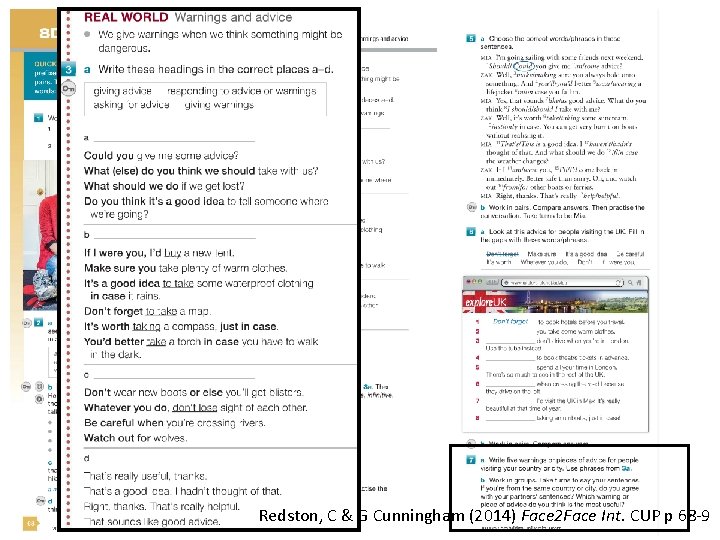
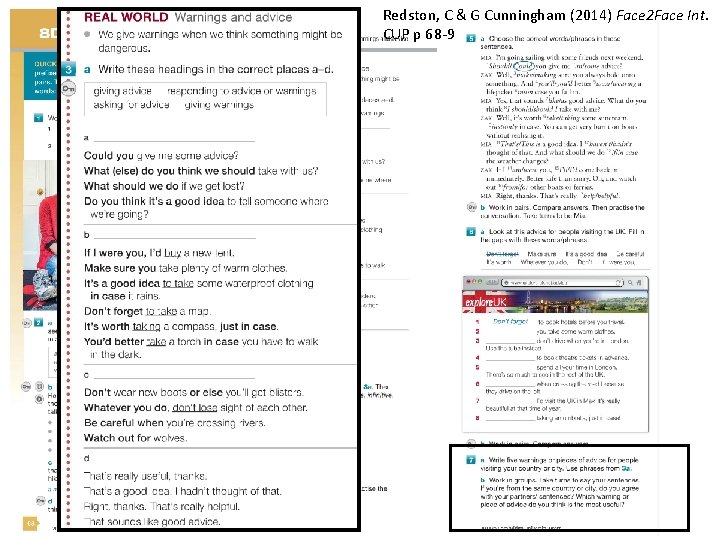
Give a Redston, C & G Cunningham (2014) Face 2 Face Int. CUP p 68 -9
WHAT IS DISCOURSE LAYERING?
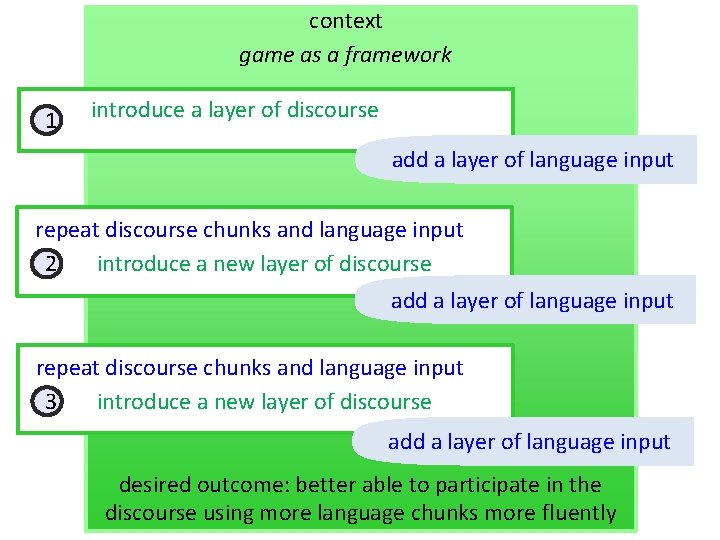
context game as a framework 1 introduce a layer of discourse add a layer of language input repeat discourse chunks and language input 2 introduce a new layer of discourse add a layer of language input repeat discourse chunks and language input 3 introduce a new layer of discourse add a layer of language input desired outcome: better able to participate in the discourse using more language chunks more fluently
DISCOURSE LAYERING ACTIVITY 1 Starting your speaking turn in a conversation Giving opinions using comparatives and superlatives Explaining why Agreeing and disagreeing
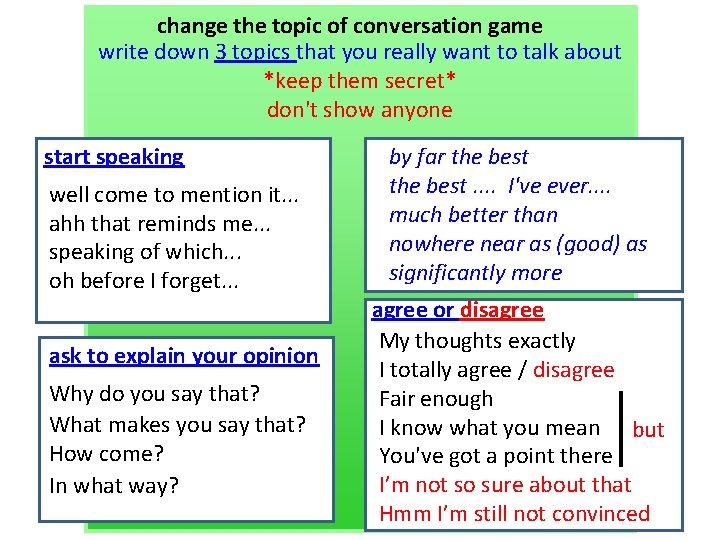
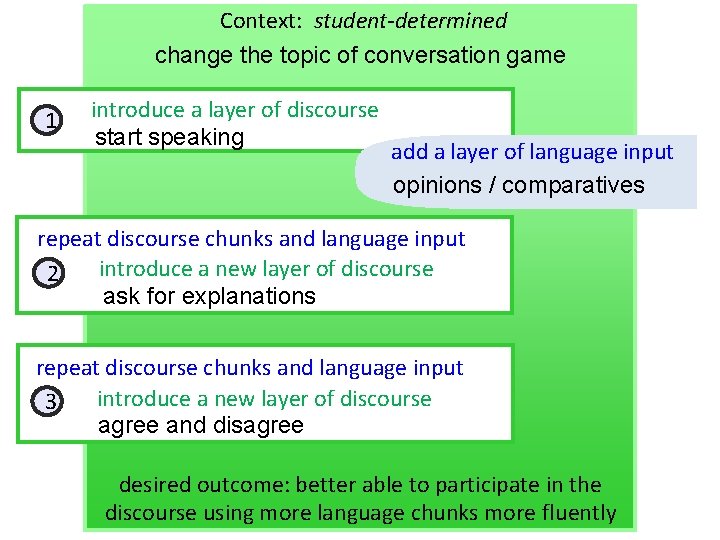
change the topic of conversation game write down 3 topics that you really want to talk about *keep them secret* don't show anyone start speaking well come to mention it. . . ahh that reminds me. . . speaking of which. . . oh before I forget. . . ask to explain your opinion Why do you say that? What makes you say that? How come? In what way? by far the best. . I've ever. . much better than nowhere near as (good) as significantly more agree or disagree My thoughts exactly I totally agree / disagree Fair enough I know what you mean but You've got a point there I’m not so sure about that Hmm I’m still not convinced
Context: student-determined change the topic of conversation game 1 introduce a layer of discourse start speaking add a layer of language input opinions / comparatives repeat discourse chunks and language input introduce a new layer of discourse 2 ask for explanations repeat discourse chunks and language input introduce a new layer of discourse 3 agree and disagree desired outcome: better able to participate in the discourse using more language chunks more fluently
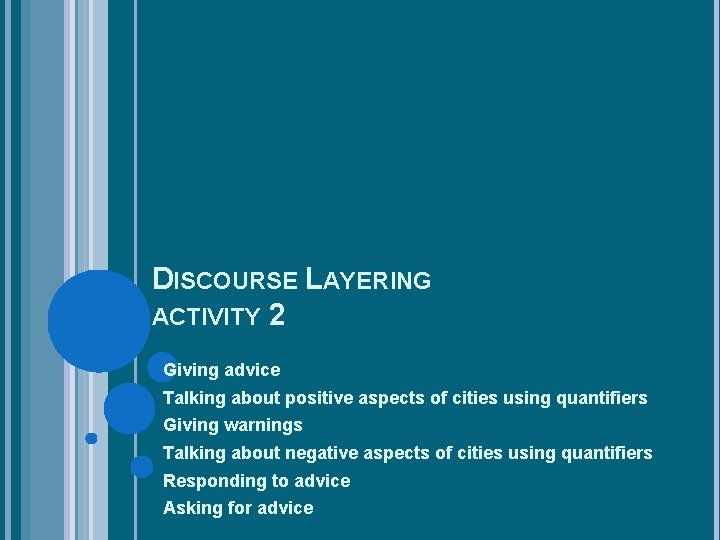
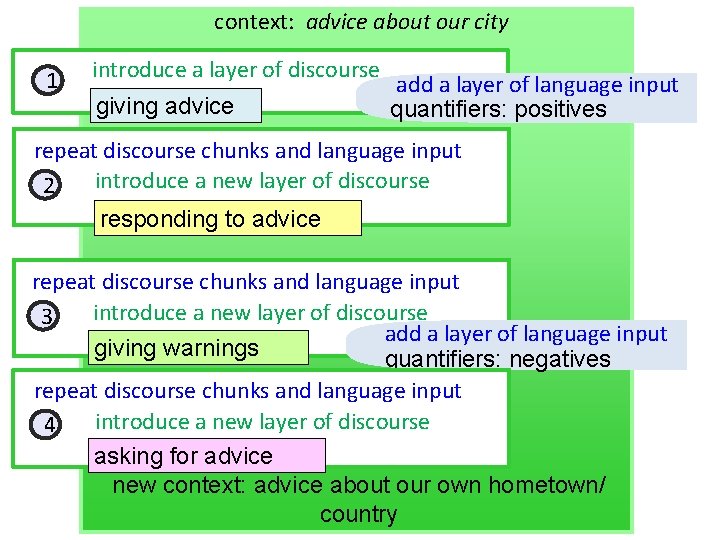
DISCOURSE LAYERING ACTIVITY 2 Giving advice Talking about positive aspects of cities using quantifiers Giving warnings Talking about negative aspects of cities using quantifiers Responding to advice Asking for advice
Redston, C & G Cunningham (2014) Face 2 Face Int. CUP p 68 -9 Give a
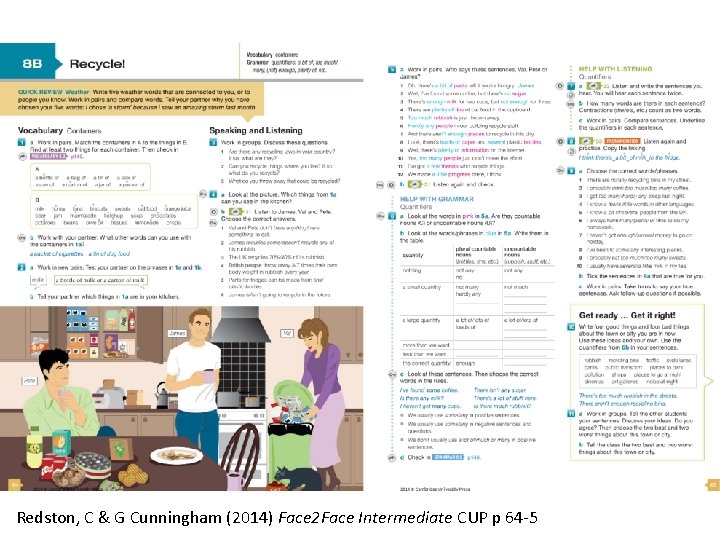
Redston, C & G Cunningham (2014) Face 2 Face Intermediate CUP p 64 -5
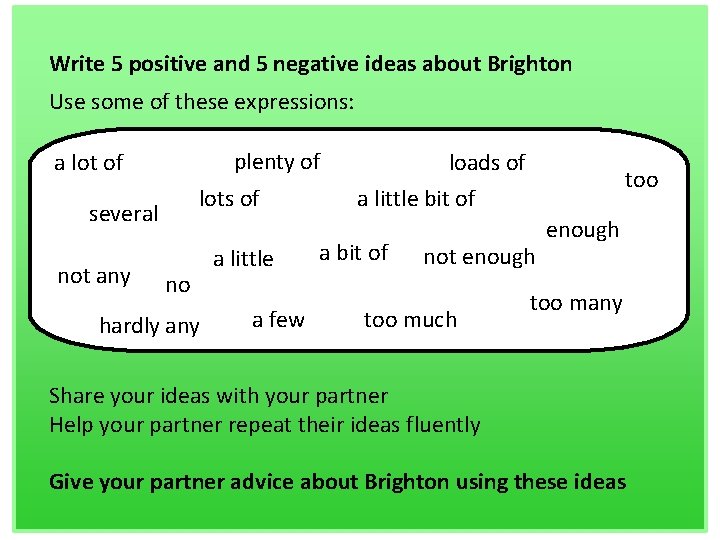
Write 5 positive and 5 negative ideas about Brighton Use some of these expressions: plenty of a lot of lots of several not any no hardly any a little a few loads of too a little bit of a bit of not enough too much enough too many Share your ideas with your partner Help your partner repeat their ideas fluently Give your partner advice about Brighton using these ideas
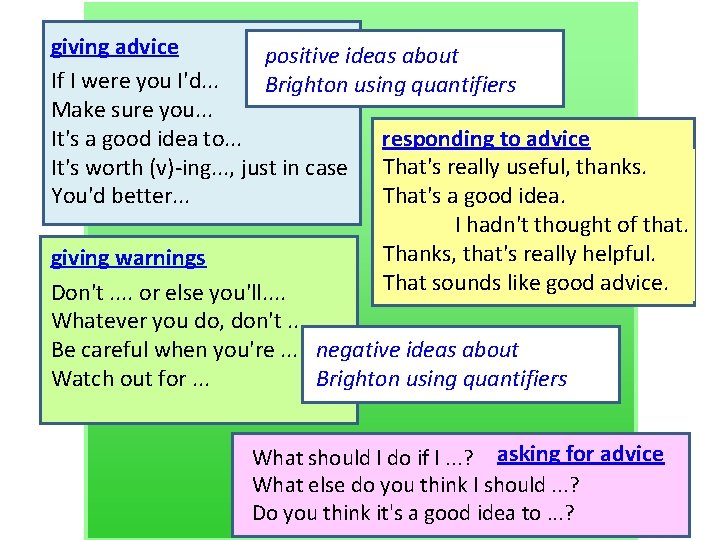
giving advice positive ideas about If I were you I'd. . . Brighton using quantifiers Make sure you. . . It's a good idea to. . . responding to advice It's worth (v)-ing. . . , just in case That's really useful, thanks. That's a good idea. You'd better. . . I hadn't thought of that. Thanks, that's really helpful. giving warnings That sounds like good advice. Don't. . or else you'll. . Whatever you do, don't. . . Be careful when you're. . . negative ideas about Brighton using quantifiers Watch out for. . . What should I do if I. . . ? asking for advice What else do you think I should. . . ? Do you think it's a good idea to. . . ?
context: advice about our city 1 introduce a layer of discourse giving advice add a layer of language input quantifiers: positives repeat discourse chunks and language input introduce a new layer of discourse 2 responding to advice repeat discourse chunks and language input introduce a new layer of discourse 3 add a layer of language input giving warnings quantifiers: negatives repeat discourse chunks and language input introduce a new layer of discourse 4 asking for advice new context: advice about our own hometown/ country
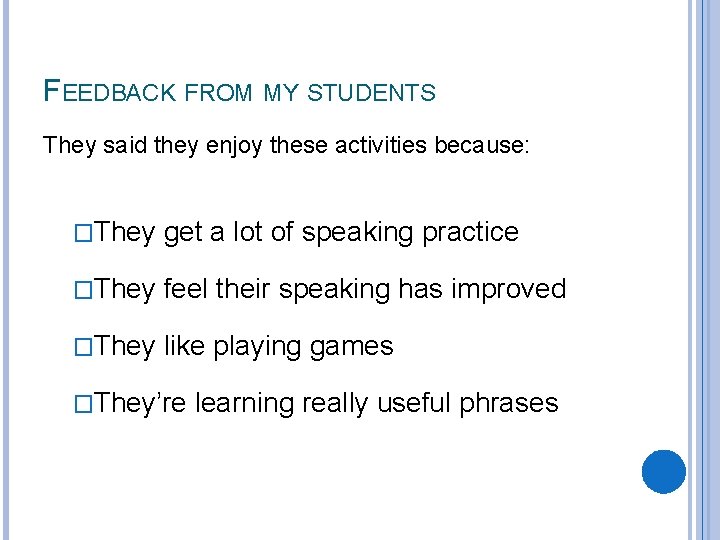
FEEDBACK FROM MY STUDENTS They said they enjoy these activities because: �They get a lot of speaking practice �They feel their speaking has improved �They like playing games �They’re learning really useful phrases
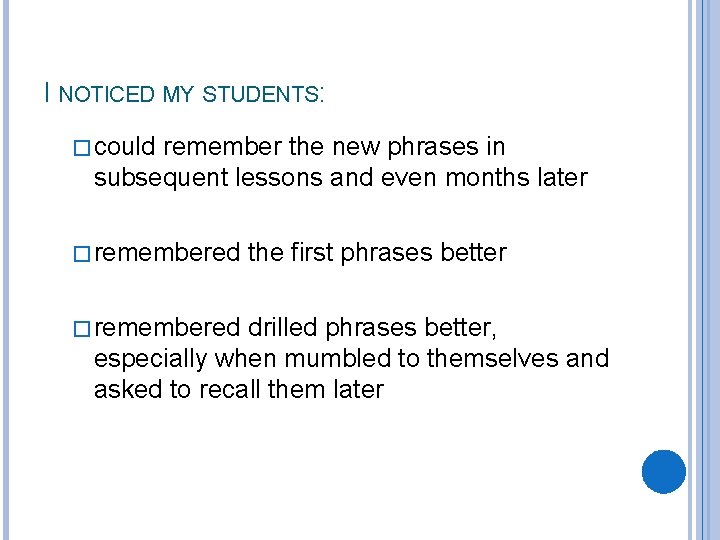
I NOTICED MY STUDENTS: �could remember the new phrases in subsequent lessons and even months later �remembered the first phrases better drilled phrases better, especially when mumbled to themselves and asked to recall them later
REFERENCES AND FURTHER READING Phil Hynd Redston, Chris & Gillie Cunningham (2014) Face 2 Face Intermediate Cambridge University Press Dellar, Hugh and Andrew Walkley (2016) Teaching Lexically: Principles and Practice Delta Publishing Bilbrough, Nick (2011) Memory Activities for Language Learning CUP Carey, Benedict (2014) How We Learn Macmillan
Thank you! DISCOURSE LAYERING: PRACTICAL ACTIVITIES TO TEACH LEXICAL CHUNKS Laura Laubacher eltlaura@yahoo. com eltlaura. wordpress. com Laubacher. Laura