
Disclosure SelfAdvocacy SelfDetermination Transition Preparation Job Corps Health
Disclosure Self-Advocacy Self-Determination Transition Preparation Job Corps Health & Wellness Conference, San Francisco Region, May 10 -12, 2006 Presenter: Nancie Payne, M. S. President, Payne & Associates, Inc. www. payneandassociates. com
WELCOME… • What a Great Afternoon • Warm-up
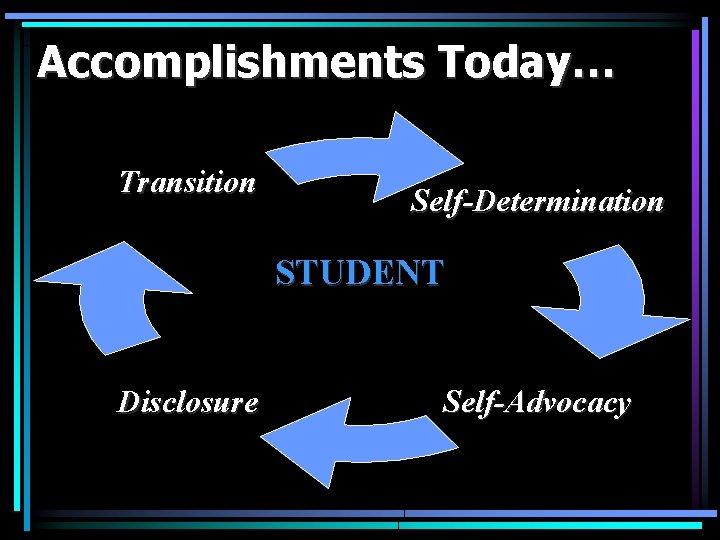
Accomplishments Today… Transition Self-Determination STUDENT Disclosure Self-Advocacy
TRANSITION • Result of a change • State change puts one into • Not automatic • Change is external • Transition is internal
TRANSITION • Transition takes longer • Transition happens much more slowly than change • Transition is what happens when we support the processes involved in change…
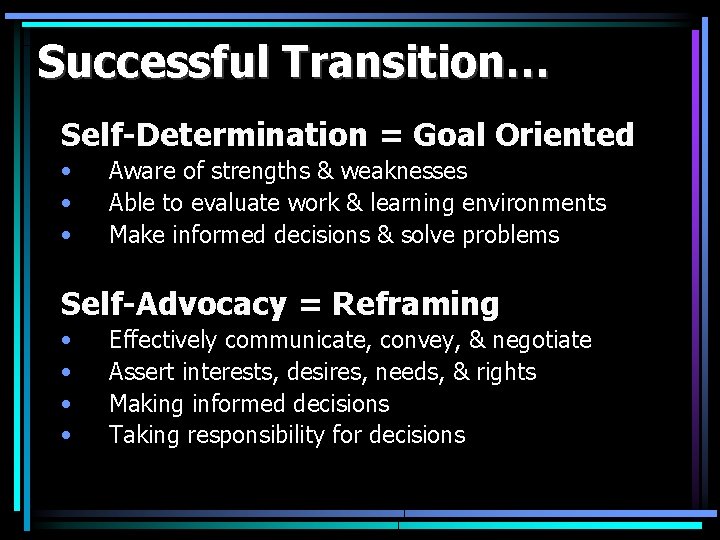
Successful Transition… Self-Determination = Goal Oriented • • • Aware of strengths & weaknesses Able to evaluate work & learning environments Make informed decisions & solve problems Self-Advocacy = Reframing • • Effectively communicate, convey, & negotiate Assert interests, desires, needs, & rights Making informed decisions Taking responsibility for decisions
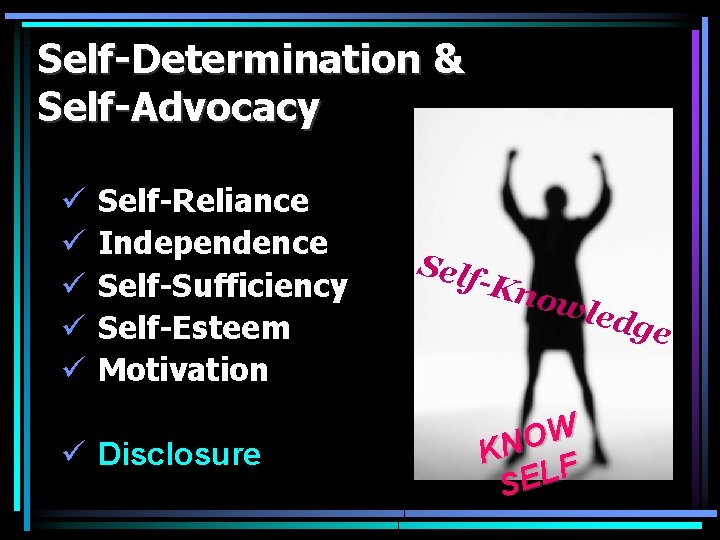
Self-Determination & Self-Advocacy ü ü ü Self-Reliance Independence Self-Sufficiency Self-Esteem Motivation ü Disclosure Self -Kn owl edg e W O KN F SEL
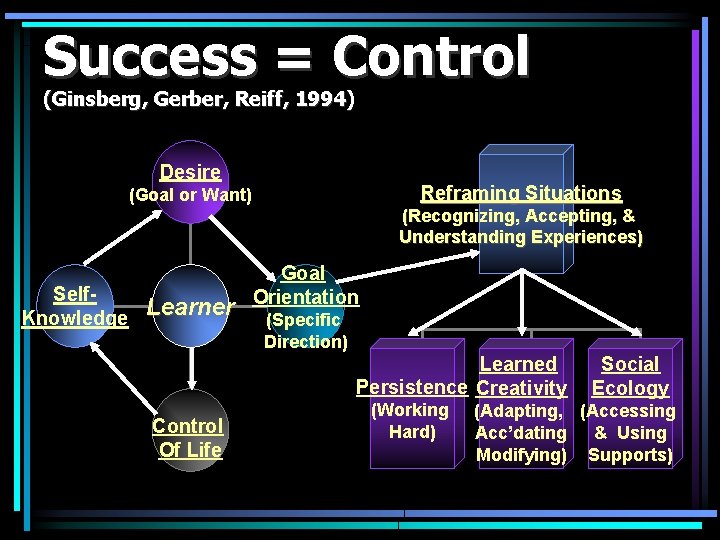
Success = Control (Ginsberg, Gerber, Reiff, 1994) Desire Reframing Situations (Goal or Want) (Recognizing, Accepting, & Understanding Experiences) Self. Knowledge Learner Goal Orientation (Specific Direction) Learned Persistence Creativity Control Of Life (Working Hard) Social Ecology (Adapting, (Accessing Acc’dating & Using Modifying) Supports)
EFFECTS OF LD “I’m Smart? Yea, Right…Then Why Can’t I Succeed? ”
EFFECTS OF LD Ø Far Reaching Ø Manifestations Different for Each Ø Positive & Negative Experiences Ø Success through… ØSelf-Knowledge ØSupport
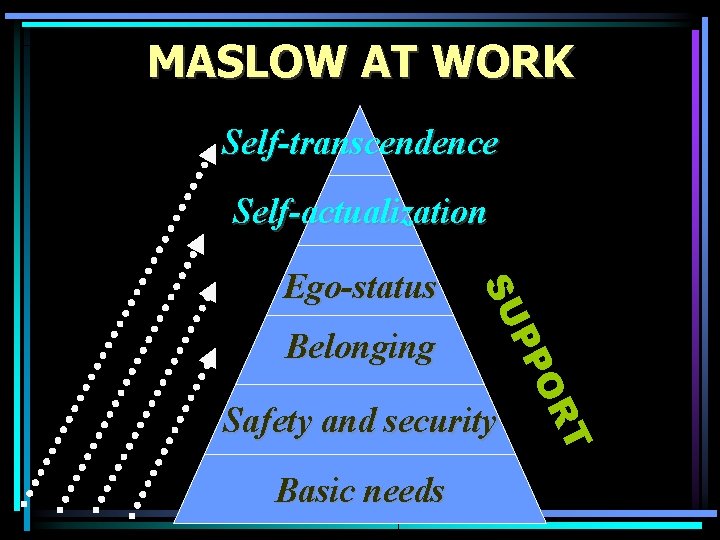
MASLOW AT WORK Self-transcendence Self-actualization PP Belonging SU Ego-status T Basic needs OR Safety and security
Postsecondary Failures ü 94% Dropout Rate Vocational, Technical & Postsecondary Among Learners who have LD (RSA 1998)
Reasons for Failures • Brainstorm & List Reasons…
Reasons for Failures • • • Weak Critical Thinking Skills Poor Self-Advocacy Skills Low Self-Esteem Poor Self-Determination Skills Negative Messages Lack of Self-Knowledge Feelings of Hopelessness Avoidance of Success Lack of Understanding of Disability Inability to Seek Resources Underdeveloped Problem Solving Skills
THE FRAMEWORK ESSENTIAL SKILLS
THE SELF-KNOWLEDGE ESSENTIALS • • Strengths & Interests Learning Styles Multiple Intelligences Critical & Higher Order Thinking Skills • Values & Personal Needs • Disability & Limitations • Accommodations
STRENGTHS & INTERESTS • • Help to recognize talents Search until you find the motivators Don’t push your own ideas Explore in positive ways Keep a list of things to investigate Maintain structure Promote follow-through
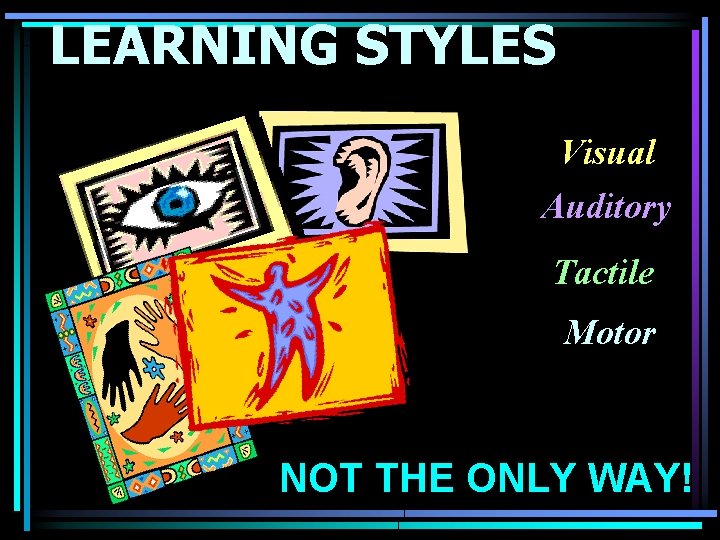
LEARNING STYLES Visual Auditory Tactile Motor NOT THE ONLY WAY!
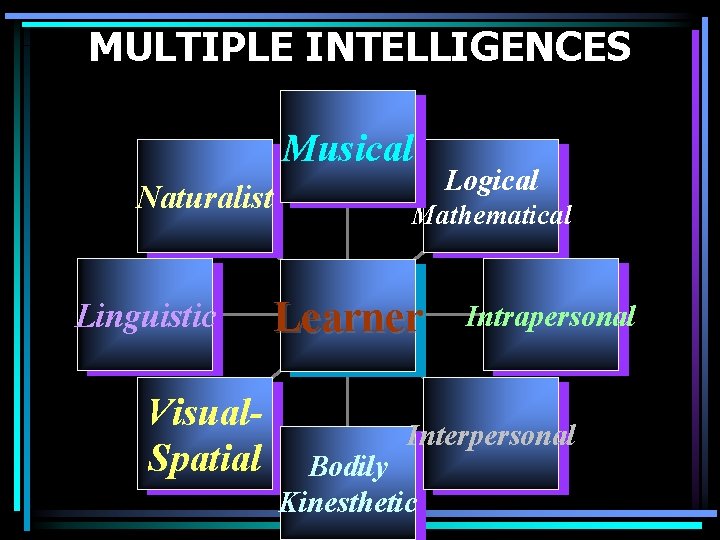
MULTIPLE INTELLIGENCES Musical Naturalist Linguistic Visual. Spatial Logical Mathematical Learner Intrapersonal Interpersonal Bodily Kinesthetic
FACILITATING CRITICAL THINKING • • Affirm Self-Worth Listen Attentively Show Support of Efforts Reflect & Mirror Ideas & Actions • Motivate Person to Think Critically Stephen Brookfield, Developing Critical Thinkers
FACILITATING CRITICAL THINKING • • Regularly Evaluate Progress Help Create Networks Be Critical Parents & Support Folks Model Critical Thinking Stephen Brookfield, Developing Critical Thinkers
Personal Needs • Figure Them Out!! – What Trips Trigger – What Works Best – Down Time – Chunking – Frustration Tolerance
DISABILITY & LIMITATIONS • Adequately describe or speak to the Disability when & where appropriate • Must understand that the limitations are the result of the disability • Accommodations are essential
Accommodations • A change to the existing environment, structure or protocol that allows the use and further development, where possible, of alternative, intact physical methods or cognitive channels in order to compensate for the limitation created by the person’s disability.
Accommodations • Elementary School • High School • • • GED Postsecondary Training Entrance testing Certification testing Pre-employment testing
DISCLOSURE RANDOM THOUGHTS • Postsecondary & Training • Employment & Training Programs – Core Services – Intensive & Training Services • Pre-Employment Processes • During Employment Offers • After Employment Accepted – Probationary Period
Factors Leading to Success • • Work Tolerance & Endurance Work Skills Above Entry & Low Level Job-related Academic Skills Disability Awareness Self-esteem & Self-confidence Medical, Psychological & Psychiatric Coordination & Co-investigation
Factors Leading to Success • • • Mobility & Transportation Verbal Communication Non-Verbal Communication Learning Styles & Job Culture Knowledge & Exposure of Employment Potentials • Job Interests & Passions • Secondary Completion
THE “OTHER” FACTOR • Reframe limitations using accommodations • Remediate weaknesses after limitations have been accommodated successfully
THE “OTHER” FACTOR The framework must be • What I Can do – not – • What I can’t do
Critical Transition Elements • Employment Success Factors • Desires – Goals • Self-Knowledge • Self-Determination • Persistence • Learned Creativity & Accommodations • Supports • Reframing & Control
Remember… • Knowledge is Power • Sharing Knowledge creates positive power • Providing Support fosters motivation, initiative & independence promoting success
THANK YOU! Those Who See the Invisible… Can do the Impossible
Payne & Associates, Inc. Nancie Payne, M. S. 205 Lilly Road NE, Bldg B, Ste A Olympia, Washington 98506 360 -491 -7600 payneassoc@att. net Mission • Competent, effective disability-related services designed to Maximize Human Potential & Create Productive Environments
- Slides: 34