
Disclaimer l The following slides reuse materials from
- Slides: 22
Disclaimer l The following slides reuse materials from SIGGRAPH 2001 Course Notes on Physically-based Modeling (copyright 2001 by David Baraff at Pixar). UNC Chapel Hill M. C. Lin
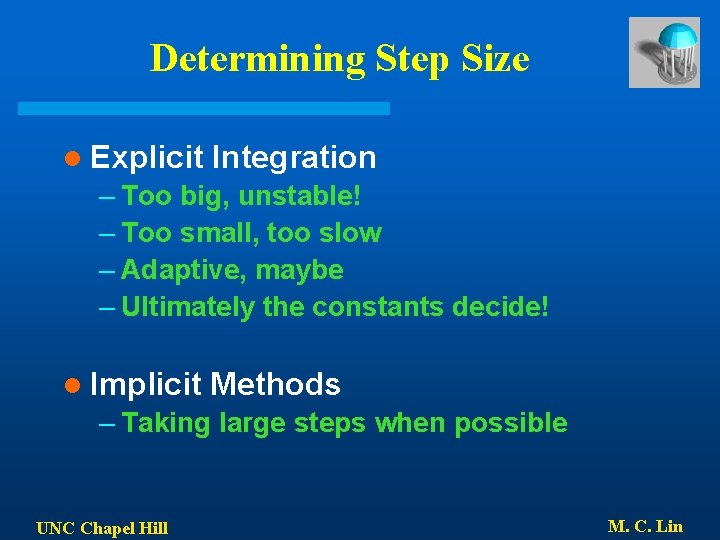
Determining Step Size l Explicit Integration – Too big, unstable! – Too small, too slow – Adaptive, maybe – Ultimately the constants decide! l Implicit Methods – Taking large steps when possible UNC Chapel Hill M. C. Lin
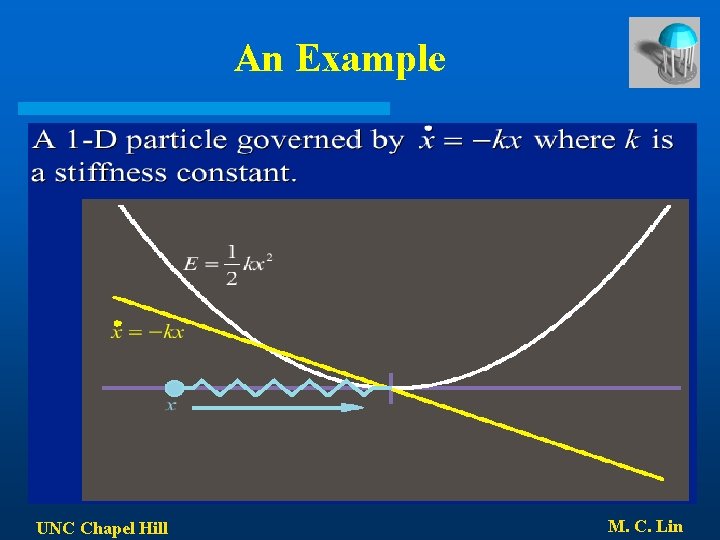
An Example UNC Chapel Hill M. C. Lin
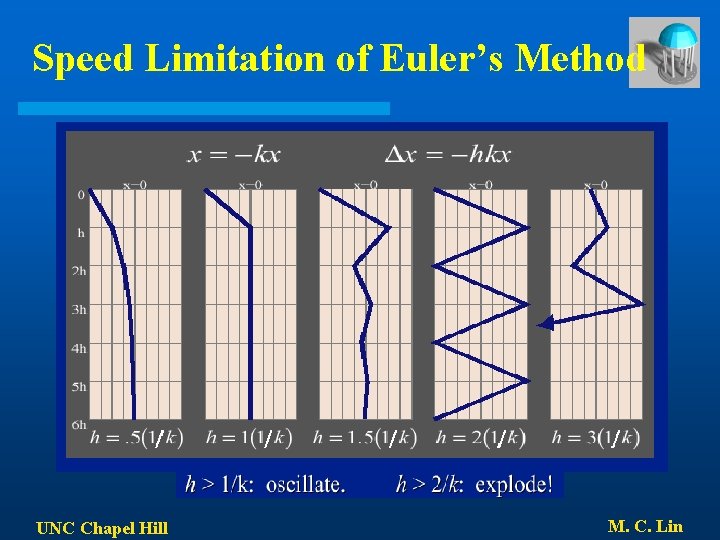
Speed Limitation of Euler’s Method UNC Chapel Hill M. C. Lin
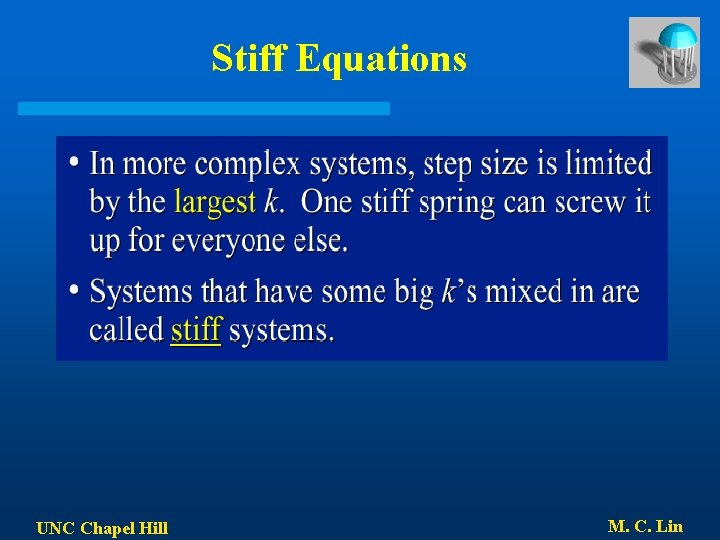
Stiff Equations UNC Chapel Hill M. C. Lin
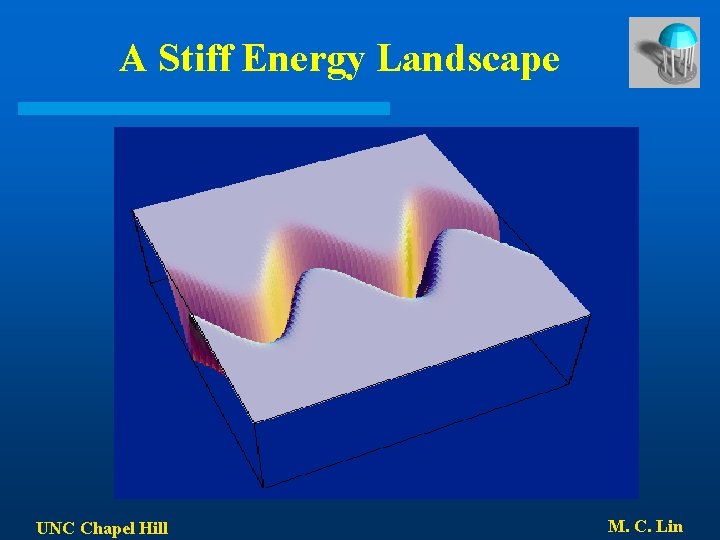
A Stiff Energy Landscape UNC Chapel Hill M. C. Lin
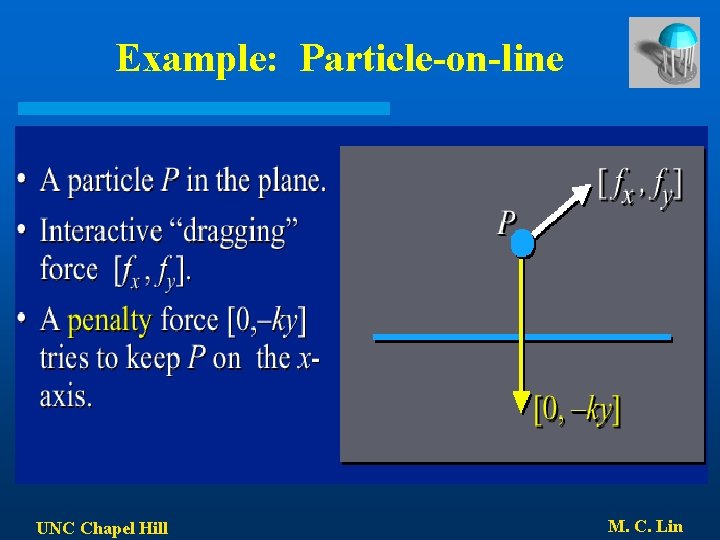
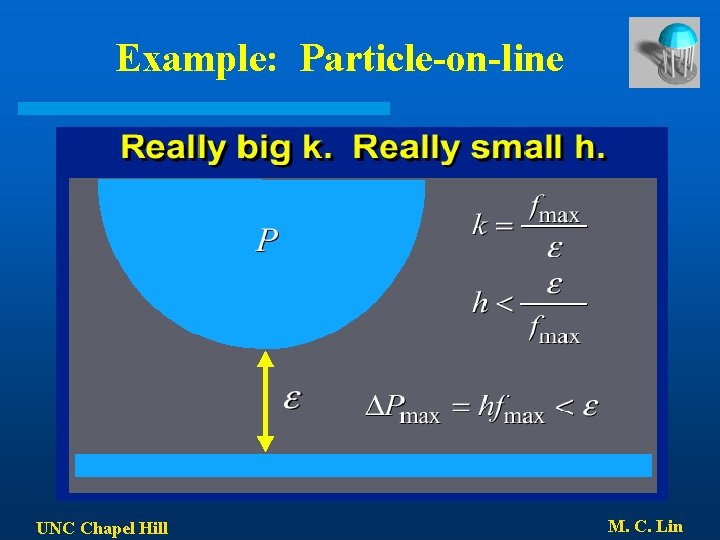
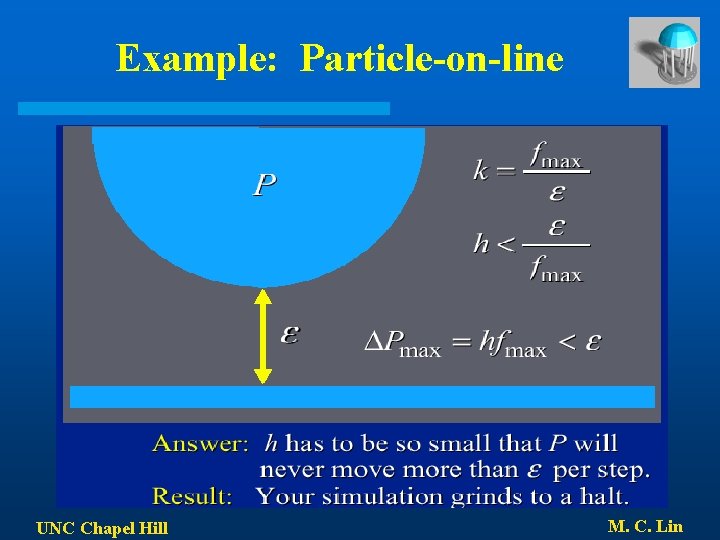
Example: Particle-on-line UNC Chapel Hill M. C. Lin
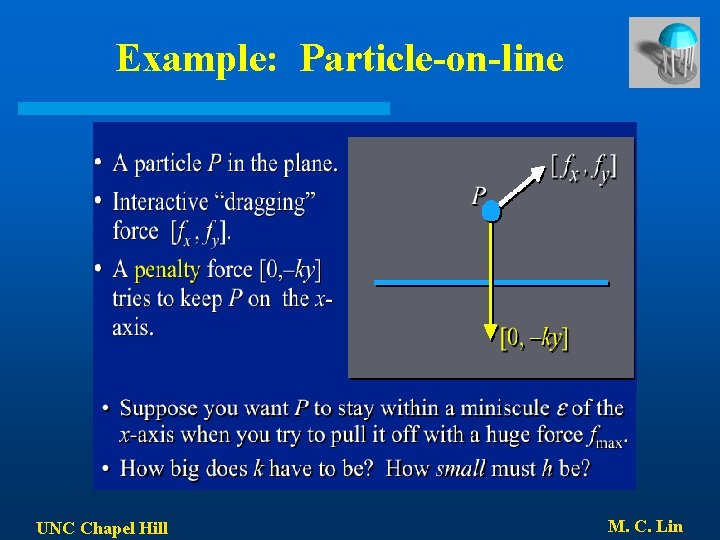
Example: Particle-on-line UNC Chapel Hill M. C. Lin
Example: Particle-on-line UNC Chapel Hill M. C. Lin
Example: Particle-on-line UNC Chapel Hill M. C. Lin
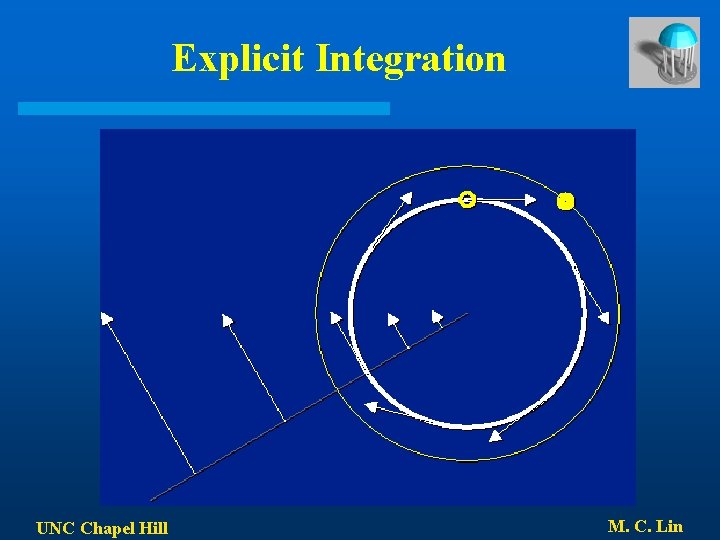
Explicit Integration UNC Chapel Hill M. C. Lin
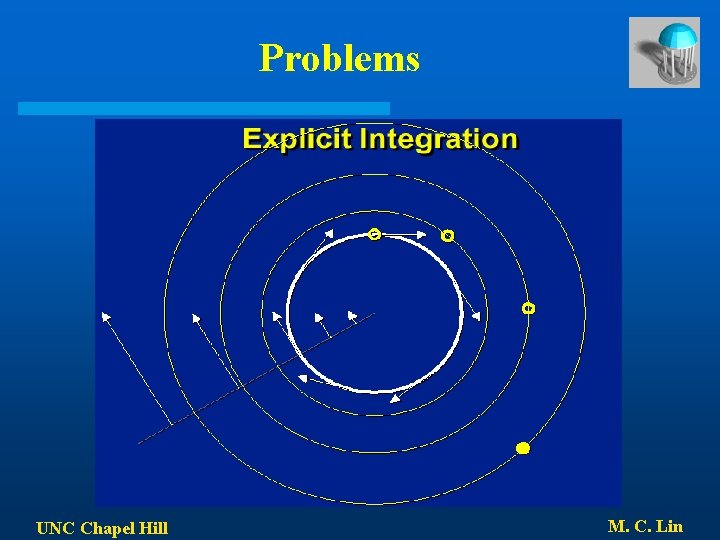
Problems UNC Chapel Hill M. C. Lin
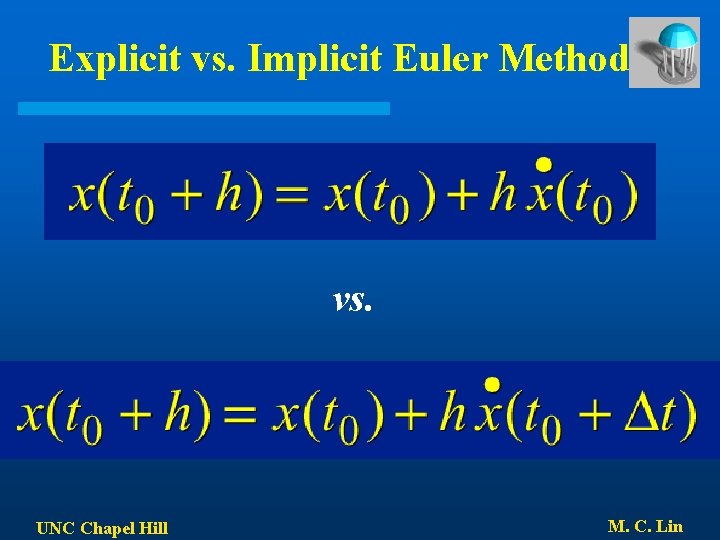
Explicit vs. Implicit Euler Method vs. UNC Chapel Hill M. C. Lin
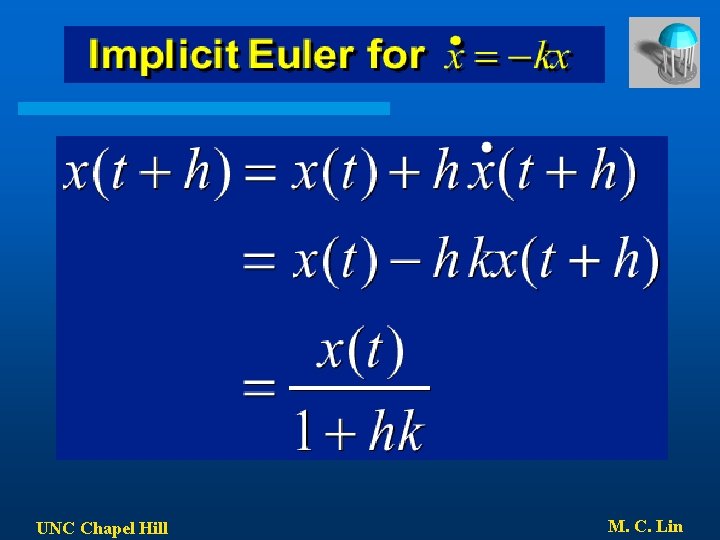
UNC Chapel Hill M. C. Lin
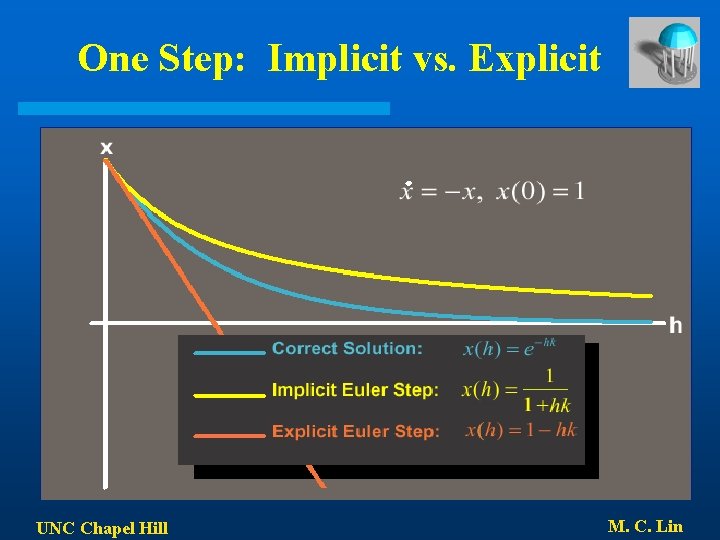
One Step: Implicit vs. Explicit UNC Chapel Hill M. C. Lin
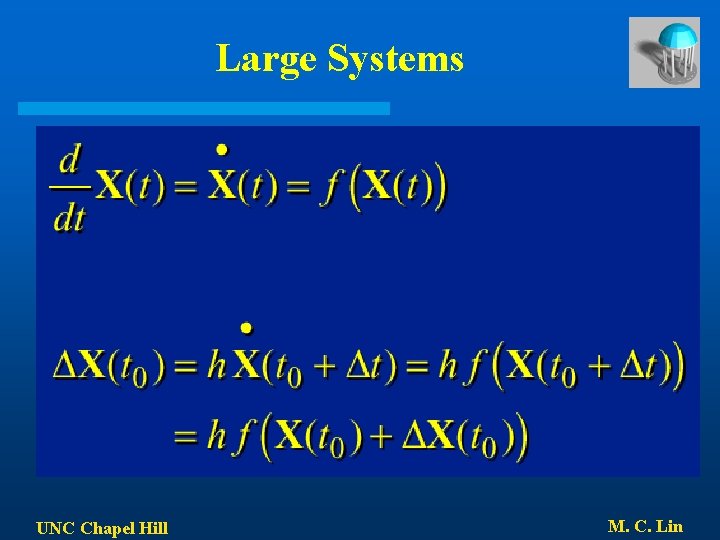
Large Systems UNC Chapel Hill M. C. Lin
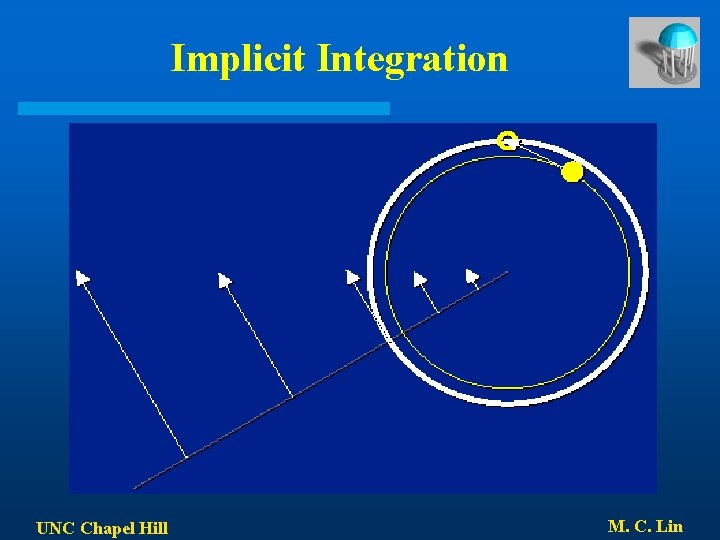
Implicit Integration UNC Chapel Hill M. C. Lin
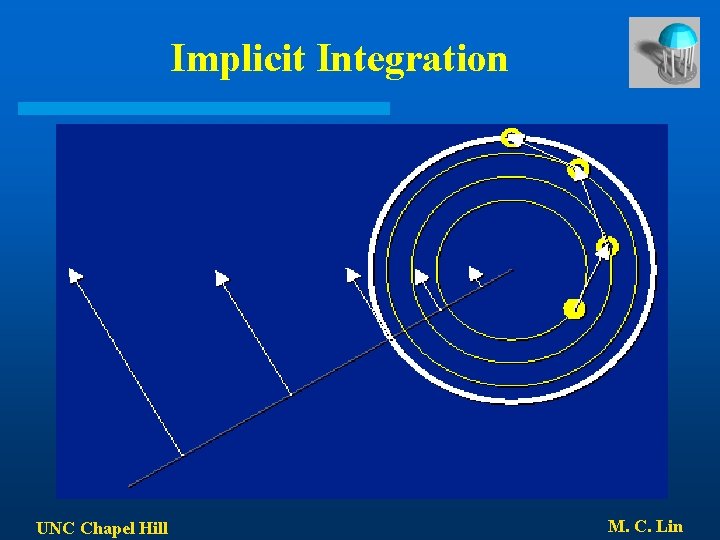
Implicit Integration UNC Chapel Hill M. C. Lin
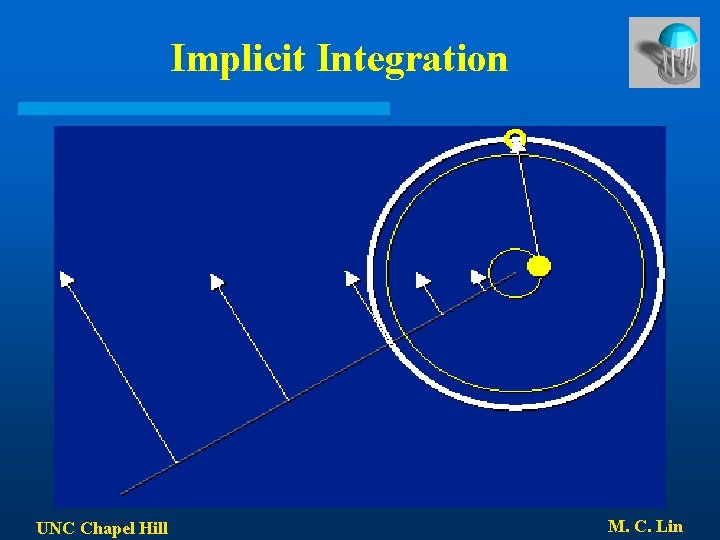
Implicit Integration UNC Chapel Hill M. C. Lin
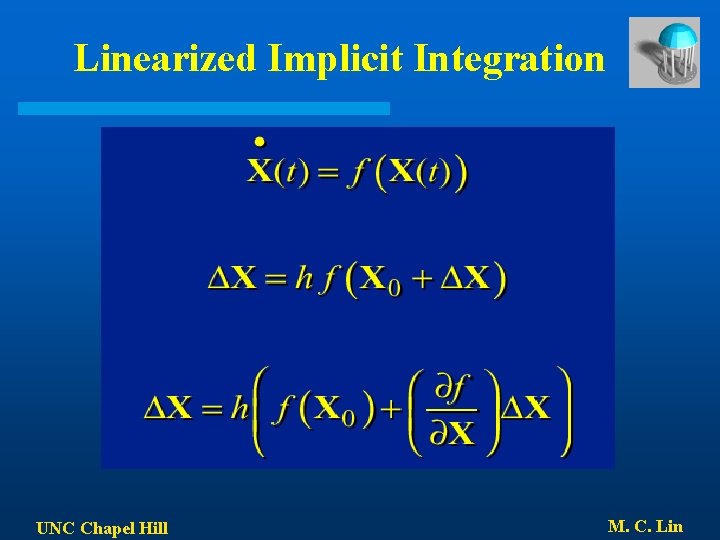
Linearized Implicit Integration UNC Chapel Hill M. C. Lin
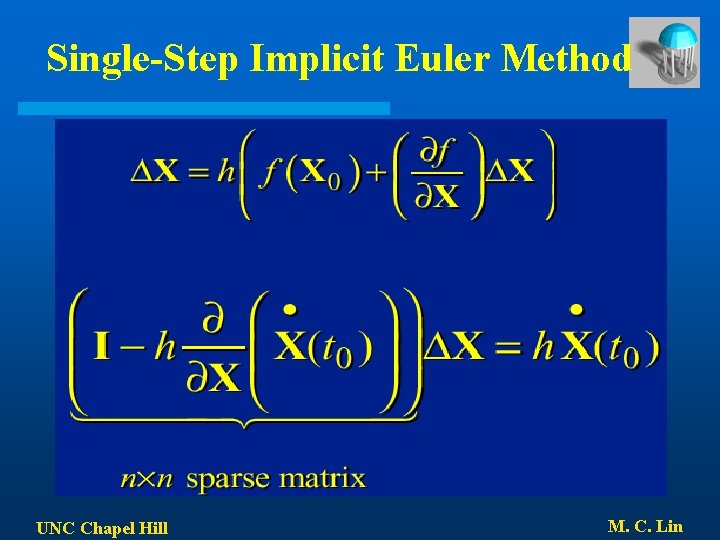
Single-Step Implicit Euler Method UNC Chapel Hill M. C. Lin
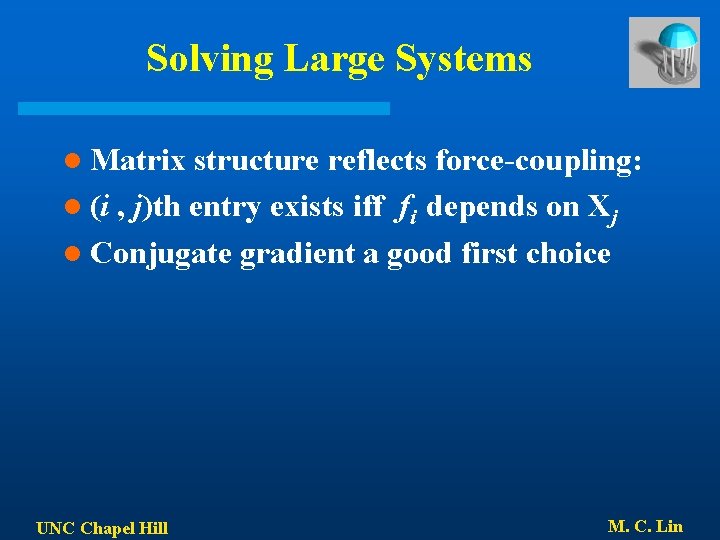
Solving Large Systems l Matrix structure reflects force-coupling: l (i , j)th entry exists iff fi depends on Xj l Conjugate gradient a good first choice UNC Chapel Hill M. C. Lin