
Discharge stream flow channel shape Discharge Measures the

- Slides: 7
Discharge, stream flow & channel shape
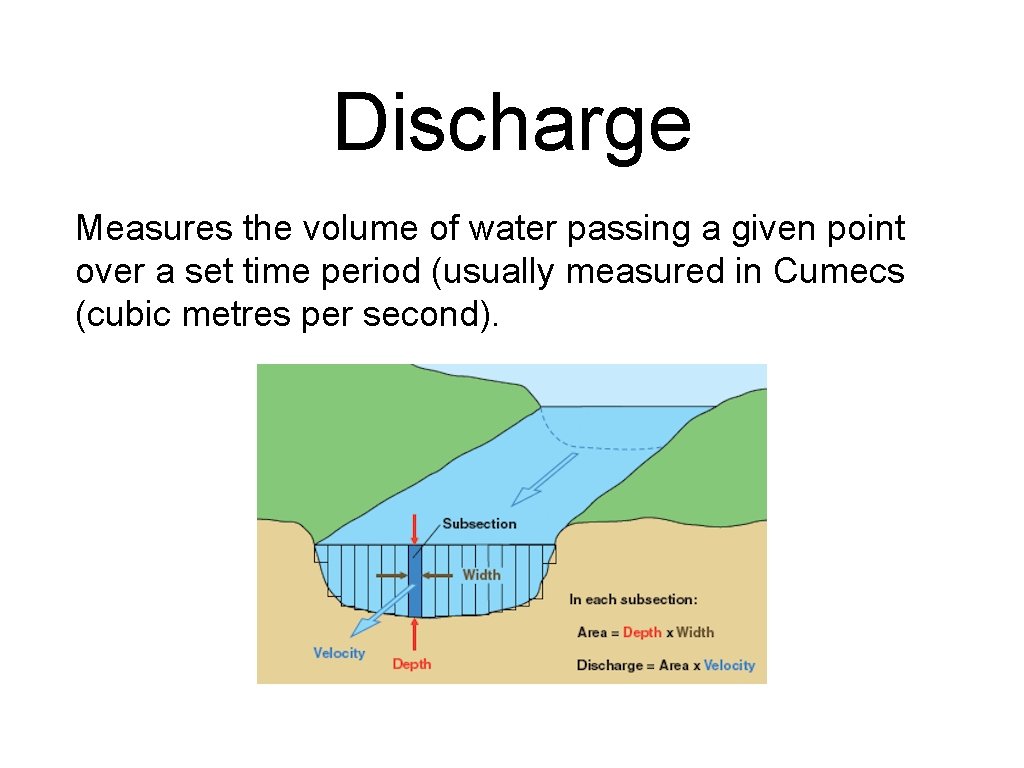
Discharge Measures the volume of water passing a given point over a set time period (usually measured in Cumecs (cubic metres per second).
Velocity • River velocity is influenced by three factors: 1. Channel shape in cross section 2. Roughness of the bed and banks 3. Channel slope.
Channel shape • Described by the term Hydraulic radius • Hydraulic radius = cross-sectional area / length of wetted perimeter. • The larger the hydraulic radius, the lower the friction acting on the water allowing for higher velocities.
Roughness of bed & banks • The smoother the bed and banks, the less friction, the higher the velocity. • Higher roughness leads to greater turbulence, which in turn leads to material on the bed being picked up and transported by the river. • Roughness is measured using Manning’s n. The greater the roughness, the higher the value.
Channel slope • Steeper slopes lead to higher velocities due to the increased effect of gravity. • However, steeper slopes, often found in the upper parts of rivers, usually have turbulent flow and high roughness. The bedload is usually large which increases friction.
Summary • Lower parts of rivers usually have greater velocities and discharge than upper parts. • Velocity increases with increases in channel depth & width. • Increased roughness reduces velocity, increases turbulent flow, and leads to more sediments and load being transported by the river.