
DISCHARGE AND SAFETY PLANNING PROTOCOL FOR CHILDREN AND
- Slides: 16
DISCHARGE AND SAFETY PLANNING PROTOCOL FOR CHILDREN AND YOUNG PEOPLE ADMITTED TO HOSPITAL
Welcome and Introductions Purpose of the protocol – to support multi-agency practitioners to make appropriate arrangements for the safe and timely discharge of children under 18 years of age Scope – CYP who need a multi-agency response to their needs due to: Ø Serious or complex mental health needs requiring hospital admission Ø Self-harm or attempted suicide Ø Other health needs where there are safeguarding and/or other welfare concerns Slide 2
Underpinning Principles • • • Children who self-harm / express suicidal ideas will always be taken seriously and provided with appropriate help and support Most admissions for mental health needs will require followup community support after discharge Discharge planning is an essential part of care management in the hospital setting and will ensure that the right health and social care support is put in place Children should not remain in hospital once they are well enough to leave Where there are safeguarding concerns a referral should be made to the Newham MASH (multi-agency safeguarding hub) Slide 3
The Discharge Planning Process • • • The hospital lead the process Attendees: Medical or Duty Consultant or their delegate; Ward Nursing staff; CAMHs practitioner; Social worker and Practice Leader from Children’s Social Care (where there are safeguarding concerns) Convened at least 24 hours before planned discharge May double as a child protection meeting – if required The hospital will chair the meeting, record and circulate the discharge plan. In cases where Children’s Social Care involved they will hold the chairing responsibility. Agenda and Template for the DPM developed as part of the protocol (Appendix 1) Slide 4
Data: Child Mental Health 2016/17 • • • The rate of self harm and suicide attempts in children is lower than the national average. Newham hospital admissions as a result of self harm in 10 -24 yr. olds: 278/100, 000 young people (England average is 423/100, 000). Completed suicide rate/100, 000 population in Newham: 7. 4/1000, 000 population (all ages) (England average is 10. 1). Two young people in Newham committed suicide in 2016 -17. Newham LSCB carried out serious case reviews in both cases and the learning from these has been widely shared within the partnership Majority of children who present after deliberate self-harm do very well, engaging with support and treatment after their crisis, particularly where there is good multi-agency input Slide 5
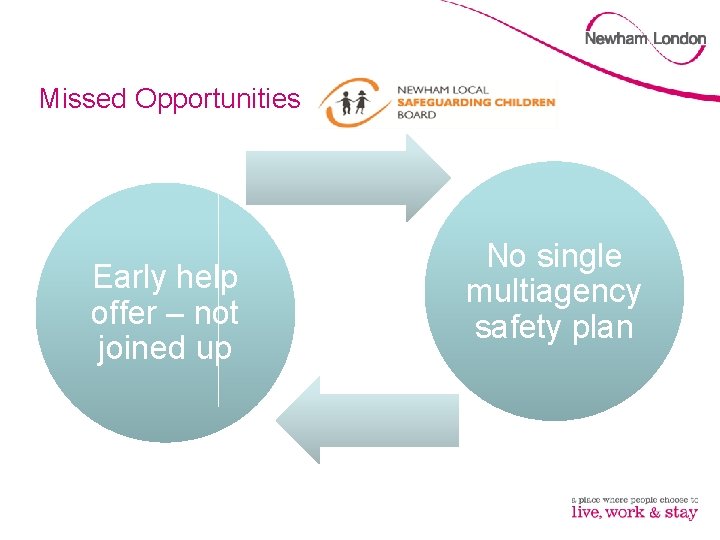
Child J serious case review: Children’s Social Care • J was a 15 year old boy who took his own life within weeks of being discharged from NUH where he had been admitted after an episode of deliberate self-harm • Serious case review identified missed opportunities and weaknesses in the discharge planning and follow up for J • SCR has been a key driver in developing the protocol Slide 6
Missed Opportunities Early help offer – not joined up No single multiagency safety plan
Working Together: collaboration is key to success Slide 8
Children’s Social Care Roles and responsibilities • Review and respond to referrals to the MASH to determine level of support required (within 24 hours) Ø early help or targeted support (through the EH framework) Ø Statutory interventions(requiring a social worker): v child in need v child protection • Allocated social worker will meet with the young person and their family to begin a child in need assessment • Arrange and chair multi-agency strategy meeting if there are child protection concerns and complete section 47 enquires (within 15 working days) • Arrange an alternative placement if the child cannot safely return home • Not all cases involving complex mental health will require a social worker. Cases may be stepped up or down on completion of enquiries/assessments Slide 9
Child and Adolescent Mental health services • • Are expected to assess within 4 hours of admission to ED or the next day if the young person has been admitted overnight Record the assessment of Rio and share with ward staff to develop a joint care plan Undertake risk assessment and evaluate ongoing risk Assess capacity of young person to make health decisions for themselves. Important for 16 -18 year olds Meet with parent/carers to corroborate history, evaluate relationships and ascertain their support in risk management. Formulate a treatment plan and follow up in the community – 7 day follow up appt offered by CAMHS Daily discussion with acute ward Update CSC where there are safeguarding issues Slide 10
Discharge plan: shared responsibility Initiated by the Hospital - the meeting will cover: • Background and reasons for admission • Outcome of assessments • Child’s voice and experience • Develop the discharge/safety plan which will specify: Ø Presenting issues, triggers, warning signs Ø Protective factors Ø Treatment and support plan with timescales Ø Outcomes to be achieved Ø Visiting arrangements (1 st visit within 48 hours of discharge, arrangements for weekends, holidays – if required Ø Status and ownership of the plan / Interface with other plans Ø Details of lead professional(s) Ø Follow up meetings Slide 11
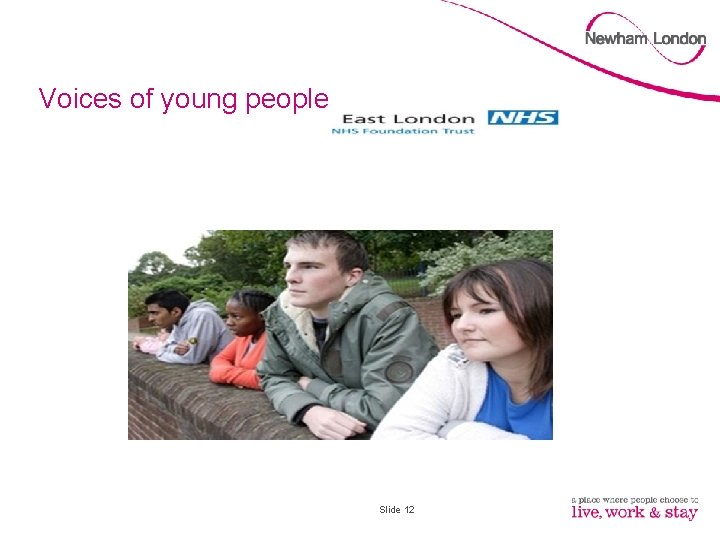
Voices of young people Slide 12
Break and Networking
Using the Protocol Group work Slide 14
Panel Time Slide 15
Next steps Named leads from Bart’s, CSC and ELFT will be tracking live cases and reporting back to the LSCB on the impact of the protocol There will be a follow up multi-agency case file audit in early 2019 LSCB provides briefings on serious case reviews and training on self-harm. For more information go to www. newhamlscb. org. uk Slide 16