
Disaster Triage in New York State STARTJump START






- Slides: 164
Disaster Triage in New York State START/Jump. START Triage SMART Tag System
AGENDA • • Introductions Objectives Presentation Scenario & Skills Train-the-Trainer Content Additional Resources Evaluation/Certificate
Acknowledgements • NYSDOH – Bureau of Emergency Medical Services • University of Rochester Medical Center - FLRTC • Stony Brook Medicine – MARO RTC • Albany Medical Center – CDR RTC • Upstate Medical University – CNY RTC • Blessing Health System/Quincy Area EMS System • Los Angeles County - Emergency Medical Services Agency
Objectives: Define a Mass Casualty Incident and the unique challenges of an MCI Understand the differences between dayto-day triage and triage during an MCI Examine the dynamics of START and Jump. START triage Review use of the SMART tagging system Demonstrate competency in the START and Jump. Start triage method
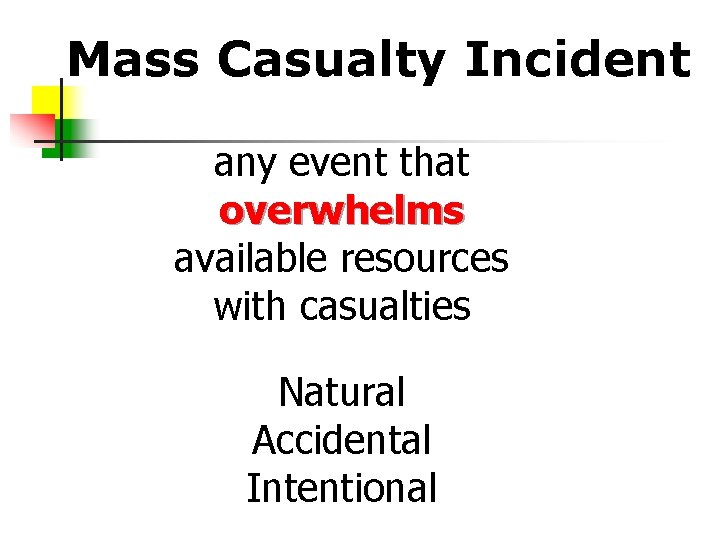
Mass Casualty Incident any event that overwhelms available resources with casualties Natural Accidental Intentional
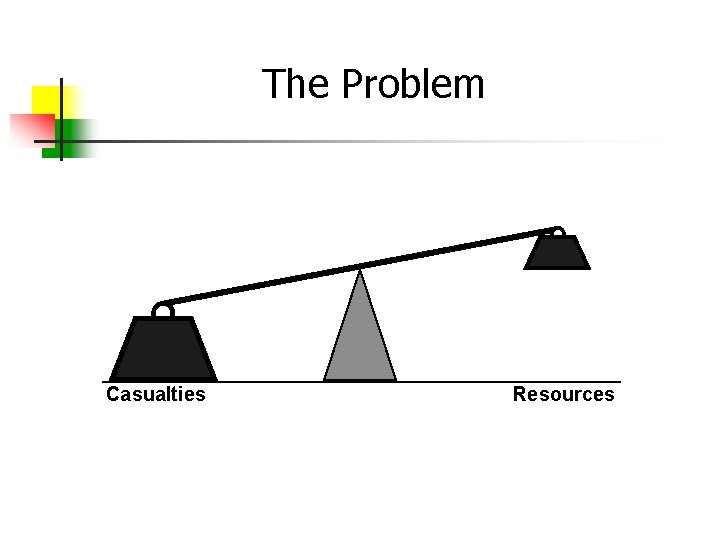
The Problem Casualties Resources
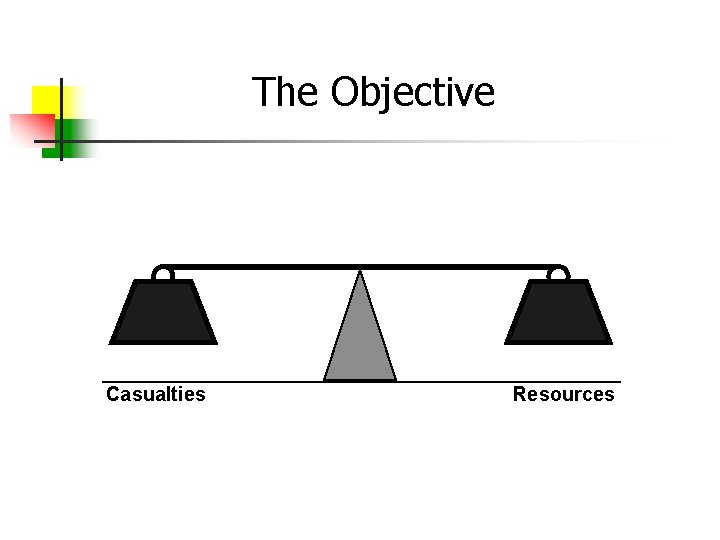
The Objective Casualties Resources
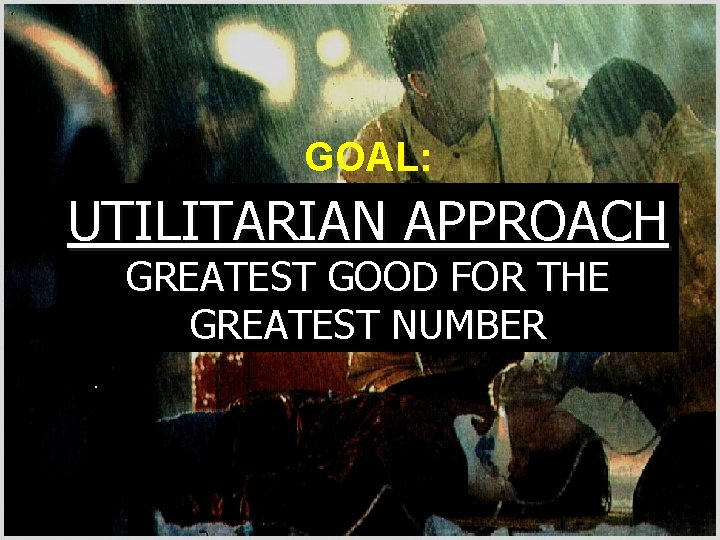
GOAL: TO SAVE THE LARGEST NUMBER UTILITARIAN APPROACH OF SURVIVORS FROM A GREATEST GOOD FOR THE MULTIPLE CASUALTY INCIDENT GREATEST NUMBER
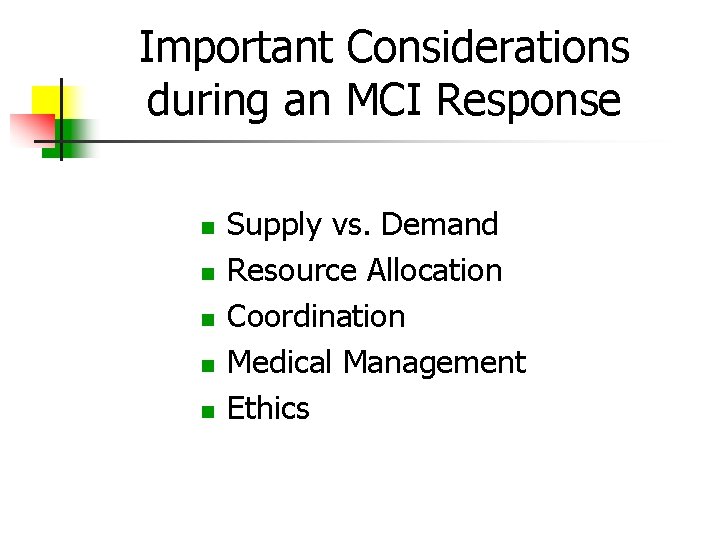
Important Considerations during an MCI Response Supply vs. Demand Resource Allocation Coordination Medical Management Ethics
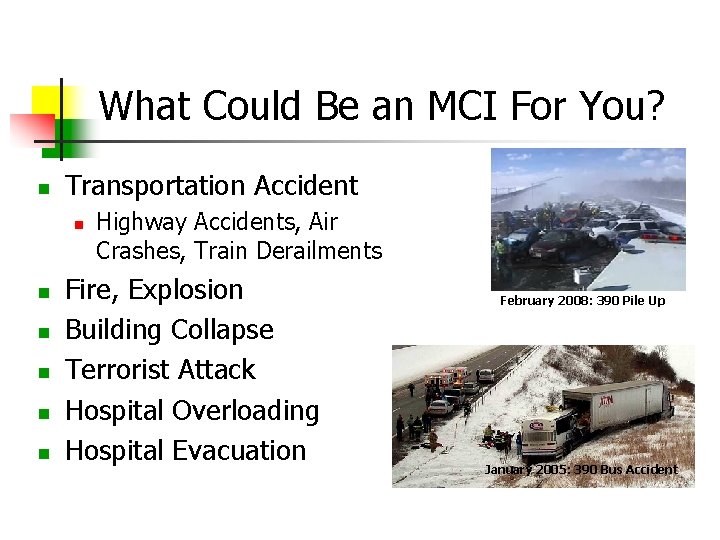
What Could Be an MCI For You? Transportation Accident Highway Accidents, Air Crashes, Train Derailments Fire, Explosion Building Collapse Terrorist Attack Hospital Overloading Hospital Evacuation February 2008: 390 Pile Up January 2005: 390 Bus Accident
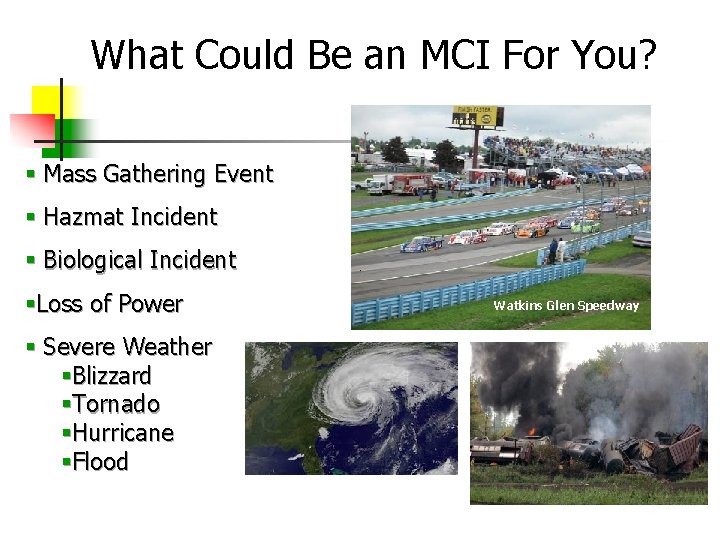
What Could Be an MCI For You? § Mass Gathering Event § Hazmat Incident § Biological Incident §Loss of Power § Severe Weather §Blizzard §Tornado §Hurricane §Flood Watkins Glen Speedway
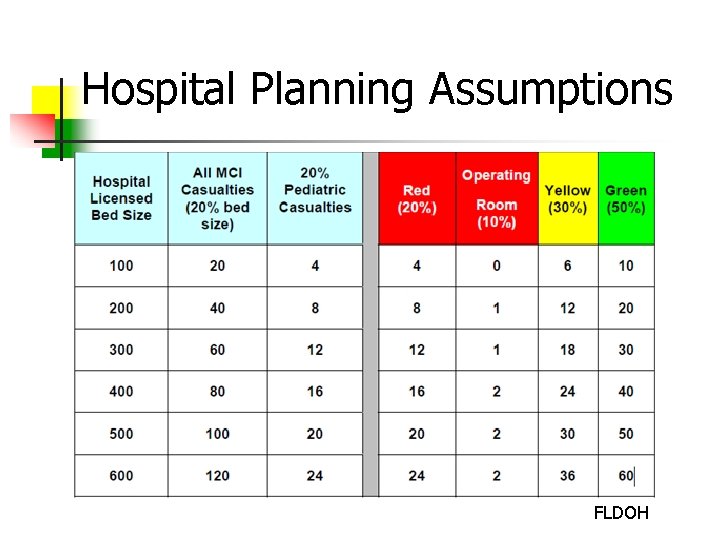
Hospital Planning Assumptions Anticipated Casualties = 20% of total licensed bed capacity Pediatric Patients = 10%-20% of Total Casualties Severe Injuries = 20% of total number of casualties 80% transported by EMS within first hour 10% require immediate care OR procedures Moderate Injuries = 30% of total number casualties 50% transported by EMS within first hr Minor Injuries = 50% of total number casualties 20% transported by EMS within first hour FLDOH
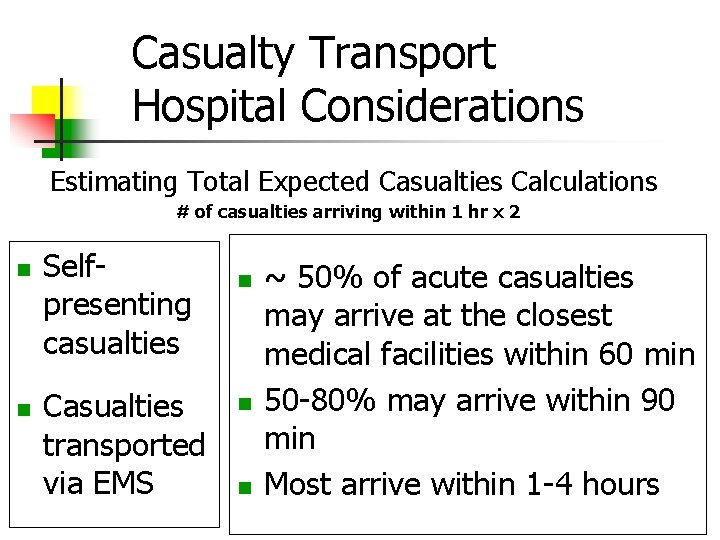
Casualty Transport Hospital Considerations Estimating Total Expected Casualties Calculations # of casualties arriving within 1 hr x 2 Selfpresenting casualties Casualties transported via EMS ~ 50% of acute casualties may arrive at the closest medical facilities within 60 min 50 -80% may arrive within 90 min Most arrive within 1 -4 hours
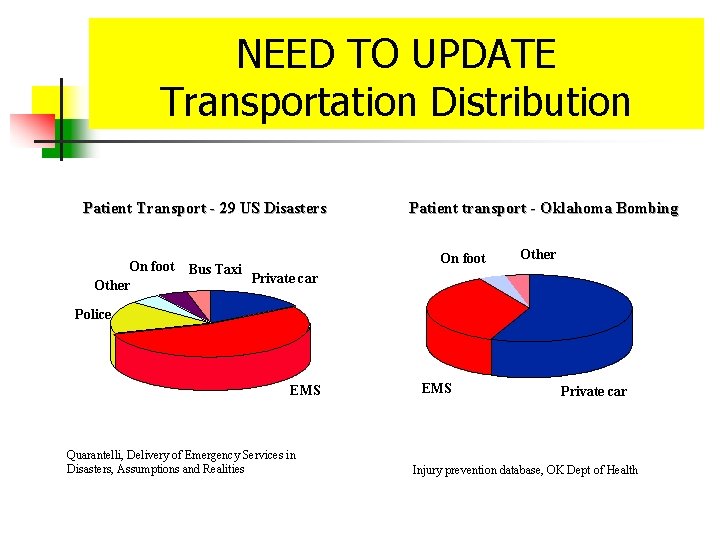
NEED TO UPDATE Transportation Distribution Patient Transport - 29 US Disasters On foot Other Bus Taxi Patient transport - Oklahoma Bombing On foot Other Private car Police EMS Quarantelli, Delivery of Emergency Services in Disasters, Assumptions and Realities EMS Private car Injury prevention database, OK Dept of Health
Managing Mass Casualty Incidents Would any of those situations lead to shortage of personnel & equipment resources? Would decisions and changes need to be made in how you do business? Priority Shift Altered Standards of Care Treatment of Non-MCI patients
CASE STUDIES Boston Marathon Bombing Orlando Shooting Las Vegas Shooting
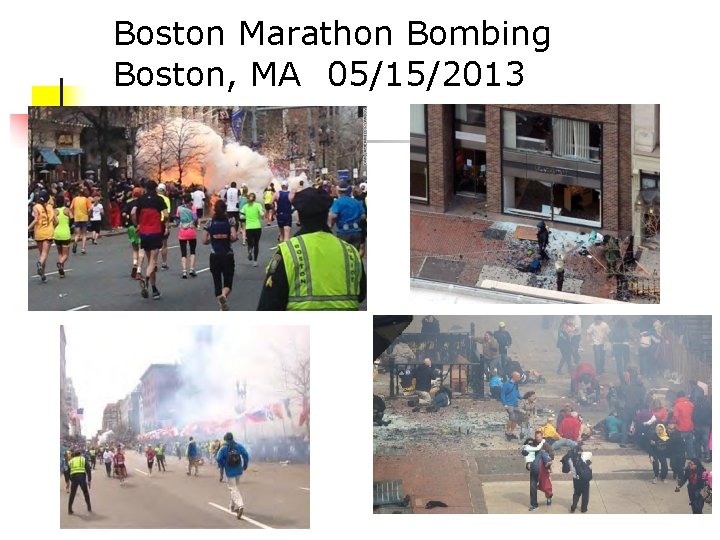
Boston Marathon Bombing Boston, MA 05/15/2013
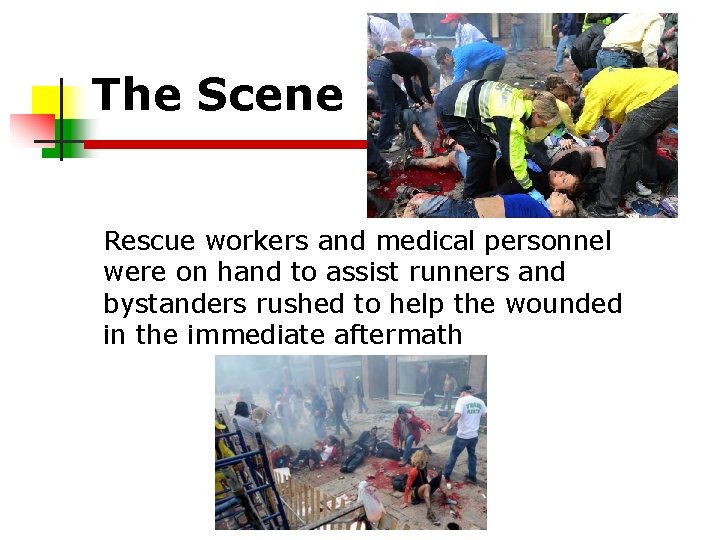
The Scene Rescue workers and medical personnel were on hand to assist runners and bystanders rushed to help the wounded in the immediate aftermath
Where Did They Go? 264 casualties were treated in 27 local hospitals At least 14 casualties required amputations Brigham and Women’s Hospital received 31 casualties – 28 with significant injuries Massachusetts General Hospital also received 31 casualties - at least 4 required amputations. Boston Medical Center received 23 casualties. Beth Israel Deaconess Medical Center handled 21 casualties Boston Children’s Hospital took in 10 children, ages two to twelve. Tufts Medical Center and St. Elizabeth’s Medical Center each treated 18 casualties
Injury & Treatment A number of the injuries were grievous, requiring intensive care, and appeared to be "war-like injuries" of mutilation, shrapnel wounds, and dismemberment. The trauma surgery chief at Boston Medical Center said: "We see patients like this, with mangled extremities, but we don't see 16 of them at the same time, and we don't see patients from blast injuries Doctors described removing "ball-bearing type" metallic beads a little larger than BBs, and small carpenter-type nails about 1 to 2. 5 centimeters (0. 4 to 1. 0 in) long. Because the bombs were low to the ground, the injuries mainly affected legs and feet instead of abdomens, chests, and heads. As a result few deaths occurred. Some suffered ruptured eardrums
MCI MANAGEMENT Identify and Sort the Injured Prioritize Treatment and Transport
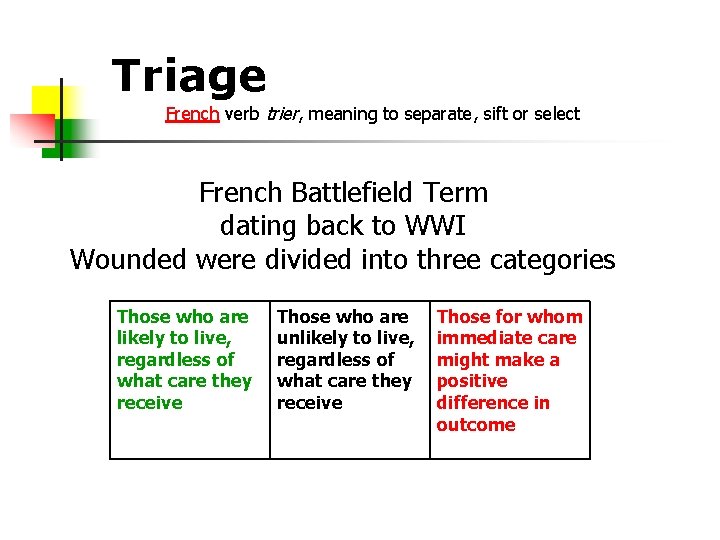
Triage French verb trier, meaning to separate, sift or select French Battlefield Term dating back to WWI Wounded were divided into three categories Those who are likely to live, regardless of what care they receive Those who are unlikely to live, regardless of what care they receive Those for whom immediate care might make a positive difference in outcome
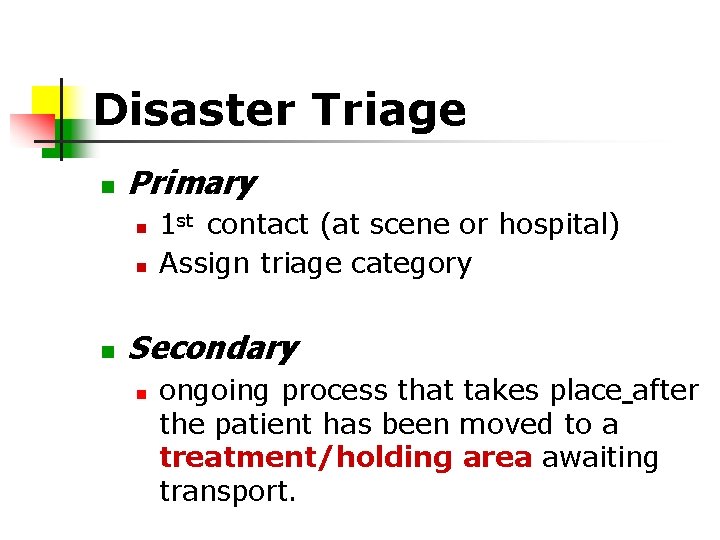
Disaster Triage Primary 1 st contact (at scene or hospital) Assign triage category Secondary ongoing process that takes place after the patient has been moved to a treatment/holding area awaiting transport.
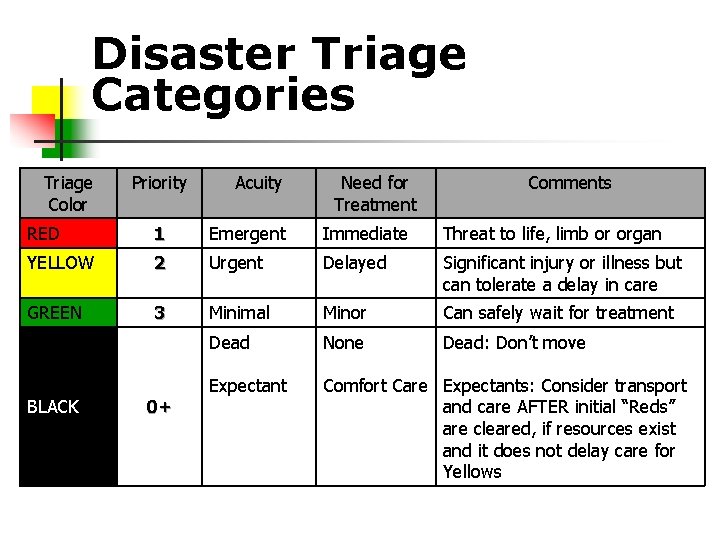
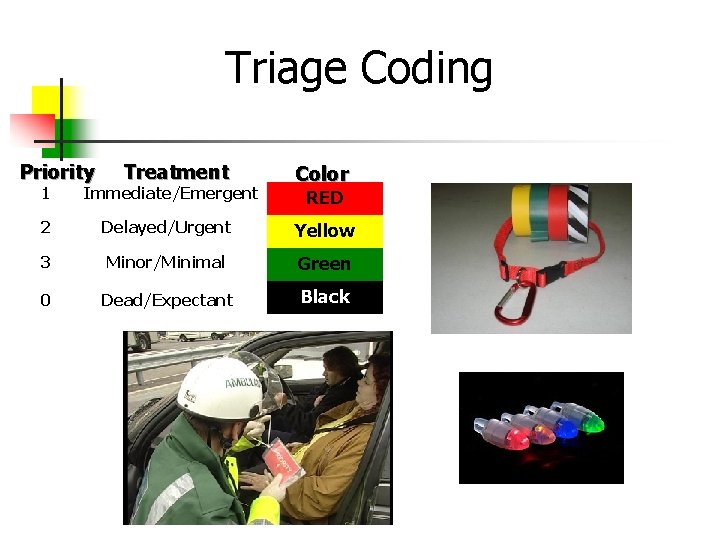
Disaster Triage Categories Triage Color Priority Acuity Need for Treatment Comments RED 1 Emergent Immediate Threat to life, limb or organ YELLOW 2 Urgent Delayed Significant injury or illness but can tolerate a delay in care GREEN 3 Minimal Minor Can safely wait for treatment Dead None Dead: Don’t move Expectant Comfort Care Expectants: Consider transport and care AFTER initial “Reds” are cleared, if resources exist and it does not delay care for Yellows BLACK 0+
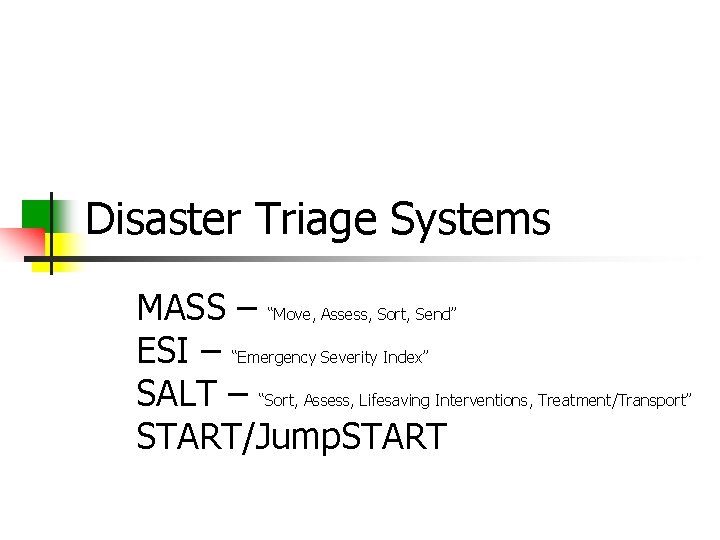
Disaster Triage Systems MASS – “Move, Assess, Sort, Send” ESI – “Emergency Severity Index” SALT – “Sort, Assess, Lifesaving Interventions, Treatment/Transport” START/Jump. START
Disaster Triage Systems MASS ESI SALT START/Jump. START “Simple Triage and Rapid Treatment/Transport”
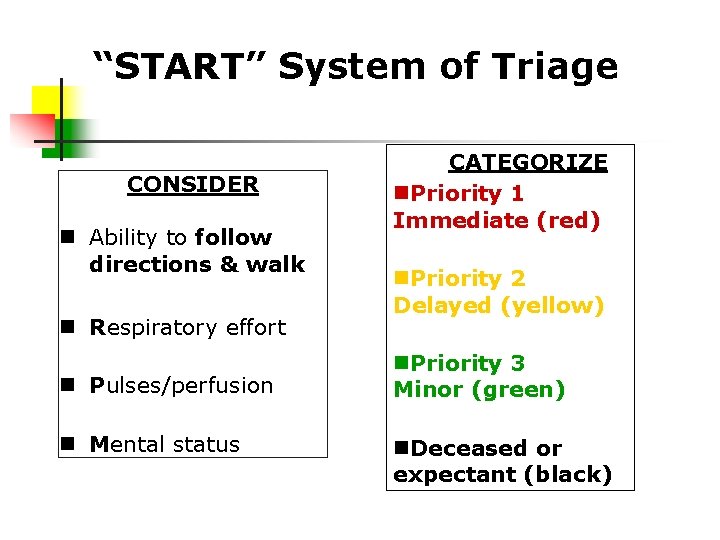
“START” System of Triage CONSIDER Ability to follow directions & walk Respiratory effort Pulses/perfusion Mental status CATEGORIZE Priority 1 Immediate (red) Priority 2 Delayed (yellow) Priority 3 Minor (green) Deceased or expectant (black)
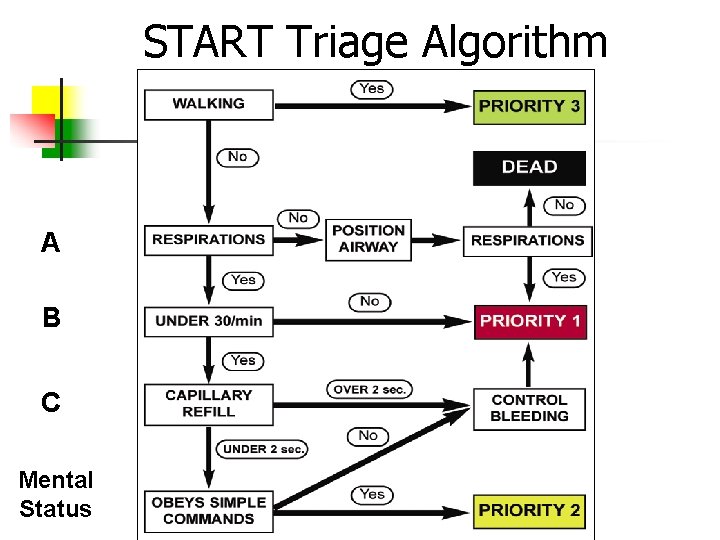
START Triage Algorithm A B C Mental Status
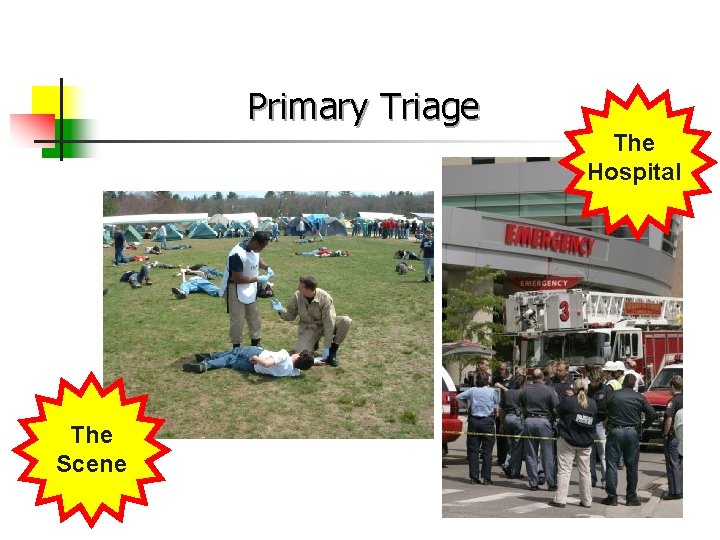
Primary Triage The Hospital The Scene
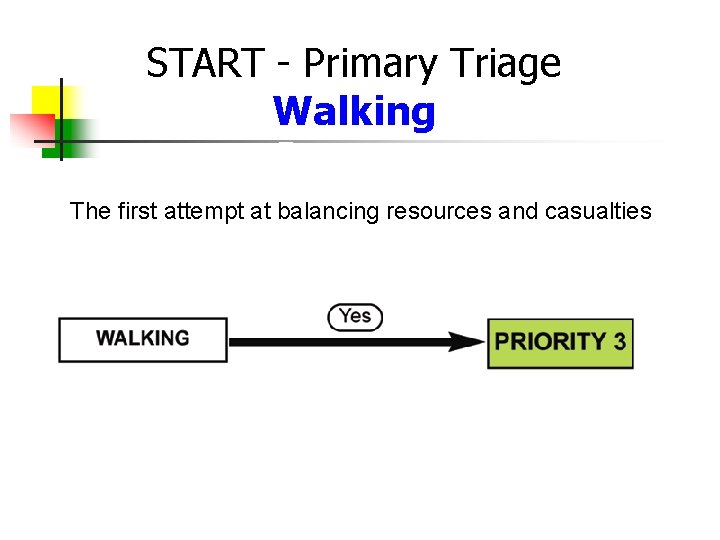
START - Primary Triage Walking The first attempt at balancing resources and casualties
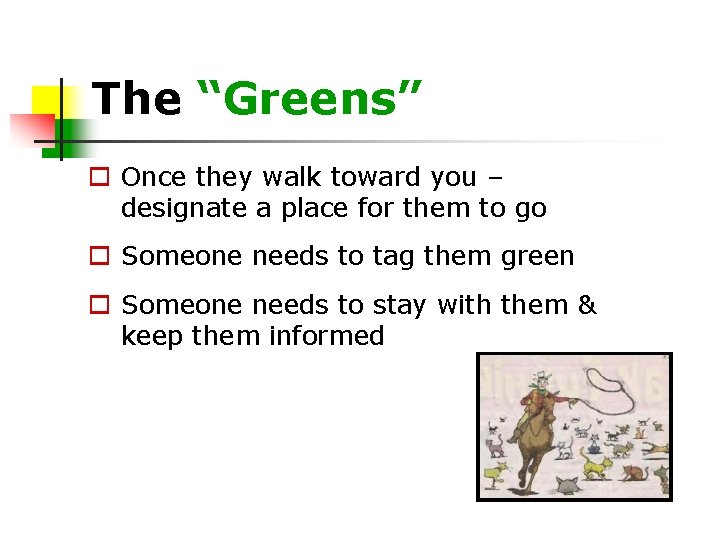
The “Greens” Once they walk toward you – designate a place for them to go Someone needs to tag them green Someone needs to stay with them & keep them informed
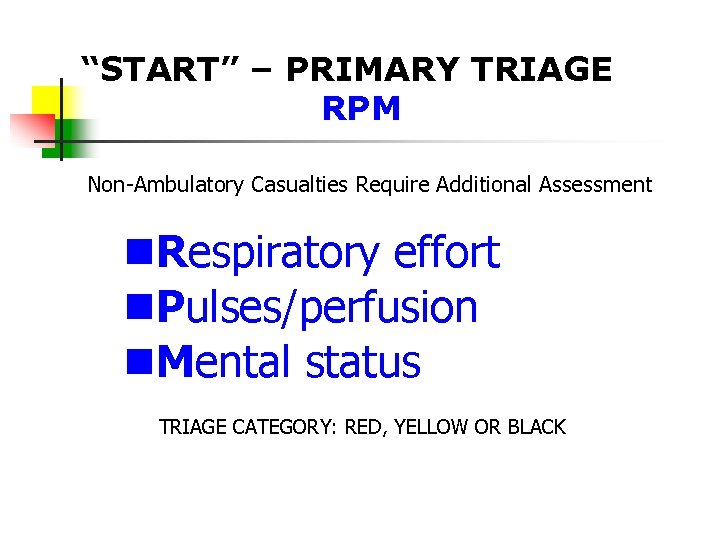
“START” – PRIMARY TRIAGE RPM Non-Ambulatory Casualties Require Additional Assessment Respiratory effort Pulses/perfusion Mental status TRIAGE CATEGORY: RED, YELLOW OR BLACK
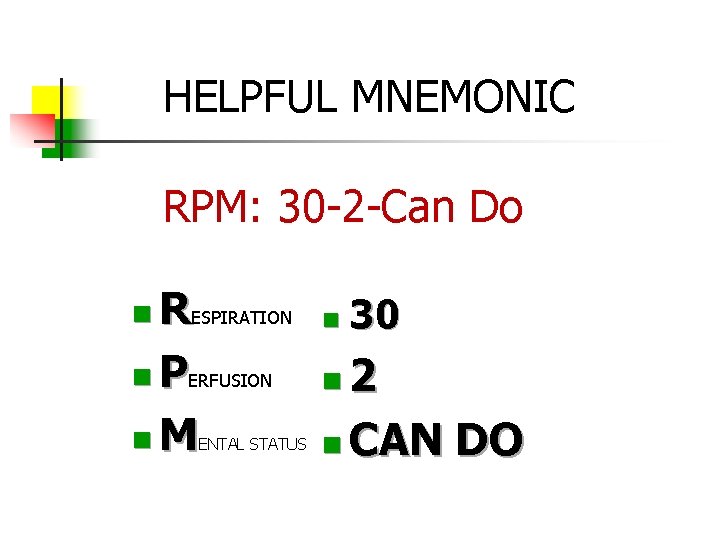
HELPFUL MNEMONIC RPM: 30 -2 -Can Do RESPIRATION PERFUSION M ENTAL STATUS 30 2 CAN DO
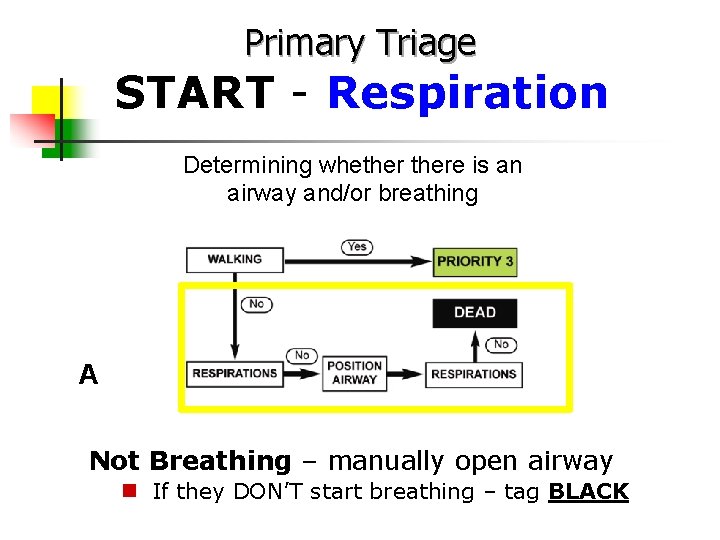
Primary Triage START - Respiration Determining whethere is an airway and/or breathing A Not Breathing – manually open airway If they DON’T start breathing – tag BLACK
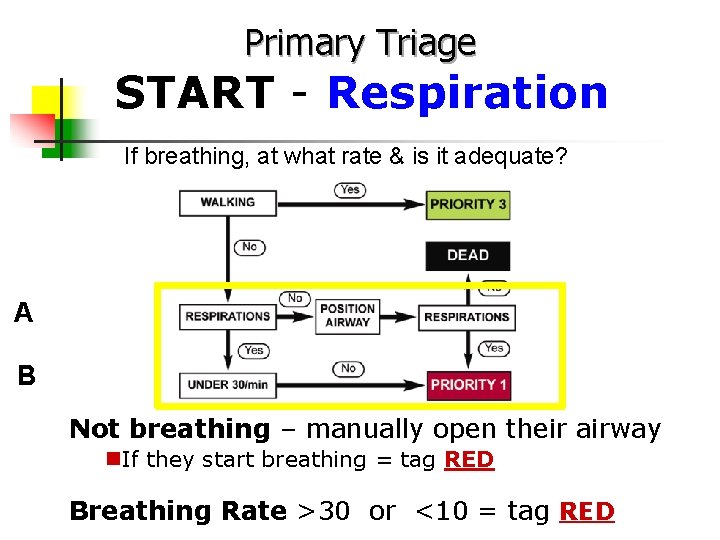
Primary Triage START - Respiration If breathing, at what rate & is it adequate? A B Not breathing – manually open their airway If they start breathing = tag RED Breathing Rate >30 or <10 = tag RED
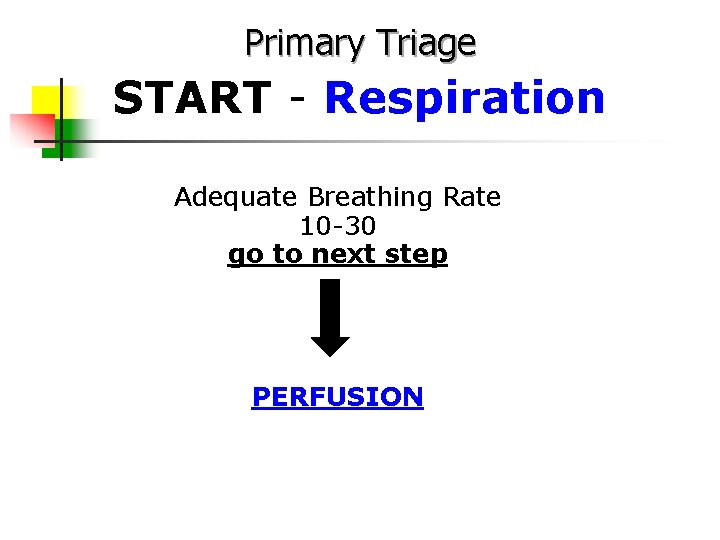
Primary Triage START - Respiration Adequate Breathing Rate 10 -30 go to next step PERFUSION
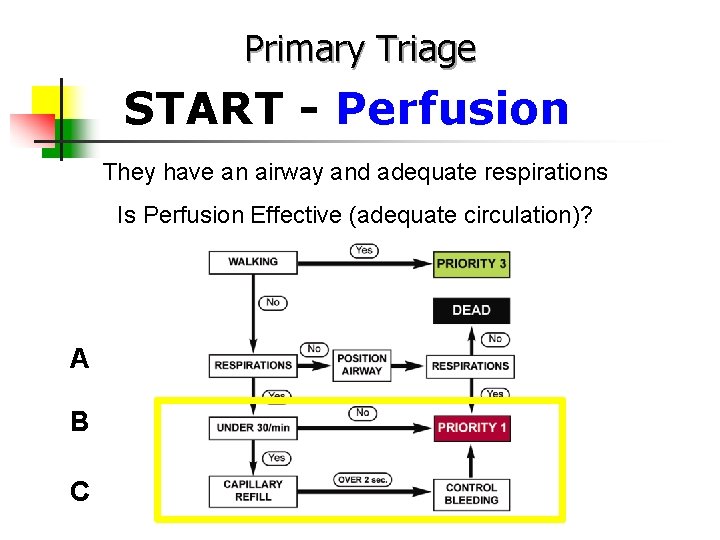
Primary Triage START - Perfusion They have an airway and adequate respirations Is Perfusion Effective (adequate circulation)? A B C
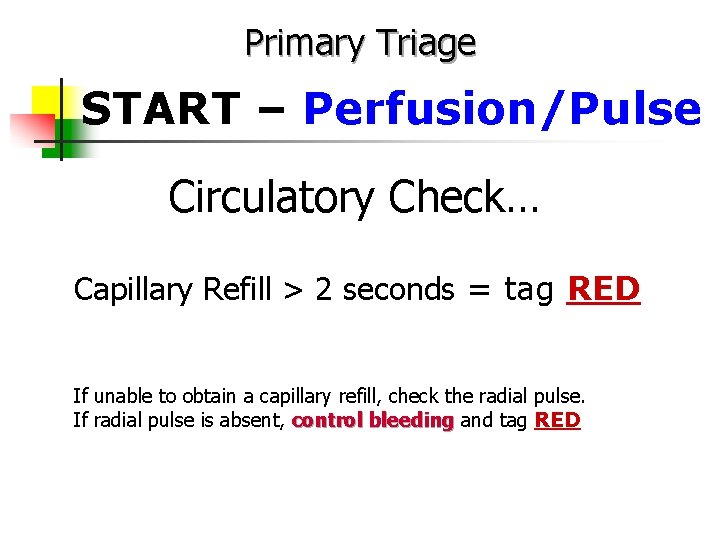
Primary Triage START – Perfusion/Pulse Circulatory Check… Capillary Refill > 2 seconds = tag RED If unable to obtain a capillary refill, check the radial pulse. If radial pulse is absent, control bleeding and tag RED
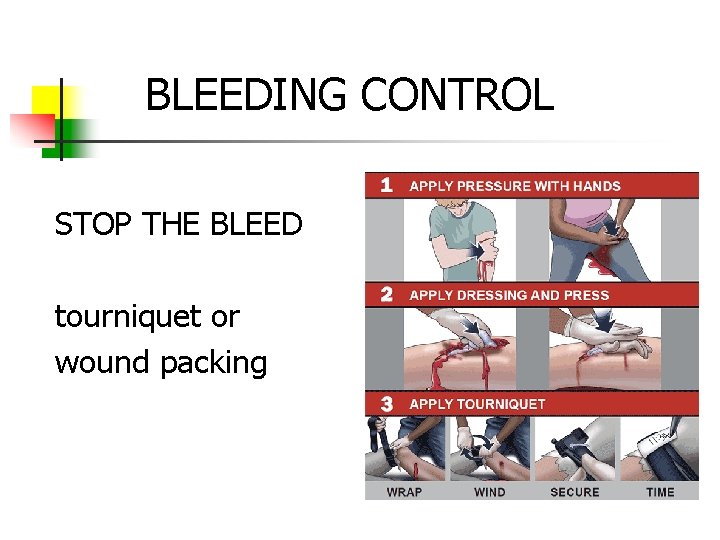
BLEEDING CONTROL STOP THE BLEED tourniquet or wound packing
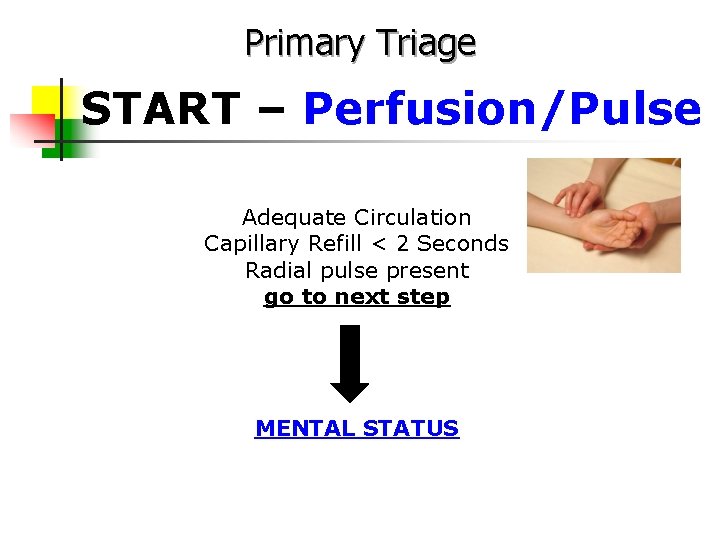
Primary Triage START – Perfusion/Pulse Adequate Circulation Capillary Refill < 2 Seconds Radial pulse present go to next step MENTAL STATUS
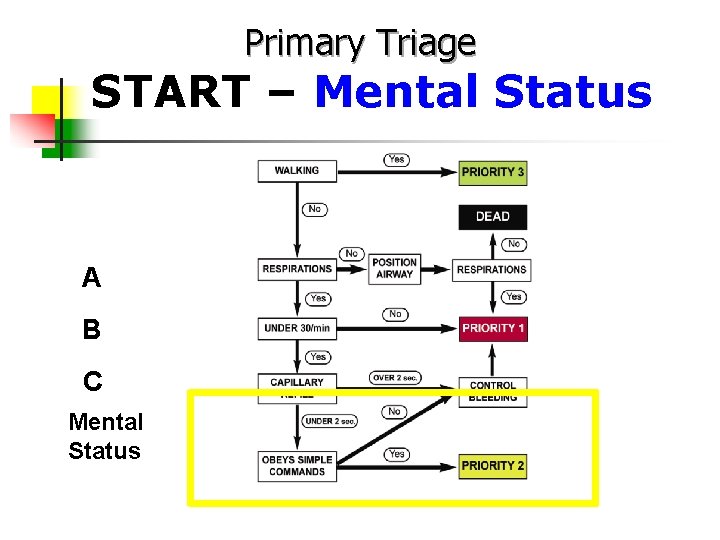
Primary Triage START – Mental Status A B C Mental Status
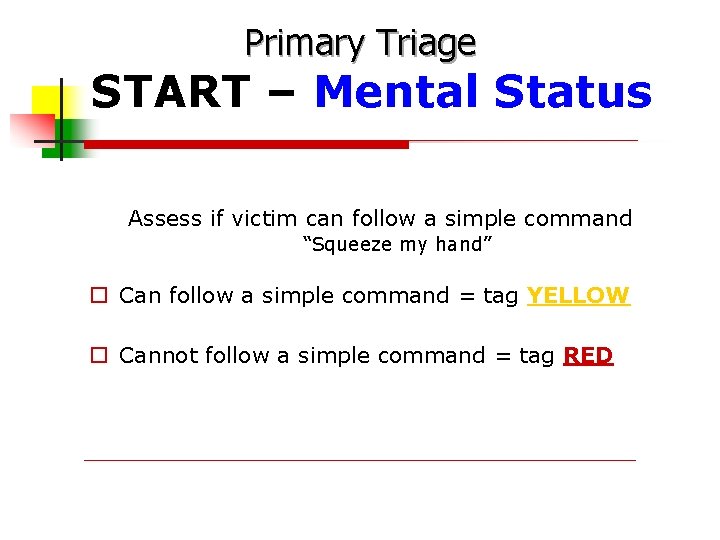
Primary Triage START – Mental Status Assess if victim can follow a simple command “Squeeze my hand” Can follow a simple command = tag YELLOW Cannot follow a simple command = tag RED
START TRIAGE REVIEW OF PRIORITIES
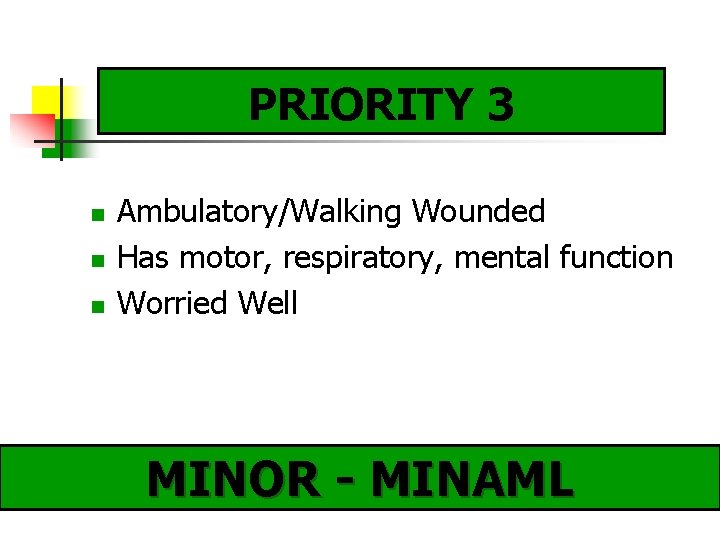
PRIORITY 3 Ambulatory/Walking Wounded Has motor, respiratory, mental function Worried Well MINOR - MINAML
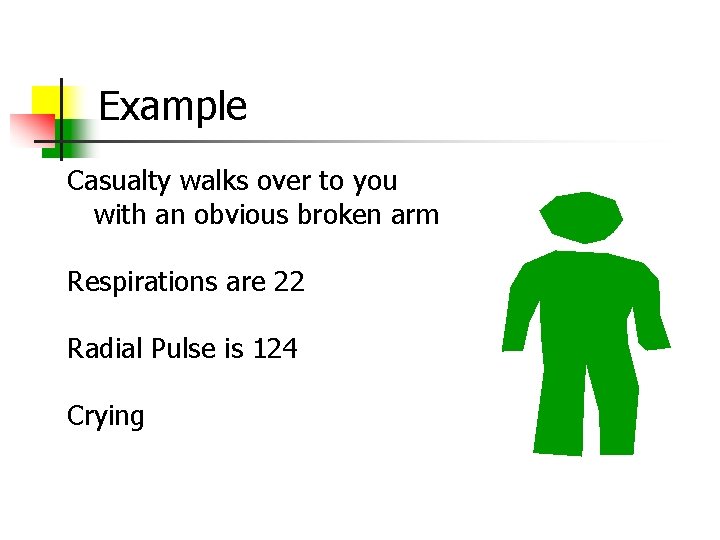
Example Casualty walks over to you with an obvious broken arm Respirations are 22 Radial Pulse is 124 Crying
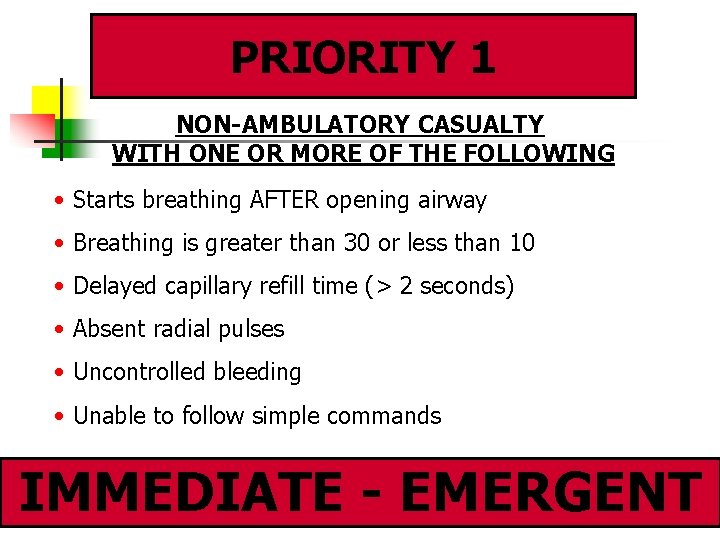
PRIORITY 1 NON-AMBULATORY CASUALTY WITH ONE OR MORE OF THE FOLLOWING • Starts breathing AFTER opening airway • Breathing is greater than 30 or less than 10 • Delayed capillary refill time (> 2 seconds) • Absent radial pulses • Uncontrolled bleeding • Unable to follow simple commands IMMEDIATE - EMERGENT
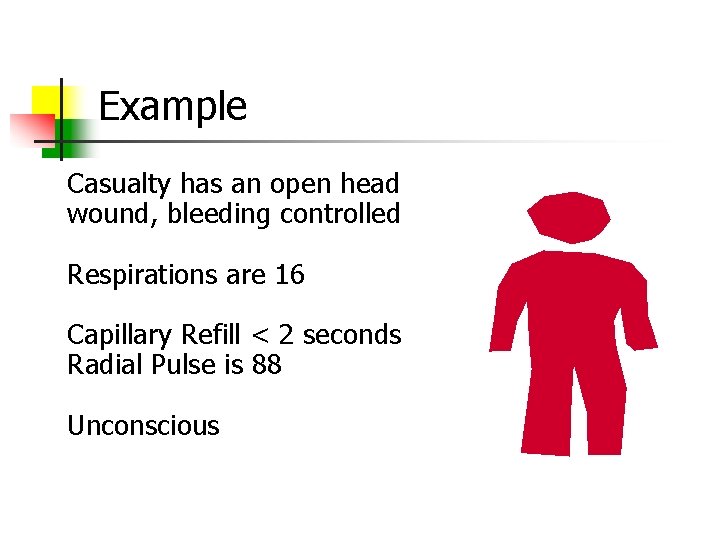
Example Casualty has an open head wound, bleeding controlled Respirations are 16 Capillary Refill < 2 seconds Radial Pulse is 88 Unconscious
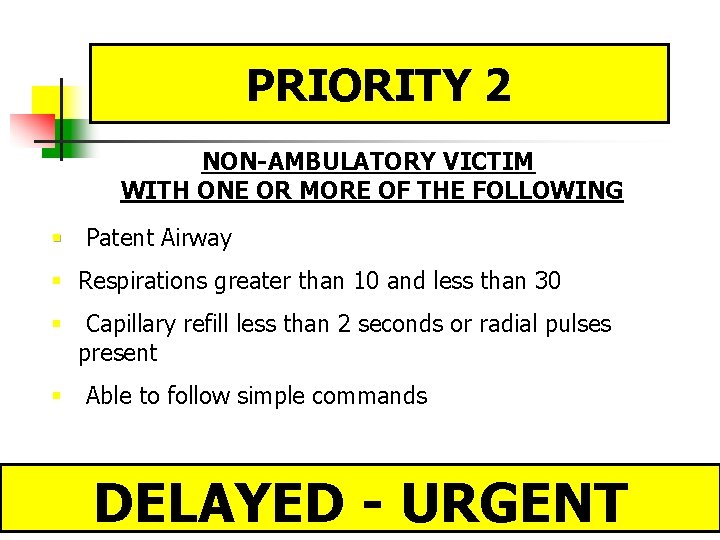
PRIORITY 2 NON-AMBULATORY VICTIM WITH ONE OR MORE OF THE FOLLOWING § Patent Airway § Respirations greater than 10 and less than 30 § Capillary refill less than 2 seconds or radial pulses present § Able to follow simple commands DELAYED - URGENT
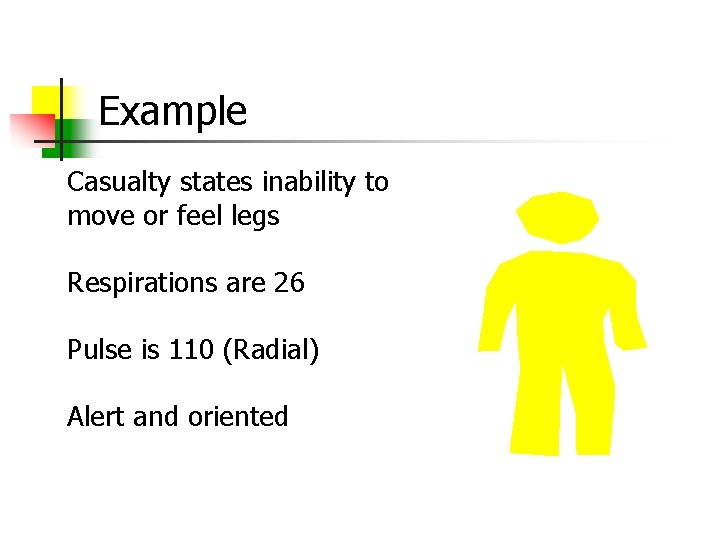
Example Casualty states inability to move or feel legs Respirations are 26 Pulse is 110 (Radial) Alert and oriented
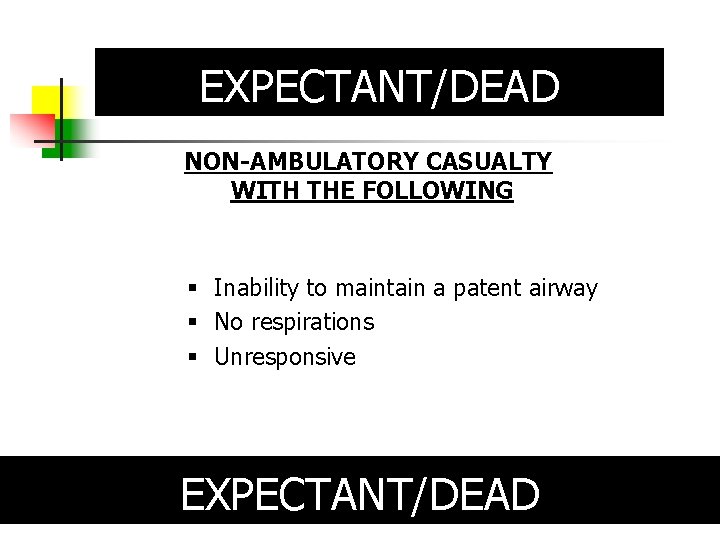
EXPECTANT/DEAD NON-AMBULATORY CASUALTY WITH THE FOLLOWING § Inability to maintain a patent airway § No respirations § Unresponsive EXPECTANT/DEAD
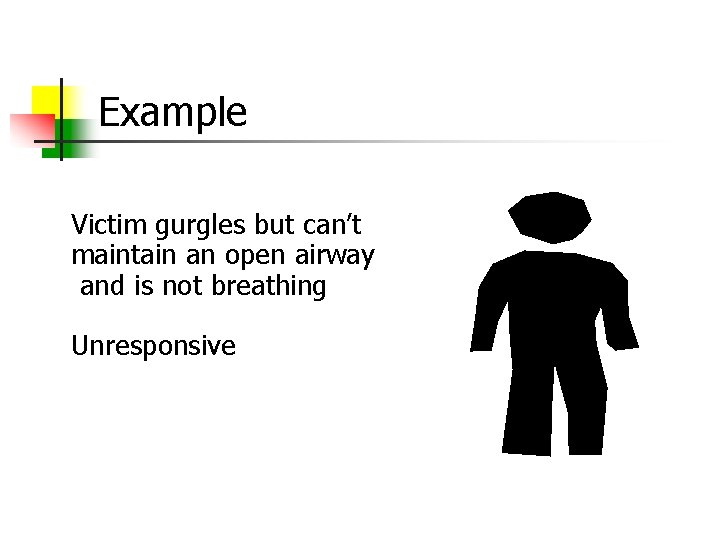
Example Victim gurgles but can’t maintain an open airway and is not breathing Unresponsive
Triage Coding Priority Treatment Color 1 Immediate/Emergent 2 Delayed/Urgent Yellow 3 Minor/Minimal Green 0 Dead/Expectant Black RED
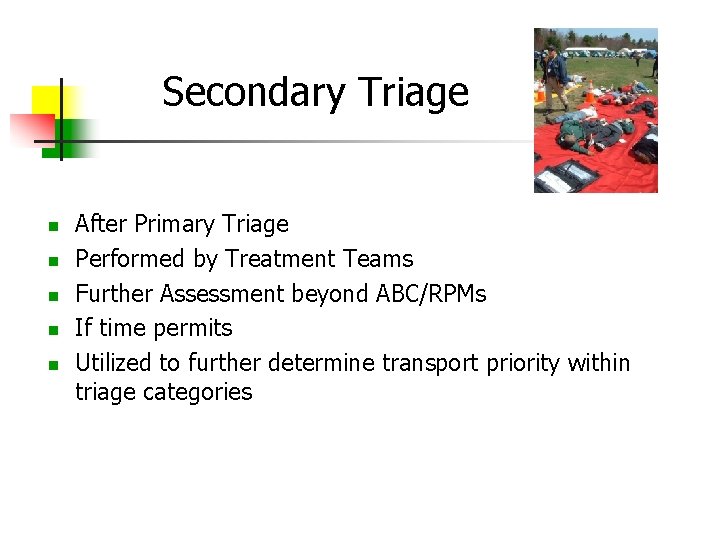
Secondary Triage After Primary Triage Performed by Treatment Teams Further Assessment beyond ABC/RPMs If time permits Utilized to further determine transport priority within triage categories
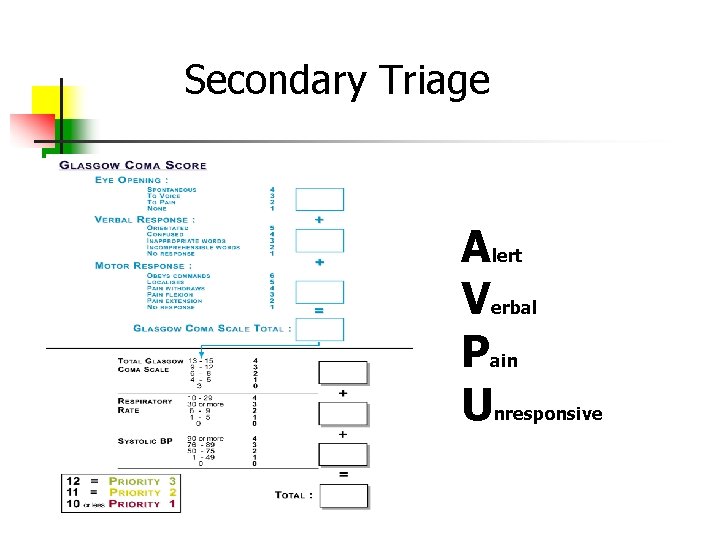
Secondary Triage Alert Verbal Pain Unresponsive
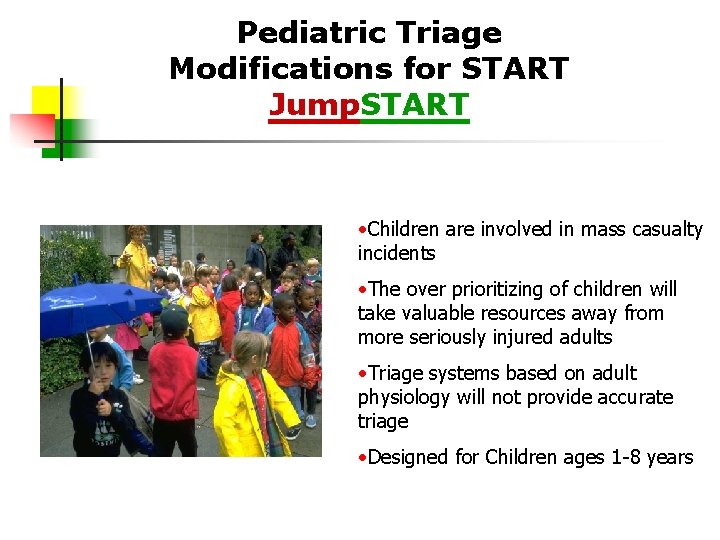
Pediatric Triage Modifications for START Jump. START • Children are involved in mass casualty incidents • The over prioritizing of children will take valuable resources away from more seriously injured adults • Triage systems based on adult physiology will not provide accurate triage • Designed for Children ages 1 -8 years
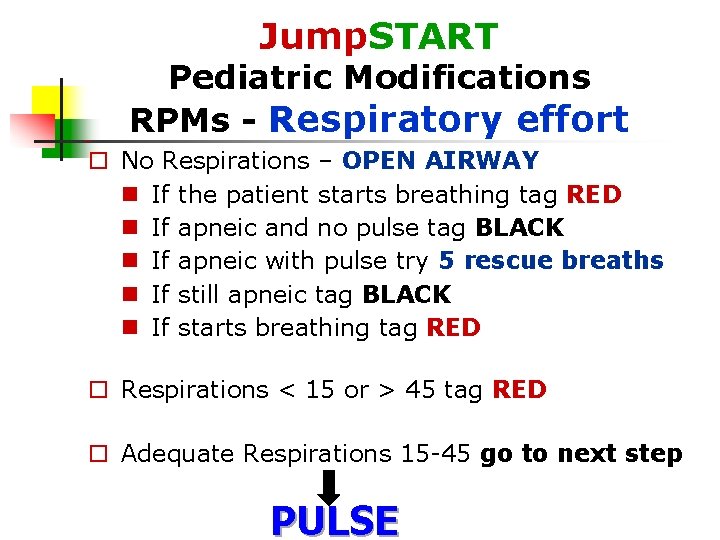
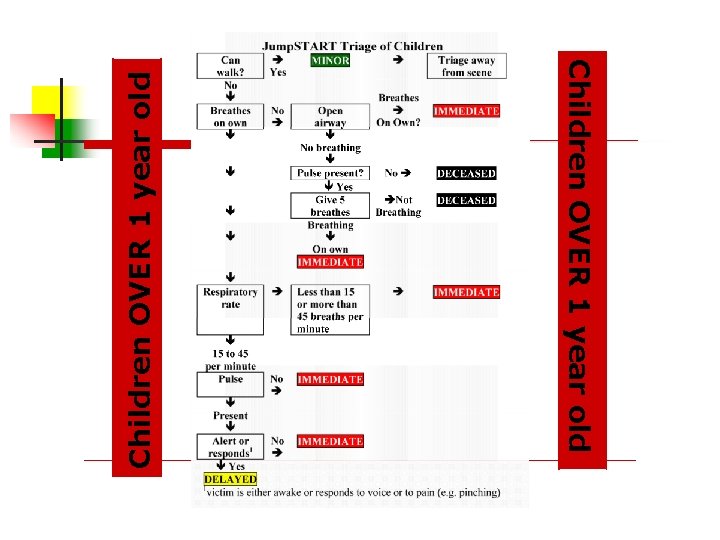
Jump. START Pediatric Modifications RPMs - Respiratory effort No Respirations – OPEN AIRWAY If the patient starts breathing tag RED If apneic and no pulse tag BLACK If apneic with pulse try 5 rescue breaths If still apneic tag BLACK If starts breathing tag RED Respirations < 15 or > 45 tag RED Adequate Respirations 15 -45 go to next step PULSE
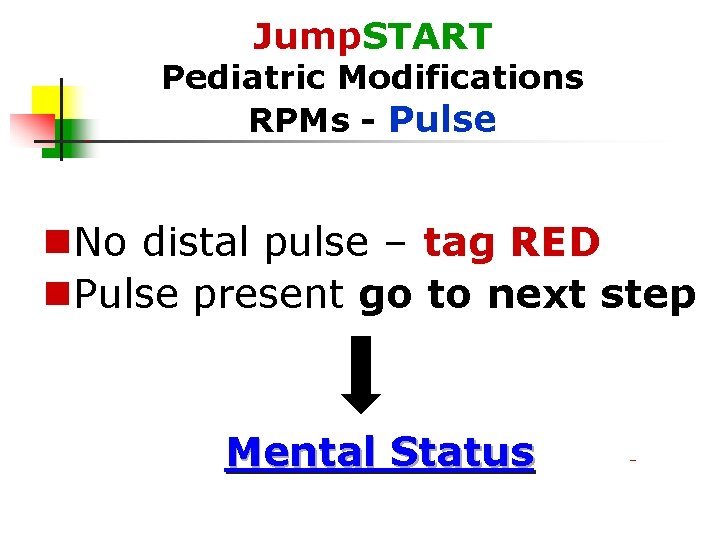
Jump. START Pediatric Modifications RPMs - Pulse No distal pulse – tag RED Pulse present go to next step Mental Status
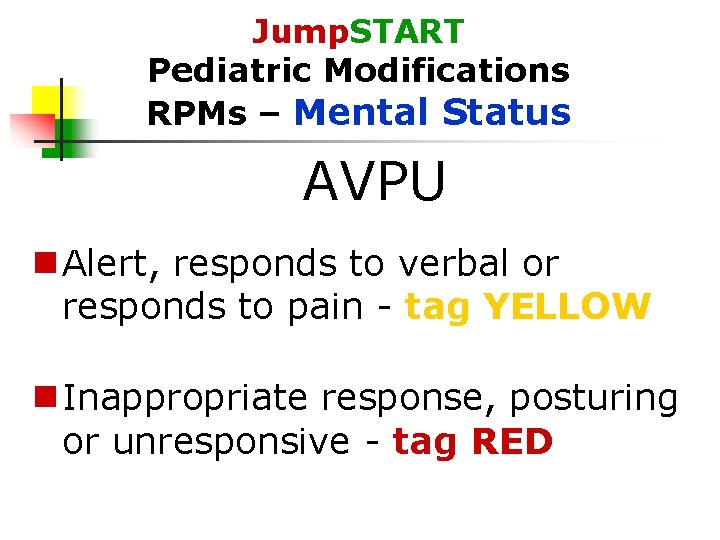
Jump. START Pediatric Modifications RPMs – Mental Status AVPU Alert, responds to verbal or responds to pain - tag YELLOW Inappropriate response, posturing or unresponsive - tag RED
Children OVER 1 year old
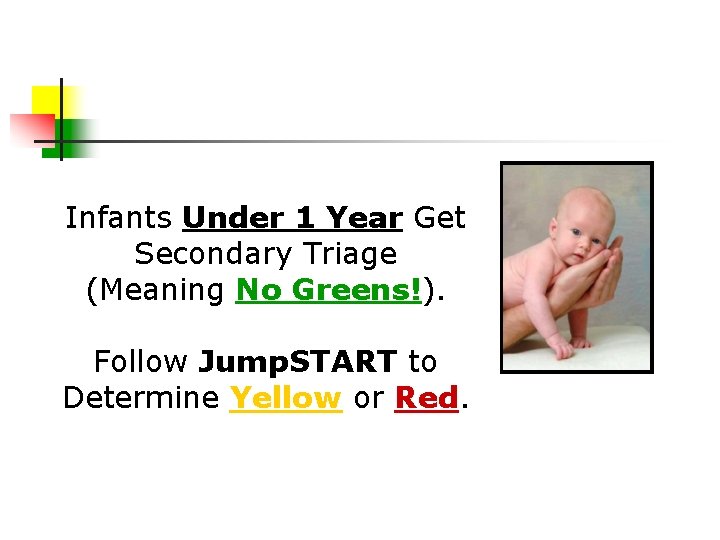
Infants Under 1 Year Get Secondary Triage (Meaning No Greens!). Follow Jump. START to Determine Yellow or Red.
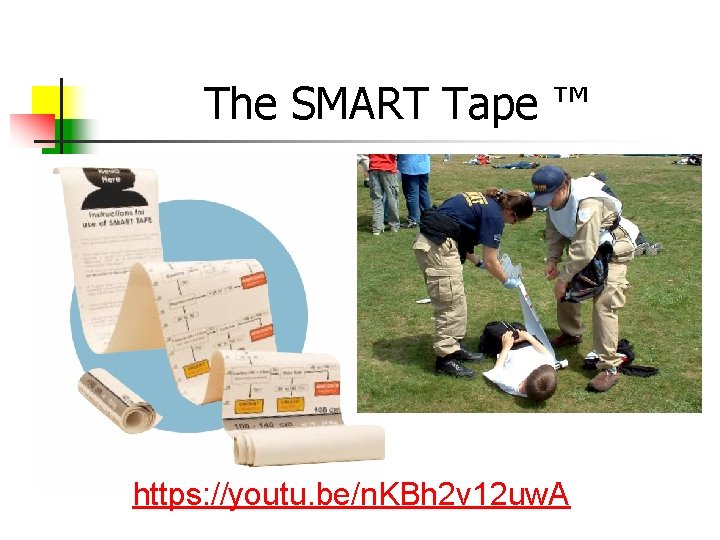
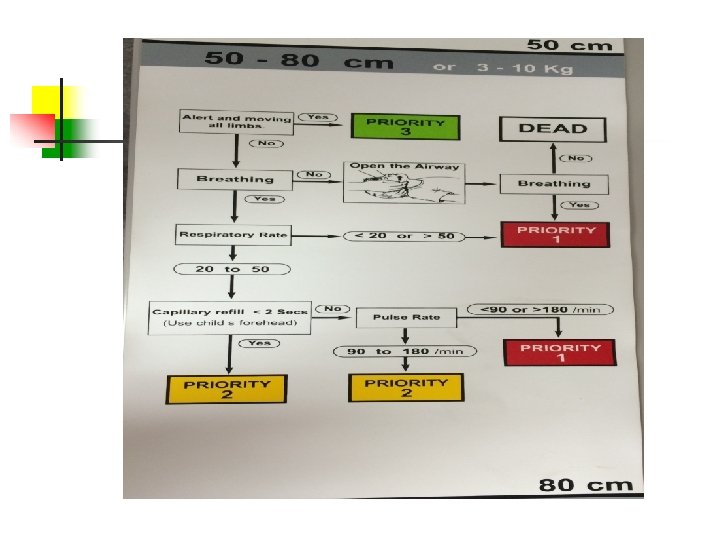
The SMART Tape ™ https: //youtu. be/n. KBh 2 v 12 uw. A
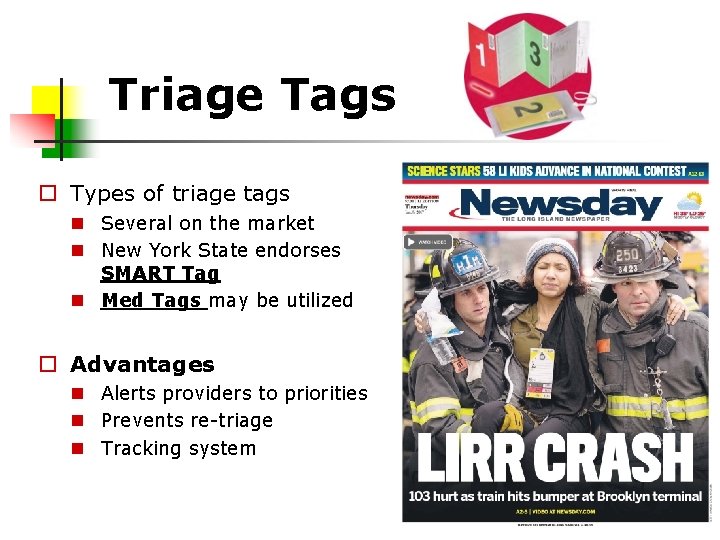
Triage Tags Types of triage tags Several on the market New York State endorses SMART Tag Med Tags may be utilized Advantages Alerts providers to priorities Prevents re-triage Tracking system
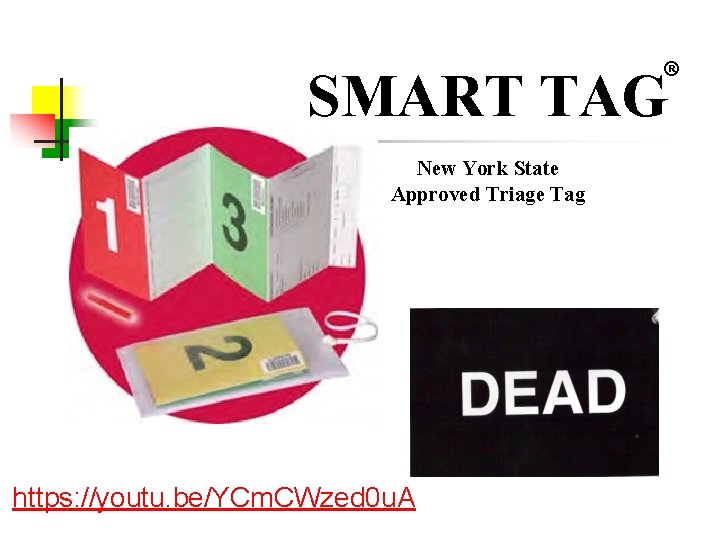
® SMART TAG New York State Approved Triage Tag https: //youtu. be/YCm. CWzed 0 u. A
SMART TRIAGE TAG • Innovative folded design allows for simple re-triaging • Highly visible, with Priority 1 lightstick • Highly durable, waterproof and tear resistant material • Space for structured recording of interventions (time allowing) • Unique barcode for integration with tracking software
It’s a RED that is VERY Critical
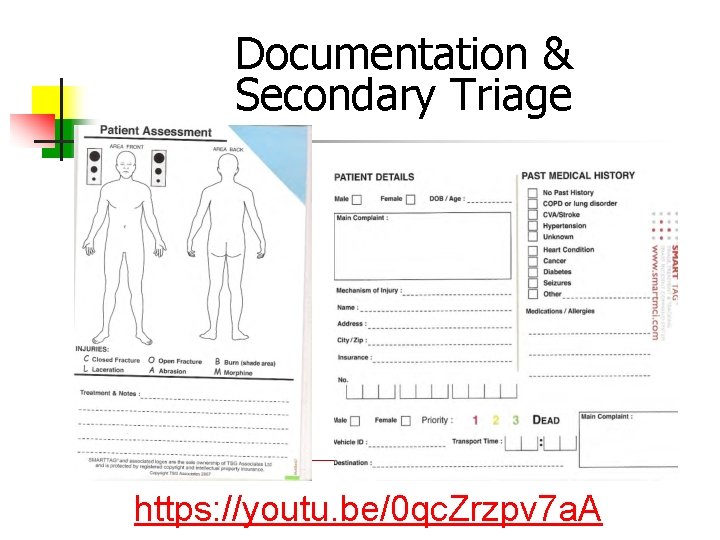
Documentation & Secondary Triage https: //youtu. be/0 qc. Zrzpv 7 a. A
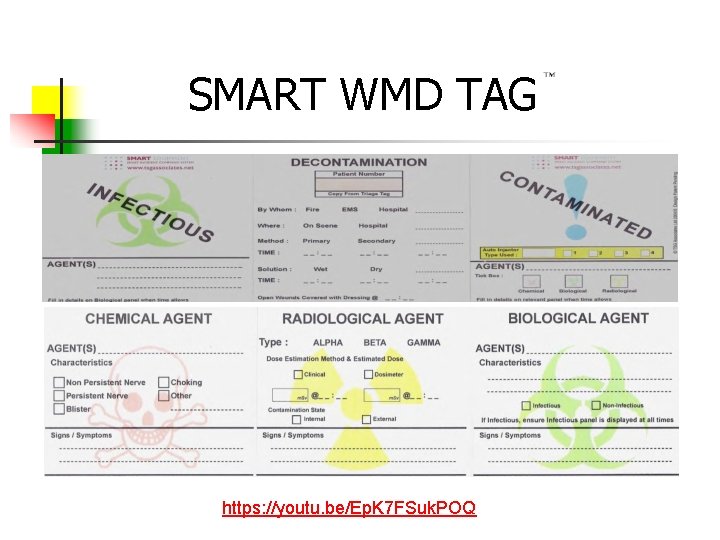
SMART WMD TAG https: //youtu. be/Ep. K 7 FSuk. POQ
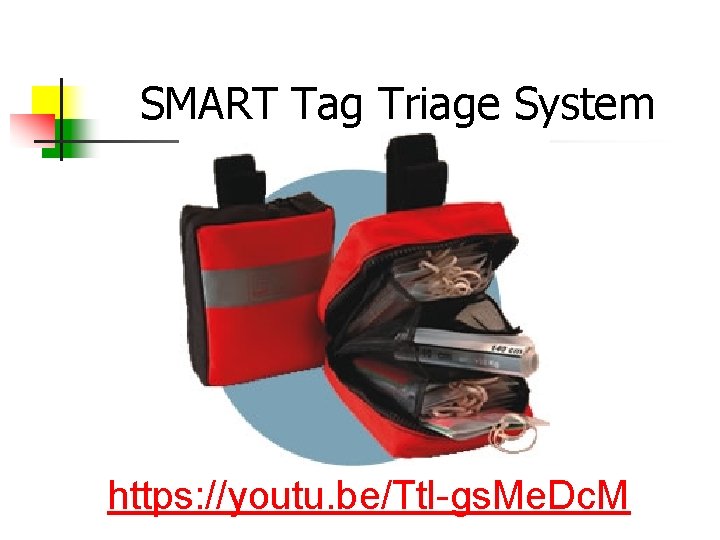
SMART Tag Triage System https: //youtu. be/Ttl-gs. Me. Dc. M
SMART Triage Pack Contents Dynamic Tags (20) Dead Tags (10) Pencils Cylume Sticks Casualty Count Card/Protocol SMART Pediatric Tape
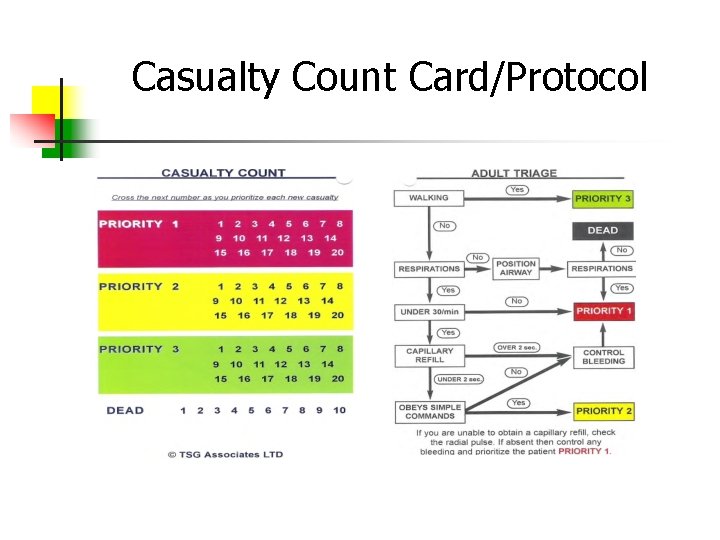
Casualty Count Card/Protocol
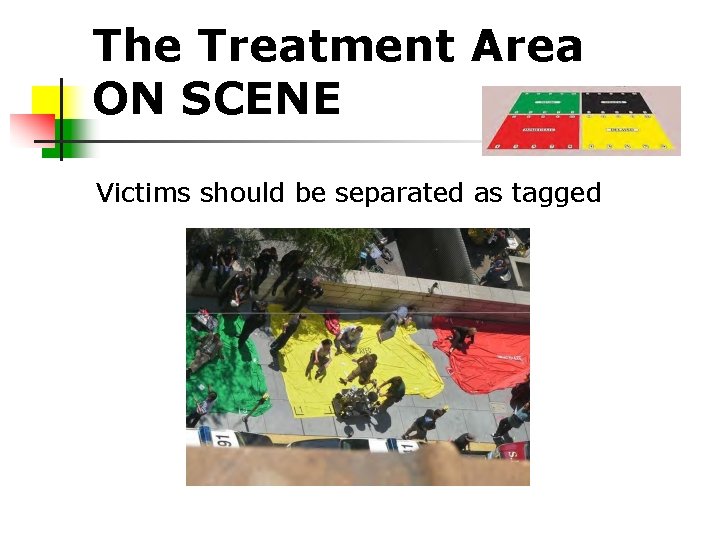
The Treatment Area ON SCENE Victims should be separated as tagged
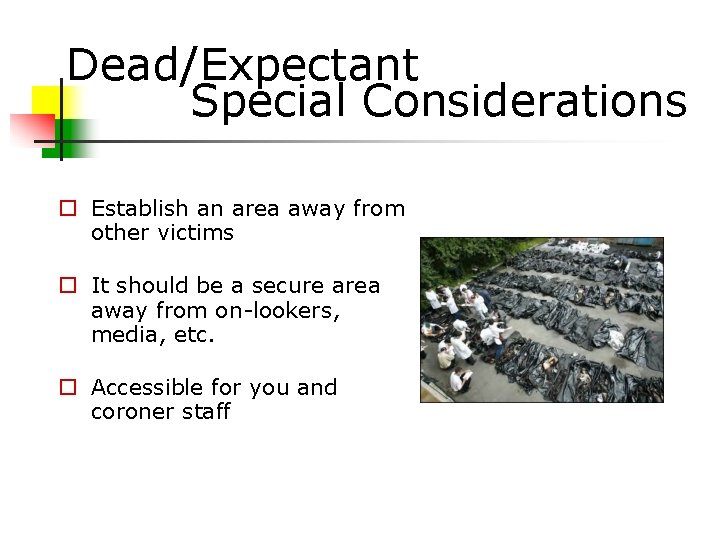
Dead/Expectant Special Considerations Establish an area away from other victims It should be a secure area away from on-lookers, media, etc. Accessible for you and coroner staff
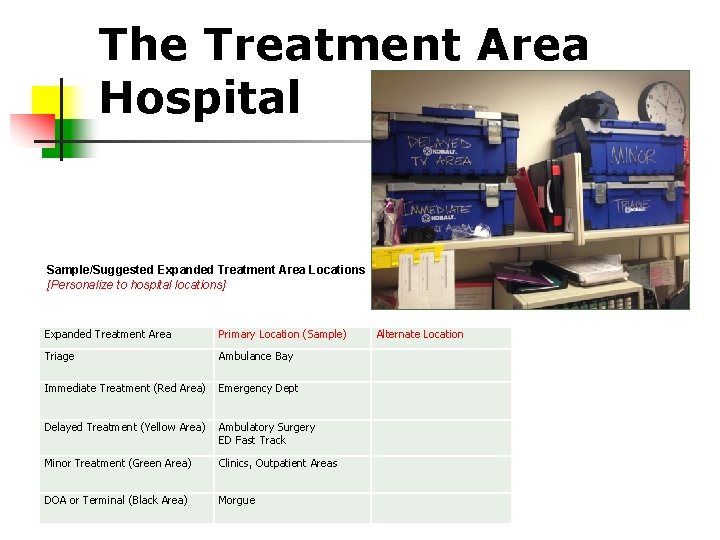
The Treatment Area Hospital Sample/Suggested Expanded Treatment Area Locations [Personalize to hospital locations] Expanded Treatment Area Primary Location (Sample) Alternate Location Triage Ambulance Bay Immediate Treatment (Red Area) Emergency Dept Delayed Treatment (Yellow Area) Ambulatory Surgery ED Fast Track Minor Treatment (Green Area) Clinics, Outpatient Areas DOA or Terminal (Black Area) Morgue
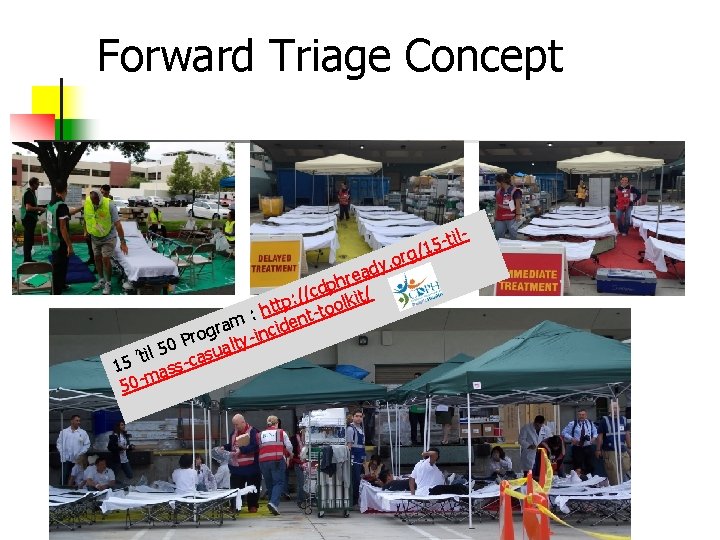
Forward Triage Concept . o ady e r dph it/ c / / tp: toolk t h m : cidenta r rog lty-in P l 50 casua i t ’ s 15 s a m 50 - til- 5 rg/1
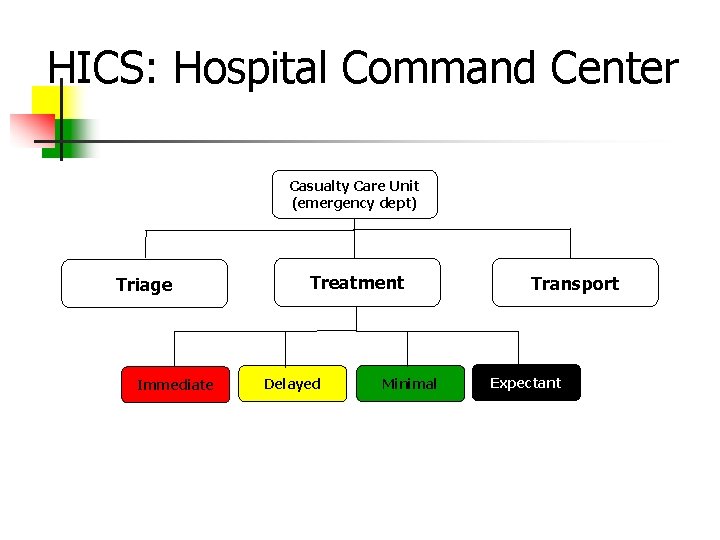
HICS: Hospital Command Center Casualty Care Unit (emergency dept) Triage Immediate Treatment Delayed Minimal Transport Expectant
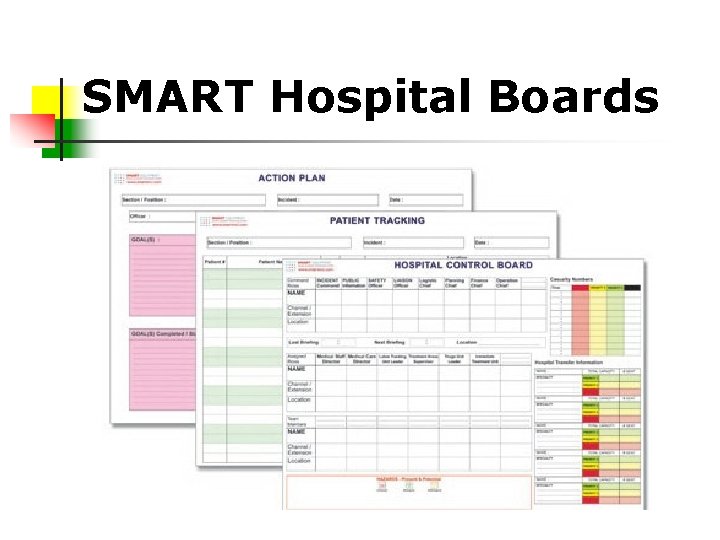
SMART Hospital Boards
START Triage Practical Application
Scenario An improvised explosive device is detonated at a large outdoor sporting event. At least 50 people are confirmed injured. EMS is on scene. Casualties begin to arrive to your hospital before EMS.
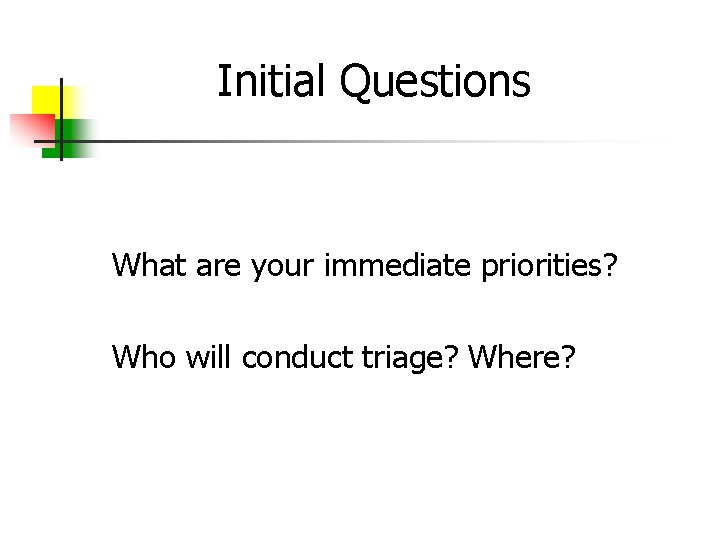
Initial Questions What are your immediate priorities? Who will conduct triage? Where?
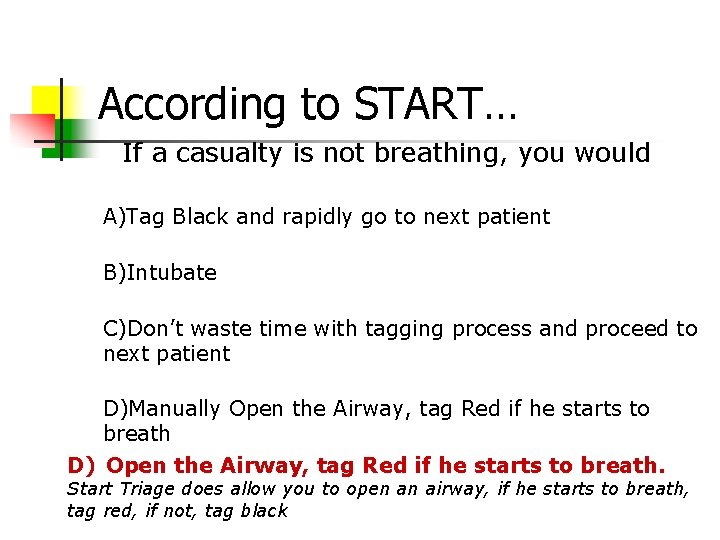
According to START… If a casualty is not breathing, you would A)Tag Black and rapidly go to next patient B)Intubate C)Don’t waste time with tagging process and proceed to next patient D)Manually Open the Airway, tag Red if he starts to breath D) Open the Airway, tag Red if he starts to breath. Start Triage does allow you to open an airway, if he starts to breath, tag red, if not, tag black
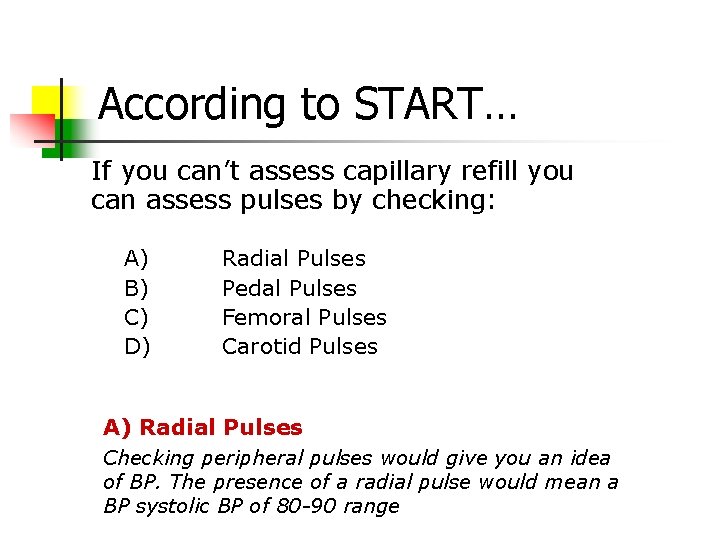
According to START… If you can’t assess capillary refill you can assess pulses by checking: A) B) C) D) Radial Pulses Pedal Pulses Femoral Pulses Carotid Pulses A) Radial Pulses Checking peripheral pulses would give you an idea of BP. The presence of a radial pulse would mean a BP systolic BP of 80 -90 range
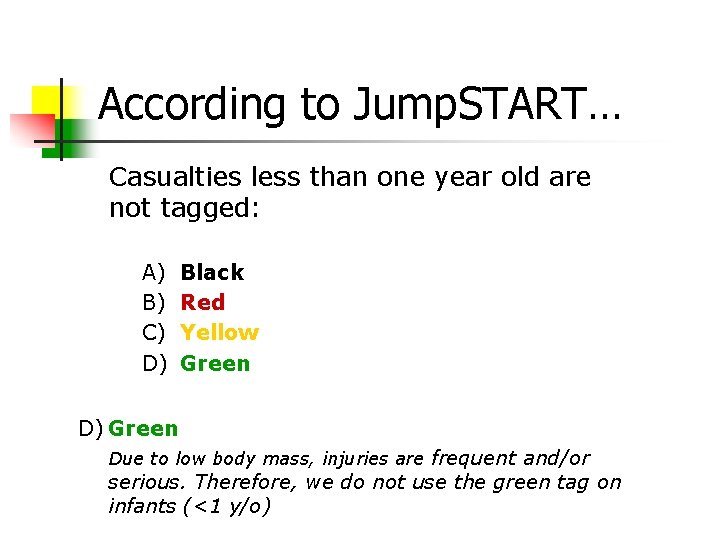
According to Jump. START… Casualties less than one year old are not tagged: A) B) C) D) Black Red Yellow Green D) Green Due to low body mass, injuries are frequent and/or serious. Therefore, we do not use the green tag on infants (<1 y/o)
LET’S TRIAGE Individual casualties will be shown on the screen (with signs/symptoms) 1. Follow START Triage methodology 2. Identify important info (not all signs/symptoms are pertinent) 3. Make initial triage decision(s)
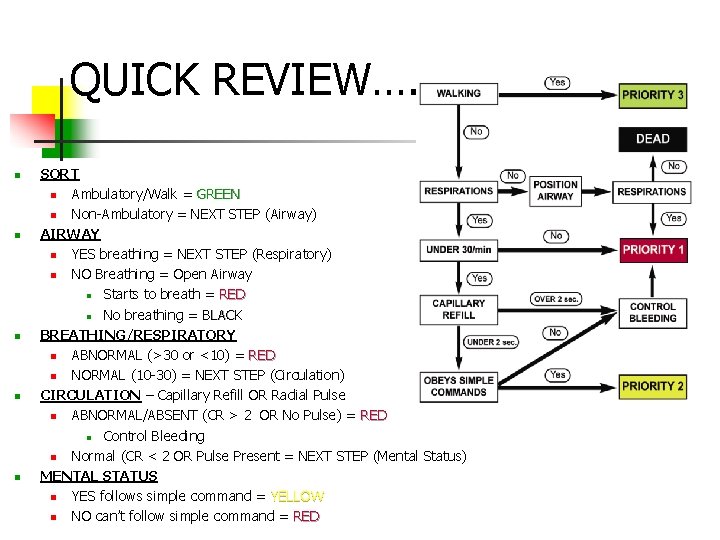
QUICK REVIEW…. SORT Ambulatory/Walk = GREEN Non-Ambulatory = NEXT STEP (Airway) AIRWAY YES breathing = NEXT STEP (Respiratory) NO Breathing = Open Airway Starts to breath = RED No breathing = BLACK BREATHING/RESPIRATORY ABNORMAL (>30 or <10) = RED NORMAL (10 -30) = NEXT STEP (Circulation) CIRCULATION – Capillary Refill OR Radial Pulse ABNORMAL/ABSENT (CR > 2 OR No Pulse) = RED Control Bleeding Normal (CR < 2 OR Pulse Present = NEXT STEP (Mental Status) MENTAL STATUS YES follows simple command = YELLOW NO can’t follow simple command = RED
Casualty #1 Abd. Tenderness and superficial penetrating foreign body Ambulating A & O x 3 RR 24 Strong radial pulse
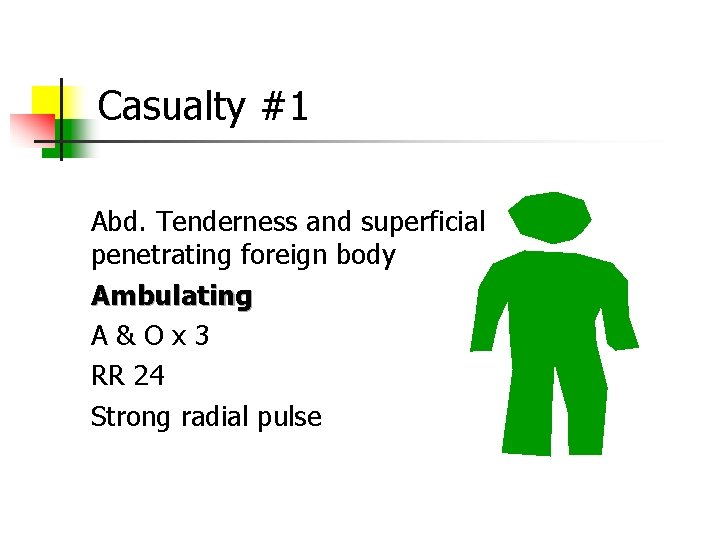
Casualty #1 Abd. Tenderness and superficial penetrating foreign body Ambulating A & O x 3 RR 24 Strong radial pulse
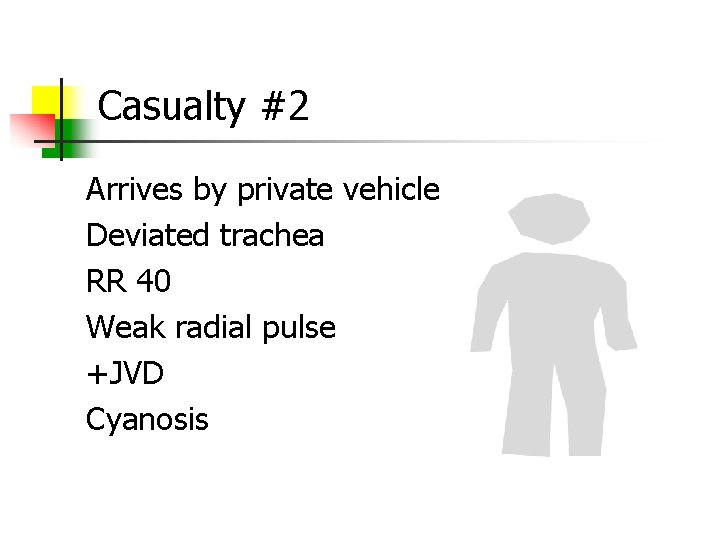
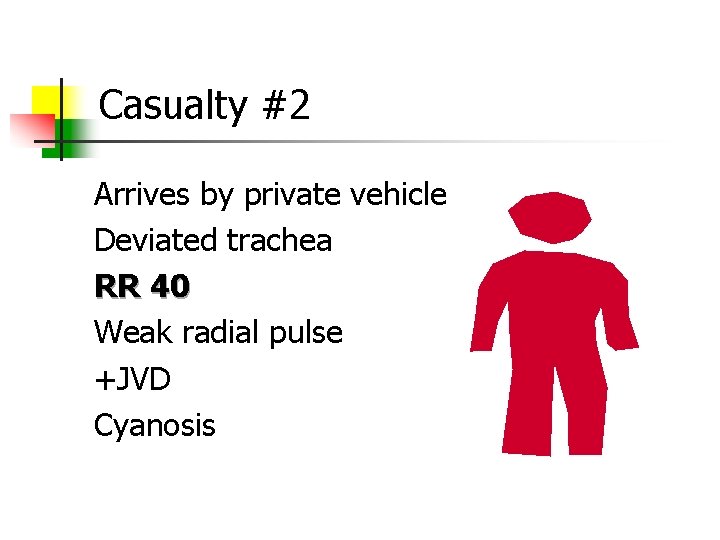
Casualty #2 Arrives by private vehicle Deviated trachea RR 40 Weak radial pulse +JVD Cyanosis
Casualty #2 Arrives by private vehicle Deviated trachea RR 40 Weak radial pulse +JVD Cyanosis
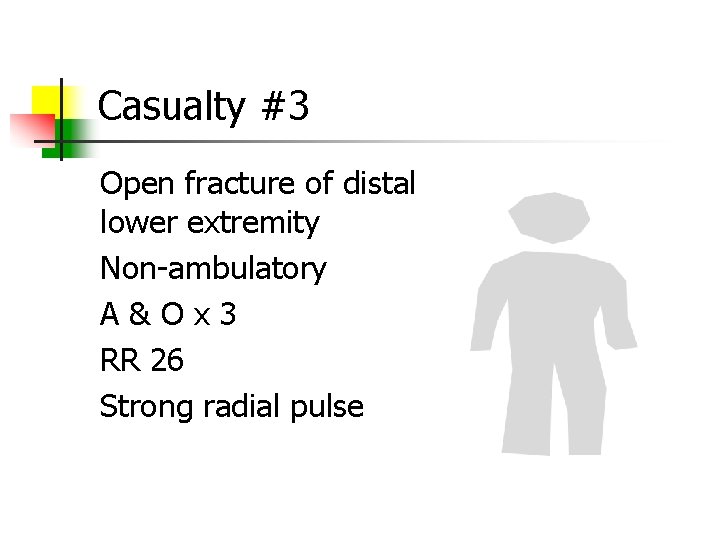
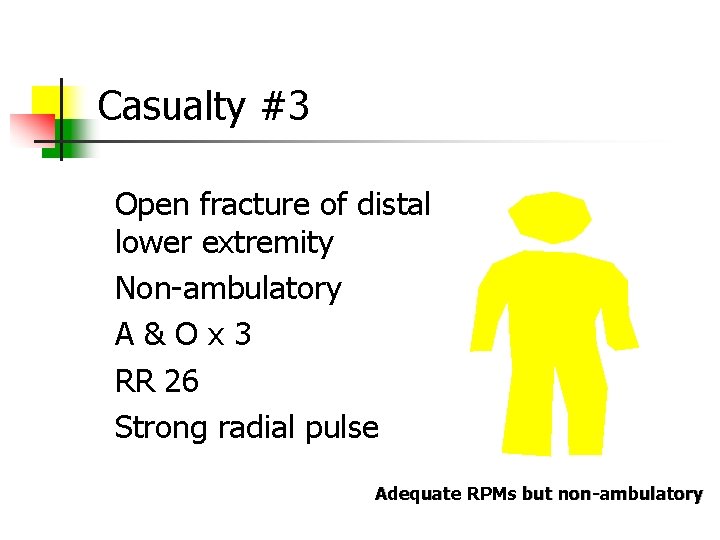
Casualty #3 Open fracture of distal lower extremity Non-ambulatory A & O x 3 RR 26 Strong radial pulse
Casualty #3 Open fracture of distal lower extremity Non-ambulatory A & O x 3 RR 26 Strong radial pulse Adequate RPMs but non-ambulatory
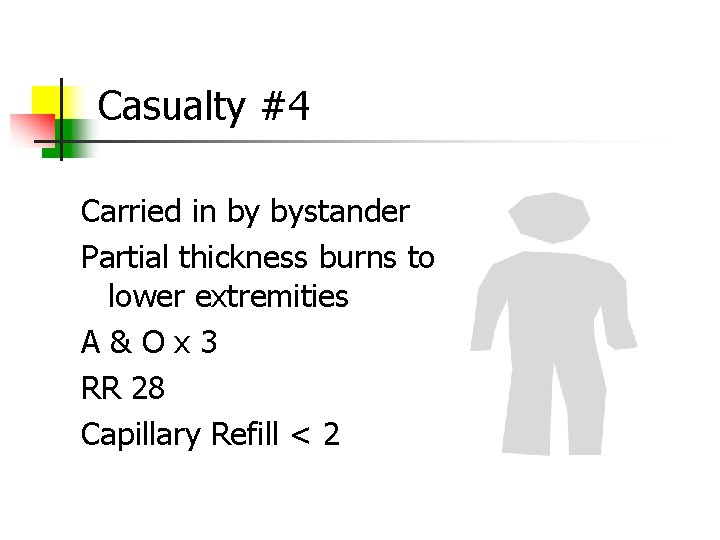
Casualty #4 Carried in by bystander Partial thickness burns to lower extremities A & O x 3 RR 28 Capillary Refill < 2
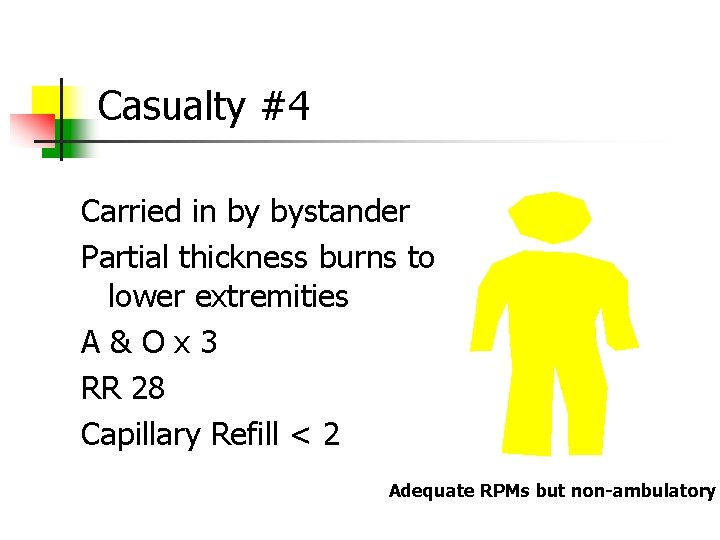
Casualty #4 Carried in by bystander Partial thickness burns to lower extremities A & O x 3 RR 28 Capillary Refill < 2 Adequate RPMs but non-ambulatory
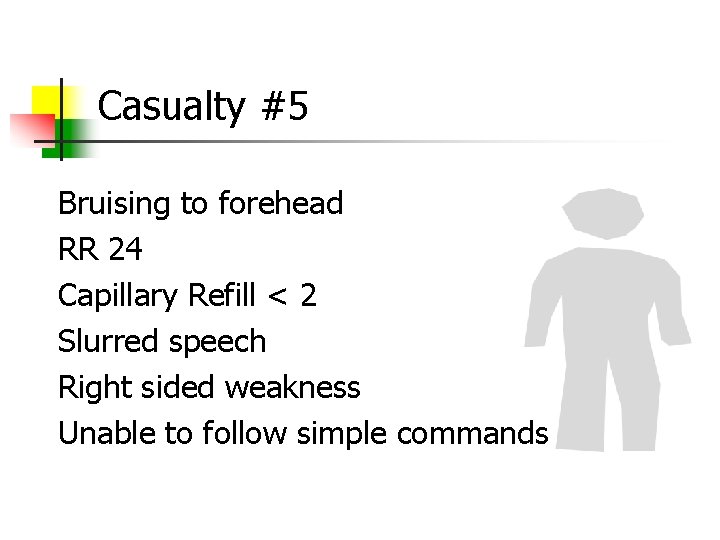
Casualty #5 Bruising to forehead RR 24 Capillary Refill < 2 Slurred speech Right sided weakness Unable to follow simple commands
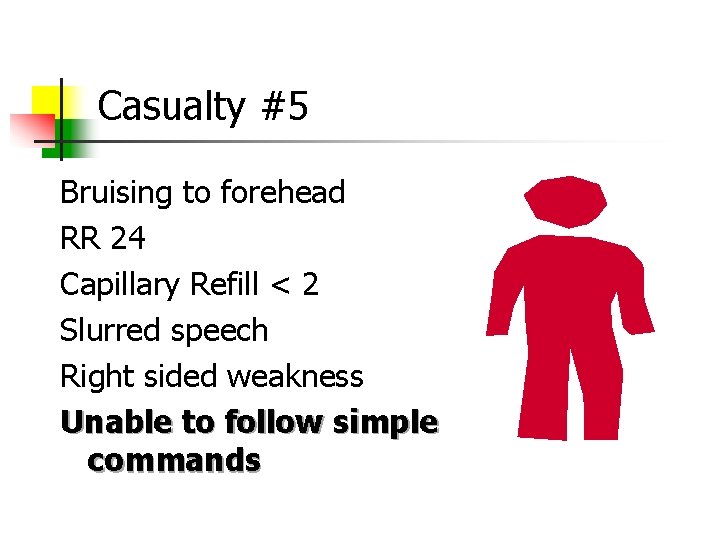
Casualty #5 Bruising to forehead RR 24 Capillary Refill < 2 Slurred speech Right sided weakness Unable to follow simple commands
Casualty #6 Abdominal penetrating trauma Apneic No radial pulse Unresponsive
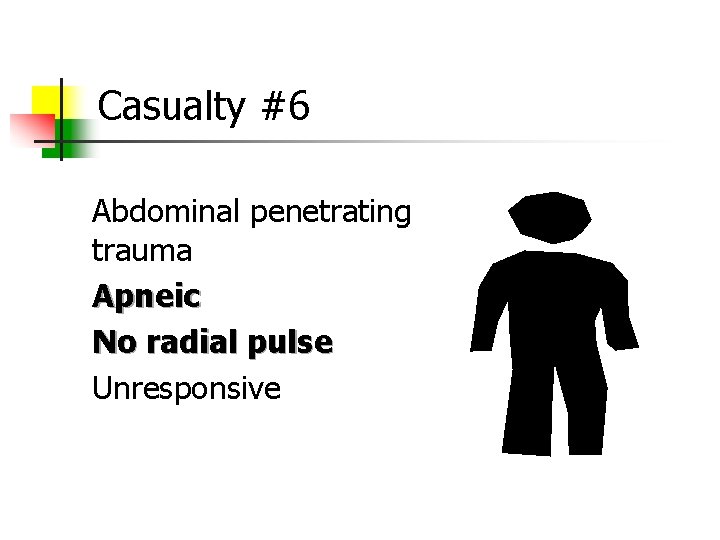
Casualty #6 Abdominal penetrating trauma Apneic No radial pulse Unresponsive
Casualty #7 Walks up to you Hysterical, screaming Blood in ears Rapid respirations Looking for spouse
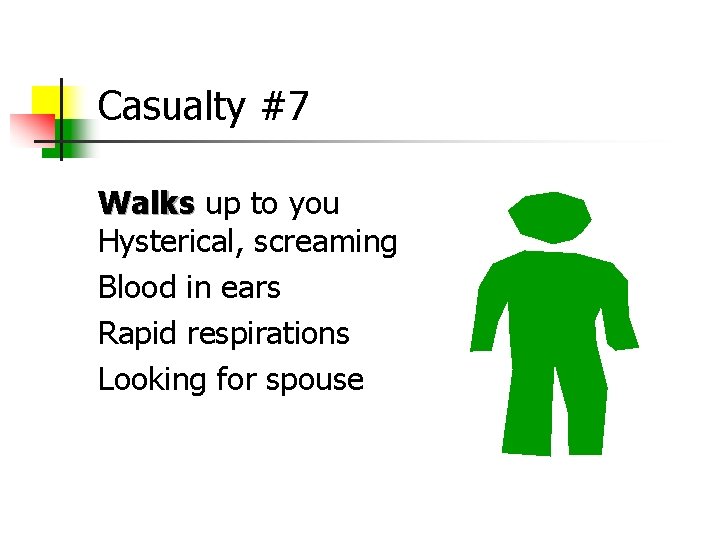
Casualty #7 Walks up to you Walks Hysterical, screaming Blood in ears Rapid respirations Looking for spouse
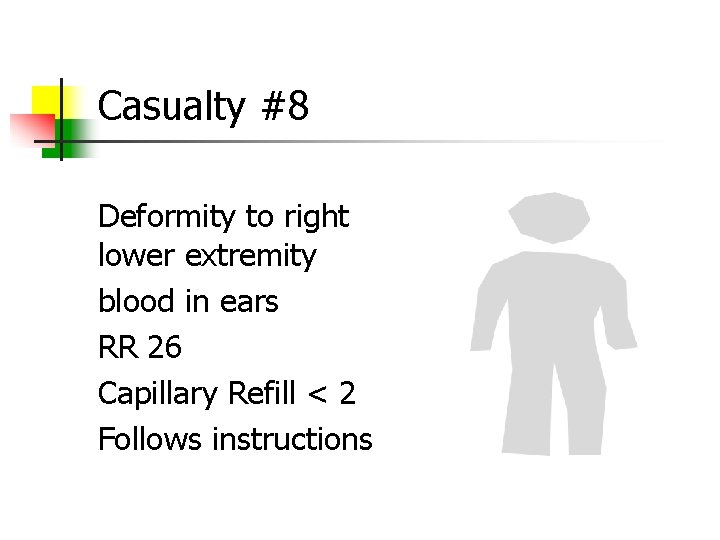
Casualty #8 Deformity to right lower extremity blood in ears RR 26 Capillary Refill < 2 Follows instructions
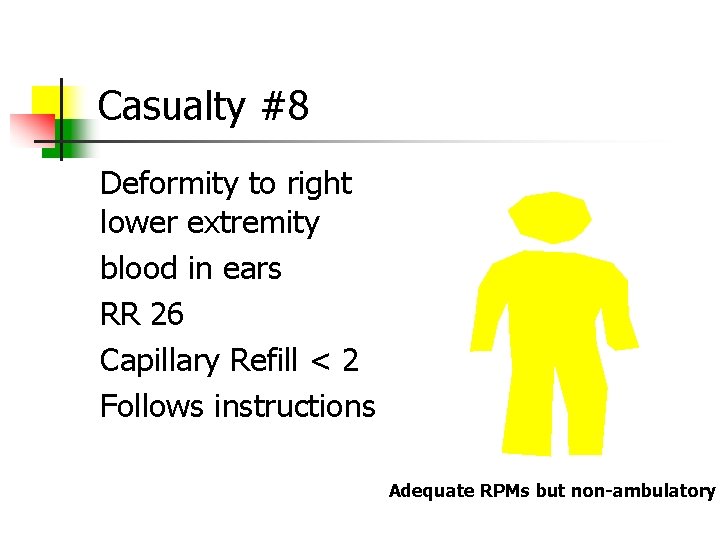
Casualty #8 Deformity to right lower extremity blood in ears RR 26 Capillary Refill < 2 Follows instructions Adequate RPMs but non-ambulatory
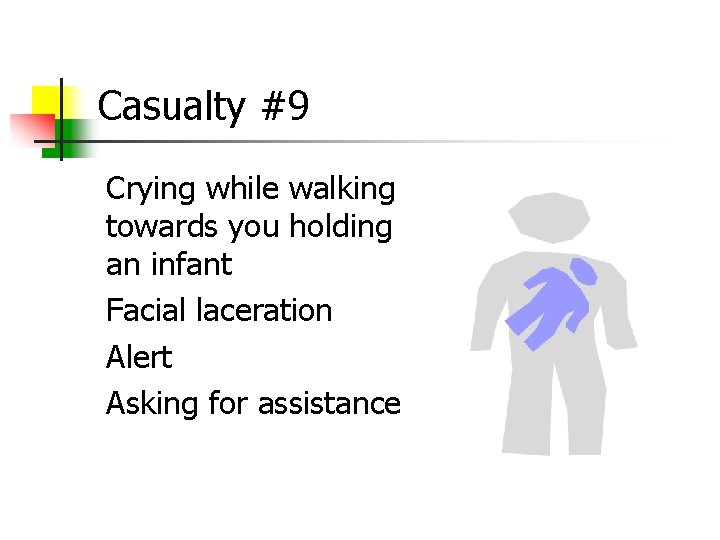
Casualty #9 Crying while walking towards you holding an infant Facial laceration Alert Asking for assistance
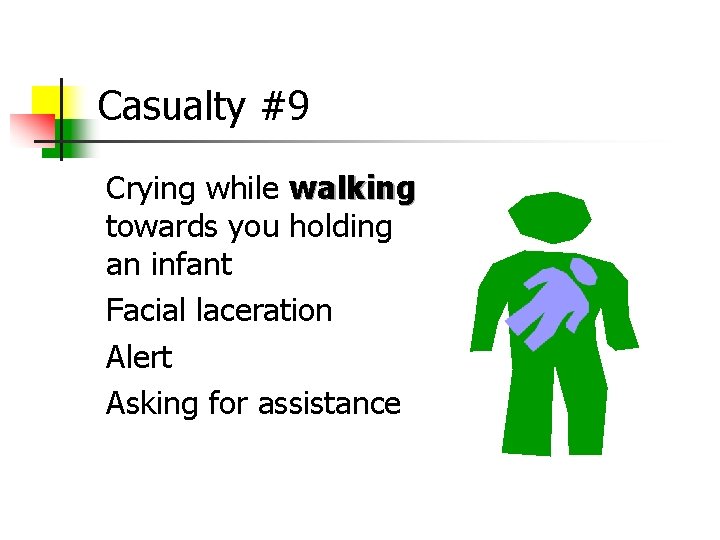
Casualty #9 Crying while walking towards you holding an infant Facial laceration Alert Asking for assistance
Casualty #10 Infant Apneic No Pulse What Would You Do?
Casualty #10 Open Airway 5 rescue breaths…. Still no breathing
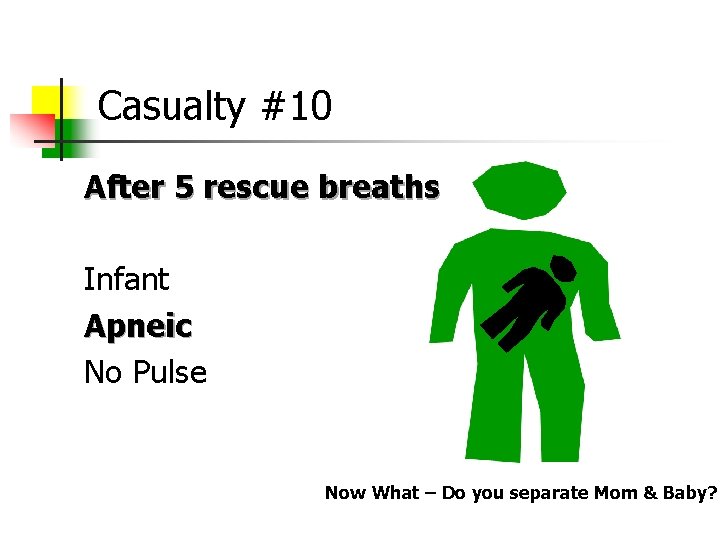
Casualty #10 After 5 rescue breaths Infant Apneic No Pulse Now What – Do you separate Mom & Baby?
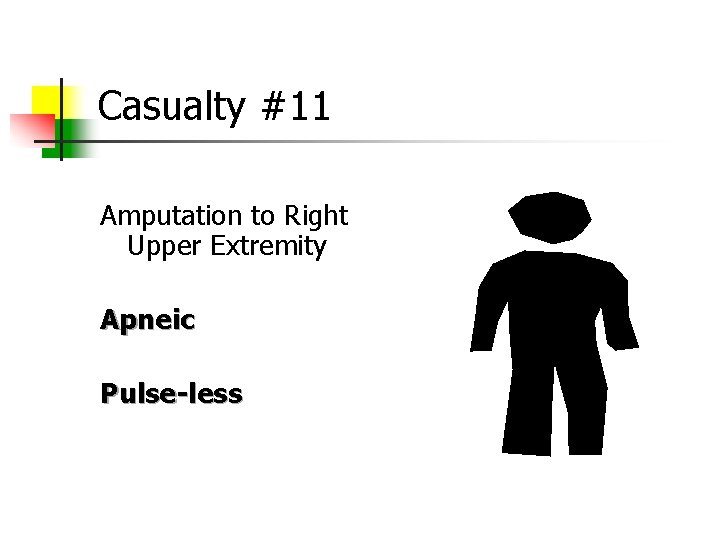
Casualty #11 Amputation to Right Upper Extremity Apneic Pulse-less
Casualty #11 Amputation to Right Upper Extremity Apneic Pulse-less
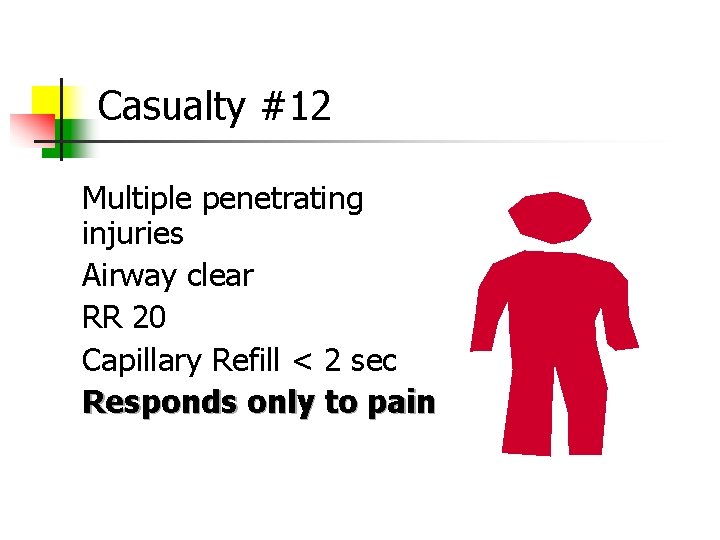
Casualty #12 Multiple penetrating injuries Airway clear RR 20 Capillary Refill < 2 sec Responds only to pain
Casualty #12 Multiple penetrating injuries Airway clear RR 20 Capillary Refill < 2 sec Responds only to pain
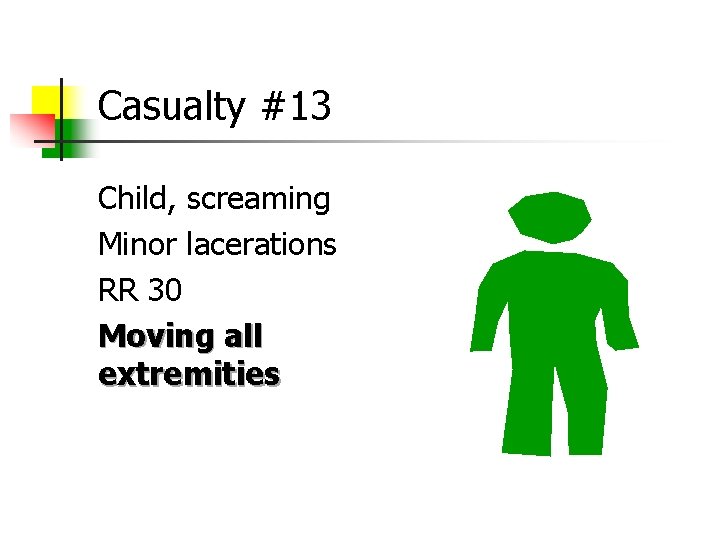
Casualty #13 Child, screaming Minor lacerations RR 30 Moving all extremities
Casualty #13 Child, screaming Minor lacerations RR 30 Moving all extremities
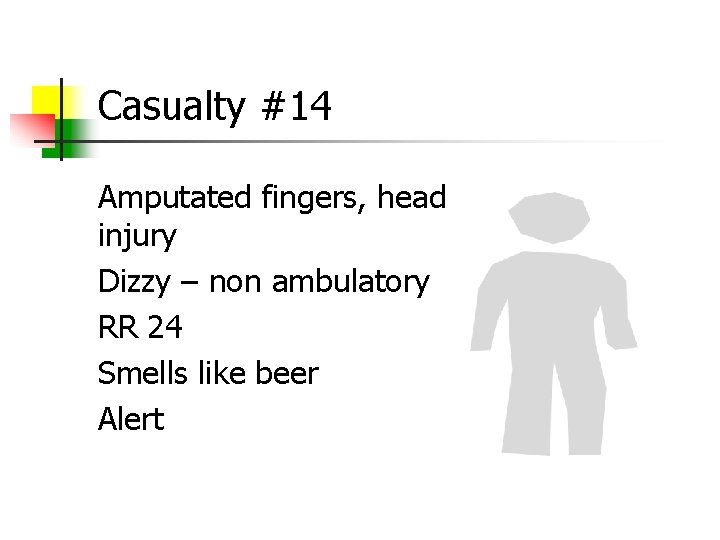
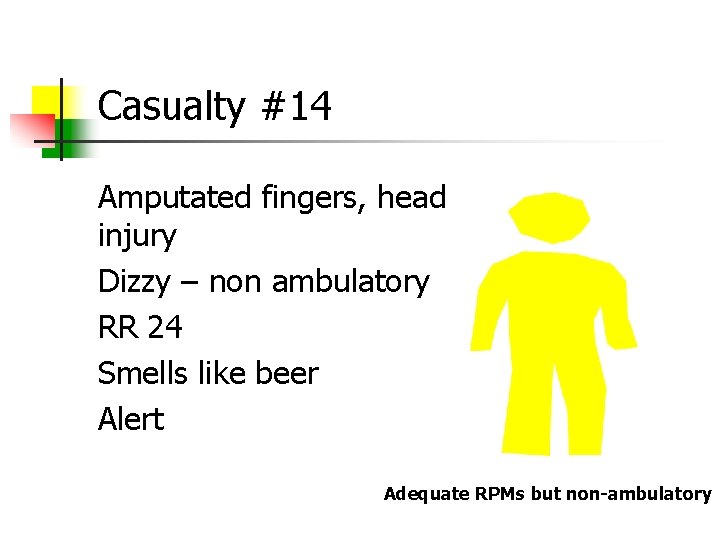
Casualty #14 Amputated fingers, head injury Dizzy – non ambulatory RR 24 Smells like beer Alert
Casualty #14 Amputated fingers, head injury Dizzy – non ambulatory RR 24 Smells like beer Alert Adequate RPMs but non-ambulatory
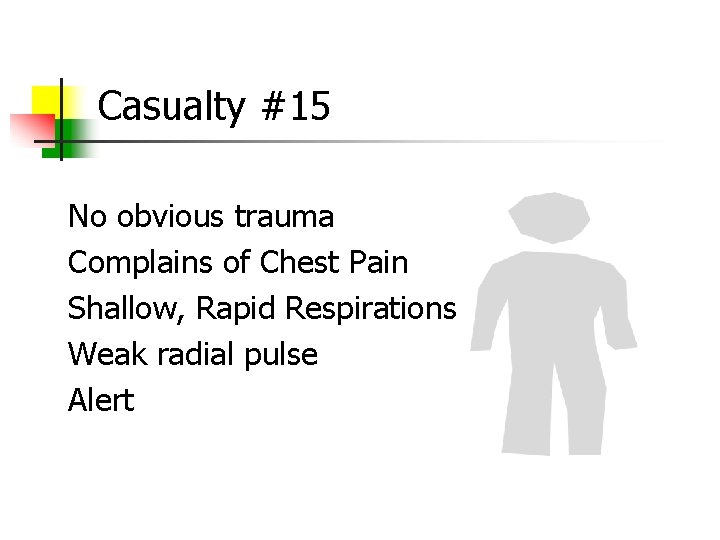
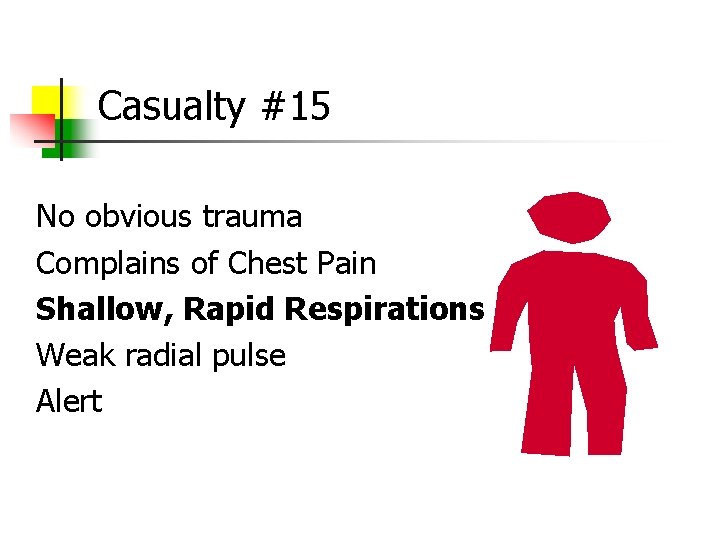
Casualty #15 No obvious trauma Complains of Chest Pain Shallow, Rapid Respirations Weak radial pulse Alert
Casualty #15 No obvious trauma Complains of Chest Pain Shallow, Rapid Respirations Weak radial pulse Alert
Casualty #16 Not Breathing Blood in nose, mouth and ears What would you do?
Casualty #16 RR 10 with manual opening Still unresponsive
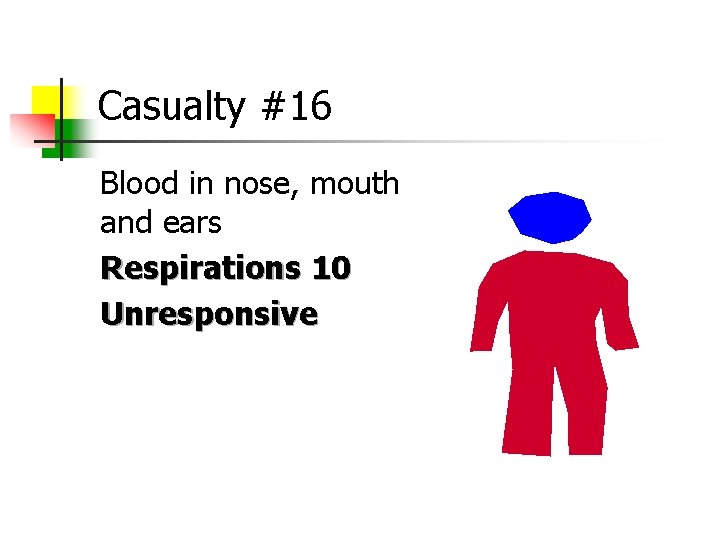
Casualty #16 Blood in nose, mouth and ears Respirations 10 Unresponsive
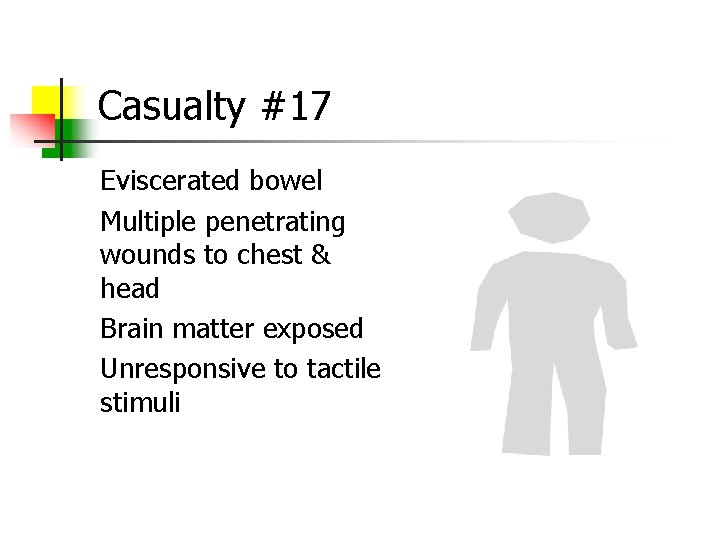
Casualty #17 Eviscerated bowel Multiple penetrating wounds to chest & head Brain matter exposed Unresponsive to tactile stimuli
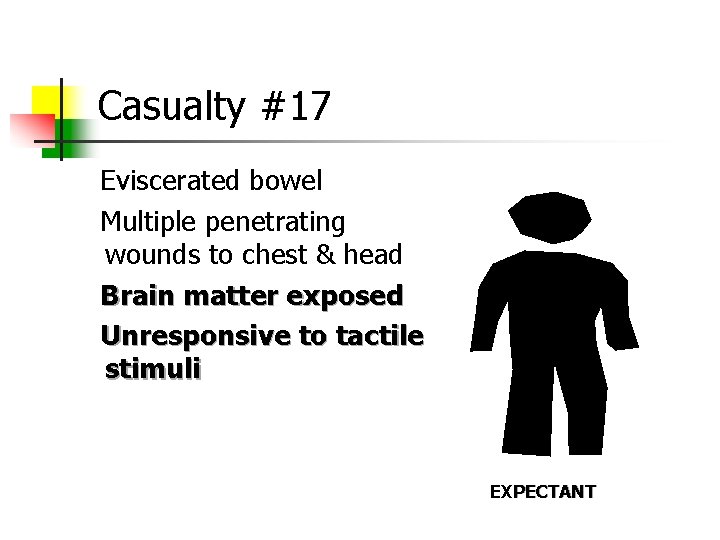
Casualty #17 Eviscerated bowel Multiple penetrating wounds to chest & head Brain matter exposed Unresponsive to tactile stimuli EXPECTANT
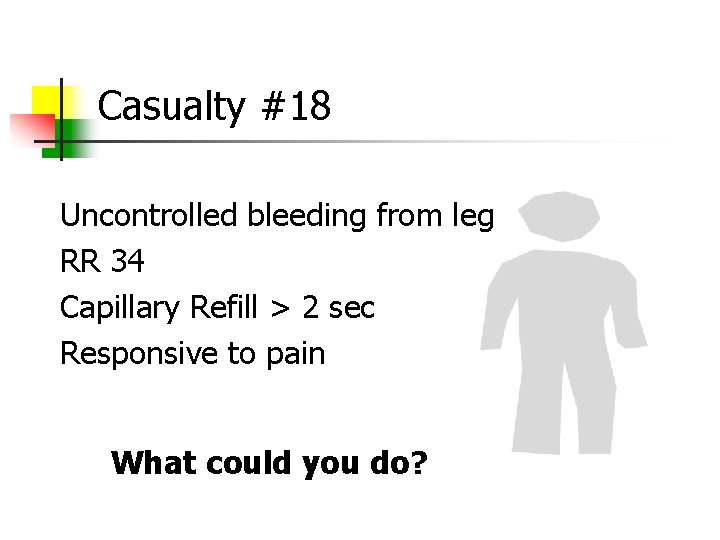
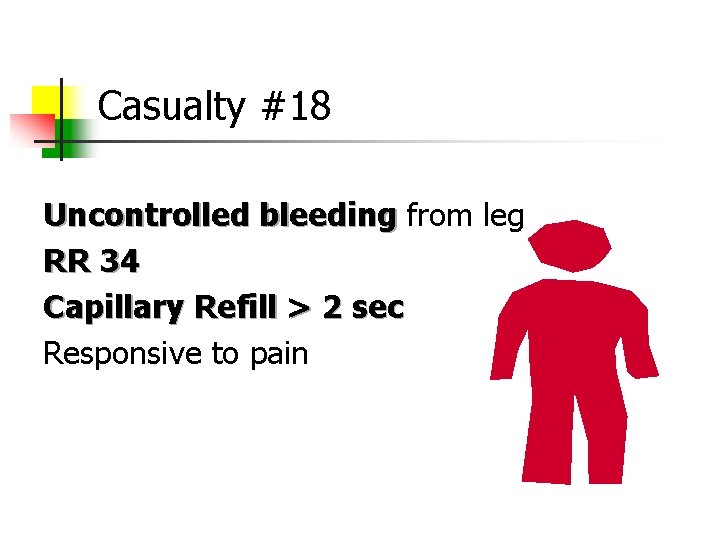
Casualty #18 Uncontrolled bleeding from leg RR 34 Capillary Refill > 2 sec Responsive to pain What could you do?
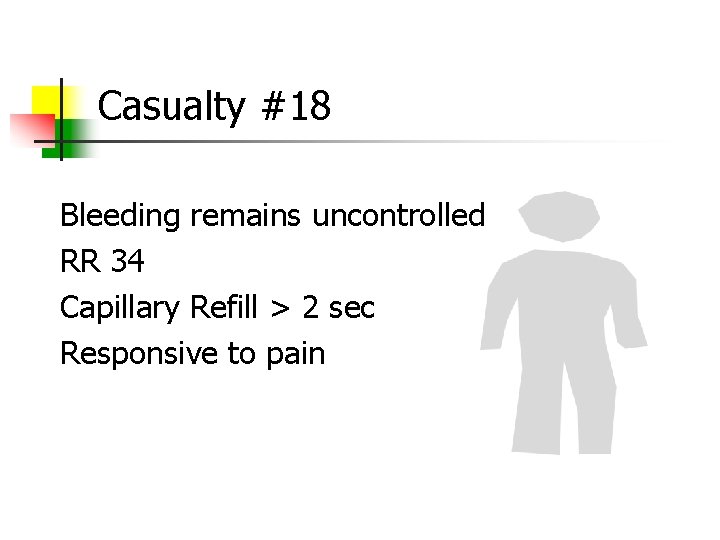
Casualty #18 Bleeding remains uncontrolled RR 34 Capillary Refill > 2 sec Responsive to pain
Casualty #18 Uncontrolled bleeding from leg RR 34 Capillary Refill > 2 sec Responsive to pain
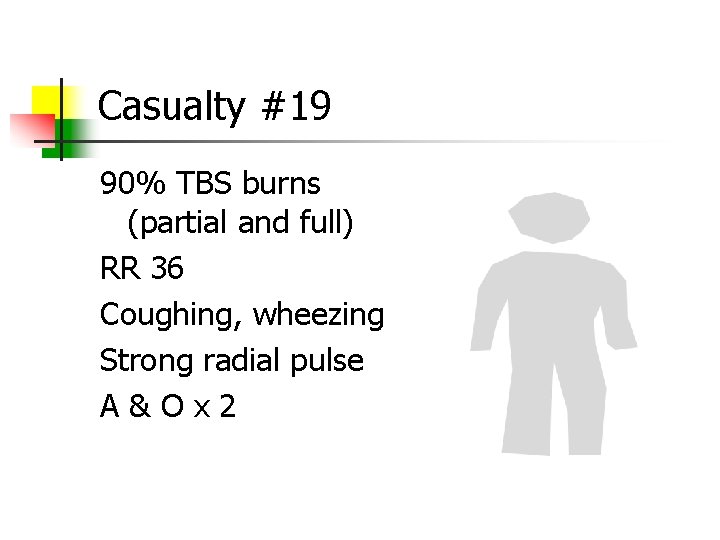
Casualty #19 90% TBS burns (partial and full) RR 36 Coughing, wheezing Strong radial pulse A & O x 2
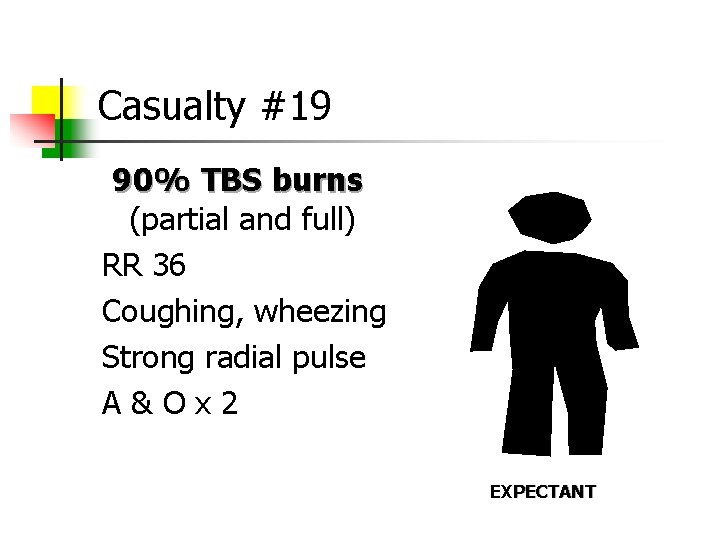
Casualty #19 90% TBS burns (partial and full) RR 36 Coughing, wheezing Strong radial pulse A & O x 2 EXPECTANT
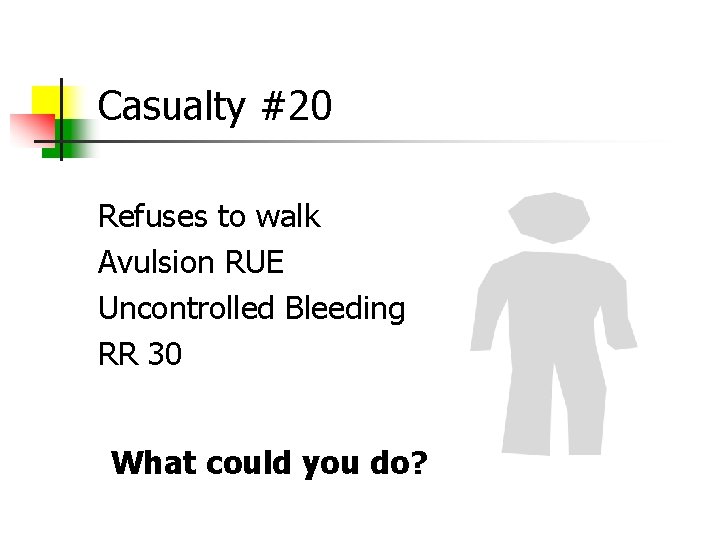
Casualty #20 Refuses to walk Avulsion RUE Uncontrolled Bleeding RR 30 What could you do?
Casualty #20 Bleeding Controlled with gauze
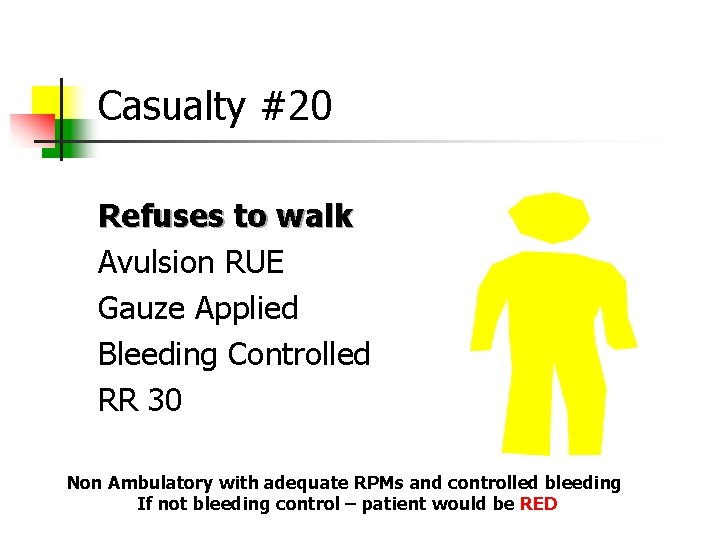
Casualty #20 Refuses to walk Avulsion RUE Gauze Applied Bleeding Controlled RR 30 Non Ambulatory with adequate RPMs and controlled bleeding If not bleeding control – patient would be RED
Questions? ? ?
Remember the goal of Disaster Triage training Increase familiarity/proficiency of the START and Jump START triage methodologies Increase familiarity with the SMART Tag Triage System Train with a standardized methodology and system Grow your organization’s triage & mass casualty response competency
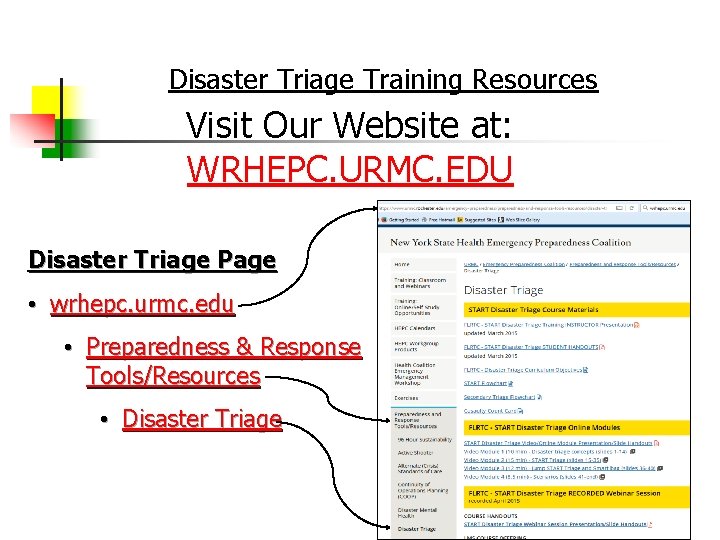
Disaster Triage Training Resources Visit Our Website at: WRHEPC. URMC. EDU Disaster Triage Page • wrhepc. urmc. edu • Preparedness & Response Tools/Resources • Disaster Triage
ADDITIONAL EDUCATION OPPORTUNITIES Visit Our Website at: WRHEPC. URMC. EDU Upcoming Training Classroom & Webinars Online & Self-Study
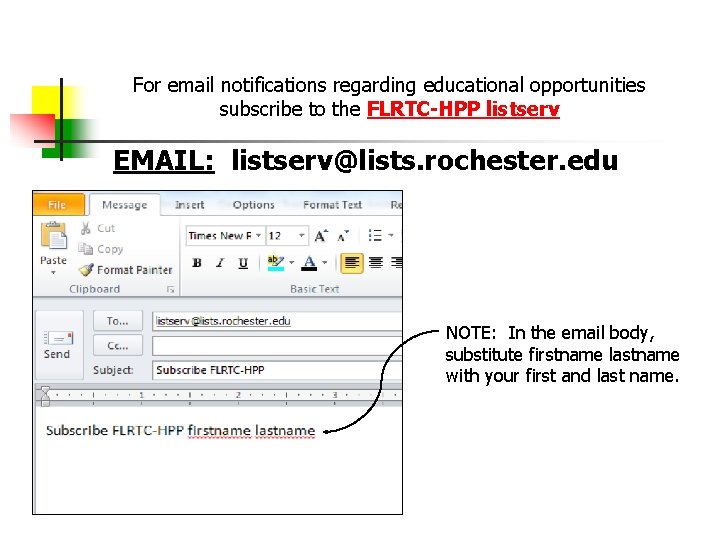
For email notifications regarding educational opportunities subscribe to the FLRTC-HPP listserv EMAIL: listserv@lists. rochester. edu NOTE: In the email body, substitute firstname lastname with your first and last name.
Train-the-Trainer • Set-up • Appropriate classroom / lecture hall • Materials & resources: • • Power. Point slides & slide advancer Patient cards SMART Triage system, triage protocol cards Other peripherals & learning aids • Know your students: • • Background experience Role/responsibility for triage
Train-the-Trainer • Content delivery • • Knowledge / Skills & Abilities / Attitudes Leave enough time for logistics, housekeeping, activities, etc. (plan & practice!) • Training / Exercise planning: • • Don’t just “check the box” Start small & grow into larger, more complex training/exercises • Wrap-up: • • Exams? Evaluations? Other requirements Certificates Classroom teardown & other logistics
Thank You! Regional Training Centers
NEED MORE PRACTICE?
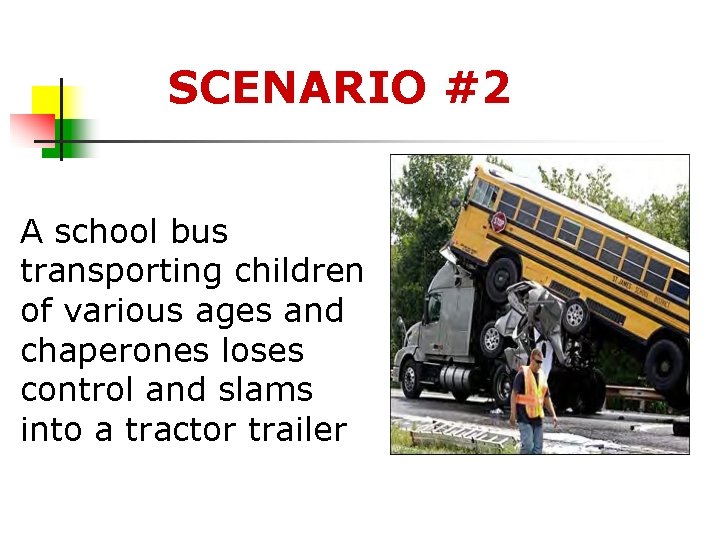
SCENARIO #2 A school bus transporting children of various ages and chaperones loses control and slams into a tractor trailer
Casualty #1 6 year old ejected from bus Unresponsive Hematoma to the forehead. RR 34 Radial pulse 120
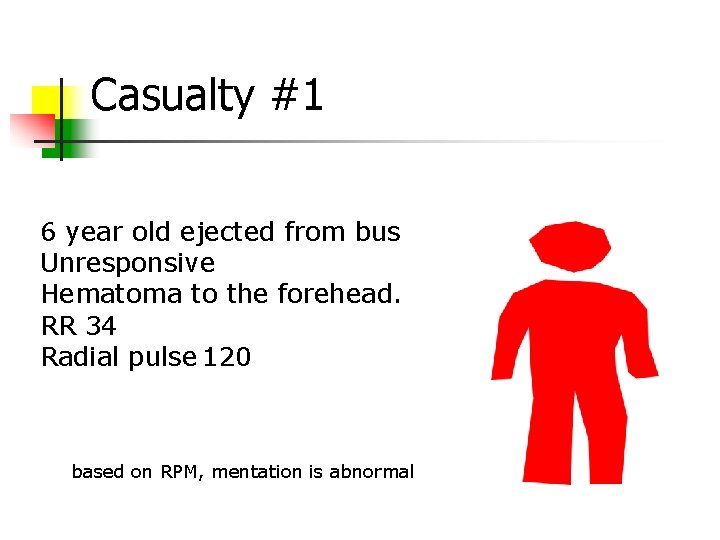
Casualty #1 6 year old ejected from bus Unresponsive Hematoma to the forehead. RR 34 Radial pulse 120 based on RPM, mentation is abnormal
Casualty #2 7 year old Was trapped under bus seat Not Breathing GIVE 5 RESCUE No Pulse BREATHS Unresponsive WHAT CAN YOU DO?
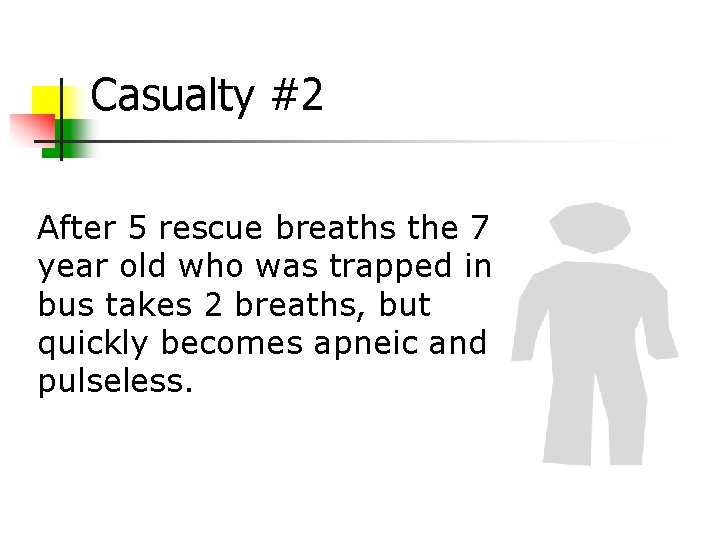
Casualty #2 After 5 rescue breaths the 7 year old who was trapped in bus takes 2 breaths, but quickly becomes apneic and pulseless.
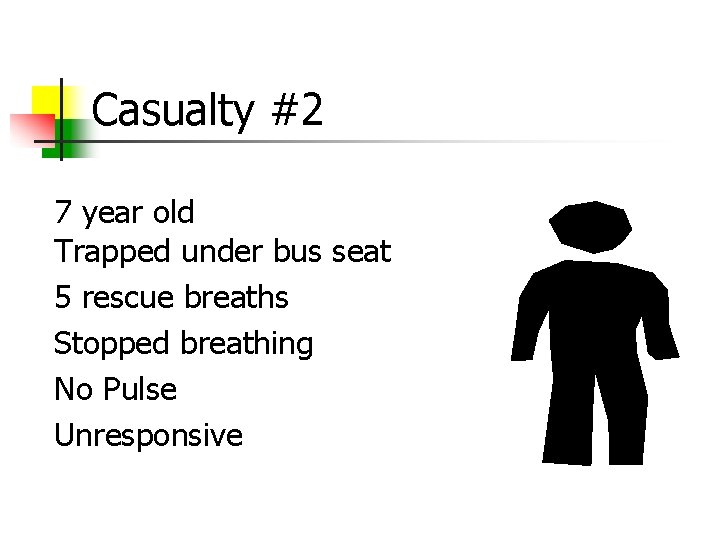
Casualty #2 7 year old Trapped under bus seat 5 rescue breaths Stopped breathing No Pulse Unresponsive
Casualty #3 6 y/o was found near front of bus RR are 10 Pulses are present Semiconscious
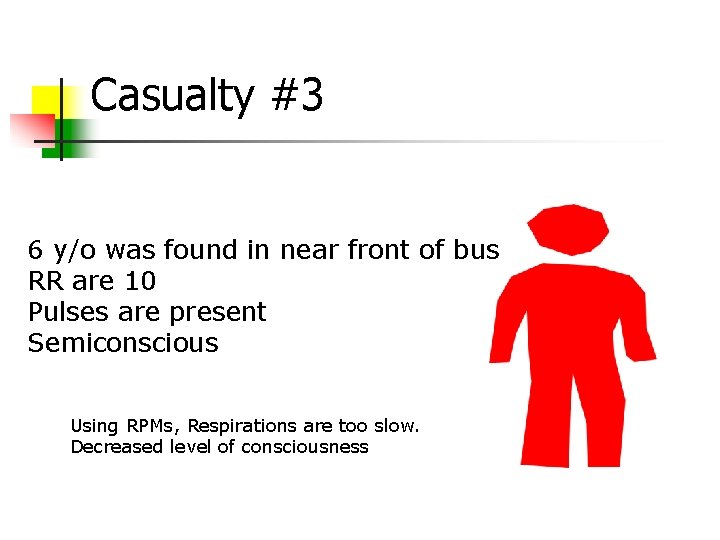
Casualty #3 6 y/o was found in near front of bus RR are 10 Pulses are present Semiconscious Using RPMs, Respirations are too slow. Decreased level of consciousness
Casualty # 4 Adult kneeling at the side of the road Too dizzy to walk RR 20 Capillary Refill 2 sec Obeys commands
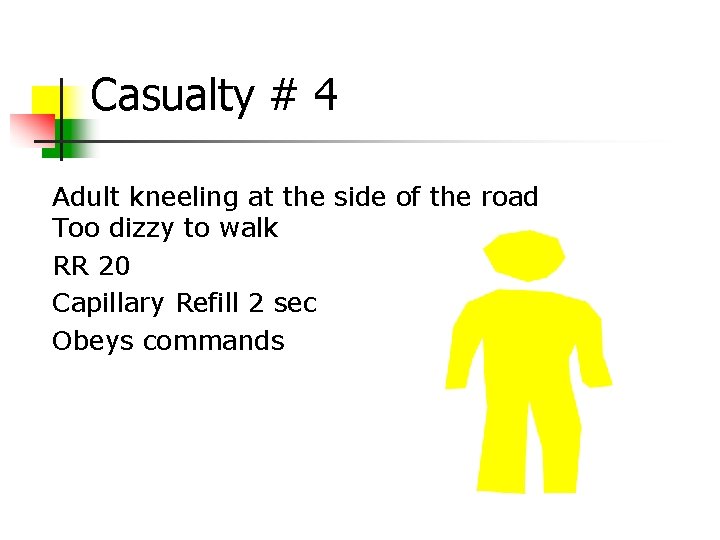
Casualty # 4 Adult kneeling at the side of the road Too dizzy to walk RR 20 Capillary Refill 2 sec Obeys commands
Casualty # 5 School aged girl crawls out of the wreckage Walks toward you crying Jacket and shirt torn No obvious bleeding
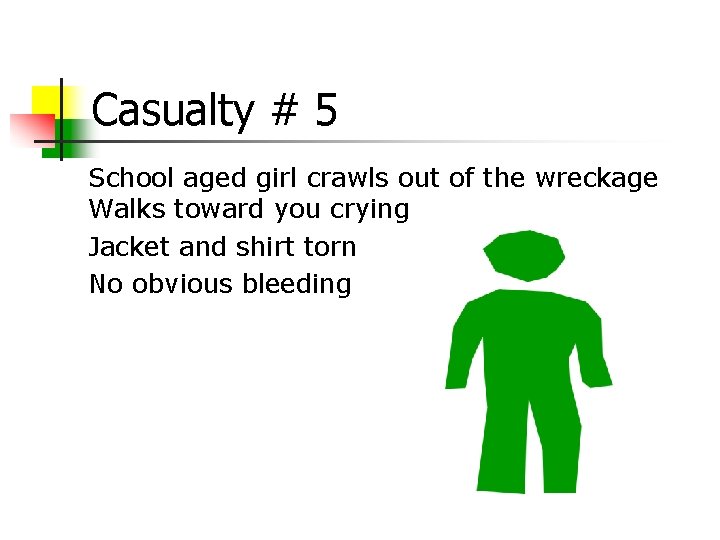
Casualty # 5 School aged girl crawls out of the wreckage Walks toward you crying Jacket and shirt torn No obvious bleeding
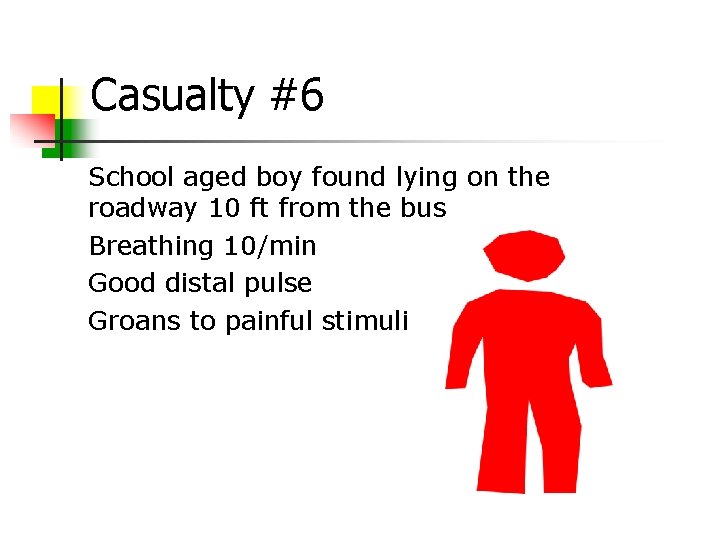
Casualty #6 School aged boy found lying on the roadway 10 ft from the bus Breathing 10/min Good distal pulse Groans to painful stimuli
Casualty #6 School aged boy found lying on the roadway 10 ft from the bus Breathing 10/min Good distal pulse Groans to painful stimuli
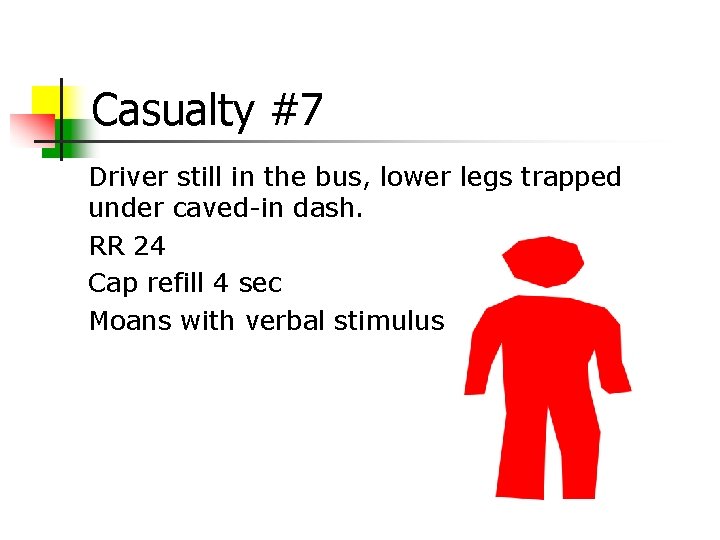
Casualty #7 Driver still in the bus, lower legs trapped under caved-in dash. RR 24 Cap refill 4 sec Moans with verbal stimulus
Casualty #7 Driver still in the bus, lower legs trapped under caved-in dash. RR 24 Cap refill 4 sec Moans with verbal stimulus
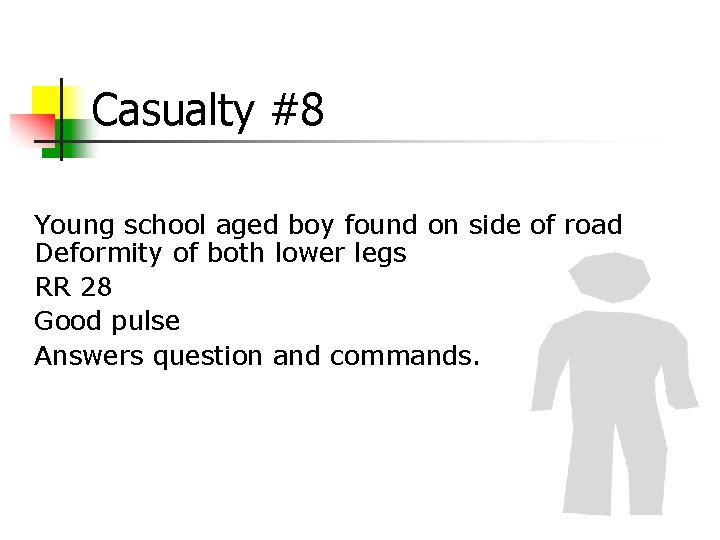
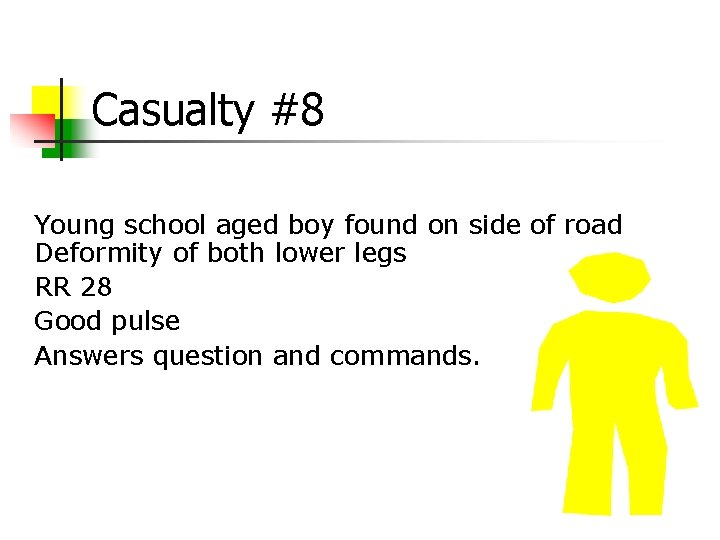
Casualty #8 Young school aged boy found on side of road Deformity of both lower legs RR 28 Good pulse Answers question and commands.
Casualty #8 Young school aged boy found on side of road Deformity of both lower legs RR 28 Good pulse Answers question and commands.
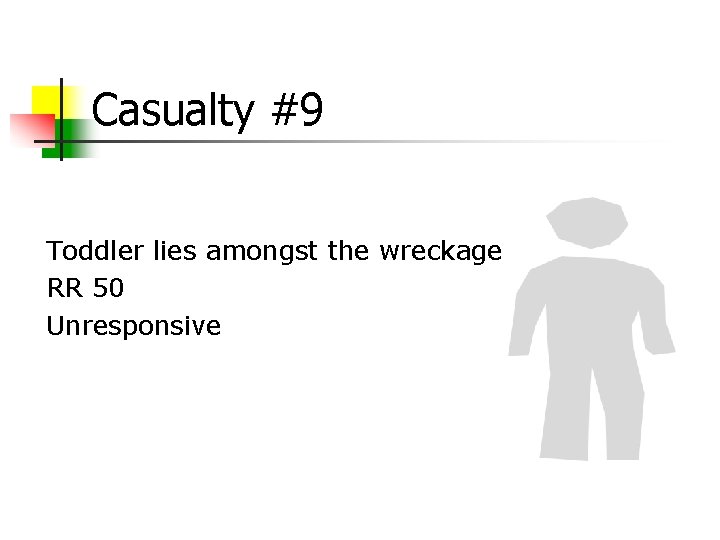
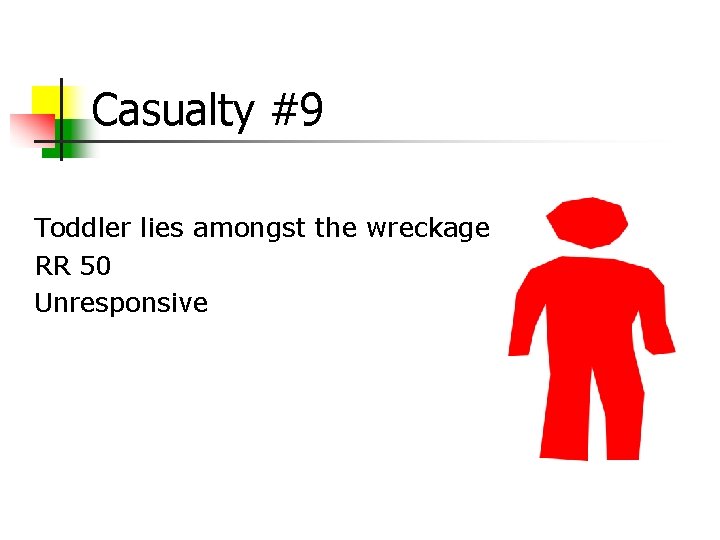
Casualty #9 Toddler lies amongst the wreckage RR 50 Unresponsive
Casualty #9 Toddler lies amongst the wreckage RR 50 Unresponsive
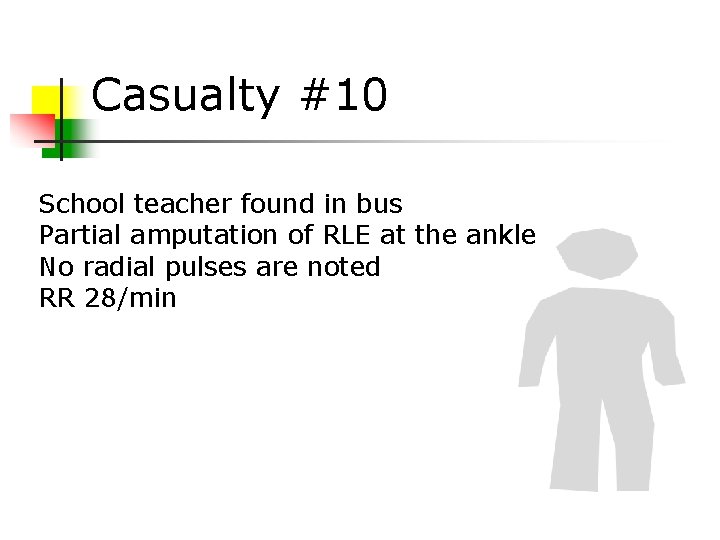
Casualty #10 School teacher found in bus Partial amputation of RLE at the ankle No radial pulses are noted RR 28/min
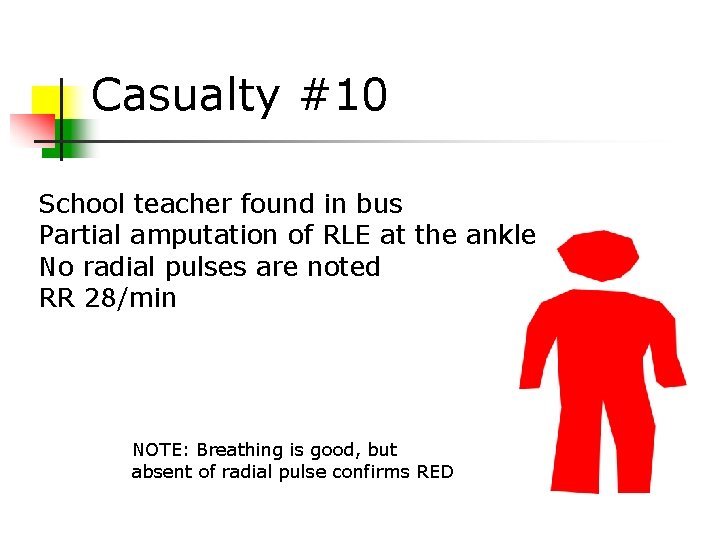
Casualty #10 School teacher found in bus Partial amputation of RLE at the ankle No radial pulses are noted RR 28/min NOTE: Breathing is good, but absent of radial pulse confirms RED
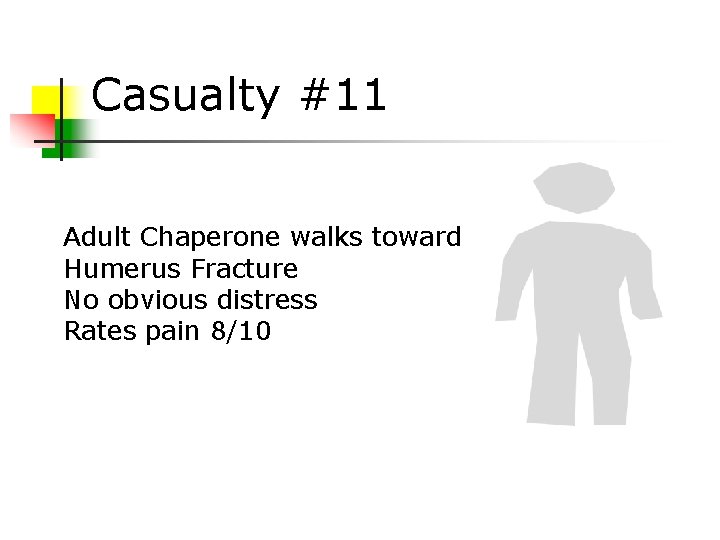
Casualty #11 Adult Chaperone walks toward Humerus Fracture No obvious distress Rates pain 8/10
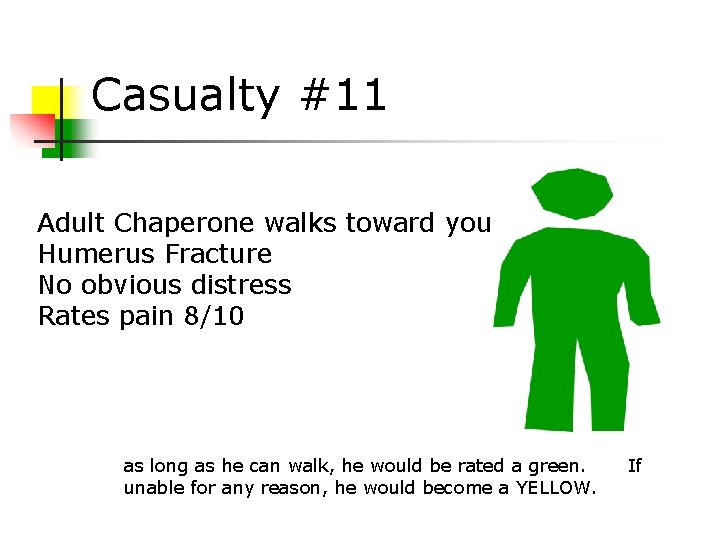
Casualty #11 Adult Chaperone walks toward you Humerus Fracture No obvious distress Rates pain 8/10 as long as he can walk, he would be rated a green. unable for any reason, he would become a YELLOW. If
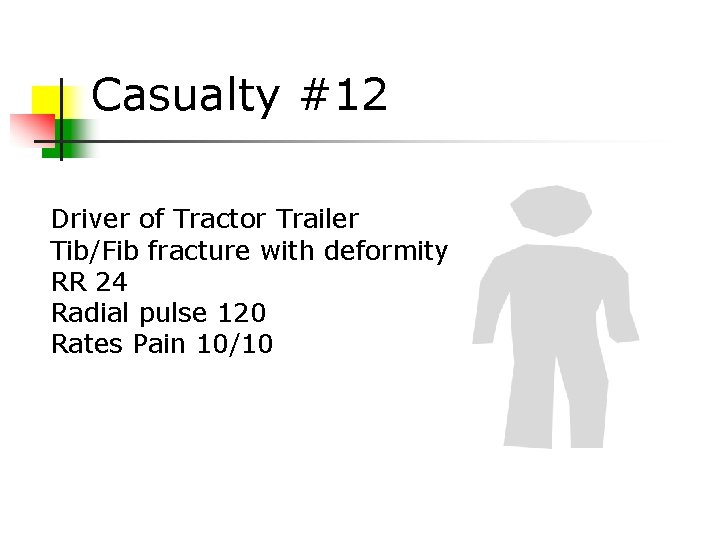
Casualty #12 Driver of Tractor Trailer Tib/Fib fracture with deformity RR 24 Radial pulse 120 Rates Pain 10/10
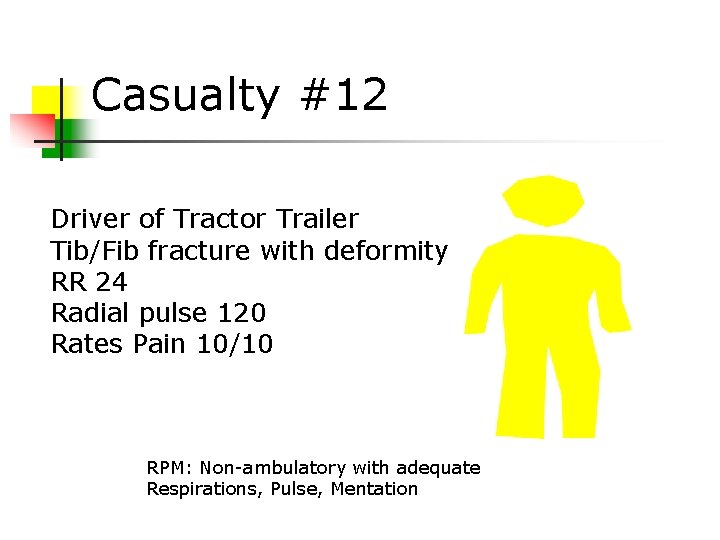
Casualty #12 Driver of Tractor Trailer Tib/Fib fracture with deformity RR 24 Radial pulse 120 Rates Pain 10/10 RPM: Non-ambulatory with adequate Respirations, Pulse, Mentation