
DISASTER SITE WORKER SAFETY 1 Personal Protective Equipment
- Slides: 13
DISASTER SITE WORKER SAFETY 1 Personal Protective Equipment (PPE)
OBJECTIVES • • • 2 Describe specific conditions that determine PPE level selections. Describe the Levels of PPE for Disaster Site Workers. Identify the physiological and psychological stressors that can affect users of all Levels of PPE. Discuss challenges and techniques for communication while working in Level C PPE. Properly don and doff the Level C protective clothing and respiratory protection. Discuss the limitations while wearing PPE.
3 WORKER PROTECTION AGAINST CBRNE AGENTS PPE for use against CBRNE agents consists of respiratory and dermal protection. The level of protection that is required will depend upon: • The specific agent. • The conditions under which the equipment is worn. • The activities and exposure level of the personnel.
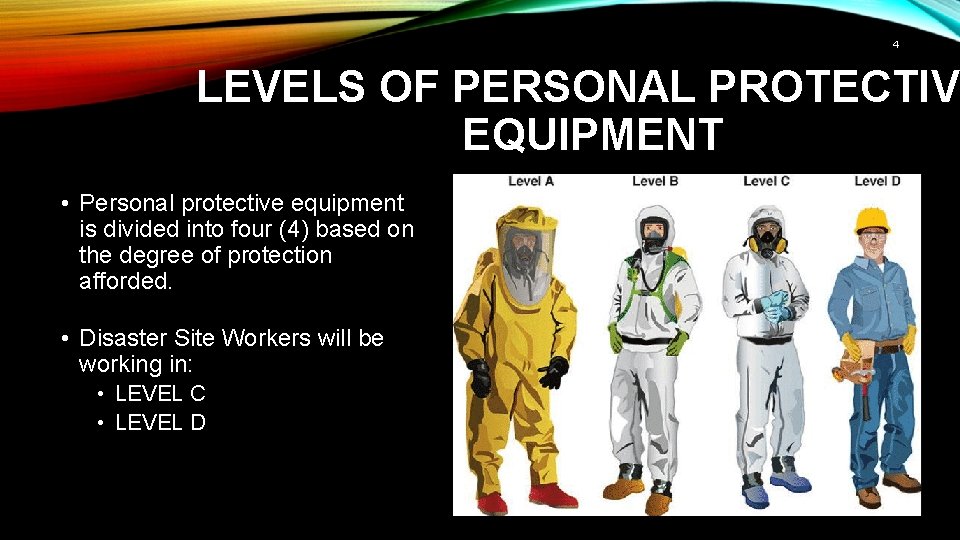
4 LEVELS OF PERSONAL PROTECTIV EQUIPMENT • Personal protective equipment is divided into four (4) based on the degree of protection afforded. • Disaster Site Workers will be working in: • LEVEL C • LEVEL D
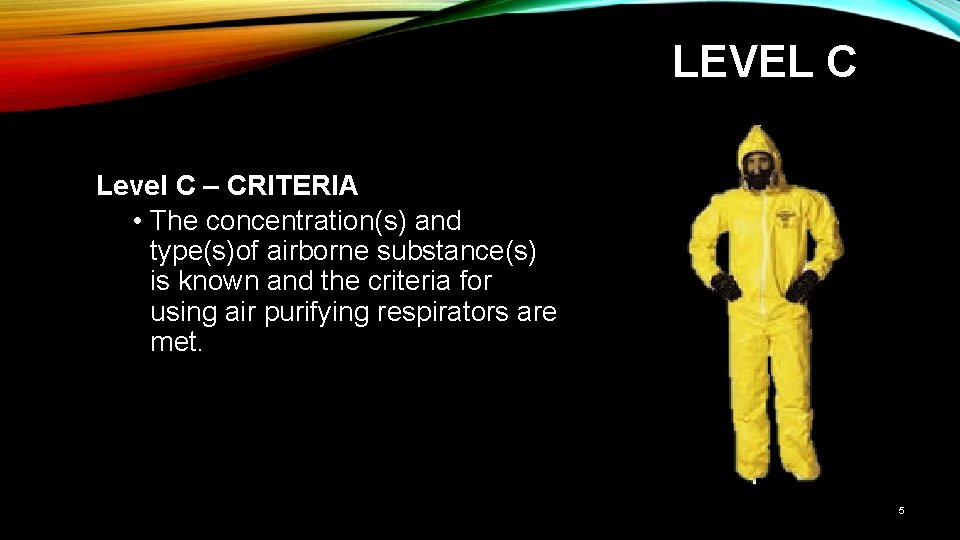
LEVEL C Level C – CRITERIA • The concentration(s) and type(s)of airborne substance(s) is known and the criteria for using air purifying respirators are met. 5
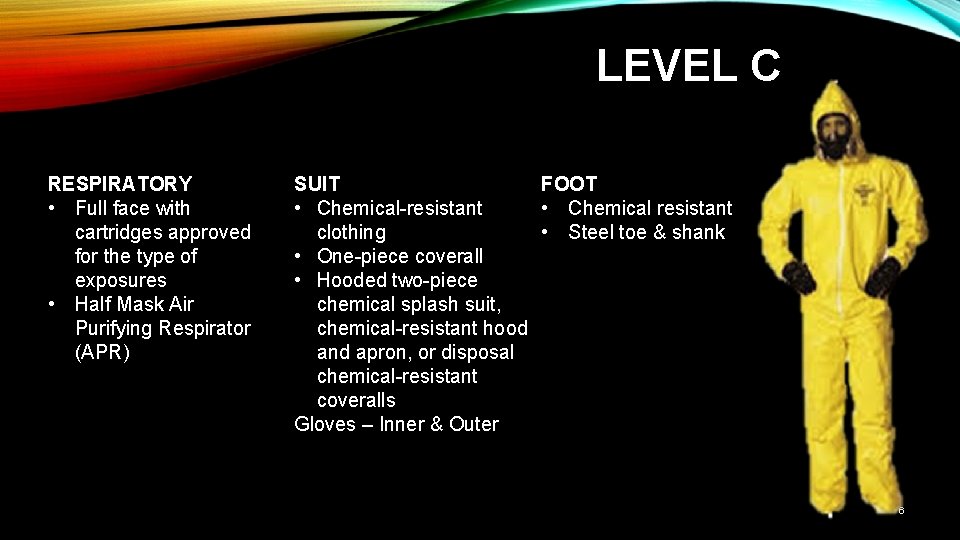
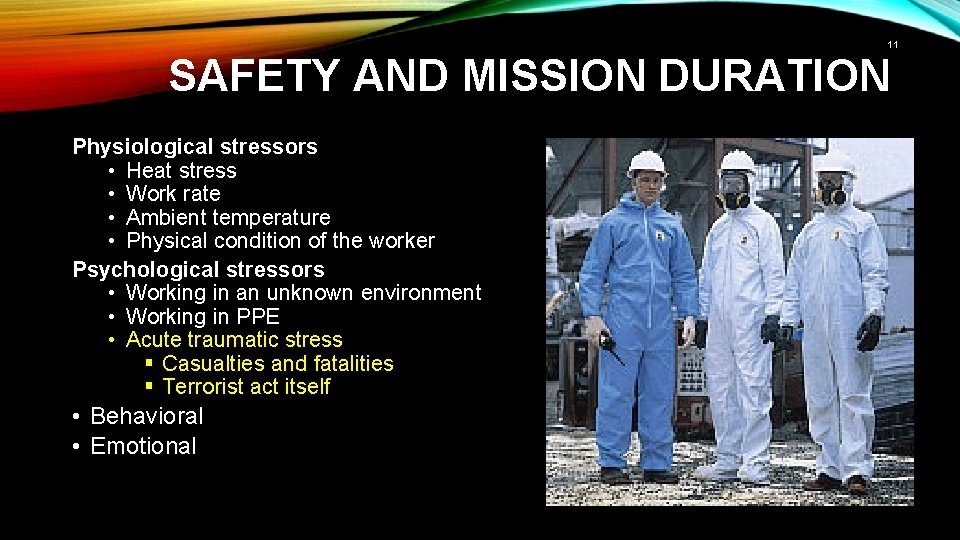
LEVEL C RESPIRATORY • Full face with cartridges approved for the type of exposures • Half Mask Air Purifying Respirator (APR) SUIT • Chemical-resistant clothing • One-piece coverall • Hooded two-piece chemical splash suit, chemical-resistant hood and apron, or disposal chemical-resistant coveralls Gloves – Inner & Outer FOOT • Chemical resistant • Steel toe & shank 6
7 LEVEL C Optional items: • Protective inserts (as needed) • Cloth coveralls • Radio • Hard hat • Escape mask
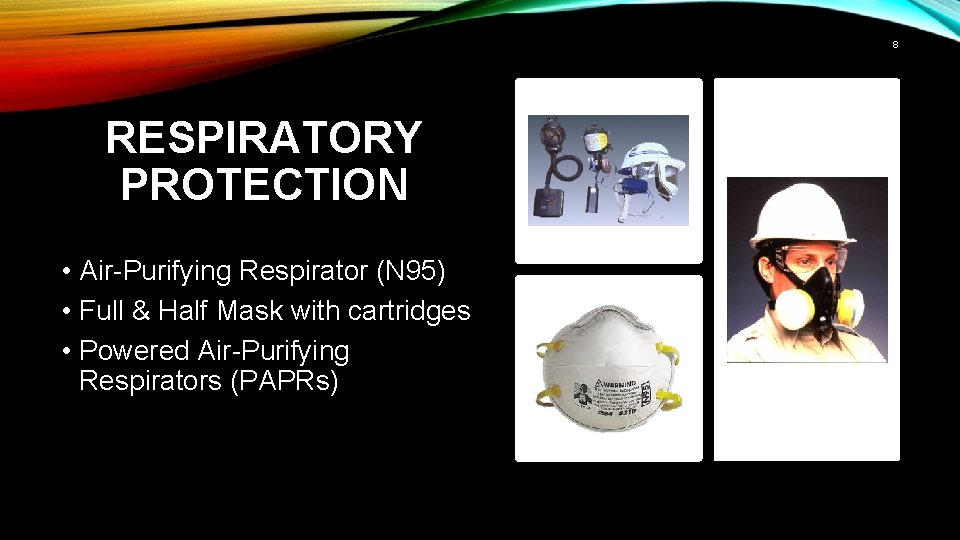
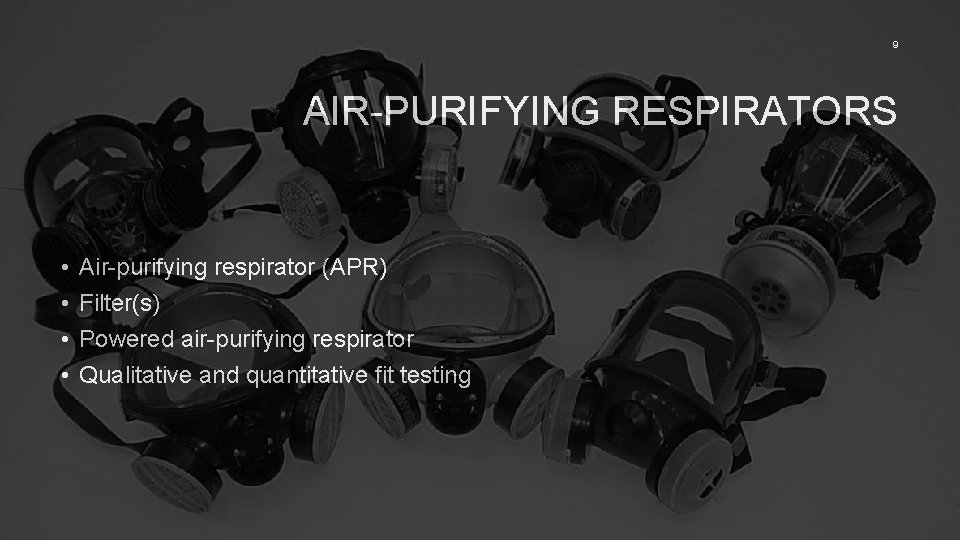
8 RESPIRATORY PROTECTION • Air-Purifying Respirator (N 95) • Full & Half Mask with cartridges • Powered Air-Purifying Respirators (PAPRs)
9 AIR-PURIFYING RESPIRATORS • • Air-purifying respirator (APR) Filter(s) Powered air-purifying respirator Qualitative and quantitative fit testing
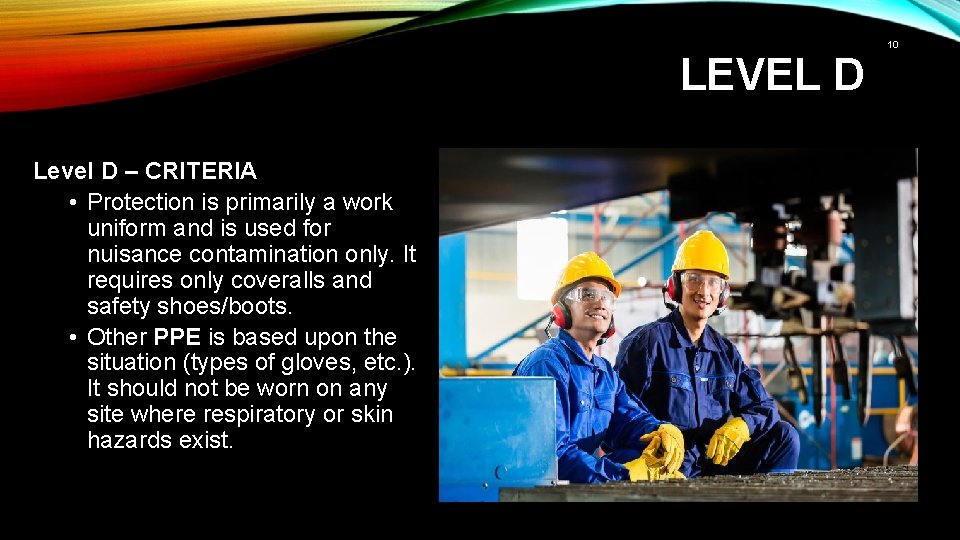
LEVEL D Level D – CRITERIA • Protection is primarily a work uniform and is used for nuisance contamination only. It requires only coveralls and safety shoes/boots. • Other PPE is based upon the situation (types of gloves, etc. ). It should not be worn on any site where respiratory or skin hazards exist. 10
11 SAFETY AND MISSION DURATION Physiological stressors • Heat stress • Work rate • Ambient temperature • Physical condition of the worker Psychological stressors • Working in an unknown environment • Working in PPE • Acute traumatic stress § Casualties and fatalities § Terrorist act itself • Behavioral • Emotional
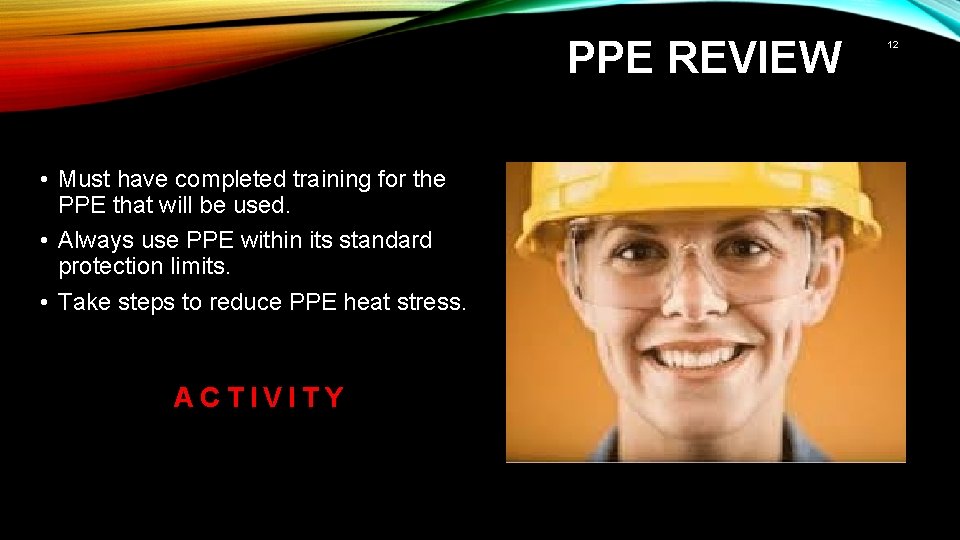
PPE REVIEW • Must have completed training for the PPE that will be used. • Always use PPE within its standard protection limits. • Take steps to reduce PPE heat stress. ACTIVITY 12
DASHBOAR D DECON