
Disaster Preparedness CERT Basic Training Unit 1 Lisa
Disaster Preparedness CERT Basic Training Unit 1
Lisa Katzki Home and Workplace Preparedness
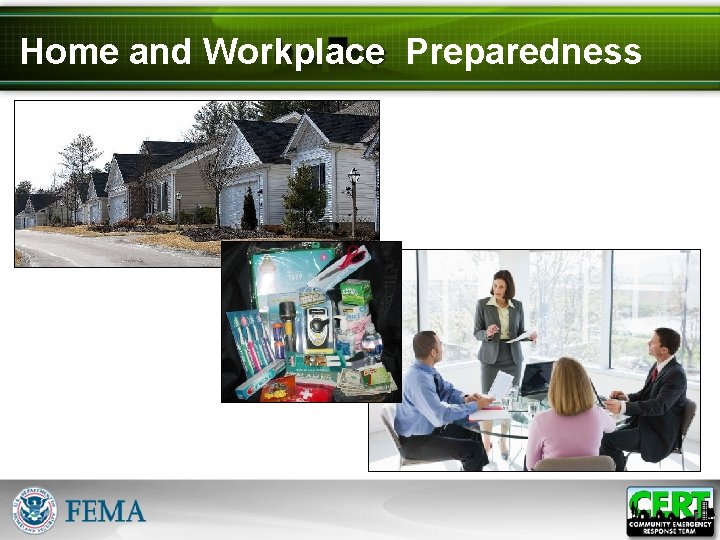
Home and Workplace Preparedness
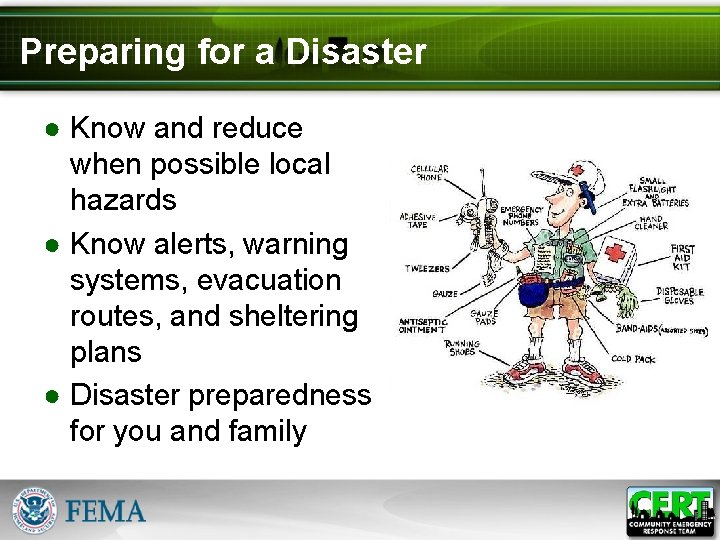
Preparing for a Disaster ● Know and reduce when possible local hazards ● Know alerts, warning systems, evacuation routes, and sheltering plans ● Disaster preparedness for you and family
Develop a Disaster Plan ● Where will you meet family members? ● Who is your out-of-State “check-in” contact? ● Will you have an extended stay? Shelter in place? Evacuate? ● How will you escape your home? Workplace? School? Place of worship? ● What route (and several alternates) will you use to evacuate your neighborhood? ● Do you have transportation? ● Did you practice your plan?
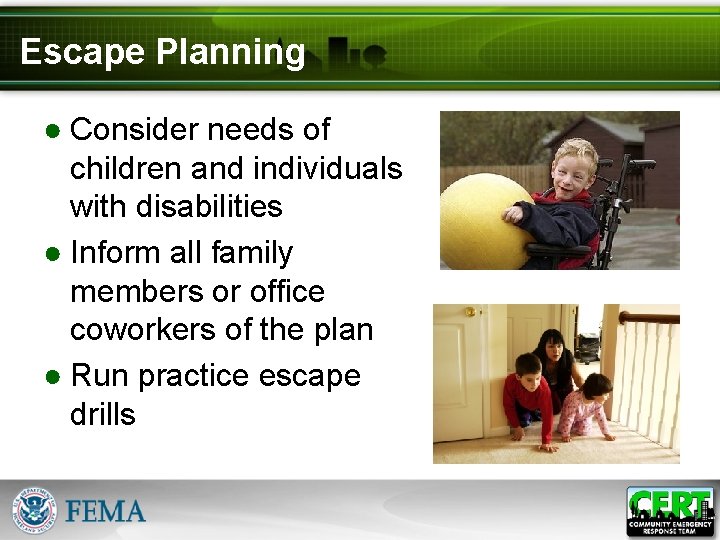
Escape Planning ● Consider needs of children and individuals with disabilities ● Inform all family members or office coworkers of the plan ● Run practice escape drills
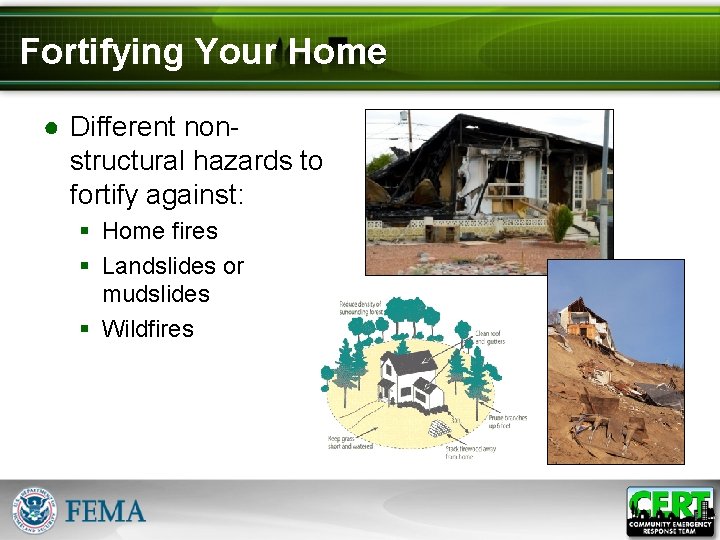
Fortifying Your Home ● Different nonstructural hazards to fortify against: § Home fires § Landslides or mudslides § Wildfires
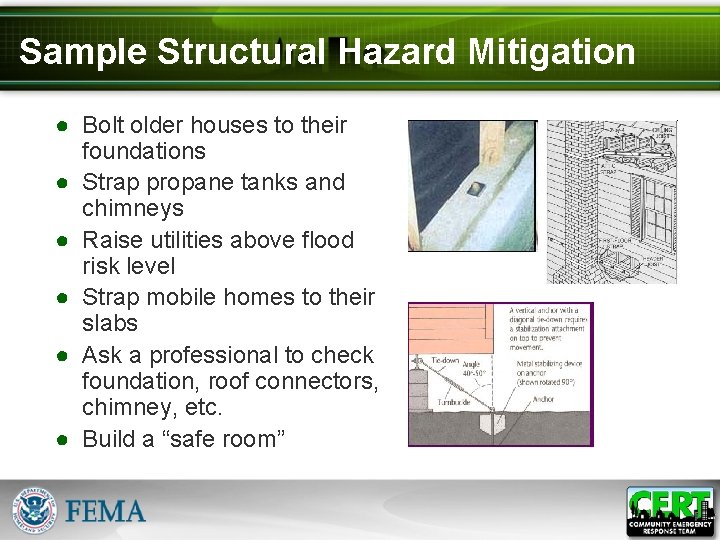
Sample Structural Hazard Mitigation ● Bolt older houses to their foundations ● Strap propane tanks and chimneys ● Raise utilities above flood risk level ● Strap mobile homes to their slabs ● Ask a professional to check foundation, roof connectors, chimney, etc. ● Build a “safe room”
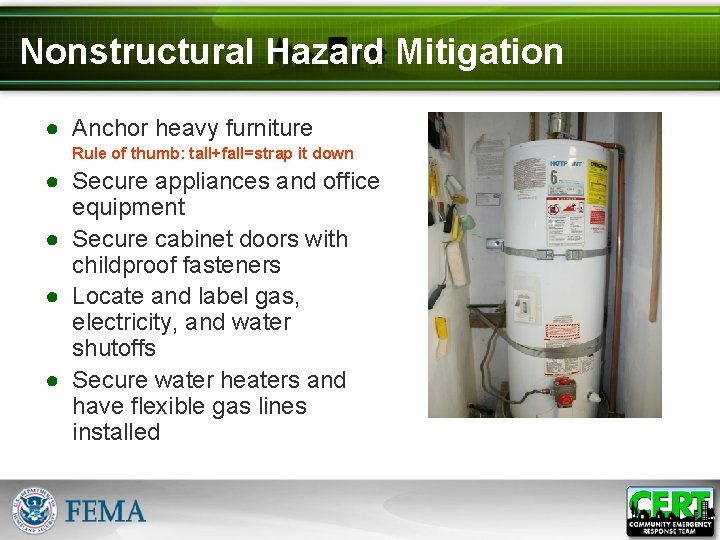
Nonstructural Hazard Mitigation ● Anchor heavy furniture Rule of thumb: tall+fall=strap it down ● Secure appliances and office equipment ● Secure cabinet doors with childproof fasteners ● Locate and label gas, electricity, and water shutoffs ● Secure water heaters and have flexible gas lines installed
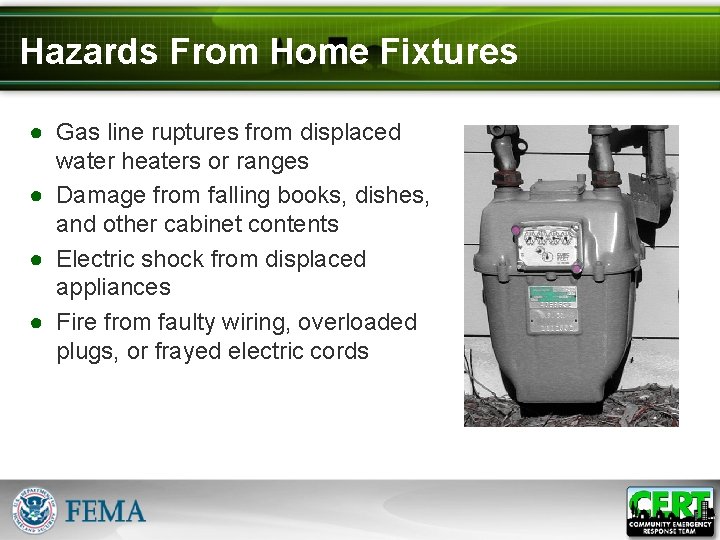
Hazards From Home Fixtures ● Gas line ruptures from displaced water heaters or ranges ● Damage from falling books, dishes, and other cabinet contents ● Electric shock from displaced appliances ● Fire from faulty wiring, overloaded plugs, or frayed electric cords
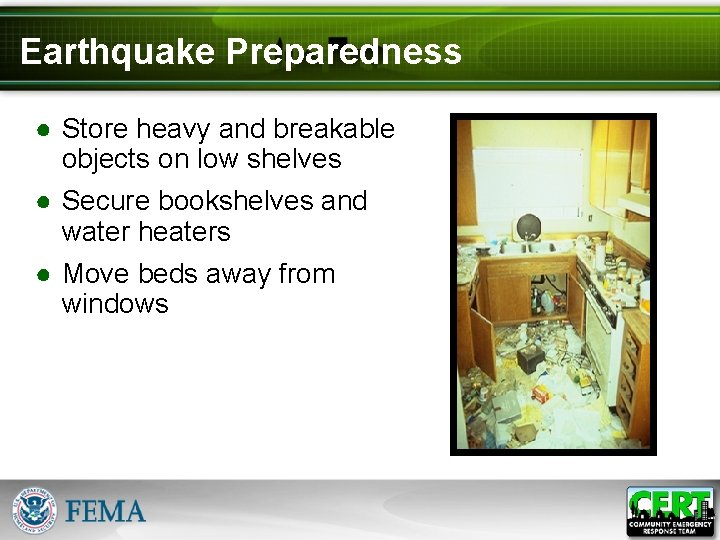
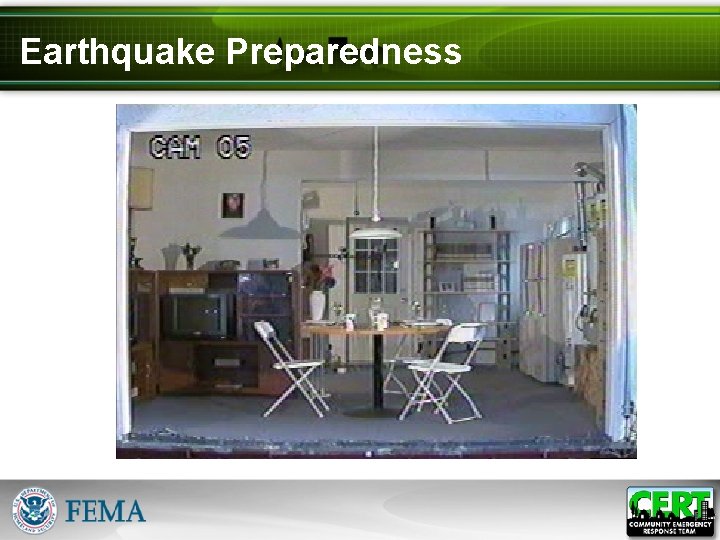
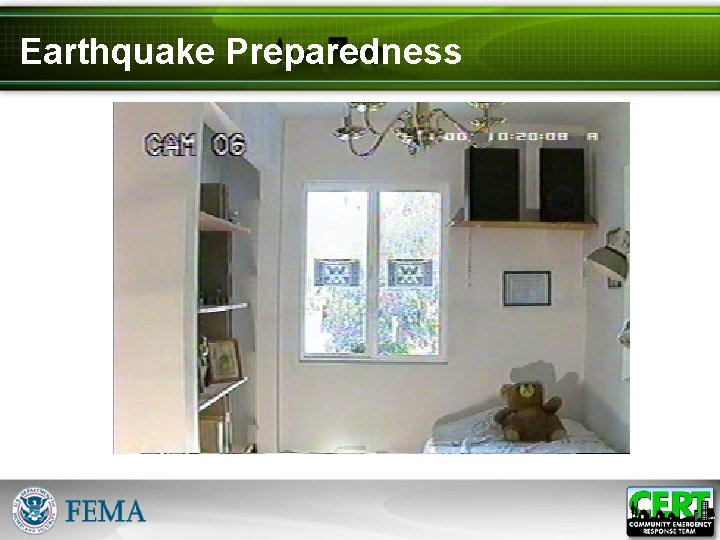
Earthquake Preparedness ● Store heavy and breakable objects on low shelves ● Secure bookshelves and water heaters ● Move beds away from windows
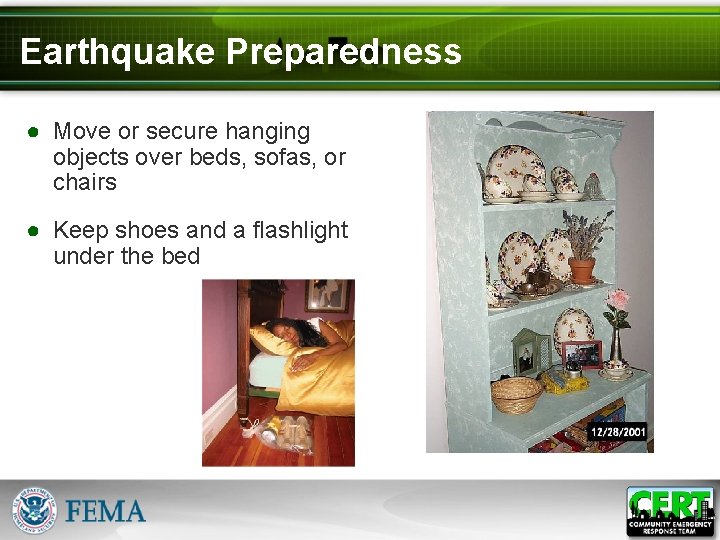
Earthquake Preparedness ● Move or secure hanging objects over beds, sofas, or chairs ● Keep shoes and a flashlight under the bed
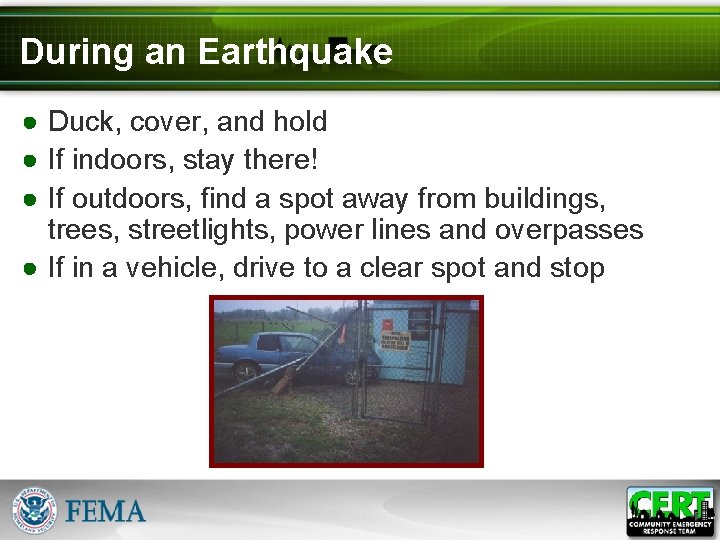
During an Earthquake ● Duck, cover, and hold ● If indoors, stay there! ● If outdoors, find a spot away from buildings, trees, streetlights, power lines and overpasses ● If in a vehicle, drive to a clear spot and stop
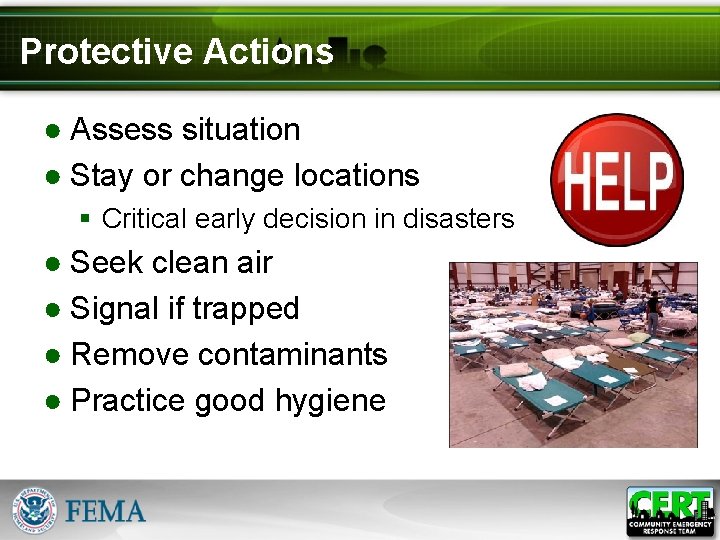
Protective Actions ● Assess situation ● Stay or change locations § Critical early decision in disasters ● Seek clean air ● Signal if trapped ● Remove contaminants ● Practice good hygiene
After an Earthquake ● Extinguish small fires ● Clean up spills ● Inspect home for damage ● Help neighbors ● Tune to Emergency Alert System (EAS) KCBS, KABC and KGO plus others ● Also called Bay Area Community Warning System (CWS) Notification Media ● Expect aftershocks
Bay Area CWS Alerts ● Sign up for cell phone alerts at ● Contra Costa County CWS – cwsalerts. com ● Nixle – www. nixle. com ● See alerts online at cwsalerts. com ● Sign up for email alerts at Nextdoor. com ● WCPD and other government entities post notices to Nextdoor
Bay Area CWS Notification Media Television KCRT Television Channel 4 (NBC) Channel 5 (CBS) Channel 9 (PBS) Contra Costa Television (CCTV) Radio Stations KCBS AM 740 KATD AM 990 KFRC AM 610 KEAR FM 106. 9 KOIT FM 96. 5 KFRC FM 99. 7 KQED FM 88. 5 KSTN FM 107. 3 KROW FM 104. 1 KYCY FM 93. 3 KZWC FM 88. 1 Shadow News Services Metro News Service
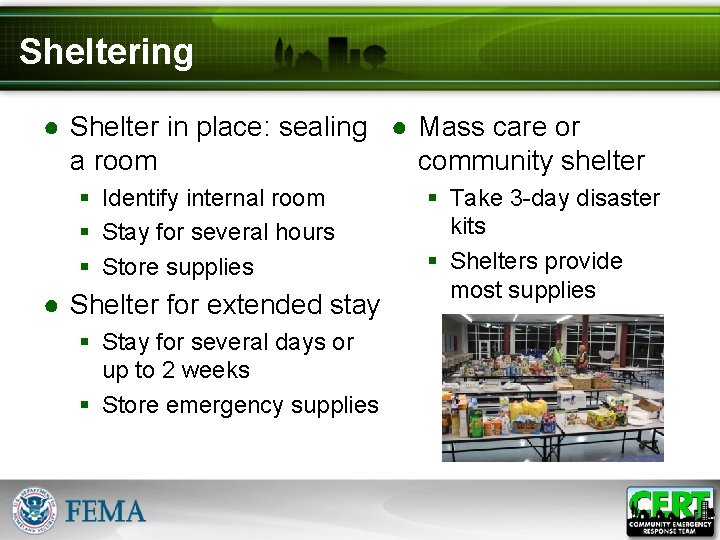
Sheltering ● Shelter in place: sealing ● Mass care or a room community shelter § Identify internal room § Stay for several hours § Store supplies ● Shelter for extended stay § Stay for several days or up to 2 weeks § Store emergency supplies § Take 3 -day disaster kits § Shelters provide most supplies
Earthquake Preparedness
Earthquake Preparedness
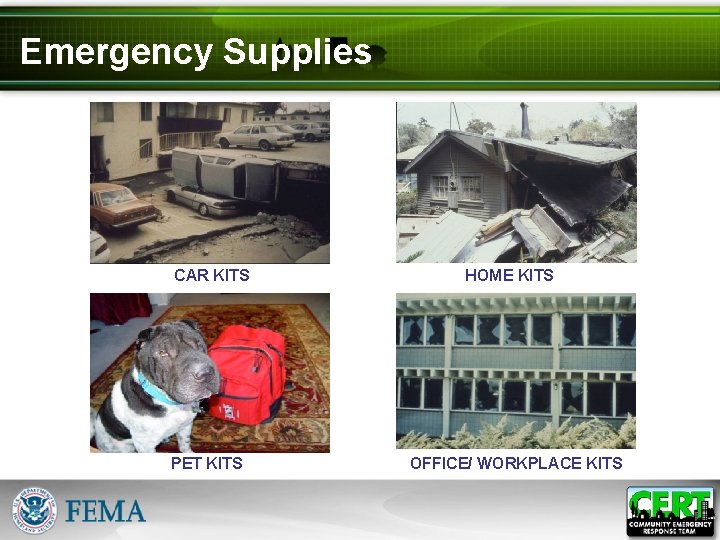
Emergency Supplies CAR KITS PET KITS HOME KITS OFFICE/ WORKPLACE KITS
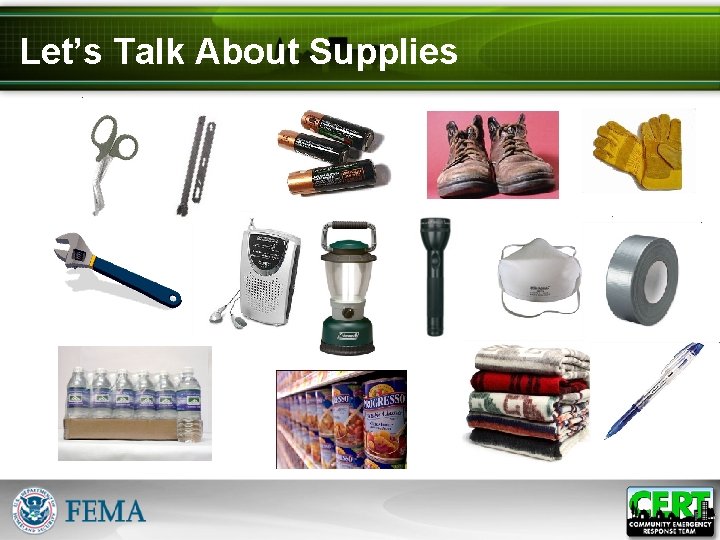
Let’s Talk About Supplies
Food and Water Choose foods that: ● You like ● Require little or no cooking or water for prep ● Require no refrigeration ● Do not increase thirst (e. g. low salt) ● Meet the needs of infants, diabetics or others with special needs Remember food for your pets, utensils and a manual can opener!
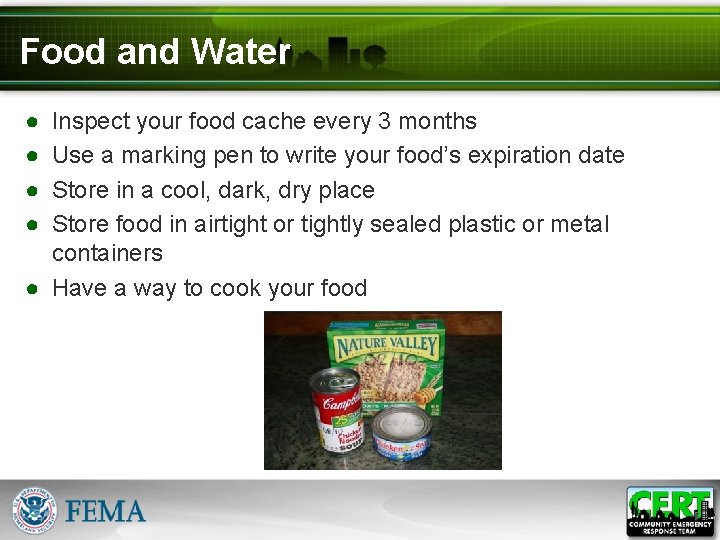
Food and Water ● ● Inspect your food cache every 3 months Use a marking pen to write your food’s expiration date Store in a cool, dark, dry place Store food in airtight or tightly sealed plastic or metal containers ● Have a way to cook your food
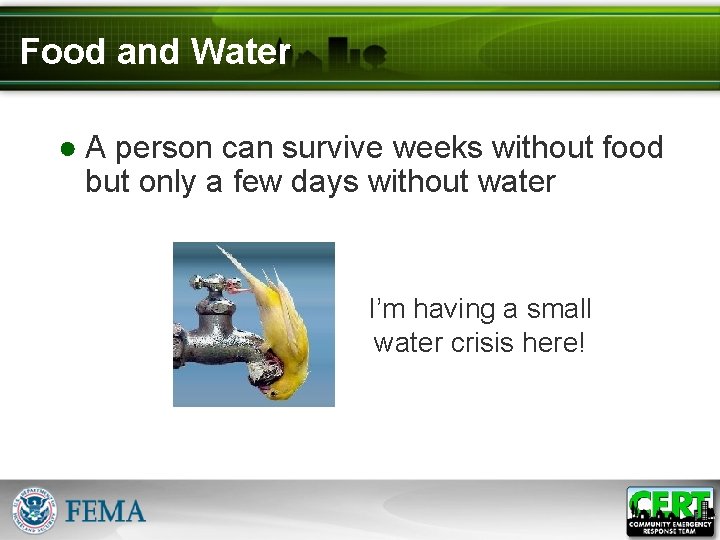
Food and Water ● A person can survive weeks without food but only a few days without water I’m having a small water crisis here!
Water ● Minimum one gallon person or pet per day for up to 14 days for consumption ● Use food grade plastic containers, do not used milk containers ● Observe the expiration date for store-bought water ● Replace other stored water every six months ● Store in a cool and dark place ● Use marking pen to mark expiration date ● Be prepared to disinfect additional water
Supplies ● First Aid/Medication ● Communication and Lighting ● Warmth, Shelter and Clothing ● Tools ● Sanitation ● Special needs
Where do we get supplies? ● Hardware stores ● Grocery stores ● Camping stores ● Emergency Preparedness stores ● Your instructor may have a list of local sources
Exercise Are YOU Ready? Olympics
Unit Summary ● You should now be able to: § Identify roles and responsibilities for community preparedness § Describe types of hazards that affect community, people, health, and infrastructure § Undertake personal and organizational preparedness actions § Describe functions of CERTs
- Slides: 30