
DISASTER MEDICAL OPERATIONS 1 Why it is important
- Slides: 9
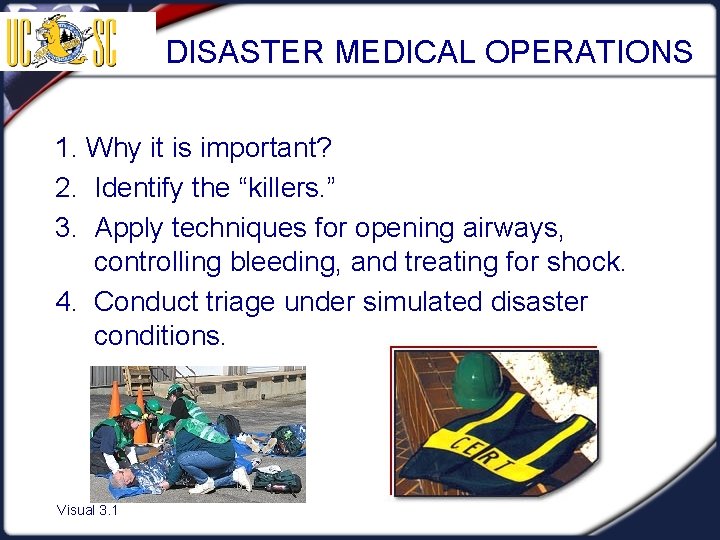
DISASTER MEDICAL OPERATIONS 1. Why it is important? 2. Identify the “killers. ” 3. Apply techniques for opening airways, controlling bleeding, and treating for shock. 4. Conduct triage under simulated disaster conditions. Visual 3. 1
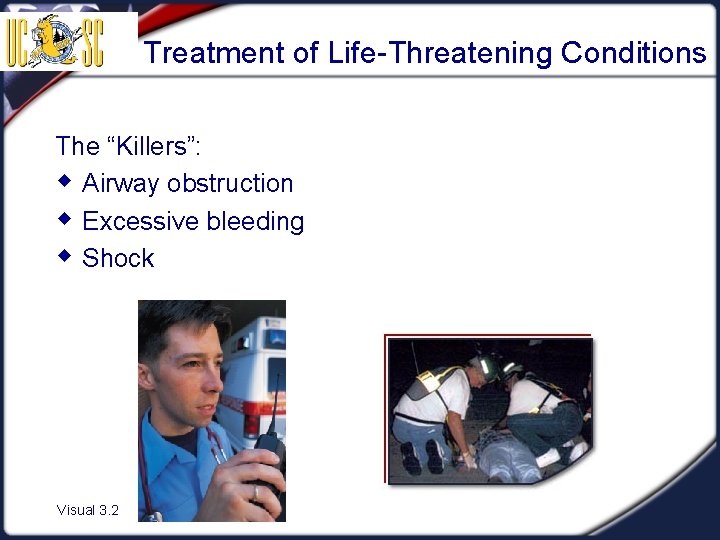
Treatment of Life-Threatening Conditions The “Killers”: w Airway obstruction w Excessive bleeding w Shock Visual 3. 2
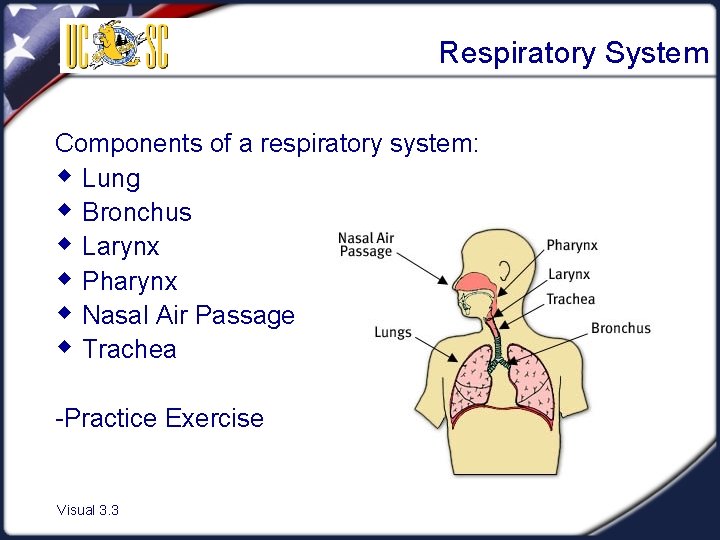
Respiratory System Components of a respiratory system: w Lung w Bronchus w Larynx w Pharynx w Nasal Air Passage w Trachea -Practice Exercise Visual 3. 3
Controlling Bleeding Types: w Arterial w Venous w Capillary Methods of control: w Direct pressure w Elevation w Pressure points -Practice Exercise Visual 3. 4
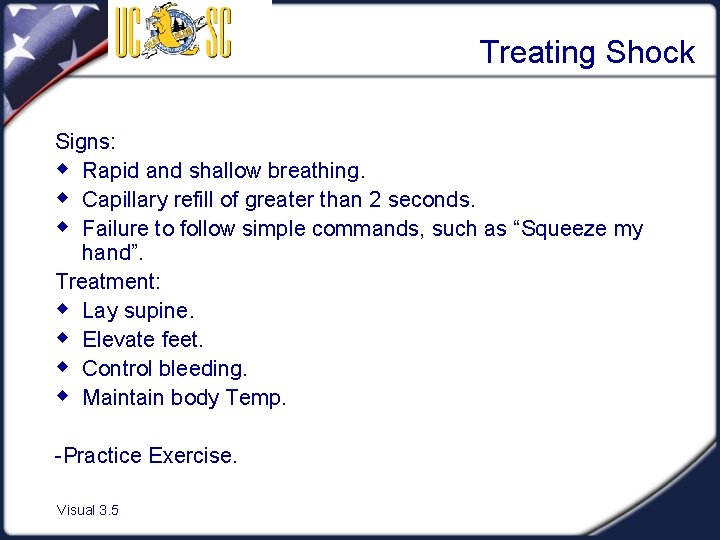
Treating Shock Signs: w Rapid and shallow breathing. w Capillary refill of greater than 2 seconds. w Failure to follow simple commands, such as “Squeeze my hand”. Treatment: w Lay supine. w Elevate feet. w Control bleeding. w Maintain body Temp. -Practice Exercise. Visual 3. 5
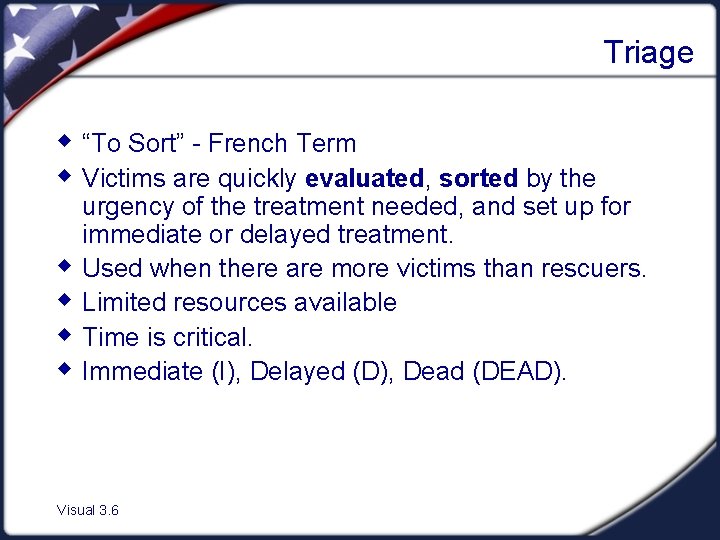
Triage w “To Sort” - French Term w Victims are quickly evaluated, sorted by the w w urgency of the treatment needed, and set up for immediate or delayed treatment. Used when there are more victims than rescuers. Limited resources available Time is critical. Immediate (I), Delayed (D), Dead (DEAD). Visual 3. 6
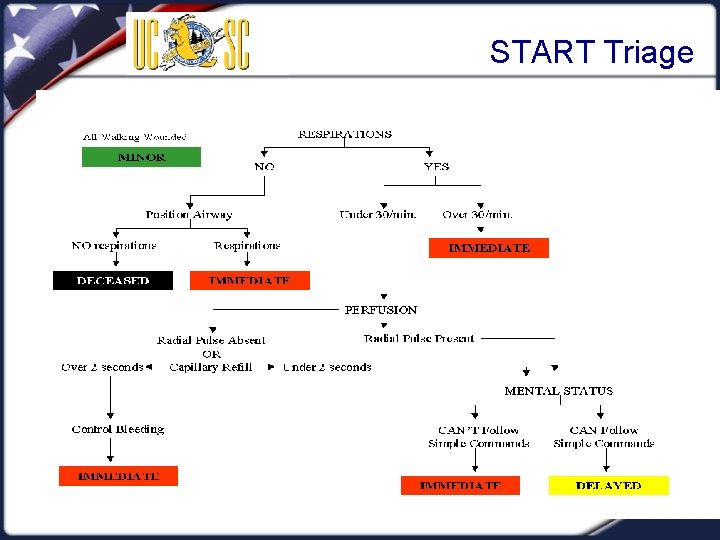
START Triage Visual 3. 7
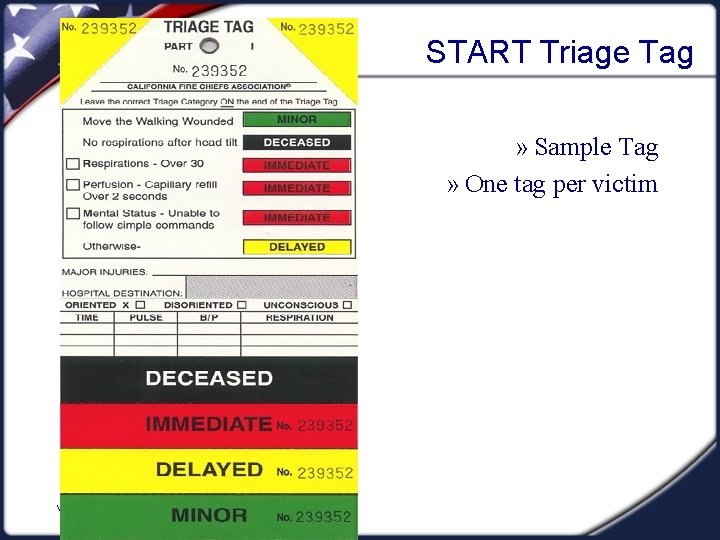
START Triage Tag » Sample Tag » One tag per victim Visual 3. 8
Triage Pitfalls w No team plan, organization, or goal w Indecisive leadership w Too much focus on one injury w Treatment (rather than triage) performed -Triage Exercise. Visual 3. 9