
Disaster and MultiCasualty Triage Amado Alejandro Bez MD
Disaster and Multi-Casualty Triage Amado Alejandro Báez MD MSc Matthew Sztajnkrycer MD Ph. D
Learning Objectives • Describe the key elements of disaster triage • Understand the basic principles of Mass Casualty Triage (START)
Performance Objectives • At the end of the course the student should be able to: • Apply the principles of disaster triage • Understand the concept of reverse triage
![Triage • [French, from trier, to sort, from Old French. ] • A method](http://slidetodoc.com/presentation_image_h/dfce0745b82d2ebf22c60540472bec98/image-4.jpg "Triage • [French, from trier, to sort, from Old French. ] • A method")
Triage • [French, from trier, to sort, from Old French. ] • A method of quickly identifying victims who have immediately life-threatening injuries AND who have the best chance of surviving.

Tagging • Complements Triage • Rapid Identification of patient • Color Coded / Bar Coded system • Plastic “bands” can substitute tags
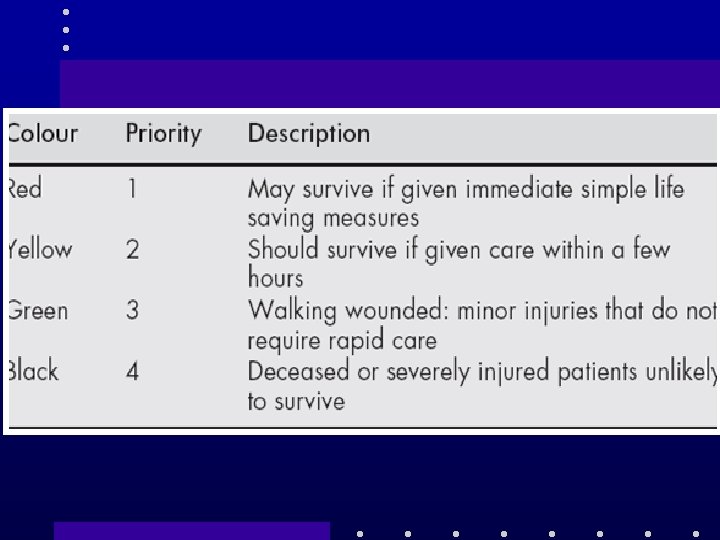
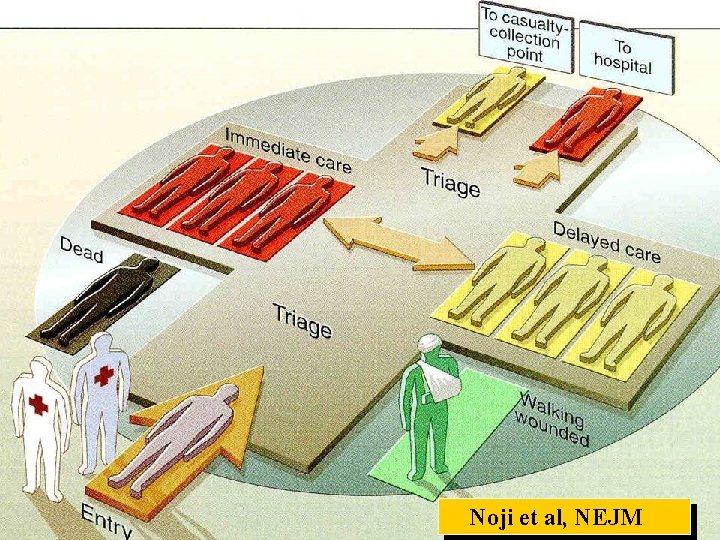
Noji et al, NEJM
START SYSTEM • Created in the 1980’s by Hoag Hospital and the Newport Beach CA Fire Dept • Allows rapid assessment of victims • It should not take more than 15 sec/ Pt • Once victim is in treatment area more detailed assessment should be made
START SYSTEM Clasification is based on three items • Respiratory • Perfusion • Mental status evaluation
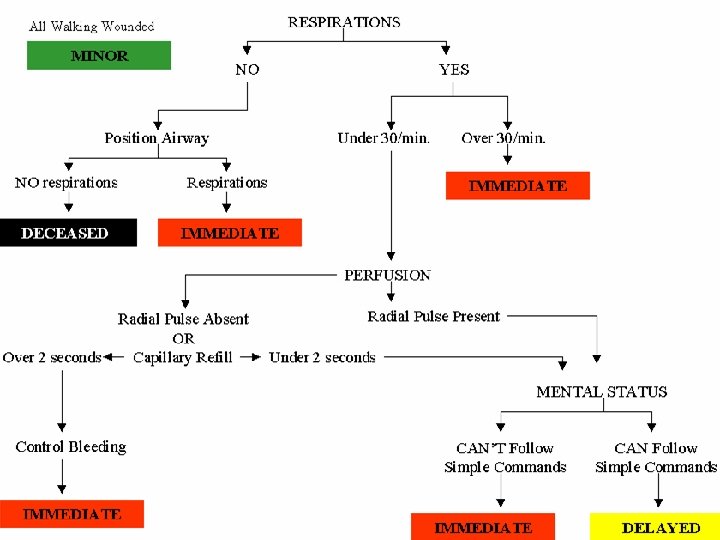
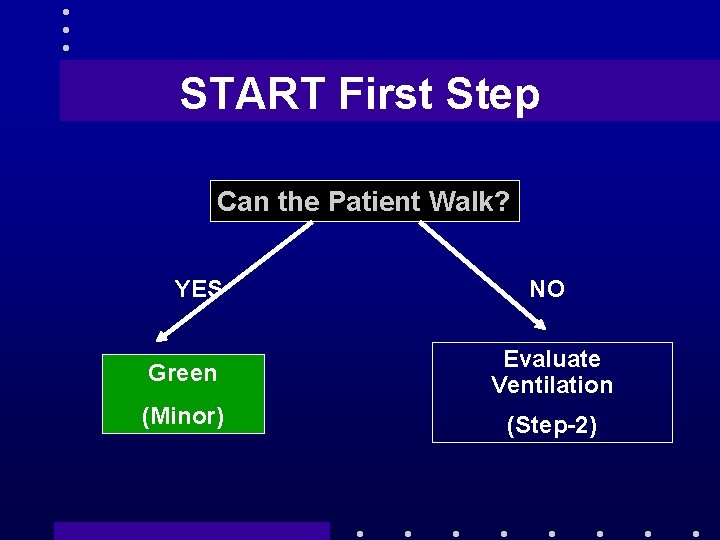
START First Step Can the Patient Walk? YES NO Green Evaluate Ventilation (Minor) (Step-2)
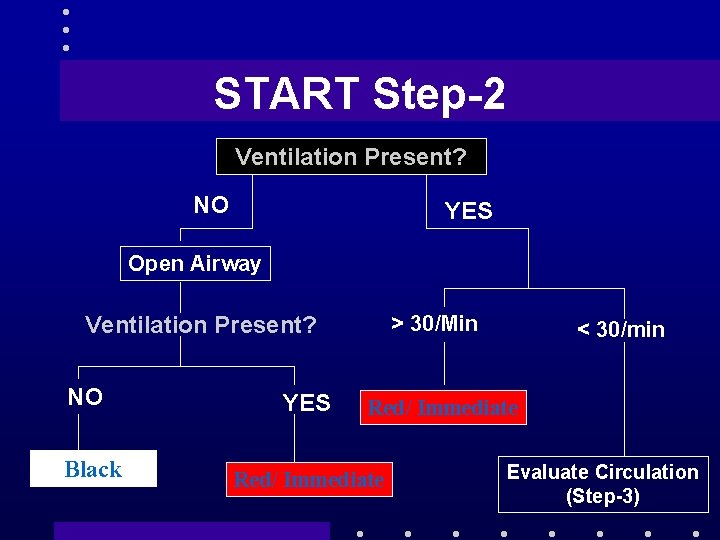
START Step-2 Ventilation Present? NO YES Open Airway > 30/Min Ventilation Present? NO Black YES < 30/min Red/ Immediate Evaluate Circulation (Step-3)
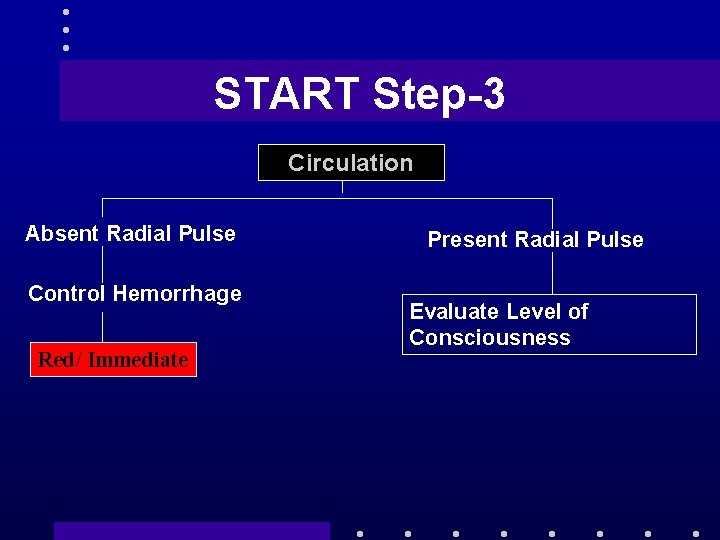
START Step-3 Circulation Absent Radial Pulse Control Hemorrhage Red/ Immediate Present Radial Pulse Evaluate Level of Consciousness
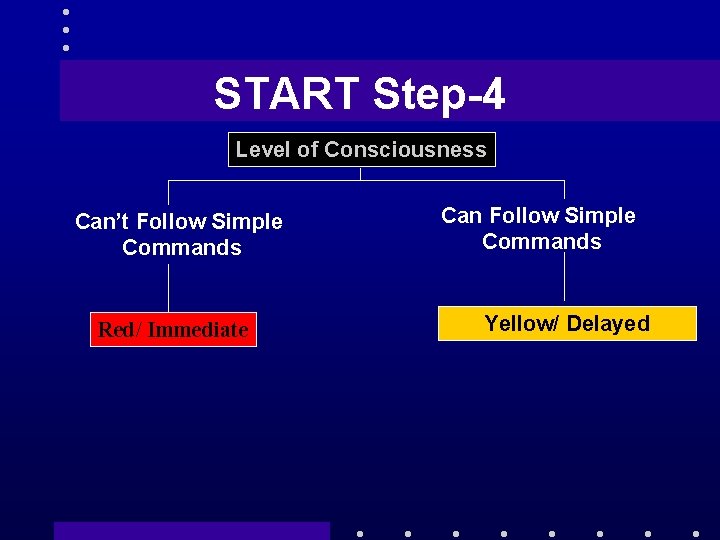
START Step-4 Level of Consciousness Can’t Follow Simple Commands Red/ Immediate Can Follow Simple Commands Yellow/ Delayed
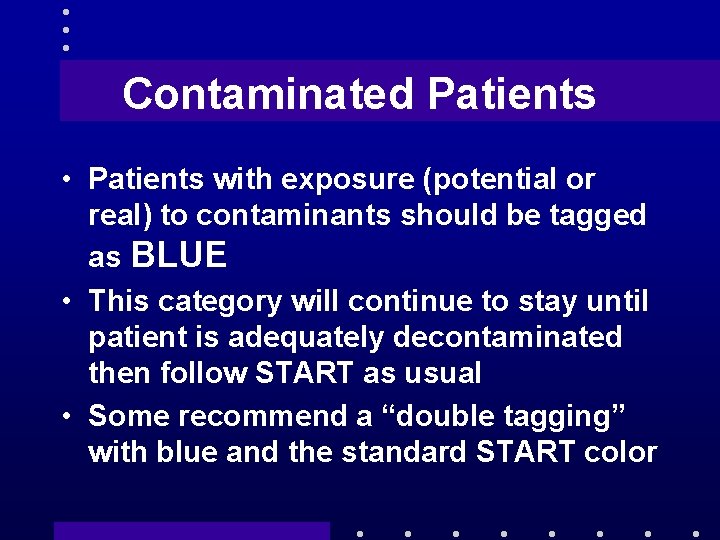
Contaminated Patients • Patients with exposure (potential or real) to contaminants should be tagged as BLUE • This category will continue to stay until patient is adequately decontaminated then follow START as usual • Some recommend a “double tagging” with blue and the standard START color
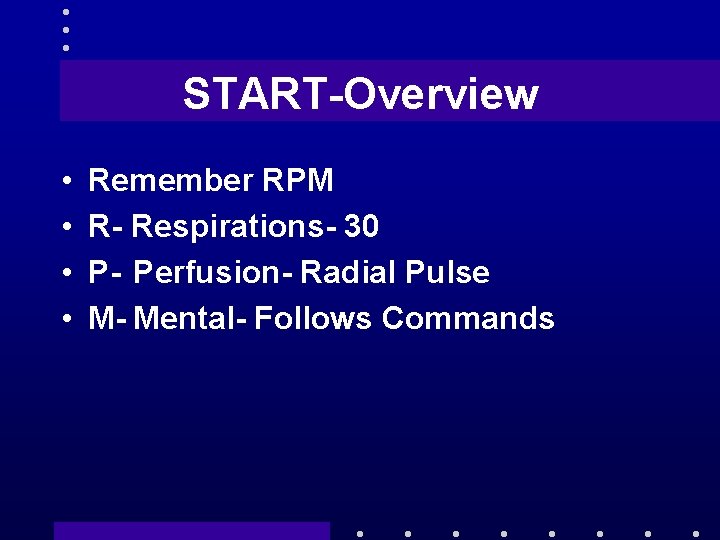
START-Overview • • Remember RPM R- Respirations- 30 P- Perfusion- Radial Pulse M- Mental- Follows Commands
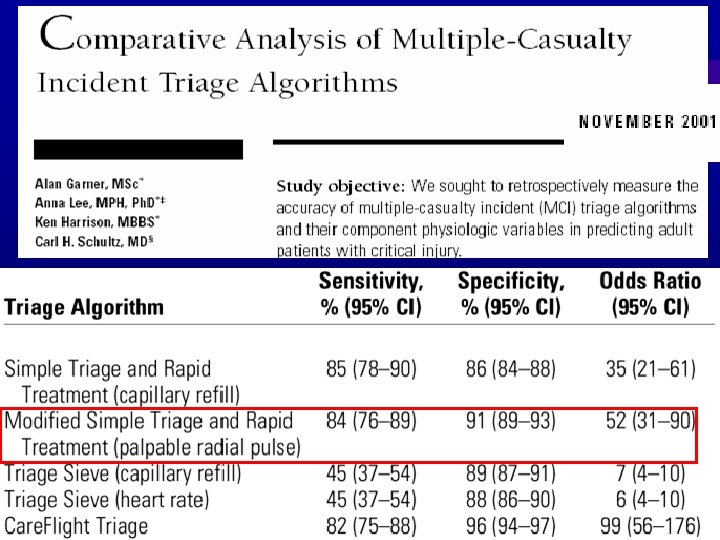
START System and the Evidence
Reverse Triage • Used in mass-casualty lightning injuries • The dead are treated first • High potential for respiratory arrest • Potential for resuscitative success
Conclusions • Triage is a method of quickly identifying victims who have immediately lifethreatening injuries AND who have the best chance of surviving • Key elements of the START Triage System are: Respiration, Perfusion and Mentation • Reverse Triage is used for mass casualty lightning incidents.
- Slides: 20