
disaccharides alcohol aldehyde hemiacetal unstable hemiacetal condensation H
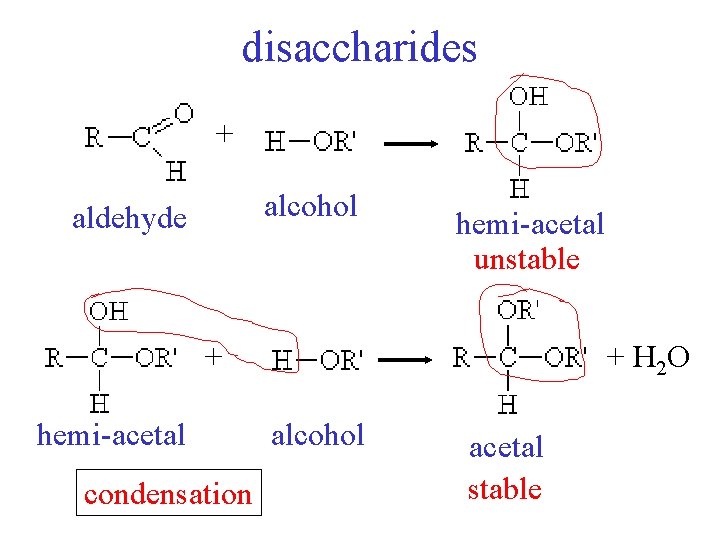
disaccharides + alcohol aldehyde hemi-acetal unstable + hemi-acetal condensation + H 2 O alcohol acetal stable
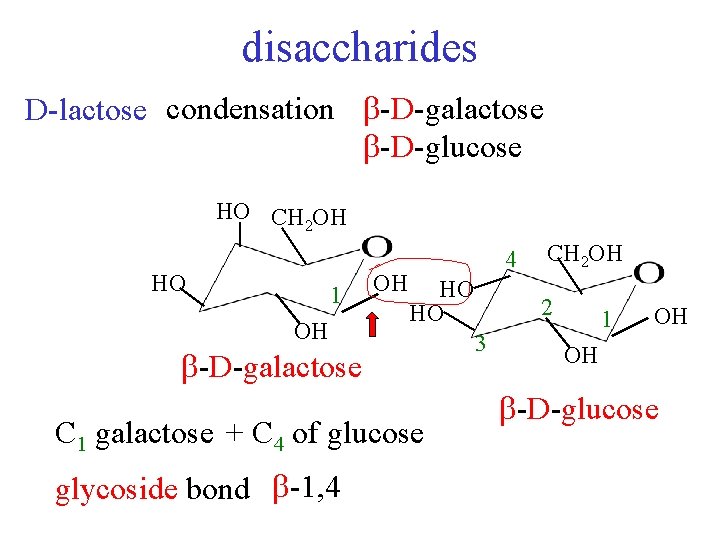
disaccharides D-lactose condensation -D-galactose -D-glucose HO CH 2 OH HO 1 OH OH 4 HO HO -D-galactose C 1 galactose + C 4 of glucose D-galactose glycoside bond -1, 4 CH 2 OH 2 3 1 OH OH -D-glucose
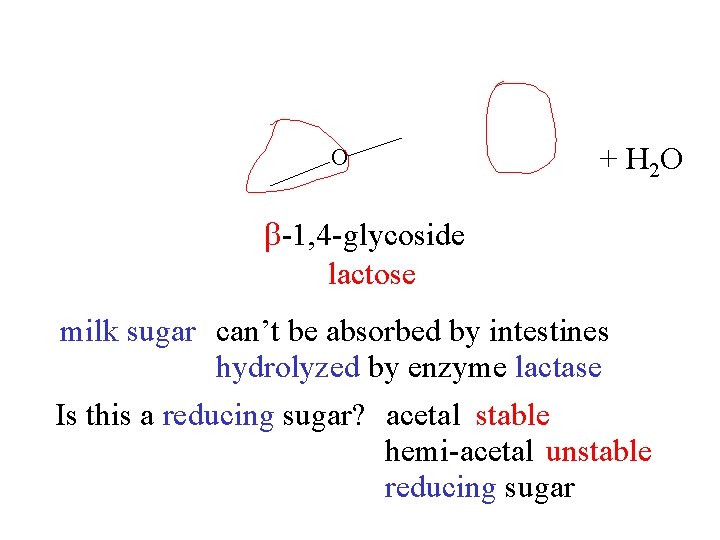
O + H 2 O -D-galactose -D-glucose -1, 4 -glycoside lactose milk sugar can’t be absorbed by intestines hydrolyzed by enzyme lactase Is this a reducing sugar? acetal stable hemi-acetal unstable reducing sugar
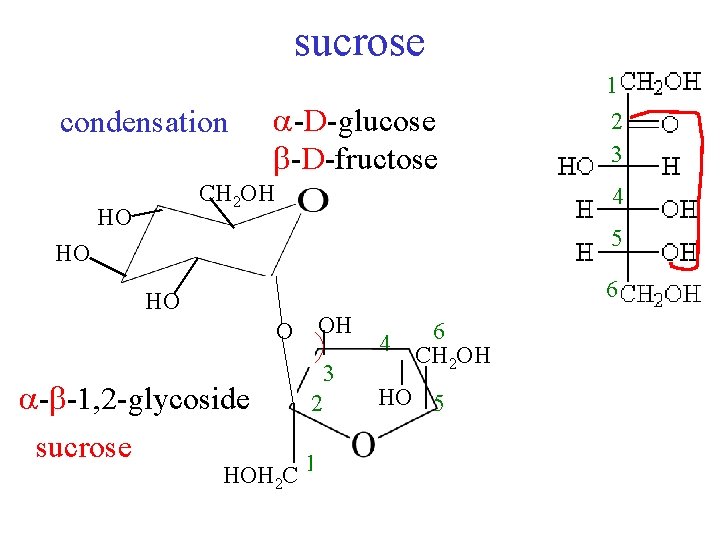
sucrose 1 condensation -D-glucose -D-fructose CH 2 OH HO 2 3 4 5 HO 6 HO -D-glucose - -1, 2 -glycoside sucrose OH OH 3 2 HOH 2 C 1 4 6 CH 2 OH HO 5 - D-fructose
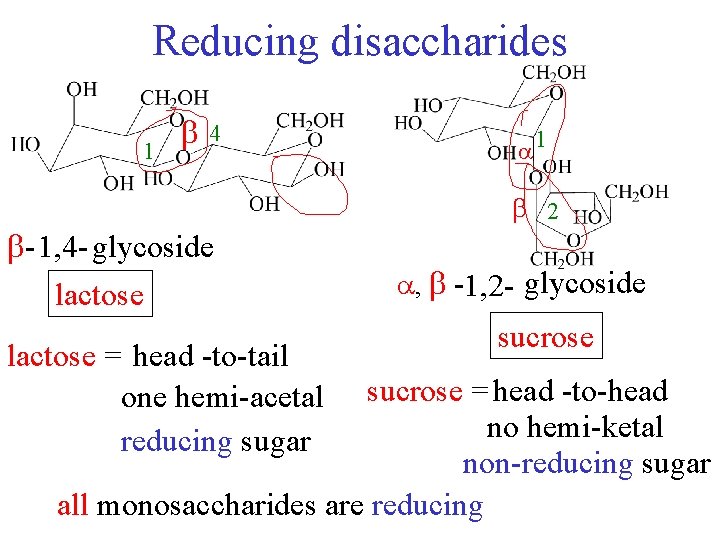
Reducing disaccharides 1 4 1 2 - 1, 4 - glycoside lactose = head -to-tail one hemi-acetal reducing sugar , -1, 2 - glycoside sucrose = head -to-head no hemi-ketal non-reducing sugar all monosaccharides are reducing
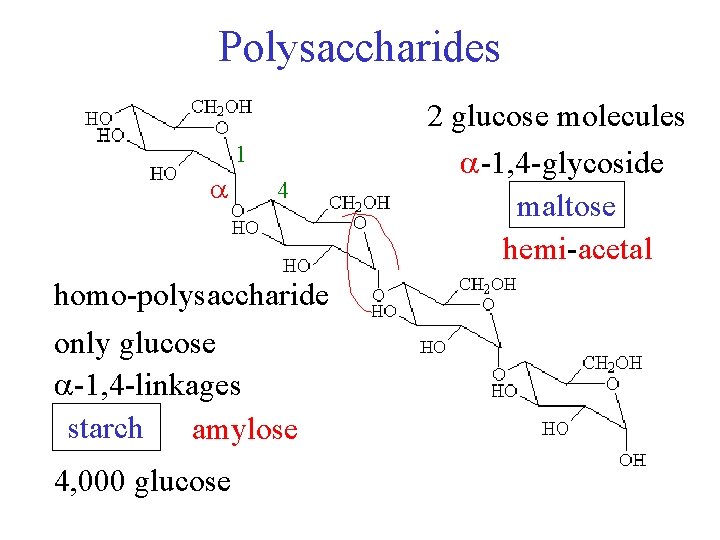
Polysaccharides 1 4 homo-polysaccharide only glucose -1, 4 -linkages starch amylose 4, 000 glucose 2 glucose molecules -1, 4 -glycoside maltose hemi-acetal
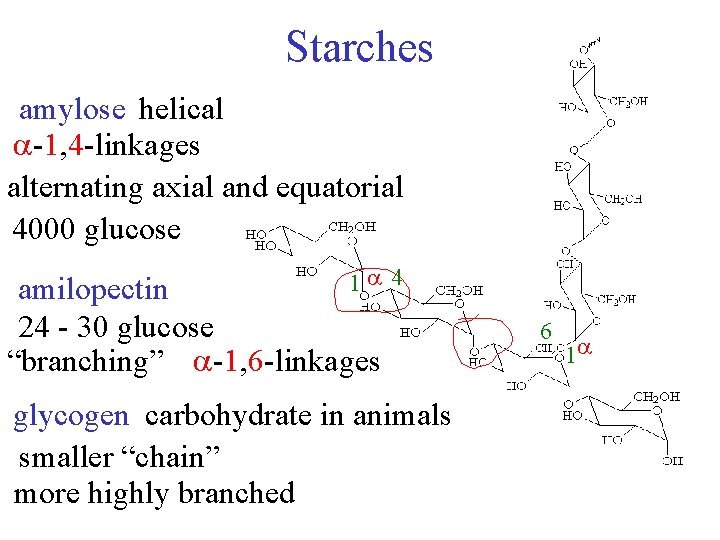
Starches amylose helical -1, 4 -linkages alternating axial and equatorial 4000 glucose 1 4 amilopectin 24 - 30 glucose “branching” -1, 6 -linkages glycogen carbohydrate in animals smaller “chain” more highly branched 6 1
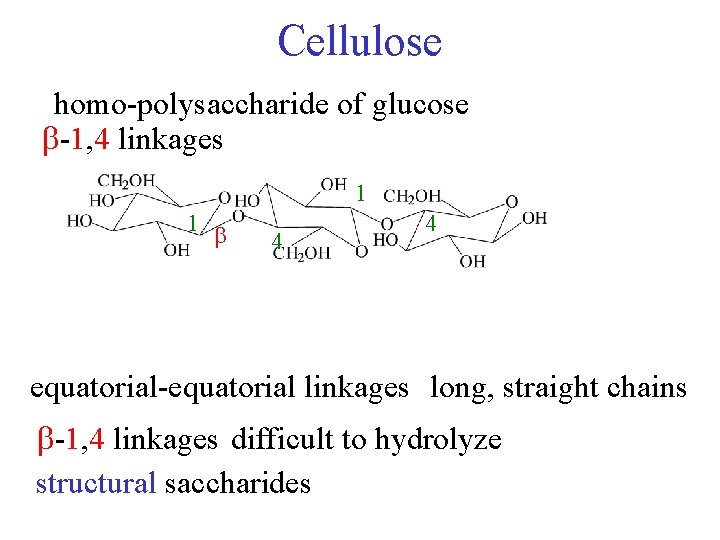
Cellulose homo-polysaccharide of glucose -1, 4 linkages 1 1 4 4 equatorial-equatorial linkages long, straight chains -1, 4 linkages difficult to hydrolyze structural saccharides
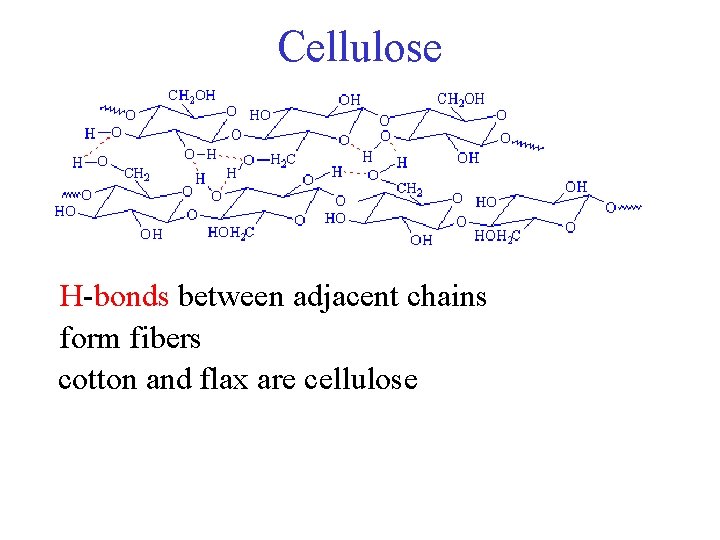
Cellulose H-bonds between adjacent chains form fibers cotton and flax are cellulose
- Slides: 9