
Disability and Voluntarism 1965 1995 an effective force
Disability and Voluntarism 1965 - 1995 – an effective force in policy making? Gareth Millward Centre for History in Public Health London School of Hygiene and Tropical Medicine
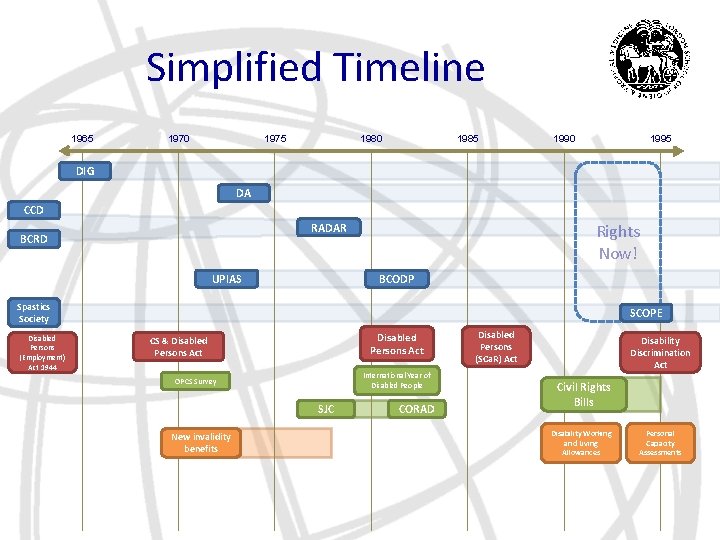
Simplified Timeline 1965 1970 1975 1980 1985 1990 1995 DIG DA CCD Rights Now! RADAR BCRD UPIAS BCODP Spastics Society Disabled Persons (Employment) Act 1944 SCOPE Disabled Persons Act CS & Disabled Persons Act International Year of Disabled People OPCS Survey SJC New invalidity benefits CORAD Disabled Persons (SCa. R) Act Disability Discrimination Act Civil Rights Bills Disability Working and Living Allowances Personal Capacity Assessments
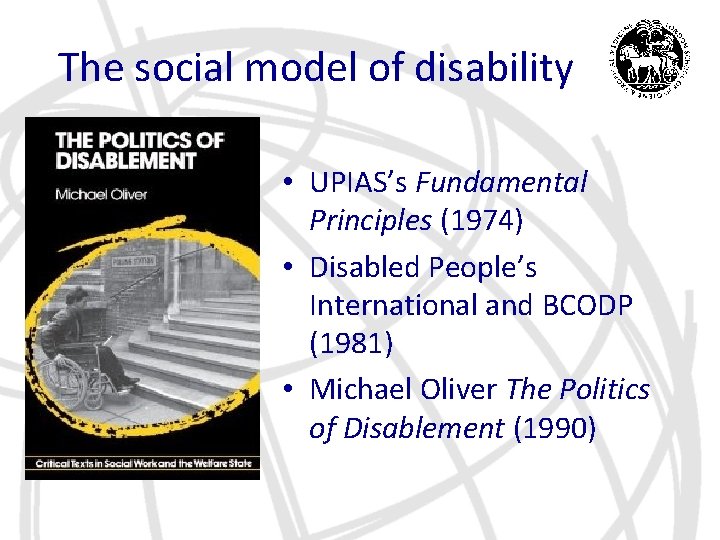
The social model of disability • UPIAS’s Fundamental Principles (1974) • Disabled People’s International and BCODP (1981) • Michael Oliver The Politics of Disablement (1990)
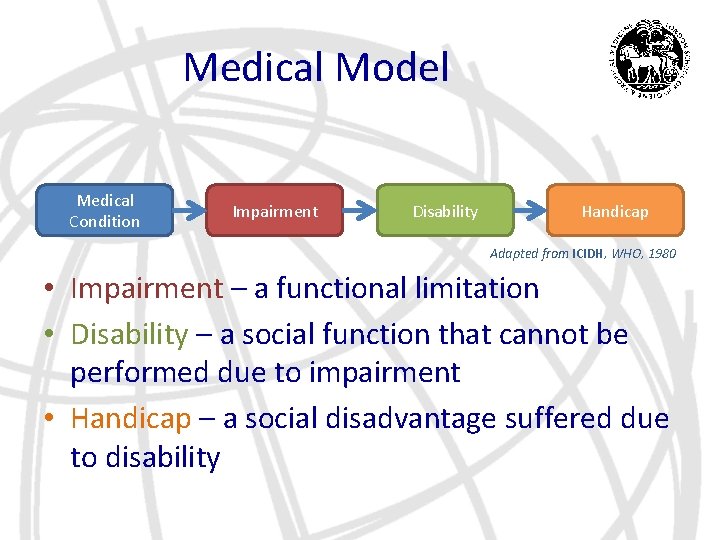
Medical Model Medical Condition Impairment Disability Handicap Adapted from ICIDH, WHO, 1980 • Impairment – a functional limitation • Disability – a social function that cannot be performed due to impairment • Handicap – a social disadvantage suffered due to disability
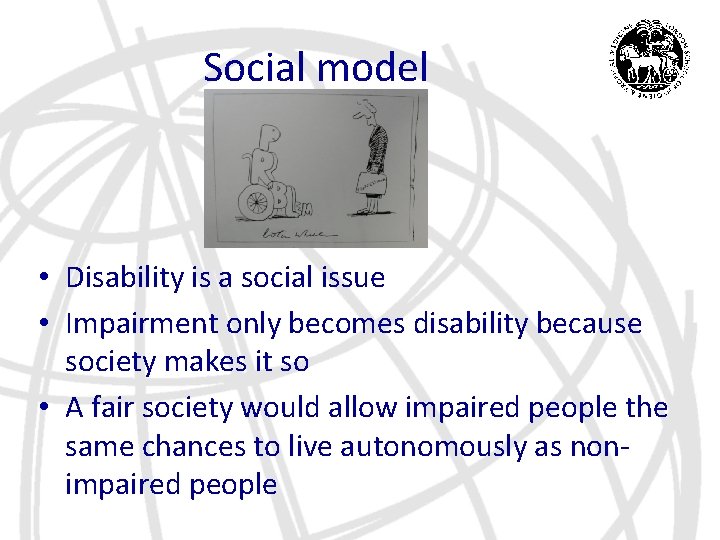
Social model • Disability is a social issue • Impairment only becomes disability because society makes it so • A fair society would allow impaired people the same chances to live autonomously as nonimpaired people
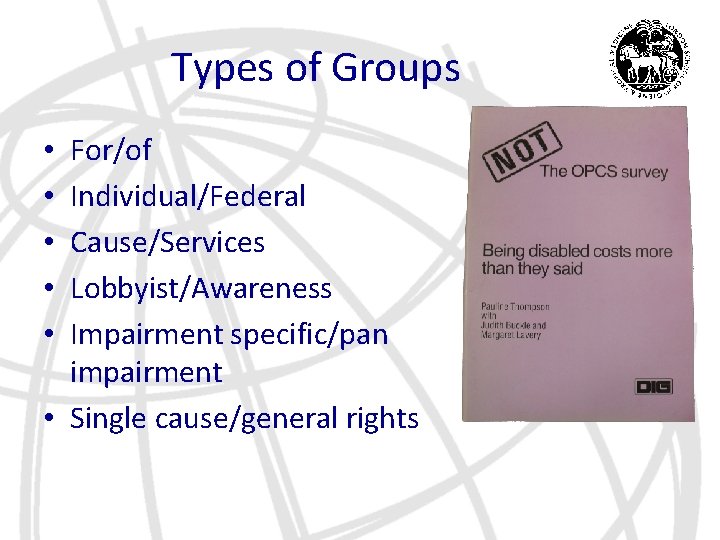
Types of Groups For/of Individual/Federal Cause/Services Lobbyist/Awareness Impairment specific/pan impairment • Single cause/general rights • • •
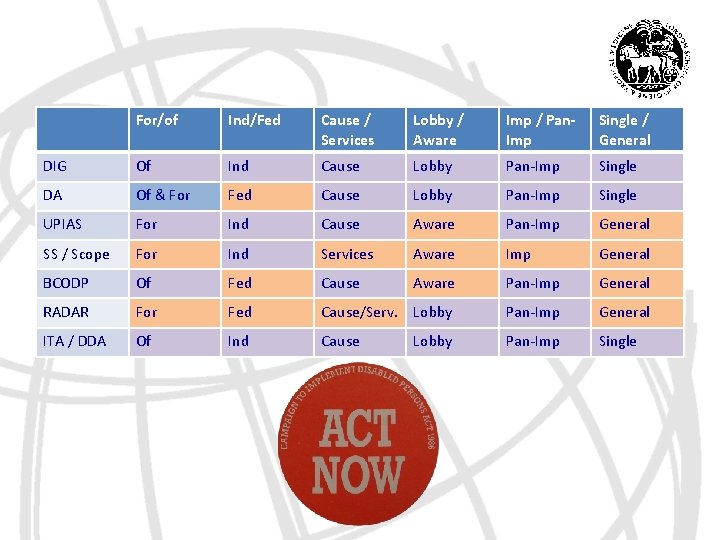
For/of Ind/Fed Cause / Services Lobby / Aware Imp / Pan. Imp Single / General DIG Of Ind Cause Lobby Pan-Imp Single DA Of & For Fed Cause Lobby Pan-Imp Single UPIAS For Ind Cause Aware Pan-Imp General SS / Scope For Ind Services Aware Imp General BCODP Of Fed Cause Aware Pan-Imp General RADAR For Fed Cause/Serv. Lobby Pan-Imp General ITA / DDA Of Ind Cause Pan-Imp Single Lobby
Insider/Outsider • Big charities – definitely “in”, but not actively attempting to adjust conceptions of disability • DIG, DA, RADAR – “experts” • BCODP – not in, though perhaps not trying?
The role of individuals • A small network of agitators, highly skilled and highly motivated. • Personal relationships important in discussions between “offices” • However – also very similar demographics. A certain “type” of disabled person.
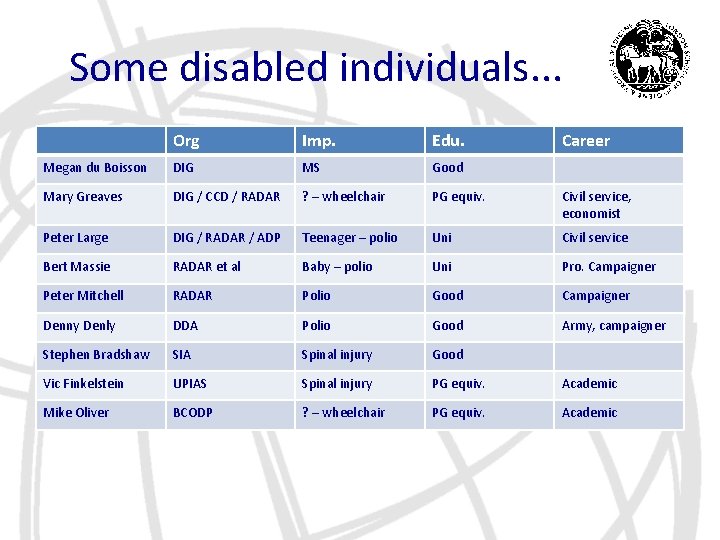
Some disabled individuals. . . Org Imp. Edu. Career Megan du Boisson DIG MS Good Mary Greaves DIG / CCD / RADAR ? – wheelchair PG equiv. Civil service, economist Peter Large DIG / RADAR / ADP Teenager – polio Uni Civil service Bert Massie RADAR et al Baby – polio Uni Pro. Campaigner Peter Mitchell RADAR Polio Good Campaigner Denny Denly DDA Polio Good Army, campaigner Stephen Bradshaw SIA Spinal injury Good Vic Finkelstein UPIAS Spinal injury PG equiv. Academic Mike Oliver BCODP ? – wheelchair PG equiv. Academic
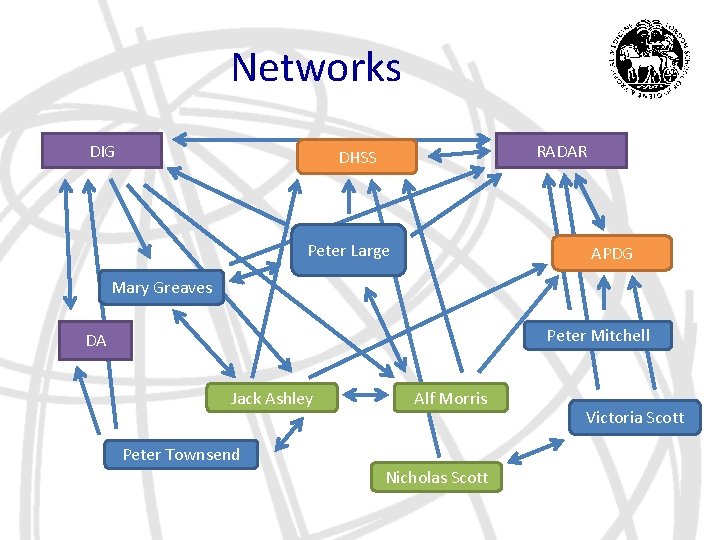
Networks DIG RADAR DHSS Peter Large APDG Mary Greaves Peter Mitchell DA Jack Ashley Alf Morris Peter Townsend Nicholas Scott Victoria Scott
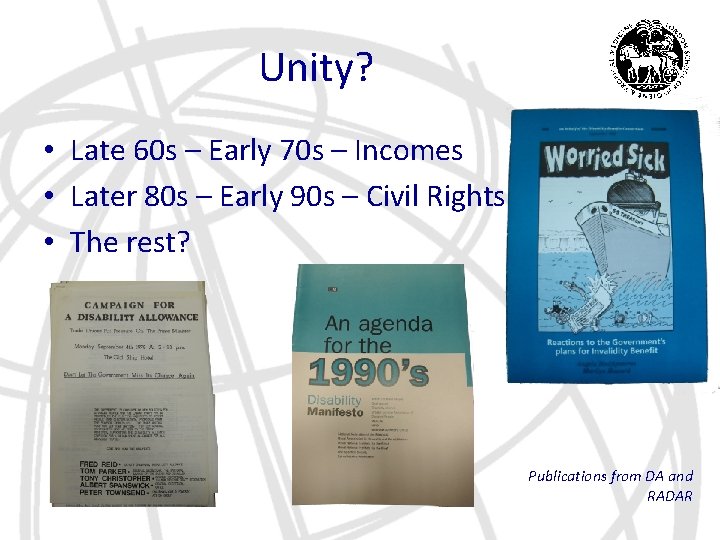
Unity? • Late 60 s – Early 70 s – Incomes • Later 80 s – Early 90 s – Civil Rights • The rest? Publications from DA and RADAR
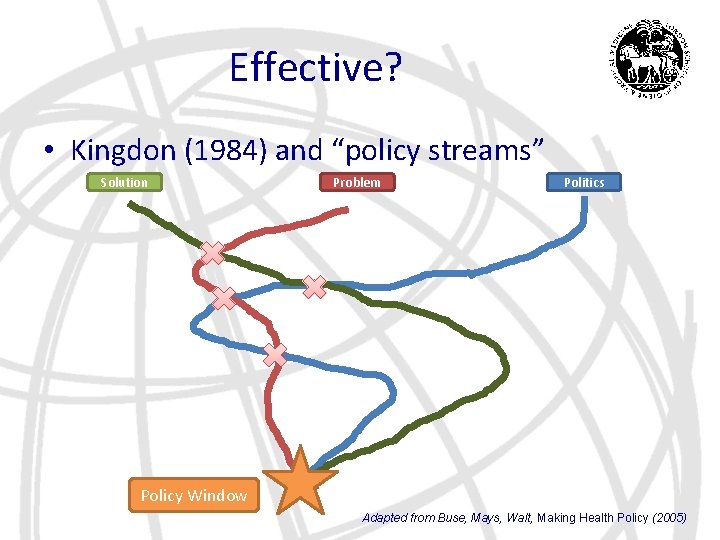
Effective? • Kingdon (1984) and “policy streams” Solution Problem Politics Policy Window Adapted from Buse, Mays, Walt, Making Health Policy (2005)

Effective? • Excellent manipulation of “problem” and “politics” • Poor at influencing “solution” The Times, 15 th November 1971, p. 1.
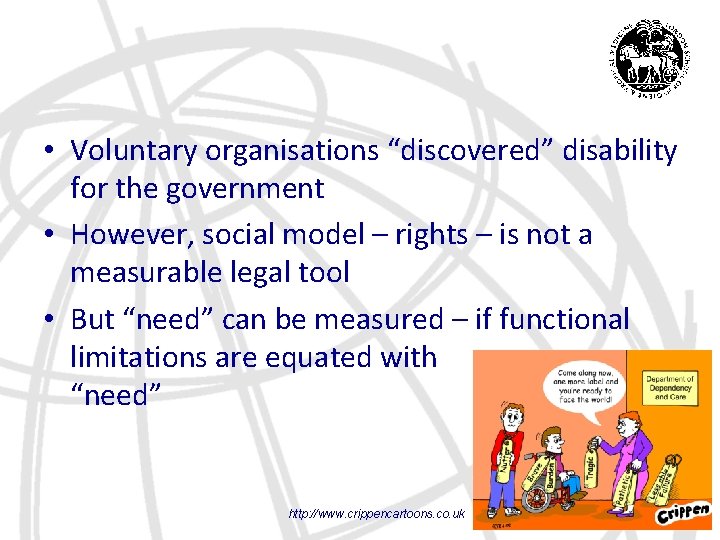
• Voluntary organisations “discovered” disability for the government • However, social model – rights – is not a measurable legal tool • But “need” can be measured – if functional limitations are equated with “need” http: //www. crippencartoons. co. uk
Outcome Examples • DDA employment sections did not apply to businesses employing fewer than 20 people • New capacity tests looked at medically ascertainable functional limitations – not disease nomenclature • Benefits paid more equally based on need – but still at levels far too low to alleviate poverty
Conclusions. . . • Style, type, aims and background of both individuals and organisations • The networks – how, why and when interactions take place • Times of unity, broadly times of change • Extent, scope and efficiency of said change more problematic
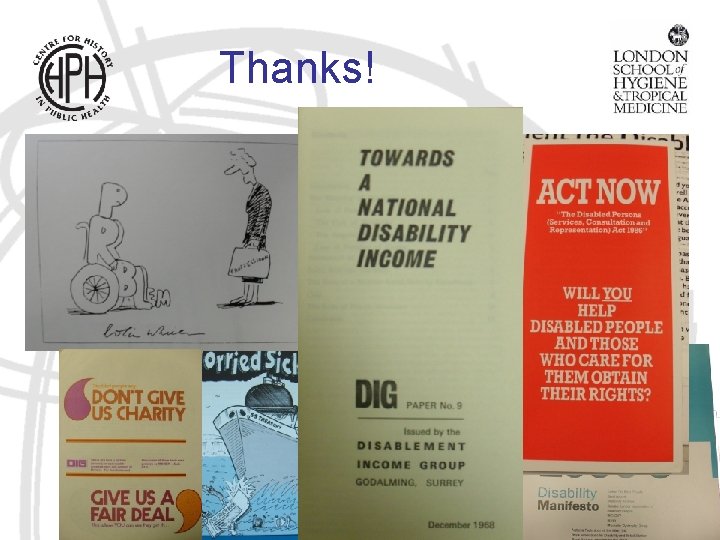
Thanks!
- Slides: 18