
Directional Terms Planes Anatomy and Physiology Anatomical Orientation

- Slides: 18
Directional Terms & Planes Anatomy and Physiology
Anatomical Orientation • Standard position of the body • Why? • Must have a reference point for directional terms and descriptions
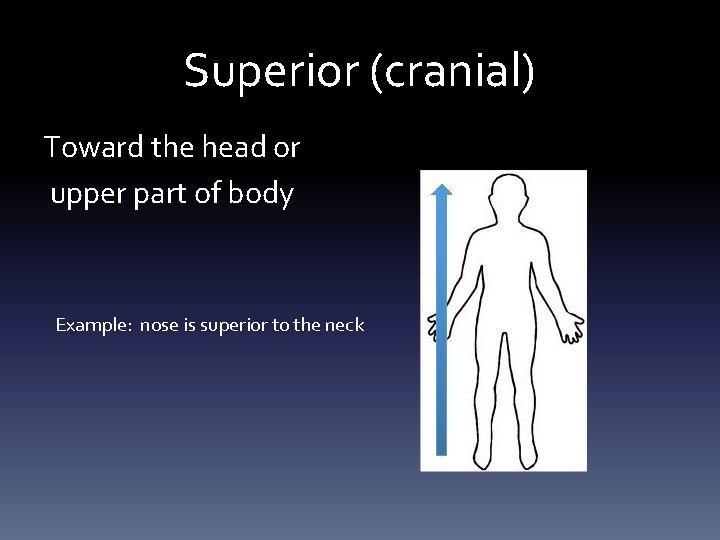
Superior (cranial) Toward the head or upper part of body Example: nose is superior to the neck
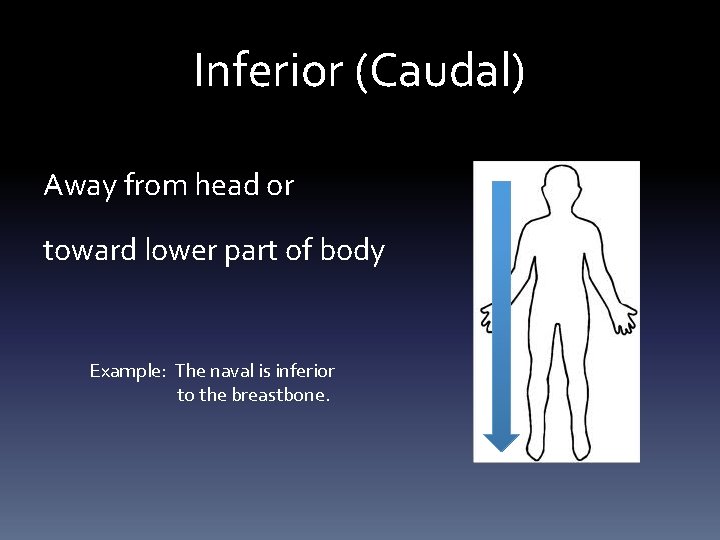
Inferior (Caudal) Away from head or toward lower part of body Example: The naval is inferior to the breastbone.
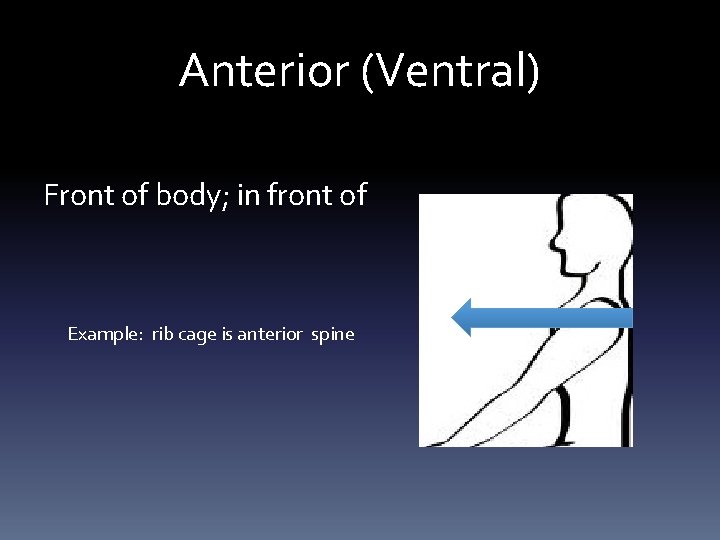
Anterior (Ventral) Front of body; in front of Example: rib cage is anterior spine
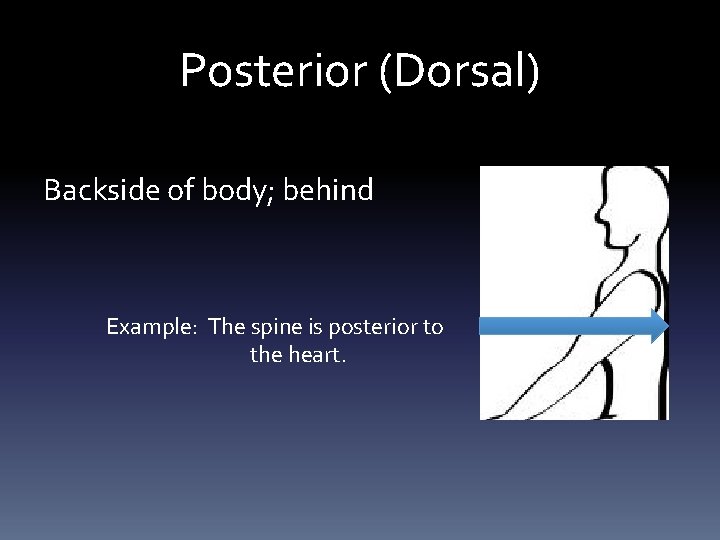
Posterior (Dorsal) Backside of body; behind Example: The spine is posterior to the heart.
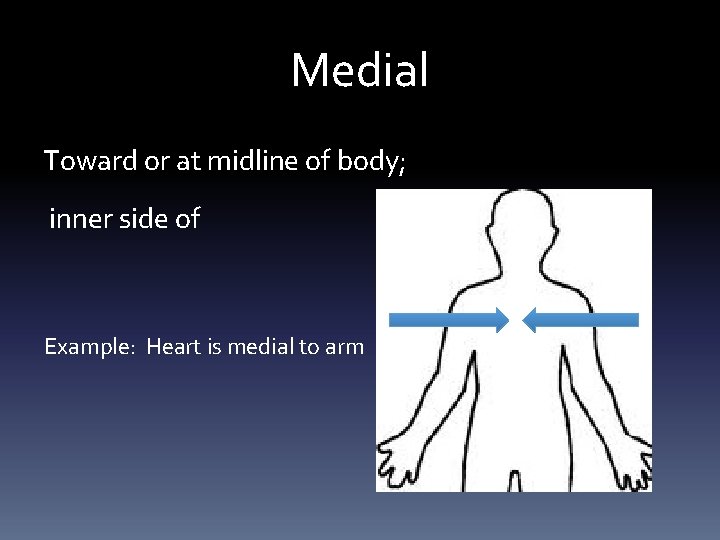
Medial Toward or at midline of body; inner side of Example: Heart is medial to arm
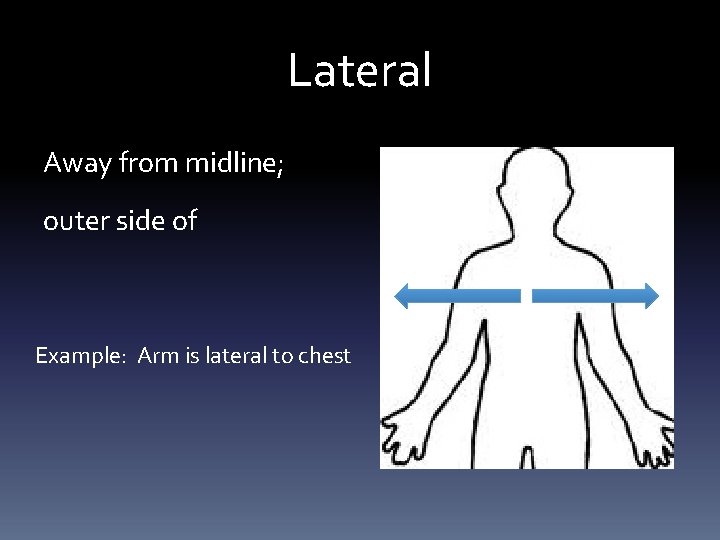
Lateral Away from midline; outer side of Example: Arm is lateral to chest
Superficial (External) Toward or at body surface Example: Skin is superficial to skeleton
Deep (internal) Away from body surface; internal Example: Lungs deep to rib cage
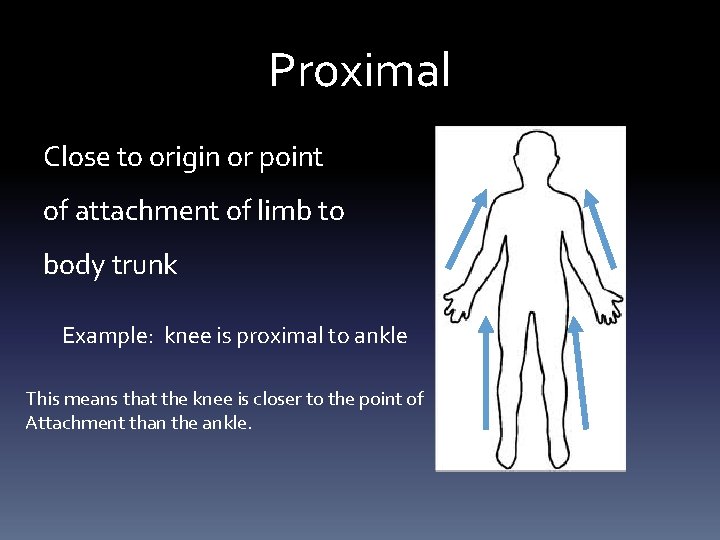
Proximal Close to origin or point of attachment of limb to body trunk Example: knee is proximal to ankle This means that the knee is closer to the point of Attachment than the ankle.
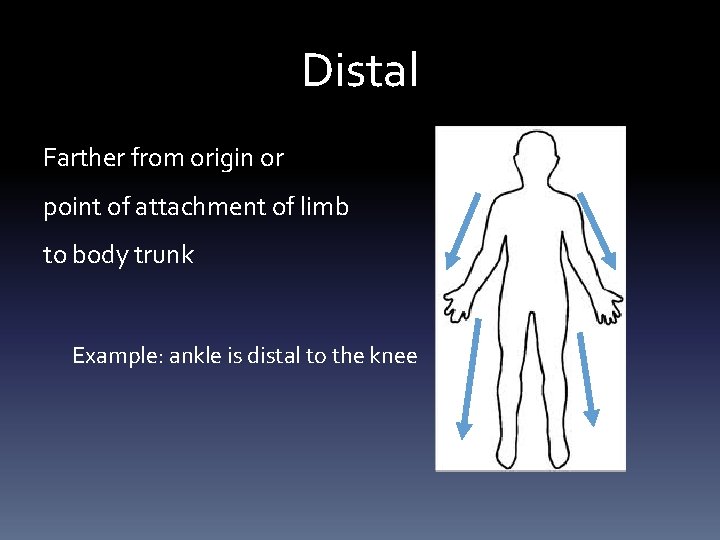
Distal Farther from origin or point of attachment of limb to body trunk Example: ankle is distal to the knee
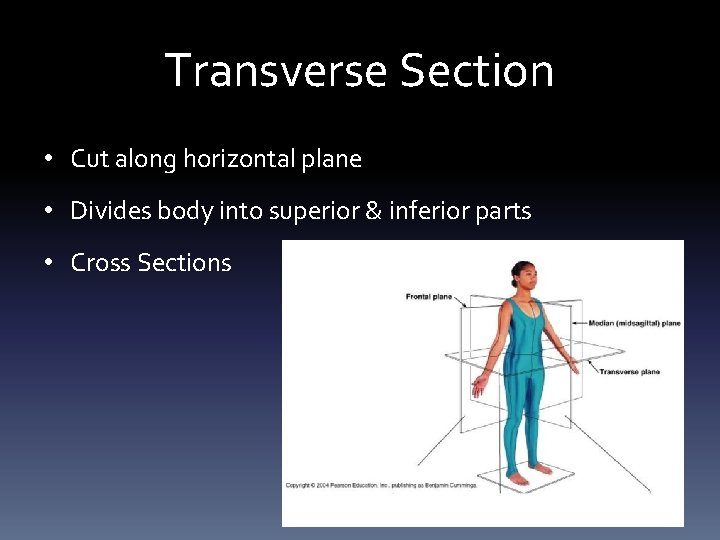
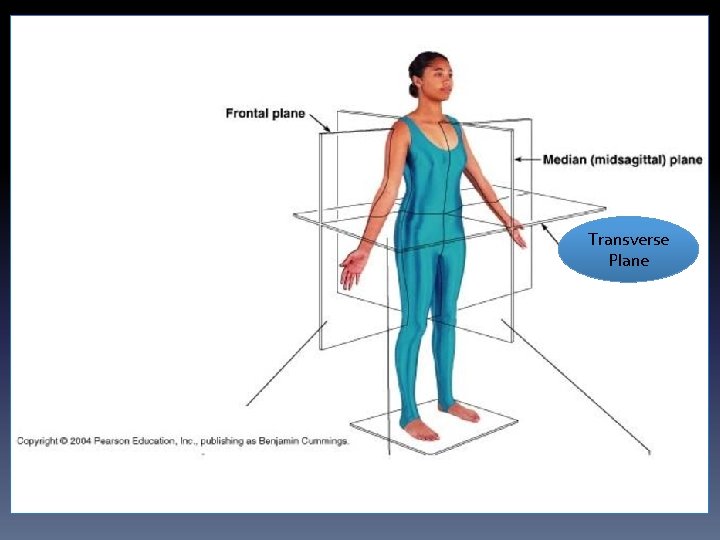
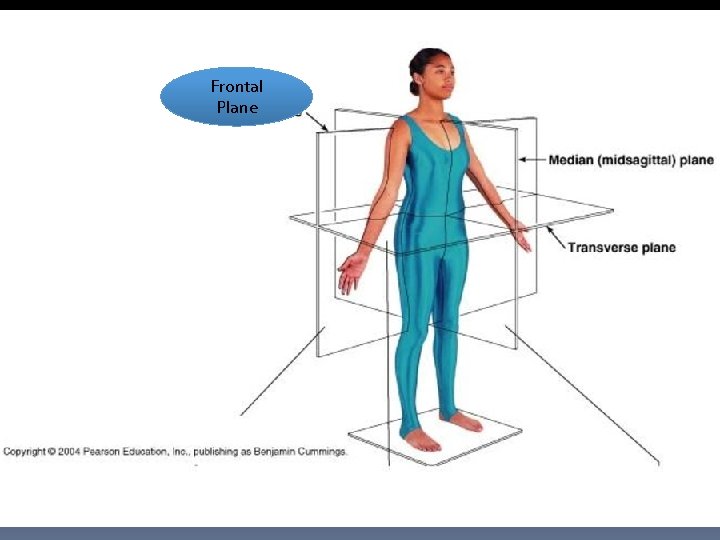
Transverse Section • Cut along horizontal plane • Divides body into superior & inferior parts • Cross Sections
Transverse Plane
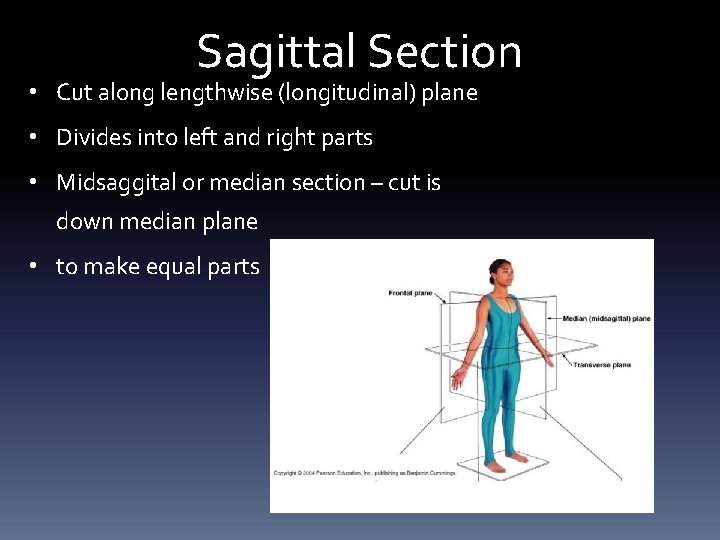
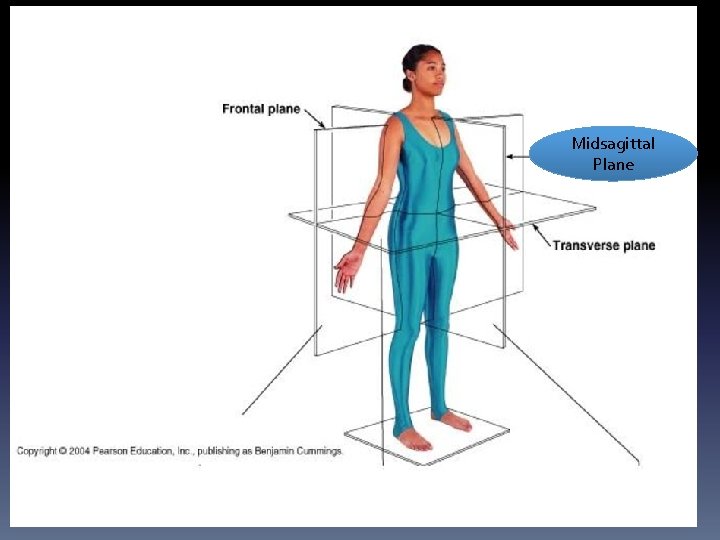
Sagittal Section • Cut along lengthwise (longitudinal) plane • Divides into left and right parts • Midsaggital or median section – cut is down median plane • to make equal parts
Midsagittal Plane
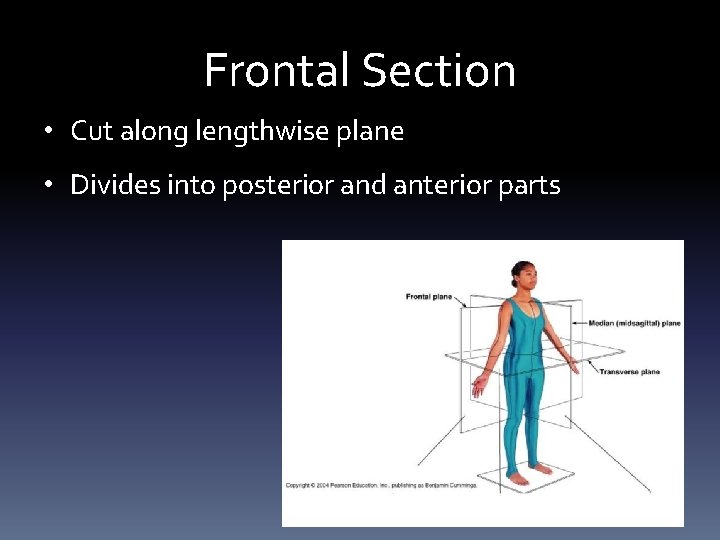
Frontal Section • Cut along lengthwise plane • Divides into posterior and anterior parts
Frontal Plane