
Directed Graphs Textbook Sedgewick Part 5 COMP 2521
Directed Graphs Textbook: Sedgewick Part 5 COMP 2521 18 x 1

Directed Graphs In our previous discussion of graphs: • we have considered undirected graphs • an edge indicates a relationship between two vertices • an edge indicates nothing more than a relationship
Directed Graphs In many real-world applications of graphs: • edges are directional (v → w ≠ w → v) • For example a one way street • Liking a fan page on facebook, following someone on twitter Directed graphs (aka Digraphs) include • edges that are directional • self -loops
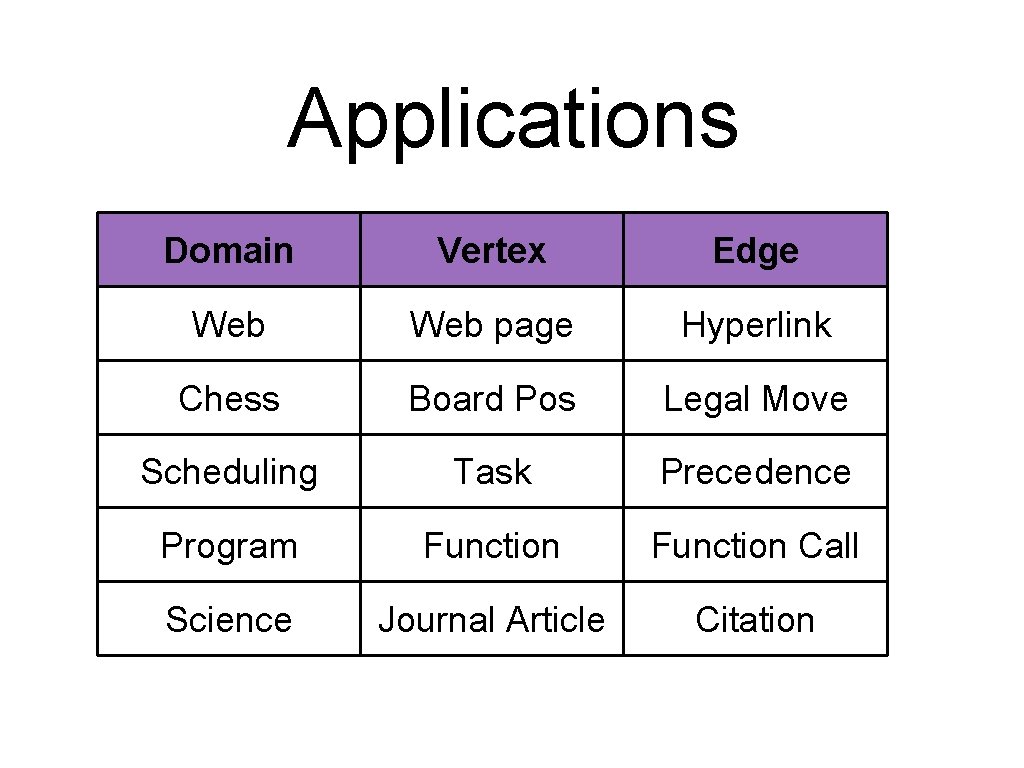
Applications Domain Vertex Edge Web page Hyperlink Chess Board Pos Legal Move Scheduling Task Precedence Program Function Call Science Journal Article Citation
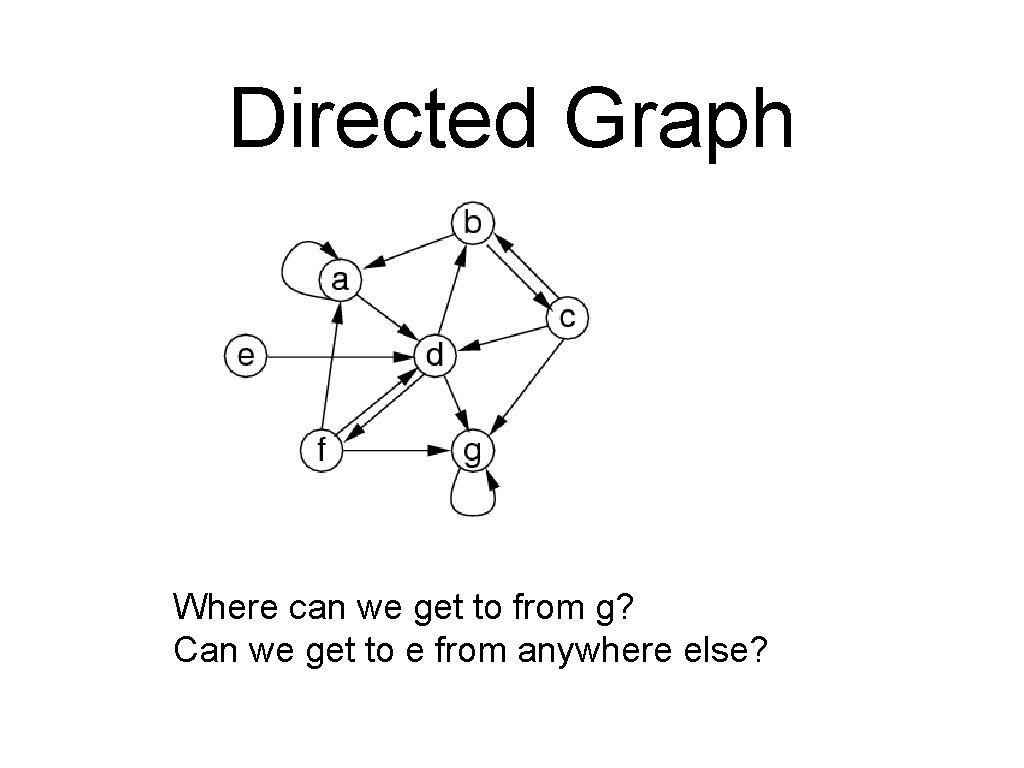
Directed Graph Where can we get to from g? Can we get to e from anywhere else?
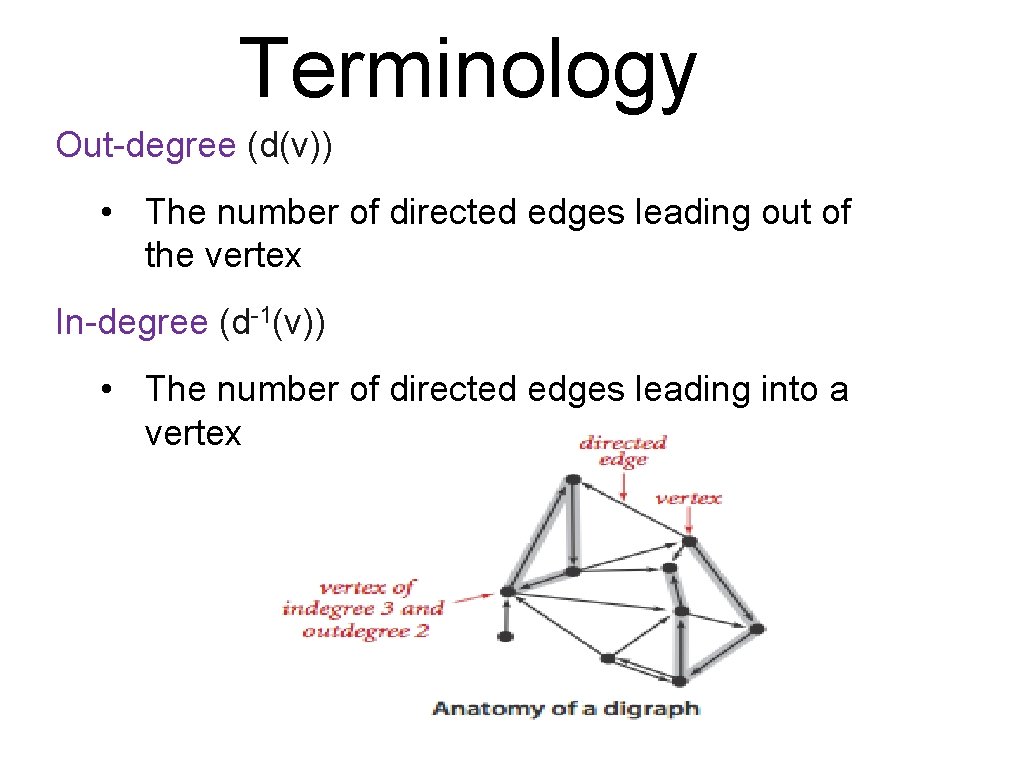
Terminology Out-degree (d(v)) • The number of directed edges leading out of the vertex In-degree (d-1(v)) • The number of directed edges leading into a vertex
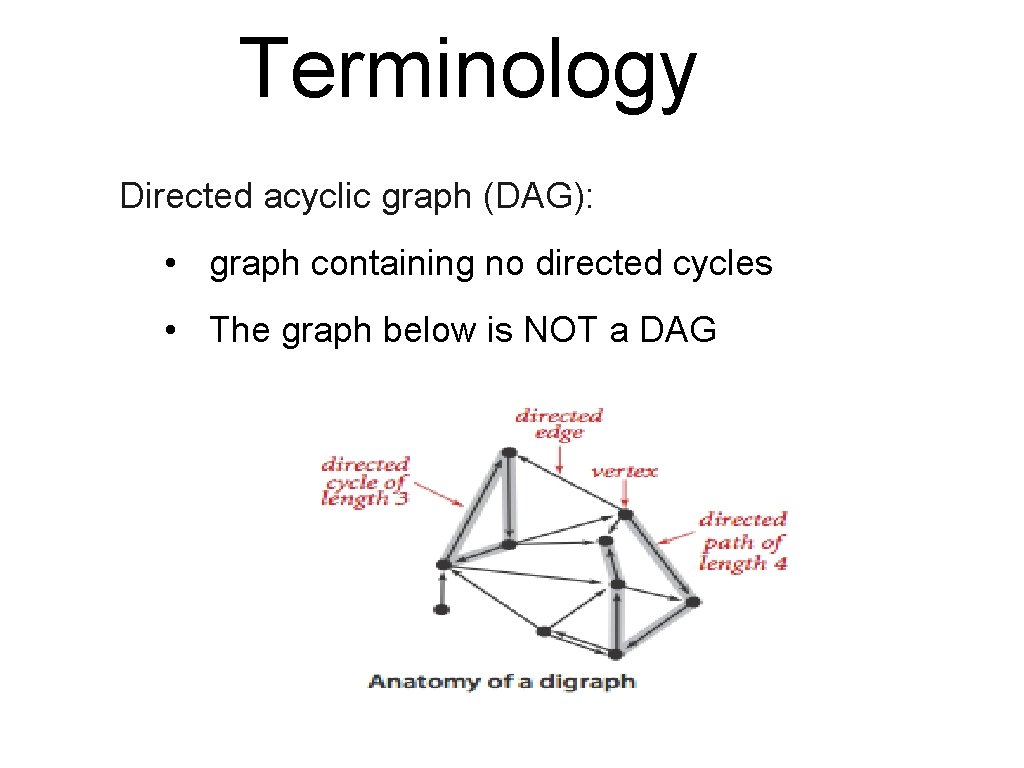
Terminology Directed acyclic graph (DAG): • graph containing no directed cycles • The graph below is NOT a DAG
Terminology Reachability: • w is reachable from v if there exists a directed path v, . . . , w Strongly Connected: • Two vertices v and w are strongly connected if they are mutually reachable: there is a directed path from v to w and a directed path from w to v.
Terminology Strong connectivity: • every vertex is reachable from every other vertex Strongly connected components: • A digraph that is not strongly connected consists of a set of strongly-connected components, which are maximal stronglyconnected subgraphs.
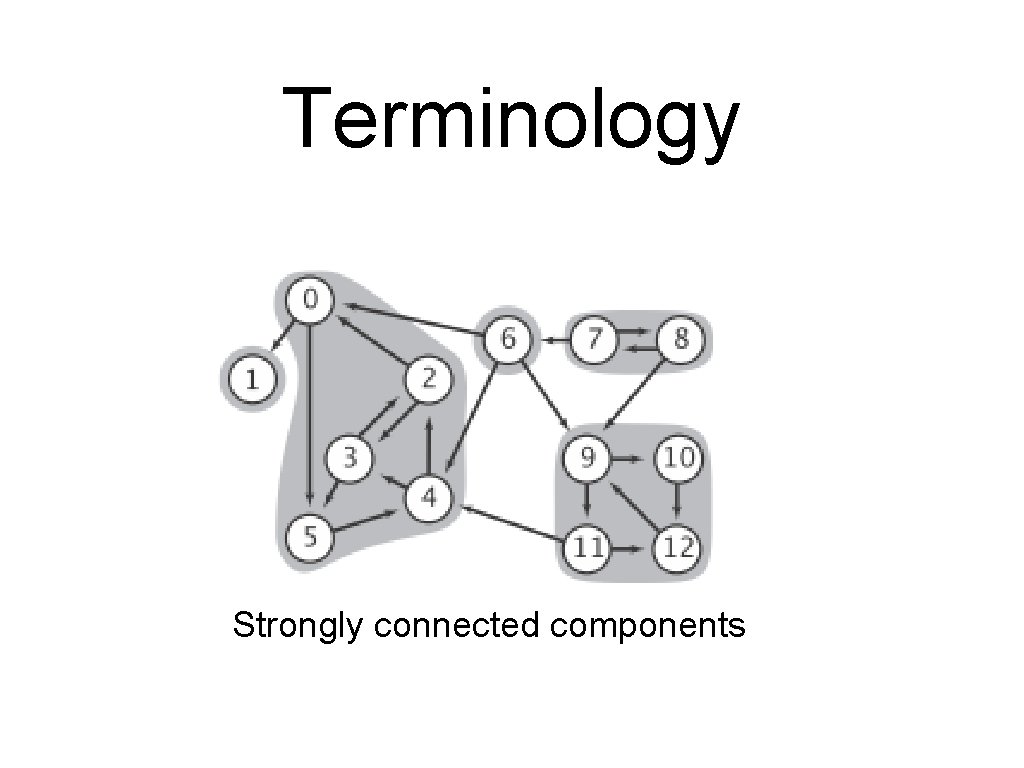
Terminology Strongly connected components
Problems on Digraphs is there a directed path from s to t? (transitive closure) what is the shortest path from s to t? (shortest path) are all vertices mutually reachable? (strong connectivity) how to organise a set of tasks? (topological sort) how to build a web crawler? (graph traversal) which web pages are "important"? (Page. Rank)
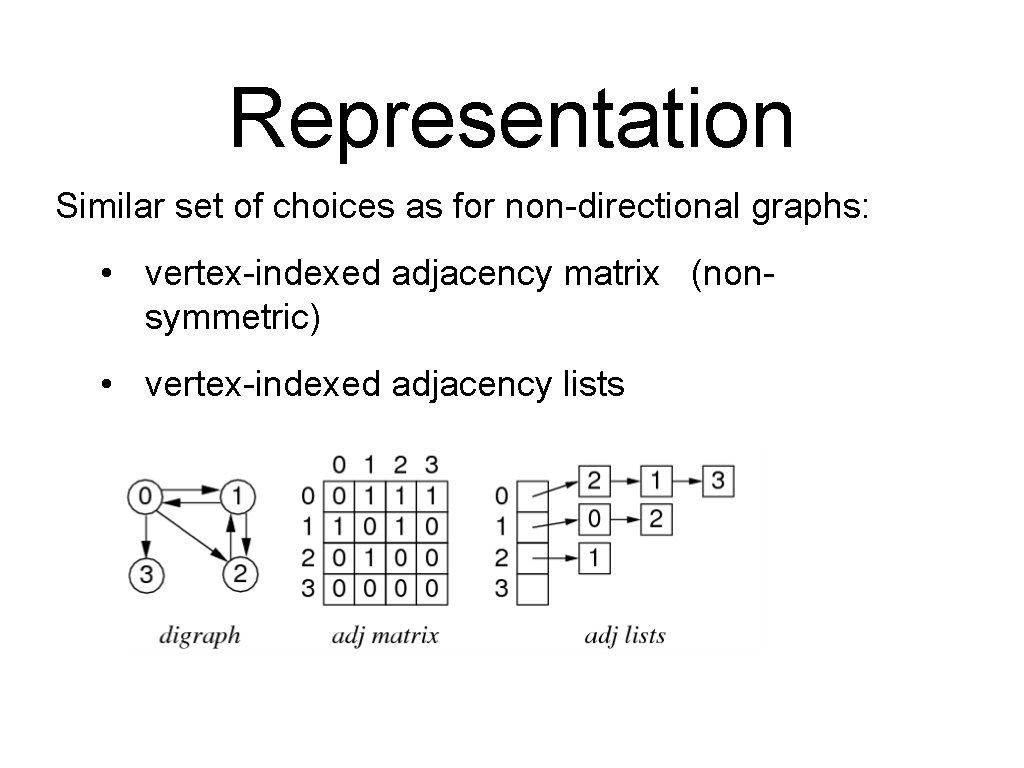
Representation Similar set of choices as for non-directional graphs: • vertex-indexed adjacency matrix (nonsymmetric) • vertex-indexed adjacency lists
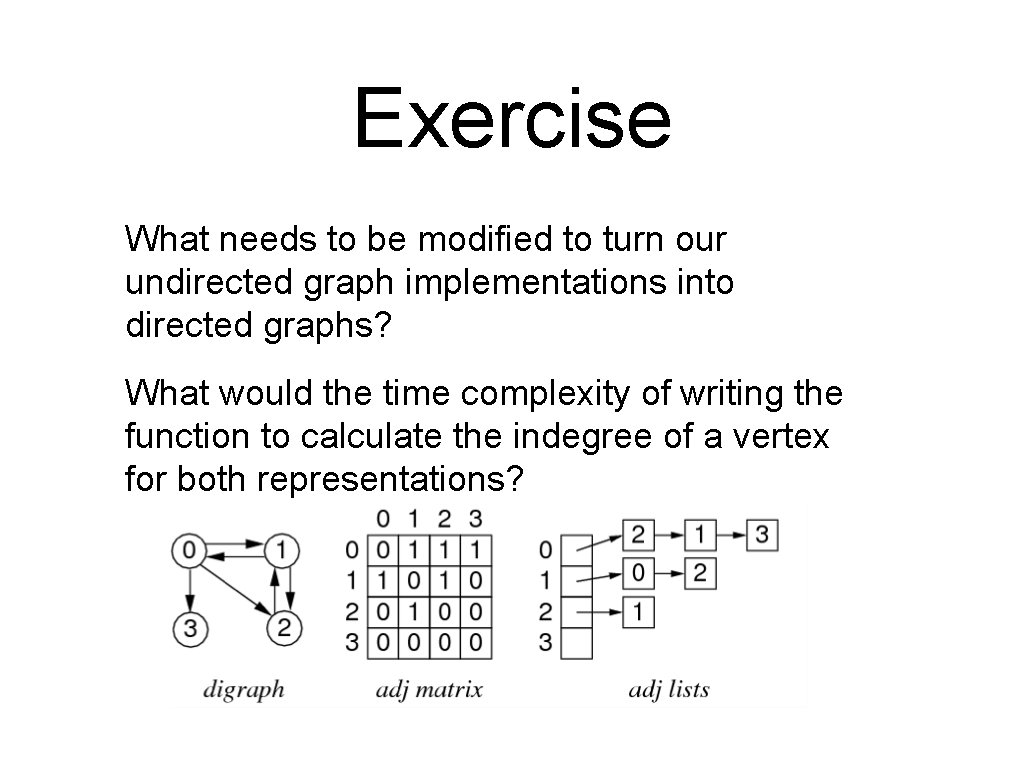
Exercise What needs to be modified to turn our undirected graph implementations into directed graphs? What would the time complexity of writing the function to calculate the indegree of a vertex for both representations?
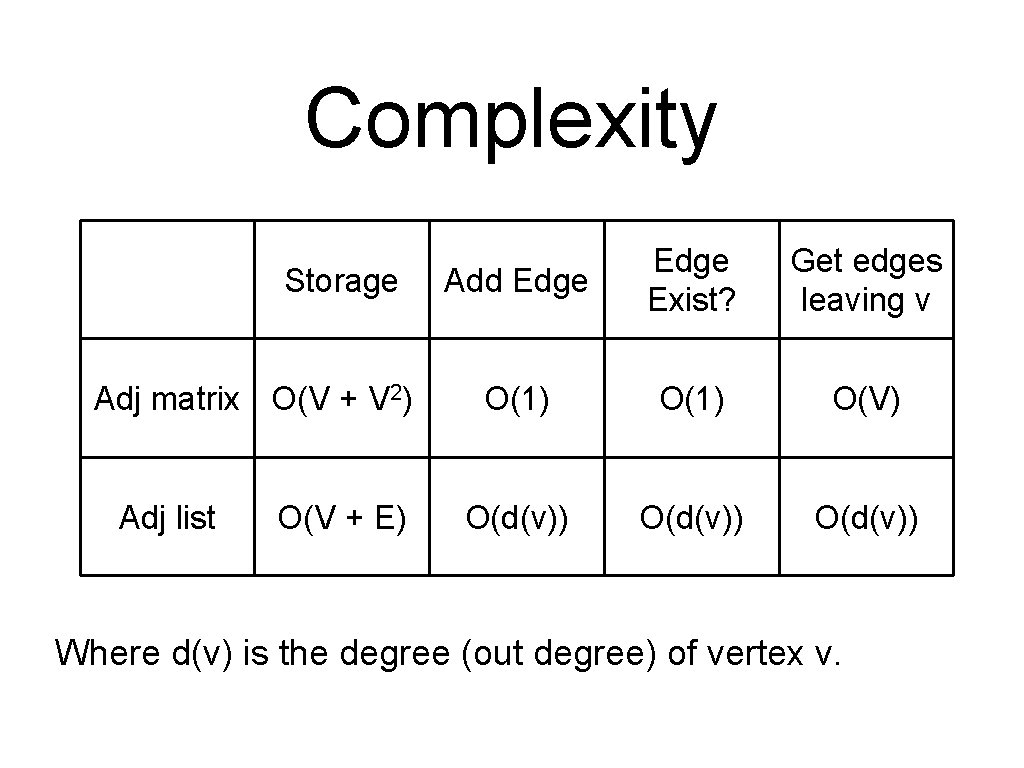
Complexity Storage Adj matrix O(V + V 2) Adj list O(V + E) Add Edge Exist? Get edges leaving v O(1) O(V) O(d(v)) Where d(v) is the degree (out degree) of vertex v.
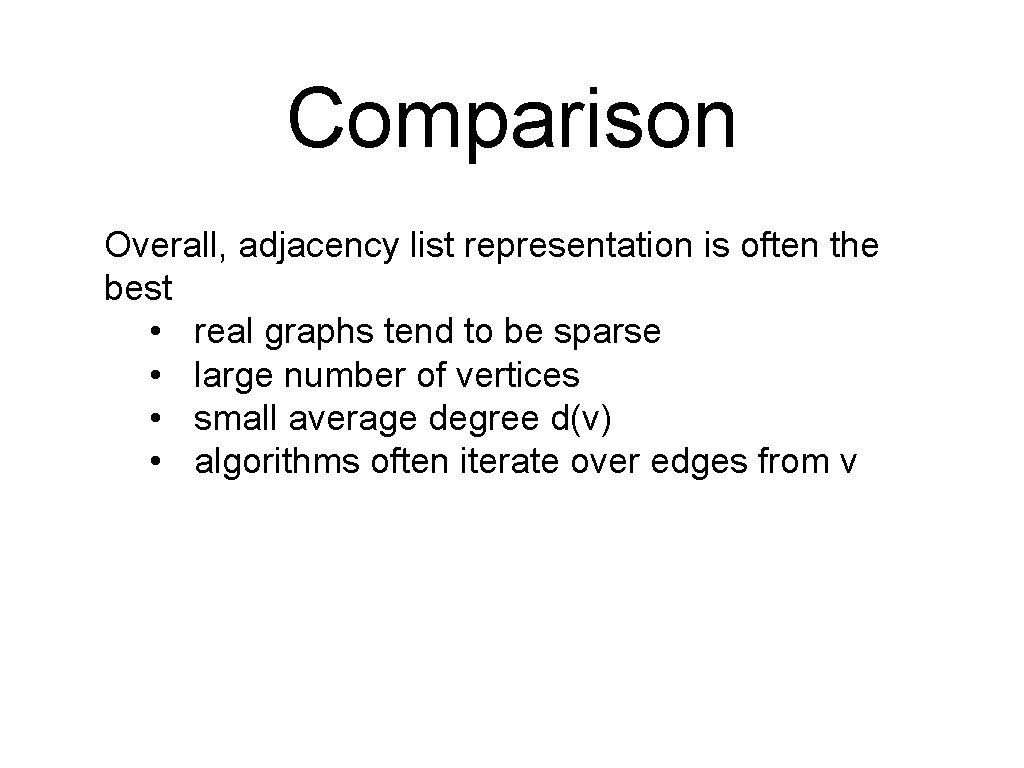
Comparison Overall, adjacency list representation is often the best • real graphs tend to be sparse • large number of vertices • small average degree d(v) • algorithms often iterate over edges from v
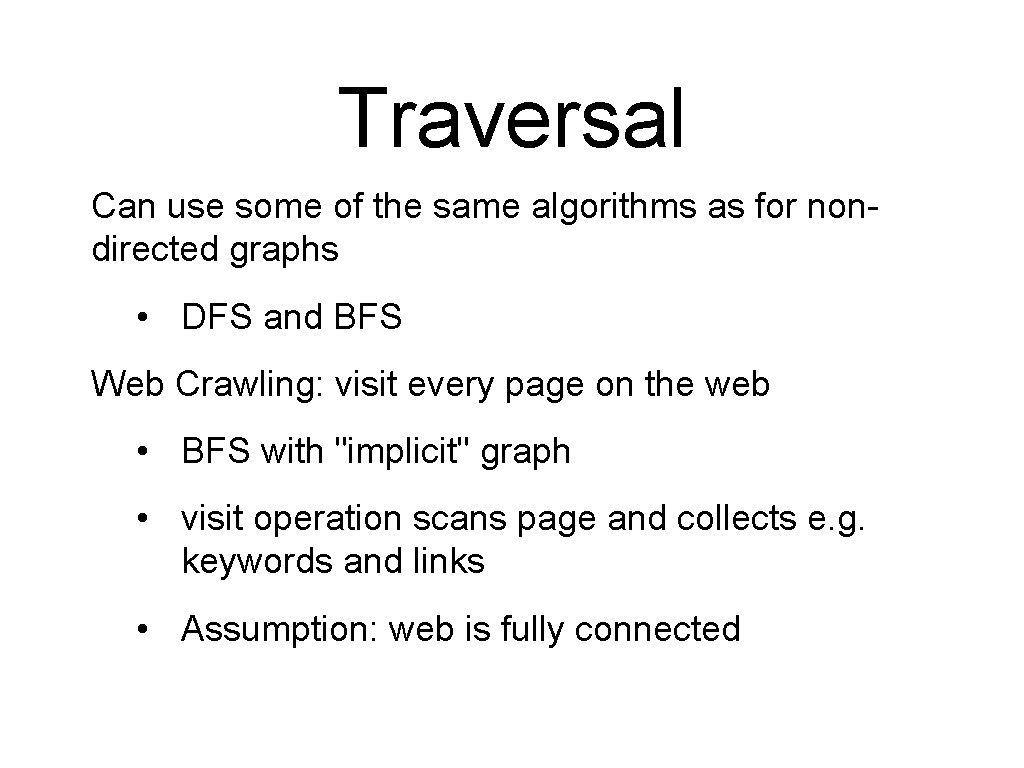
Traversal Can use some of the same algorithms as for nondirected graphs • DFS and BFS Web Crawling: visit every page on the web • BFS with "implicit" graph • visit operation scans page and collects e. g. keywords and links • Assumption: web is fully connected
- Slides: 16