
Direct Work with Children and Young People a




- Slides: 37
Direct Work with Children and Young People: a new perspective London Borough of Bromley Vanisha Jassal and Laura Hanbury
Icebreaker Welcome and Introductions The Centre for Child Protection Group discussion: what we all understand by the term ‘Direct Work’ • Today’s Agenda • •
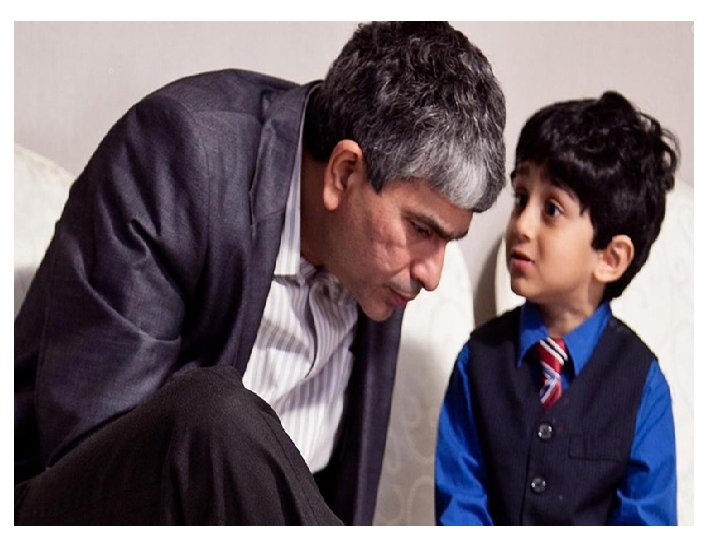
What do we mean by direct work? • It’s more than just talking and listening and goes beyond ascertaining wishes and feelings; • It is about understanding the inner world of the child; • Purpose should always be to help the child/yp communicate with us; • So that we can truly SEE and HEAR what they are expressing to us, verbally or through their behaviour; • It should entail a specific piece of work through employing certain tools/techniques; • Always ask permission from the child/young person before starting the direct work with him/her.
When direct work may be carried out • Helping traumatised children and young people • Gaining an understanding of children’s wishes and feelings • Gaining an understanding of children and young people’s perceptions of his/her life and experiences • Reintegration of early life events • Explaining plans for the future • Addressing current areas of concerns • Helping children to ‘keep safe’ • Facilitating identity formation and increasing children and young people’s knowledge of self • Helping children gain and sustain friendships • Helping children and young people within their family relationships
Reviewing our direct work As in all aspects of practice, we need to reflect upon whether the direct work we are carrying out is progressing well. It is important to consider: • What sense is the child making of the work with you? • Are the methods effective or do they need to be altered? • Whether someone else may be able to connect more with the child.
Research and policy frameworks • There has been a significant amount of research about direct work – see handout; • 1989, 2004 Acts; UN Convention on the Rights of the Child; 2011 Munro Review: • ‘Participation can be empowering if undertaken well. However, many practitioners feel ill-equipped to communicate with children and involve them at every stage of the child protection process…the core skills required for effective communication with children …. include listening, being able to convey genuine interest, empathic concern, understanding, emotional warmth, respect for the child, and the capacity to reflect and to manage emotions’ (Munro, 2011; page 25).
Today’s Aim To increase practitioner confidence in undertaking effective direct work practice through providing a reflective space in which we can appreciate the relationship between: hearing/observing children and young people, mentalisation and our own feelings.
Learning Outcomes for today Morning: • Remind ourselves of the importance of effective direct work skills. • Utilise a technique which may support children in care. • Develop our definition of ‘direct work’ through the concept of ‘mentalisation’: “Just because you don’t show emotion, doesn’t mean you don’t feel emotion”. • Examine some of the barriers to effective direct work including how it makes us feel. • Participate in specific direct work activities. Afternoon: • Getting us to think outside of the box and develop our communication skills in a creative and innovative way. • Continue active participation in direct work activities. • Expanding our knowledge about using technology in direct work interactions. • Bringing direct work to a close and how we need to be supported.
Ground rules • Listen, Think and Reflect throughout the day; • During the 6 direct work activities, do not talk but stick to the activity in hand see the activities as real direct work interactions; • Complete the activities as YOU but during the day, keep the children/young people you typically work with in your mind; • Be sensitive to your own feelings and the feelings of others; • Switch your phone on silence and try to only check it during tea/lunch breaks. • Not a rule but please feel free to speak to the facilitators if you feel uncomfortable or concerned about anything.
Direct Work Activity 1: Mapping the Life of a Looked After Child • Watch the ‘Re. Moved’ film: https: //www. youtube. com/watch? v=l. Oe. QUwd. Aj. E 0 • How did the film make you feel? • Does the film resonate with any of the (looked after) children you may be working work? • Have a Scribble – Get Creative and warm up for the River/Road Activity. • Complete the Activity and Feedback • The Michaelamovement blog: https: //michaelamovement. blog/2017/11/10/safeguarding-in-practice /
An attempt to portray a child’s perspective (by Radio 4) • http: //bobnational. net/record/204596
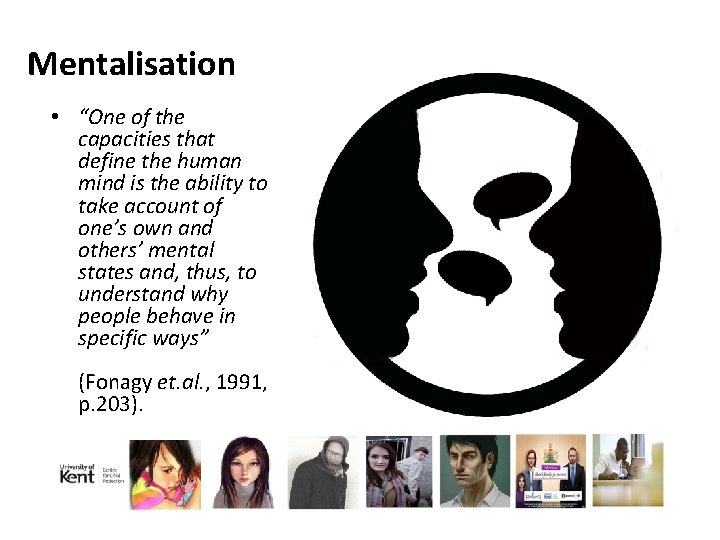
Mentalisation • “One of the capacities that define the human mind is the ability to take account of one’s own and others’ mental states and, thus, to understand why people behave in specific ways” (Fonagy et. al. , 1991, p. 203).
In everyday language……. . • It’s when you are aware of what is going on in your head and in the heads of other people; • It’s when you are aware that what others may be thinking and feeling may be different to what you are thinking and feeling; • It facilitates our ‘curiosity’ to understand our own mental states and that of others; • It is the capacity to understand how one’s own and other people’s mental states affect behaviour; • Much of this ‘activity’ takes part in the unconscious part of the brain; • Babies can interpret the mental state of the mother from a few months old.
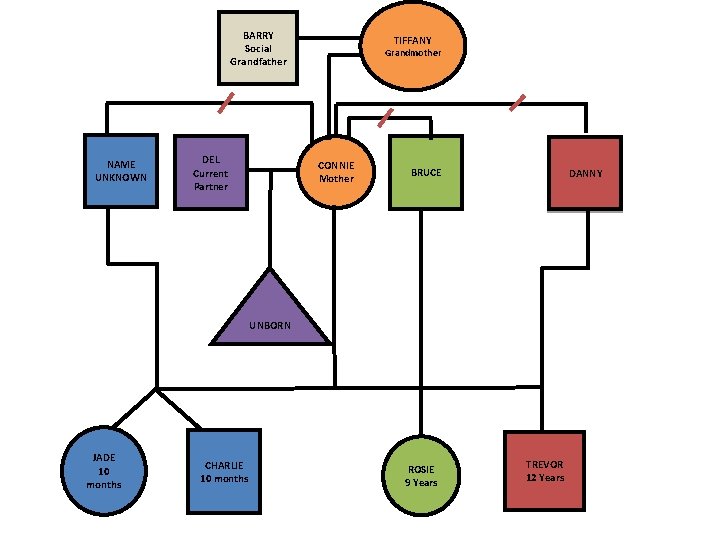
BARRY Social Grandfather NAME UNKNOWN DEL Current Partner TIFFANY Grandmother CONNIE Mother BRUCE DANNY UNBORN JADE 10 months CHARLIE 10 months ROSIE 9 Years TREVOR 12 Years
Direct Work Activity 2: ‘Rosie 2’: Mentalising Rosie or Trevor • Read the Biography and Genogram • Scene 3 in the Garden • As two groups discuss what we think Rosie or Trevor may be feeling about their life and that this is the fifth SW coming into their home , and what we would do to try and work with Rosie/Trevor.
Direct Work Activity 3: The Feelings Cards • Scene 13: Direct Work with Rosie; • As two groups discuss what this scene tells us about Rosie’s inner world and how effective is Andrew in his DW approach (note his tone, pauses, questions and tools); • Group feedback on the two activities.
Having a go at the Feelings Cards • Each of you have been given a feelings card; • Working in pairs, tell each other your emotion and elaborate upon what the person in the picture is feeling; • Taking turns, tell the other person when you have recently felt this emotion and then answer questions posed noting how this is making you feel; whether you are being asked the questions you want/do not want asked? whether it is feeling intrusive? whether you are reluctant to share some things? • As the person asking the questions, note whether the person is able to speak about the emotion quite easily or whether you are having to work quite hard in getting them to relate it to themselves; what did you observe from their body language; did you want to ask something else but felt that you couldn’t? • Only share what you are comfortable sharing; please remain sensitive to each other; Stop if you wish to. • Group Feedback.
Direct Work Activity 4: Creating Your World through Sand Play • This is an intimate DW technique so remember to ask permission; • Confidentiality boundaries need to be set very clearly, making it clear to the child that information they share will be kept between the two of you unless there is a reason to share with other people/agencies; • You as a practitioner would decide on its appropriateness, according to the age and cognitive capacity of the child; • You would also decide the timing of when this intervention is introduced; • The purpose is to facilitate communication between the child and yourself in a detached and safe way; • How the information gathered is taken forward is to be discussed within the supervision/organisation context.
Group feedback on the sand tray technique Only share what you wish to share; How did the process make you feel? What conscious or unconscious feelings arose? Could you see yourself using it with a child/young person? • https: //www. youtube. com/watch? v=bt 0 g. F 7 h. Aqxw • •
What facilitates effective direct work? • Confidence of the practitioner; • Techniques and tools at his/her disposal; • Calm and stable environment for child e. g. foster care placement, good relations with parents; • Child development – child’s capacity to engage; cognitive ability; verbal and language skills; • Dependent upon what time in the child’s life you are placed with him/her; • Organisational support; • Introspection.
Supporting you the practitioner • Practitioners need to feel supported in supervision/through their organisation when carrying out direct work in terms of its emotional impact. Ingram (2016): • ‘The relationship between rational thought and emotions is often depicted as an uneasy alliance’ (page 8); • ‘if one does separate off one’s emotions from practice, then one is essentially separating the relationship with the service user’ (page 5); PRACTITIONER EMOTIONS ARE IMPORTANT TO CP PRACTICE BUT IF THEY ARE NOT PROCESSED THE IMPACT CAN BE VERY DAMAGING
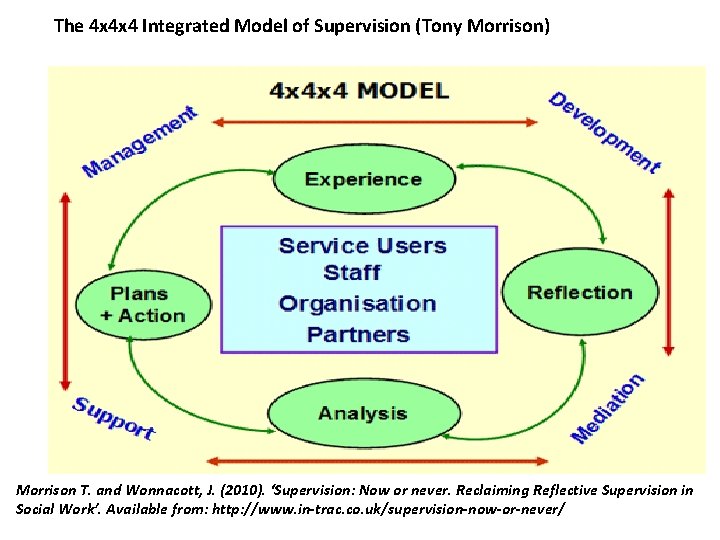
The 4 x 4 x 4 Integrated Model of Supervision (Tony Morrison) Morrison T. and Wonnacott, J. (2010). ‘Supervision: Now or never. Reclaiming Reflective Supervision in Social Work’. Available from: http: //www. in-trac. co. uk/supervision-now-or-never/
Direct Work Activity 5: Keeping children safe from online grooming • ‘Looking out for Lottie’: spotting the signs of CSE. • Scene 4. • Worksheets.
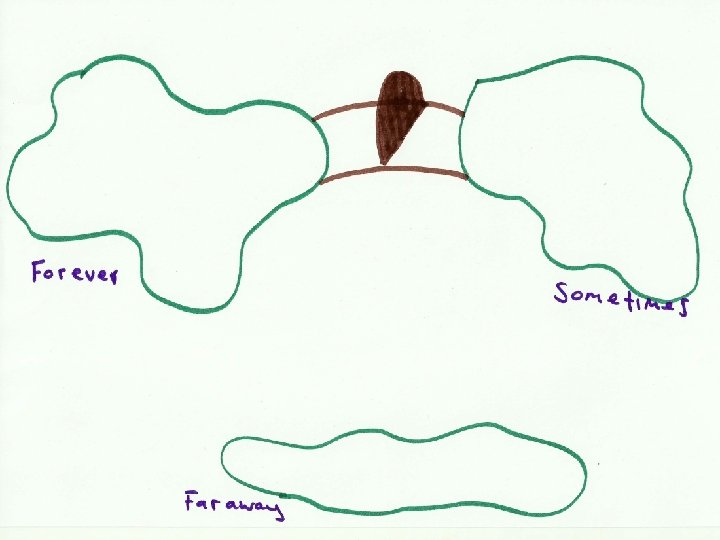
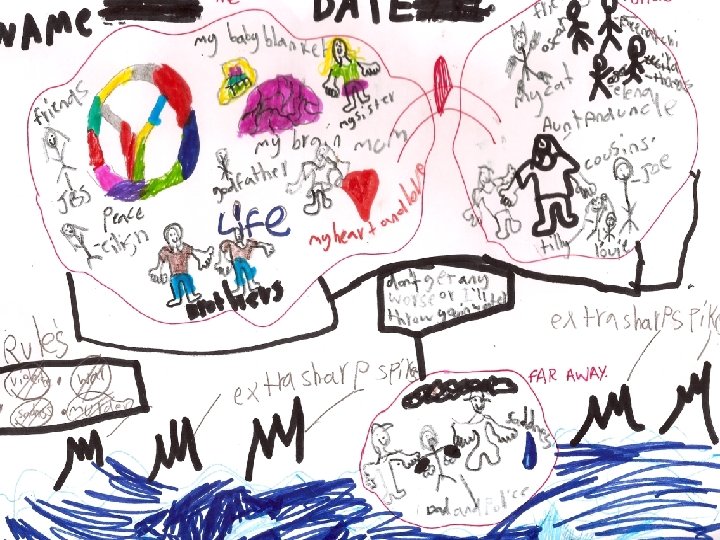
Direct Activity 6 – Further tools for Direct Work • The Shield; Three Houses; Three Islands; • Take one tool and fill it in alone as you, using pictures only; • Take it in turns to ask the other about aspects of the drawing; • The person giving the answers ought to try and give as little information as possible; • Reflect upon the process of being asked and in asking the questions.
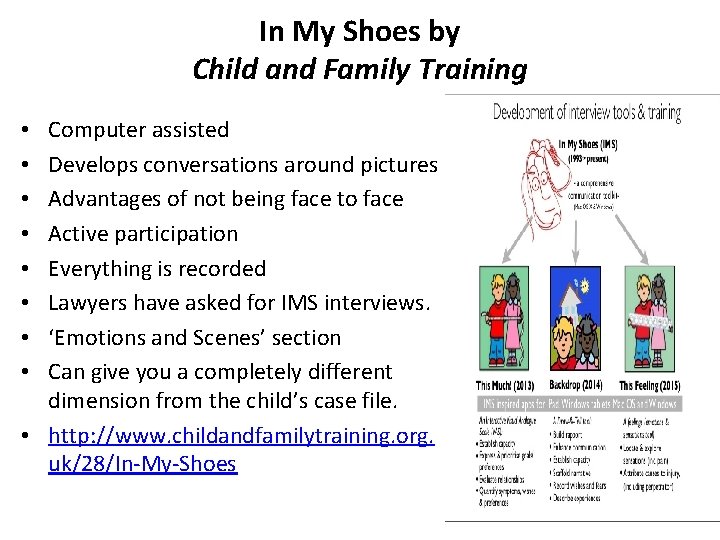
Technologies and Direct Work – see handout “computers can be beneficial as an aid to assessment and therapy, as they are an effective help for children enabling them to better express their emotions, feelings and describe experiences…. The medium itself is appealing to children, and the sense of familiarity with the tool, as well as the feeling of being better than adults at using it, can be empowering for the child. Furthermore, the use of a computer to mediate sensitive discussions can release some pressure from the traditional one-to -one interview, by providing an external focus to the conversation” (Grasso et al. , 2013, p. 318).
In My Shoes by Child and Family Training Computer assisted Develops conversations around pictures Advantages of not being face to face Active participation Everything is recorded Lawyers have asked for IMS interviews. ‘Emotions and Scenes’ section Can give you a completely different dimension from the child’s case file. • http: //www. childandfamilytraining. org. uk/28/In-My-Shoes • •
Bringing direct work to a close Consider: • Whether you have achieved your shared aims? • How the relationship with the child will finish or alter? • How you will mark the end or changing nature of your work with the child? • Whether the child has someone else to confide in. • Whether the child will be able to get in touch with you or another social worker if needed. • Whether the child will have the confidence or ability to seek help, or can someone act on his/her behalf? • How the process(es) made us feel.
Closing Reflections • Final thoughts; • What may you do differently in the future? • What can your supervisor, team, organisation do to support you?
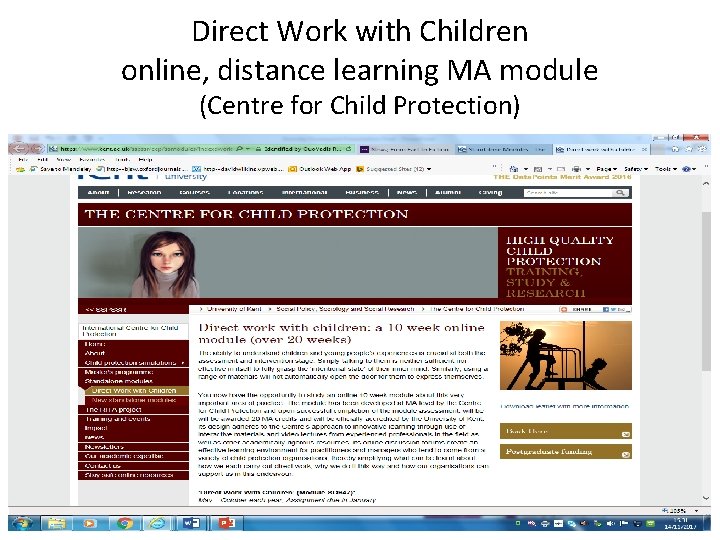
Direct Work with Children online, distance learning MA module (Centre for Child Protection)
Useful further reading • • • • Butler, I. and Drakeford, M. (2011). ‘Social Work on Trial’. (Bristol: The Policy Press). Clark, A. and Moss, P. (2011). Listening to Young Children: The Mosaic Approach, 2 nd edn. (London: National Children’s Bureau Enterprises). Fonagy, P. , Steele, M. , Steele, H. , Moran, G. S. and Higgitt, A. C. (1991). ‘The Capacity for Understanding Mental States: the Reflective Self in Parent and Child its significance for Security of Attachment’. Infant Mental Health. V. 12(3), pp 201 -218. Grasso, F. , Atkinson, K. and Jimmieson, P. (2103). ‘In My Shoes’ – A computer assisted interview for communicating with children about emotions. (Humaine Association Conference on Affective Computing and Intelligent Interaction). Ingram, R. (2012). ‘Emotions, social work practice and supervision: an uneasy alliance? ’. Journal of Social Work Practice, V. 27(1), pp 5 -19. Laming, W. H. (2003). ‘The Victoria Climbié Inquiry’. (TSO). Leeson, C. (2010). The emotional labour of caring about looked after children. Child and Family Social Work, V. 15, pp. 483– 491. Handley, G. and Doyle, C. (2014). Ascertaining the wishes and feelings of young children. Child and Family Social Work, V. 19, pp 443 -454. Lefevre, M. , Tanner, K. and Luckock, B. (2008). Developing social work students’ communication skills with children and young people: a model for the qualifying level curriculum. Child and Family Social Work, V. 13, pp. 166– 176. Munro, E. (2011). ‘The Munro Review of Child Protection: a child-centred system’. (London: Department for Education). North East Lincolnshire Local Safeguarding Children Board. Serious Case Review Report Child T (2017). O’Neill, T. (2010). ‘Someone to Love Us’. (London: Harper Collins Publishers). Richards, S. , Ruch, G. and Trevithick, P. (2005). Communication skills training for practice: the ethical dilemma for social work education. Social Work Education, V. 24 (4), pp. 409– 422. Shemmings, D. and Shemmings, Y. (2011). ‘Understanding Disorganised Attachment’. (Jessica Kingsley, London). Winnicott, C. and Kanter, J. (1997). ‘Communicating with Children’. Smith College Studies in Social Work. V. 67)2), pp 115 -178. Winter, K. (2010). The perspectives of young children in care about their circumstances and implications for social work practice. Child & Family Social Work, V. 15, pp. 186– 195.