
Direct Simulation Monte Carlo A Particle Method for





- Slides: 41
Direct Simulation Monte Carlo: A Particle Method for Nonequilibrium Gas Flows Iain D. Boyd Department of Aerospace Engineering University of Michigan Ann Arbor, MI 48109 Support Provided By: MSI, AFOSR, DARPA, NASA
Overview • Physical characteristics of nonequilibrium gas flow. • Direct simulation Monte Carlo (DSMC) method. • The MONACO DSMC code: – data structure; – scalar/parallel optimization. • Illustrative DSMC applications: – hypersonic aerothermodynamics; – materials processing; – spacecraft propulsion. • Summary and future directions.
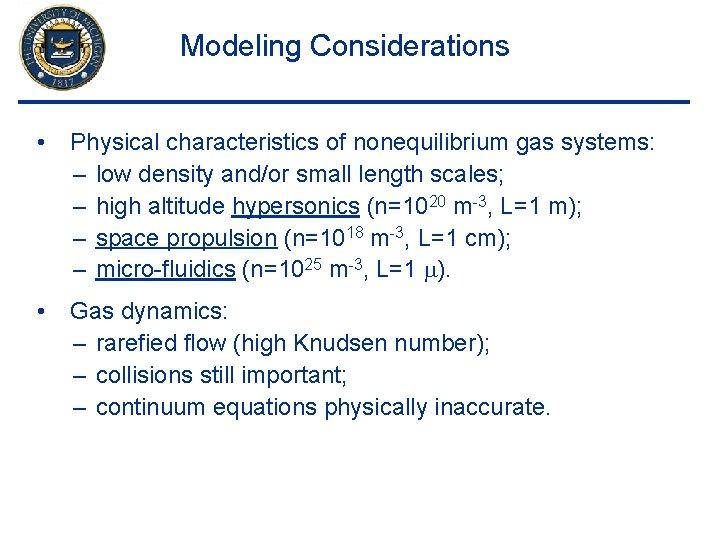
Modeling Considerations • Physical characteristics of nonequilibrium gas systems: – low density and/or small length scales; – high altitude hypersonics (n=1020 m-3, L=1 m); – space propulsion (n=1018 m-3, L=1 cm); – micro-fluidics (n=1025 m-3, L=1 m). • Gas dynamics: – rarefied flow (high Knudsen number); – collisions still important; – continuum equations physically inaccurate.
Characterization of Nonequilibrium Gas Flow Regimes: continuum Kn Control equations: slip transitional free-molecular 0. 1 0. 01 10 DSMC Boltzmann Equation Navier-Stokes Euler Burnett Collisionless Boltzmann Eqn
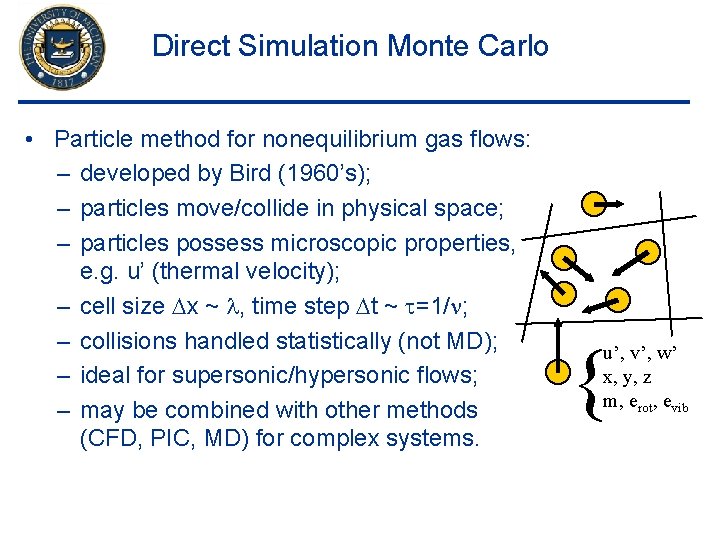
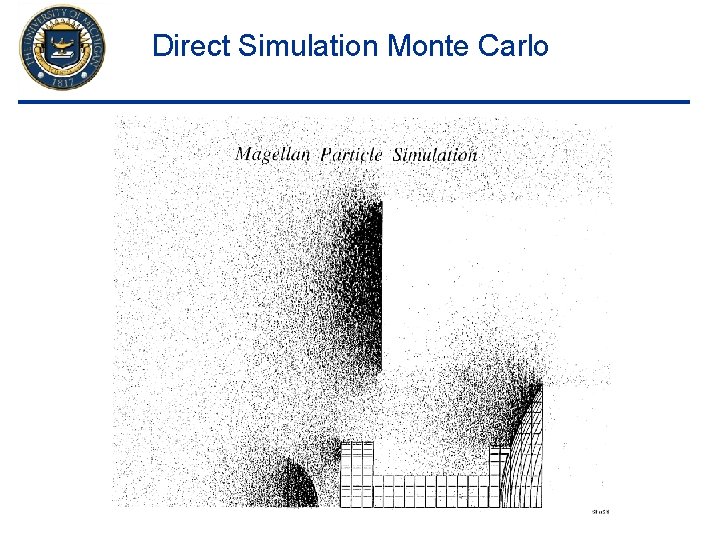
Direct Simulation Monte Carlo • Particle method for nonequilibrium gas flows: – developed by Bird (1960’s); – particles move/collide in physical space; – particles possess microscopic properties, e. g. u’ (thermal velocity); – cell size Dx ~ l, time step Dt ~ t=1/n; – collisions handled statistically (not MD); – ideal for supersonic/hypersonic flows; – may be combined with other methods (CFD, PIC, MD) for complex systems. { u’, v’, w’ x, y, z m, erot, evib
Direct Simulation Monte Carlo
The DSMC Algorithm • MOVE: – translate particles Dx = u Dt; – apply boundary conditions (walls, sources, sinks). • SORT: – generate list of particles in each cell. • COLLIDE: – statistically determine particles that collide in each cell; – apply collision dynamics. • SAMPLE: – update sums of various particle properties in each cell.
Current DSMC-Related Projects • Hypersonics: – vehicle aerodynamics (NASA-URETI); – hybrid particle-continuum method (AFOSR); – TOMEX flight experiment (Aerospace Corp). • Space propulsion: – NEXT ion thruster, FEEP (NASA); – Hall thrusters (DOE, NASA); – micro-ablation thrusters (AFOSR); – two-phase plume flows (AFRL). • Micro-scale flows: – low-speed rarefied flow (DOE).
The DSMC Code MONACO • MONACO: a general purpose 2 D/3 D DSMC code. • Physical models: – Variable Soft Sphere (Koura & Matsumoto, 1992); – rotational relaxation (Boyd, 1990); – vibrational relaxation (Vijayakumar et al. , 1999); – chemistry (dissociation, recombination, exchange). • Applications: – hypersonic vehicle aerodynamics; – spacecraft propulsion systems; – micro-scale gas flows, space physics; – materials processing (deposition, etching).
MONACO: Data Structure • Novel DSMC data structure: – basic unit of the algorithm is the cell; – all data associated with a cell are stored in cache; – particles sorted automatically.
MONACO: Scalar Optimization • Inexpensive cache memory system used on workstations: – data localization leads to performance enhancement. • Optimization for specific processor: – e. g. overlap *add*, *multiply* and *logical* instructions.
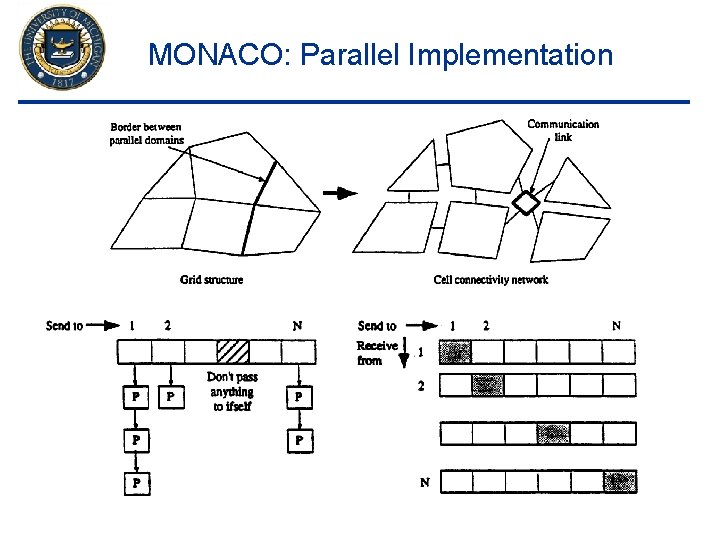
MONACO: Parallel Implementation • Grid geometry reflected in the code data structure: – domain decomposition employed. • When a particle crosses a cell edge: – particle pointed to new cell; – thus, particles sorted-by-cell automatically. • When a particle crosses a domain edge: – communication link employed; – linked lists of particles sent as matrix; – inter-processor communication minimized; – no explicit synchronization required.
MONACO: Parallel Implementation
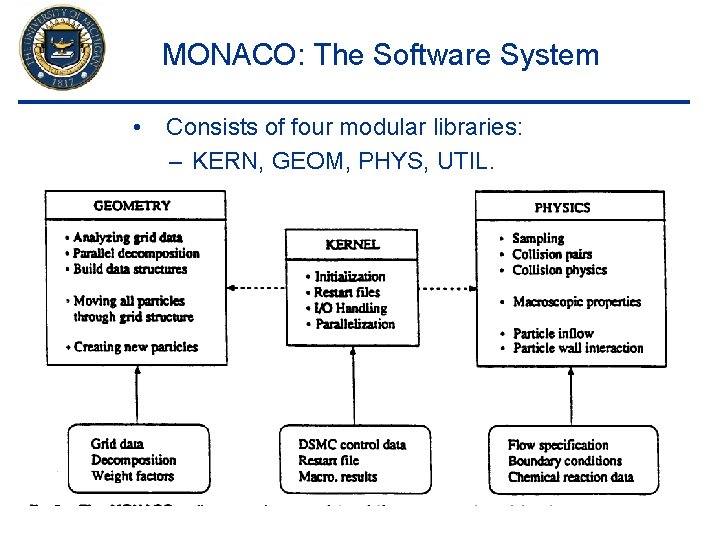
MONACO: The Software System • Consists of four modular libraries: – KERN, GEOM, PHYS, UTIL.
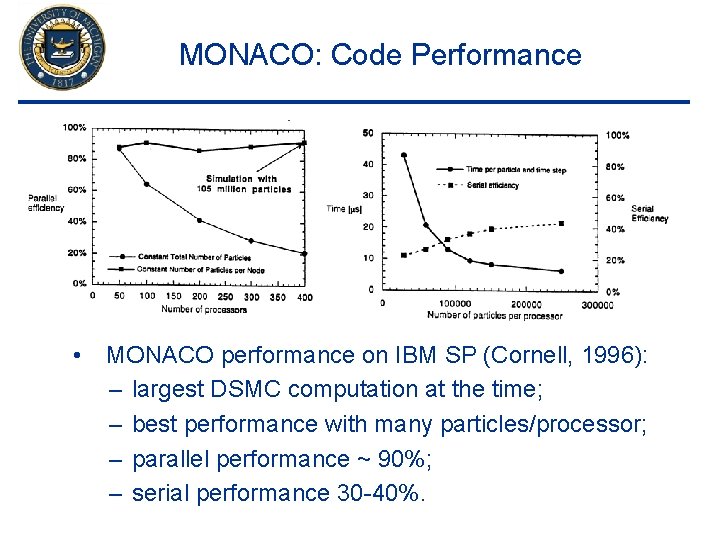
MONACO: Code Performance • MONACO performance on IBM SP (Cornell, 1996): – largest DSMC computation at the time; – best performance with many particles/processor; – parallel performance ~ 90%; – serial performance 30 -40%.
MONACO: Unstructured Grids Hypersonic flow around a planetary probe 3 D Surface geometry of TOMEX flight experiment
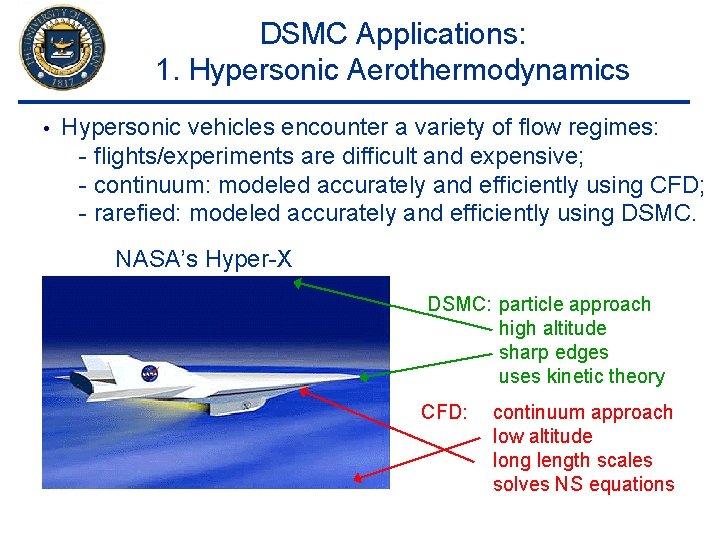
DSMC Applications: 1. Hypersonic Aerothermodynamics • Hypersonic vehicles encounter a variety of flow regimes: - flights/experiments are difficult and expensive; - continuum: modeled accurately and efficiently using CFD; - rarefied: modeled accurately and efficiently using DSMC. NASA’s Hyper-X DSMC: particle approach high altitude sharp edges uses kinetic theory CFD: continuum approach low altitude long length scales solves NS equations
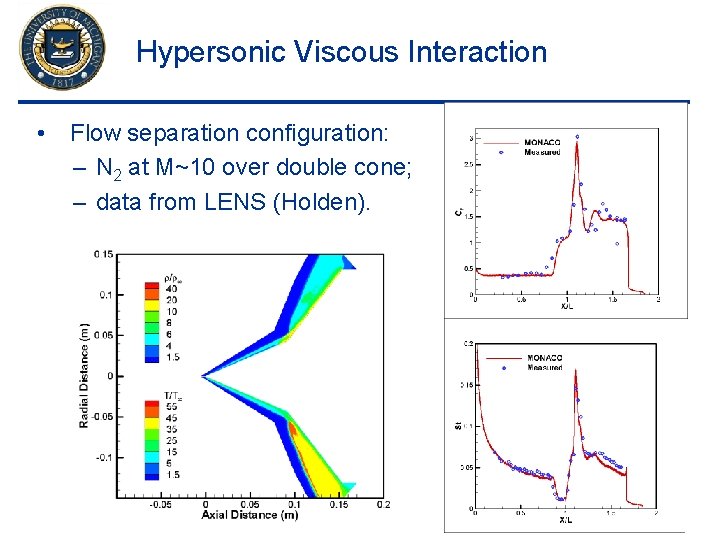
Hypersonic Viscous Interaction • Flow separation configuration: – N 2 at M~10 over double cone; – data from LENS (Holden).
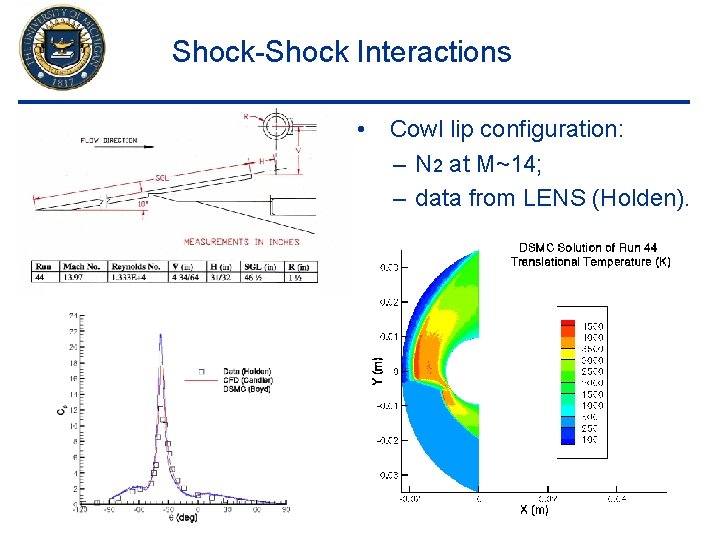
Shock-Shock Interactions • Cowl lip configuration: – N 2 at M~14; – data from LENS (Holden).
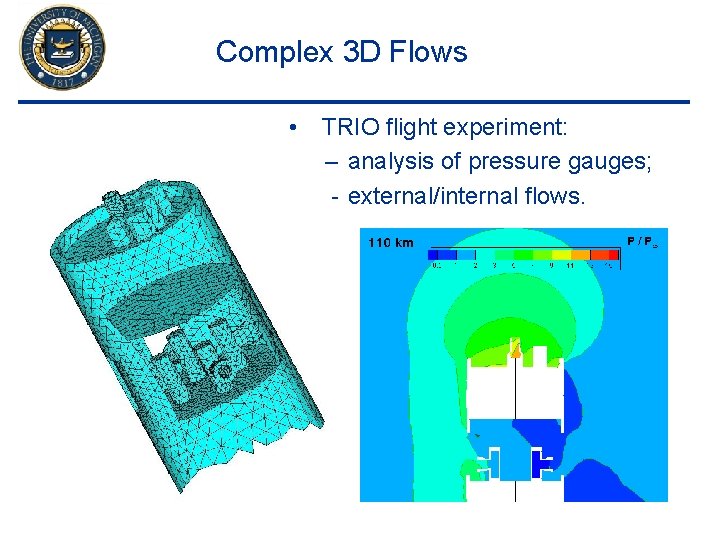
Complex 3 D Flows • TRIO flight experiment: – analysis of pressure gauges; – external/internal flows.
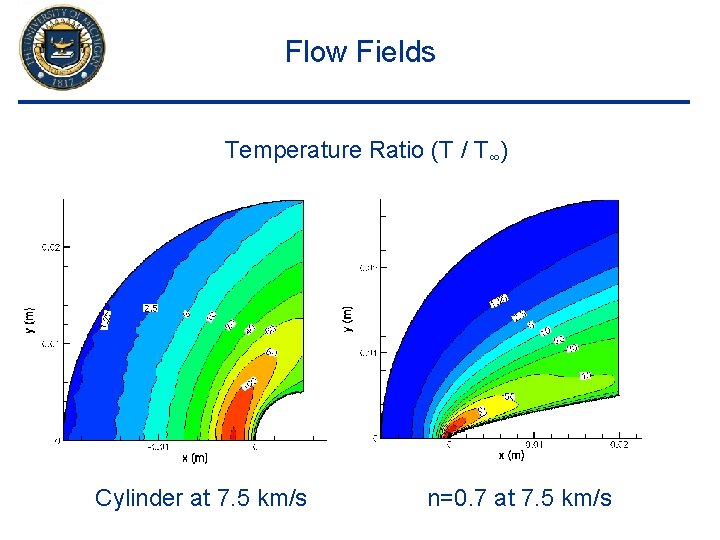
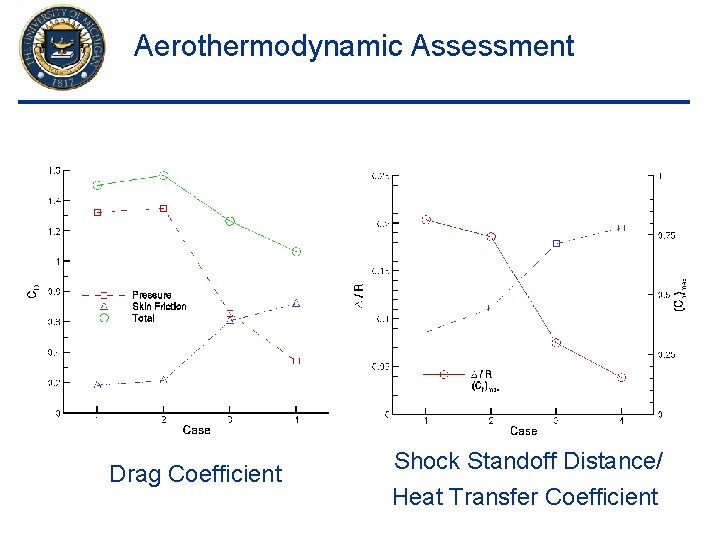
Aerothermodynamics Of Sharp Leading Edges • Computations of hypersonic flow around several power -law leading edge configurations performed using MONACO at high altitude. • Advanced physical modeling: - vibrational relaxation and air chemistry; - incomplete wall accommodation. • Effects of sharpening the leading edge: - reductions in overall drag coefficient and shock standoff distance; - increases in peak heat transfer coefficient.
Flow Fields Temperature Ratio (T / T∞) Cylinder at 7. 5 km/s n=0. 7 at 7. 5 km/s
Aerothermodynamic Assessment Drag Coefficient Shock Standoff Distance/ Heat Transfer Coefficient
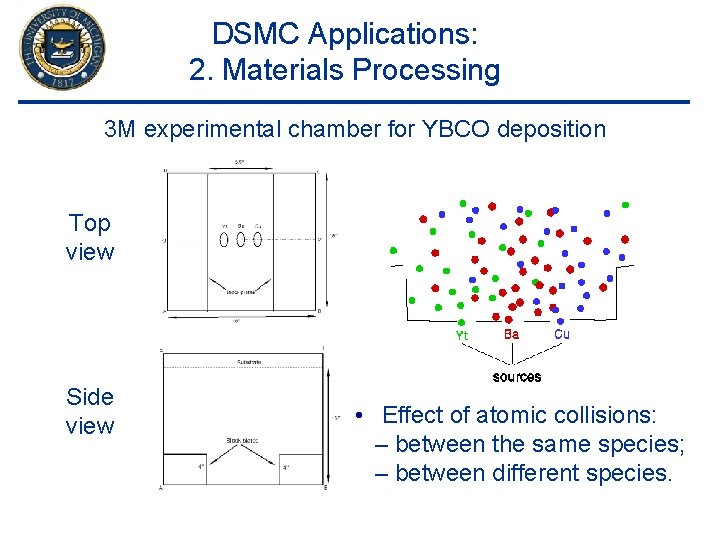
DSMC Applications: 2. Materials Processing 3 M experimental chamber for YBCO deposition Top view Side view • Effect of atomic collisions: – between the same species; – between different species.
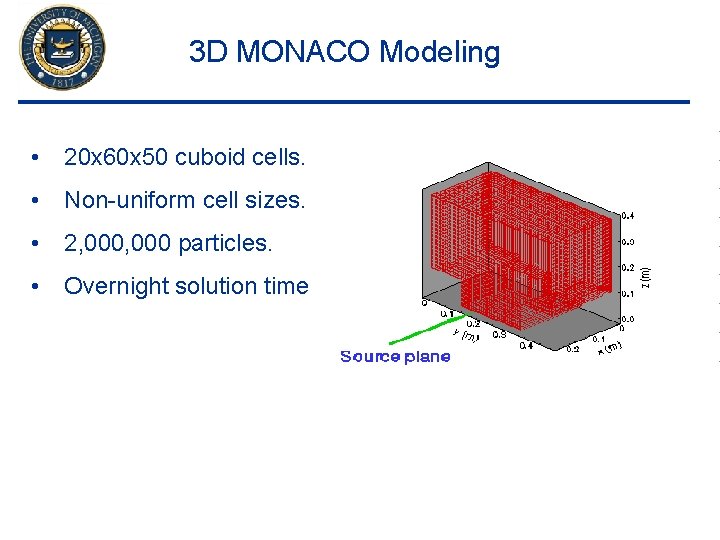
3 D MONACO Modeling • 20 x 60 x 50 cuboid cells. • Non-uniform cell sizes. • 2, 000 particles. • Overnight solution time
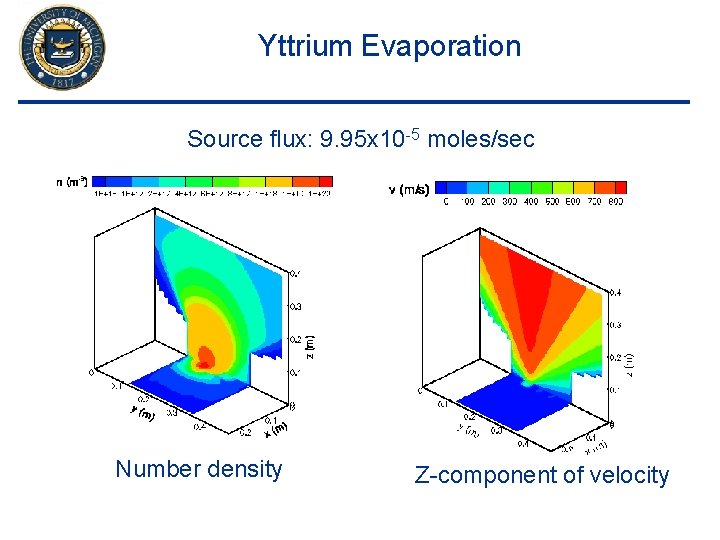
Yttrium Evaporation Source flux: 9. 95 x 10 -5 moles/sec Number density Z-component of velocity
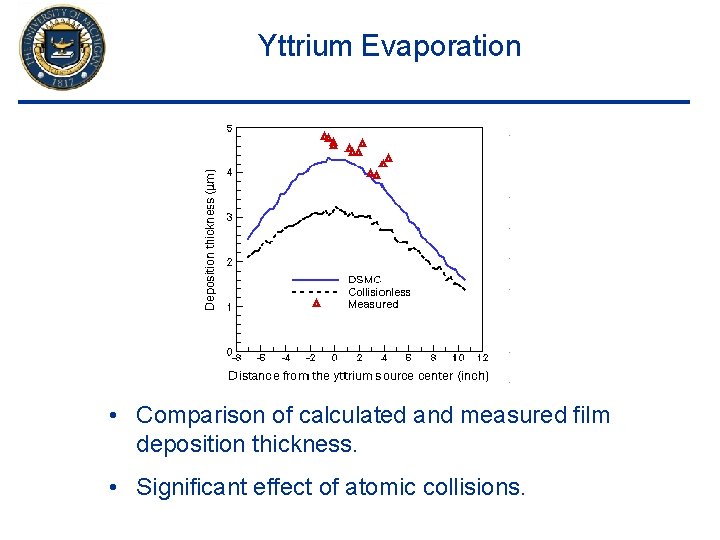
Yttrium Evaporation • Comparison of calculated and measured film deposition thickness. • Significant effect of atomic collisions.
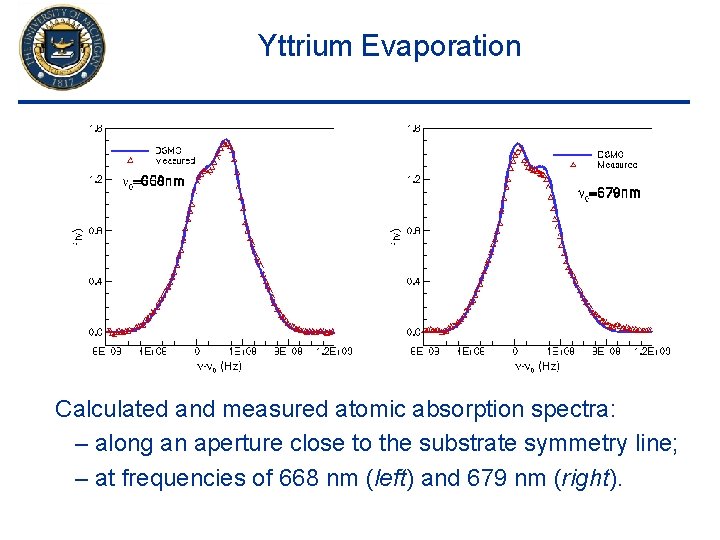
Yttrium Evaporation Calculated and measured atomic absorption spectra: – along an aperture close to the substrate symmetry line; – at frequencies of 668 nm (left) and 679 nm (right).
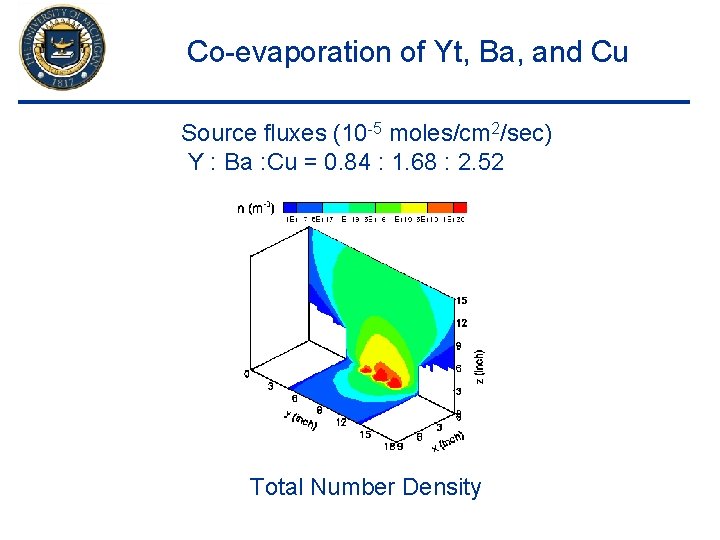
Co-evaporation of Yt, Ba, and Cu Source fluxes (10 -5 moles/cm 2/sec) Y : Ba : Cu = 0. 84 : 1. 68 : 2. 52 Total Number Density
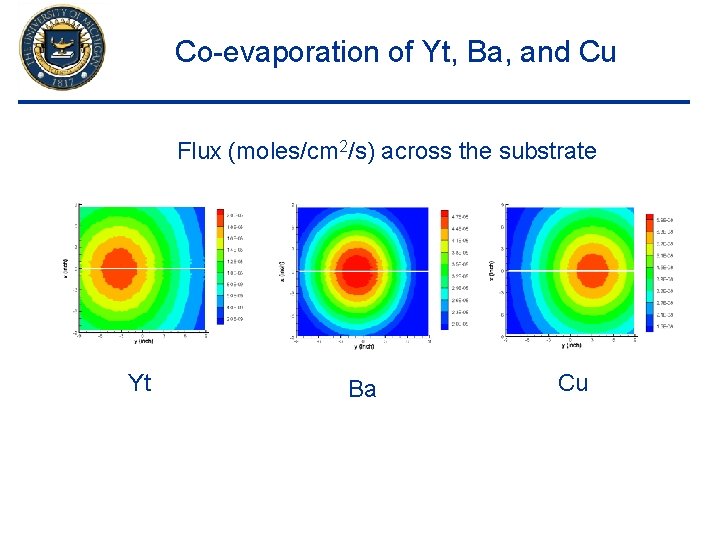
Co-evaporation of Yt, Ba, and Cu Flux (moles/cm 2/s) across the substrate Yt Ba Cu
DSMC Applications: 3. Spacecraft Propulsion • Tasks for spacecraft propulsion systems: – orbit transfer (e. g. planetary exploration); – orbit maintenance (e. g. station-keeping); – attitude control. • Motivations for development of accurate models: – simulations less expensive than testing; – improve our understanding of existing systems; – optimize engine performance and lifetime; – assessment of spacecraft integration concerns.
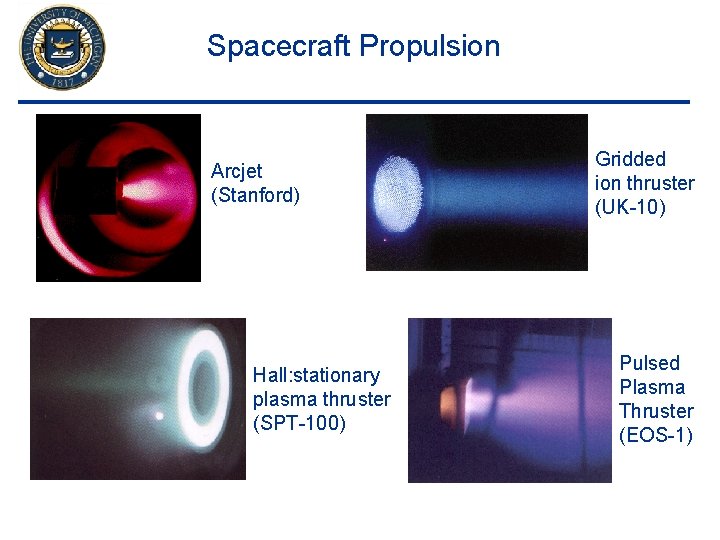
Spacecraft Propulsion Arcjet (Stanford) Hall: stationary plasma thruster (SPT-100) Gridded ion thruster (UK-10) Pulsed Plasma Thruster (EOS-1)
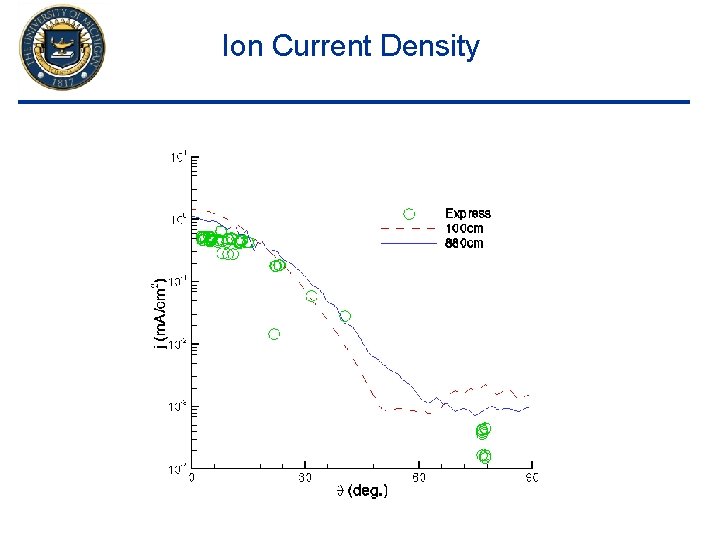
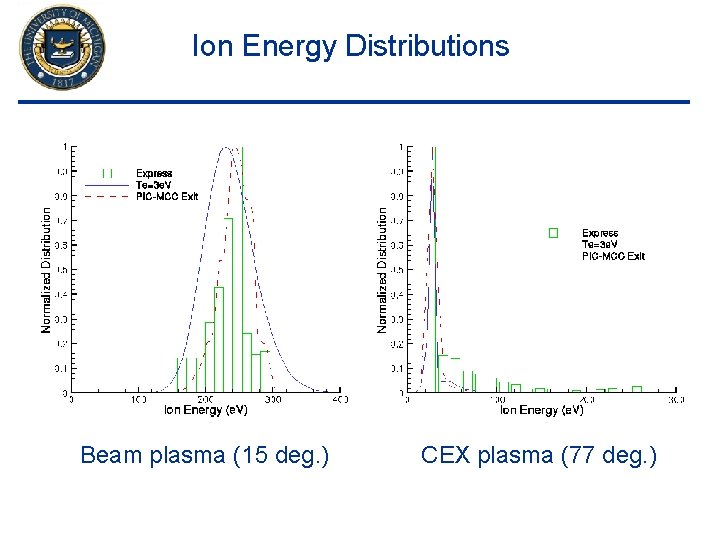
Express Spacecraft • Two Russian GEO spacecraft launched in 2000: – SPT-100 Hall thrusters used for station-keeping; – in-flight characterization program managed by NASA; – first in-flight plume data for Hall thrusters. • Diagnostics employed on spacecraft: – electric field sensors; – Faraday probes (ion current density); – retarding potential analyzers, RPA’s (ion current density, ion energy distribution function); – pressure sensors; – disturbance torques (from telemetry data).
Express Spacecraft
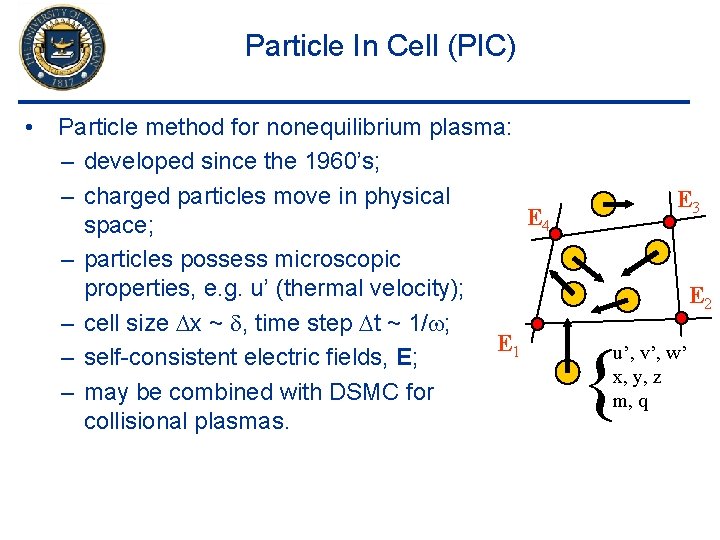
Particle In Cell (PIC) • Particle method for nonequilibrium plasma: – developed since the 1960’s; – charged particles move in physical E 4 space; – particles possess microscopic properties, e. g. u’ (thermal velocity); – cell size Dx ~ d, time step Dt ~ 1/w; E 1 – self-consistent electric fields, E; – may be combined with DSMC for collisional plasmas. E 3 E 2 { u’, v’, w’ x, y, z m, q
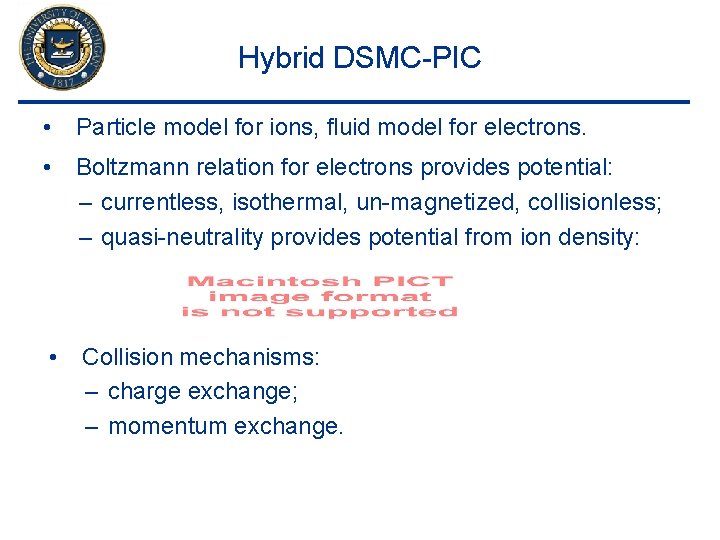
Hybrid DSMC-PIC • Particle model for ions, fluid model for electrons. • Boltzmann relation for electrons provides potential: – currentless, isothermal, un-magnetized, collisionless; – quasi-neutrality provides potential from ion density: • Collision mechanisms: – charge exchange; – momentum exchange.
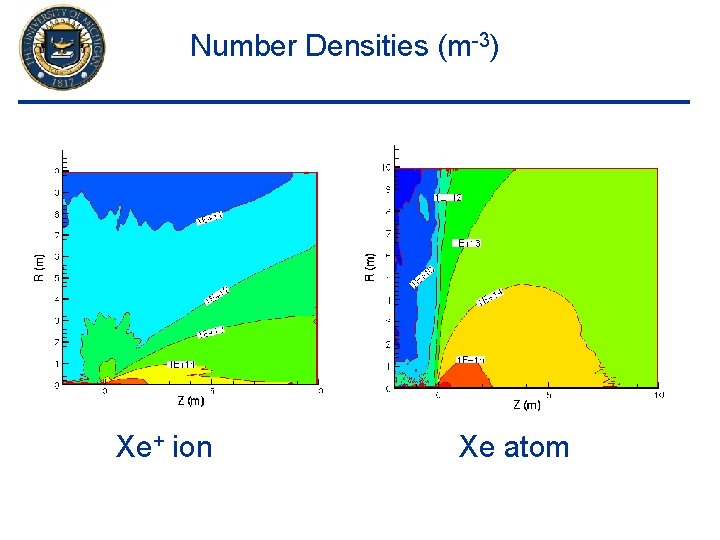
Number Densities (m-3) Xe+ ion Xe atom
Ion Current Density
Ion Energy Distributions Beam plasma (15 deg. ) CEX plasma (77 deg. )
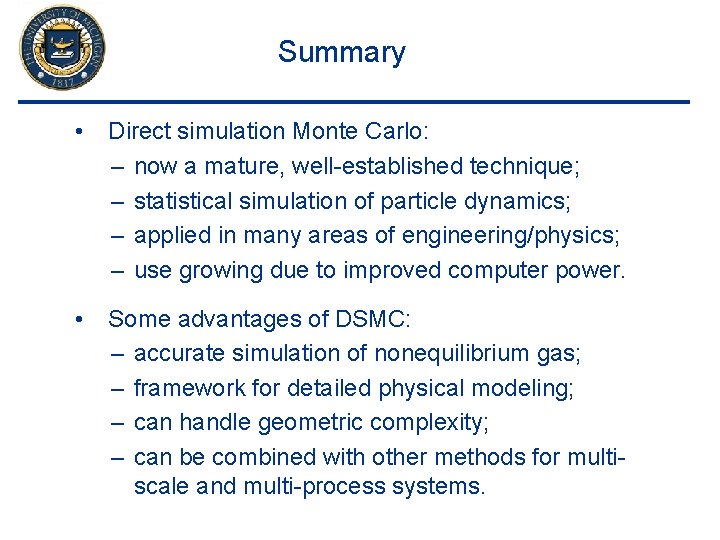
Summary • Direct simulation Monte Carlo: – now a mature, well-established technique; – statistical simulation of particle dynamics; – applied in many areas of engineering/physics; – use growing due to improved computer power. • Some advantages of DSMC: – accurate simulation of nonequilibrium gas; – framework for detailed physical modeling; – can handle geometric complexity; – can be combined with other methods for multiscale and multi-process systems.
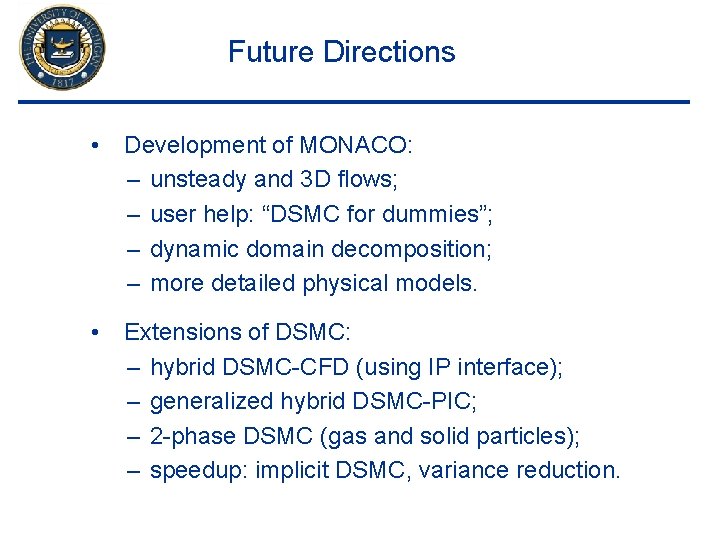
Future Directions • Development of MONACO: – unsteady and 3 D flows; – user help: “DSMC for dummies”; – dynamic domain decomposition; – more detailed physical models. • Extensions of DSMC: – hybrid DSMC-CFD (using IP interface); – generalized hybrid DSMC-PIC; – 2 -phase DSMC (gas and solid particles); – speedup: implicit DSMC, variance reduction.