
Direct Reaction Array for the Core Understanding of

- Slides: 9
Direct Reaction Array for the Core Understanding of Light-nuclei and Astrophysics DR PROPOSERS G. Lotay W. N. Catford D. T. Doherty D. G. Jenkins M. Labiche I. Lazarus J. Simpson A AC U L
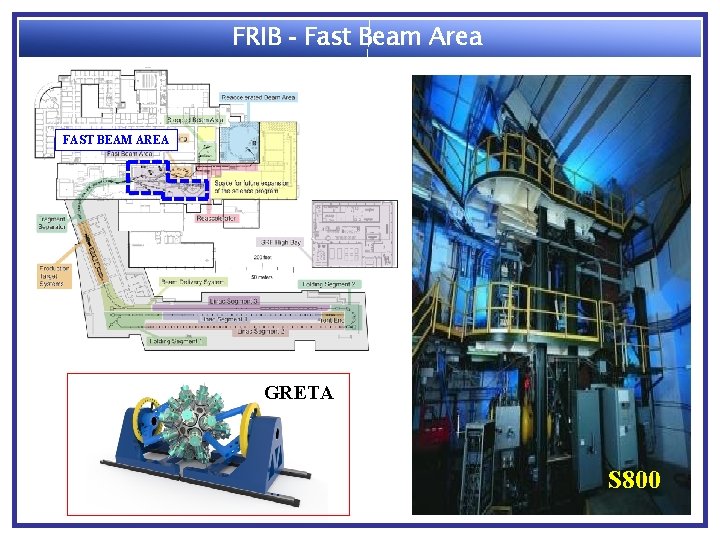
FRIB – Fast Beam Area FAST BEAM AREA GRETA S 800
Science goals s r e sf n a r )t n a ) p , (d d , i 6 L d( ISOTOPE 18 F 30 P 45 Ti 45 Cr 54 Ca 56 Ni 74 Ni 103 Sn DAY 1 ULTIMATE pps 2. 30 E+09 1. 10 E+12 5. 90 E+09 6. 30 E+11 2. 50 E+08 5. 70 E+10 9. 30 E+03 3. 80 E+06 2. 60 E+02 1. 00 E+04 1. 40 E+07 1. 70 E+10 1. 40 E+04 5. 70 E+05 9. 80 E+03 3. 90 E+05
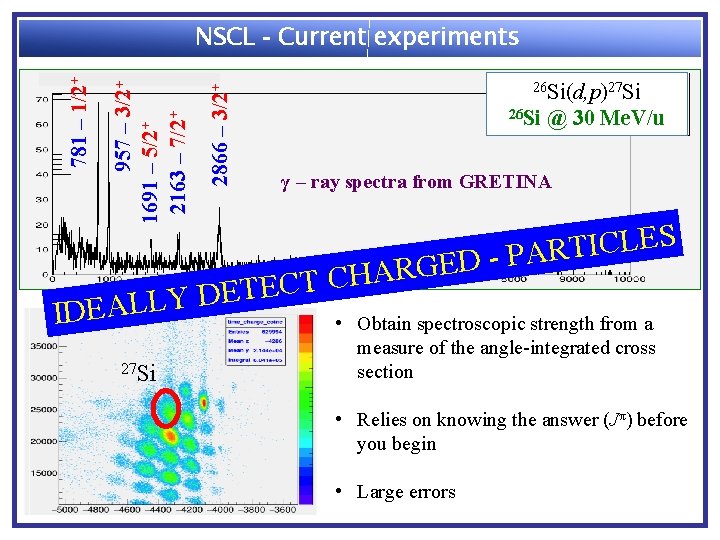
2866 – 3/2+ 957 – 3/2+ 1691 – 5/2+ 2163 – 7/2+ 781 – 1/2+ NSCL – Current experiments 26 Si(d, p)27 Si 26 Si γ – ray spectra from GRETINA C E T E D EALLY ID 27 Si @ 30 Me. V/u S E L C I T R A P D E G R A H C T • Obtain spectroscopic strength from a measure of the angle-integrated cross section • Relies on knowing the answer (Jπ) before you begin • Large errors
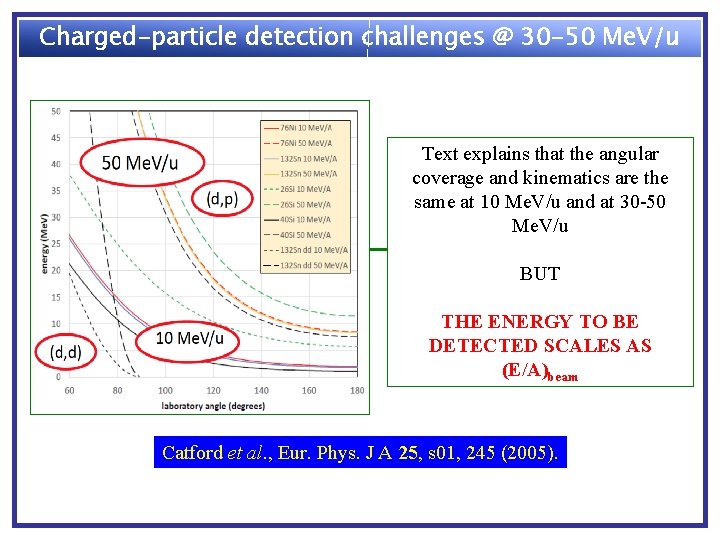
Charged-particle detection challenges @ 30 -50 Me. V/u Text explains that the angular coverage and kinematics are the same at 10 Me. V/u and at 30 -50 Me. V/u BUT THE ENERGY TO BE DETECTED SCALES AS (E/A)beam Catford et al. , Eur. Phys. J A 25, s 01, 245 (2005).
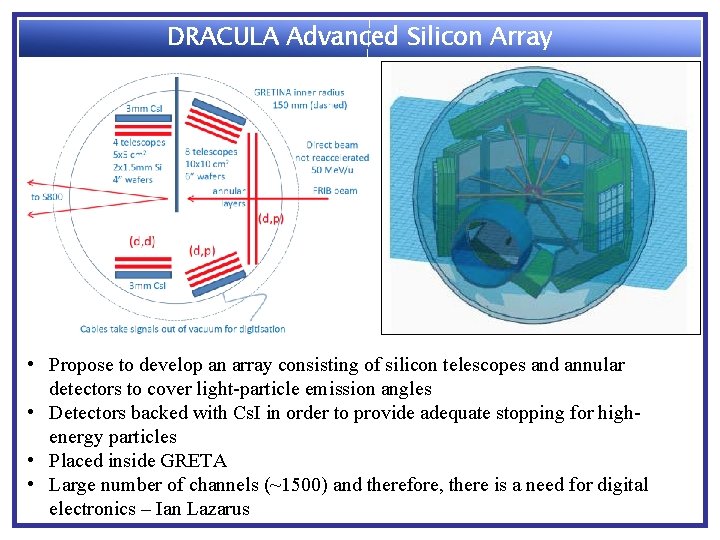
DRACULA Advanced Silicon Array • Propose to develop an array consisting of silicon telescopes and annular detectors to cover light-particle emission angles • Detectors backed with Cs. I in order to provide adequate stopping for highenergy particles • Placed inside GRETA • Large number of channels (~1500) and therefore, there is a need for digital electronics – Ian Lazarus
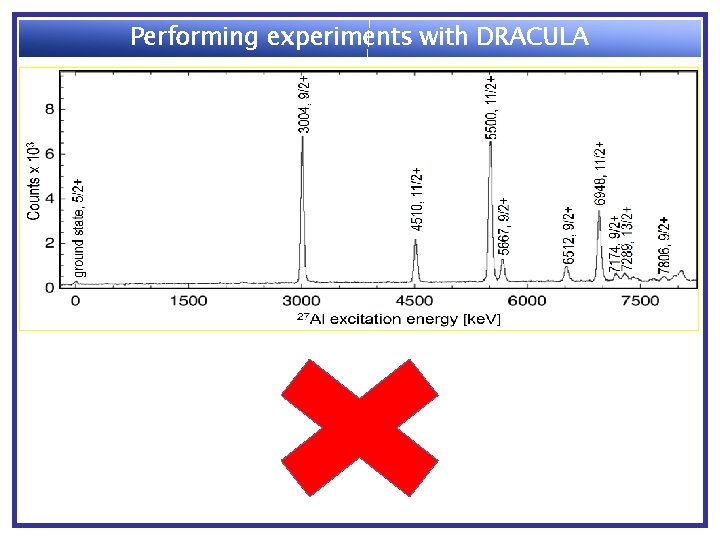
Performing experiments with DRACULA
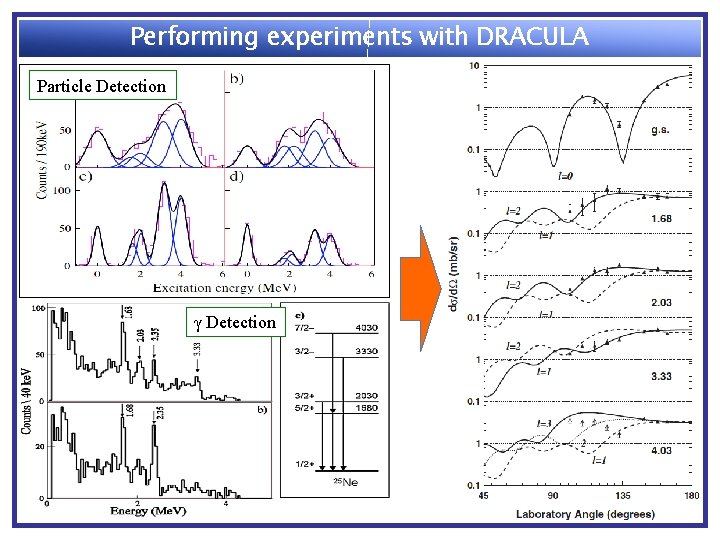
Performing experiments with DRACULA Particle Detection γ Detection
DRACULA • Ideally suited for performing detailed spectroscopy studies with the most intense rare isotope beams available at FRIB (slower fast beams) • No problems with chemistry of ISOL radioactive beams or loss of beam intensity associated with re-acceleration (~ 3 orders of magnitude) • Use of world-leading GRETA and S 800 detectors • Can also do (d, 3 He) and (d, t) reaction studies • Greeted with great enthusiasm by FRIB management (B. Sherrill) and NSCL lead scientists (A. Gade) • Extremely timely – at the moment, no one else is doing this! • Submitted an So. I to the December Science Board meeting (feedback soon) • Interest from UK nuclear physics community?