
DIRECT POTABLE REUSE Presented by Mark Farrell P
DIRECT POTABLE REUSE Presented by Mark Farrell, P. E. President- Water Resource Associates
Potable Reuse � Direct Potable ◦ Treating wastewater to drinking water quality and introducing directly back into the drinking water system � Indirect Potable ◦ Treating wastewater to drinking water quality and dispersing into the environment to be recaptured for additional treatment for drinking water purposes
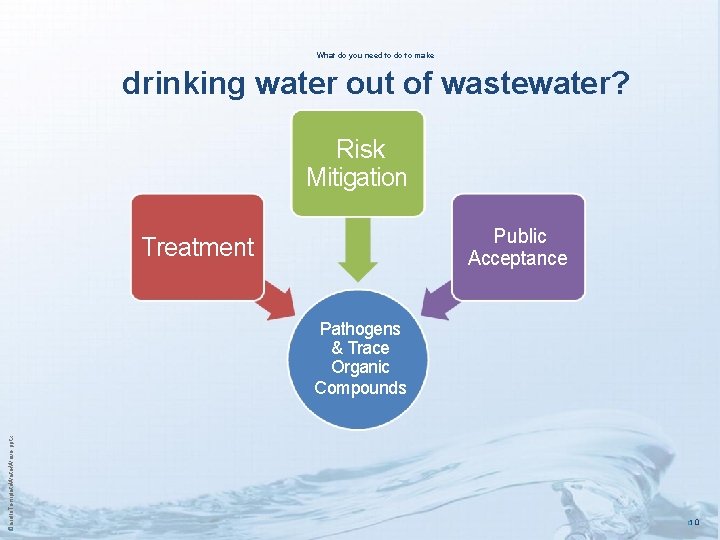
� What do you need to do to make drinking water out of wastewater? Risk Mitigation Public Acceptance Treatment � Carollo. Template. Water. Wave. pptx Pathogens & Trace Organic Compounds � 10

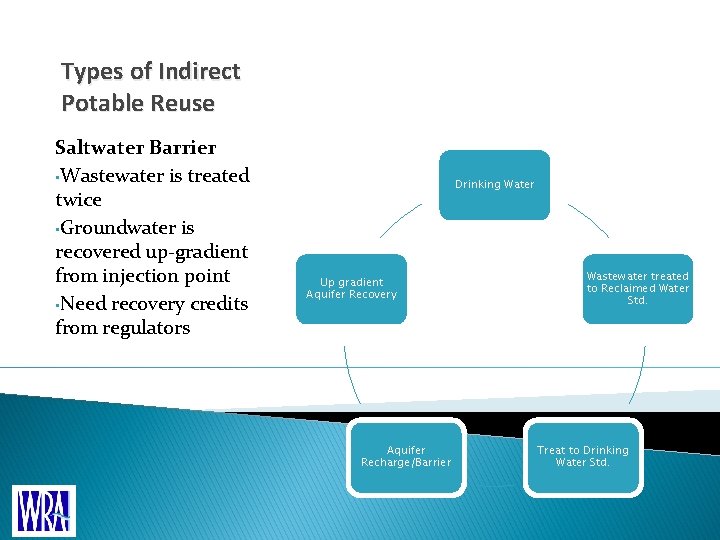
Types of Indirect Potable Reuse Saltwater Barrier • Wastewater is treated twice • Groundwater is recovered up-gradient from injection point • Need recovery credits from regulators Drinking Water Up gradient Aquifer Recovery Aquifer Recharge/Barrier Wastewater treated to Reclaimed Water Std. Treat to Drinking Water Std.
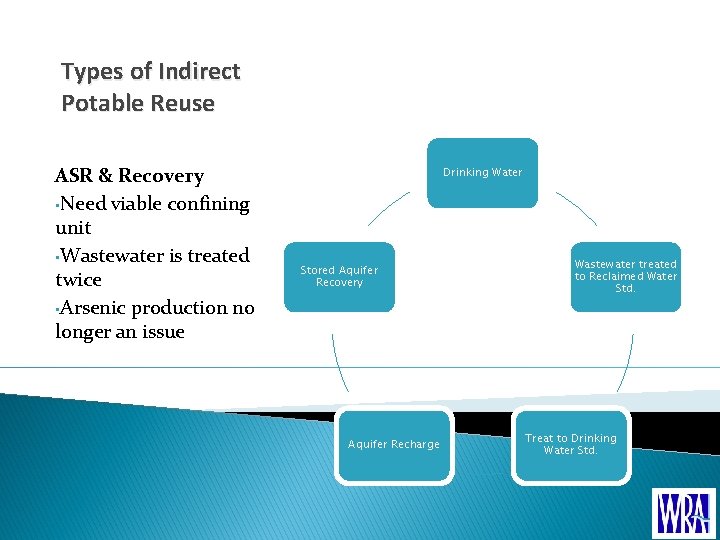
Types of Indirect Potable Reuse ASR & Recovery • Need viable confining unit • Wastewater is treated twice • Arsenic production no longer an issue Drinking Water Stored Aquifer Recovery Aquifer Recharge Wastewater treated to Reclaimed Water Std. Treat to Drinking Water Std.
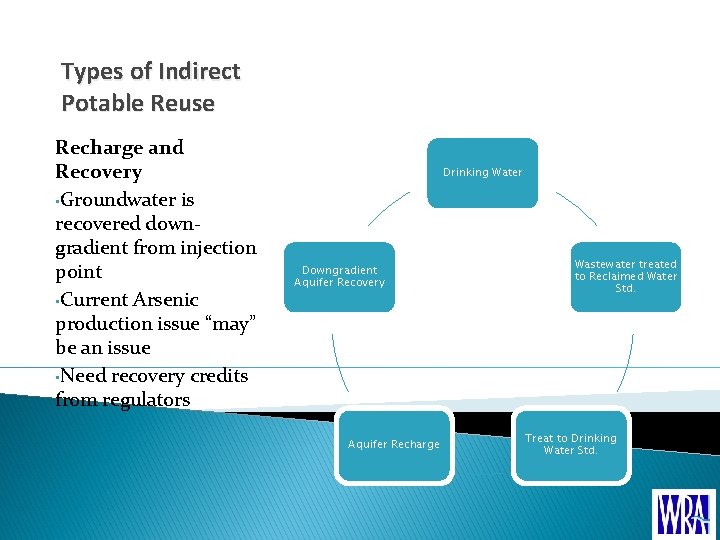
Types of Indirect Potable Reuse Recharge and Recovery • Groundwater is recovered downgradient from injection point • Current Arsenic production issue “may” be an issue • Need recovery credits from regulators Drinking Water Downgradient Aquifer Recovery Aquifer Recharge Wastewater treated to Reclaimed Water Std. Treat to Drinking Water Std.
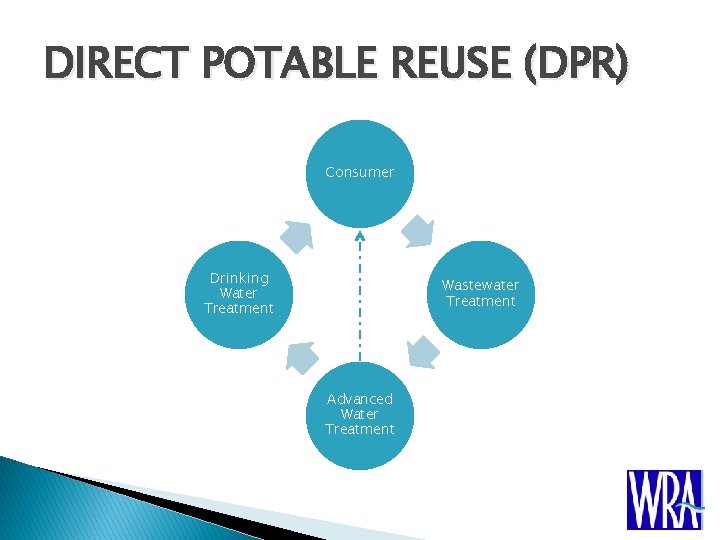
DIRECT POTABLE REUSE (DPR) Consumer Drinking Water Treatment Wastewater Treatment Advanced Water Treatment
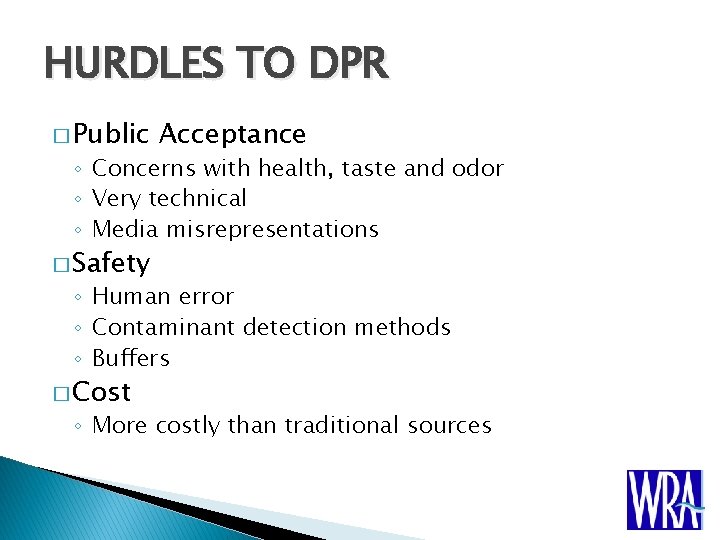
HURDLES TO DPR � Public Acceptance ◦ Concerns with health, taste and odor ◦ Very technical ◦ Media misrepresentations � Safety ◦ Human error ◦ Contaminant detection methods ◦ Buffers � Cost ◦ More costly than traditional sources
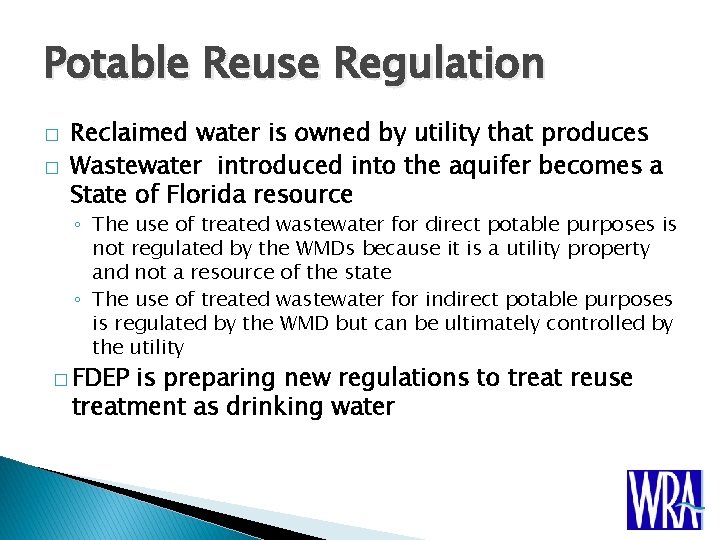
Potable Reuse Regulation � � Reclaimed water is owned by utility that produces Wastewater introduced into the aquifer becomes a State of Florida resource ◦ The use of treated wastewater for direct potable purposes is not regulated by the WMDs because it is a utility property and not a resource of the state ◦ The use of treated wastewater for indirect potable purposes is regulated by the WMD but can be ultimately controlled by the utility � FDEP is preparing new regulations to treat reuse treatment as drinking water
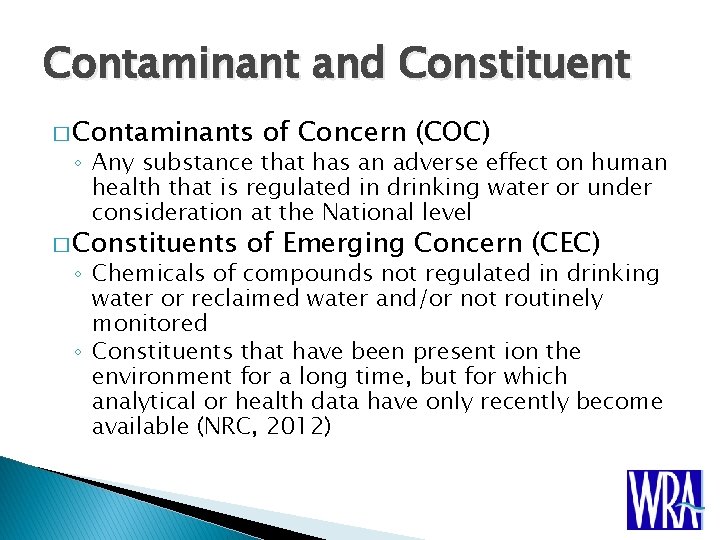
Contaminant and Constituent � Contaminants of Concern (COC) ◦ Any substance that has an adverse effect on human health that is regulated in drinking water or under consideration at the National level � Constituents of Emerging Concern (CEC) ◦ Chemicals of compounds not regulated in drinking water or reclaimed water and/or not routinely monitored ◦ Constituents that have been present ion the environment for a long time, but for which analytical or health data have only recently become available (NRC, 2012)
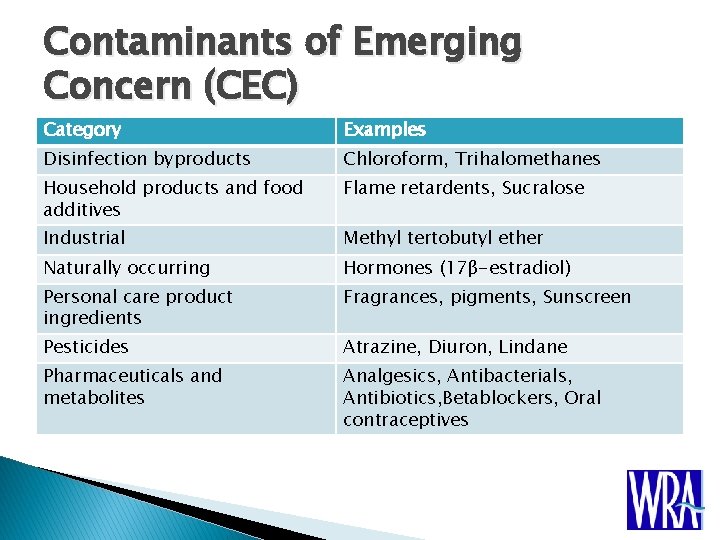
Contaminants of Emerging Concern (CEC) Category Examples Disinfection byproducts Chloroform, Trihalomethanes Household products and food additives Flame retardents, Sucralose Industrial Methyl tertobutyl ether Naturally occurring Hormones (17β-estradiol) Personal care product ingredients Fragrances, pigments, Sunscreen Pesticides Atrazine, Diuron, Lindane Pharmaceuticals and metabolites Analgesics, Antibacterials, Antibiotics, Betablockers, Oral contraceptives
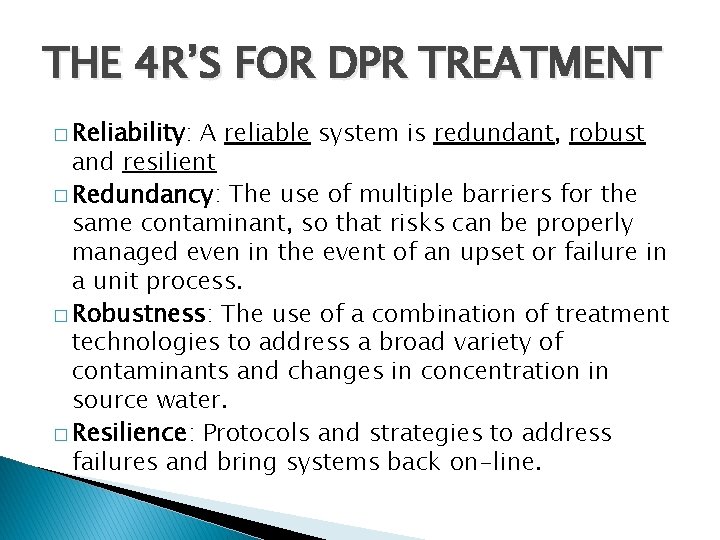
THE 4 R’S FOR DPR TREATMENT � Reliability: A reliable system is redundant, robust and resilient � Redundancy: The use of multiple barriers for the same contaminant, so that risks can be properly managed even in the event of an upset or failure in a unit process. � Robustness: The use of a combination of treatment technologies to address a broad variety of contaminants and changes in concentration in source water. � Resilience: Protocols and strategies to address failures and bring systems back on-line.
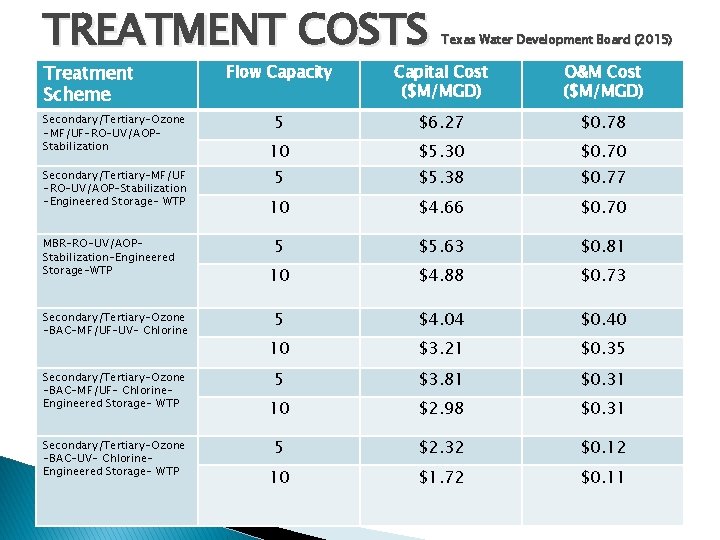
TREATMENT COSTS Treatment Scheme Secondary/Tertiary-Ozone -MF/UF-RO-UV/AOPStabilization Secondary/Tertiary-MF/UF -RO-UV/AOP-Stabilization -Engineered Storage- WTP MBR-RO-UV/AOPStabilization-Engineered Storage-WTP Secondary/Tertiary-Ozone -BAC-MF/UF-UV- Chlorine Secondary/Tertiary-Ozone -BAC-MF/UF- Chlorine. Engineered Storage- WTP Secondary/Tertiary-Ozone -BAC-UV- Chlorine. Engineered Storage- WTP Texas Water Development Board (2015) Flow Capacity Capital Cost ($M/MGD) O&M Cost ($M/MGD) 5 $6. 27 $0. 78 10 $5. 30 $0. 70 5 $5. 38 $0. 77 10 $4. 66 $0. 70 5 $5. 63 $0. 81 10 $4. 88 $0. 73 5 $4. 04 $0. 40 10 $3. 21 $0. 35 5 $3. 81 $0. 31 10 $2. 98 $0. 31 5 $2. 32 $0. 12 10 $1. 72 $0. 11
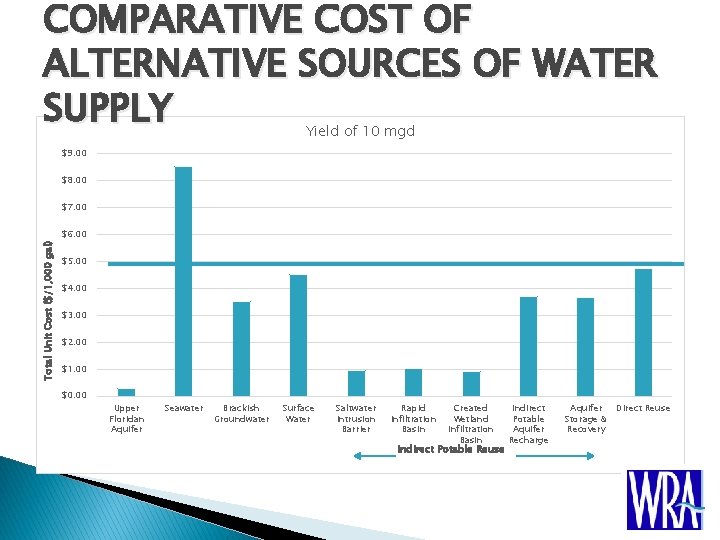
COMPARATIVE COST OF ALTERNATIVE SOURCES OF WATER SUPPLY Yield of 10 mgd $9. 00 $8. 00 Total Unit Cost ($/1, 000 gal) $7. 00 $6. 00 $5. 00 $4. 00 $3. 00 $2. 00 $1. 00 $0. 00 Upper Floridan Aquifer Seawater Brackish Groundwater Surface Water Saltwater Intrusion Barrier Rapid Infiltration Basin Created Wetland Infiltration Basin Indirect Potable Reuse Indirect Potable Aquifer Recharge Aquifer Direct Reuse Storage & Recovery
Summary � Direct potable reuse is the ultimate recycle for potable purposes � Florida trails the nation in the development of this water supply source � Cost information is still evolving as treatment trains are being evaluated for the best cost/benefit Recycling wastewater provides the best of both: ◦ Sustainable and cost effective water supply ◦ Water quality improvement for our coastal water bodies � Public information and safety is the key to development of direct potable reuse
- Slides: 16