
Direct Object Pronouns The Basics We use direct
Direct Object Pronouns
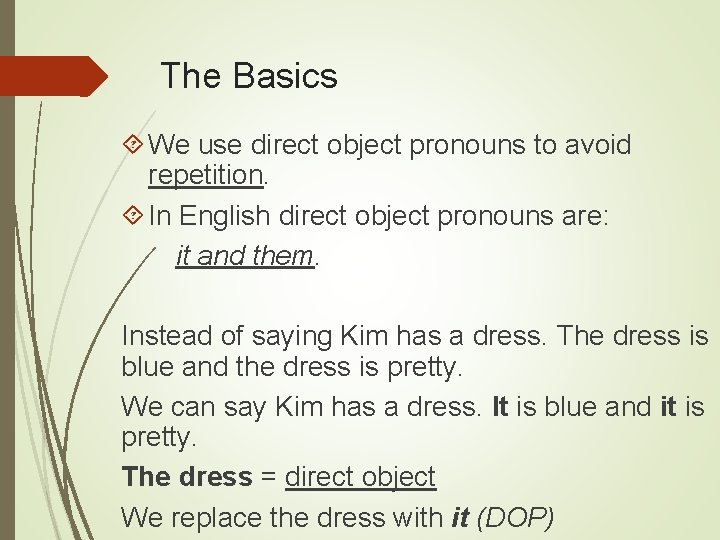
The Basics We use direct object pronouns to avoid repetition. In English direct object pronouns are: it and them. Instead of saying Kim has a dress. The dress is blue and the dress is pretty. We can say Kim has a dress. It is blue and it is pretty. The dress = direct object We replace the dress with it (DOP)
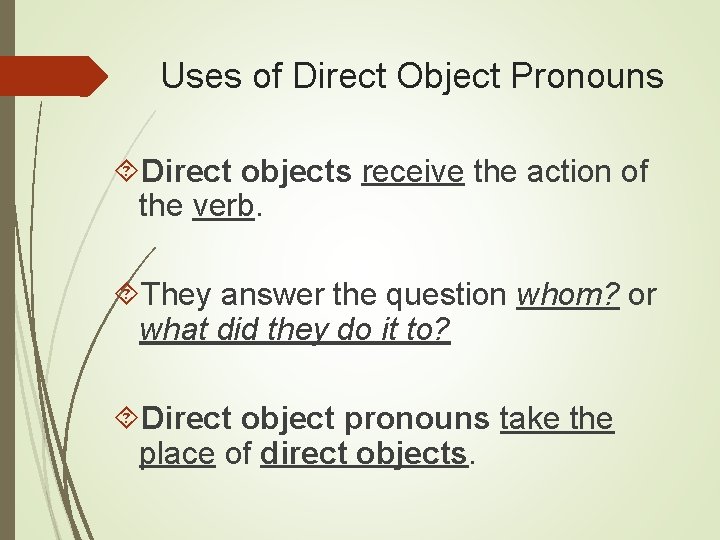
Uses of Direct Object Pronouns Direct objects receive the action of the verb. They answer the question whom? or what did they do it to? Direct object pronouns take the place of direct objects.
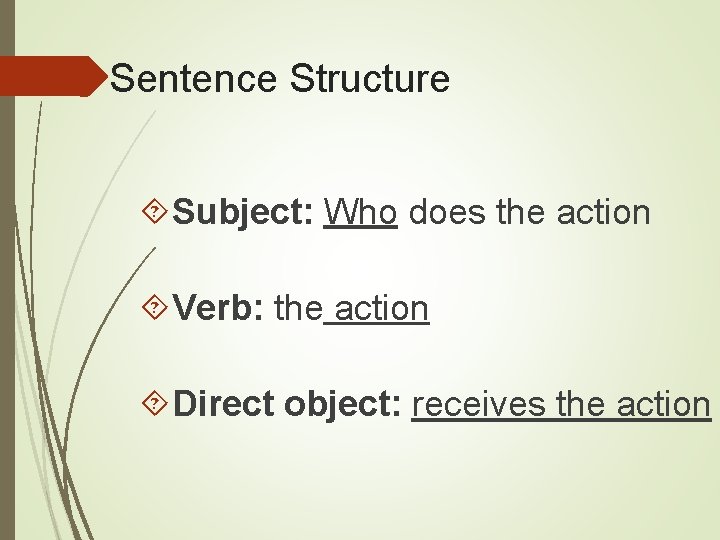
Sentence Structure Subject: Who does the action Verb: the action Direct object: receives the action
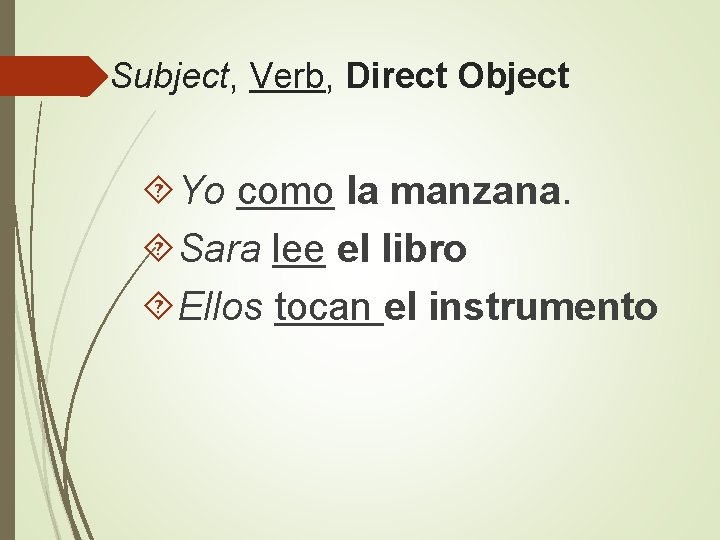
Subject, Verb, Direct Object Yo como la manzana. Sara lee el libro Ellos tocan el instrumento
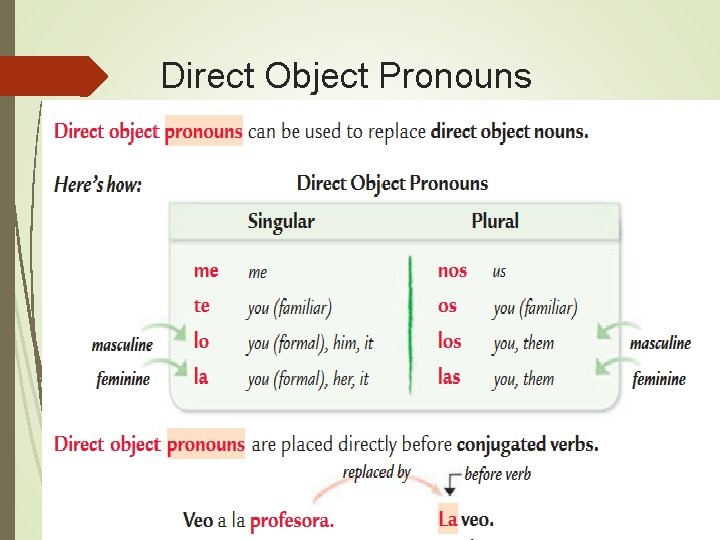
Direct Object Pronouns
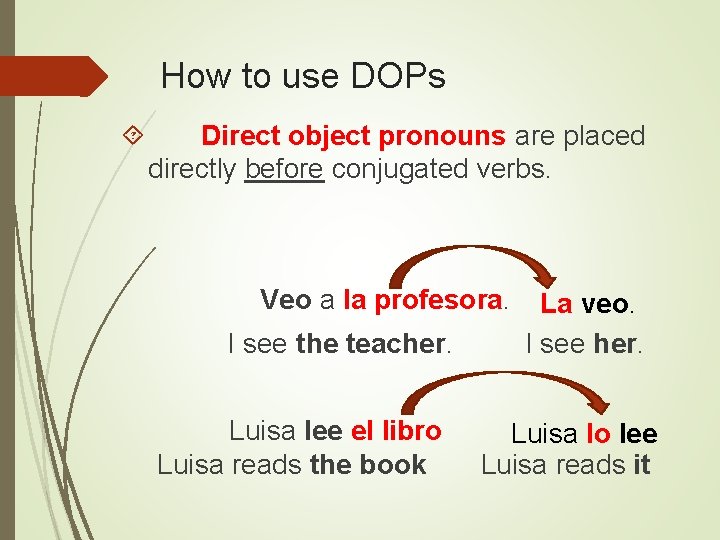
How to use DOPs Direct object pronouns are placed directly before conjugated verbs. Veo a la profesora. I see the teacher. Luisa lee el libro Luisa reads the book La veo. I see her. Luisa lo lee Luisa reads it
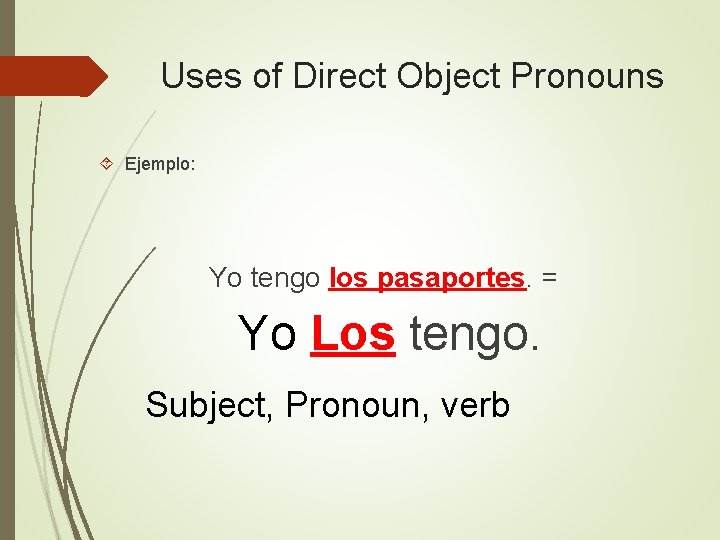
Uses of Direct Object Pronouns Ejemplo: Yo tengo los pasaportes. = Yo Los tengo. Subject, Pronoun, verb
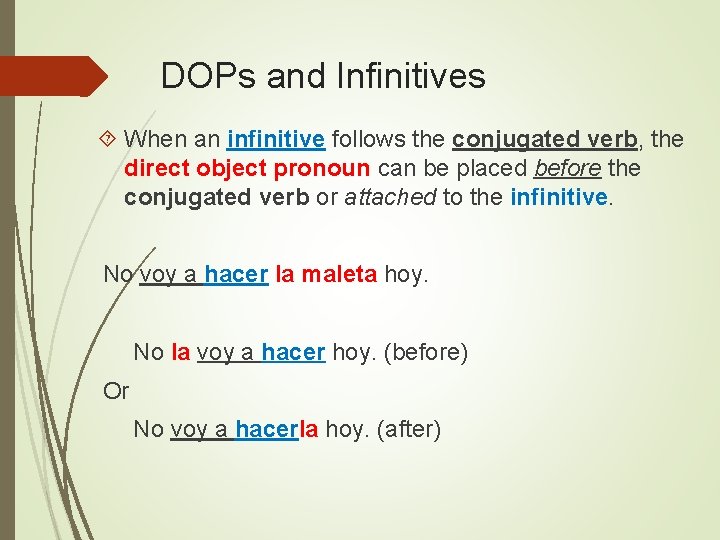
DOPs and Infinitives When an infinitive follows the conjugated verb, the direct object pronoun can be placed before the conjugated verb or attached to the infinitive. No voy a hacer la maleta hoy. No la voy a hacer hoy. (before) Or No voy a hacerla hoy. (after)
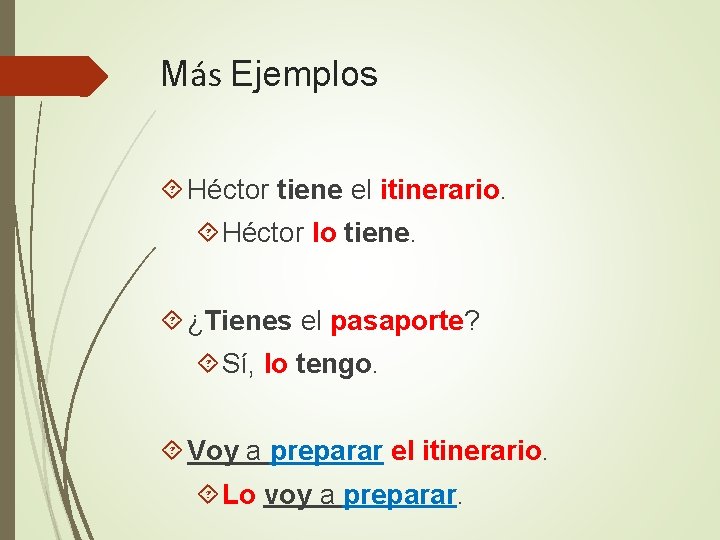
Más Ejemplos Héctor tiene el itinerario. Héctor lo tiene. ¿Tienes el pasaporte? Sí, lo tengo. Voy a preparar el itinerario. Lo voy a preparar.
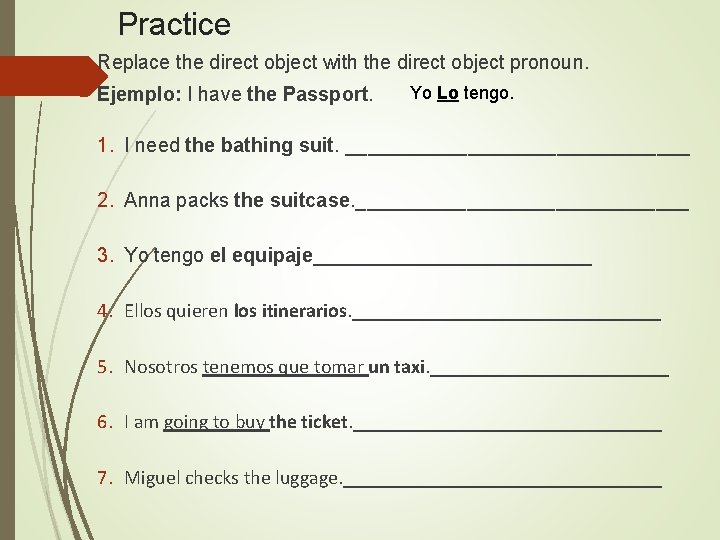
Practice Replace the direct object with the direct object pronoun. Ejemplo: I have the Passport. Yo Lo tengo. 1. I need the bathing suit. ________________ 2. Anna packs the suitcase. _______________ 3. Yo tengo el equipaje______________ 4. Ellos quieren los itinerarios. ________________ 5. Nosotros tenemos que tomar un taxi. ____________ 6. I am going to buy the ticket. ________________ 7. Miguel checks the luggage. ________________
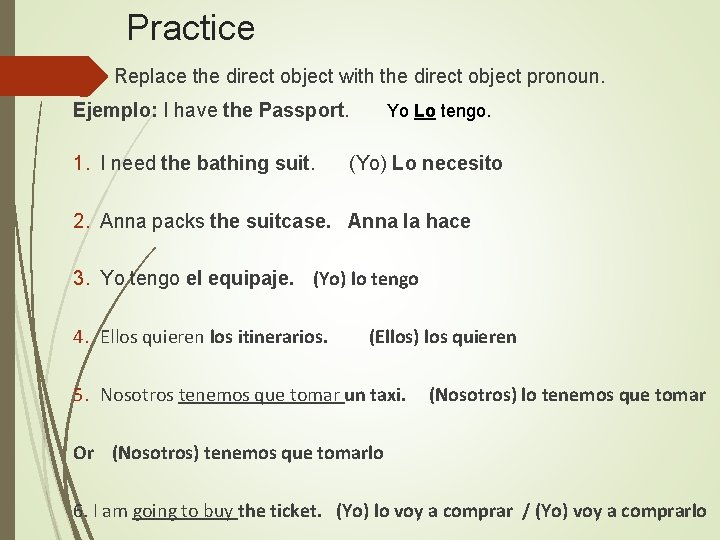
Practice Replace the direct object with the direct object pronoun. Ejemplo: I have the Passport. 1. I need the bathing suit. Yo Lo tengo. (Yo) Lo necesito 2. Anna packs the suitcase. Anna la hace 3. Yo tengo el equipaje. (Yo) lo tengo 4. Ellos quieren los itinerarios. (Ellos) los quieren 5. Nosotros tenemos que tomar un taxi. (Nosotros) lo tenemos que tomar Or (Nosotros) tenemos que tomarlo 6. I am going to buy the ticket. (Yo) lo voy a comprar / (Yo) voy a comprarlo
7. Miguel checks the luggage. Miguel lo factura
- Slides: 13