
Direct Object Pronouns Direct Object Receives the action
Direct Object Pronouns

Direct Object • Receives the action of the verb directly(the thing being “verbed”) • 1. I wash the clothes. • what is being washed? • the clothes
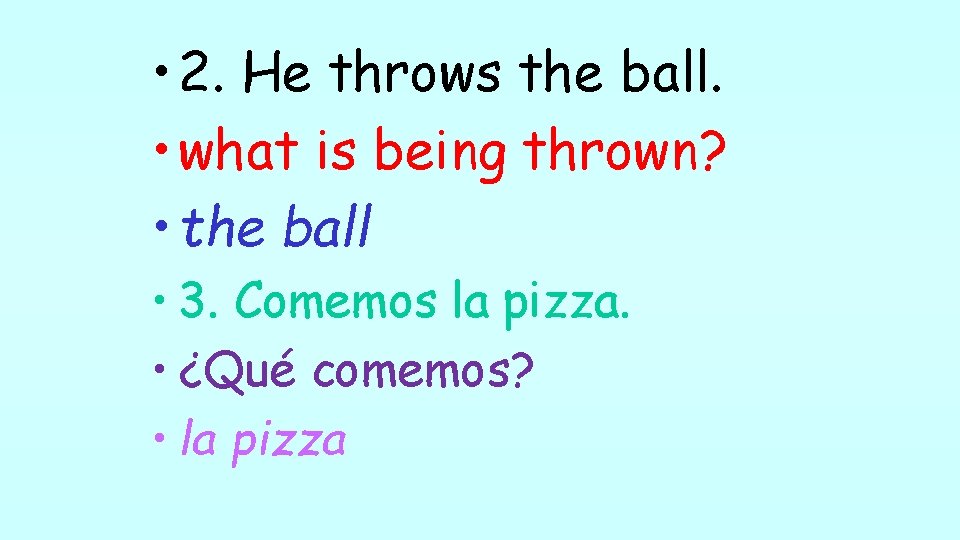
• 2. He throws the ball. • what is being thrown? • the ball • 3. Comemos la pizza. • ¿Qué comemos? • la pizza
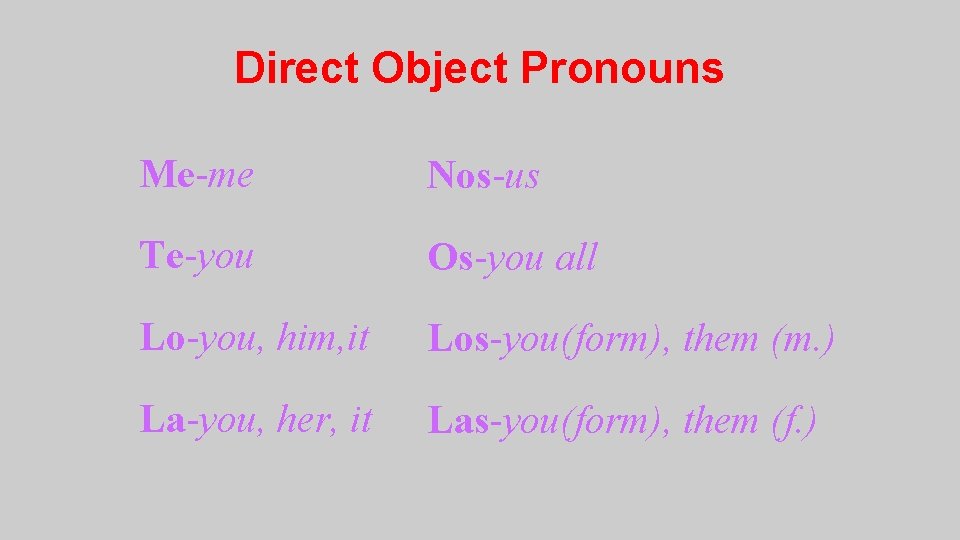
Direct Object Pronouns Me-me Nos-us Te-you Os-you all Lo-you, him, it Los-you(form), them (m. ) La-you, her, it Las-you(form), them (f. )
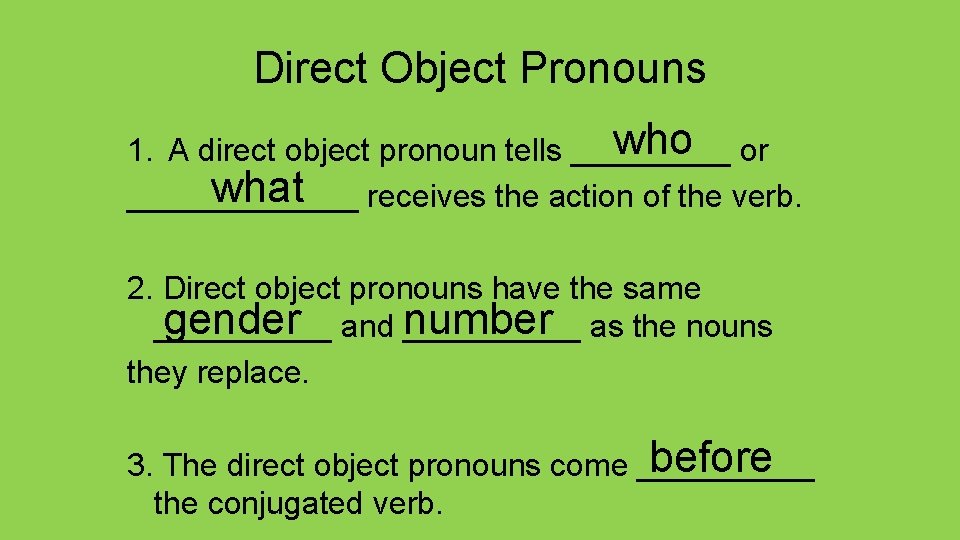
Direct Object Pronouns who or 1. A direct object pronoun tells _____ what receives the action of the verb. _______ 2. Direct object pronouns have the same gender and number __________ as the nouns they replace. before 3. The direct object pronouns come _____ the conjugated verb.
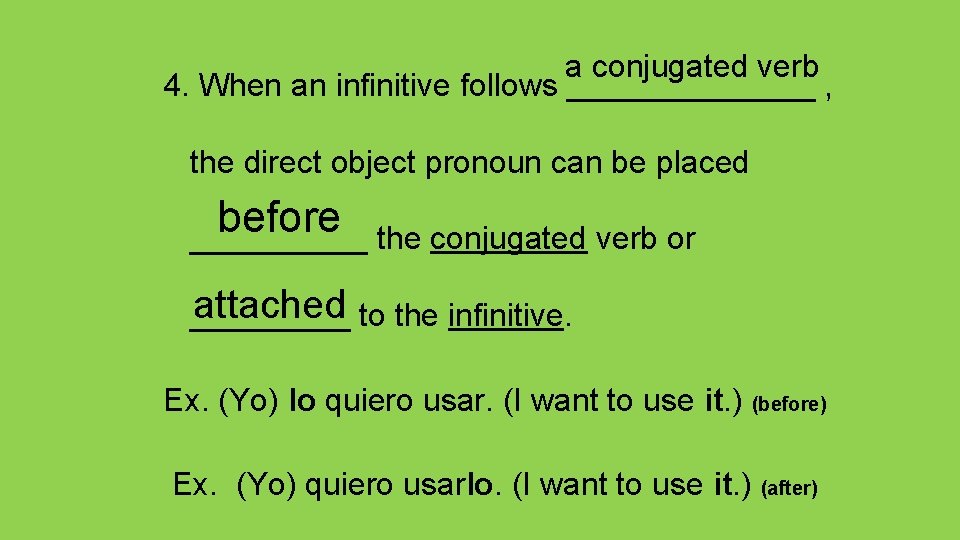
a conjugated verb 4. When an infinitive follows _______ , the direct object pronoun can be placed before _____ the conjugated verb or attached to the infinitive. _____ Ex. (Yo) lo quiero usar. (I want to use it. ) (before) Ex. (Yo) quiero usarlo. (I want to use it. ) (after)
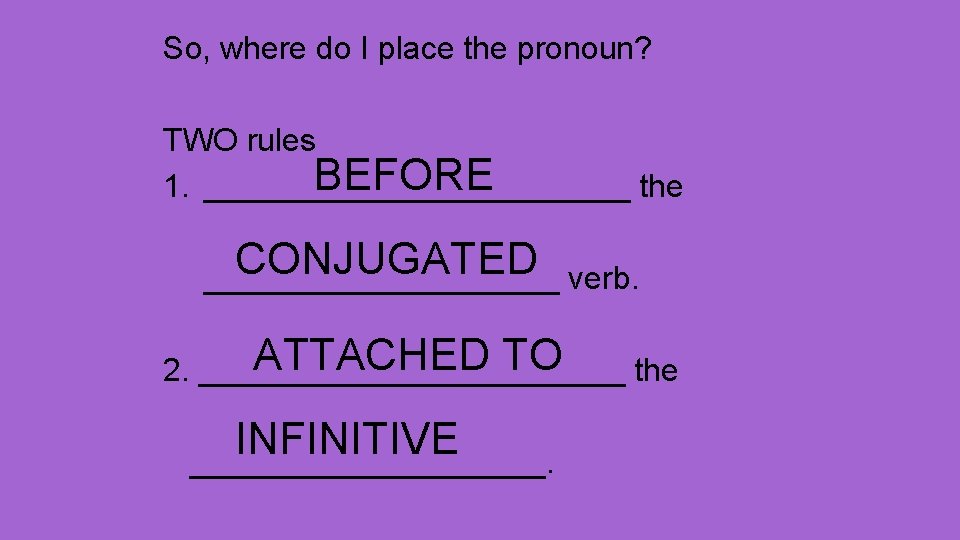
So, where do I place the pronoun? TWO rules BEFORE 1. ____________ the CONJUGATED __________ verb. ATTACHED TO 2. ____________ the INFINITIVE __________.
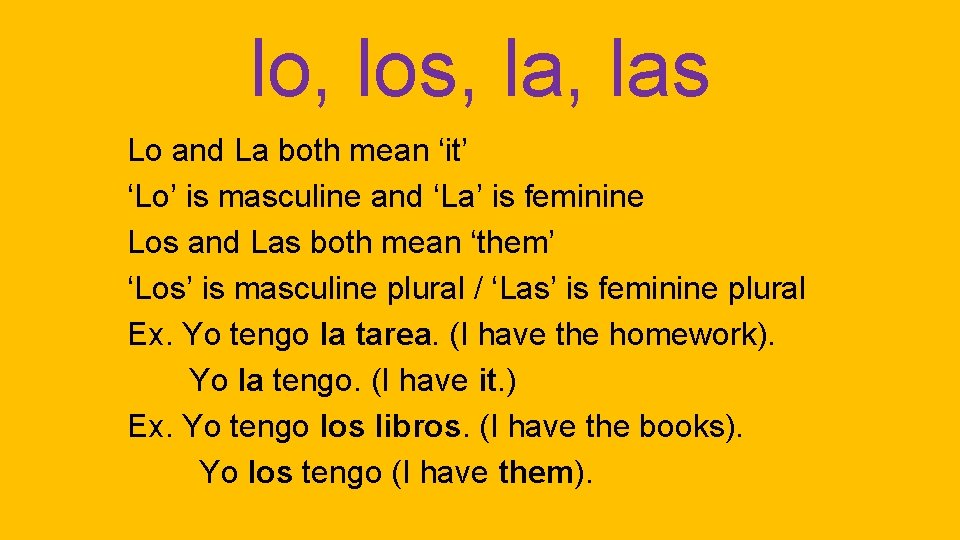
lo, los, las Lo and La both mean ‘it’ ‘Lo’ is masculine and ‘La’ is feminine Los and Las both mean ‘them’ ‘Los’ is masculine plural / ‘Las’ is feminine plural Ex. Yo tengo la tarea. (I have the homework). Yo la tengo. (I have it. ) Ex. Yo tengo los libros. (I have the books). Yo los tengo (I have them).
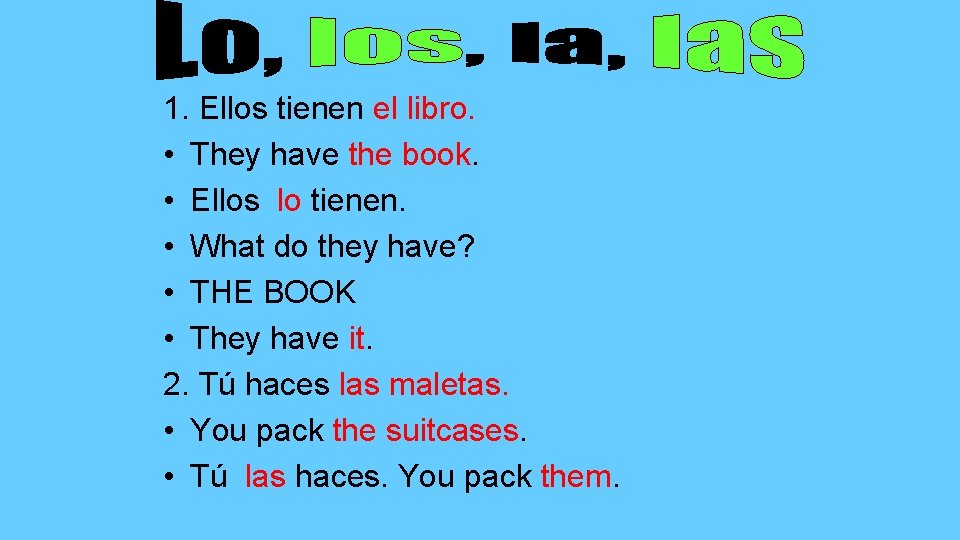
1. Ellos tienen el libro. • They have the book. • Ellos lo tienen. • What do they have? • THE BOOK • They have it. 2. Tú haces las maletas. • You pack the suitcases. • Tú las haces. You pack them.
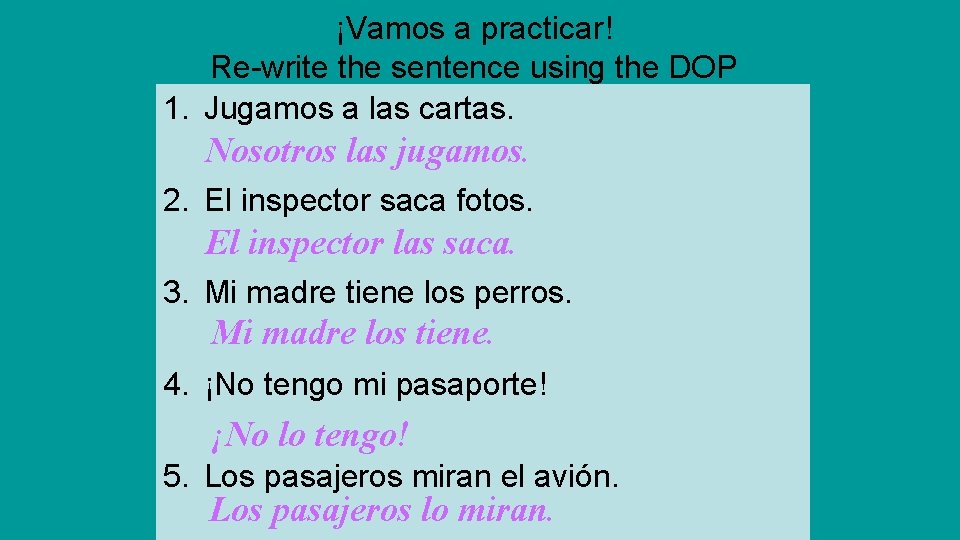
¡Vamos a practicar! Re-write the sentence using the DOP 1. Jugamos a las cartas. Nosotros las jugamos. 2. El inspector saca fotos. El inspector las saca. 3. Mi madre tiene los perros. Mi madre los tiene. 4. ¡No tengo mi pasaporte! ¡No lo tengo! 5. Los pasajeros miran el avión. Los pasajeros lo miran.
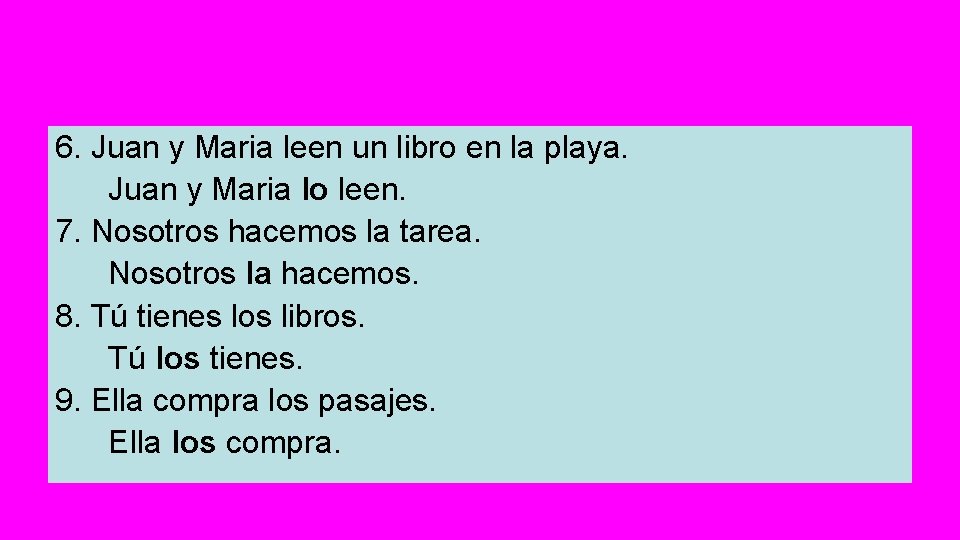
6. Juan y Maria leen un libro en la playa. Juan y Maria lo leen. 7. Nosotros hacemos la tarea. Nosotros la hacemos. 8. Tú tienes los libros. Tú los tienes. 9. Ella compra los pasajes. Ella los compra.
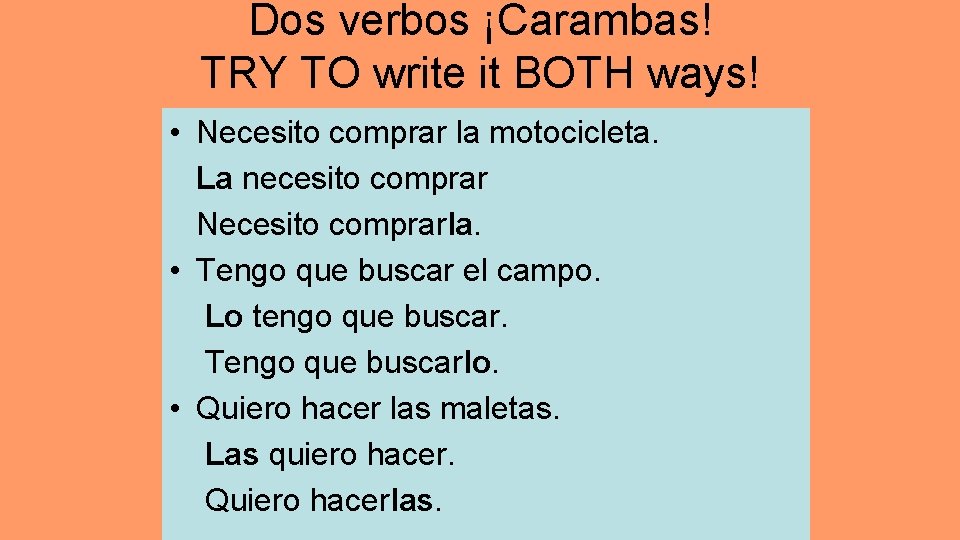
Dos verbos ¡Carambas! TRY TO write it BOTH ways! • Necesito comprar la motocicleta. La necesito comprar Necesito comprarla. • Tengo que buscar el campo. Lo tengo que buscar. Tengo que buscarlo. • Quiero hacer las maletas. Las quiero hacer. Quiero hacerlas.
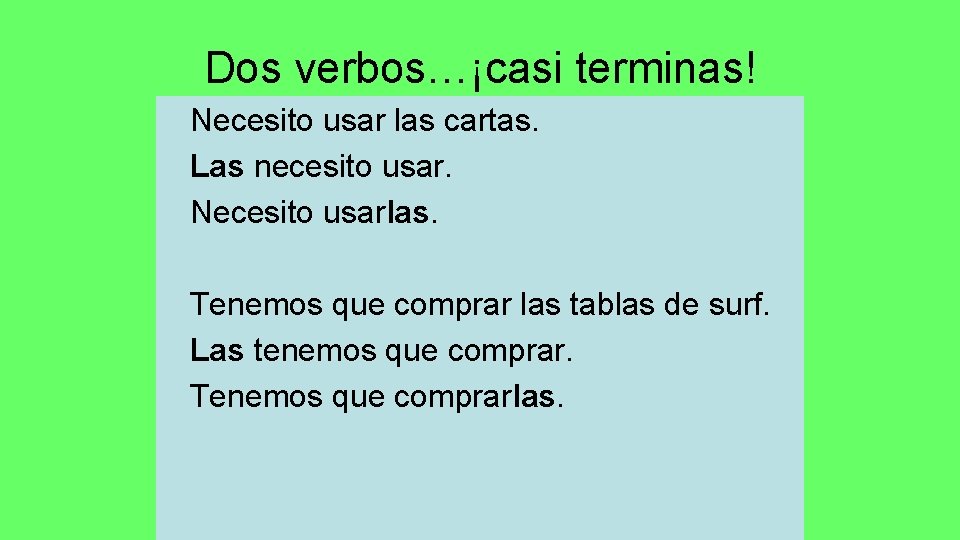
Dos verbos…¡casi terminas! Necesito usar las cartas. Las necesito usar. Necesito usarlas. Tenemos que comprar las tablas de surf. Las tenemos que comprar. Tenemos que comprarlas.
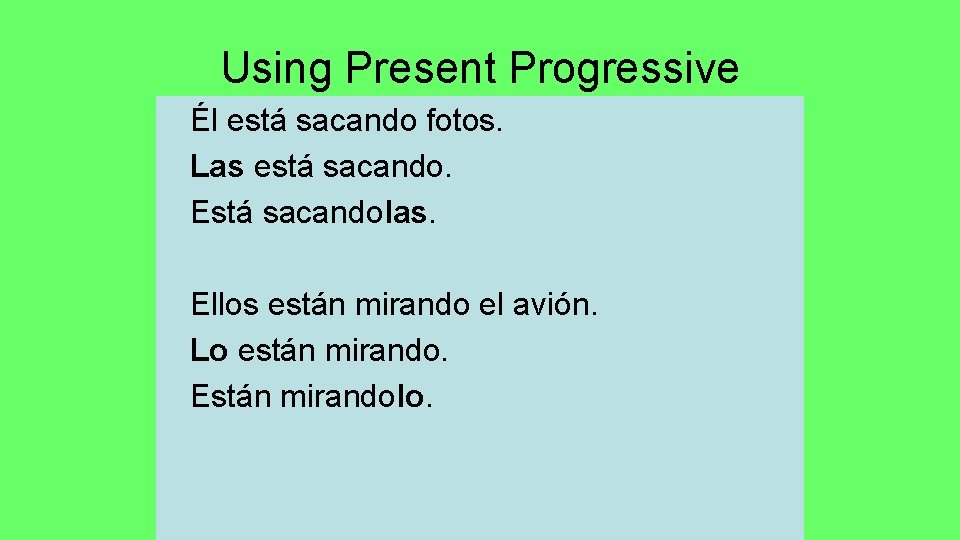
Using Present Progressive Él está sacando fotos. Las está sacando. Está sacandolas. Ellos están mirando el avión. Lo están mirando. Están mirandolo.
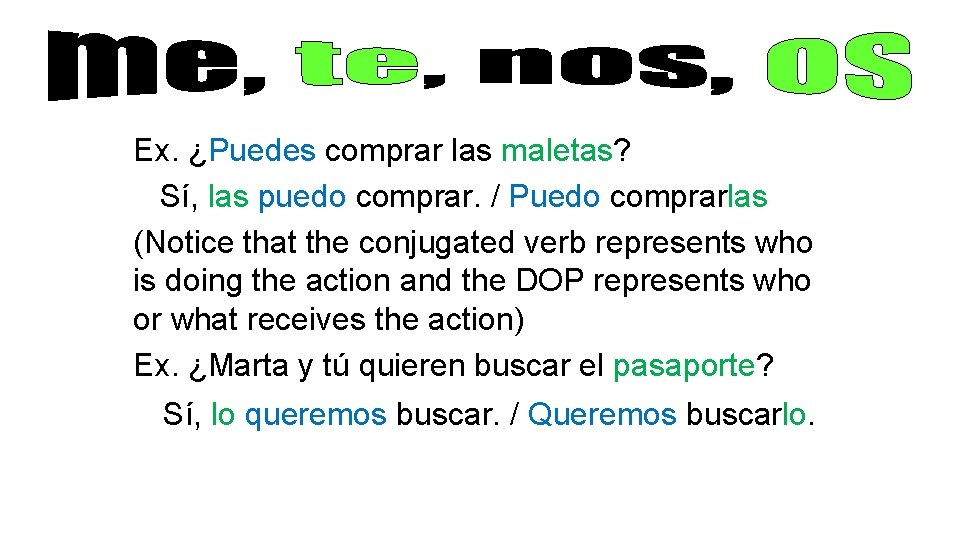
Ex. ¿Puedes comprar las maletas? Sí, las puedo comprar. / Puedo comprarlas (Notice that the conjugated verb represents who is doing the action and the DOP represents who or what receives the action) Ex. ¿Marta y tú quieren buscar el pasaporte? Sí, lo queremos buscar. / Queremos buscarlo.
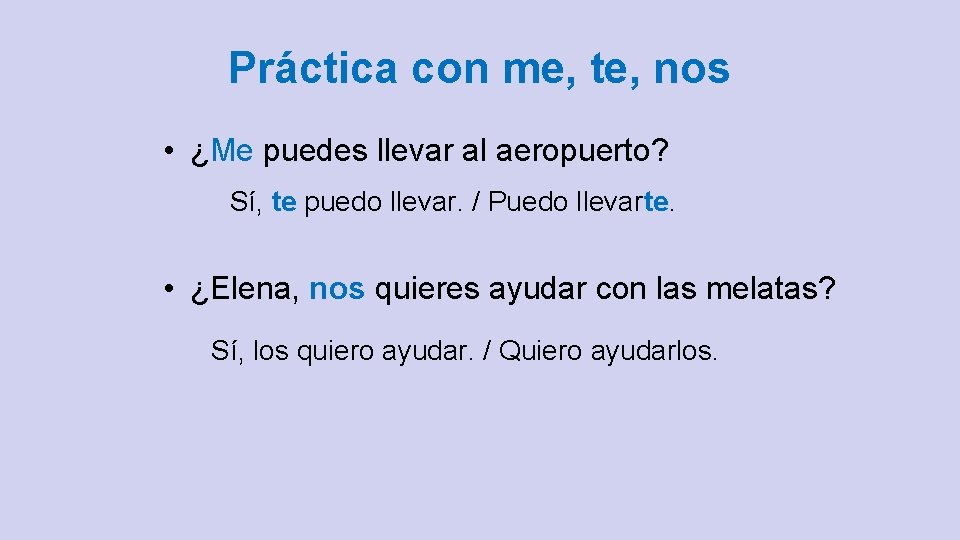
Práctica con me, te, nos • ¿Me puedes llevar al aeropuerto? Sí, te puedo llevar. / Puedo llevarte. • ¿Elena, nos quieres ayudar con las melatas? Sí, los quiero ayudar. / Quiero ayudarlos.
- Slides: 17