
Direct measurements of cosmic rays in space ROBERTA
Direct measurements of cosmic rays in space ROBERTA SPARVOLI ROME “TOR VERGATA” UNIVERSITY AND INFN, ITALY Vulcano Workshop 2014 Vulcano Island (Italy), 23° May 2014
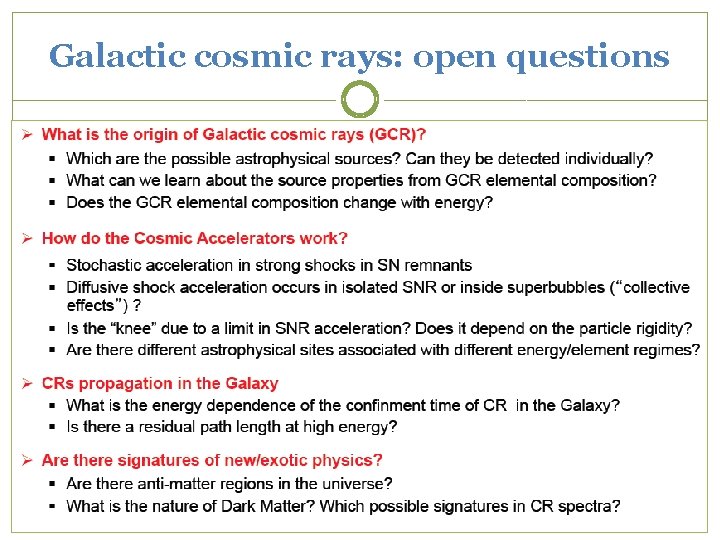
Galactic cosmic rays: open questions
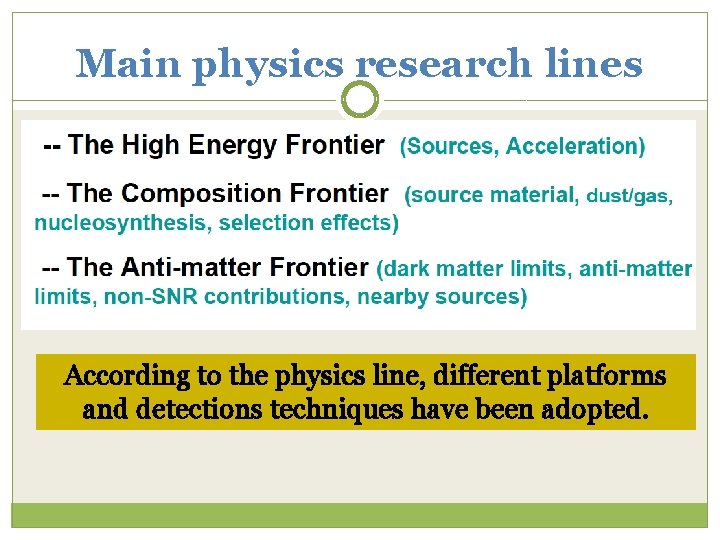
Main physics research lines According to the physics line, different platforms and detections techniques have been adopted.
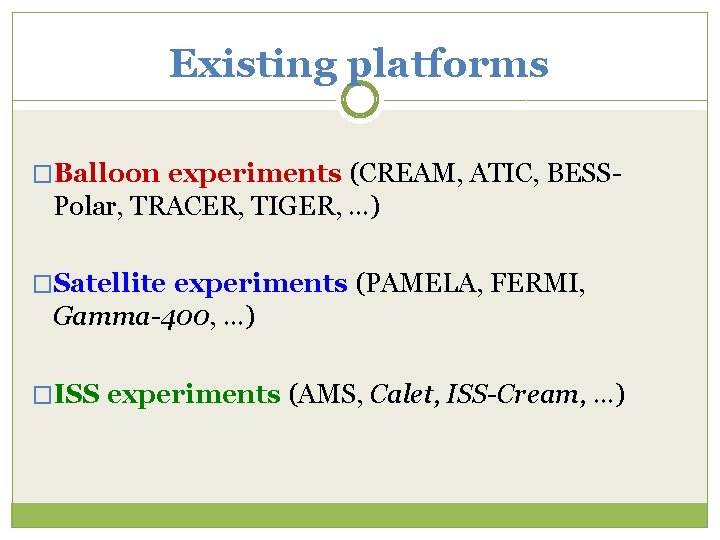
Existing platforms �Balloon experiments (CREAM, ATIC, BESS- Polar, TRACER, TIGER, …) �Satellite experiments (PAMELA, FERMI, Gamma-400, …) �ISS experiments (AMS, Calet, ISS-Cream, …)
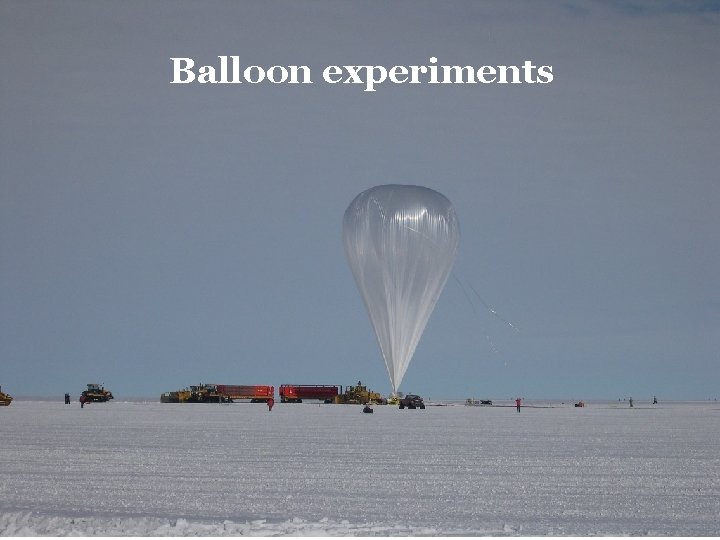
Balloon experiments
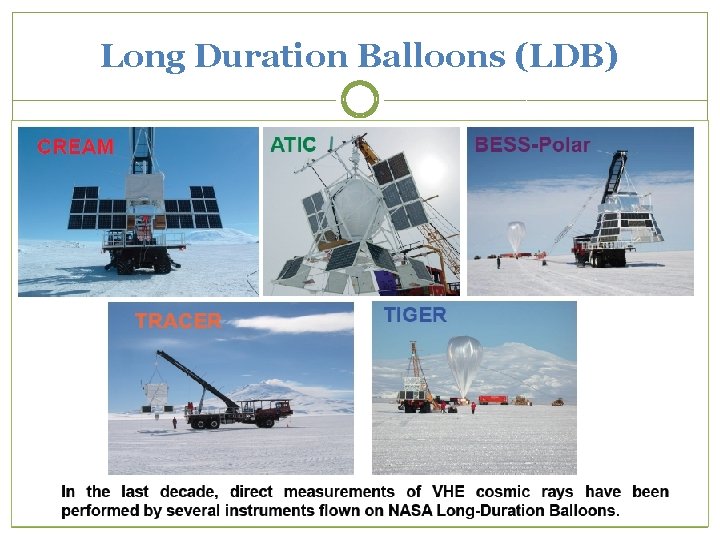
Long Duration Balloons (LDB)
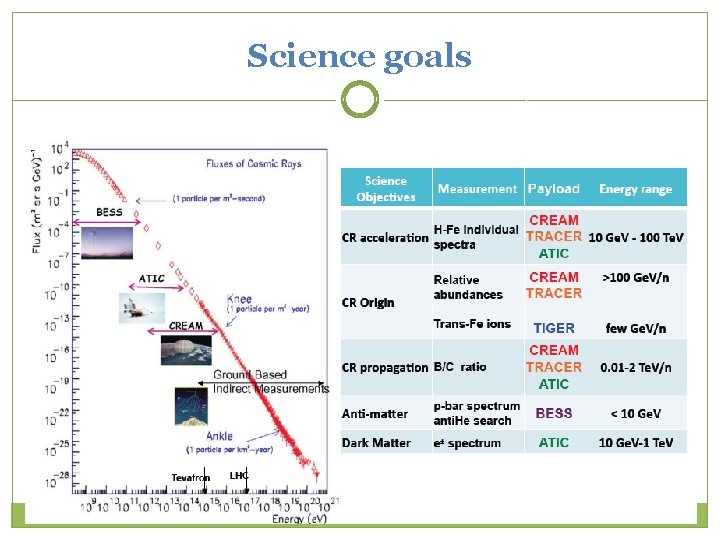
Science goals
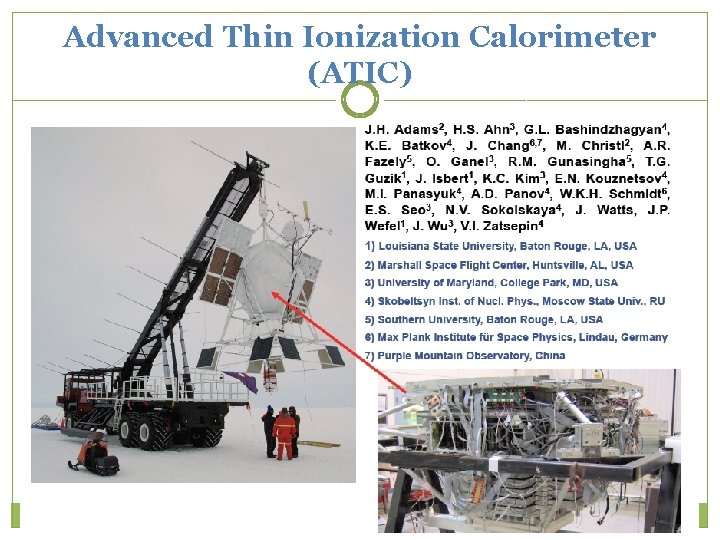
Advanced Thin Ionization Calorimeter (ATIC)
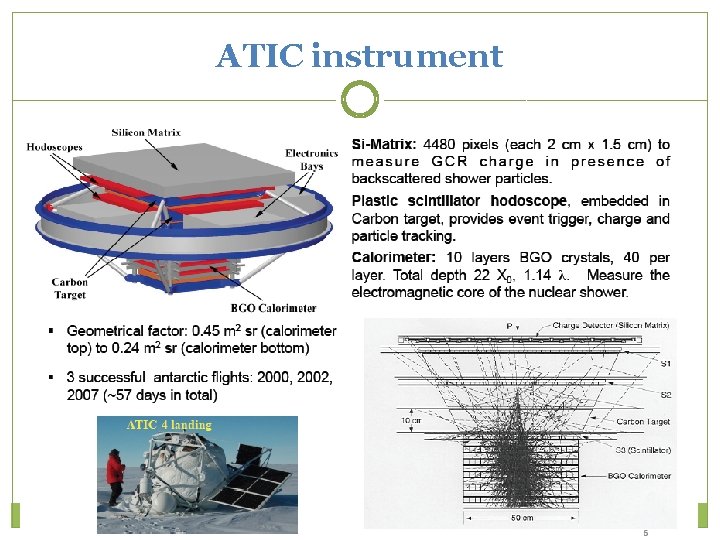
ATIC instrument
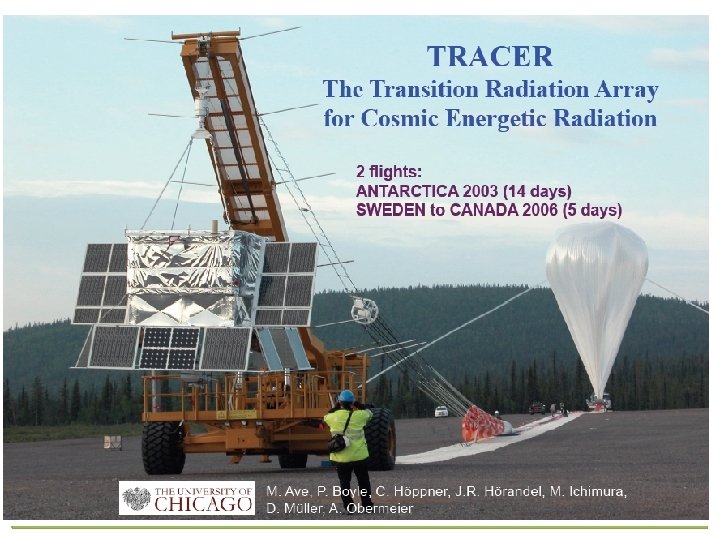
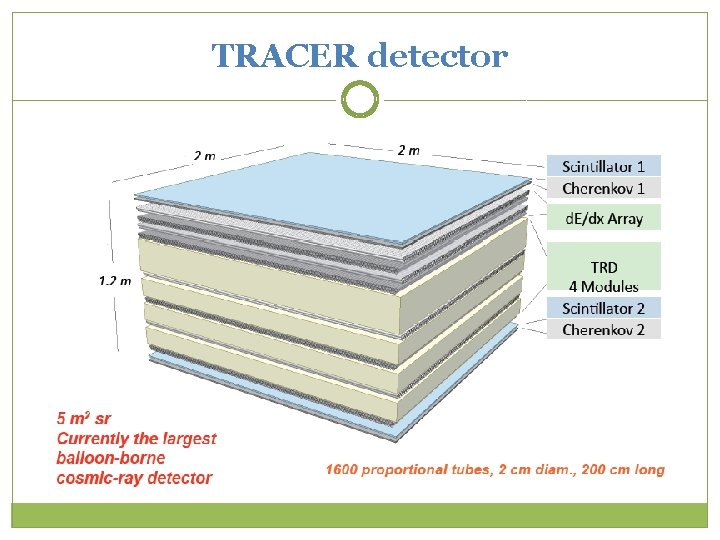
TRACER detector
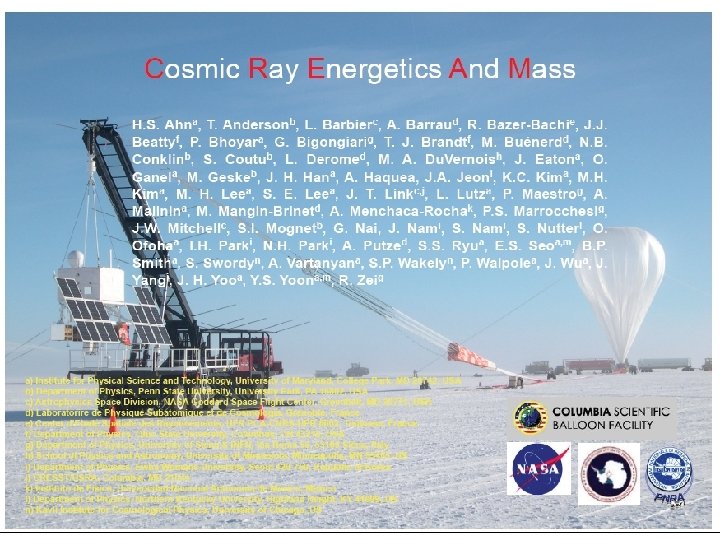
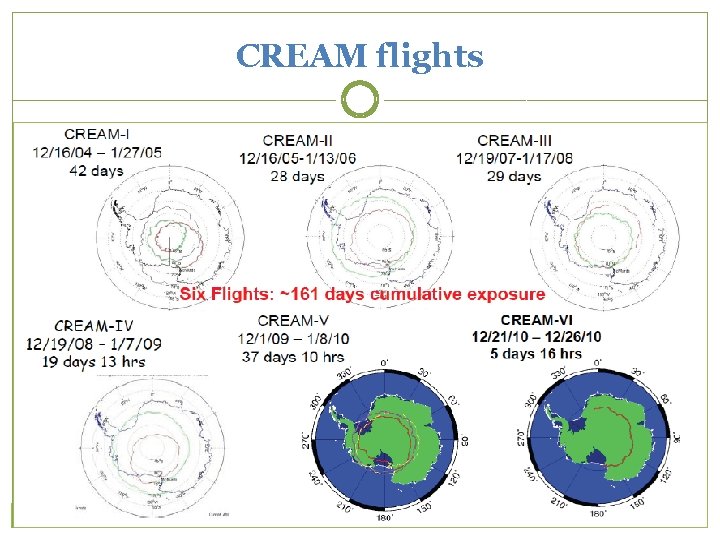
CREAM flights
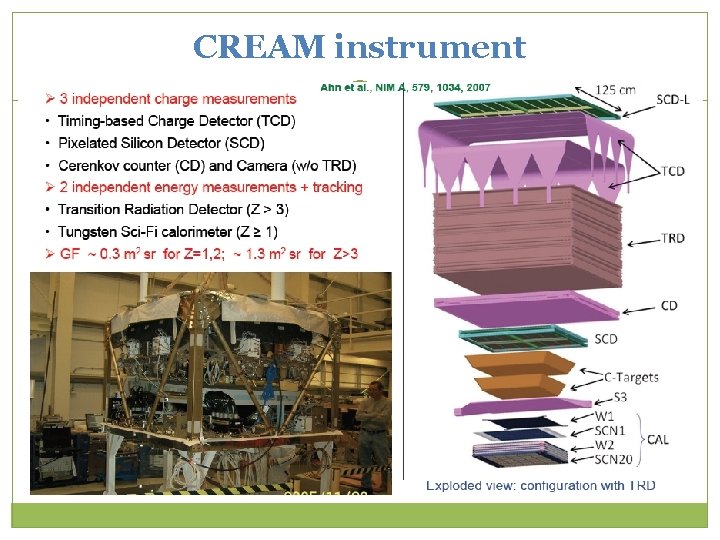
CREAM instrument
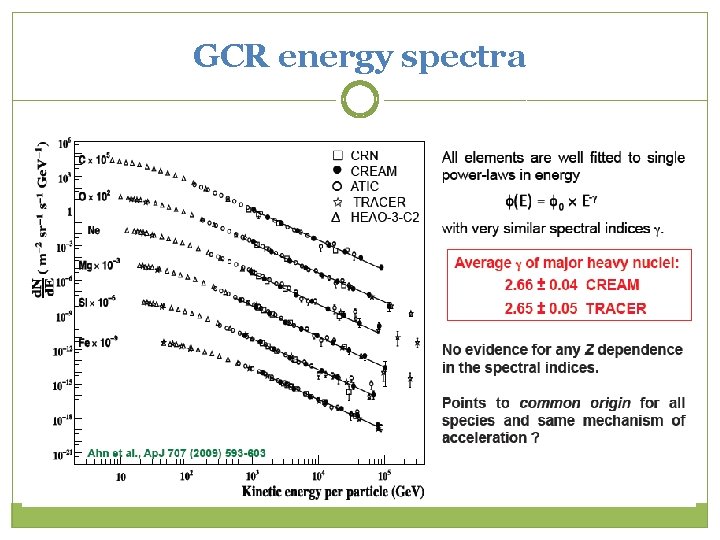
GCR energy spectra
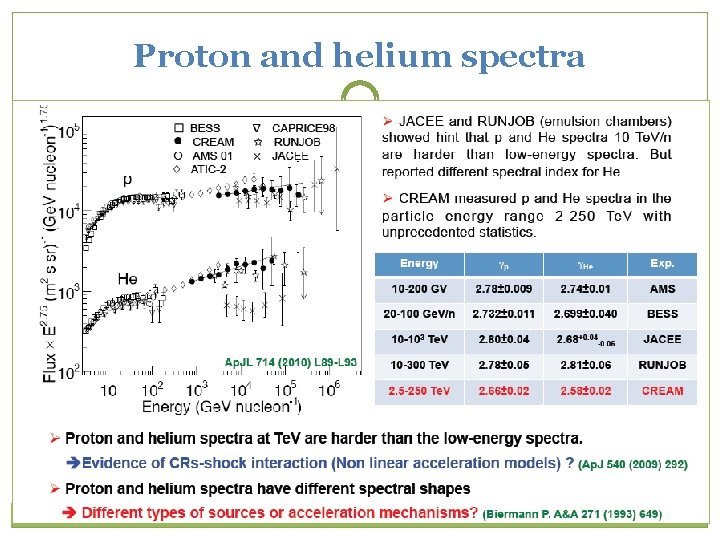
Proton and helium spectra
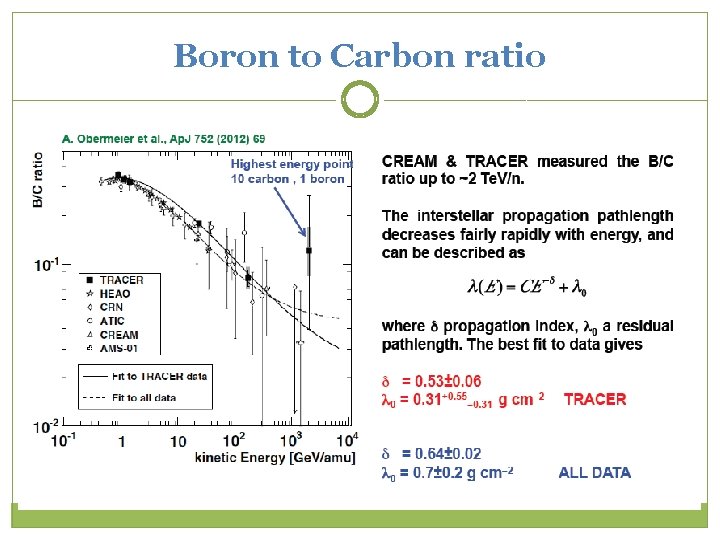
Boron to Carbon ratio
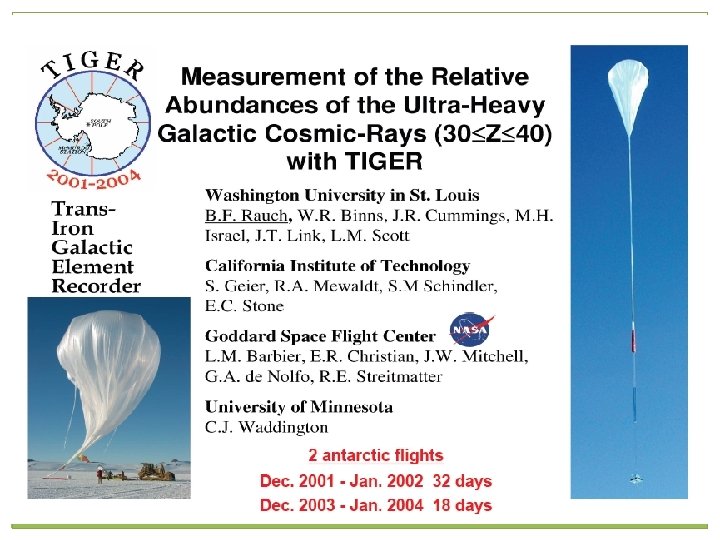
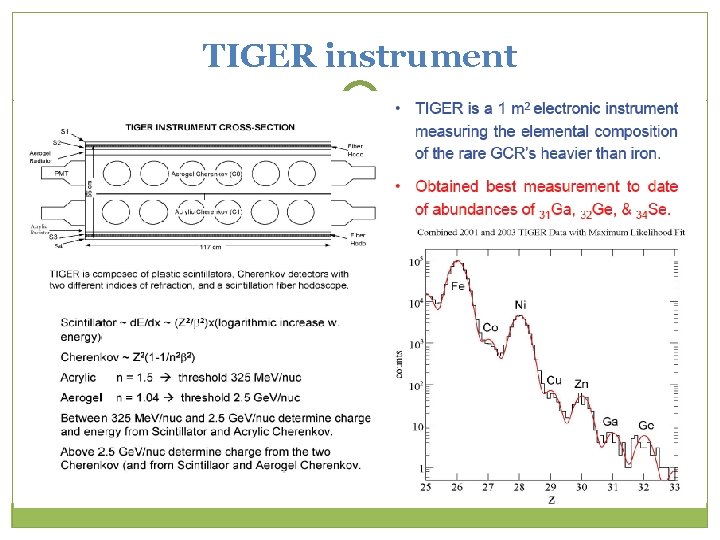
TIGER instrument
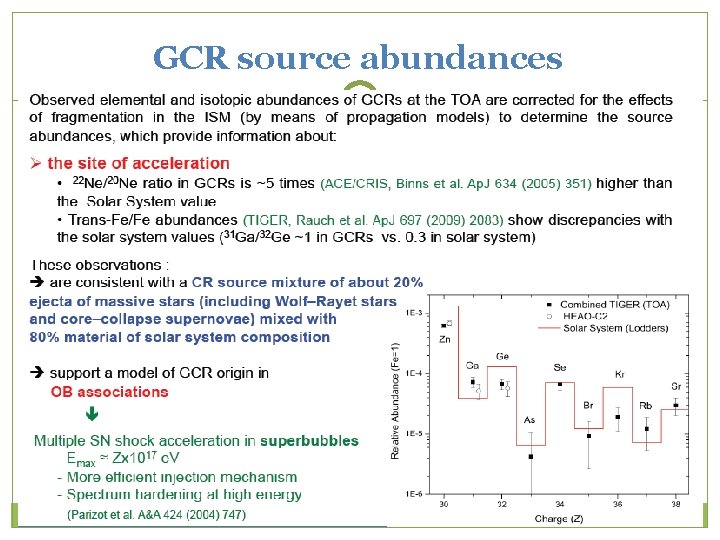
GCR source abundances
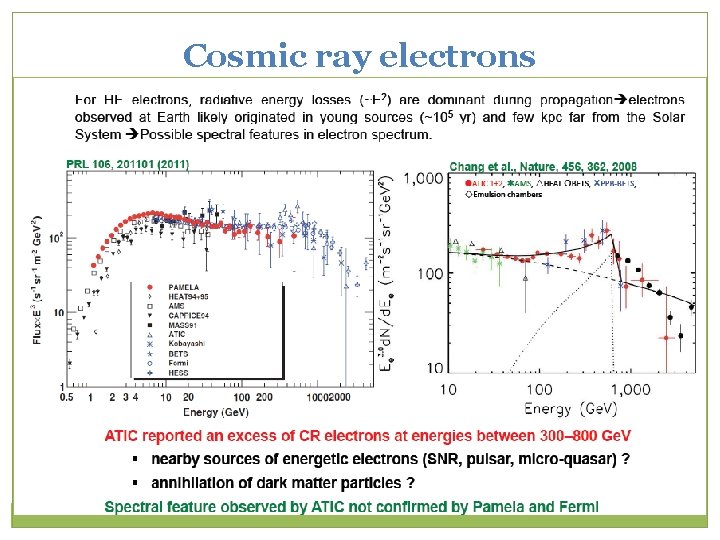
Cosmic ray electrons
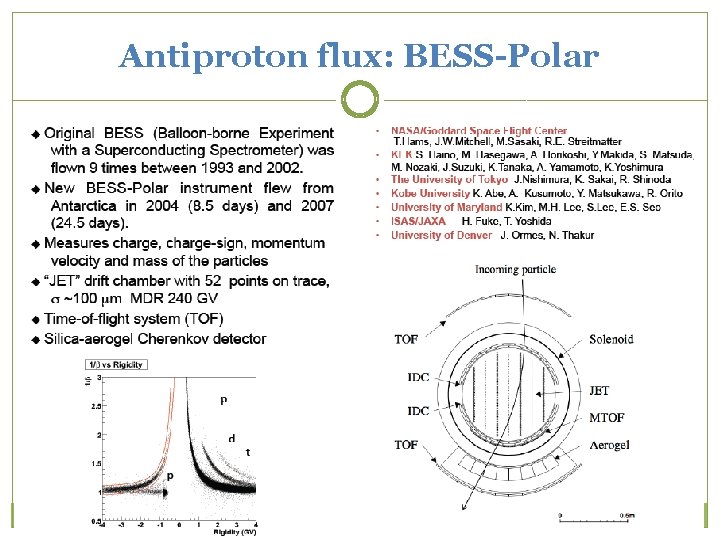
Antiproton flux: BESS-Polar
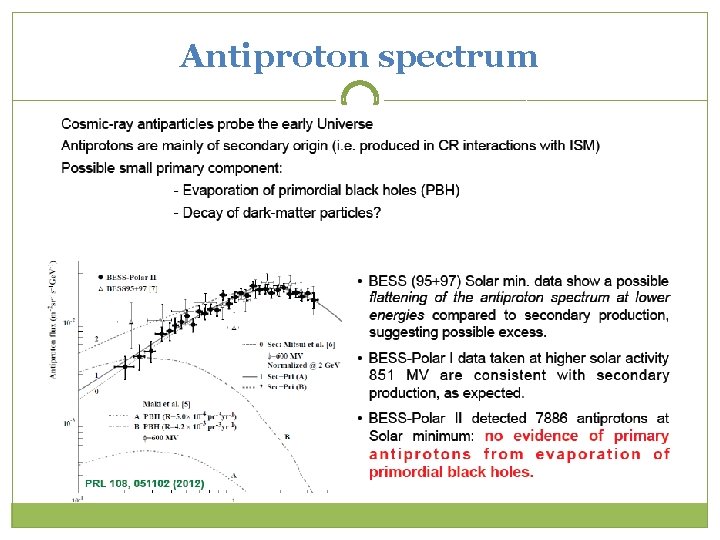
Antiproton spectrum
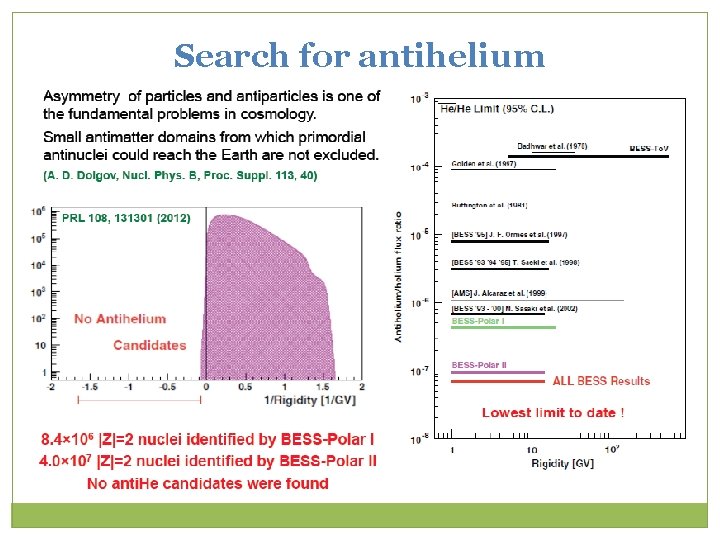
Search for antihelium
Satellite experiments
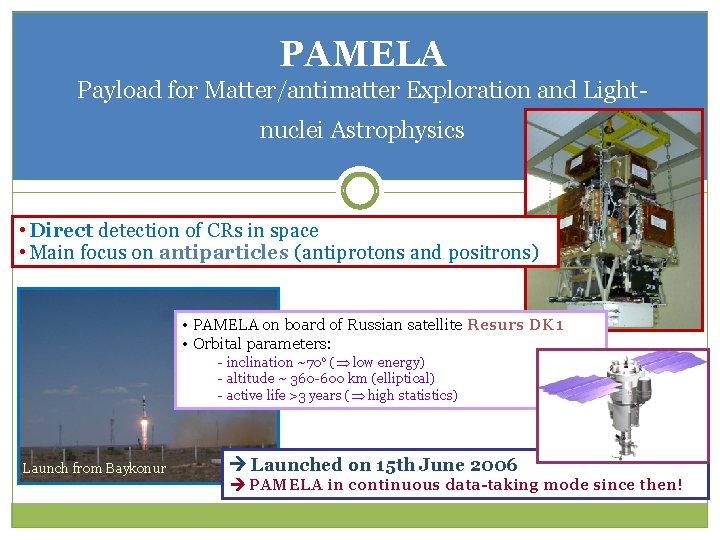
PAMELA Payload for Matter/antimatter Exploration and Lightnuclei Astrophysics • Direct detection of CRs in space • Main focus on antiparticles (antiprotons and positrons) • PAMELA on board of Russian satellite Resurs DK 1 • Orbital parameters: - inclination ~70 o ( low energy) - altitude ~ 360 -600 km (elliptical) - active life >3 years ( high statistics) Launch from Baykonur Launched on 15 th June 2006 PAMELA in continuous data-taking mode since then!
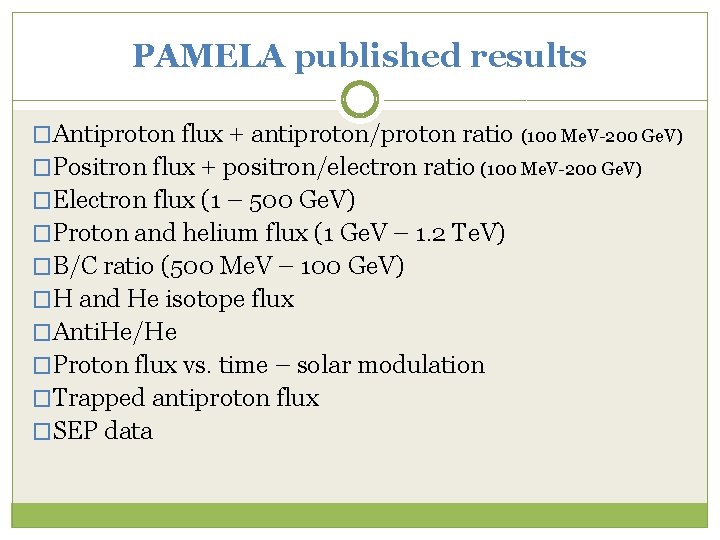
PAMELA published results �Antiproton flux + antiproton/proton ratio (100 Me. V-200 Ge. V) �Positron flux + positron/electron ratio (100 Me. V-200 Ge. V) �Electron flux (1 – 500 Ge. V) �Proton and helium flux (1 Ge. V – 1. 2 Te. V) �B/C ratio (500 Me. V – 100 Ge. V) �H and He isotope flux �Anti. He/He �Proton flux vs. time – solar modulation �Trapped antiproton flux �SEP data
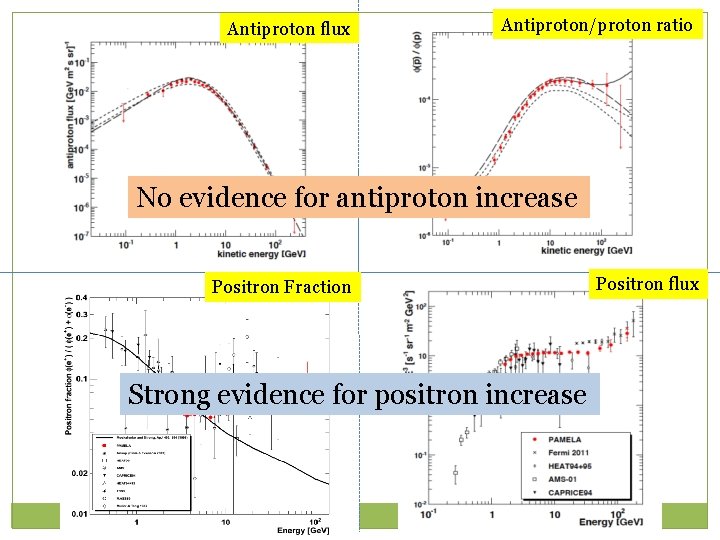
Antiproton flux Antiproton/proton ratio No evidence for antiproton increase Positron Fraction Strong evidence for positron increase Positron flux
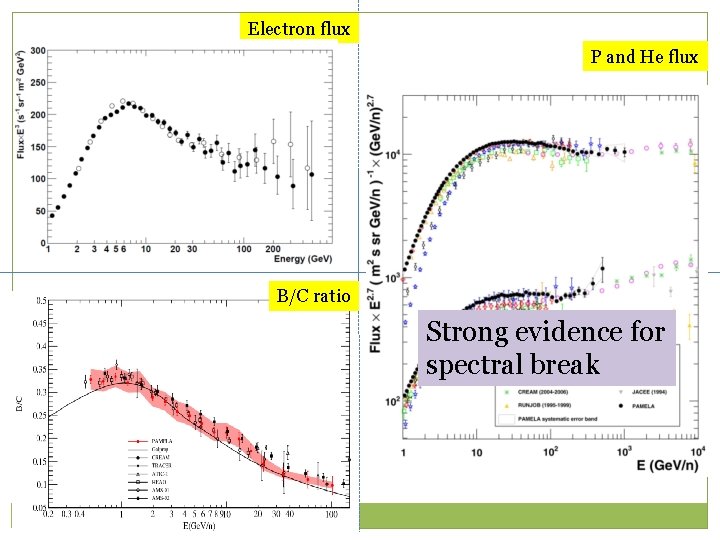
Electron flux P and He flux B/C ratio Strong evidence for spectral break
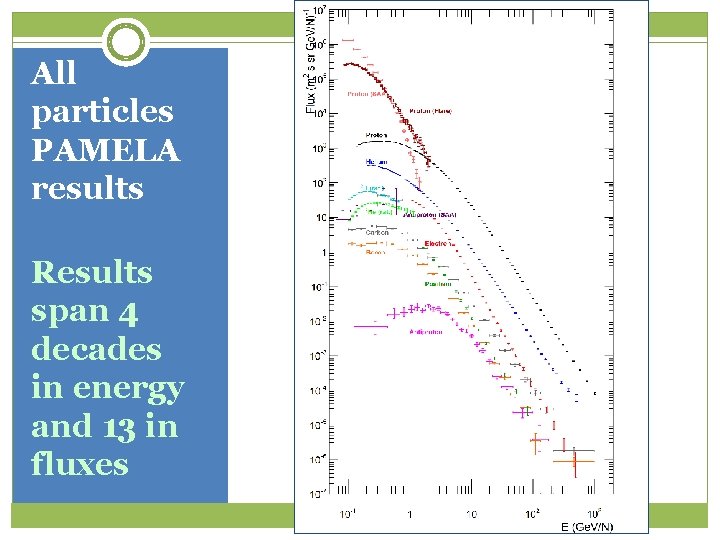
All particles PAMELA results Results span 4 decades in energy and 13 in fluxes
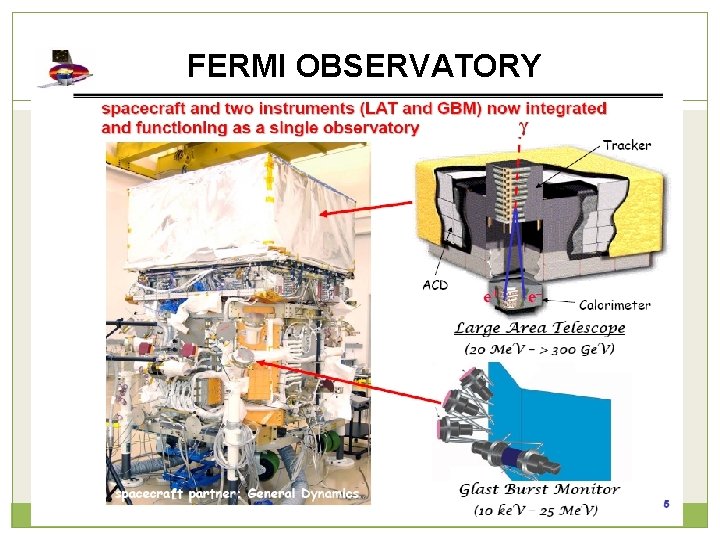
FERMI OBSERVATORY
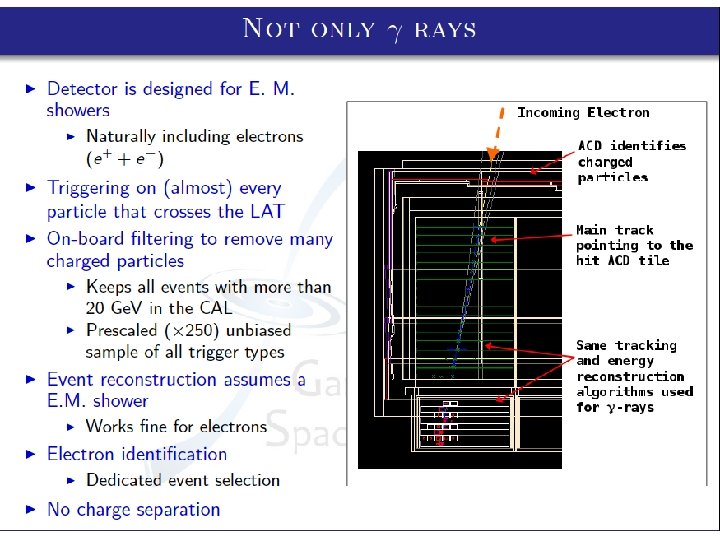
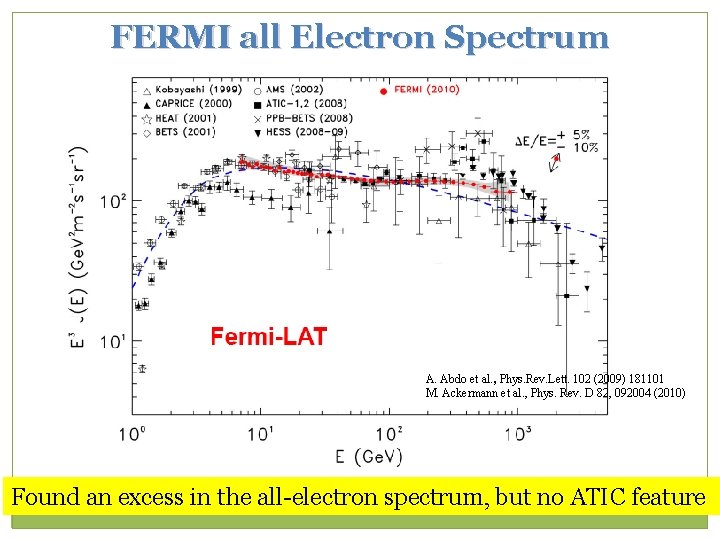
FERMI all Electron Spectrum A. Abdo et al. , Phys. Rev. Lett. 102 (2009) 181101 M. Ackermann et al. , Phys. Rev. D 82, 092004 (2010) Found an excess in the all-electron spectrum, but no ATIC feature
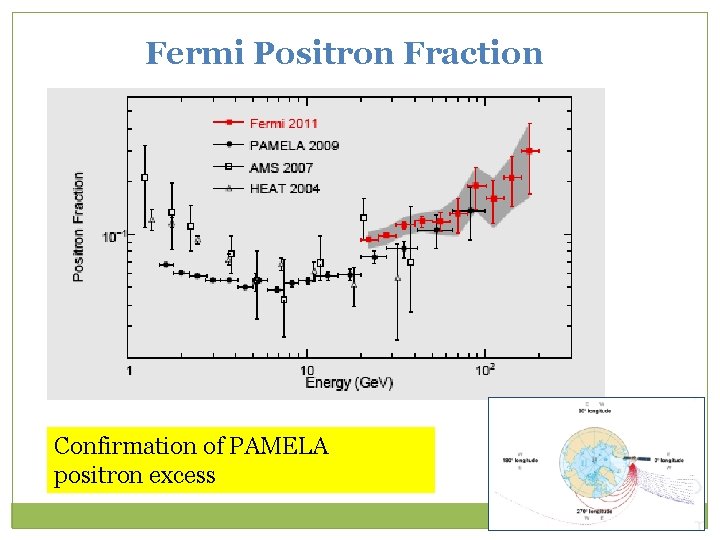
Fermi Positron Fraction Confirmation of PAMELA positron excess
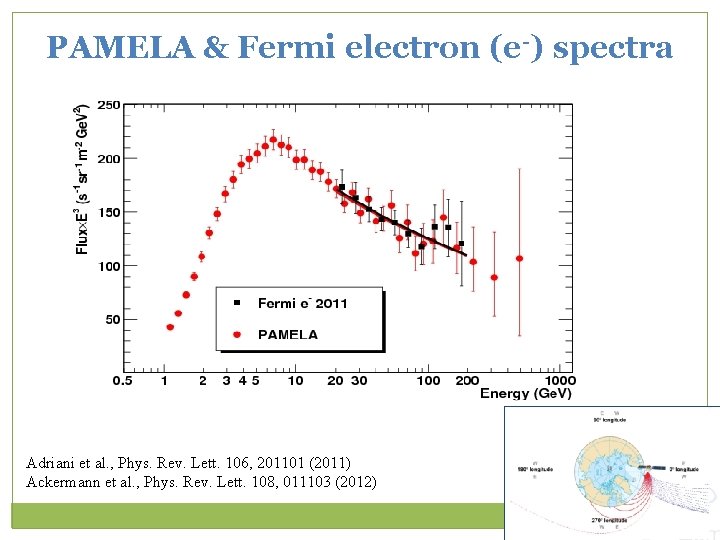
PAMELA & Fermi electron (e-) spectra Adriani et al. , Phys. Rev. Lett. 106, 201101 (2011) Ackermann et al. , Phys. Rev. Lett. 108, 011103 (2012)
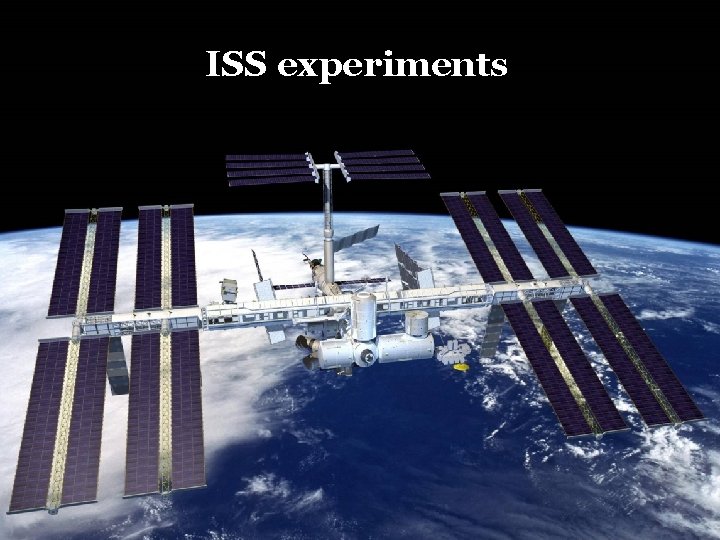
ISS experiments
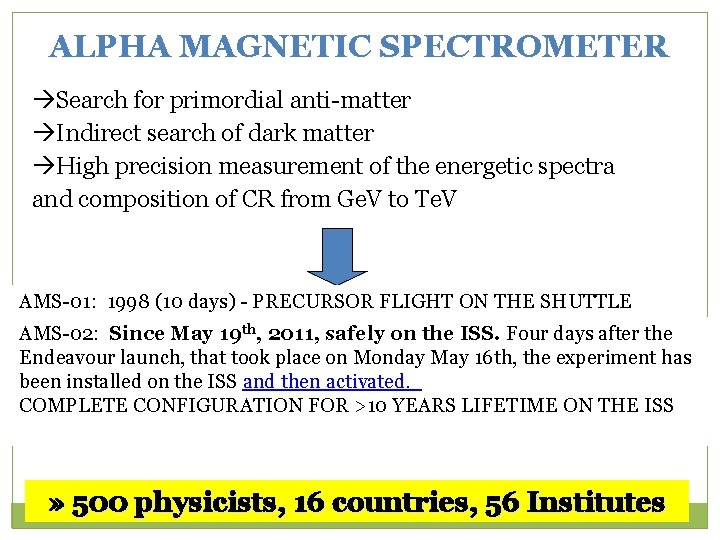
ALPHA MAGNETIC SPECTROMETER Search for primordial anti-matter Indirect search of dark matter High precision measurement of the energetic spectra and composition of CR from Ge. V to Te. V AMS-01: 1998 (10 days) - PRECURSOR FLIGHT ON THE SHUTTLE AMS-02: Since May 19 th, 2011, safely on the ISS. Four days after the Endeavour launch, that took place on Monday May 16 th, the experiment has been installed on the ISS and then activated. COMPLETE CONFIGURATION FOR >10 YEARS LIFETIME ON THE ISS » 500 physicists, 16 countries, 56 Institutes
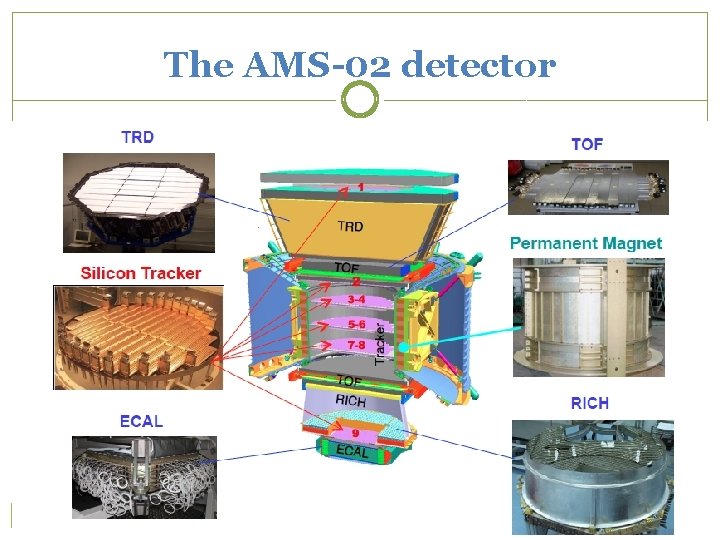
The AMS-02 detector
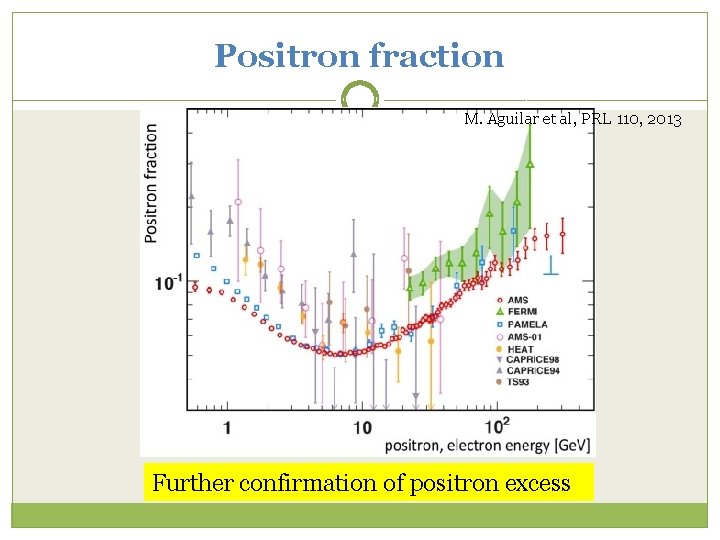
Positron fraction M. Aguilar et al, PRL 110, 2013 Further confirmation of positron excess
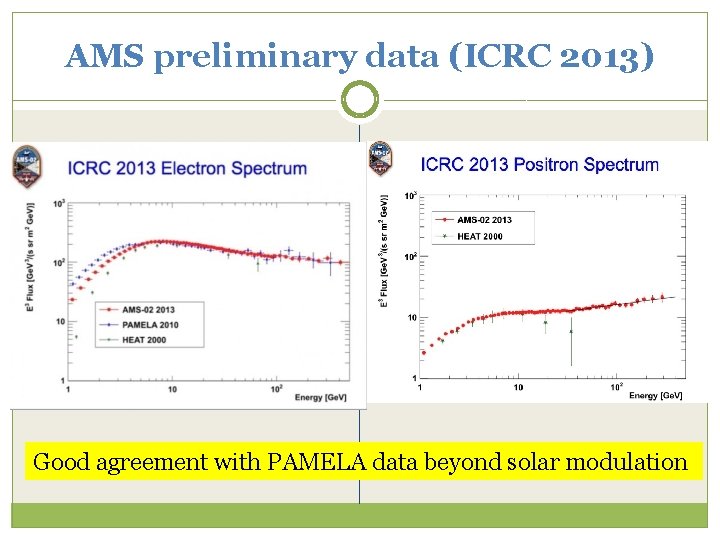
AMS preliminary data (ICRC 2013) Good agreement with PAMELA data beyond solar modulation
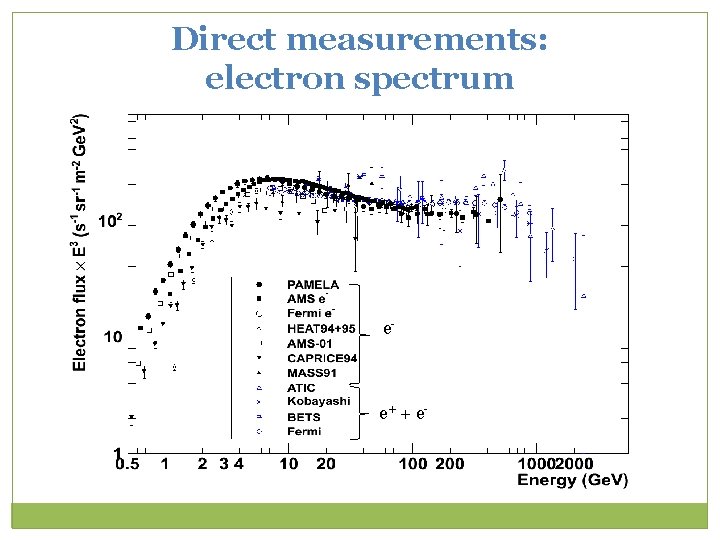
Direct measurements: electron spectrum e- e+ + e -
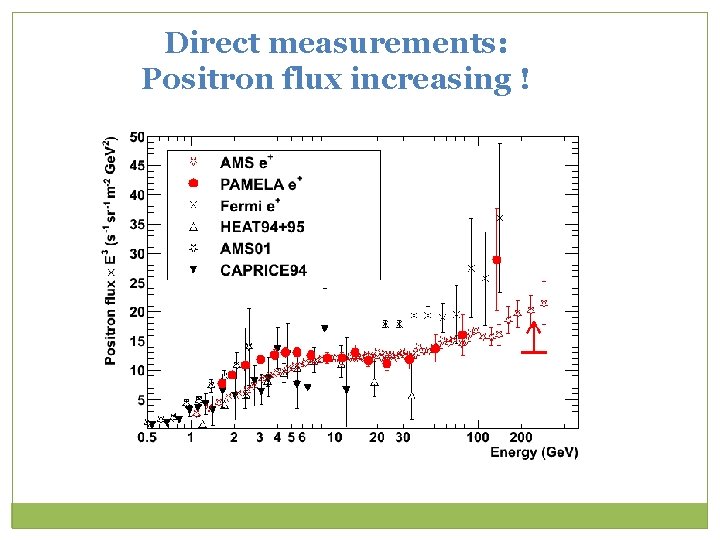
Direct measurements: Positron flux increasing !
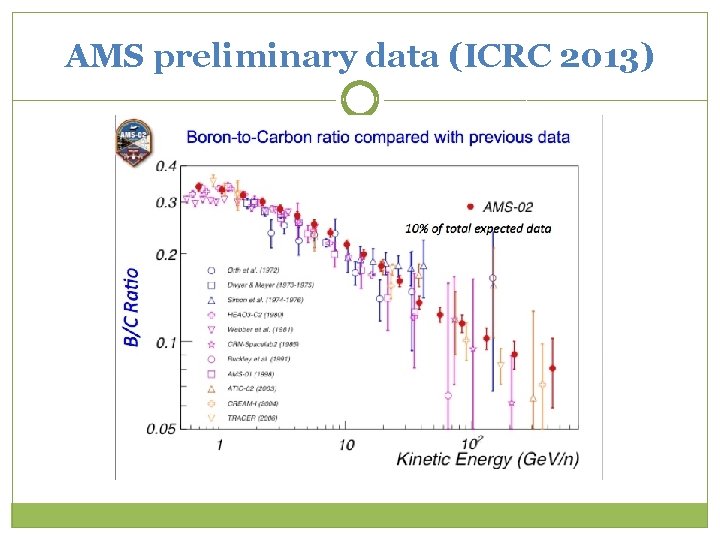
AMS preliminary data (ICRC 2013)
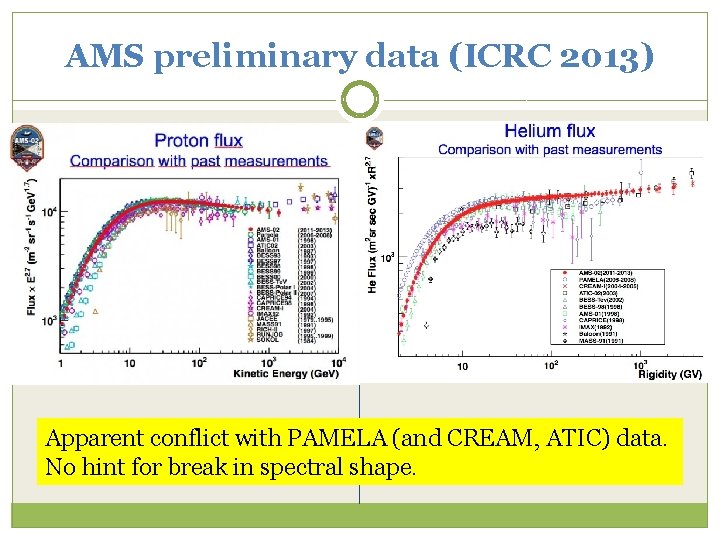
AMS preliminary data (ICRC 2013) Apparent conflict with PAMELA (and CREAM, ATIC) data. No hint for break in spectral shape.
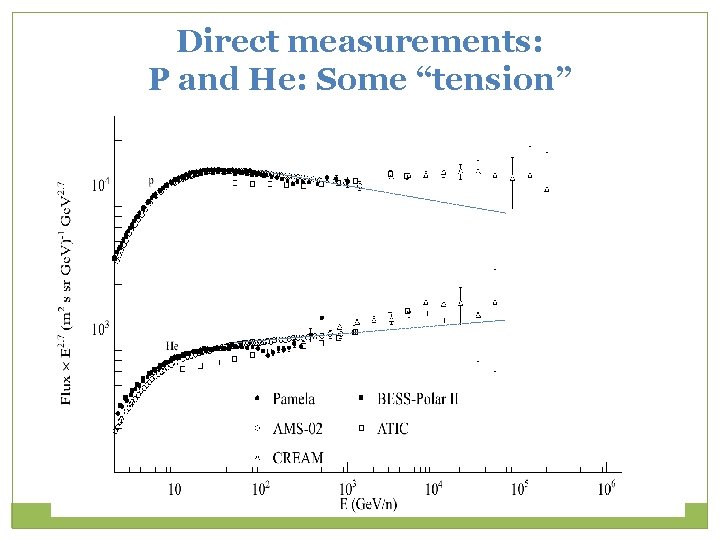
Direct measurements: P and He: Some “tension”
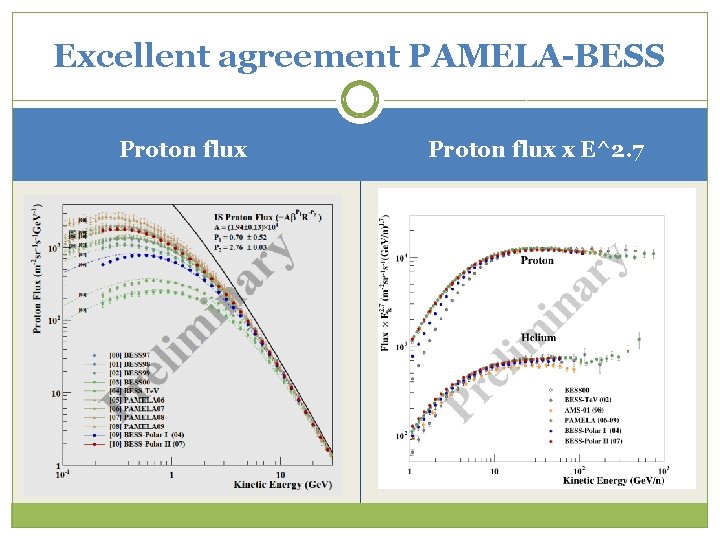
Excellent agreement PAMELA-BESS Proton flux x E^2. 7
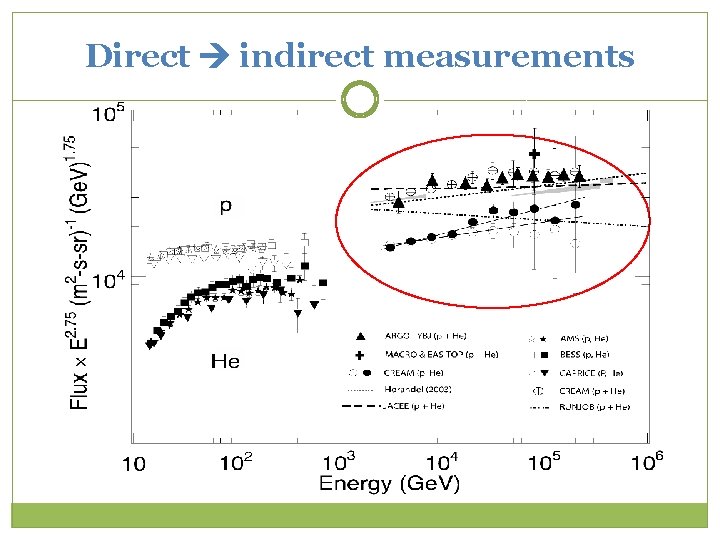
Direct indirect measurements
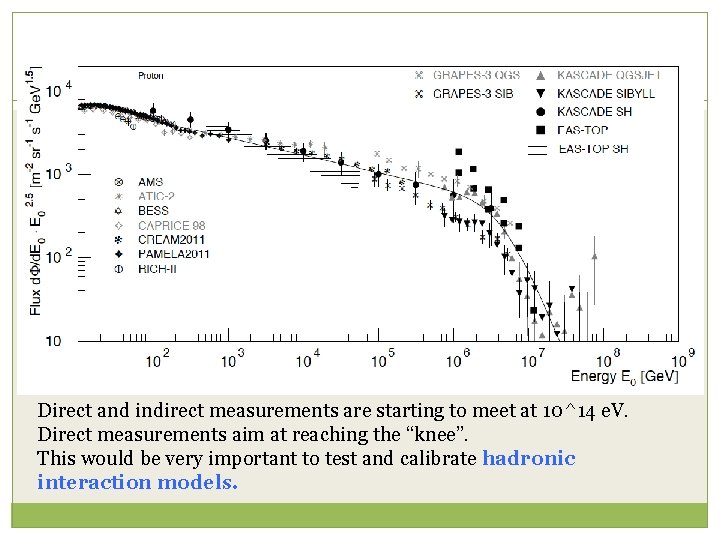
Direct and indirect measurements are starting to meet at 10^14 e. V. Direct measurements aim at reaching the “knee”. This would be very important to test and calibrate hadronic interaction models.
Future experiments
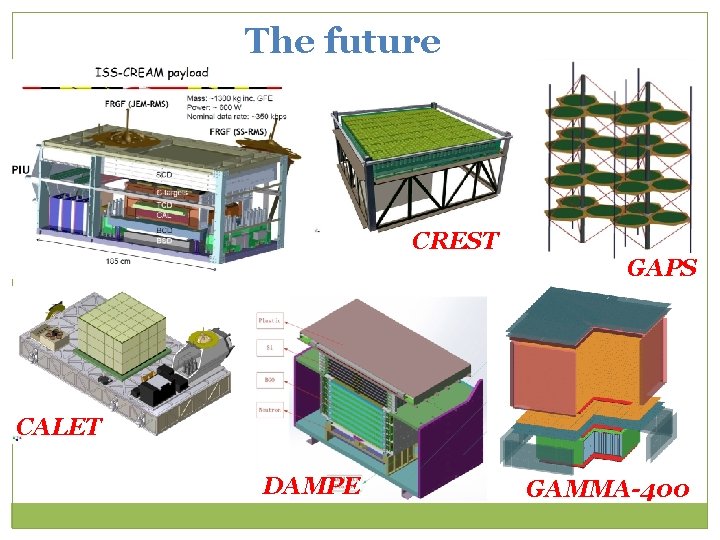
The future CREST GAPS CALET DAMPE GAMMA-400
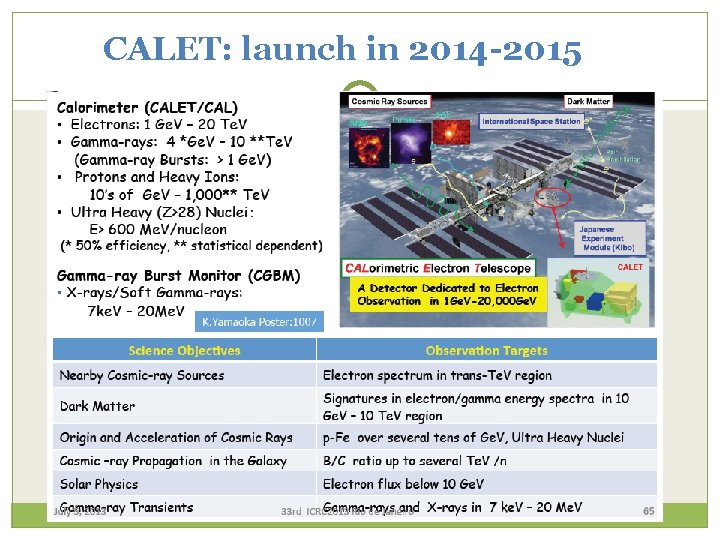
CALET: launch in 2014 -2015
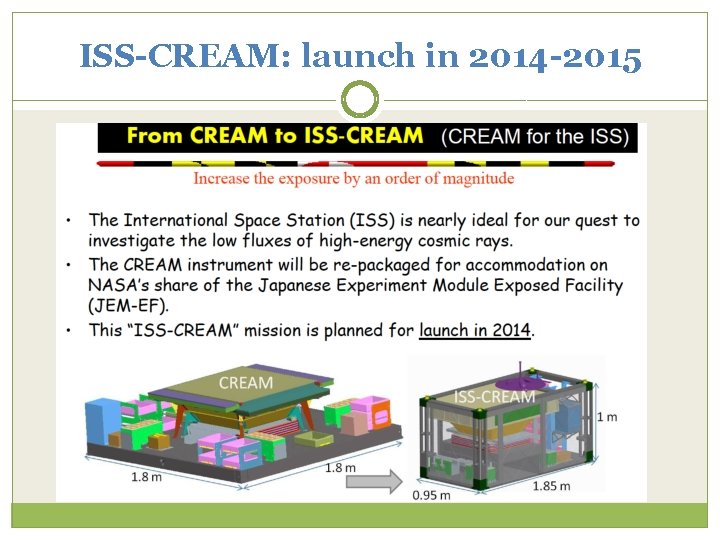
ISS-CREAM: launch in 2014 -2015
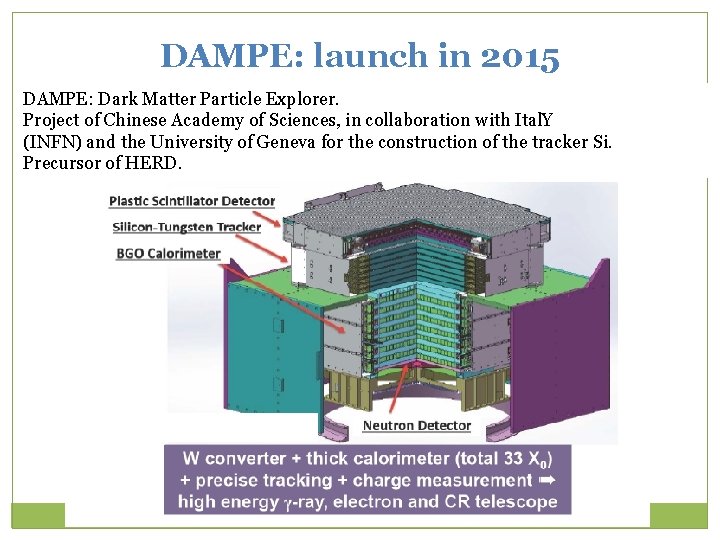
DAMPE: launch in 2015 DAMPE: Dark Matter Particle Explorer. Project of Chinese Academy of Sciences, in collaboration with Ital. Y (INFN) and the University of Geneva for the construction of the tracker Si. Precursor of HERD.
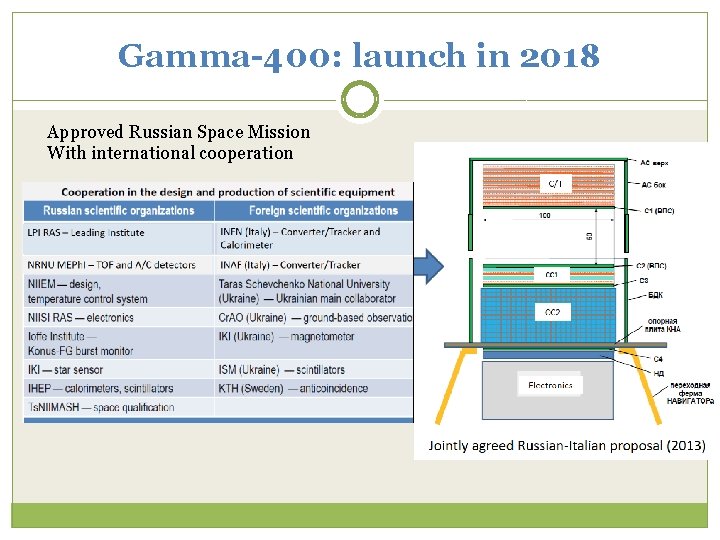
Gamma-400: launch in 2018 Approved Russian Space Mission With international cooperation
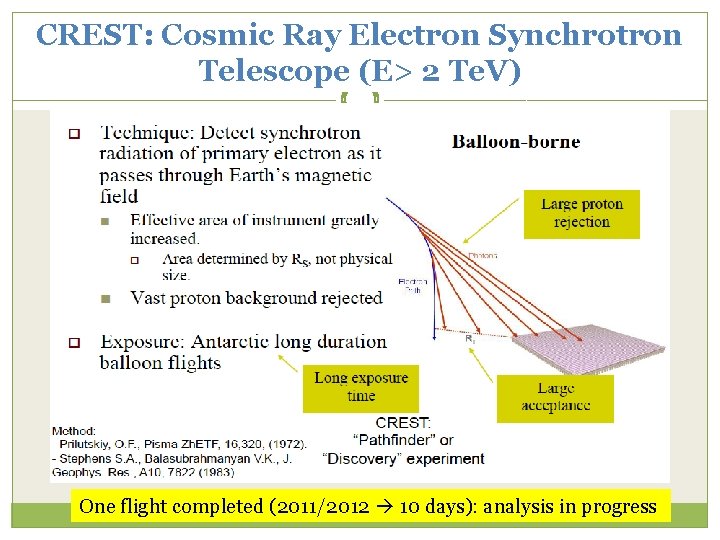
CREST: Cosmic Ray Electron Synchrotron Telescope (E> 2 Te. V) One flight completed (2011/2012 10 days): analysis in progress
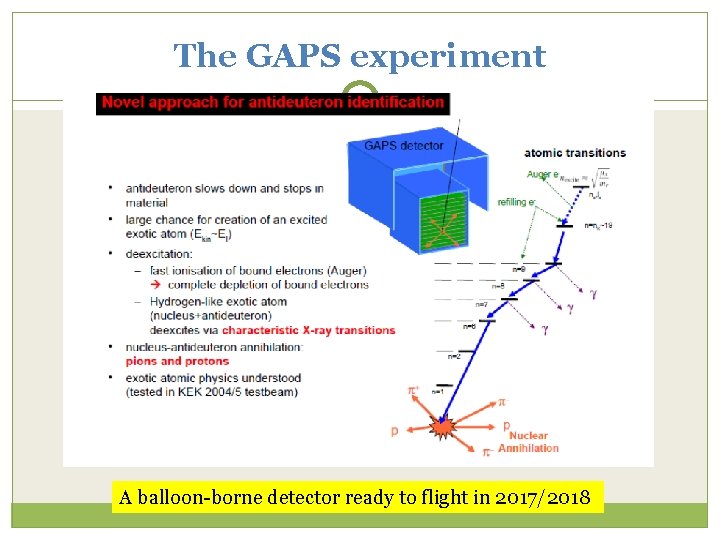
The GAPS experiment A balloon-borne detector ready to flight in 2017/2018
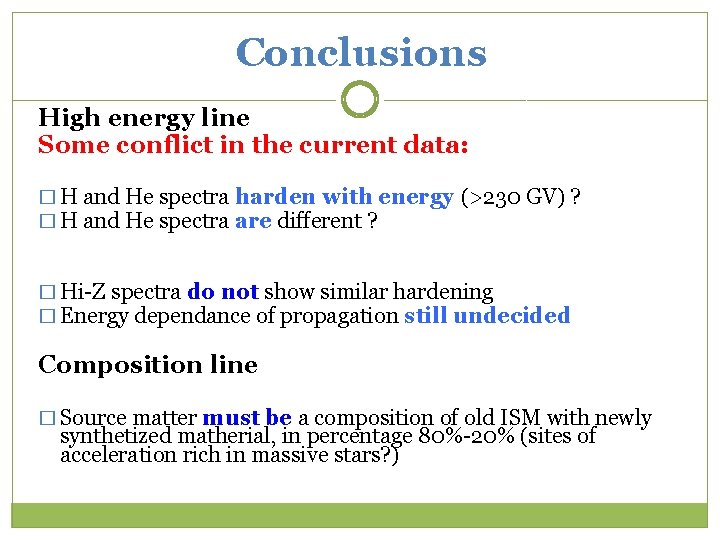
Conclusions High energy line Some conflict in the current data: � H and He spectra harden with energy (>230 GV) ? � H and He spectra are different ? � Hi-Z spectra do not show similar hardening � Energy dependance of propagation still undecided Composition line � Source matter must be a composition of old ISM with newly synthetized matherial, in percentage 80%-20% (sites of acceleration rich in massive stars? )
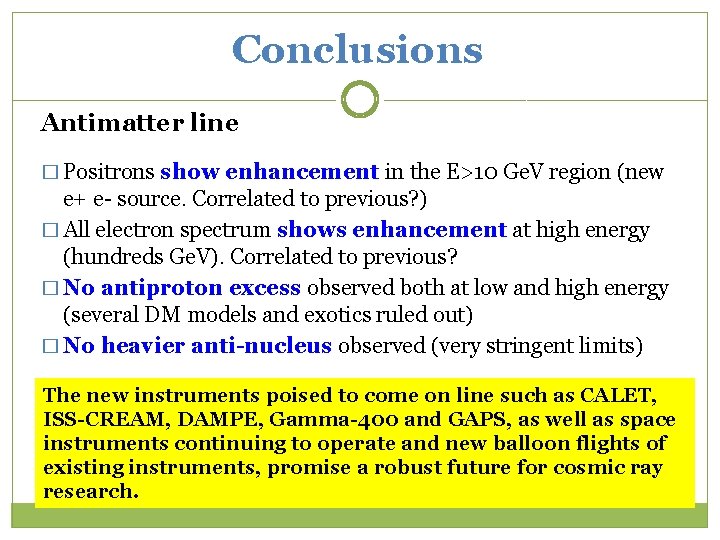
Conclusions Antimatter line � Positrons show enhancement in the E>10 Ge. V region (new e+ e- source. Correlated to previous? ) � All electron spectrum shows enhancement at high energy (hundreds Ge. V). Correlated to previous? � No antiproton excess observed both at low and high energy (several DM models and exotics ruled out) � No heavier anti-nucleus observed (very stringent limits) The new instruments poised to come on line such as CALET, ISS-CREAM, DAMPE, Gamma-400 and GAPS, as well as space instruments continuing to operate and new balloon flights of existing instruments, promise a robust future for cosmic ray research.
- Slides: 58