
Direct Instruction Teaching Strategy Education 2500 Cinde Brown
Direct Instruction Teaching Strategy Education 2500 Cinde Brown Carrie Steadman Kailey Esplin Ken Atwood
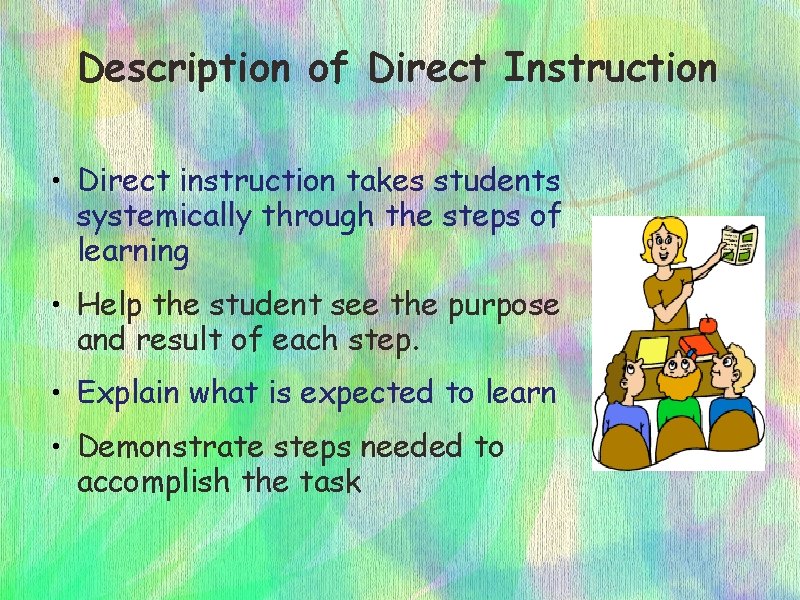
Description of Direct Instruction • Direct instruction takes students systemically through the steps of learning • Help the student see the purpose and result of each step. • Explain what is expected to learn • Demonstrate steps needed to accomplish the task
Basic Components 1. Setting clear goals for students and making sure they understand these goals. 2. Presenting a sequence of wellorganized assignments. 3. Giving students clear, concise explanations and illustrations of the subject matter. 4. Asking frequent questions to see if the students understand the work. 5. Giving students frequent opportunities to practice what they have learned.
Advantages • Direct teaching is best for learning specific concepts or skills. • Delivering large amounts of information in a timely manner. • It lends itself to designing instruction that is developmentally appropriate to students’ ages and stages.
Advantages (Cont. ) • It has proven itself effective for all students all grade levels, in all settings, when the goal is to create classrooms where students really learn. • Research shows that no other curriculum has ever proven itself to provide so much success.
The Disadvantages • If Direct Instruction is utilized by unprepared teachers, it can be disastrous. • The teacher must have a mastery of the subject matter, must prepare a well-organized content, and must have excellent communication skills.
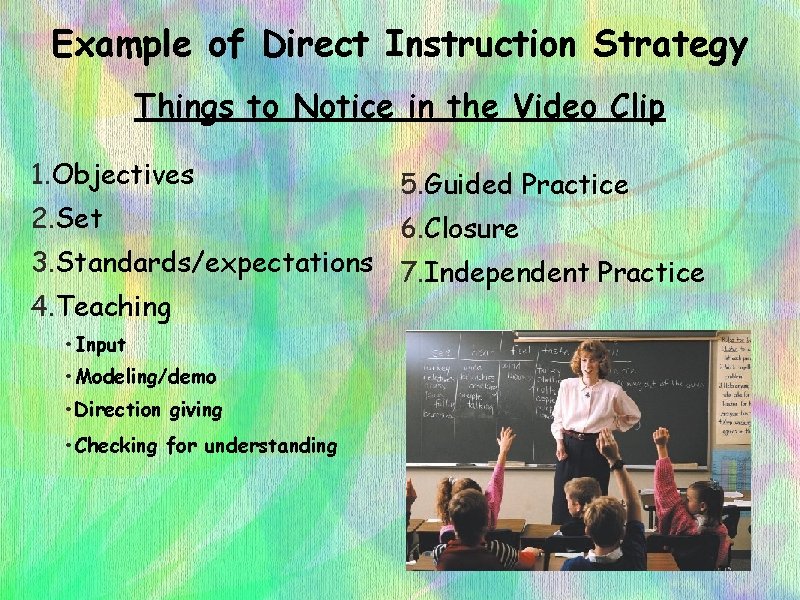
Example of Direct Instruction Strategy Things to Notice in the Video Clip 1. Objectives 2. Set 5. Guided Practice 6. Closure 3. Standards/expectations 7. Independent Practice 4. Teaching • Input • Modeling/demo • Direction giving • Checking for understanding

Example of Direct Instruction Strategy Did you see? 1. Objectives 2. Set 5. Guided Practice 6. Closure 3. Standards/expectations 7. Independent Practice 4. Teaching • Input • Modeling/demo • Direction giving • Checking for understanding
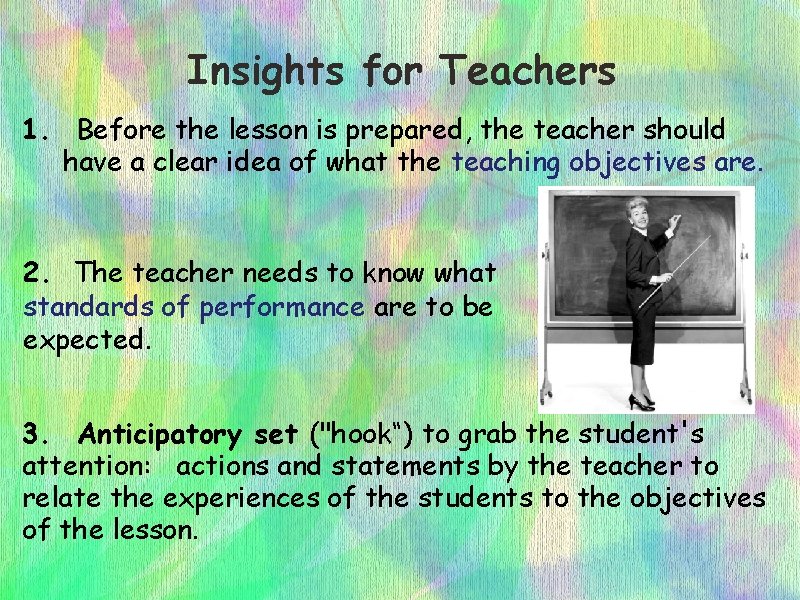
Insights for Teachers 1. Before the lesson is prepared, the teacher should have a clear idea of what the teaching objectives are. 2. The teacher needs to know what standards of performance are to be expected. 3. Anticipatory set ("hook“) to grab the student's attention: actions and statements by the teacher to relate the experiences of the students to the objectives of the lesson.
Insights for Teachers (Cont. ) 4. Input: The teacher provides the information needed for students to gain the knowledge or skill. 5. Modeling: Once the material has been presented, the teacher uses it to show students examples of what is expected as an end product of their work. 6. Checking for Understanding: Determination of whether students have "got it" before proceeding.
References http: //www. brainsarefun. com/di 2. html http: //www. brighthub. com/education/special/articles/5487. aspx http: //www. teach-technology. com/teachers/methods/models/direct/ http: //sitemaker. umich. edu/brown. 356/curriculum_direct_instruction http: //www. youtube. com/watch? v=NJt. GABPWvhg http: //www. humboldt. edu/~tha 1/hunter-eei. html http: //education. calumet. purdue. edu/ http: //www. jefflindsay. com/educdata
- Slides: 12