
Direct Instruction From the Ivory Tower to the


- Slides: 30
Direct Instruction: From the Ivory Tower to the Outback Cathy Watkins, Ph. D. Professor Emerita CSU, Stanislaus clwatkins@me. com Western Association of Behavior Analysis August 28, 2015
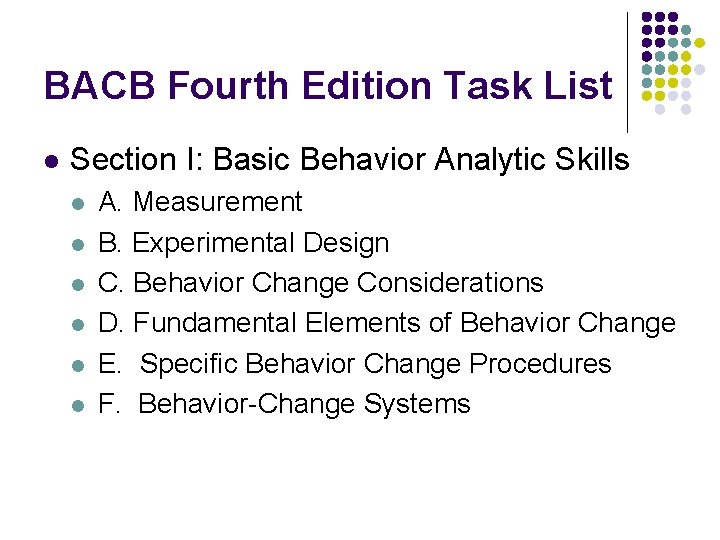
BACB Fourth Edition Task List l Section I: Basic Behavior Analytic Skills l l l A. Measurement B. Experimental Design C. Behavior Change Considerations D. Fundamental Elements of Behavior Change E. Specific Behavior Change Procedures F. Behavior-Change Systems
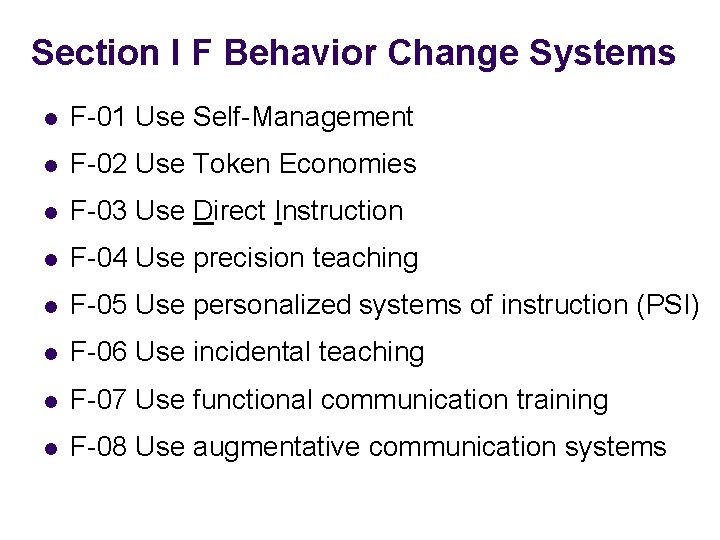
Section I F Behavior Change Systems l F-01 Use Self-Management l F-02 Use Token Economies l F-03 Use Direct Instruction l F-04 Use precision teaching l F-05 Use personalized systems of instruction (PSI) l F-06 Use incidental teaching l F-07 Use functional communication training l F-08 Use augmentative communication systems
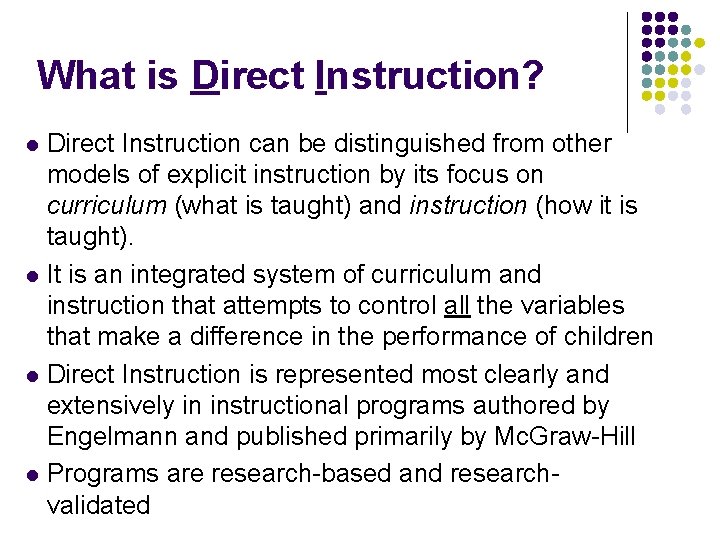
What is Direct Instruction? Direct Instruction can be distinguished from other models of explicit instruction by its focus on curriculum (what is taught) and instruction (how it is taught). l It is an integrated system of curriculum and instruction that attempts to control all the variables that make a difference in the performance of children l Direct Instruction is represented most clearly and extensively in instructional programs authored by Engelmann and published primarily by Mc. Graw-Hill l Programs are research-based and researchvalidated l
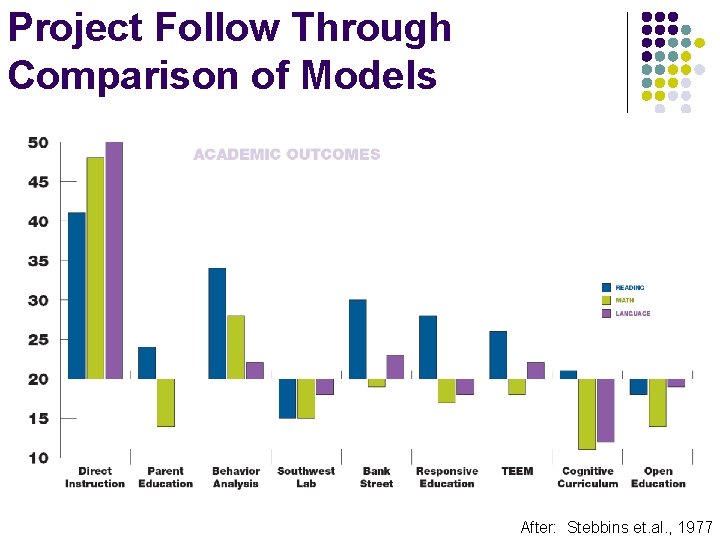
Project Follow Through Comparison of Models After: Stebbins et. al. , 1977
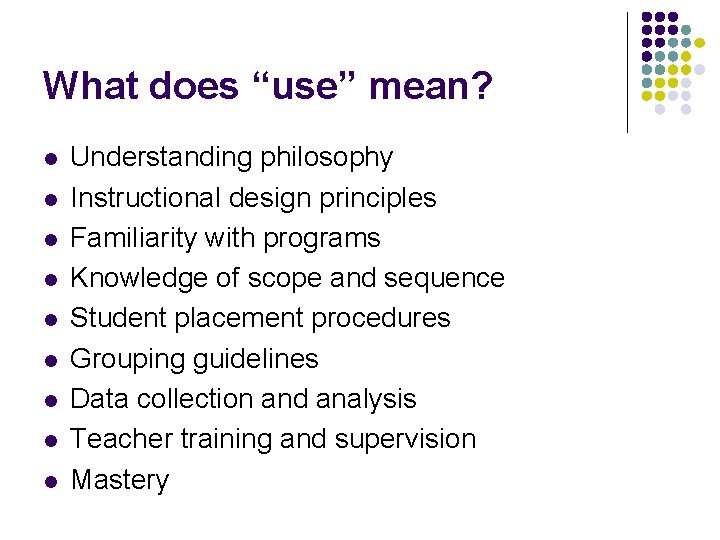
What does “use” mean? l l l l l Understanding philosophy Instructional design principles Familiarity with programs Knowledge of scope and sequence Student placement procedures Grouping guidelines Data collection and analysis Teacher training and supervision Mastery
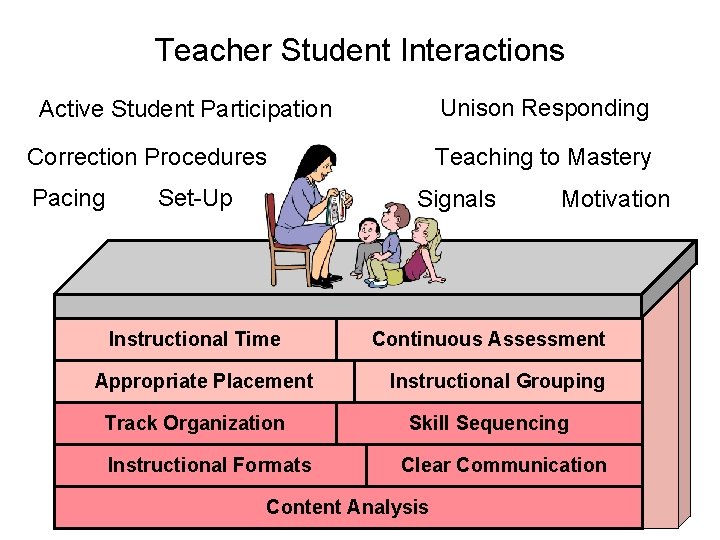
Teacher Student Interactions Unison Responding Active Student Participation Correction Procedures Pacing Set-Up Teaching to Mastery Signals Instructional Time Appropriate Placement Track Organization Instructional Formats Motivation Continuous Assessment Instructional Grouping Skill Sequencing Clear Communication Content Analysis
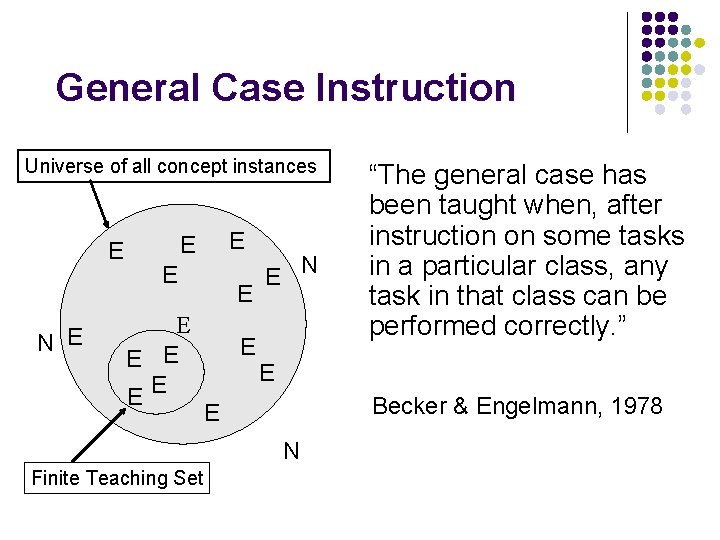
General Case Instruction Universe of all concept instances E N E E E EE E N E Becker & Engelmann, 1978 E N Finite Teaching Set “The general case has been taught when, after instruction on some tasks in a particular class, any task in that class can be performed correctly. ”
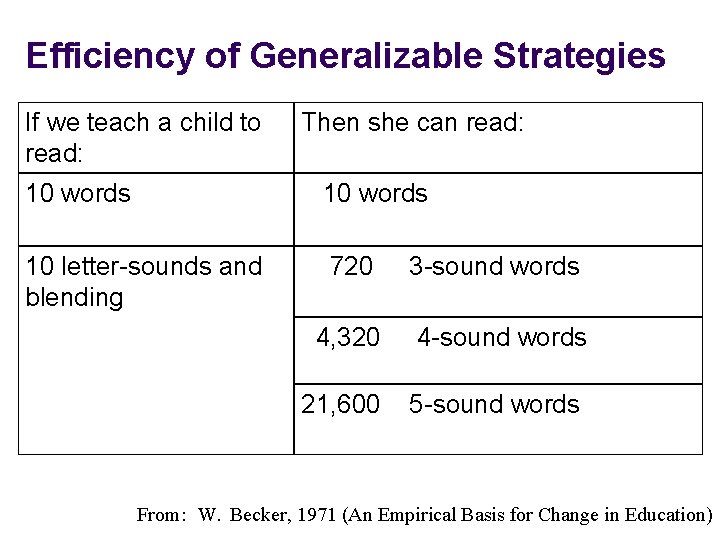
Efficiency of Generalizable Strategies If we teach a child to read: Then she can read: 10 words 10 letter-sounds and blending 720 3 -sound words 4, 320 4 -sound words 21, 600 5 -sound words From: W. Becker, 1971 (An Empirical Basis for Change in Education)
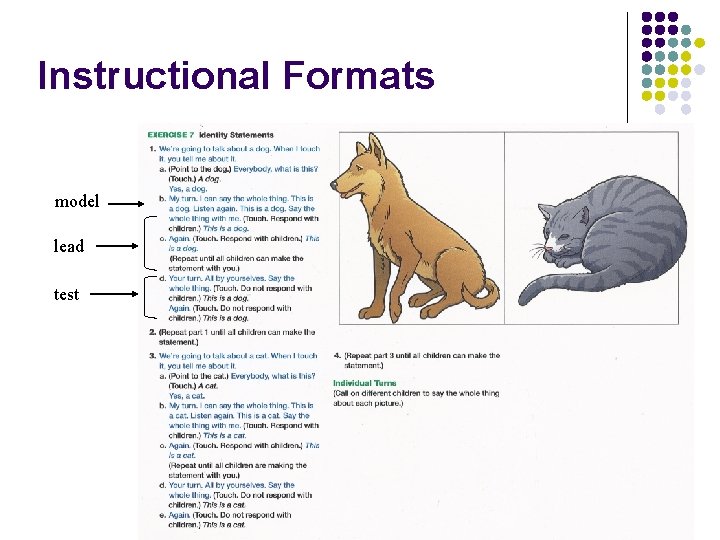
Instructional Formats model lead test
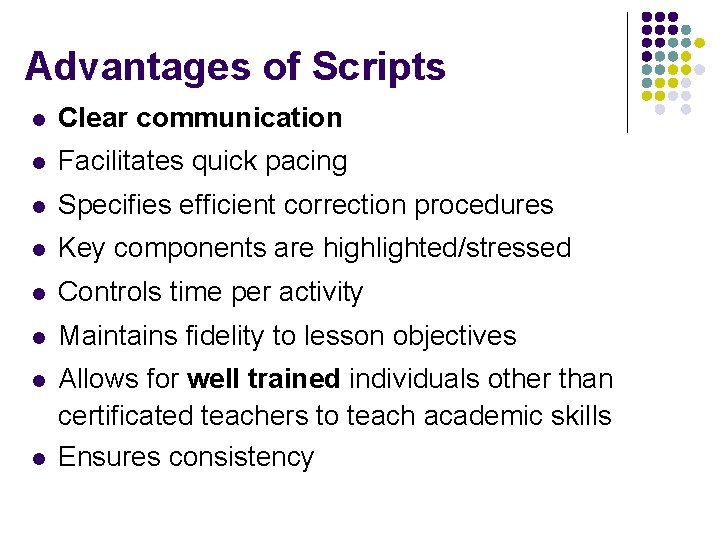
Advantages of Scripts l Clear communication l Facilitates quick pacing l Specifies efficient correction procedures l Key components are highlighted/stressed l Controls time per activity l Maintains fidelity to lesson objectives l Allows for well trained individuals other than certificated teachers to teach academic skills Ensures consistency l
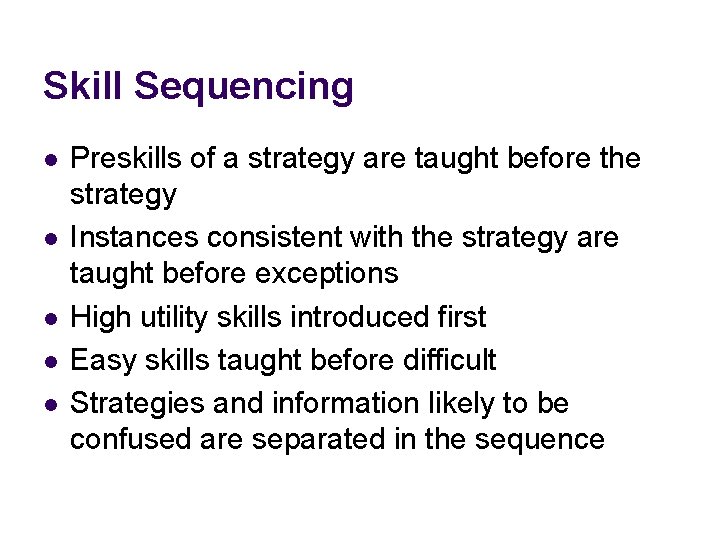
Skill Sequencing l l l Preskills of a strategy are taught before the strategy Instances consistent with the strategy are taught before exceptions High utility skills introduced first Easy skills taught before difficult Strategies and information likely to be confused are separated in the sequence
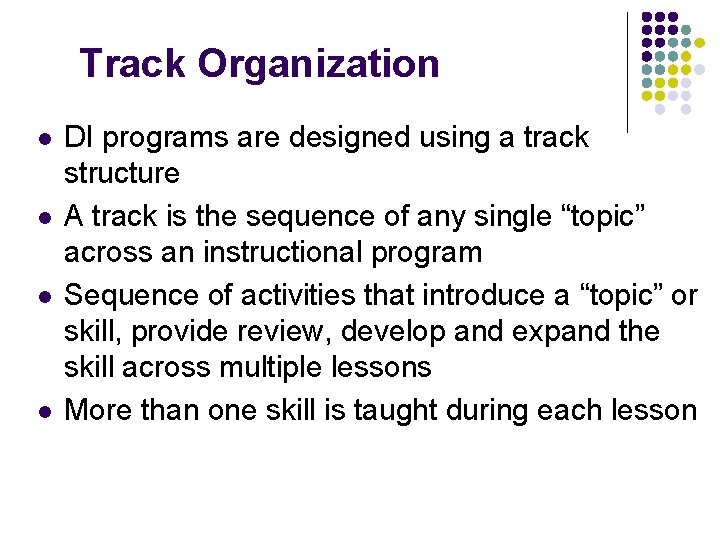
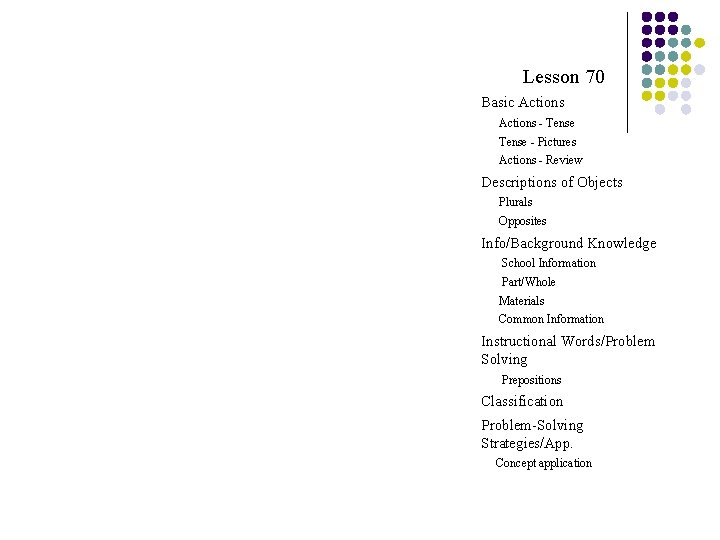
Track Organization l l DI programs are designed using a track structure A track is the sequence of any single “topic” across an instructional program Sequence of activities that introduce a “topic” or skill, provide review, develop and expand the skill across multiple lessons More than one skill is taught during each lesson
Lesson 70 Basic Actions - Tense - Pictures Actions - Review Descriptions of Objects Plurals Opposites Info/Background Knowledge School Information Part/Whole Materials Common Information Instructional Words/Problem Solving Prepositions Classification Problem-Solving Strategies/App. Concept application
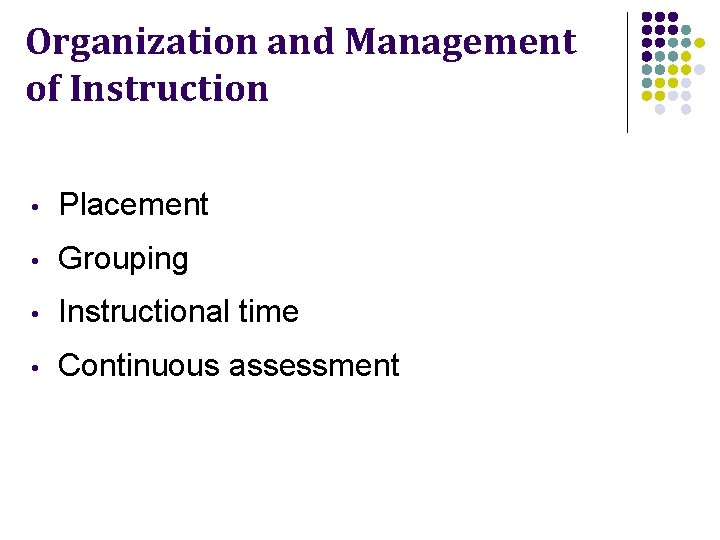
Organization and Management of Instruction • Placement • Grouping • Instructional time • Continuous assessment
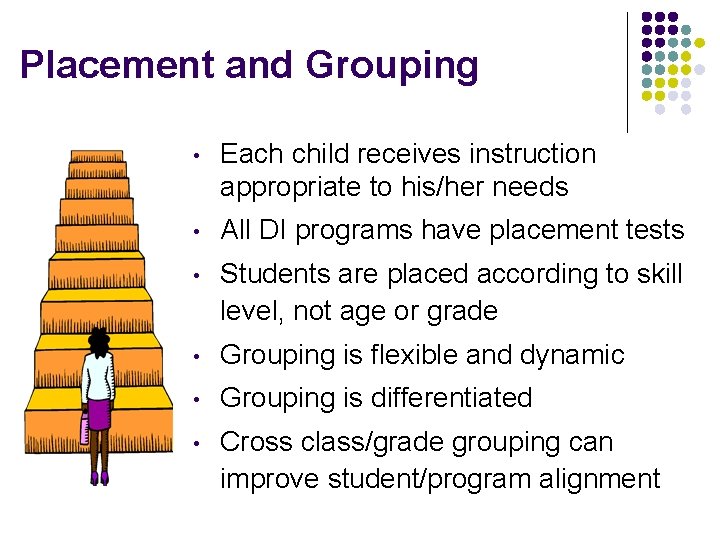
Placement and Grouping • Each child receives instruction appropriate to his/her needs • All DI programs have placement tests • Students are placed according to skill level, not age or grade • Grouping is flexible and dynamic • Grouping is differentiated • Cross class/grade grouping can improve student/program alignment
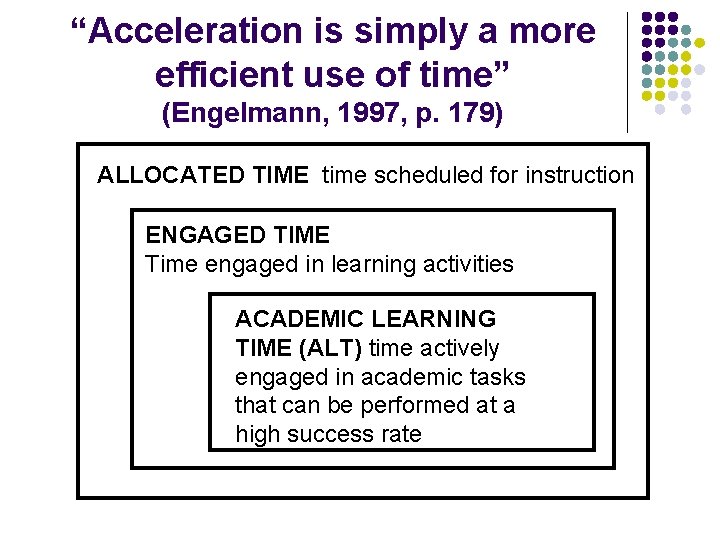
“Acceleration is simply a more efficient use of time” (Engelmann, 1997, p. 179) ALLOCATED TIME time scheduled for instruction ENGAGED TIME Time engaged in learning activities ACADEMIC LEARNING TIME (ALT) time actively engaged in academic tasks that can be performed at a high success rate
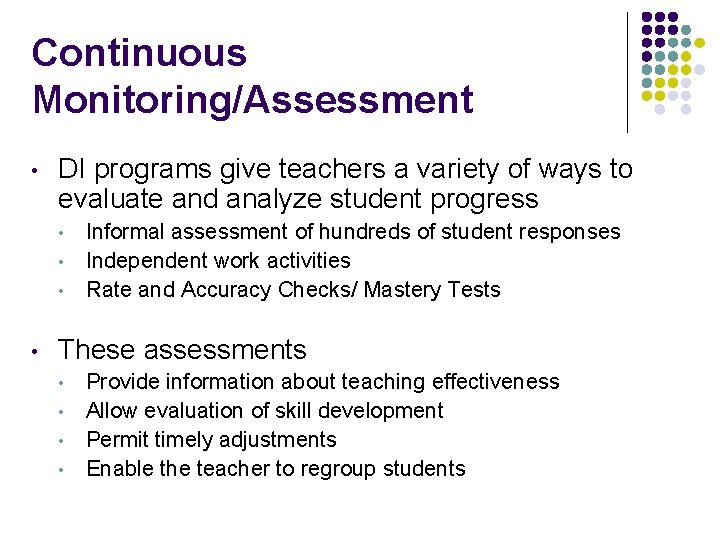
Continuous Monitoring/Assessment • DI programs give teachers a variety of ways to evaluate and analyze student progress • • Informal assessment of hundreds of student responses Independent work activities Rate and Accuracy Checks/ Mastery Tests These assessments • • Provide information about teaching effectiveness Allow evaluation of skill development Permit timely adjustments Enable the teacher to regroup students
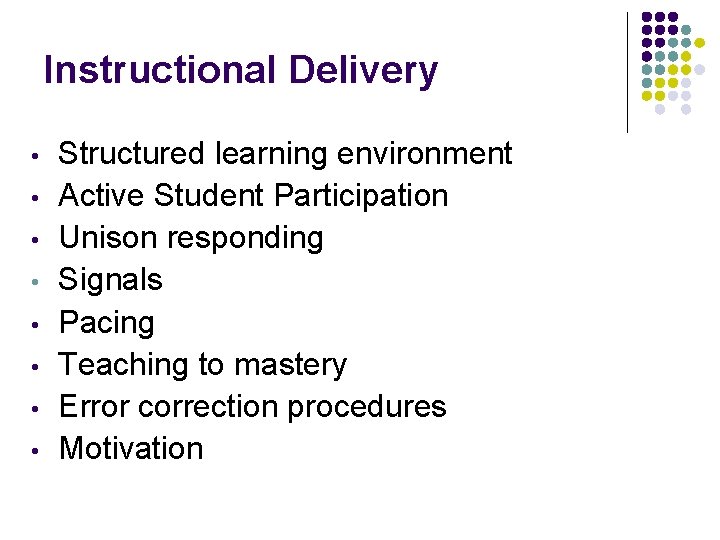
Instructional Delivery • • Structured learning environment Active Student Participation Unison responding Signals Pacing Teaching to mastery Error correction procedures Motivation
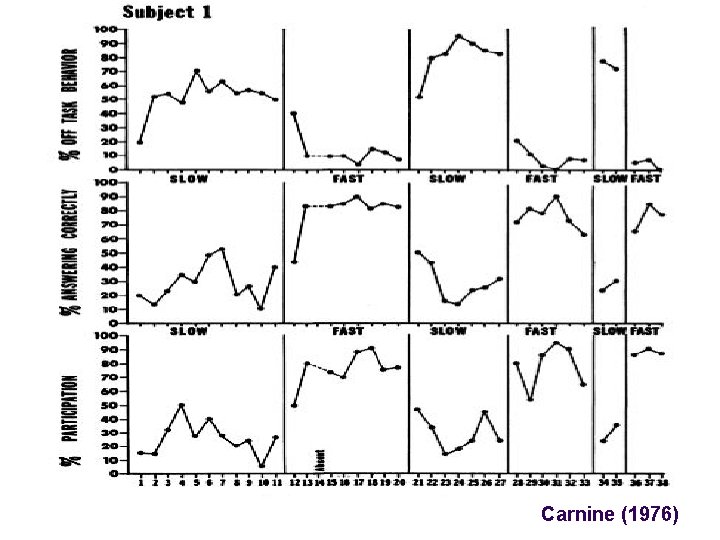
Carnine (1976)
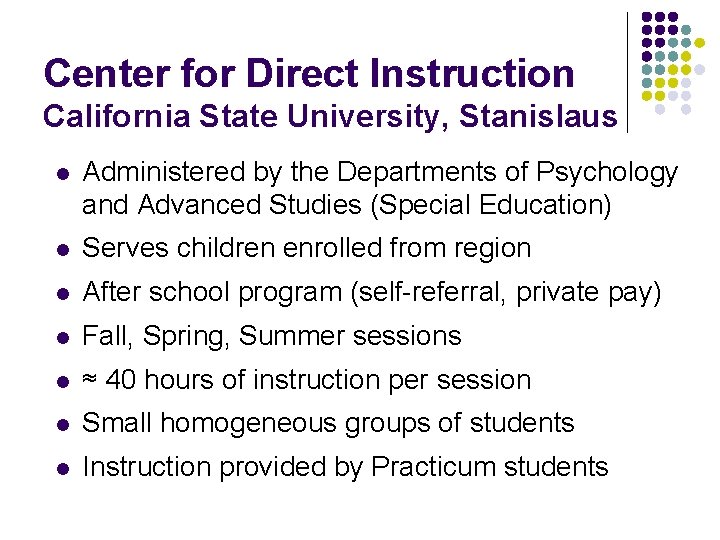
Center for Direct Instruction California State University, Stanislaus l Administered by the Departments of Psychology and Advanced Studies (Special Education) l Serves children enrolled from region l After school program (self-referral, private pay) l Fall, Spring, Summer sessions l ≈ 40 hours of instruction per session l Small homogeneous groups of students l Instruction provided by Practicum students
Watkins, Howard, & Stanislaw, 2001
CAT-5 Mean Percentile Scores for Leimbach Language Development Class and District
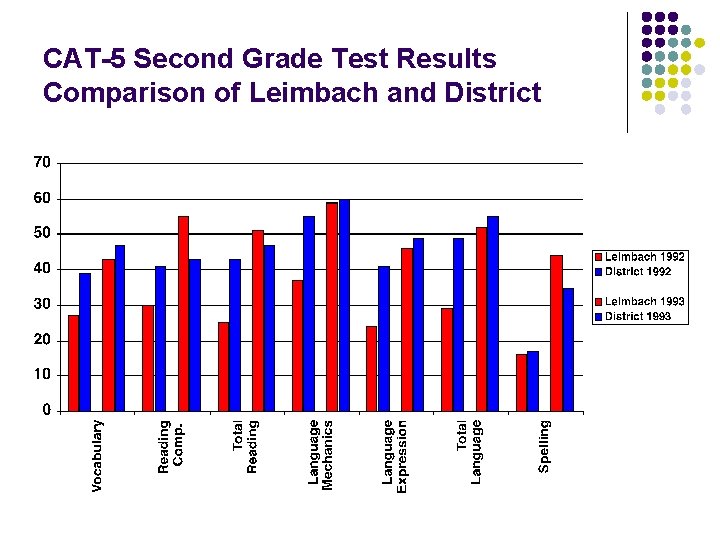
CAT-5 Second Grade Test Results Comparison of Leimbach and District
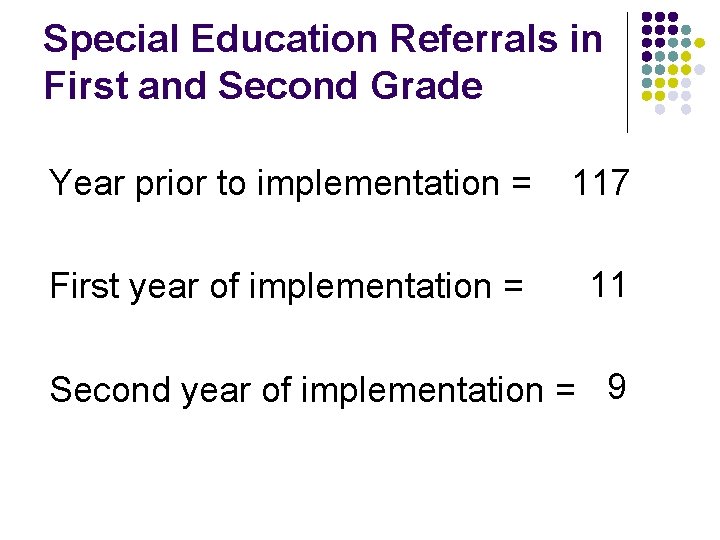
Special Education Referrals in First and Second Grade Year prior to implementation = 117 First year of implementation = 11 Second year of implementation = 9
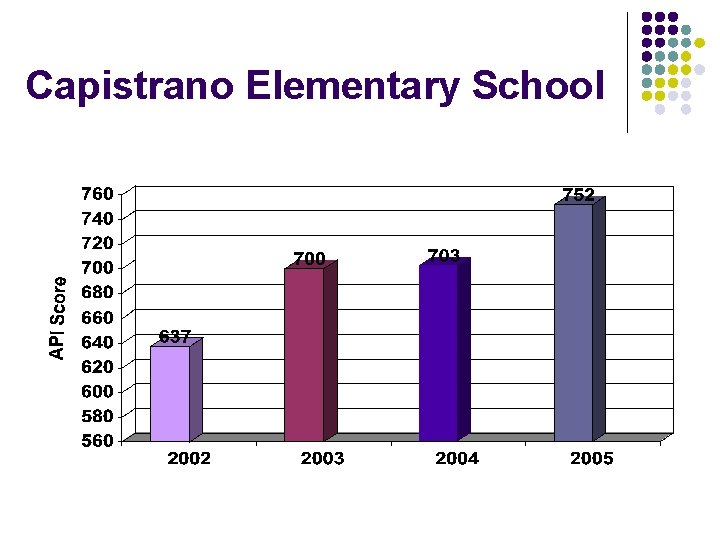
Capistrano Elementary School
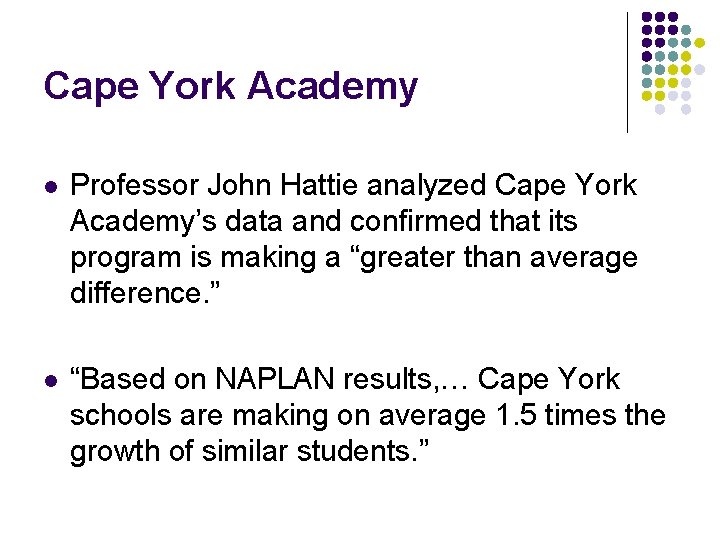
Cape York Academy l Professor John Hattie analyzed Cape York Academy’s data and confirmed that its program is making a “greater than average difference. ” l “Based on NAPLAN results, … Cape York schools are making on average 1. 5 times the growth of similar students. ”
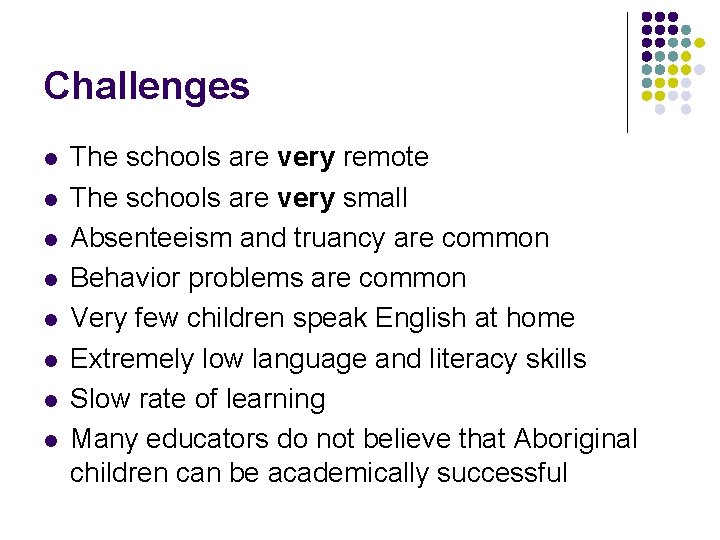
Challenges l l l l The schools are very remote The schools are very small Absenteeism and truancy are common Behavior problems are common Very few children speak English at home Extremely low language and literacy skills Slow rate of learning Many educators do not believe that Aboriginal children can be academically successful
Our job is to teach the kids we have, not the kids we used to have, not the kids we wish we had, not the kids who exist only in our dreams.