
Direct and Indirect Speech CREATED BY ASWARINI S
Direct and Indirect Speech CREATED BY: ASWARINI S.
There are two ways to report what someone says or thinks: 1. Direct Speech 2. Indirect Speech
Direct Speech Direct speech shows a person’s exact words. To write direct speech, use quotation marks (“…”) Examples: �Maria asked, “Where are you going? ” �John replied, “I’m going home. ”
Indirect Speech Indirect speech (reported speech) does not use the exact words of the speaker. Instead we report what was said by changing some of the words said, but retaining the same meaning. Examples: � Amy said, “I love chocolate. ” (direct) � Amy said that she loved chocolate. (indirect)
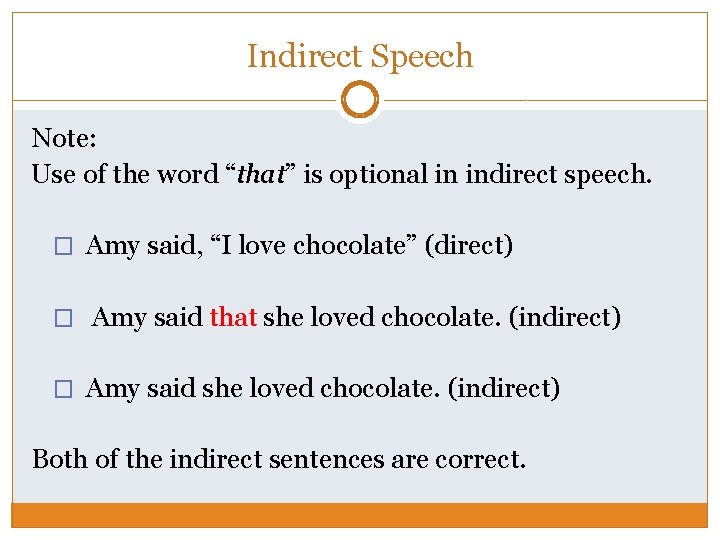
Indirect Speech Note: Use of the word “that” is optional in indirect speech. � Amy said, “I love chocolate” (direct) � Amy said that she loved chocolate. (indirect) � Amy said she loved chocolate. (indirect) Both of the indirect sentences are correct.
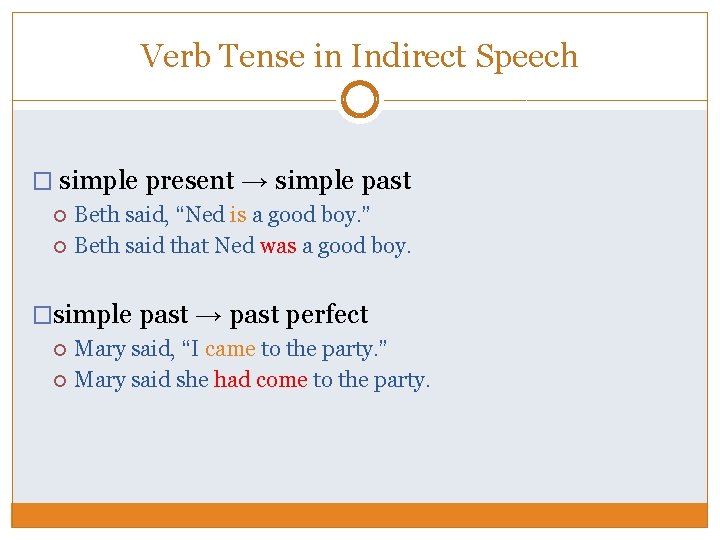
Verb Tense in Indirect Speech � simple present → simple past Beth said, “Ned is a good boy. ” Beth said that Ned was a good boy. �simple past → past perfect Mary said, “I came to the party. ” Mary said she had come to the party.
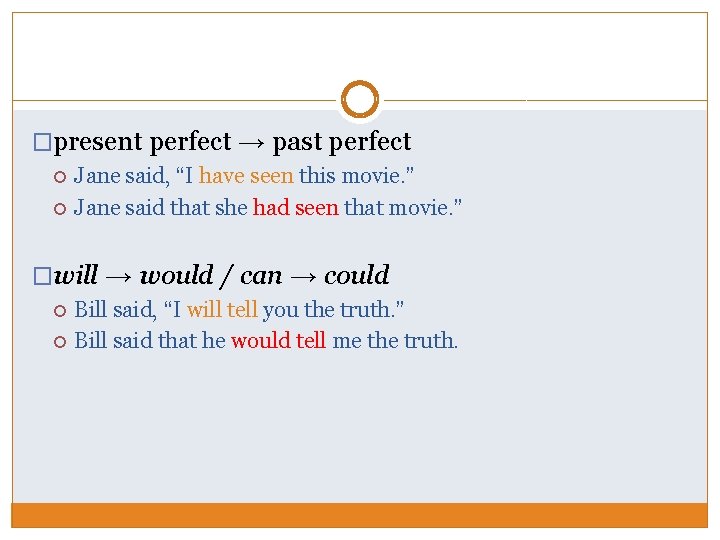
�present perfect → past perfect Jane said, “I have seen this movie. ” Jane said that she had seen that movie. ” �will → would / can → could Bill said, “I will tell you the truth. ” Bill said that he would tell me the truth.
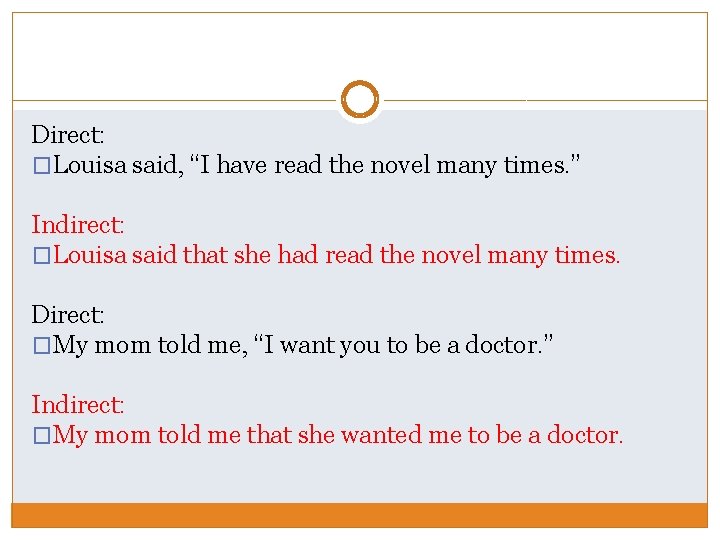
Direct: �Louisa said, “I have read the novel many times. ” Indirect: �Louisa said that she had read the novel many times. Direct: �My mom told me, “I want you to be a doctor. ” Indirect: �My mom told me that she wanted me to be a doctor.
Questions in Indirect Speech Word order: The word order in an indirect question is the same as in a statement. Examples: �Ted asked me, “What do you think about the book? ” �Ted asked me what I thought about the book.
Yes No Question To change a yes/no question in indirect speech, use if or whether. Example: �Brad asked, “Are you ready, Katy? ” �Brad asked Katy if she was ready. �Eli asked me, “Will you be at the party? ” �Eli asked whether I would be at the party.
Direct: �Tom asked, “Are you ok, Ted? ” Indirect: �Tom asked Ted if he was ok. Direct: �Beth asked Jo, “Where do you live? ” Indirect: �Beth asked Jo where he lived.
Indirect Request, Suggestion, Advice, Etc When we report offers, promises, etc, we can use the structure: Reporting verb + to-infinitive Examples: � The girl said, “Please help me, John? ” � The girl asked John to help her. � Mom said, “Amy, I think you should do your homework. ” � Mom advised Amy to do her homework.
Direct: �Dad said to me, “Call me when you get home. ” Indirect: �Dad asked me to call him when I got home. Direct: �The policeman said to the drivers, “Stop!” Indirect: �The policeman asked the drivers to stop.
Indirect negative order, promise, request, etc In negative orders, promises, requests, etc, we use the structure: Reporting verb + not + to-infinitive Examples: � The dentist told me, “Don’t eat too much sweet. ” � The dentist asked me not to eat too much sweet. � Jane said, “I will never come late anymore. ” � Jane promised not to come late anymore.
Direct: �My sister said, “Don’t leave me alone at home. ” Indirect: �My sister asked me not to leave her alone at home. Direct: �He said to the children, “Don’t play here anymore!” Indirect: �He asked the children not to play there anymore.
- Slides: 15