
Dire Wolf by Mark Hallett Trophic Cascades the
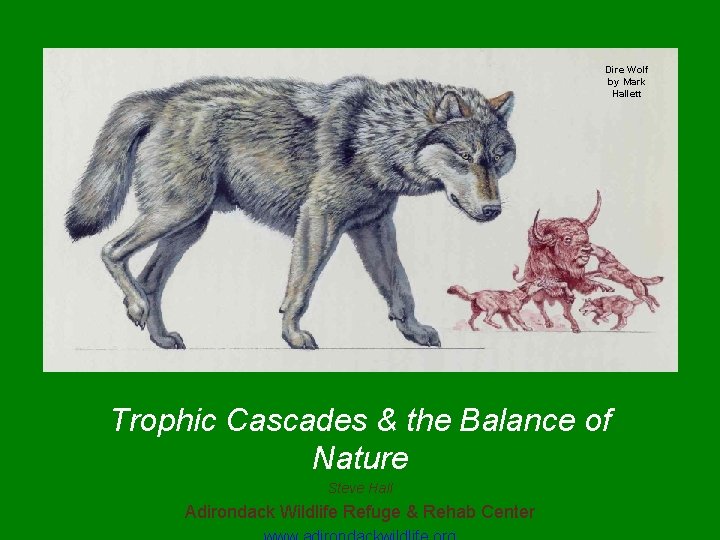
Dire Wolf by Mark Hallett Trophic Cascades & the Balance of Nature Steve Hall Adirondack Wildlife Refuge & Rehab Center
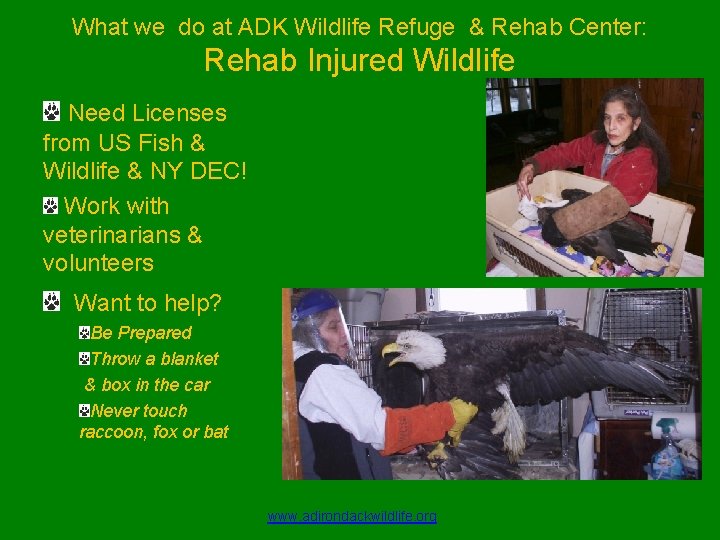
What we do at ADK Wildlife Refuge & Rehab Center: Rehab Injured Wildlife Need Licenses from US Fish & Wildlife & NY DEC! Work with veterinarians & volunteers Want to help? Be Prepared Throw a blanket & box in the car Never touch raccoon, fox or bat www. adirondackwildlife. org
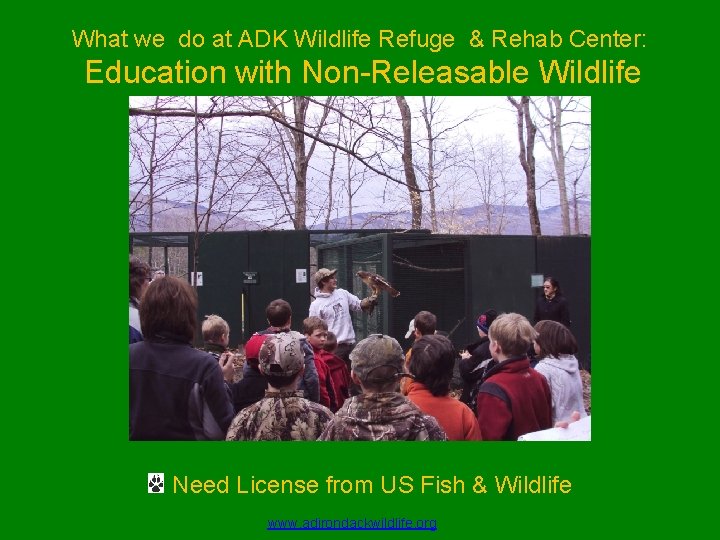
What we do at ADK Wildlife Refuge & Rehab Center: Education with Non-Releasable Wildlife Need License from US Fish & Wildlife www. adirondackwildlife. org
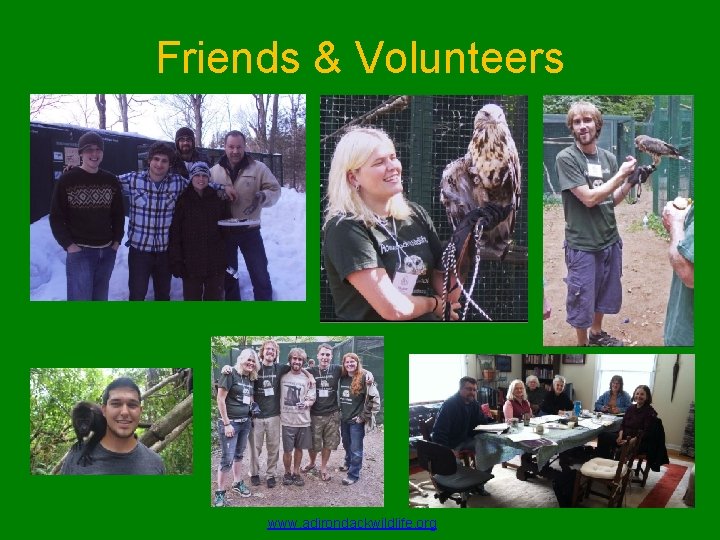
Friends & Volunteers www. adirondackwildlife. org
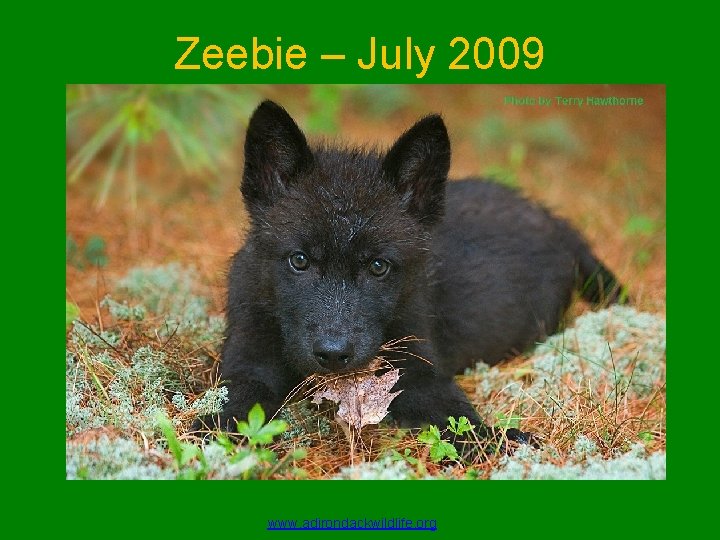
Zeebie – July 2009 www. adirondackwildlife. org
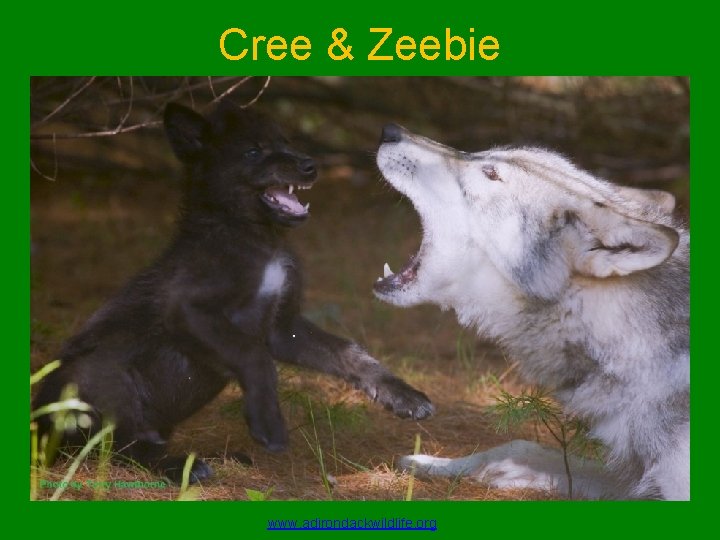
Cree & Zeebie www. adirondackwildlife. org
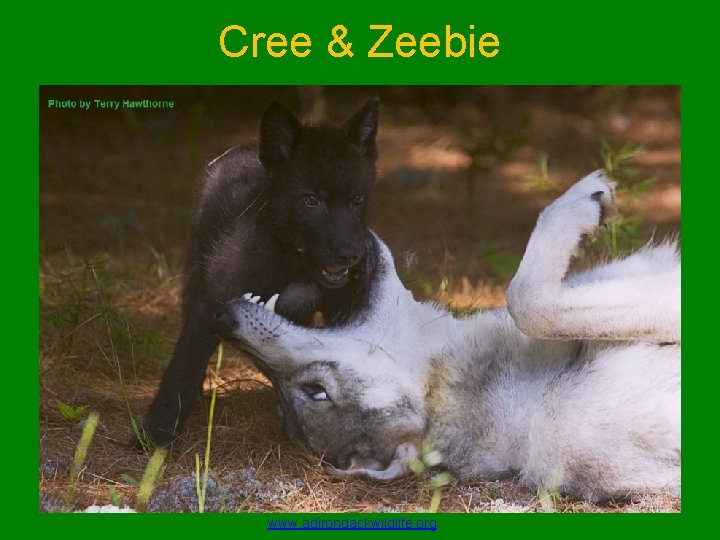
Cree & Zeebie www. adirondackwildlife. org
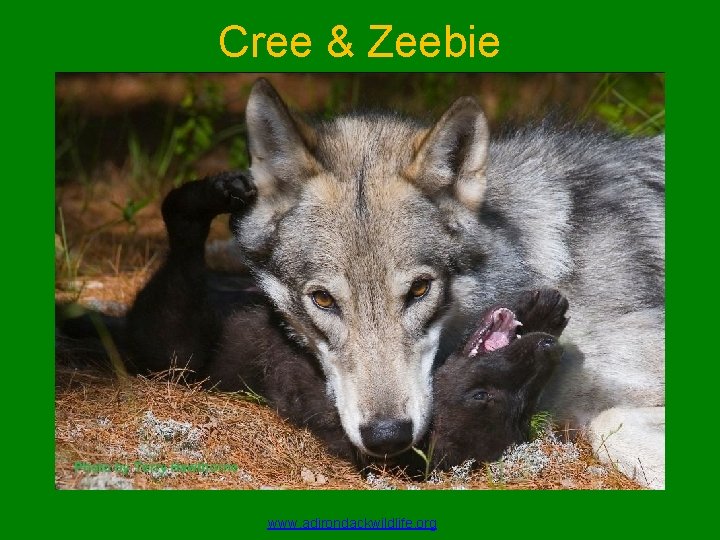
Cree & Zeebie www. adirondackwildlife. org
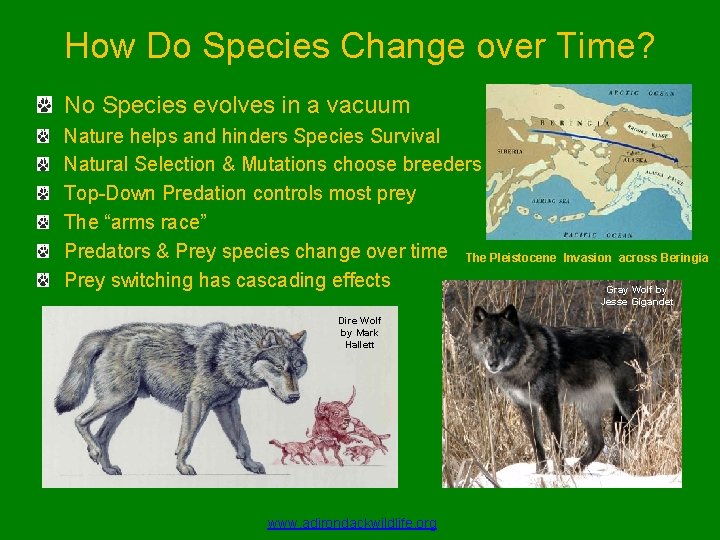
How Do Species Change over Time? No Species evolves in a vacuum Nature helps and hinders Species Survival Natural Selection & Mutations choose breeders Top-Down Predation controls most prey The “arms race” Predators & Prey species change over time The Pleistocene Prey switching has cascading effects Dire Wolf by Mark Hallett www. adirondackwildlife. org Invasion across Beringia Gray Wolf by Jesse Gigandet
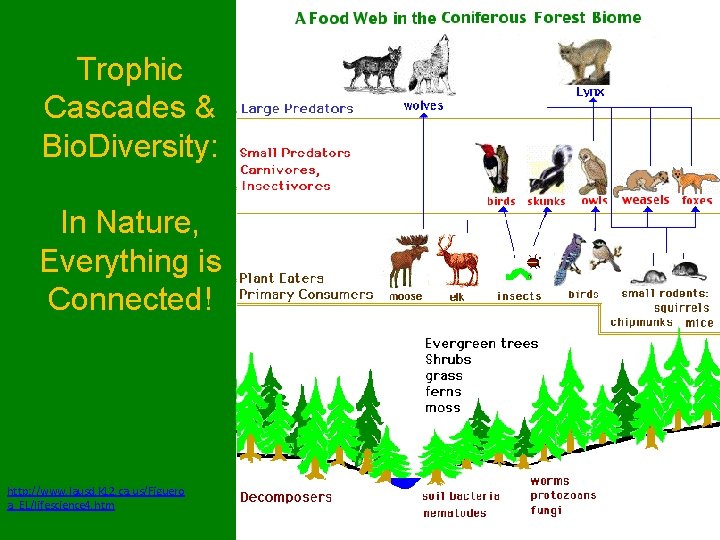
Trophic Cascades & Bio. Diversity: In Nature, Everything is Connected! http: //www. lausd. k 12. ca. us/Figuero a_EL/lifescience 4. htm
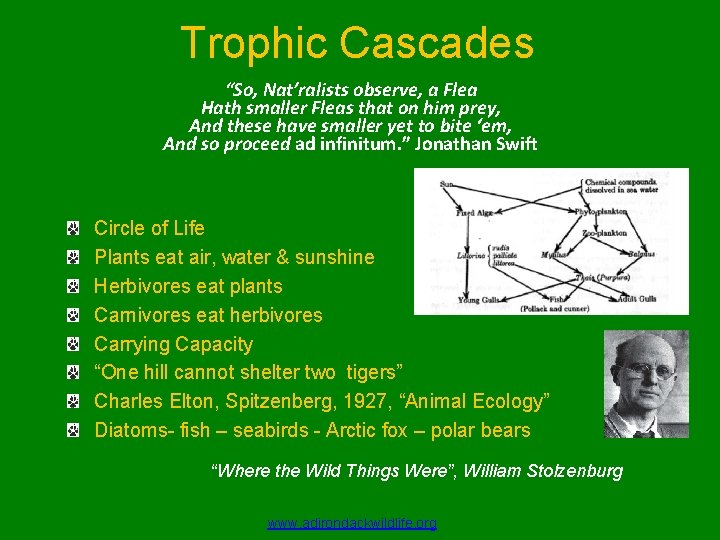
Trophic Cascades “So, Nat’ralists observe, a Flea Hath smaller Fleas that on him prey, And these have smaller yet to bite ‘em, And so proceed ad infinitum. ” Jonathan Swift Circle of Life Plants eat air, water & sunshine Herbivores eat plants Carnivores eat herbivores Carrying Capacity “One hill cannot shelter two tigers” Charles Elton, Spitzenberg, 1927, “Animal Ecology” Diatoms- fish – seabirds - Arctic fox – polar bears “Where the Wild Things Were”, William Stolzenburg www. adirondackwildlife. org
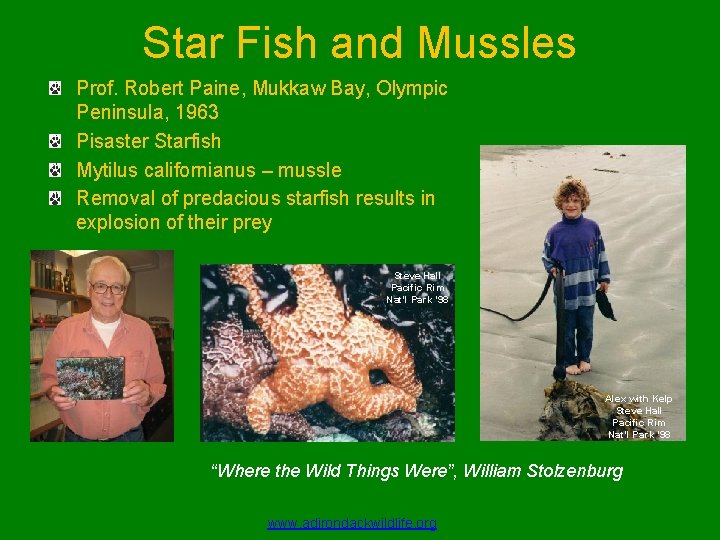
Star Fish and Mussles Prof. Robert Paine, Mukkaw Bay, Olympic Peninsula, 1963 Pisaster Starfish Mytilus californianus – mussle Removal of predacious starfish results in explosion of their prey Steve Hall Pacific Rim Nat’l Park ‘ 98 Alex with Kelp Steve Hall Pacific Rim Nat’l Park ‘ 98 “Where the Wild Things Were”, William Stolzenburg www. adirondackwildlife. org
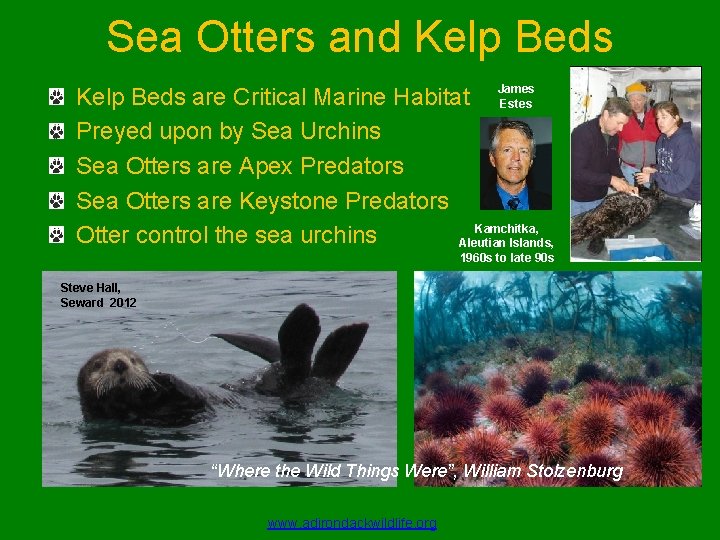
Sea Otters and Kelp Beds are Critical Marine Habitat James Estes Preyed upon by Sea Urchins Sea Otters are Apex Predators Sea Otters are Keystone Predators Kamchitka, Otter control the sea urchins Aleutian Islands, 1960 s to late 90 s Steve Hall, Seward 2012 “Where the Wild Things Were”, William Stolzenburg www. adirondackwildlife. org
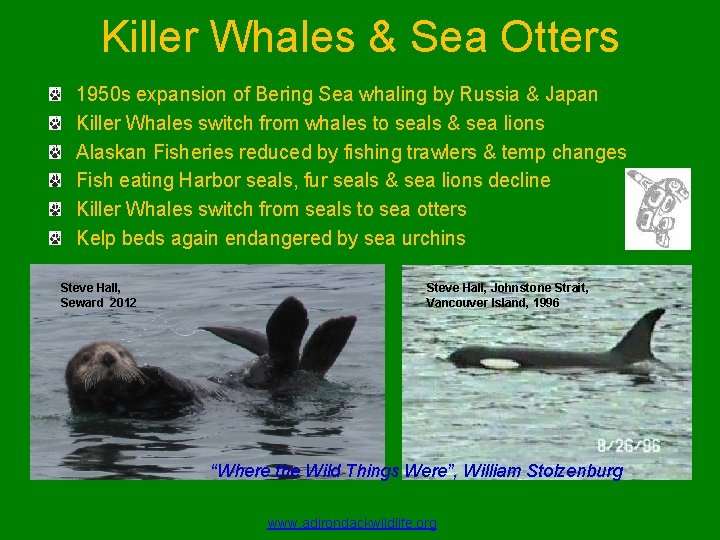
Killer Whales & Sea Otters 1950 s expansion of Bering Sea whaling by Russia & Japan Killer Whales switch from whales to seals & sea lions Alaskan Fisheries reduced by fishing trawlers & temp changes Fish eating Harbor seals, fur seals & sea lions decline Killer Whales switch from seals to sea otters Kelp beds again endangered by sea urchins Steve Hall, Seward 2012 Steve Hall, Johnstone Strait, Vancouver Island, 1996 “Where the Wild Things Were”, William Stolzenburg www. adirondackwildlife. org
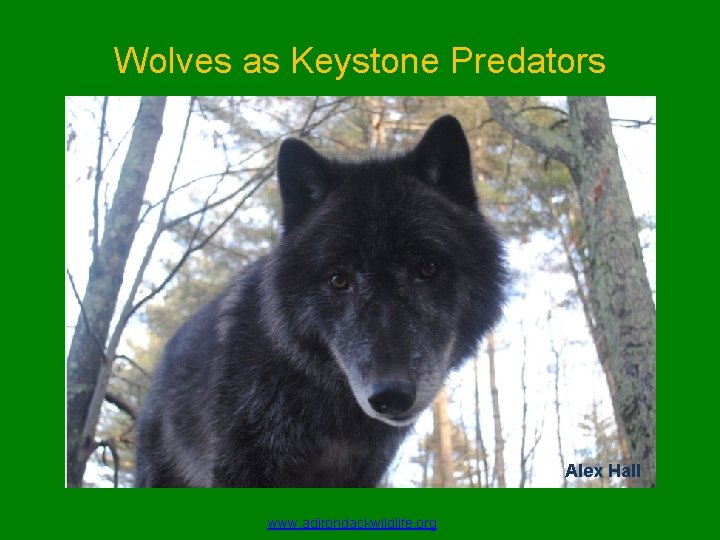
Wolves as Keystone Predators Alex Hall www. adirondackwildlife. org

Wolves Keystone Predators Control ungulates Control other predators Family Oriented Self Regulating Based on number of prey species & disease Lead Short & Dangerous Lives Harmless to People Potentially Dangerous to livestock and pets Often Misrepresented in media All dogs are canis lupus familiaris www. adirondackwildlife. org Zeebie
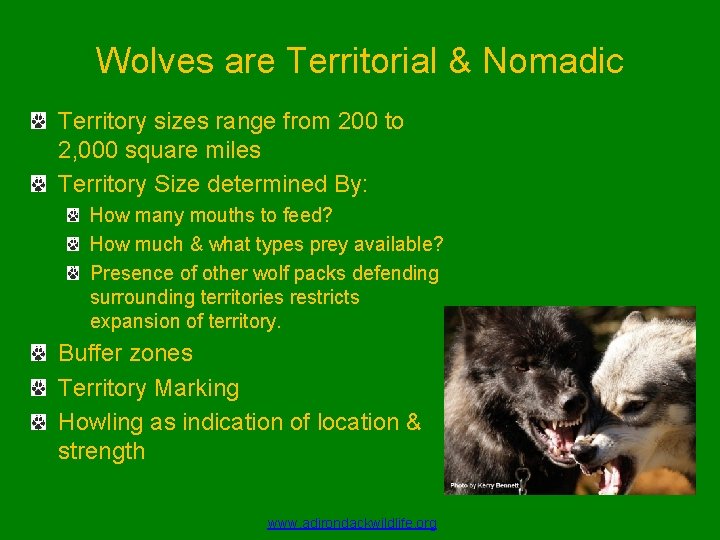
Wolves are Territorial & Nomadic Territory sizes range from 200 to 2, 000 square miles Territory Size determined By: How many mouths to feed? How much & what types prey available? Presence of other wolf packs defending surrounding territories restricts expansion of territory. Buffer zones Territory Marking Howling as indication of location & strength www. adirondackwildlife. org
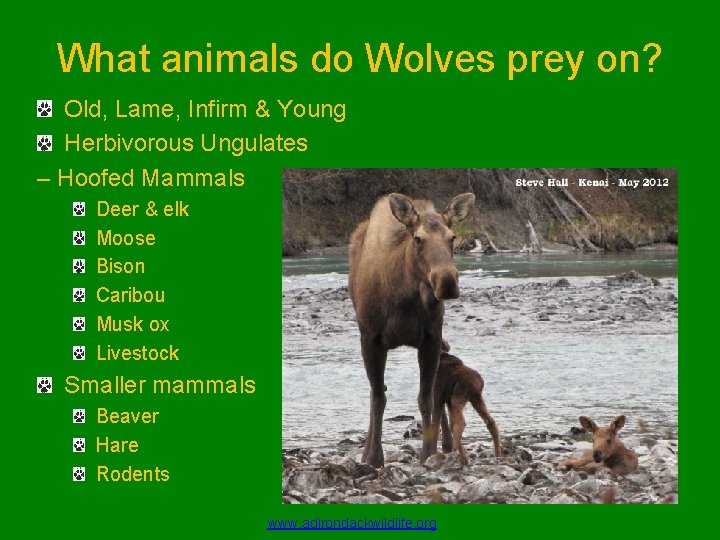
What animals do Wolves prey on? Old, Lame, Infirm & Young Herbivorous Ungulates – Hoofed Mammals Deer & elk Moose Bison Caribou Musk ox Livestock Smaller mammals Beaver Hare Rodents www. adirondackwildlife. org
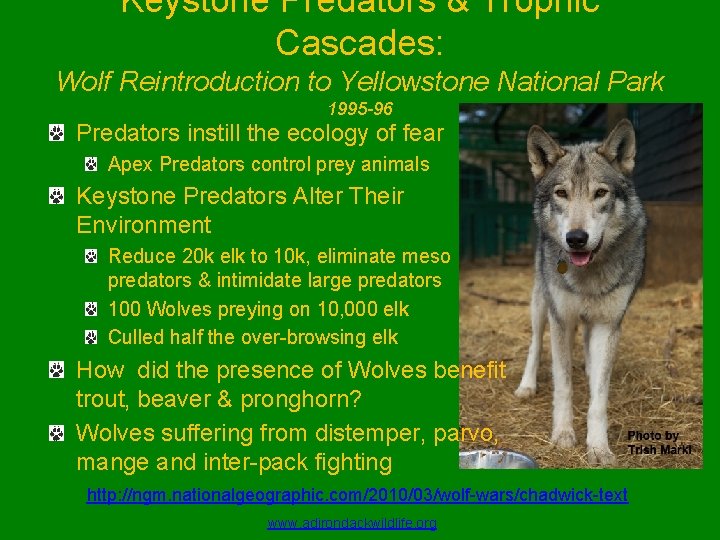
Keystone Predators & Trophic Cascades: Wolf Reintroduction to Yellowstone National Park 1995 -96 Predators instill the ecology of fear Apex Predators control prey animals Keystone Predators Alter Their Environment Reduce 20 k elk to 10 k, eliminate meso predators & intimidate large predators 100 Wolves preying on 10, 000 elk Culled half the over-browsing elk How did the presence of Wolves benefit trout, beaver & pronghorn? Wolves suffering from distemper, parvo, mange and inter-pack fighting http: //ngm. nationalgeographic. com/2010/03/wolf-wars/chadwick-text www. adirondackwildlife. org
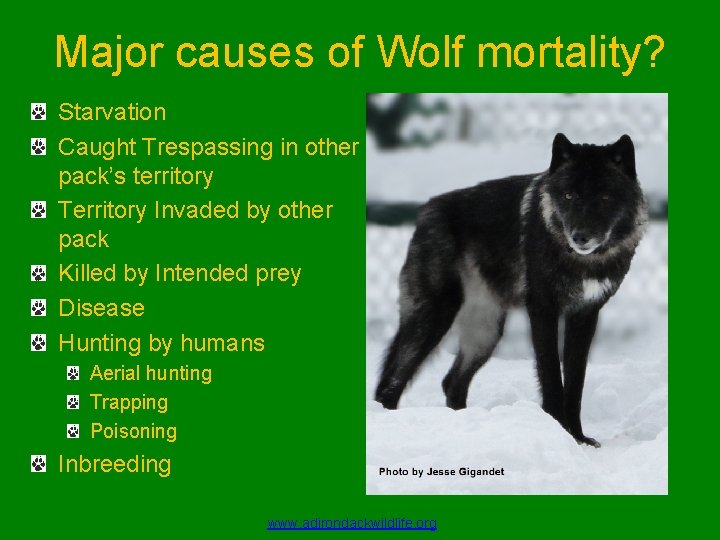
Major causes of Wolf mortality? Starvation Caught Trespassing in other pack’s territory Territory Invaded by other pack Killed by Intended prey Disease Hunting by humans Aerial hunting Trapping Poisoning Inbreeding www. adirondackwildlife. org
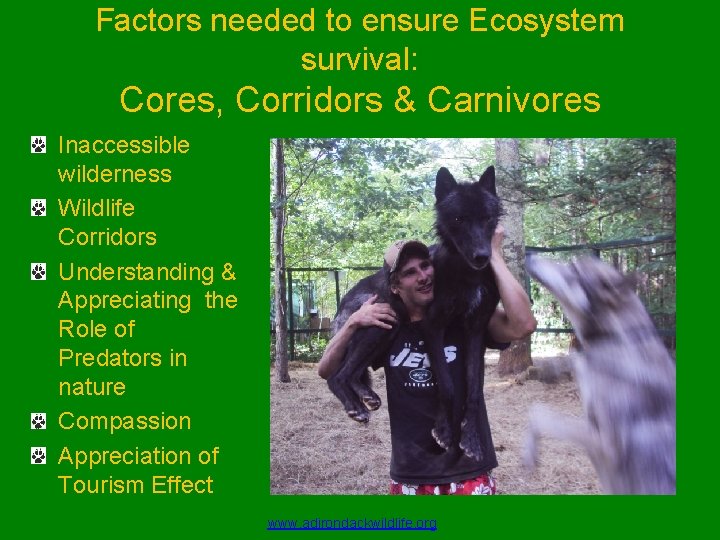
Factors needed to ensure Ecosystem survival: Cores, Corridors & Carnivores Inaccessible wilderness Wildlife Corridors Understanding & Appreciating the Role of Predators in nature Compassion Appreciation of Tourism Effect www. adirondackwildlife. org
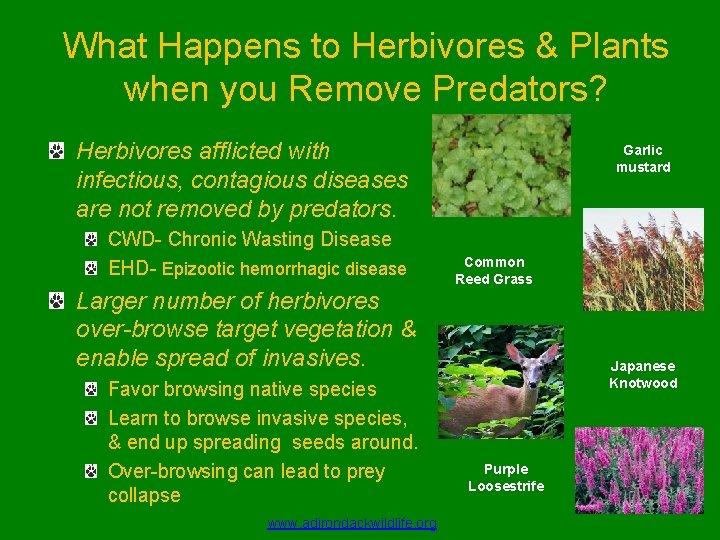
What Happens to Herbivores & Plants when you Remove Predators? Herbivores afflicted with infectious, contagious diseases are not removed by predators. CWD- Chronic Wasting Disease EHD- Epizootic hemorrhagic disease Larger number of herbivores over-browse target vegetation & enable spread of invasives. Favor browsing native species Learn to browse invasive species, & end up spreading seeds around. Over-browsing can lead to prey collapse www. adirondackwildlife. org Garlic mustard Common Reed Grass Japanese Knotwood Purple Loosestrife
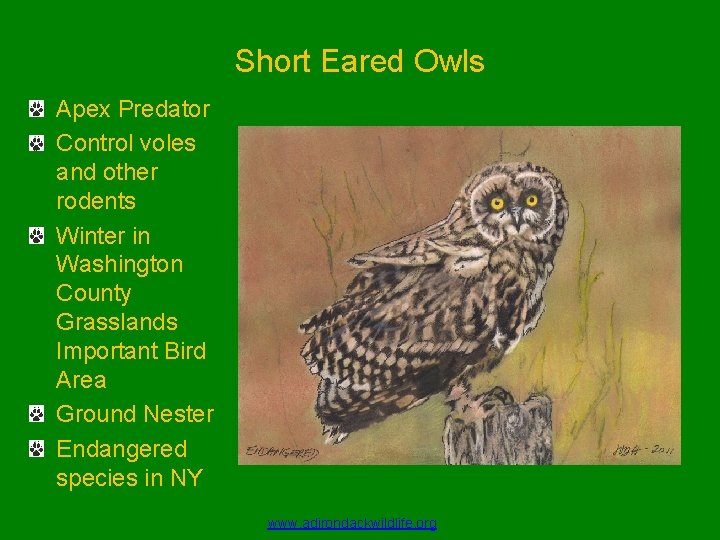
Short Eared Owls Apex Predator Control voles and other rodents Winter in Washington County Grasslands Important Bird Area Ground Nester Endangered species in NY www. adirondackwildlife. org
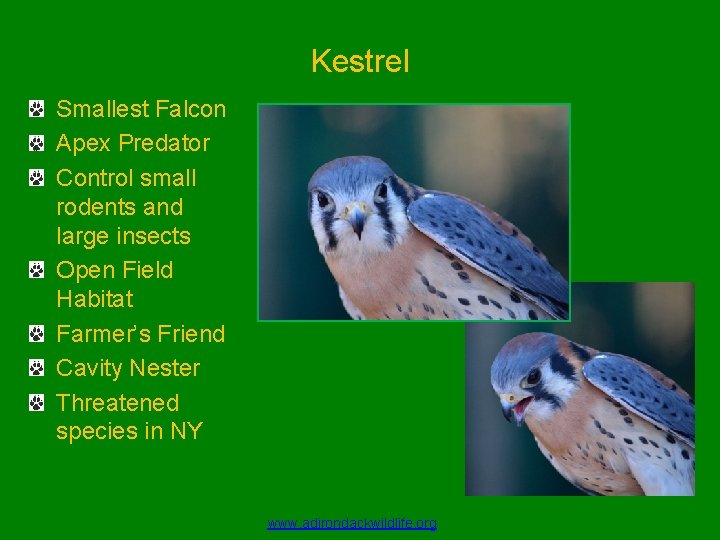
Kestrel Smallest Falcon Apex Predator Control small rodents and large insects Open Field Habitat Farmer’s Friend Cavity Nester Threatened species in NY www. adirondackwildlife. org
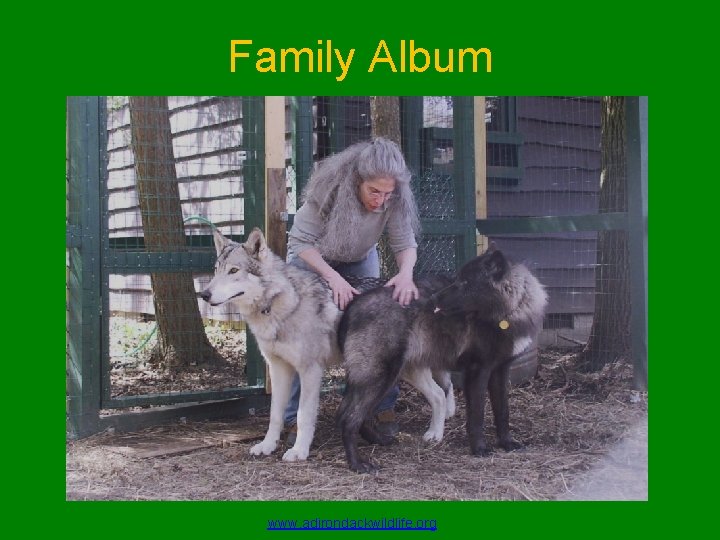
Family Album www. adirondackwildlife. org
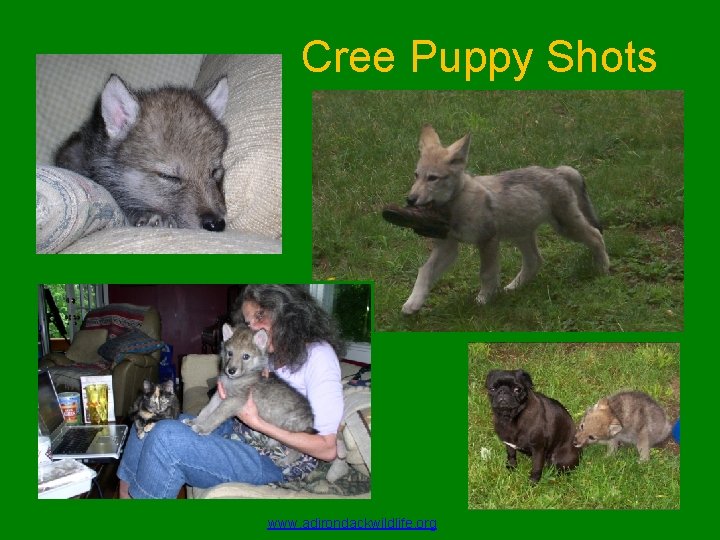
Cree Puppy Shots www. adirondackwildlife. org
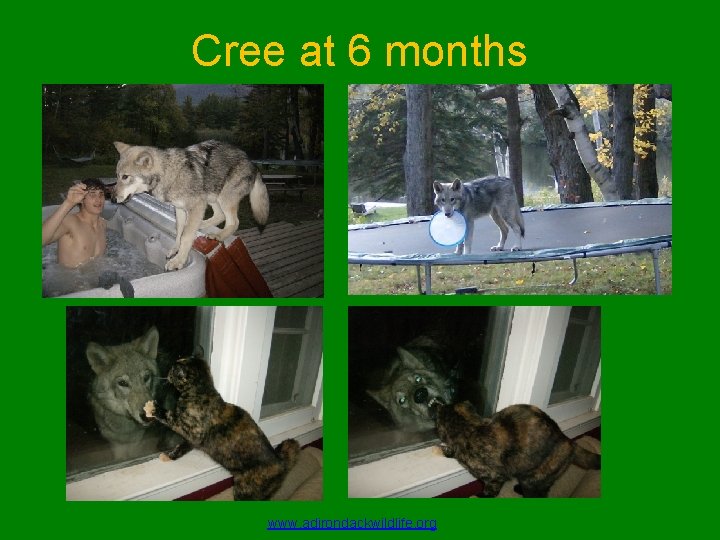
Cree at 6 months www. adirondackwildlife. org
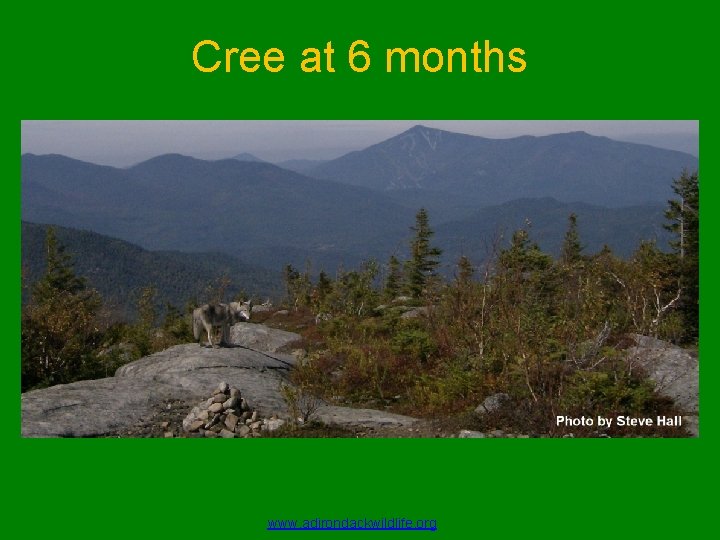
Cree at 6 months www. adirondackwildlife. org
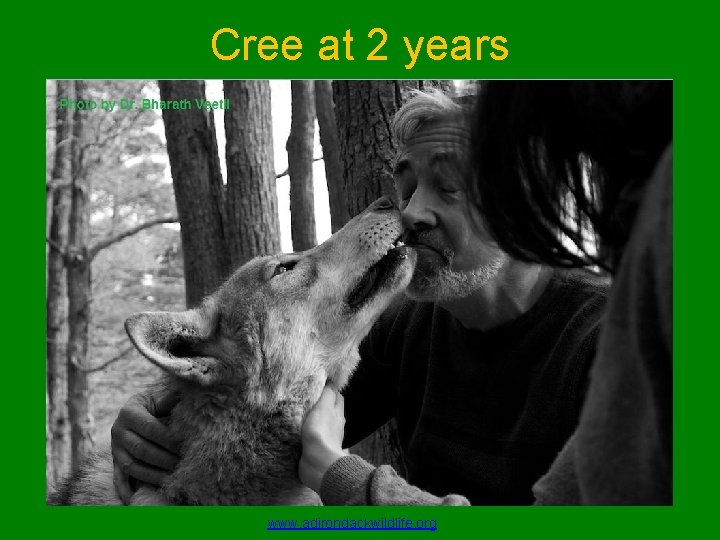
Cree at 2 years www. adirondackwildlife. org
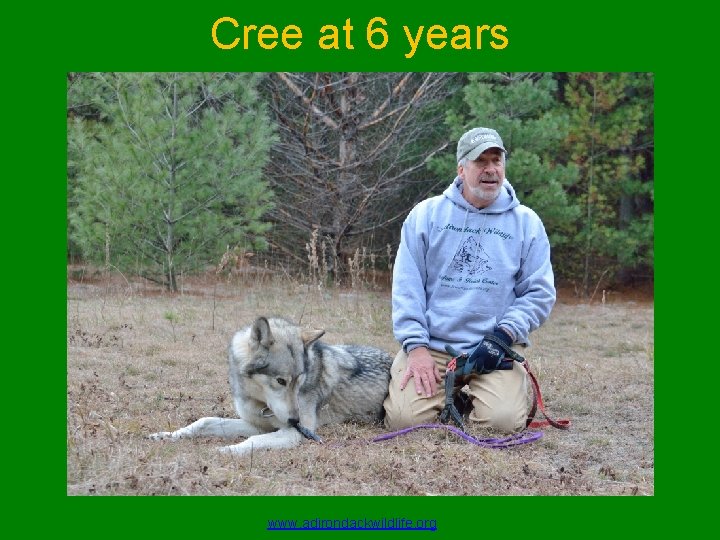
Cree at 6 years www. adirondackwildlife. org
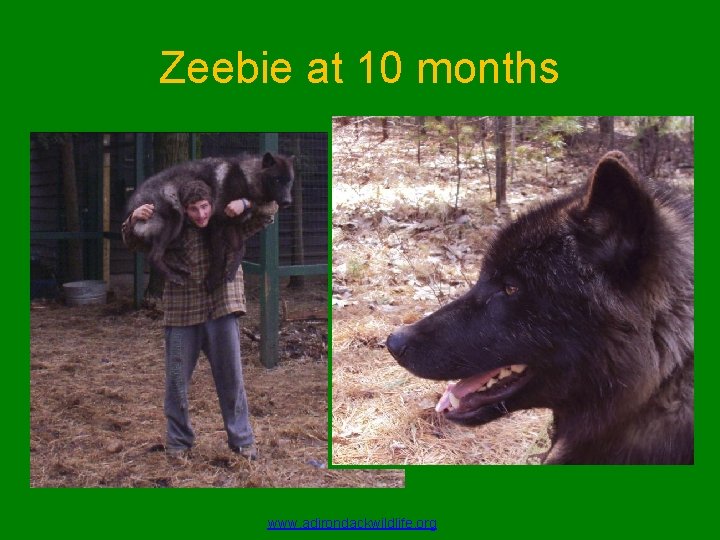
Zeebie at 10 months www. adirondackwildlife. org
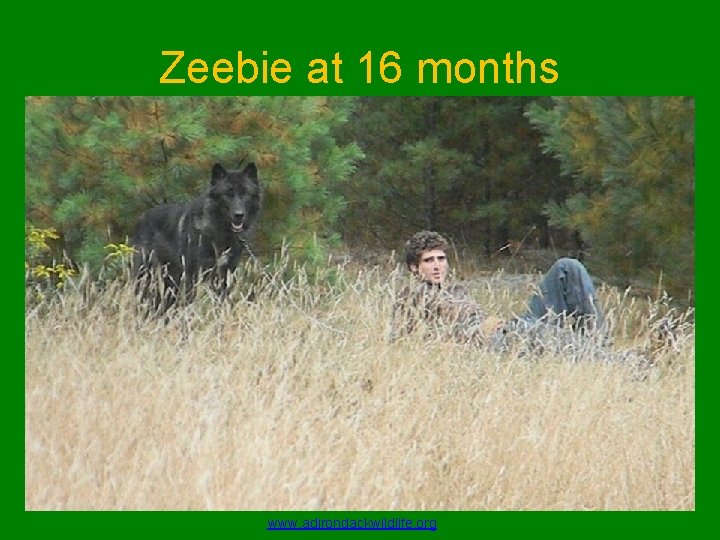
Zeebie at 16 months www. adirondackwildlife. org
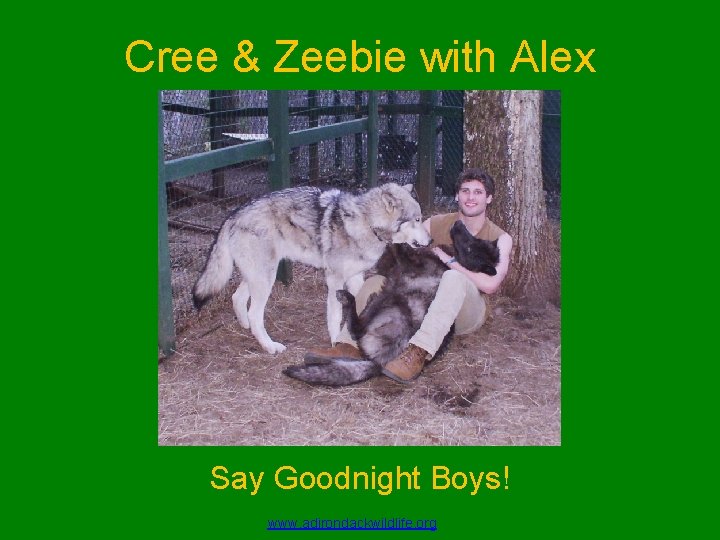
Cree & Zeebie with Alex Say Goodnight Boys! www. adirondackwildlife. org
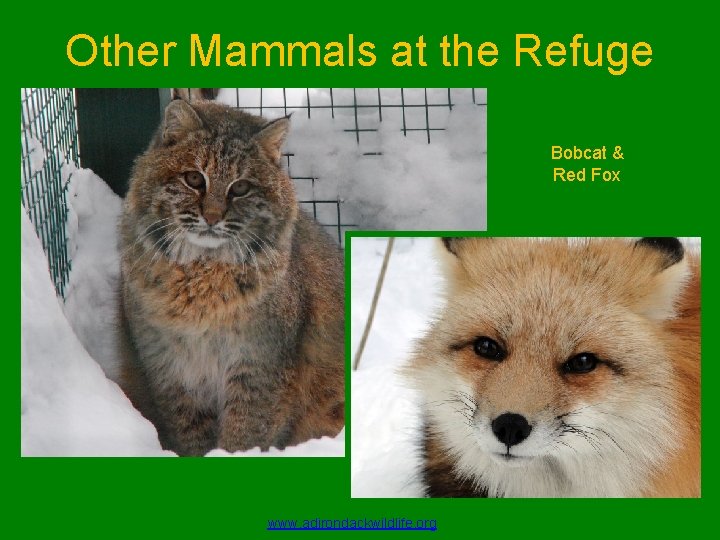
Other Mammals at the Refuge Bobcat & Red Fox www. adirondackwildlife. org
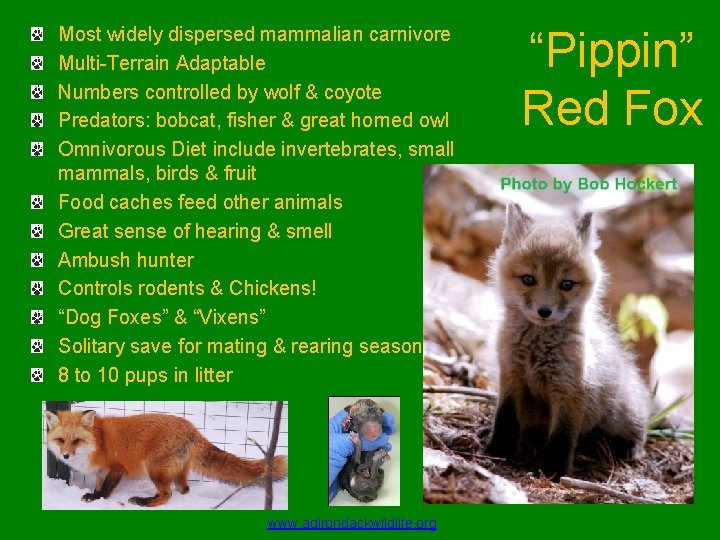
Most widely dispersed mammalian carnivore Multi-Terrain Adaptable Numbers controlled by wolf & coyote Predators: bobcat, fisher & great horned owl Omnivorous Diet include invertebrates, small mammals, birds & fruit Food caches feed other animals Great sense of hearing & smell Ambush hunter Controls rodents & Chickens! “Dog Foxes” & “Vixens” Solitary save for mating & rearing season 8 to 10 pups in litter www. adirondackwildlife. org “Pippin” Red Fox
Thank You! Adirondack Wildlife Refuge & Rehab Center www. adirondackwildlife. org 977 Springfield Rd. , Wilmington, NY 12997 1 -855 -Wolf-Man
- Slides: 36