
DIPLOID VS HAPLOID DIPLOID Diploid 2n In humans


- Slides: 12
DIPLOID VS. HAPLOID DIPLOID • • Diploid = 2(n) In humans: • n=23 chromosomes • 2(n)= 46 total chromosomes 2 sets of each chromosomes Somatic cells are diploid • Body Cells (nerve, muscle, bone, etc. ) HAPLOID • • Haploid = n In humans: • n= 23 chromosomes • Only 23 chromosomes total 1 set of each chromosome Gametes are haploid • Sex Cells (Sperm & Egg)
Cell Division Mitosis vs. Meiosis
Mitosis Purpose: • For growth and repair • Type of Asexual reproduction for some unicellular organisms
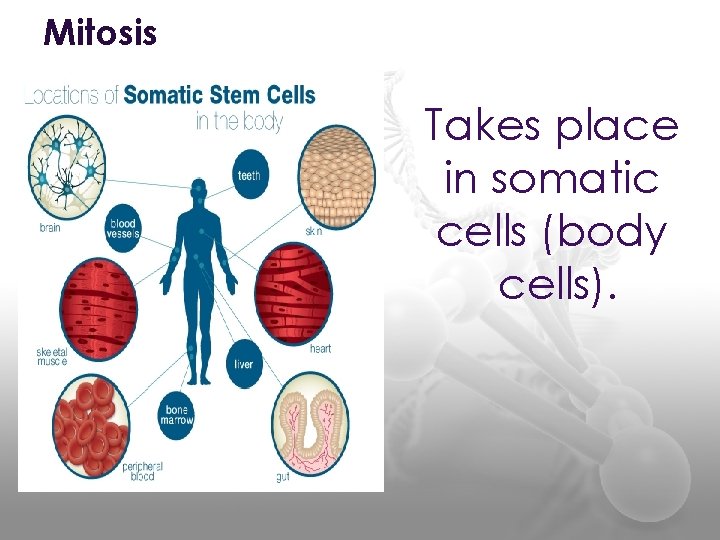
Mitosis Takes place in somatic cells (body cells).
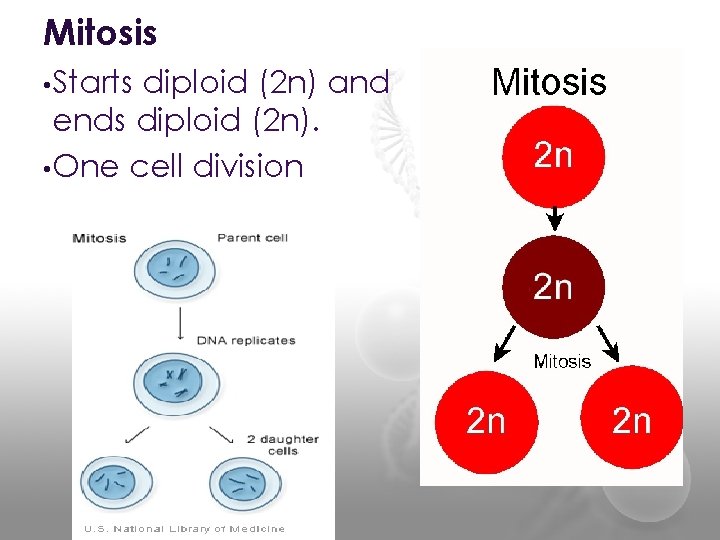
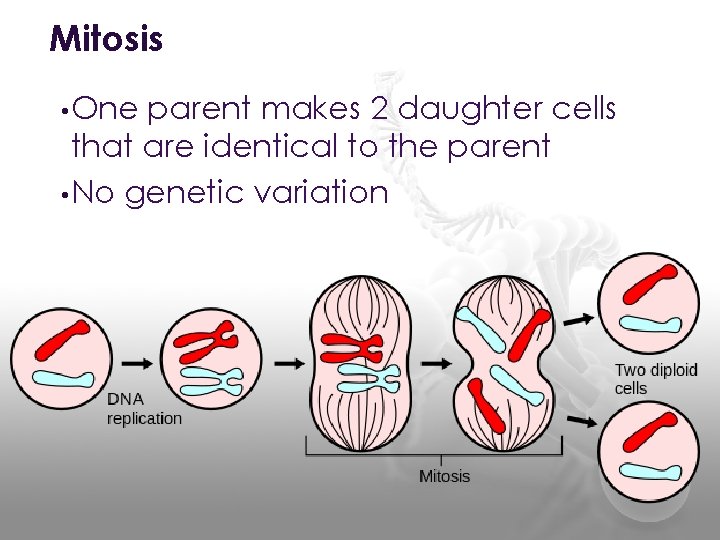
Mitosis • Starts diploid (2 n) and ends diploid (2 n). • One cell division
Mitosis • One parent makes 2 daughter cells that are identical to the parent • No genetic variation
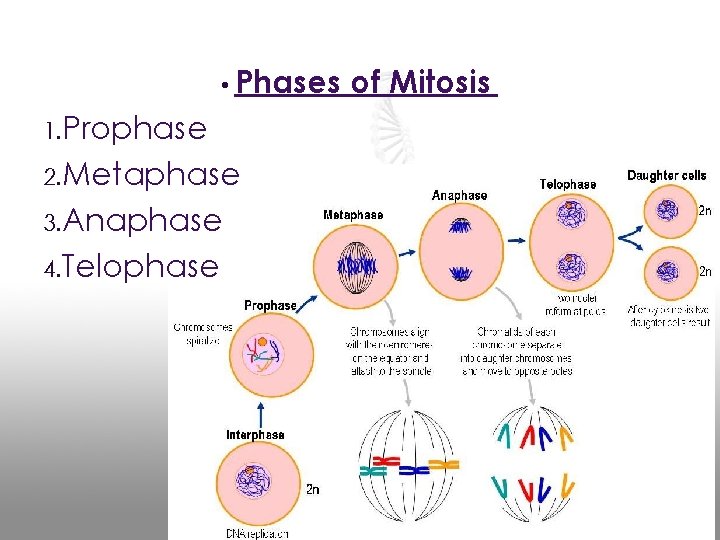
• Phases 1. Prophase 2. Metaphase 3. Anaphase 4. Telophase of Mitosis
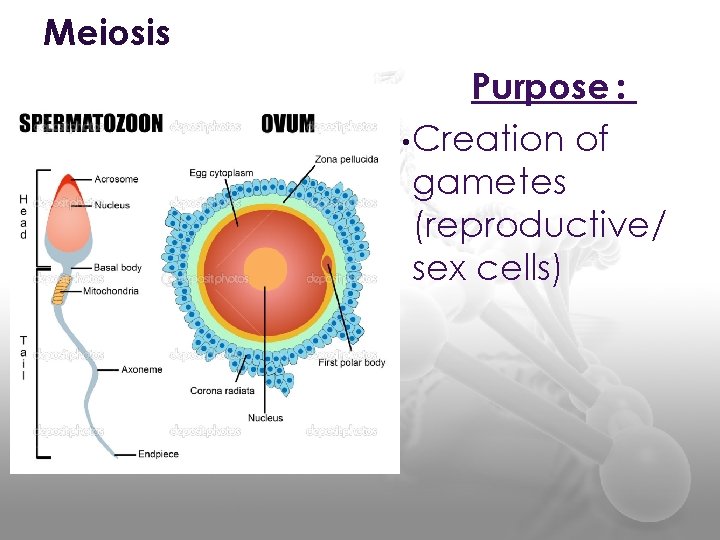
Meiosis Purpose : • Creation of gametes (reproductive/ sex cells)
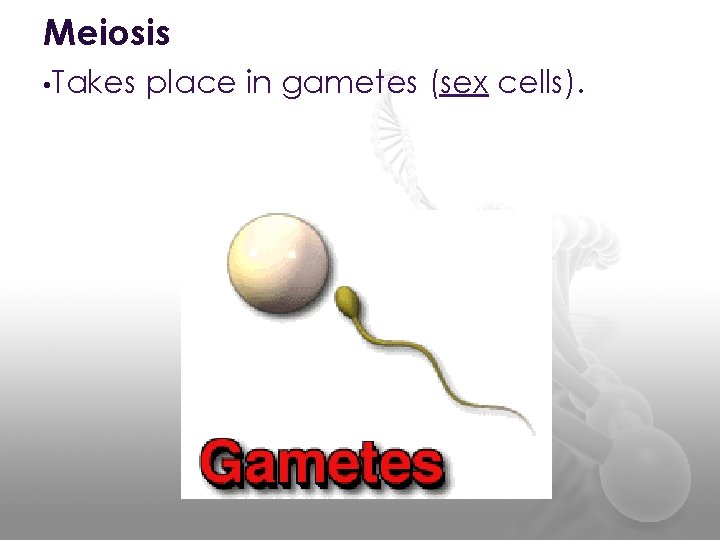
Meiosis • Takes place in gametes (sex cells).
Meiosis • Starts diploid (2 n) and ends haploid(n). • 2 cell divisions
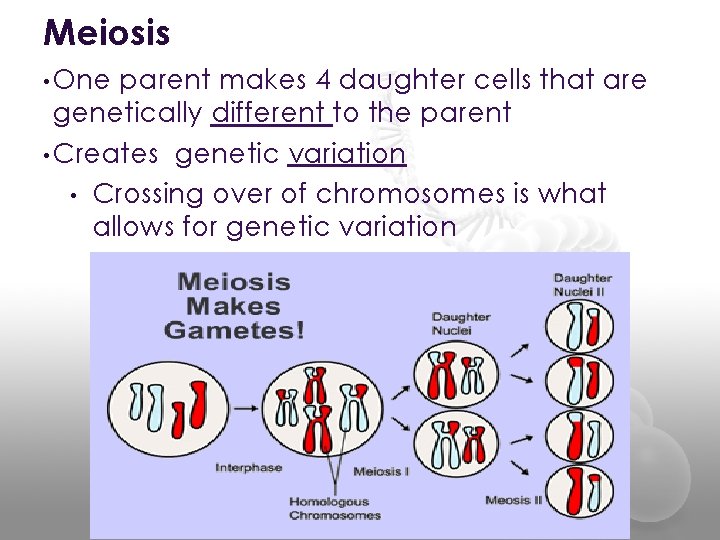
Meiosis • One parent makes 4 daughter cells that are genetically different to the parent • Creates genetic variation • Crossing over of chromosomes is what allows for genetic variation
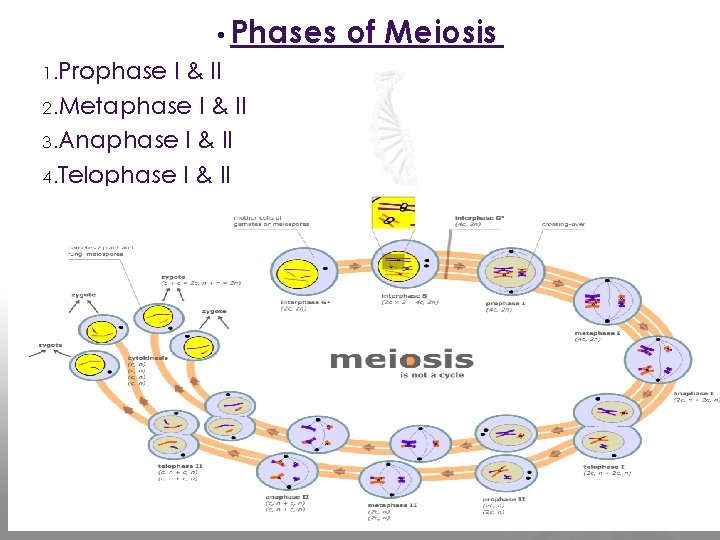
• Phases 1. Prophase I & II 2. Metaphase I & II 3. Anaphase I & II 4. Telophase I & II of Meiosis