
DIP GDM CLINICAL IMPORTANCE AND NEW WHO DIAGNOSTIC

- Slides: 15
DIP, GDM; CLINICAL IMPORTANCE AND NEW WHO DIAGNOSTIC CRITERIA FOR GDM PROFESSOR HENRY A. A. UGBOMA. 1
Definition: � Diabetes is defined as a syndrome of multiple aetiology ( inherited or acquired ) characterized by chronic hyperglycaemia with disturbances of carbohydrate, fat and protein metabolism due to deficient action of insulin on target tissues ( resulting from inadequate insulin secretion, insulin resistance or both) WHO, 1999. 2
� Diabetes mellitus in pregnancy (DIP) and Gestational Diabetes mellitus (GDM) is hyperglycaemia detected any time in pregnancy. 3
ADVERSE EFFECT: Maternal and perinatal 4
� MATERNAL: � • � • Birth trauma – Pelvic injuries, PPH, Fistulae Caesarean Section – complications – PPH, iatrogenic injuries Hypertensive disorders in pregnancy Pre- eclampsia Anaesthetic complications Sepsis Depression Maternal mortality 5
PERINATAL: � Macrosomia, Neonatal admission, Congenital abnormalities, LGA births, Birth trauma, Hyperbilirubinemia, Shoulder dystocia, Respiratory distress syndrome, SGA births, Neonatal hypoglycemia, Preterm births, Diabetes Later in Life and perinatal Mortality. 6
QUESTION: � What is glucose intolerance in pregnancy? � Dilemma � (a) � (b) � WHO, Large numbers of procedures Large numbers of glucose cut offs. 1999 attempted to answer this question with laid down criteria which was not diagnostic but prognostic. 7
REASONS: � • Not evidence based � • Presence of new data (1999 is over 10 years) � • Fasting blood sugar of ≥ 7 mmoll. L considered very high 8
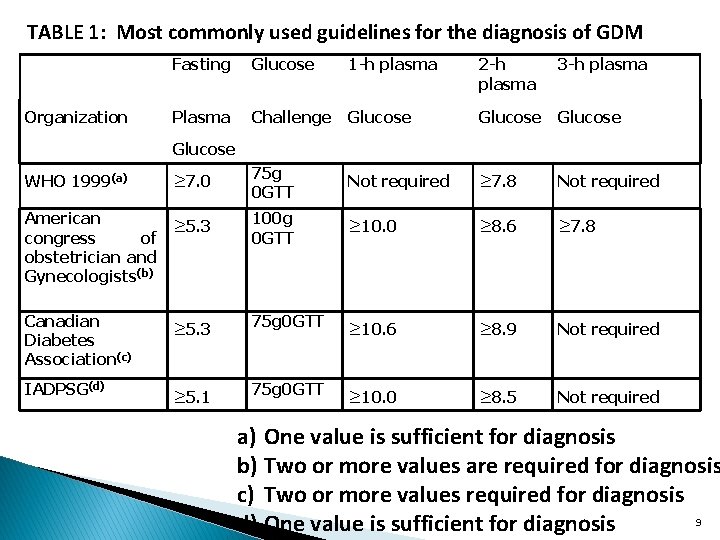
TABLE 1: Most commonly used guidelines for the diagnosis of GDM Fasting Glucose Organization Plasma Glucose 75 g ≥ 7. 0 0 GTT WHO 1999(a) 1 -h plasma Challenge Glucose 2 -h plasma 3 -h plasma Glucose Not required ≥ 7. 8 Not required American ≥ 5. 3 congress of obstetrician and Gynecologists(b) 100 g 0 GTT ≥ 10. 0 ≥ 8. 6 ≥ 7. 8 Canadian Diabetes Association(c) ≥ 5. 3 75 g 0 GTT ≥ 10. 6 ≥ 8. 9 Not required IADPSG(d) ≥ 5. 1 75 g 0 GTT ≥ 10. 0 ≥ 8. 5 Not required a) One value is sufficient for diagnosis b) Two or more values are required for diagnosis c) Two or more values required for diagnosis 9 d) One value is sufficient for diagnosis
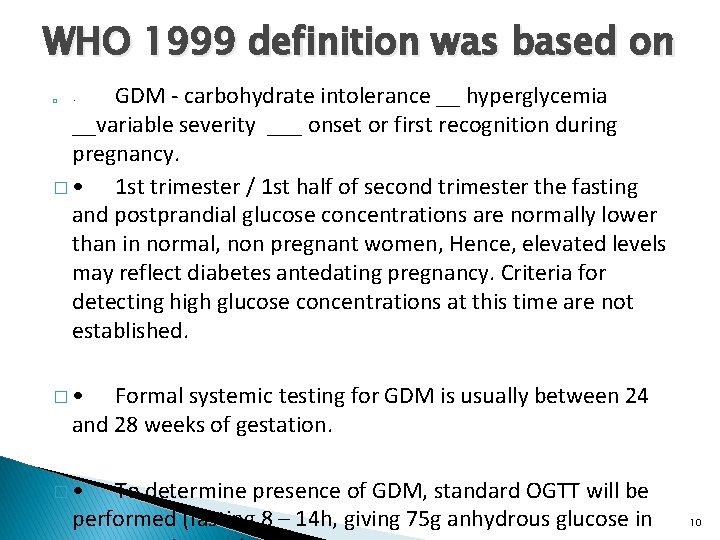
WHO 1999 definition was based on GDM - carbohydrate intolerance __ hyperglycemia __variable severity ___ onset or first recognition during pregnancy. � • 1 st trimester / 1 st half of second trimester the fasting and postprandial glucose concentrations are normally lower than in normal, non pregnant women, Hence, elevated levels may reflect diabetes antedating pregnancy. Criteria for detecting high glucose concentrations at this time are not established. � • � • Formal systemic testing for GDM is usually between 24 and 28 weeks of gestation. � • To determine presence of GDM, standard OGTT will be performed (fasting 8 – 14 h, giving 75 g anhydrous glucose in 10
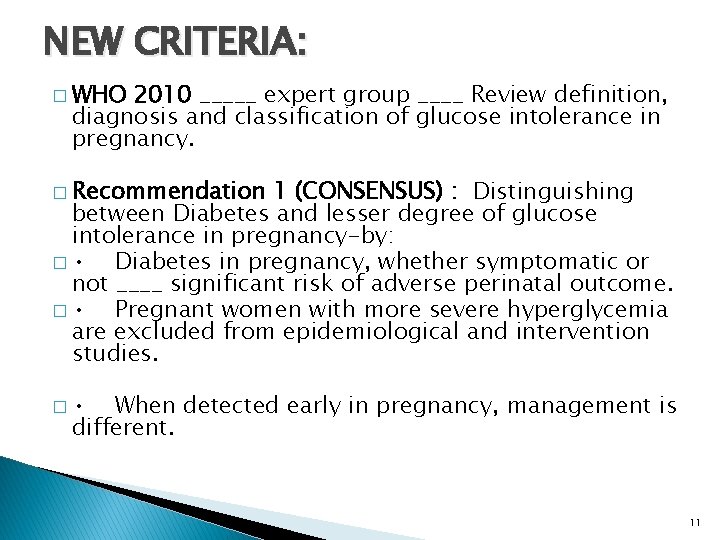
NEW CRITERIA: � WHO 2010 _____ expert group ____ Review definition, diagnosis and classification of glucose intolerance in pregnancy. � Recommendation 1 (CONSENSUS) : Distinguishing between Diabetes and lesser degree of glucose intolerance in pregnancy-by: � • Diabetes in pregnancy, whether symptomatic or not ____ significant risk of adverse perinatal outcome. � • Pregnant women with more severe hyperglycemia are excluded from epidemiological and intervention studies. � • When detected early in pregnancy, management is different. 11
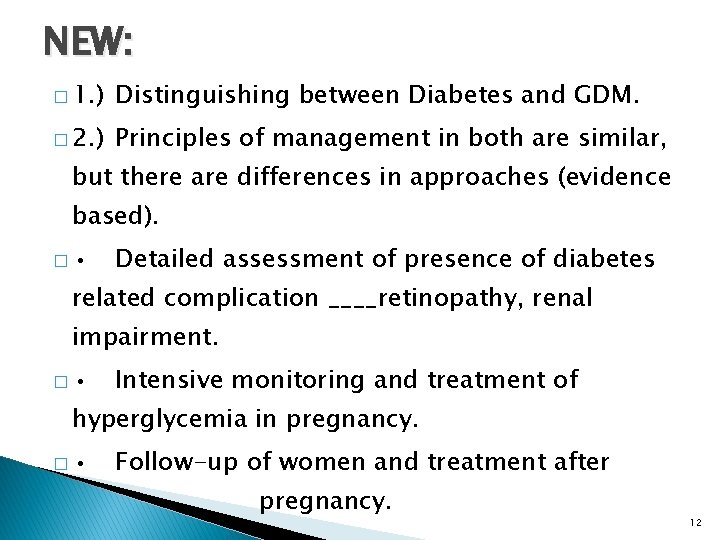
NEW: � 1. ) Distinguishing between Diabetes and GDM. � 2. ) Principles of management in both are similar, but there are differences in approaches (evidence based). � • Detailed assessment of presence of diabetes related complication ____retinopathy, renal impairment. � • Intensive monitoring and treatment of hyperglycemia in pregnancy. � • Follow-up of women and treatment after pregnancy. 12
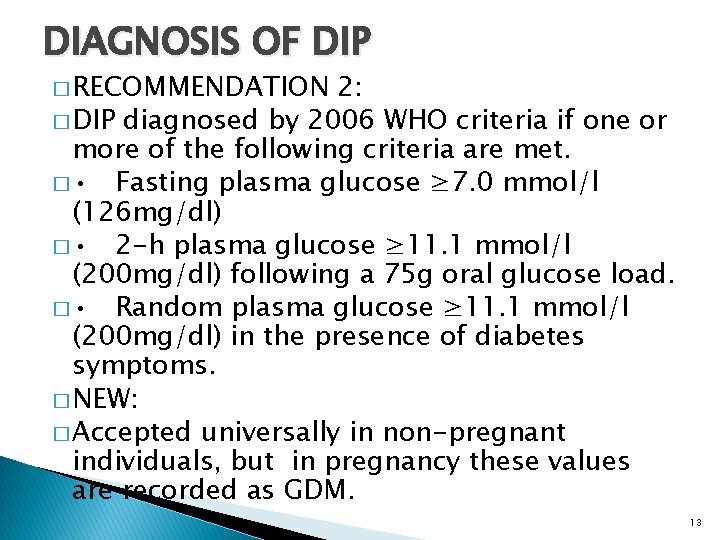
DIAGNOSIS OF DIP � RECOMMENDATION 2: � DIP diagnosed by 2006 WHO criteria if one or more of the following criteria are met. � • Fasting plasma glucose ≥ 7. 0 mmol/l (126 mg/dl) � • 2 -h plasma glucose ≥ 11. 1 mmol/l (200 mg/dl) following a 75 g oral glucose load. � • Random plasma glucose ≥ 11. 1 mmol/l (200 mg/dl) in the presence of diabetes symptoms. � NEW: � Accepted universally in non-pregnant individuals, but in pregnancy these values are recorded as GDM. 13
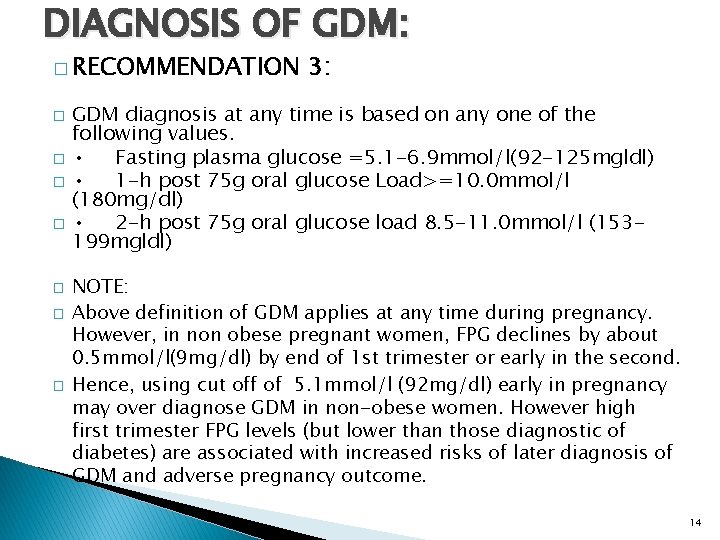
DIAGNOSIS OF GDM: � RECOMMENDATION � � � � 3: GDM diagnosis at any time is based on any one of the following values. • Fasting plasma glucose =5. 1 -6. 9 mmol/l(92 -125 mgldl) • 1 -h post 75 g oral glucose Load>=10. 0 mmol/l (180 mg/dl) • 2 -h post 75 g oral glucose load 8. 5 -11. 0 mmol/l (153199 mgldl) NOTE: Above definition of GDM applies at any time during pregnancy. However, in non obese pregnant women, FPG declines by about 0. 5 mmol/l(9 mg/dl) by end of 1 st trimester or early in the second. Hence, using cut off of 5. 1 mmol/l (92 mg/dl) early in pregnancy may over diagnose GDM in non-obese women. However high first trimester FPG levels (but lower than those diagnostic of diabetes) are associated with increased risks of later diagnosis of GDM and adverse pregnancy outcome. 14
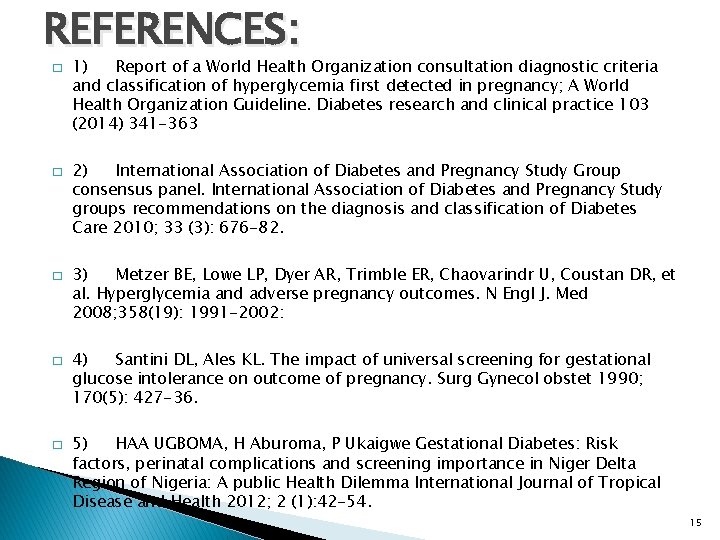
REFERENCES: � � � 1) Report of a World Health Organization consultation diagnostic criteria and classification of hyperglycemia first detected in pregnancy; A World Health Organization Guideline. Diabetes research and clinical practice 103 (2014) 341 -363 2) International Association of Diabetes and Pregnancy Study Group consensus panel. International Association of Diabetes and Pregnancy Study groups recommendations on the diagnosis and classification of Diabetes Care 2010; 33 (3): 676 -82. 3) Metzer BE, Lowe LP, Dyer AR, Trimble ER, Chaovarindr U, Coustan DR, et al. Hyperglycemia and adverse pregnancy outcomes. N Engl J. Med 2008; 358(19): 1991 -2002: 4) Santini DL, Ales KL. The impact of universal screening for gestational glucose intolerance on outcome of pregnancy. Surg Gynecol obstet 1990; 170(5): 427 -36. 5) HAA UGBOMA, H Aburoma, P Ukaigwe Gestational Diabetes: Risk factors, perinatal complications and screening importance in Niger Delta Region of Nigeria: A public Health Dilemma International Journal of Tropical Disease and Health 2012; 2 (1): 42 -54. 15