
Dioctophyma renale Dr AJIT KUMAR Department of Veterinary

- Slides: 13
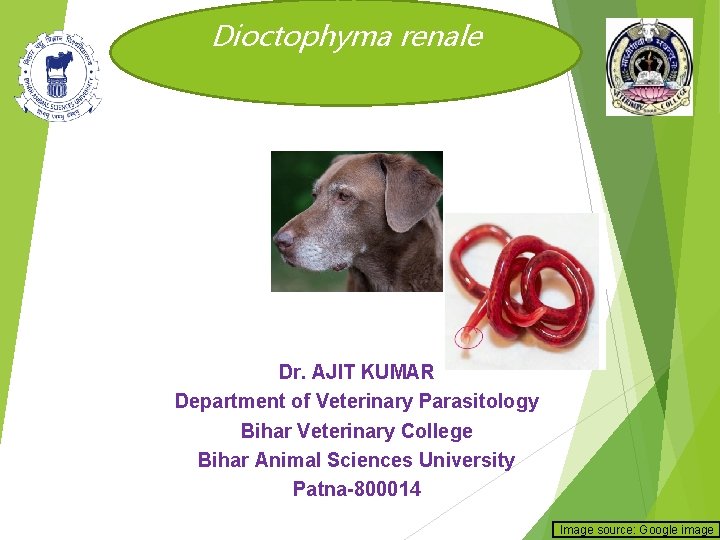
Dioctophyma renale Dr. AJIT KUMAR Department of Veterinary Parasitology Bihar Veterinary College Bihar Animal Sciences University Patna-800014 Image source: Google image
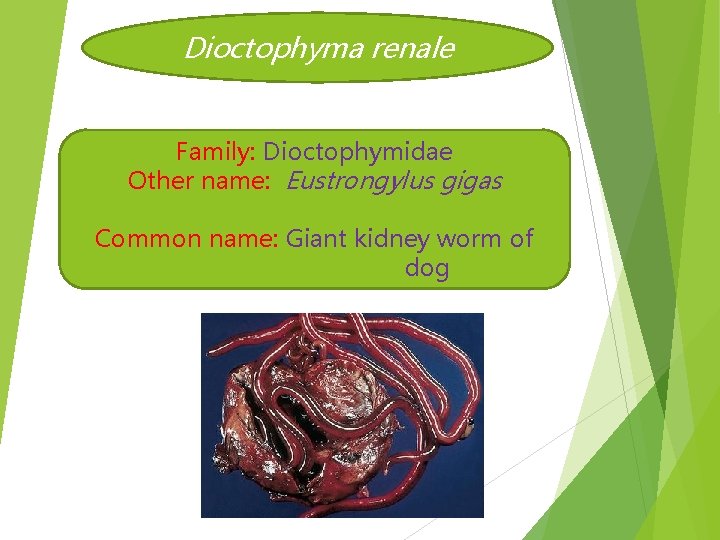
Dioctophyma renale Family: Dioctophymidae Other name: Eustrongylus gigas Common name: Giant kidney worm of dog
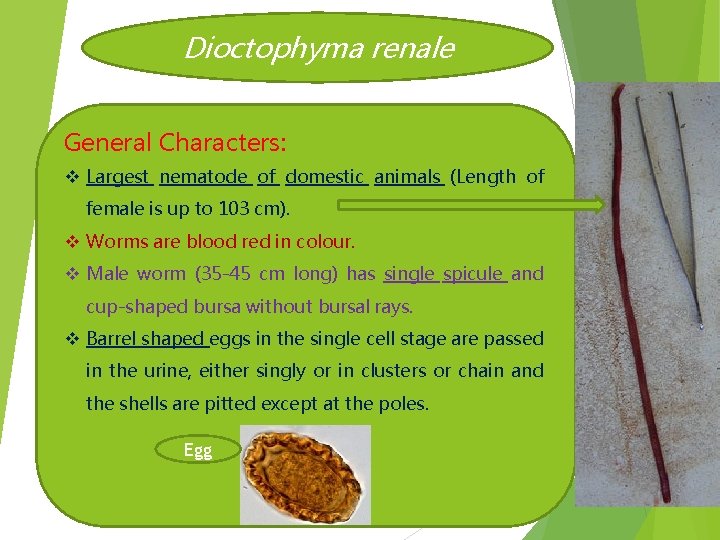
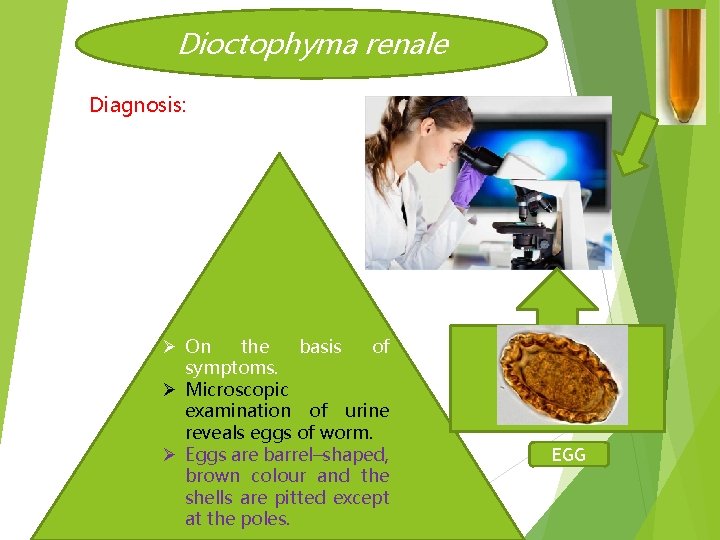
Dioctophyma renale General Characters: v Largest nematode of domestic animals (Length of female is up to 103 cm). v Worms are blood red in colour. v Male worm (35 -45 cm long) has single spicule and cup-shaped bursa without bursal rays. v Barrel shaped eggs in the single cell stage are passed in the urine, either singly or in clusters or chain and the shells are pitted except at the poles. Egg
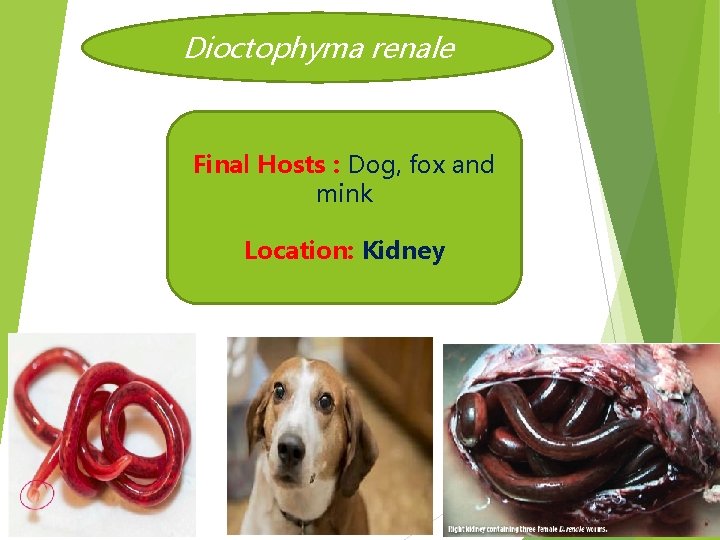
Dioctophyma renale Final Hosts : Dog, fox and mink Location: Kidney
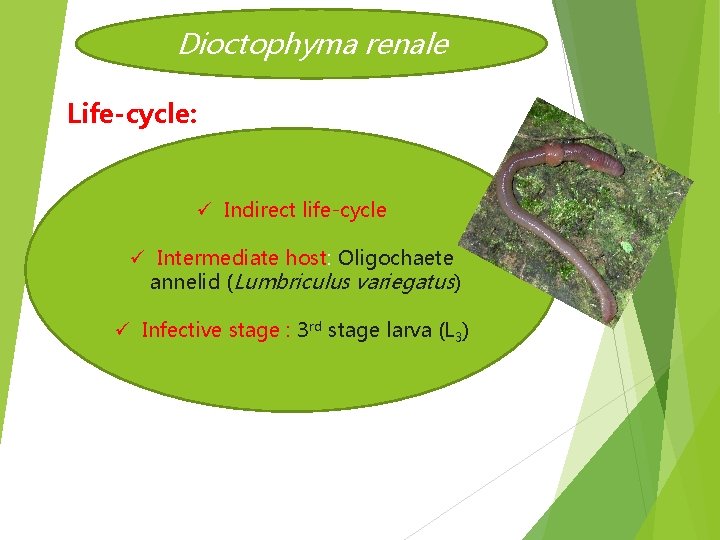
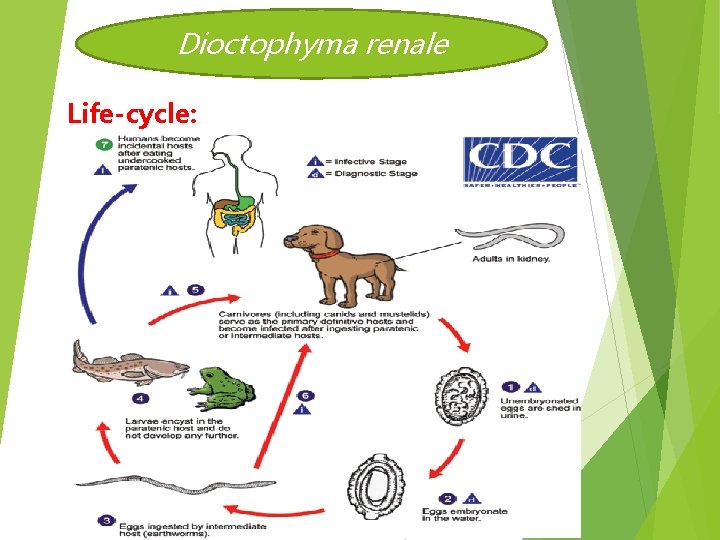
Dioctophyma renale Life-cycle: ü Indirect life-cycle ü Intermediate host: Oligochaete annelid (Lumbriculus variegatus) ü Infective stage : 3 rd stage larva (L 3)
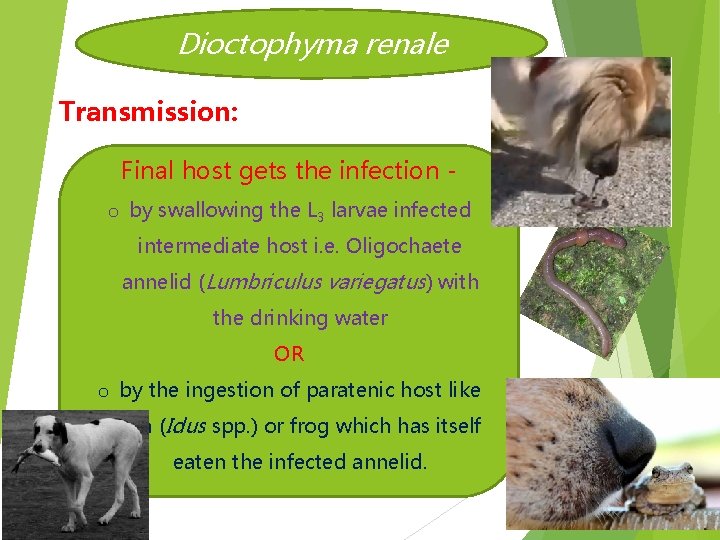
Dioctophyma renale Transmission: Final host gets the infection o by swallowing the L 3 larvae infected intermediate host i. e. Oligochaete annelid (Lumbriculus variegatus) with the drinking water OR o by the ingestion of paratenic host like fish (Idus spp. ) or frog which has itself eaten the infected annelid.
Dioctophyma renale Life-cycle:
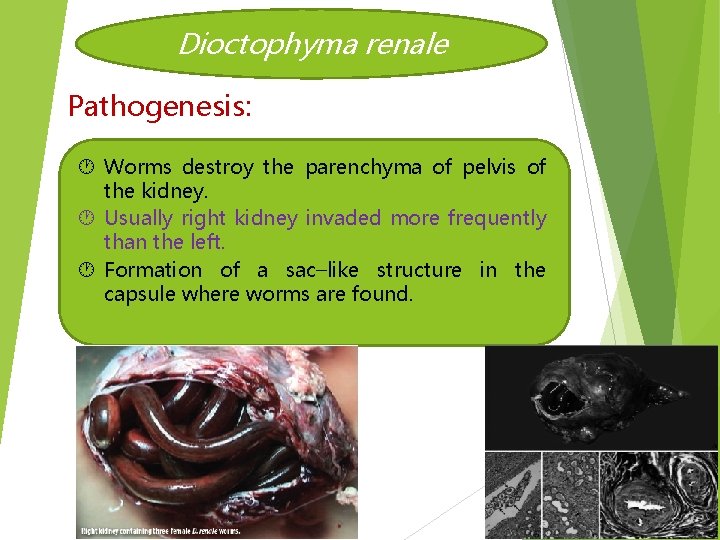
Dioctophyma renale Pathogenesis: Worms destroy the parenchyma of pelvis of the kidney. Usually right kidney invaded more frequently than the left. Formation of a sac–like structure in the capsule where worms are found.
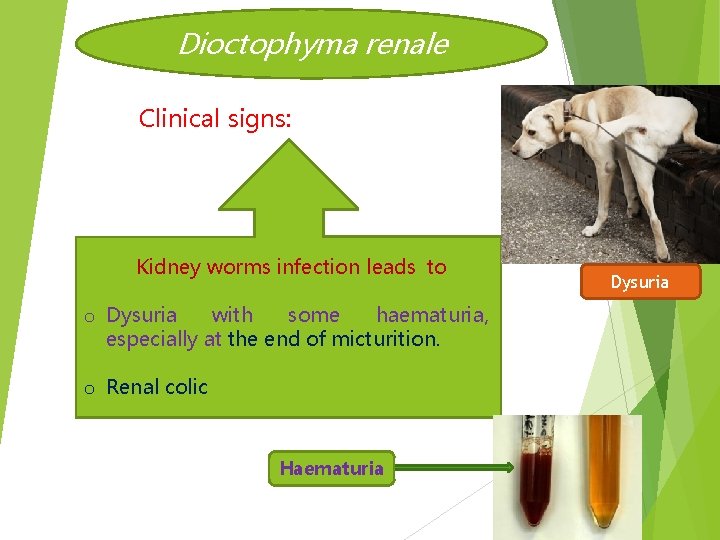
Dioctophyma renale Clinical signs: Kidney worms infection leads to o Dysuria with some haematuria, especially at the end of micturition. o Renal colic Haematuria Dysuria
Dioctophyma renale Diagnosis: Ø On the basis of symptoms. Ø Microscopic examination of urine reveals eggs of worm. Ø Eggs are barrel–shaped, brown colour and the shells are pitted except at the poles. EGG
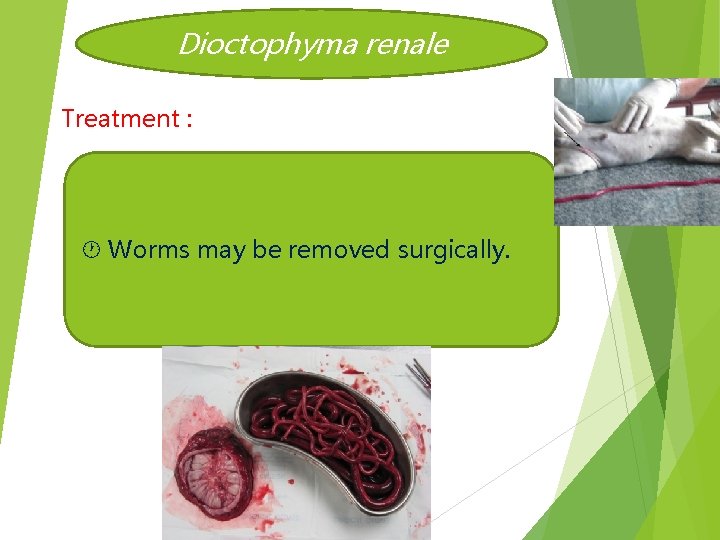
Dioctophyma renale Treatment : Worms may be removed surgically.
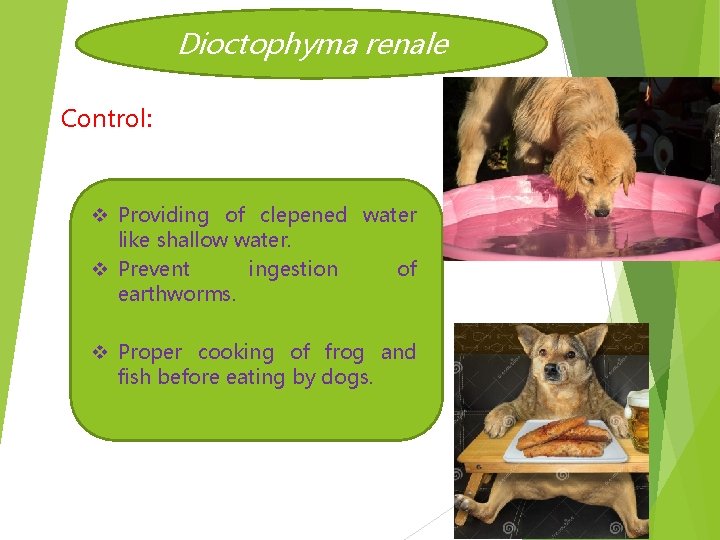
Dioctophyma renale Control: v Providing of clepened water like shallow water. v Prevent ingestion of earthworms. v Proper cooking of frog and fish before eating by dogs.
THANK YOU