
Dinosaur Evolution How do we know when dinosaurs
- Slides: 11
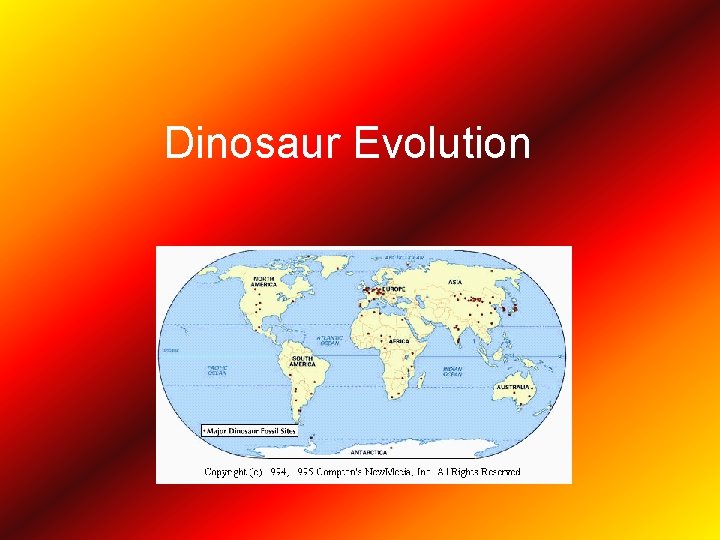
Dinosaur Evolution
How do we know when dinosaurs lived? • Layers of sedimentary rock & absolute dating – Late Triassic (during Mesozoic) through end of the Cretaceous – Also see birds & flowers for the first time during the Mesozoic (you know this!)
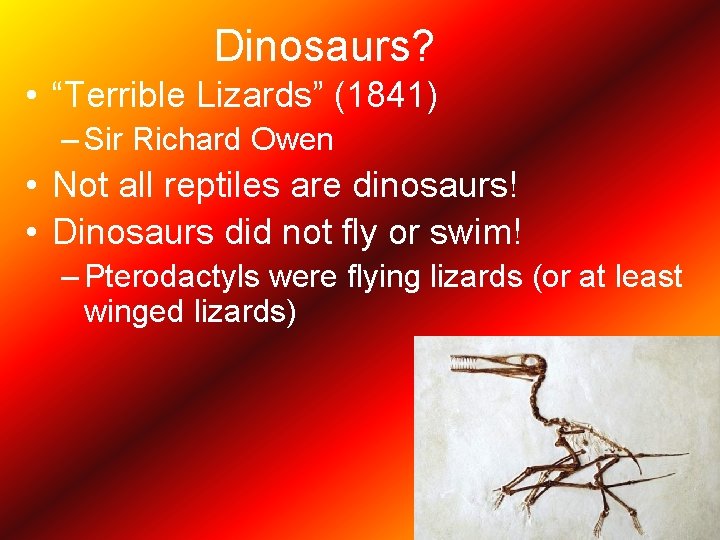
Dinosaurs? • “Terrible Lizards” (1841) – Sir Richard Owen • Not all reptiles are dinosaurs! • Dinosaurs did not fly or swim! – Pterodactyls were flying lizards (or at least winged lizards)
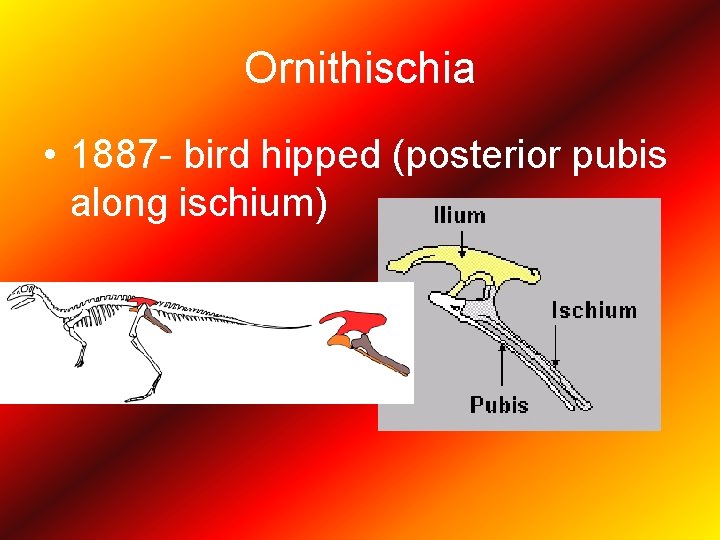
Ornithischia • 1887 - bird hipped (posterior pubis along ischium)
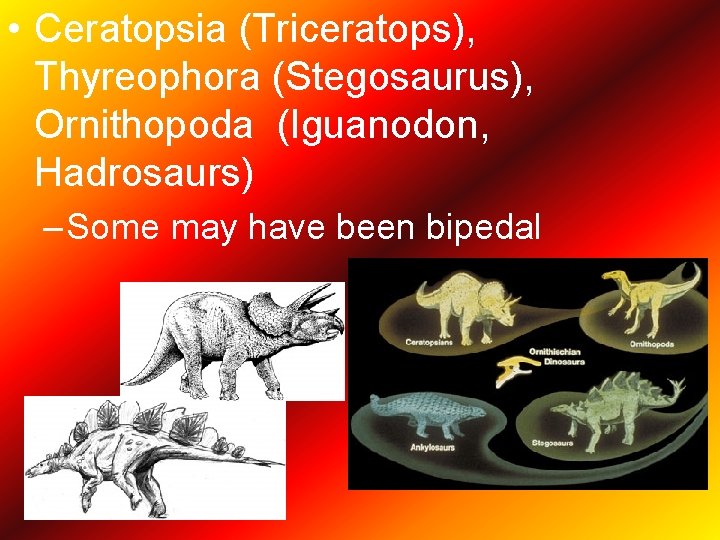
• Ceratopsia (Triceratops), Thyreophora (Stegosaurus), Ornithopoda (Iguanodon, Hadrosaurs) – Some may have been bipedal
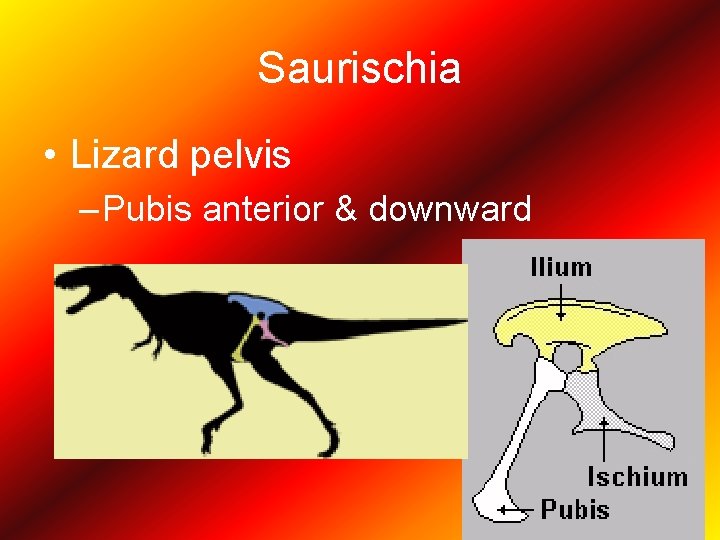
Saurischia • Lizard pelvis – Pubis anterior & downward
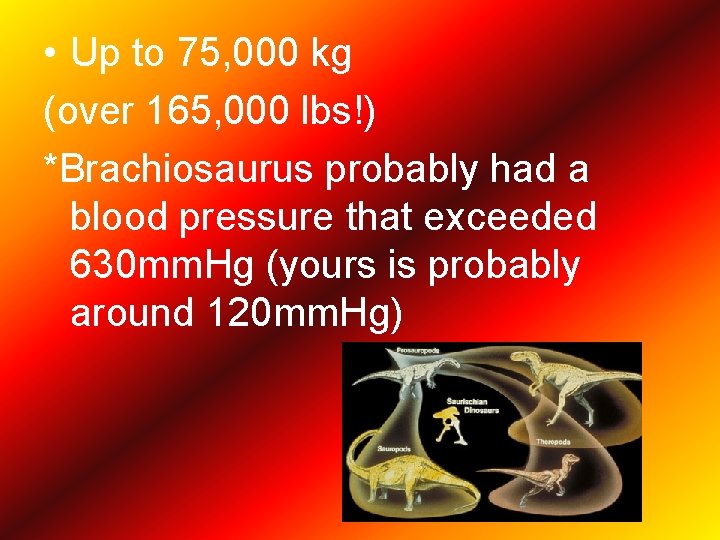
• Up to 75, 000 kg (over 165, 000 lbs!) *Brachiosaurus probably had a blood pressure that exceeded 630 mm. Hg (yours is probably around 120 mm. Hg)
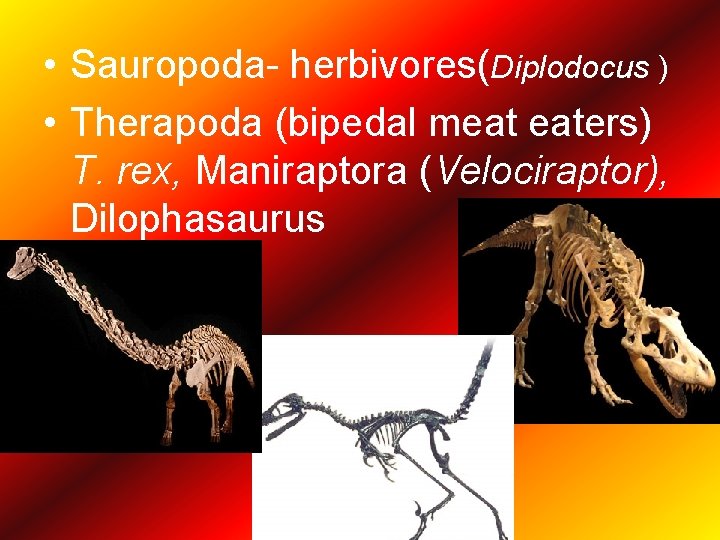
• Sauropoda- herbivores(Diplodocus ) • Therapoda (bipedal meat eaters) T. rex, Maniraptora (Velociraptor), Dilophasaurus
Good bye… • Cretaceous-Tertiary Extinction (K/T Extinction) – Active plate movement, mountainbuilding, volcanism – Lowering of global sea level – Gentle global cooling – Asteroid impact
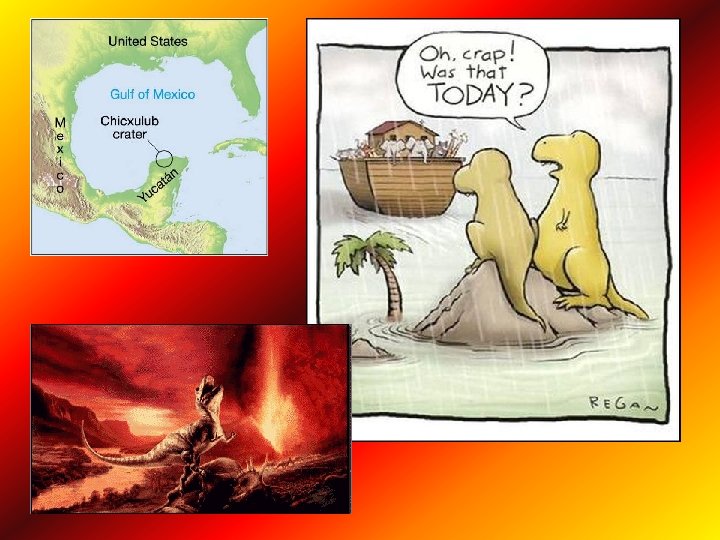
K/T Extinction • Chicxulub (devil’s tail) crater- Gulf of Mexico – Block sunlight – Short-term global warming – Global wildfires – Acid rain – Long term global cooling