
Dimi Culcer UNSW Outline of this lecture Spinorbit
Dimi Culcer UNSW
Outline of this lecture •
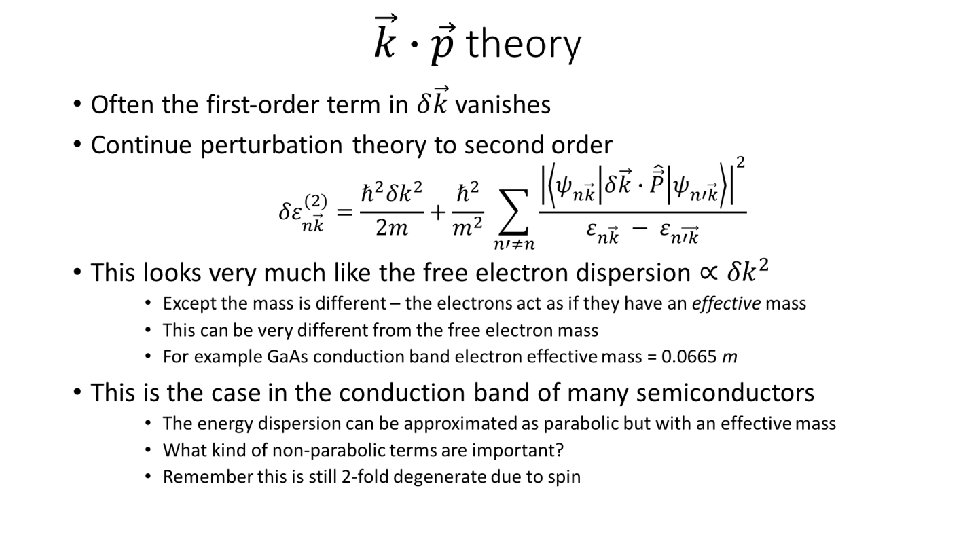
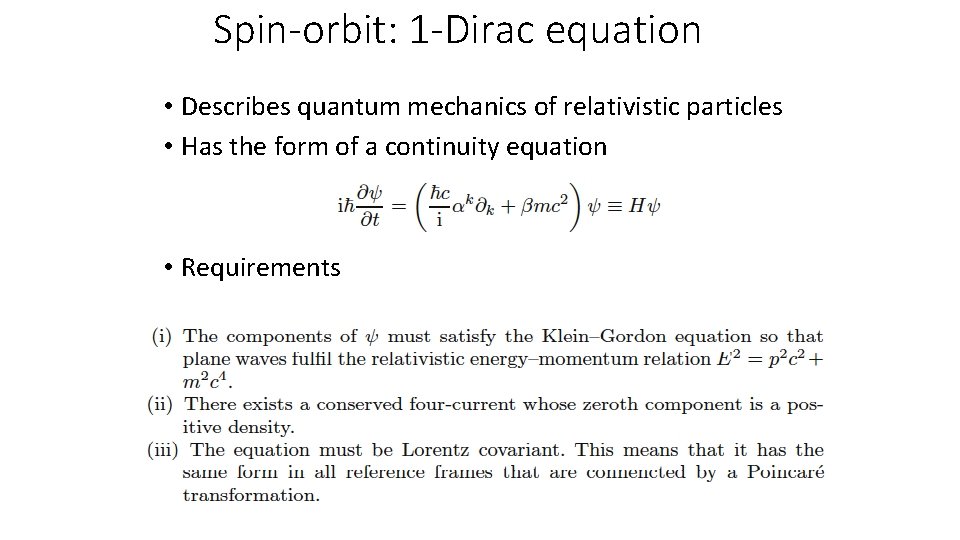
Spin-orbit: 1 -Dirac equation • Describes quantum mechanics of relativistic particles • Has the form of a continuity equation • Requirements
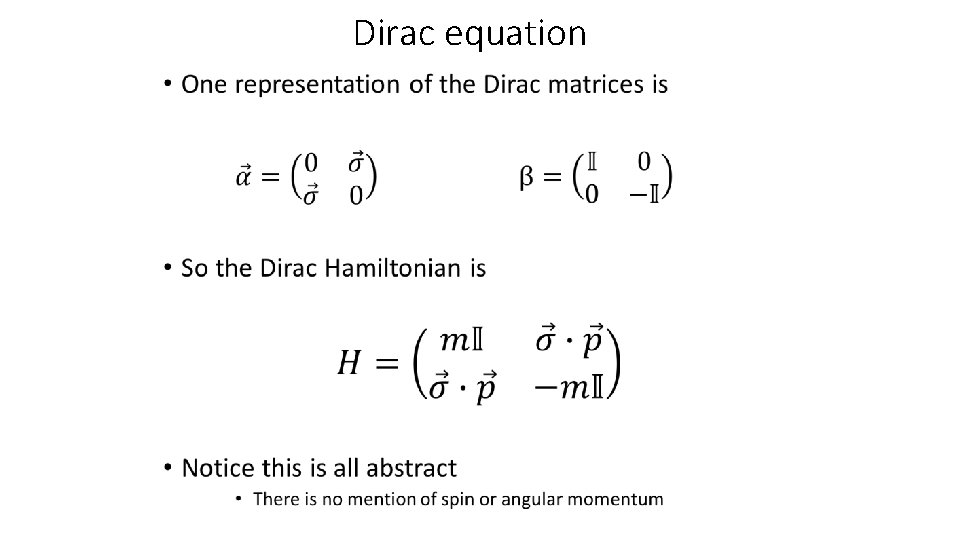
Dirac equation •
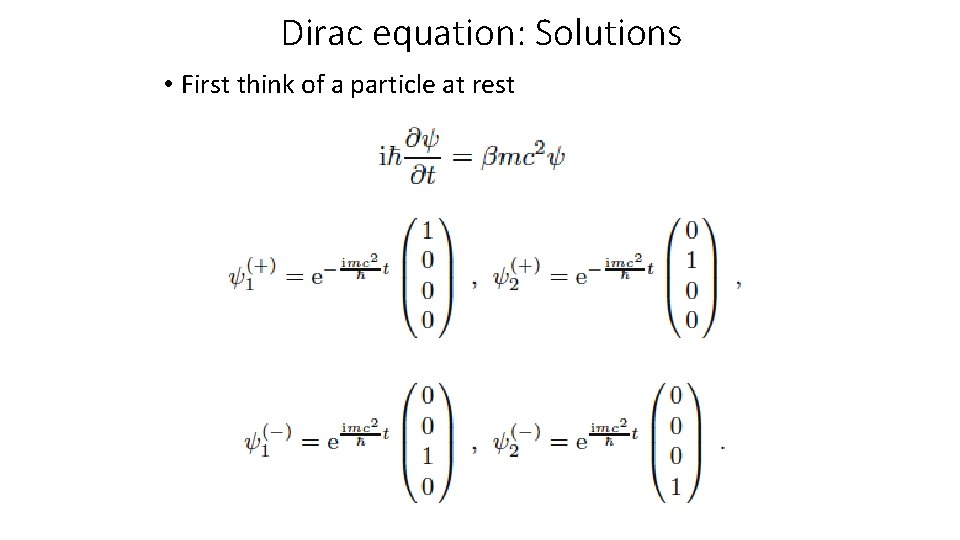
Dirac equation: Solutions • First think of a particle at rest
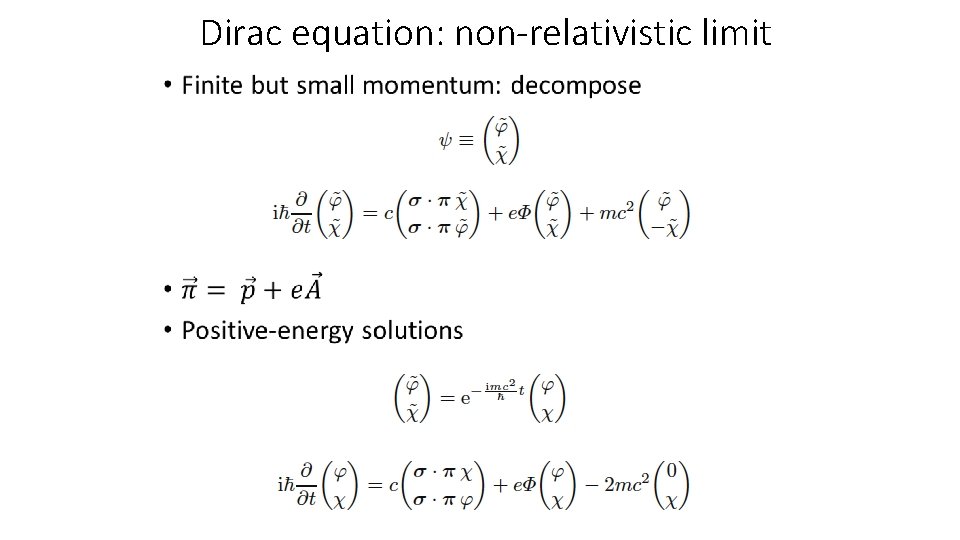
Dirac equation: non-relativistic limit •
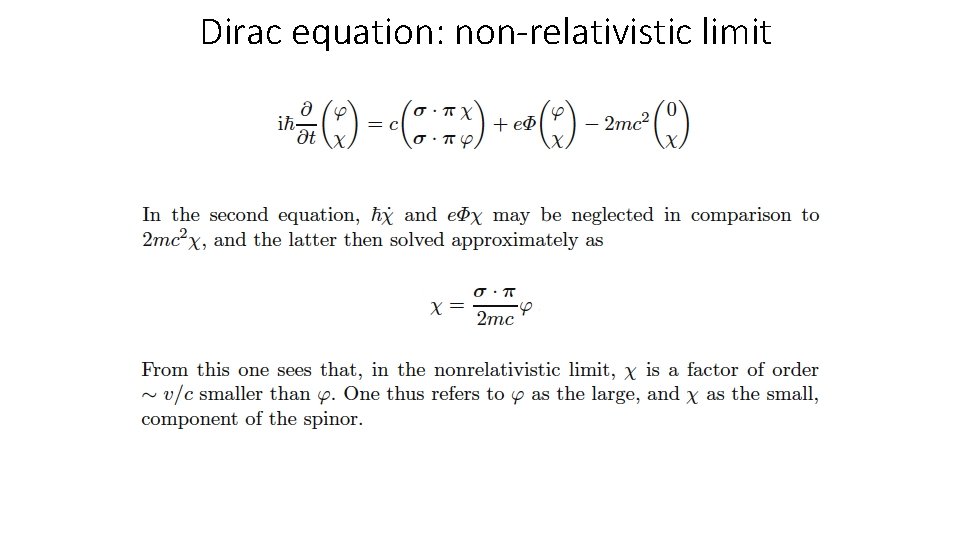
Dirac equation: non-relativistic limit
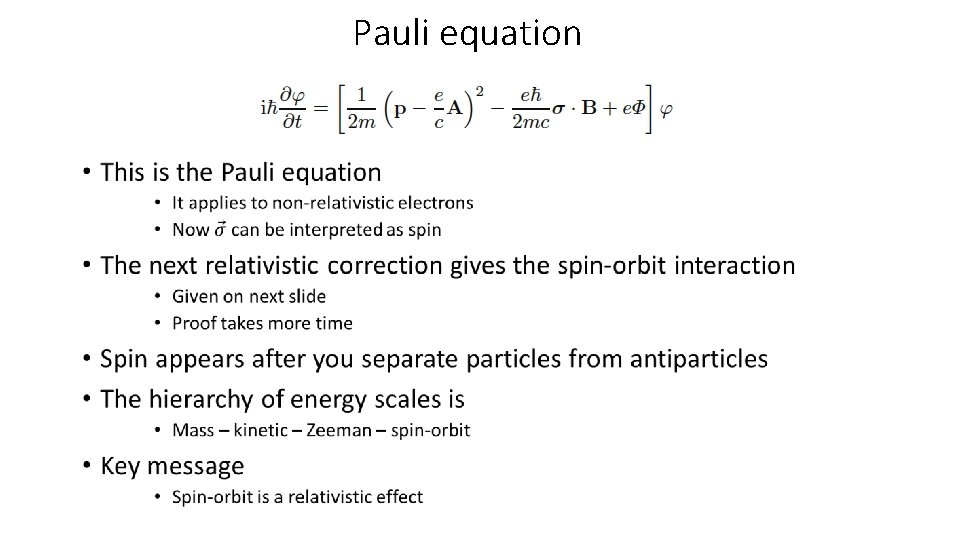
Pauli equation •
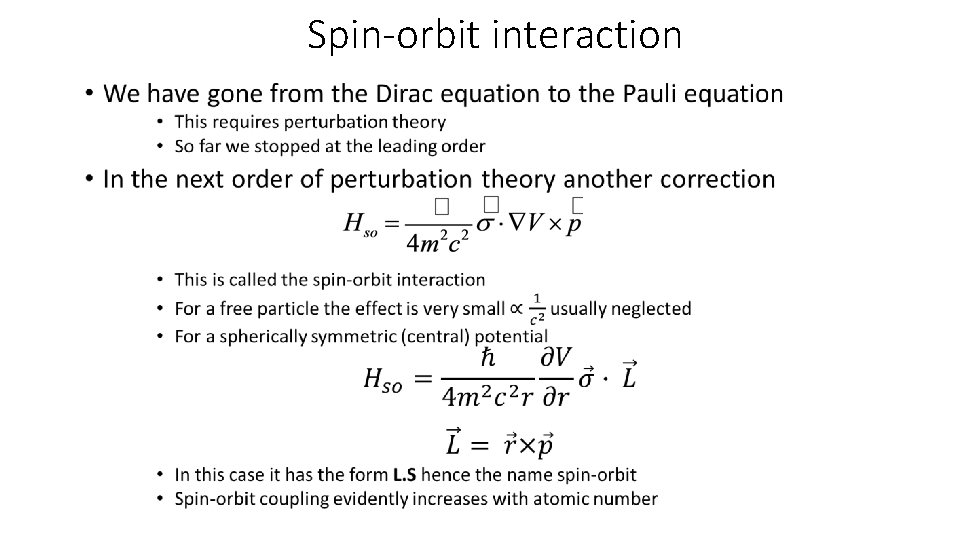
Spin-orbit interaction •
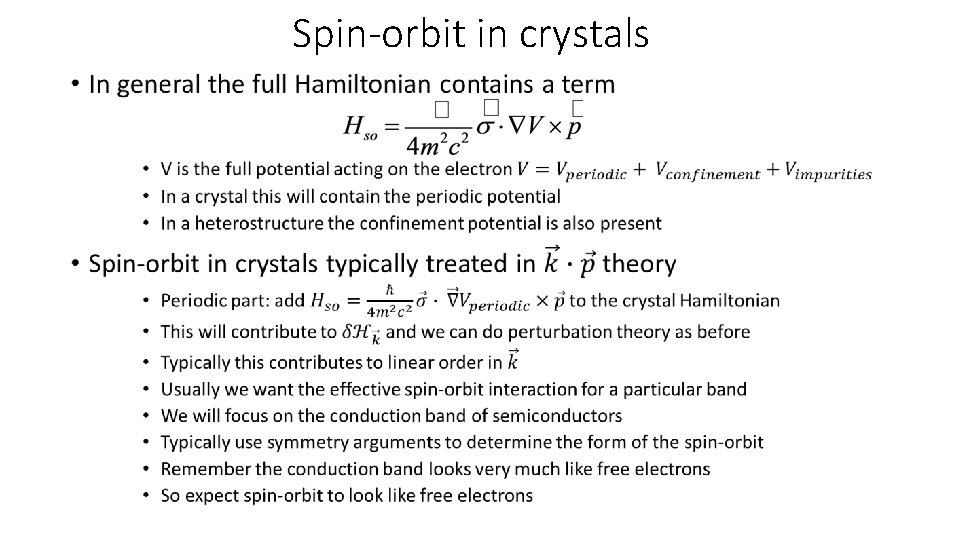
Spin-orbit in crystals •
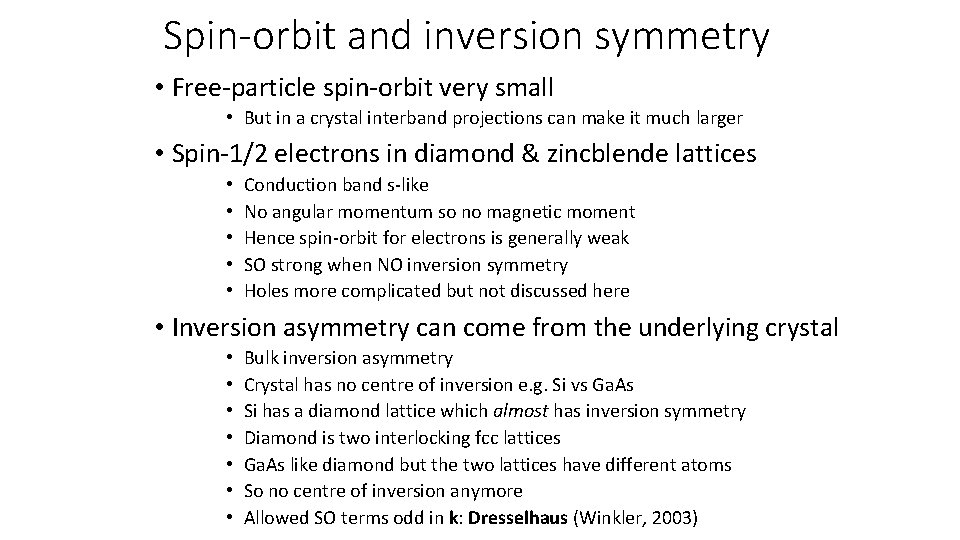
Spin-orbit and inversion symmetry • Free-particle spin-orbit very small • But in a crystal interband projections can make it much larger • Spin-1/2 electrons in diamond & zincblende lattices • • • Conduction band s-like No angular momentum so no magnetic moment Hence spin-orbit for electrons is generally weak SO strong when NO inversion symmetry Holes more complicated but not discussed here • Inversion asymmetry can come from the underlying crystal • • Bulk inversion asymmetry Crystal has no centre of inversion e. g. Si vs Ga. As Si has a diamond lattice which almost has inversion symmetry Diamond is two interlocking fcc lattices Ga. As like diamond but the two lattices have different atoms So no centre of inversion anymore Allowed SO terms odd in k: Dresselhaus (Winkler, 2003)
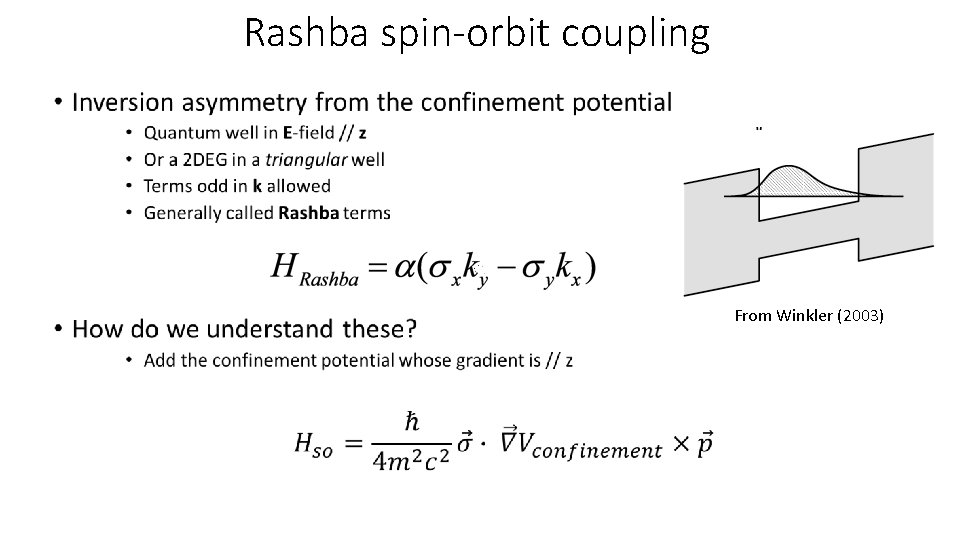
Rashba spin-orbit coupling • From Winkler (2003)
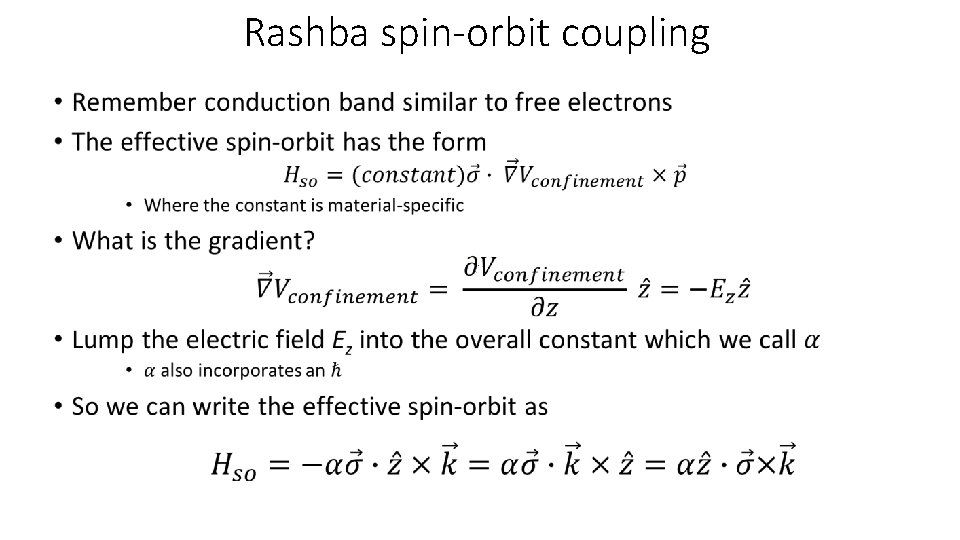
Rashba spin-orbit coupling •
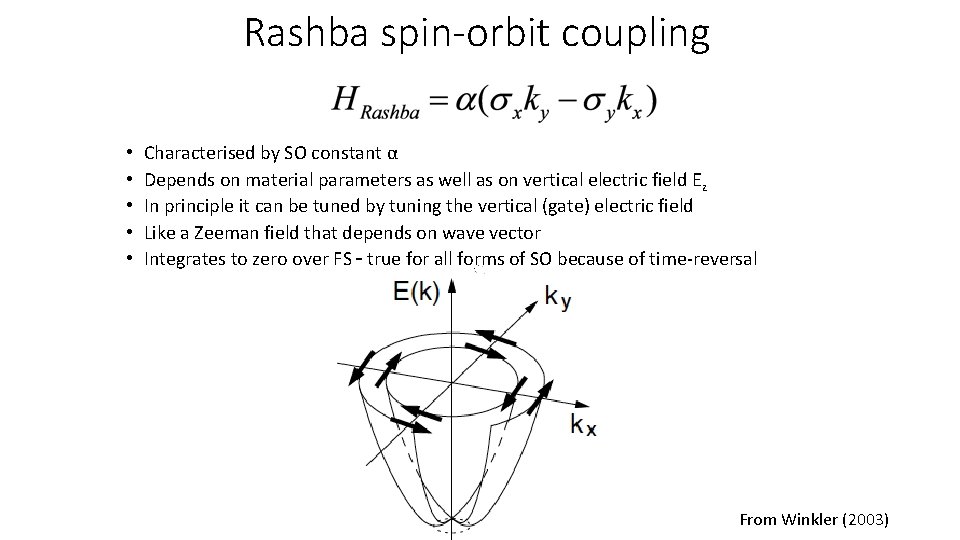
Rashba spin-orbit coupling • • • Characterised by SO constant α Depends on material parameters as well as on vertical electric field Ez In principle it can be tuned by tuning the vertical (gate) electric field Like a Zeeman field that depends on wave vector Integrates to zero over FS – true for all forms of SO because of time-reversal From Winkler (2003)
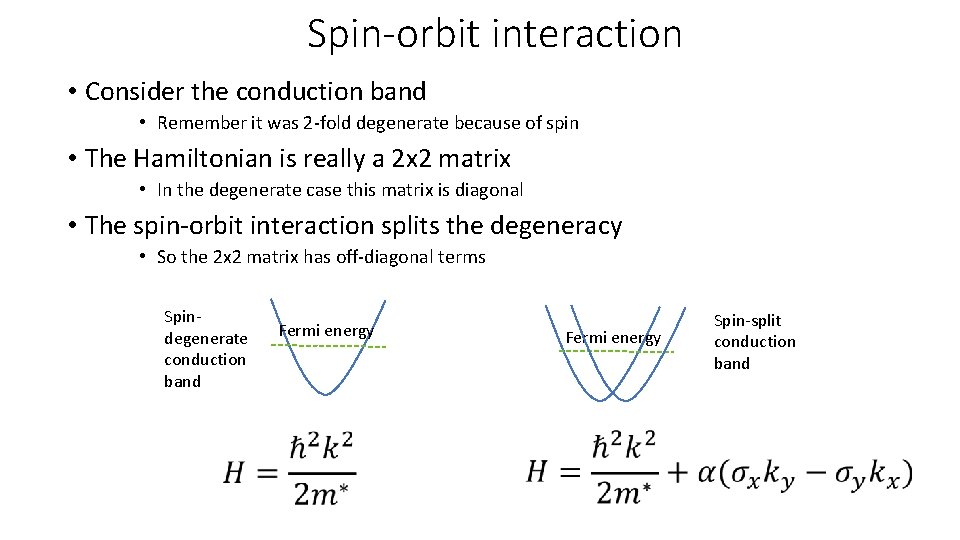
Spin-orbit interaction • Consider the conduction band • Remember it was 2 -fold degenerate because of spin • The Hamiltonian is really a 2 x 2 matrix • In the degenerate case this matrix is diagonal • The spin-orbit interaction splits the degeneracy • So the 2 x 2 matrix has off-diagonal terms Spindegenerate conduction band Fermi energy Spin-split conduction band
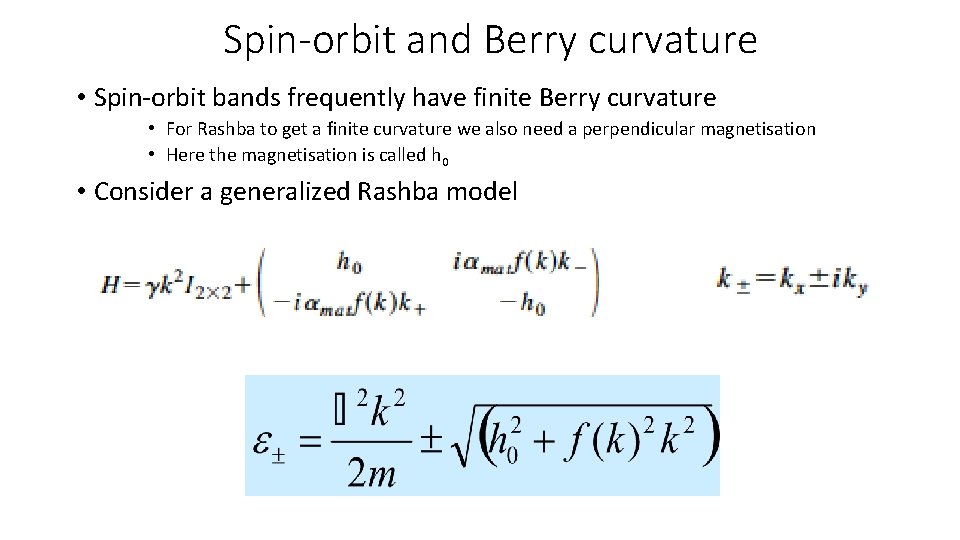
Spin-orbit and Berry curvature • Spin-orbit bands frequently have finite Berry curvature • For Rashba to get a finite curvature we also need a perpendicular magnetisation • Here the magnetisation is called h 0 • Consider a generalized Rashba model
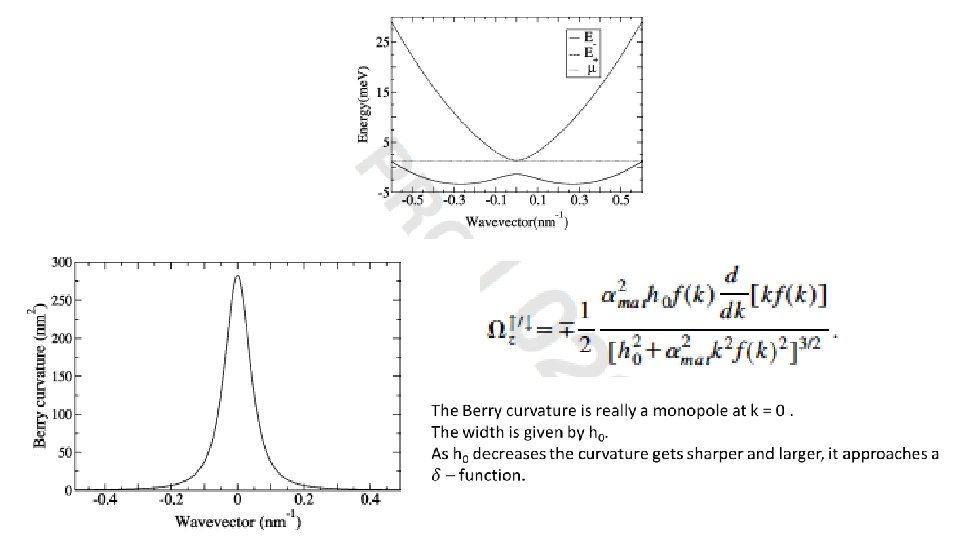
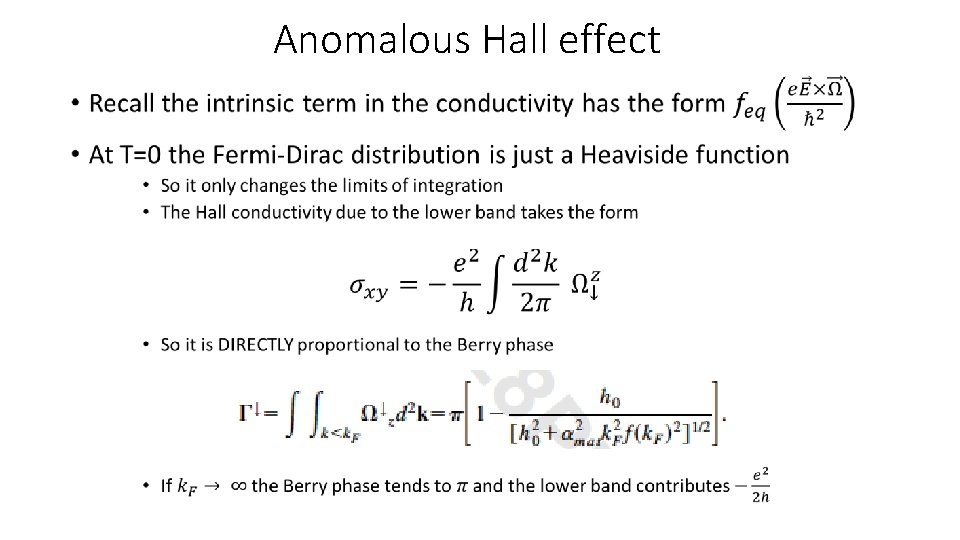
Anomalous Hall effect •
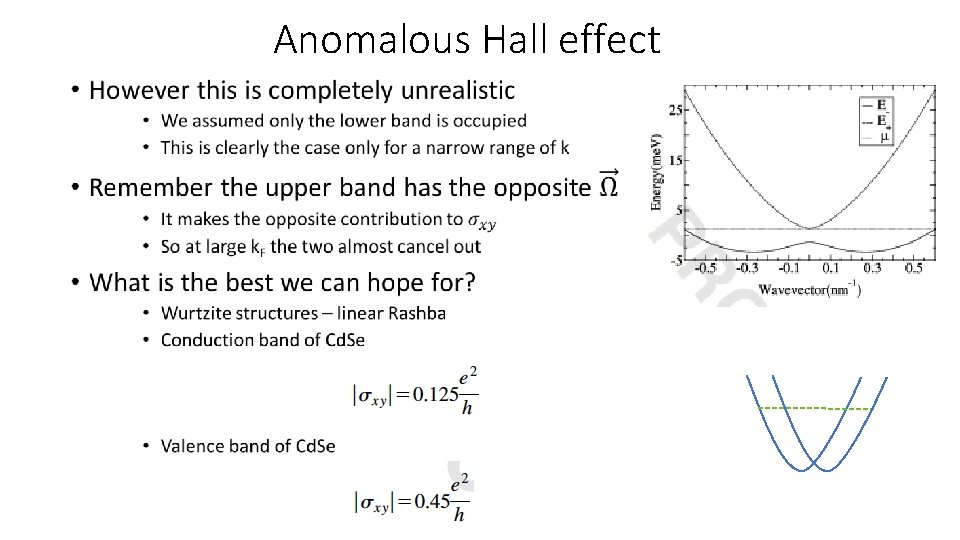
Anomalous Hall effect •
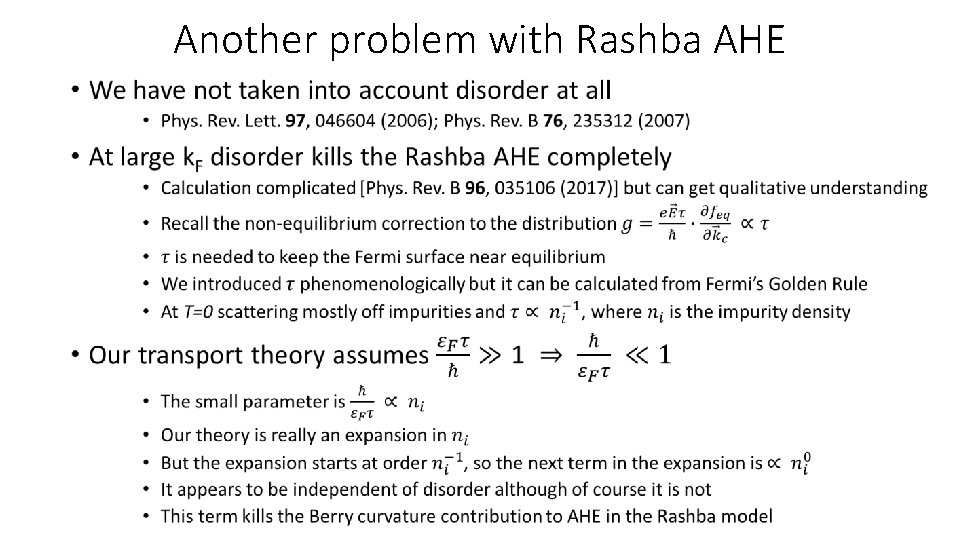
Another problem with Rashba AHE •
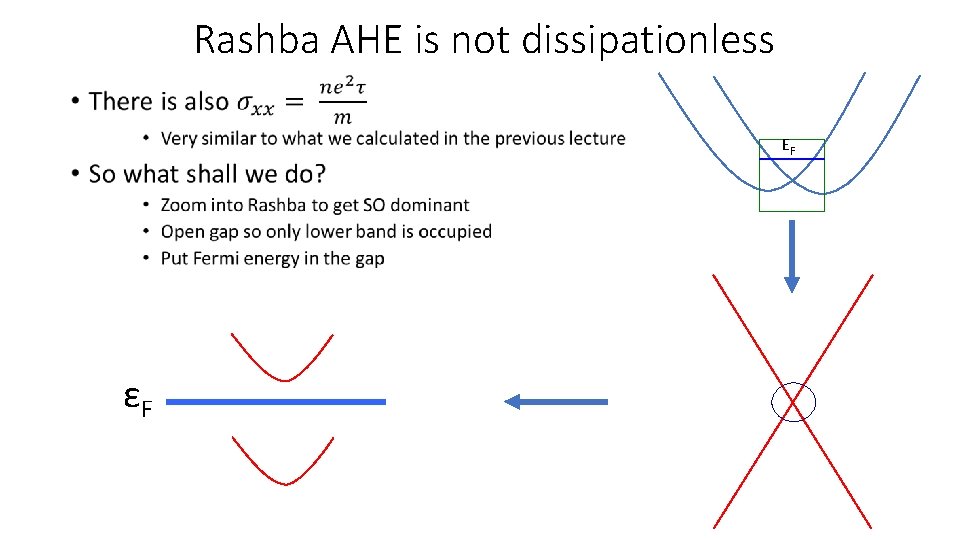
Rashba AHE is not dissipationless • EF ε F
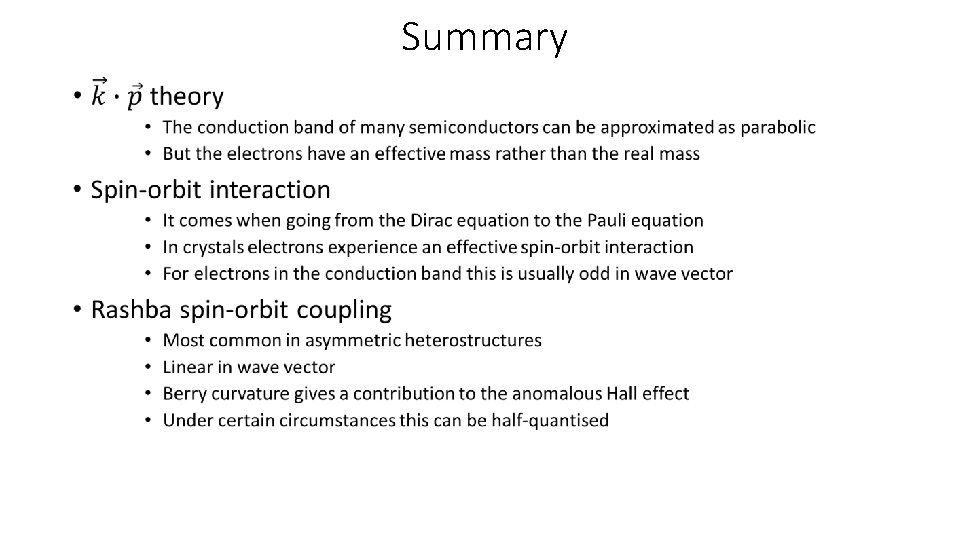
Summary •
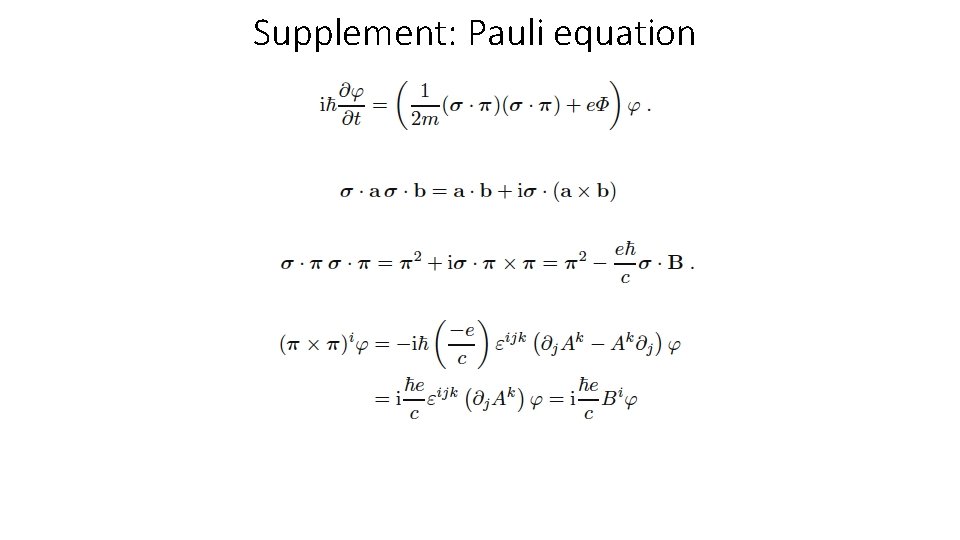
Supplement: Pauli equation
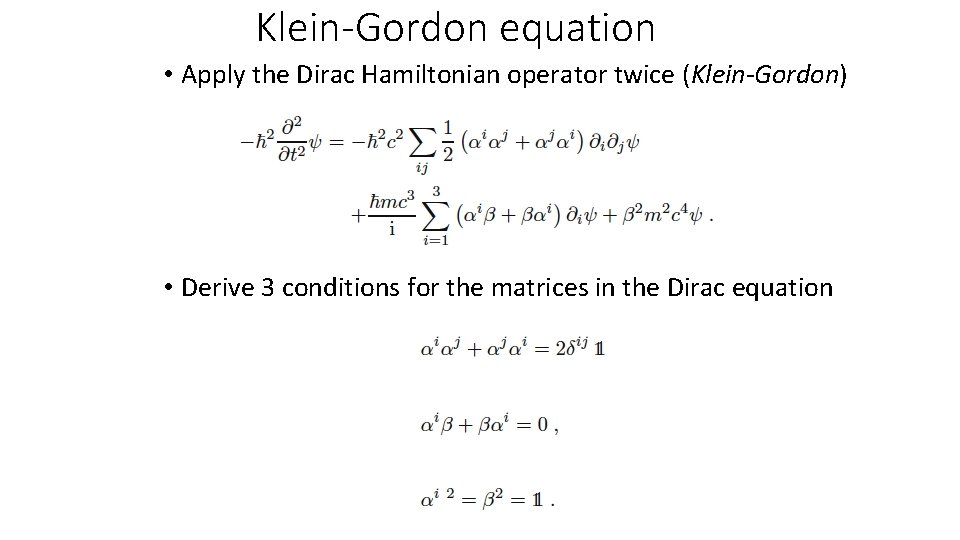
Klein-Gordon equation • Apply the Dirac Hamiltonian operator twice (Klein-Gordon) • Derive 3 conditions for the matrices in the Dirac equation
- Slides: 27