
Dimensions of User Centric Design UCD in ICT
- Slides: 54
Dimensions of User Centric Design (UCD) in ICT* Timo O. Korhonen Department of Communications and Networking (Comnet) Helsinki University of Technology (TKK) Finland *ICT = Information and Communications Technology
Timo O. Korhonen – Profile Outline o Areas of expertise n n Product development process o Usability design o Innovation systems o Quality system development o Virtual organizations Telecommunications technology o Physical level: propagation, especially optical transmission, power-line communications, and radio propagation o Modulation & coding, CDMA o Internet technology & protocols
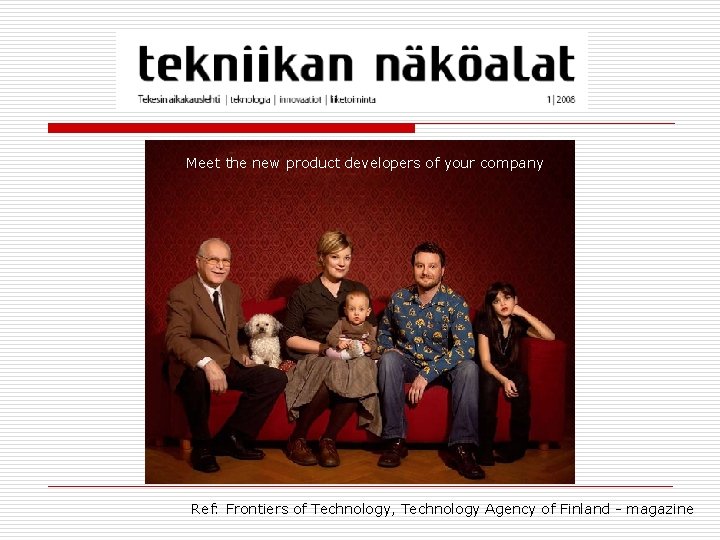
Meet the new product developers of your company Ref: Frontiers of Technology, Technology Agency of Finland - magazine
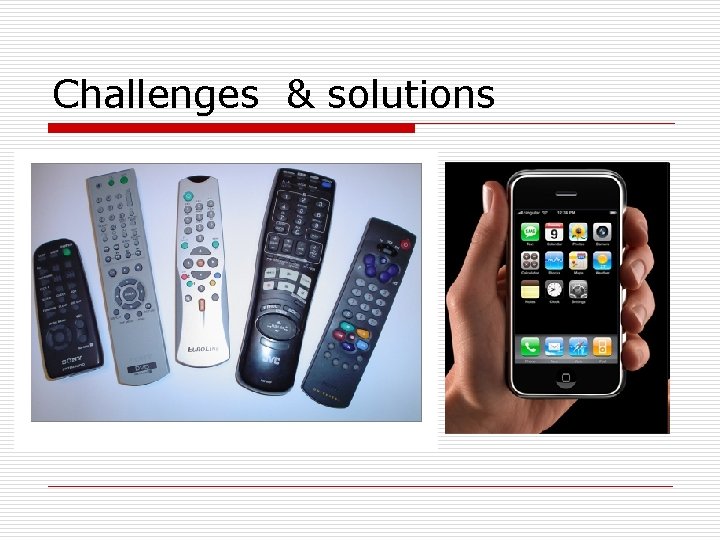
Challenges & solutions
Dimensions of User Centric Design (UCD) in ICT o o o o Some history What UCD is? Benefits of UCD methods Usability gap - Why UCD is not always applied Future outline UCD case studies
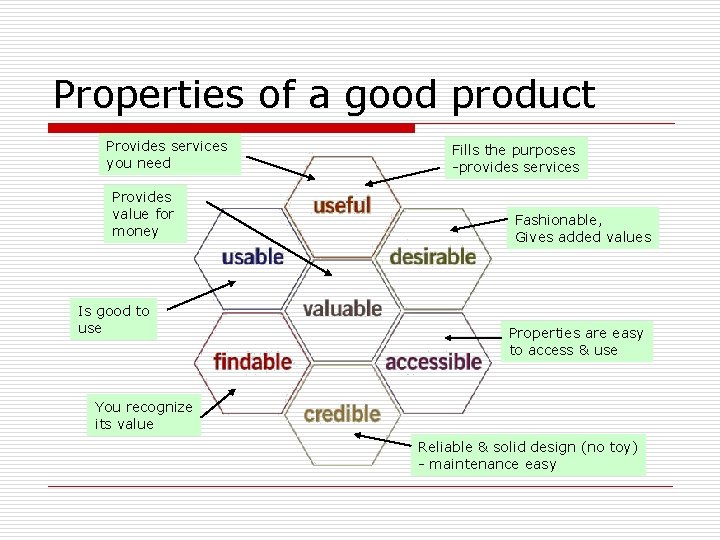
Properties of a good product Provides services you need Provides value for money Is good to use Fills the purposes -provides services Fashionable, Gives added values Properties are easy to access & use You recognize its value Reliable & solid design (no toy) - maintenance easy
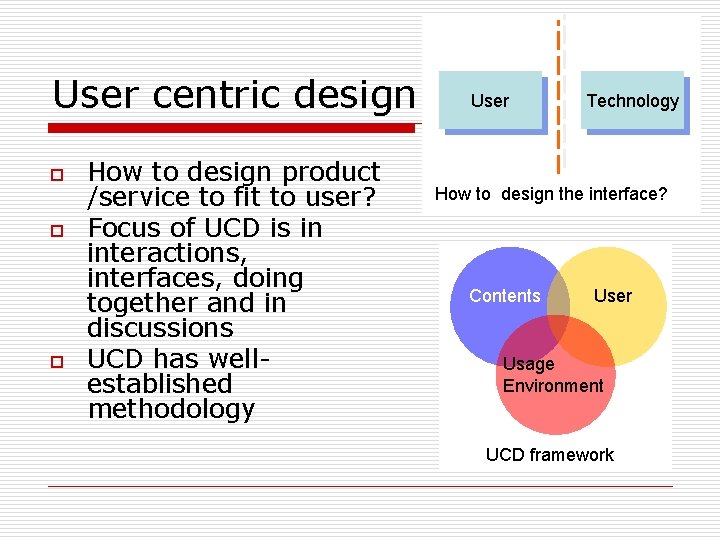
User centric design o o o How to design product /service to fit to user? Focus of UCD is in interactions, interfaces, doing together and in discussions UCD has wellestablished methodology User Technology How to design the interface? Contents User Usage Environment UCD framework
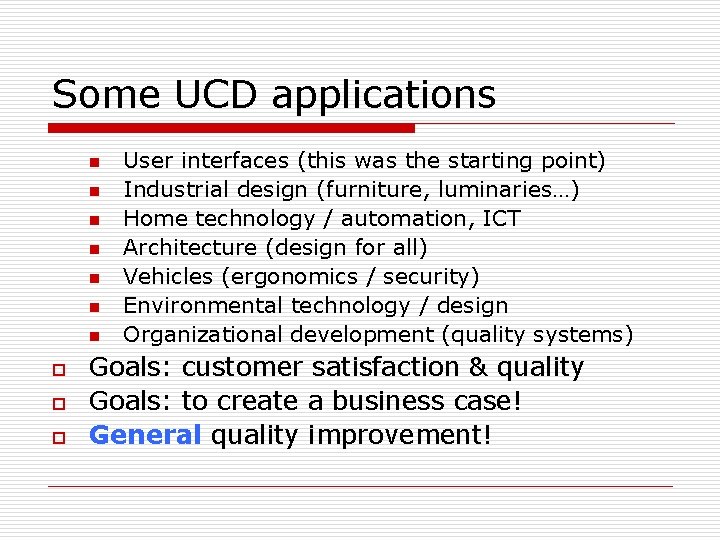
Some UCD applications n n n n o o o User interfaces (this was the starting point) Industrial design (furniture, luminaries…) Home technology / automation, ICT Architecture (design for all) Vehicles (ergonomics / security) Environmental technology / design Organizational development (quality systems) Goals: customer satisfaction & quality Goals: to create a business case! General quality improvement!
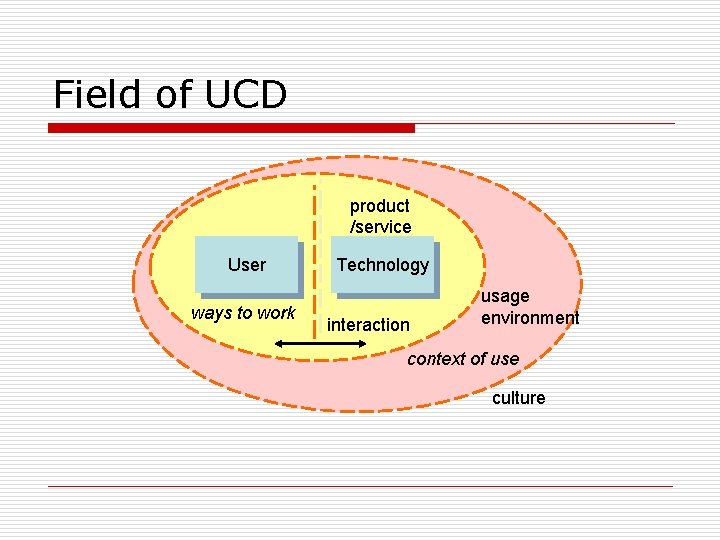
Field of UCD product /service User ways to work Technology interaction usage environment context of use culture
History of UCD (1/6) o Participatory Design originally out of Scandinavia in the 70’s. Users participate to design n focused on process and was not a design style as such applied in urban design, architecture, landscape architecture and planning example: creating environments that are more responsive and appropriate to their inhabitants
History of UCD (2/6) o o o In the 1980 s, Brenda Laurel worked as a designer and researcher at Cyber. Vision, Atari and Activision. Around ’ 86 Laurel’s “Computers as Theatre” coined the term “User Experience” and stressed narrative, context and psychological flow. Her doctoral dissertation proposed an architecture for computer-based interactive fictions.
History of UCD (3/6) o Ben Shneiderman in ‘ 83 introduced term “Direct manipulation interfaces”: n n n … make it easier for a user to learn and use an interface rapid, incremental feedback allows a user to make fewer errors and complete tasks in less time an example: Direct-manipulation is resizing a graphical shape, such as a rectangle, by dragging its corners or edges with a mouse.
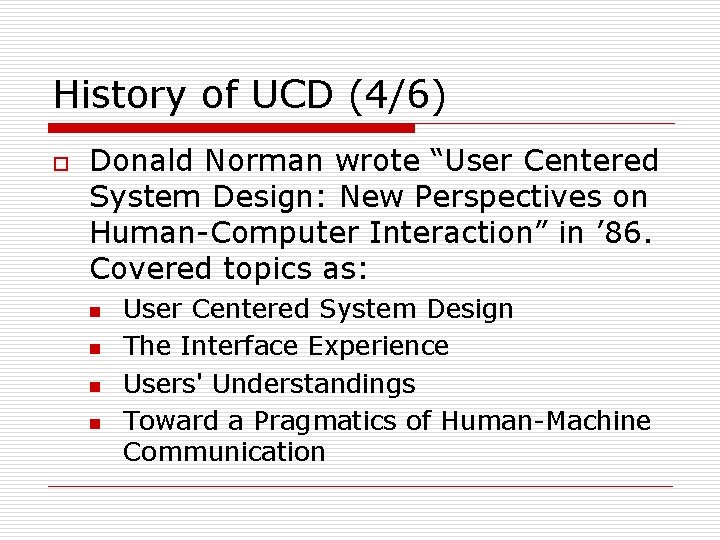
History of UCD (4/6) o Donald Norman wrote “User Centered System Design: New Perspectives on Human-Computer Interaction” in ’ 86. Covered topics as: n n User Centered System Design The Interface Experience Users' Understandings Toward a Pragmatics of Human-Machine Communication
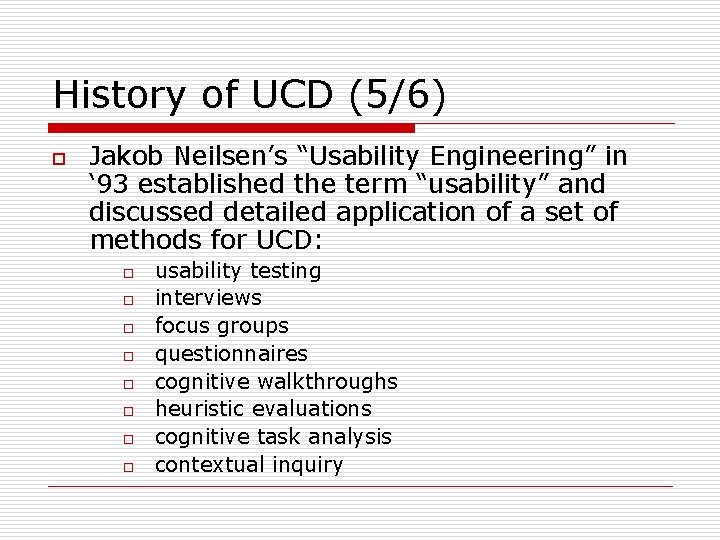
History of UCD (5/6) o Jakob Neilsen’s “Usability Engineering” in ‘ 93 established the term “usability” and discussed detailed application of a set of methods for UCD: o o o o usability testing interviews focus groups questionnaires cognitive walkthroughs heuristic evaluations cognitive task analysis contextual inquiry
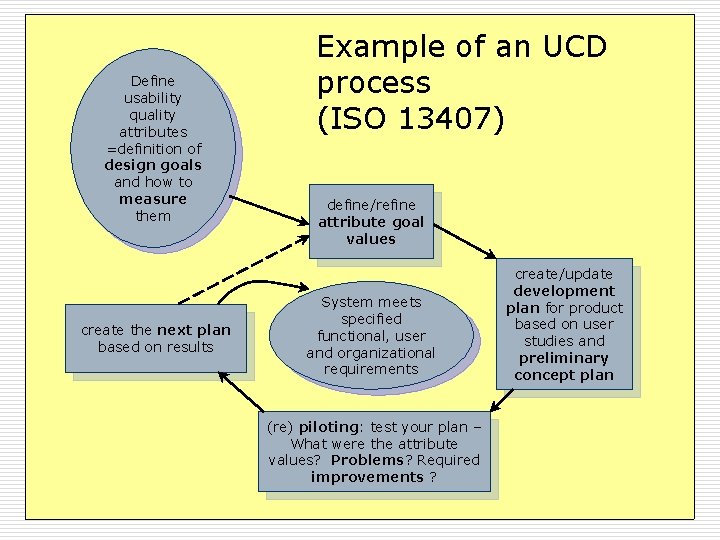
Define usability quality attributes =definition of design goals and how to measure them create the next plan based on results Example of an UCD process (ISO 13407) define/refine attribute goal values System meets specified functional, user and organizational requirements (re) piloting: test your plan – What were the attribute values? Problems? Required improvements ? create/update development plan for product based on user studies and preliminary concept plan
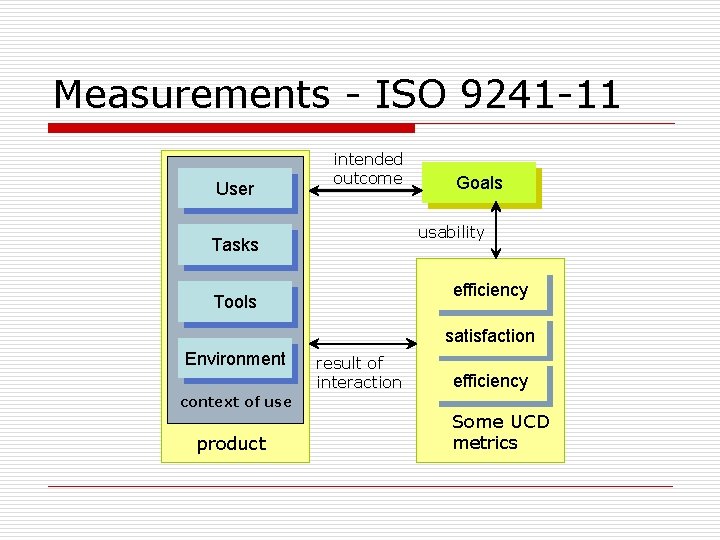
Measurements - ISO 9241 -11 User intended outcome Goals usability Tasks efficiency Tools satisfaction Environment context of use product result of interaction efficiency Some UCD metrics
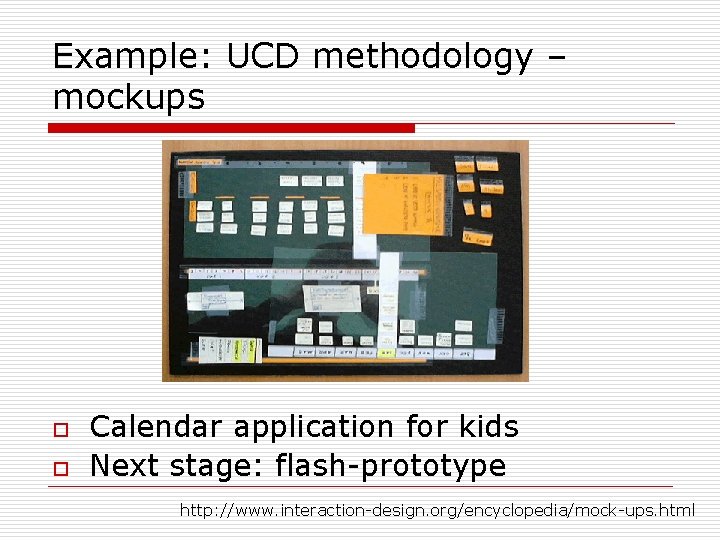
Example: UCD methodology – mockups o o Calendar application for kids Next stage: flash-prototype http: //www. interaction-design. org/encyclopedia/mock-ups. html
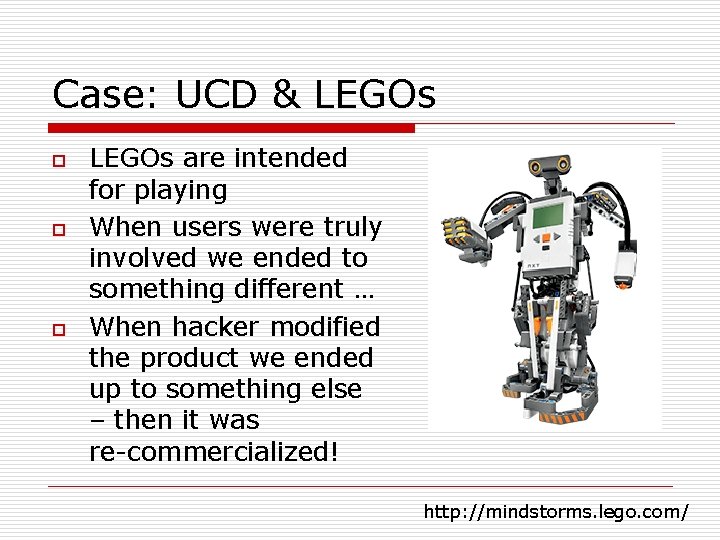
Case: UCD & LEGOs o o o LEGOs are intended for playing When users were truly involved we ended to something different … When hacker modified the product we ended up to something else – then it was re-commercialized! http: //mindstorms. lego. com/
Benefits of UCD o o o User: precision, fast, error free, safe usage, good price/quality ratio Company: selling argument, image, profitability, easy operation & maintenance, reliability Society: design-for-all, environmental aspects can be taken into account better, better usage of recourses, recyclable, safe products
User Centric Design The process
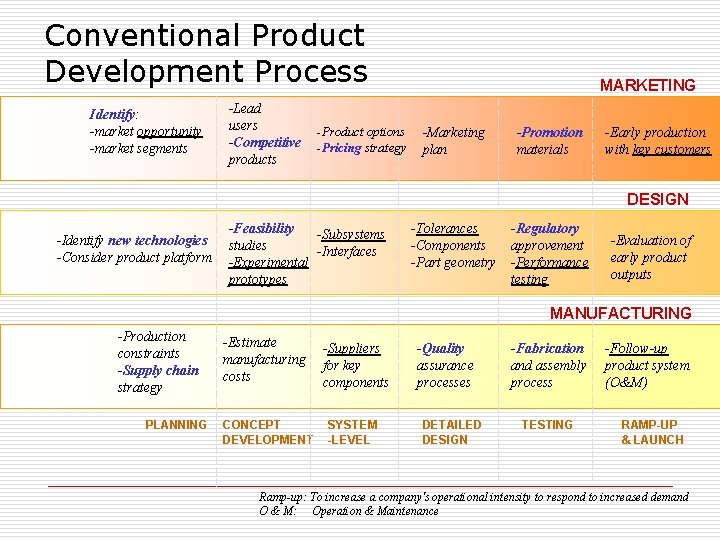
Conventional Product Development Process Identify: -market opportunity -market segments -Lead users -Competitive products -Product options -Pricing strategy MARKETING -Marketing plan -Promotion materials -Early production with key customers DESIGN -Identify new technologies -Consider product platform -Feasibility -Subsystems studies -Interfaces -Experimental prototypes -Tolerances -Components -Part geometry -Regulatory approvement -Performance testing -Evaluation of early product outputs MANUFACTURING -Production constraints -Supply chain strategy PLANNING -Estimate manufacturing costs CONCEPT DEVELOPMENT -Suppliers for key components SYSTEM -LEVEL -Quality assurance processes DETAILED DESIGN -Fabrication and assembly process TESTING -Follow-up product system (O&M) RAMP-UP & LAUNCH Ramp-up: To increase a company's operational intensity to respond to increased demand O & M: Operation & Maintenance
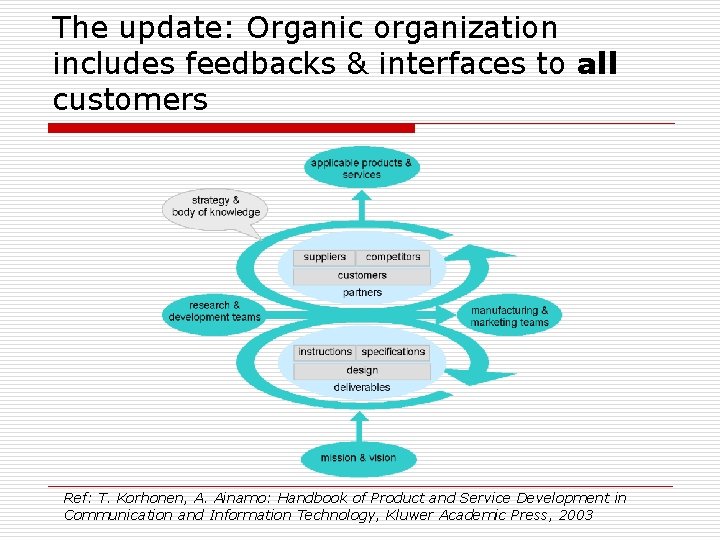
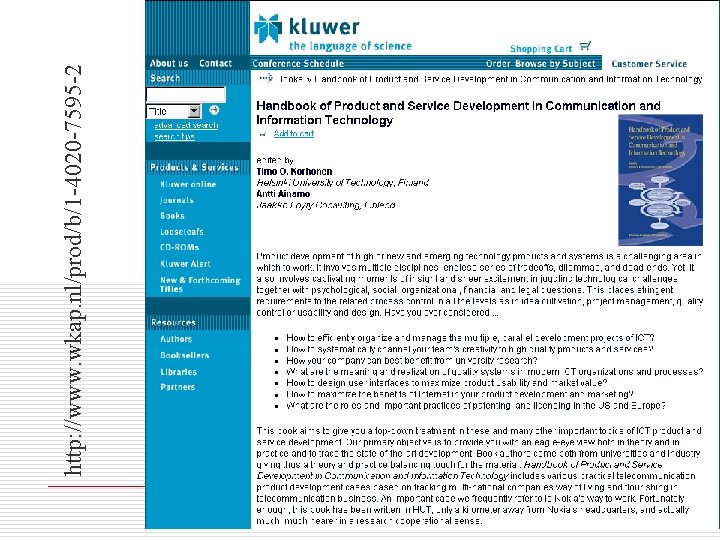
The update: Organic organization includes feedbacks & interfaces to all customers Ref: T. Korhonen, A. Ainamo: Handbook of Product and Service Development in Communication and Information Technology, Kluwer Academic Press, 2003
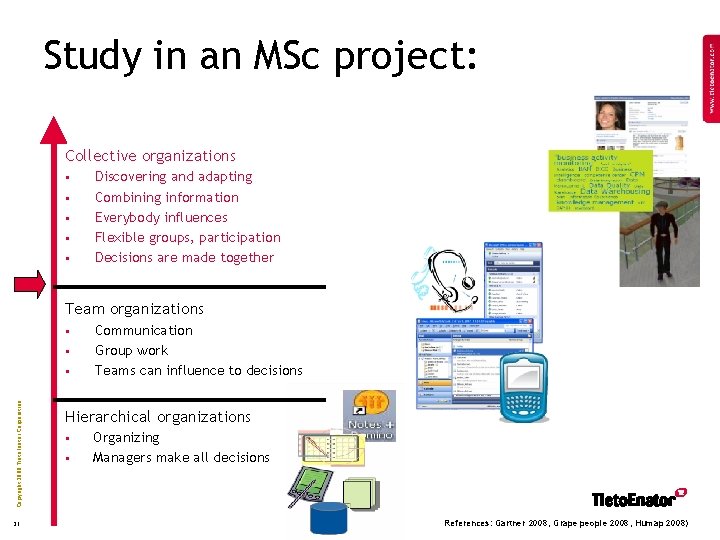
Study in an MSc project: Collective organizations • • • Discovering and adapting Combining information Everybody influences Flexible groups, participation Decisions are made together Team organizations • • Copyright 2008 Tieto. Enator Corporation • 23 Communication Group work Teams can influence to decisions Hierarchical organizations • • Organizing Managers make all decisions References: Gartner 2008, Grape people 2008, Humap 2008)
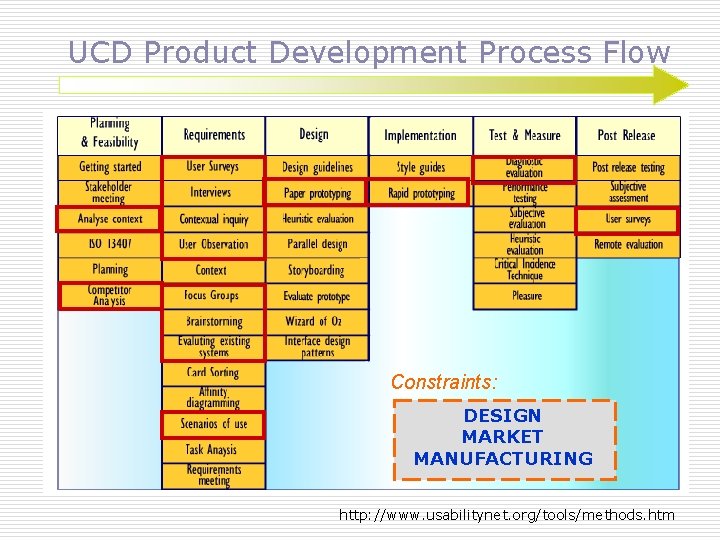
UCD Product Development Process Flow Constraints: DESIGN MARKET MANUFACTURING http: //www. usabilitynet. org/tools/methods. htm
Why UCD is not applied always? ? - Usability gaps o o Application of UCD can take a lot of time and resources – selection of right methods important Value of UCD-methodology is not realized Lack of skilful personnel to realize UCD It is not realized that UCD can bring true value for company & customer and can be cost-effective for environment too
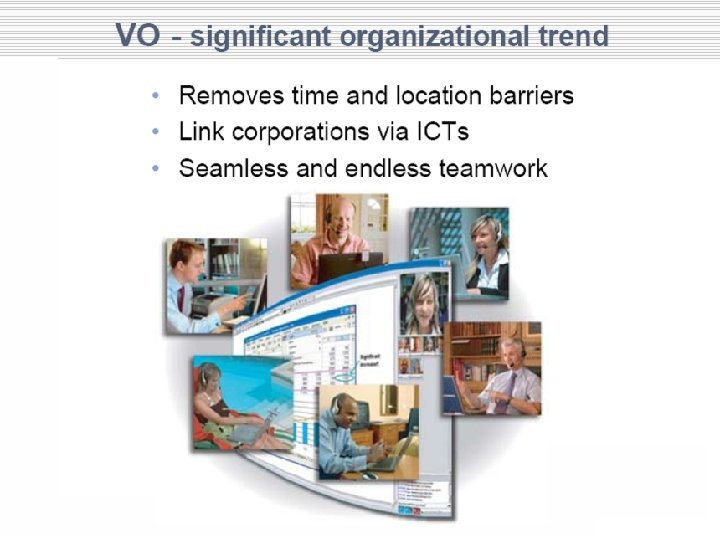
Latest chapter in history of UCD o Post modern usability: the product/service (software) interaction can’t be treated independently of the hardware design, and the physical, social, and other contextual force n ubiquitous technologies and services n semantic web: techniques for modeling contextual data: collaborative knowledge space n new ways to work: virtual organizations n data mining by semantic webs and associated AI n internet based social media: deeper understanding and prescriptive design guidance of presence & interactions of social being n service integration and active user content creation: mashups
http: //www. wkap. nl/prod/b/1 -4020 -7595 -2
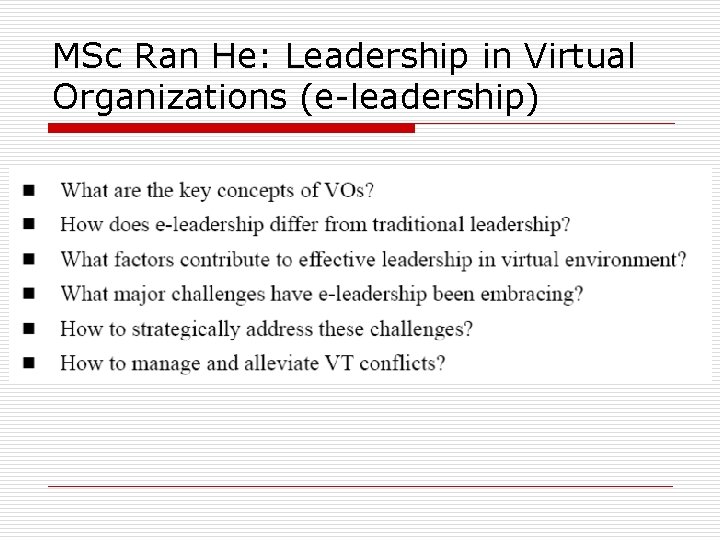
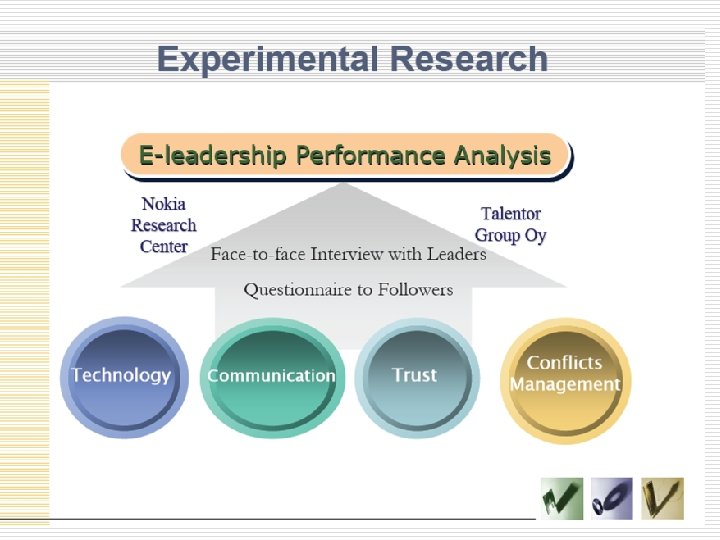
Case studies - Measuring Usability - MSc Ran He: Leadership in Virtual Organizations (e-leadership)
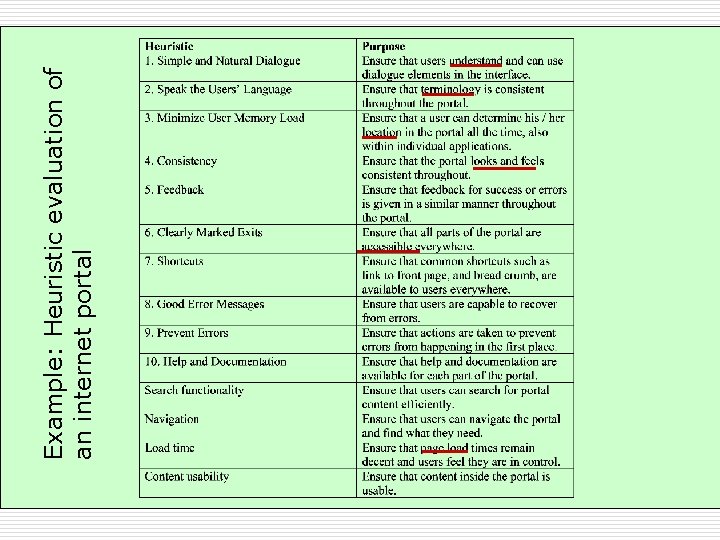
Example: Heuristic evaluation of an internet portal
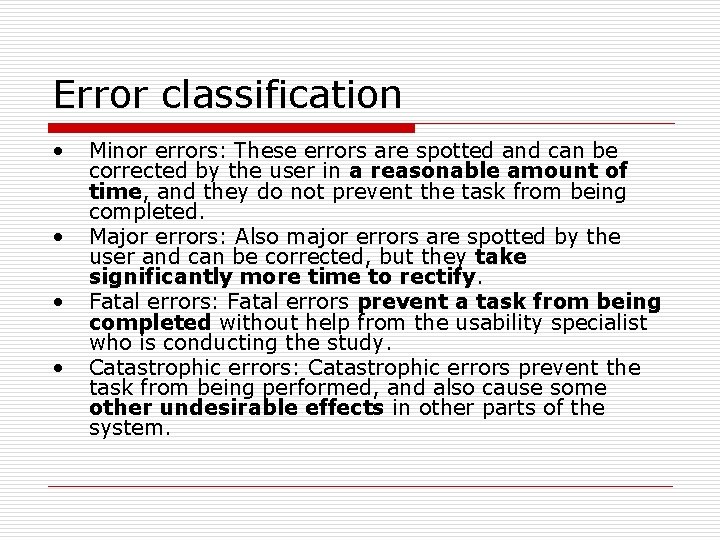
Error classification • • Minor errors: These errors are spotted and can be corrected by the user in a reasonable amount of time, and they do not prevent the task from being completed. Major errors: Also major errors are spotted by the user and can be corrected, but they take significantly more time to rectify. Fatal errors: Fatal errors prevent a task from being completed without help from the usability specialist who is conducting the study. Catastrophic errors: Catastrophic errors prevent the task from being performed, and also cause some other undesirable effects in other parts of the system.
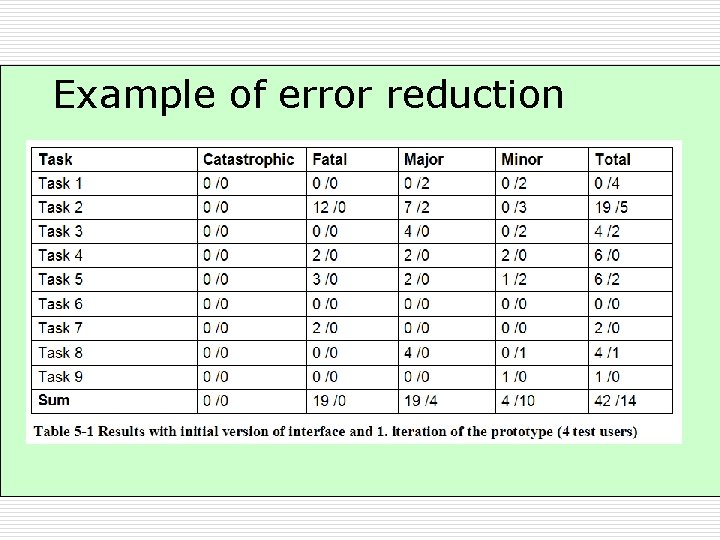
Example of error reduction
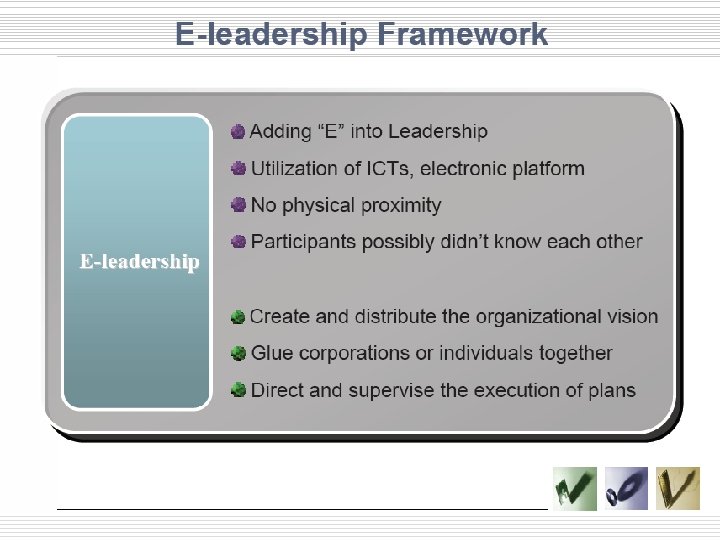
MSc Ran He: Leadership in Virtual Organizations (e-leadership)
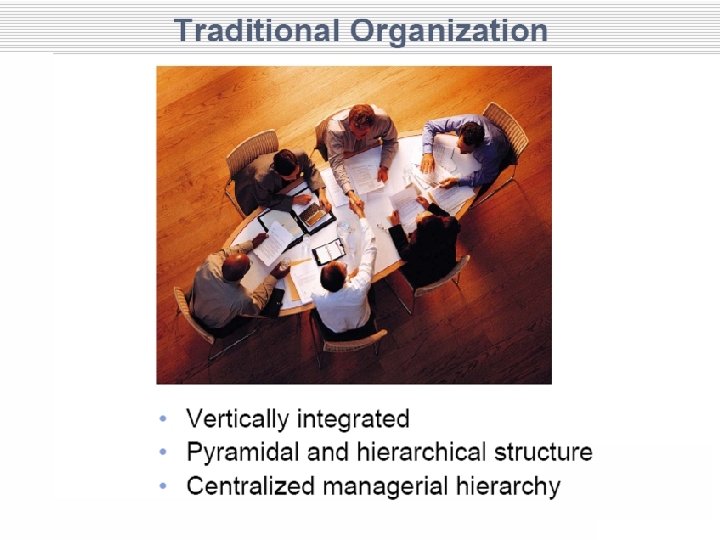
Traditional organization
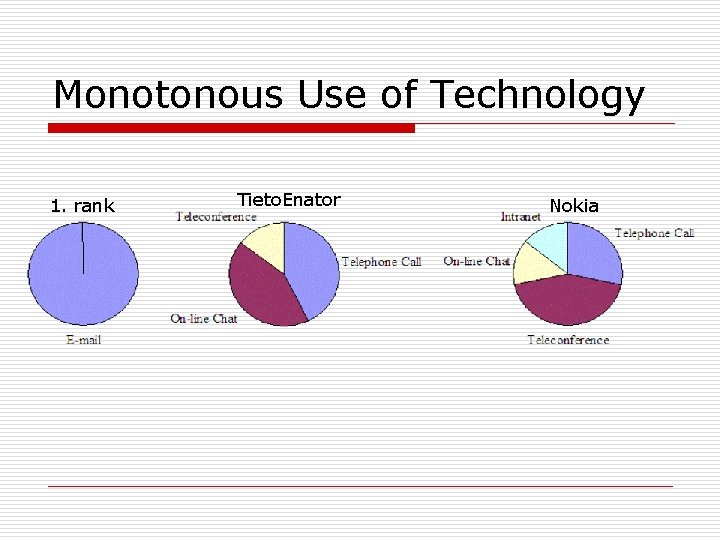
Monotonous Use of Technology 1. rank Tieto. Enator Nokia
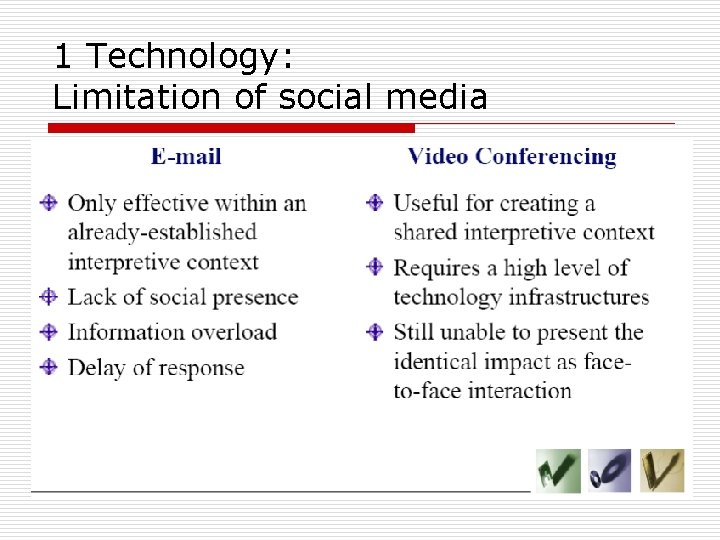
1 Technology: Limitation of social media
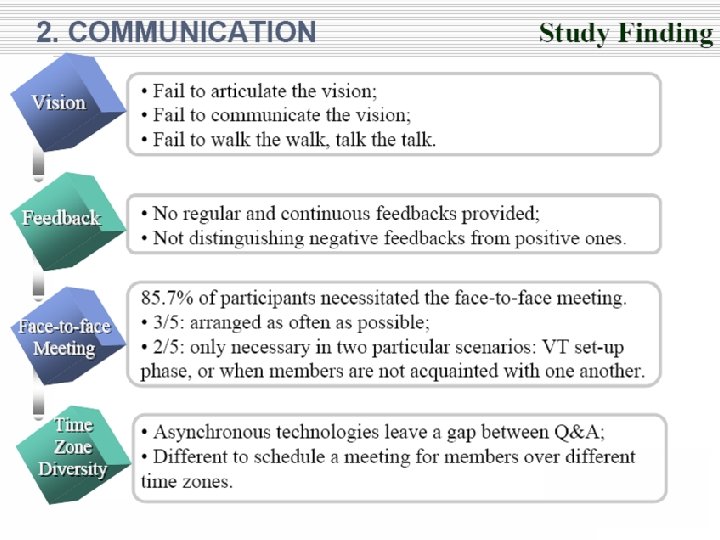
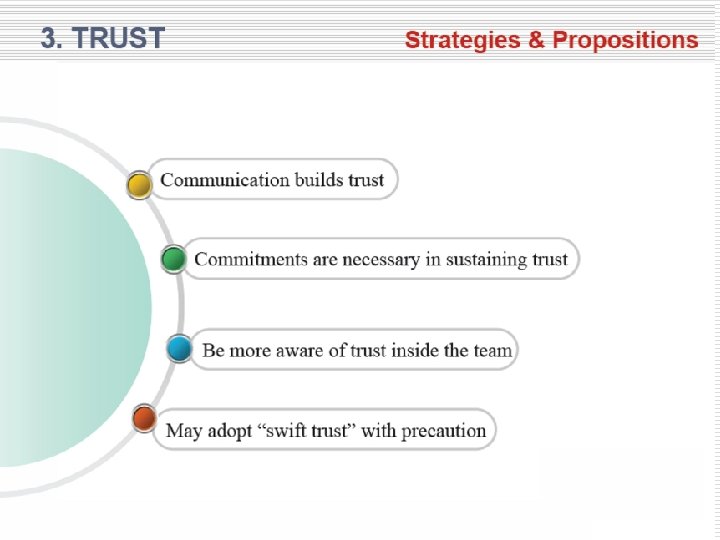
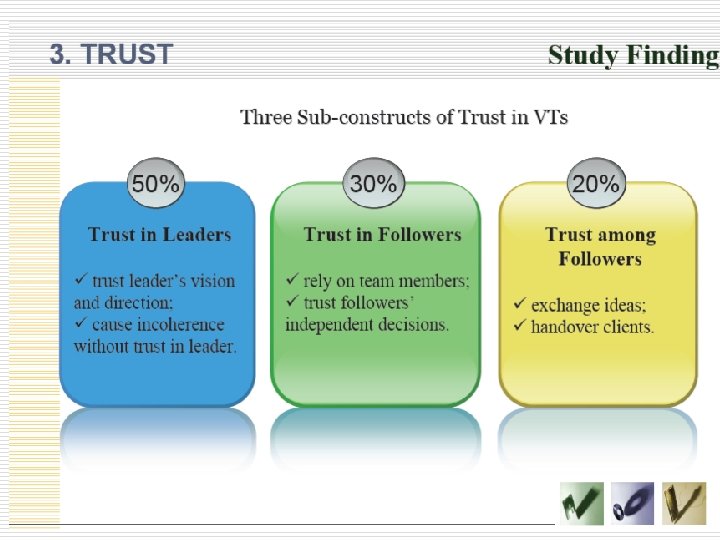
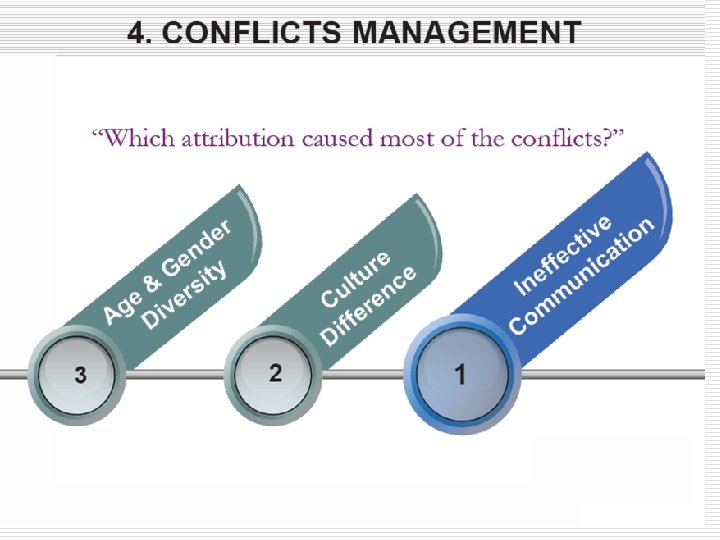
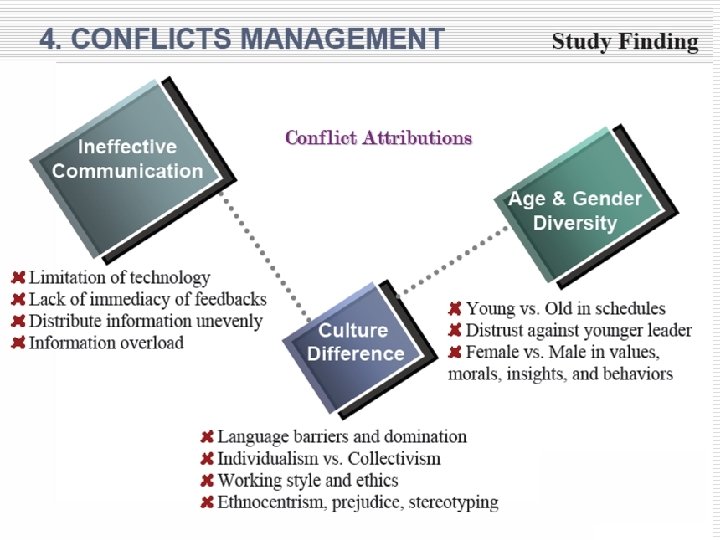
Email (1) o Clearly, no facial expressions, voice inflections, or gestures can be transmitted through e-mails, resulting in the lack of social presence. This limitation can trigger misinterpretation and misunderstanding, and further compromise the trust relationship in VTs.
Email (2) o the ability to develop relational links among team members may be hindered by e-mail communication, which may negatively affect such outcomes as creativity, morale, and decision-making quality.
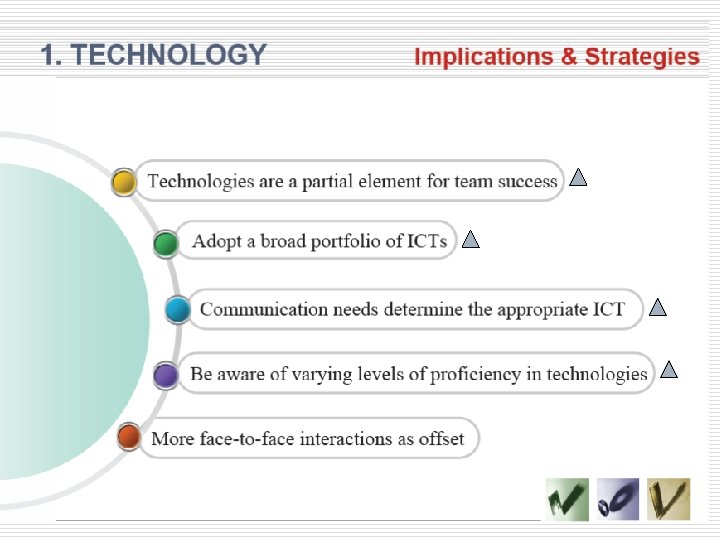
E-leaders should be aware that technologies are only a partial element for team success o o even being equipped with the most advanced technologies is scarcely enough to make a VT effective. The internal group dynamics and external support mechanisms are also indispensable for team success in the virtual world. Those distributed work groups thus must take ample time during the initial design phase to determine their future goals and develop supportive collaboration environments.
E-leaders should be aware of team members’ varying levels of proficiency in using advanced technologies o if e-leader insists to employ any new and complex information technology tool, he/she should stay aware of members’ different levels of technical expertise. Rather than simply notify followers which groupware will be adopted, e-leader should organize or arrange certain training or remediation beforehand in order to familiarize his/her team members with the specific technology.
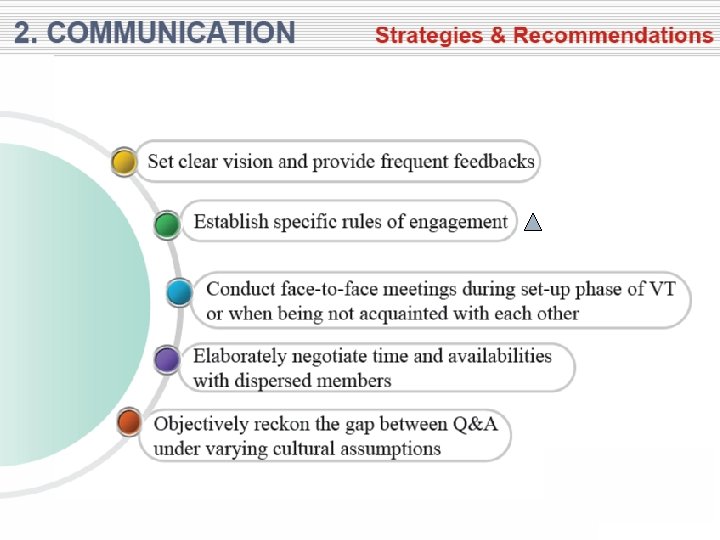
Apply broad portfolio of ICTs to fit varying communications needs o o The majority of VTs in our research heavily relied on lean communication methods, whereas leaving those novel information technologies untouched. E-leaders are recommended to employ media richness including the common media (e. g. e-mail, telephone call) as well as those advanced technologies (e. g. flash meeting, video conferencing). Those advanced technologies can complement eleadership effectiveness but also aid in recording individual’s social status, responsibility, and level of expertise. With these improved tools, the interpersonal connections between dispersed team members could be substantially enhanced, thus facilitating collaborative work.
Communication needs determine which types of communication systems are appropriate o o For example, group discussion of a critical issue on sales meeting may require a more rich communication channel due to the need for high degree of interaction, immediacy of feedback, as well as the need to view others’ comments synchronously. In contrast, when distributing a monthly meeting memo among team members, e-mail may be the effective vehicle since less interaction or immediate feedback is required in that case.
Establish specific rules of engagement o o E-leaders should seek to establish specific rules of engagement that govern exactly how and when team members should communicate with each other. It is strongly recommended that during the team’s first meeting, e-leaders should dedicate some time to setting a series of guidelines on communications such as meeting times, frequency, and electronic channels adopted. For example, a simple rule of engagement may state: “all online meetings will be scheduled in Hello Net meeting Room according to Finnish time. ” Such policies, normally taken for granted in face-toface settings, are extremely important in the virtual environment.
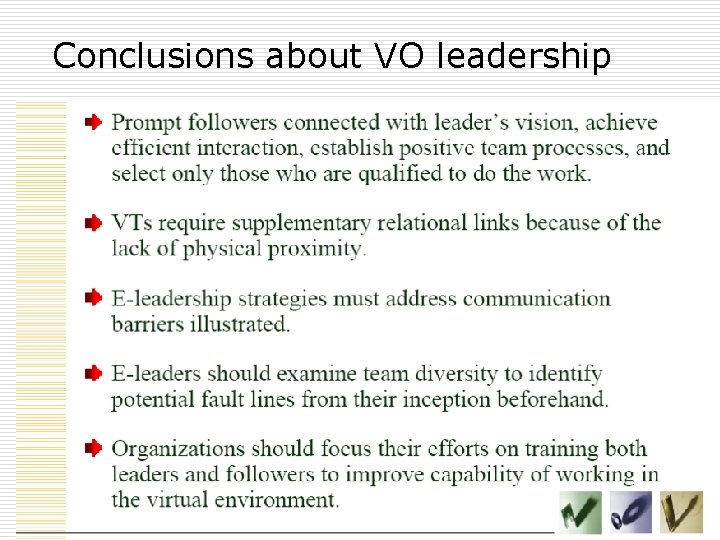
Conclusions about VO leadership
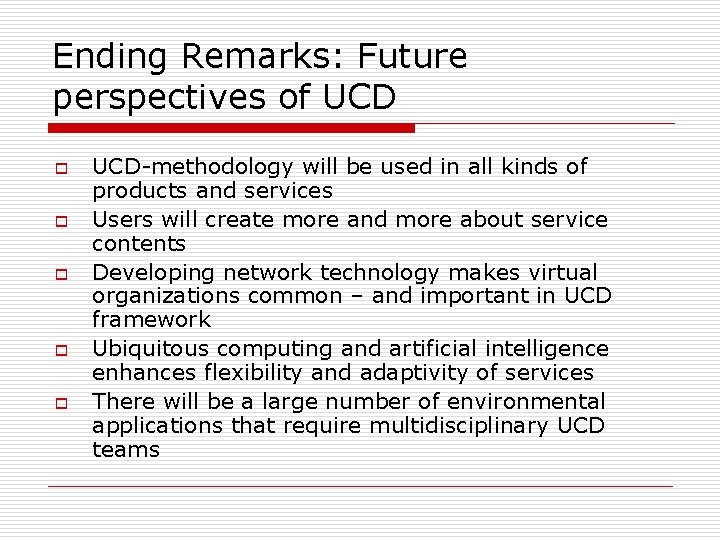
Ending Remarks: Future perspectives of UCD o o o UCD-methodology will be used in all kinds of products and services Users will create more and more about service contents Developing network technology makes virtual organizations common – and important in UCD framework Ubiquitous computing and artificial intelligence enhances flexibility and adaptivity of services There will be a large number of environmental applications that require multidisciplinary UCD teams