
Dimensional Analysis IB PHYSICS MOTION Conversions Convert the
Dimensional Analysis IB PHYSICS | MOTION

Conversions Convert the Following: 26. 2 miles kilometers 1 Mile = 1. 609 Kilometers
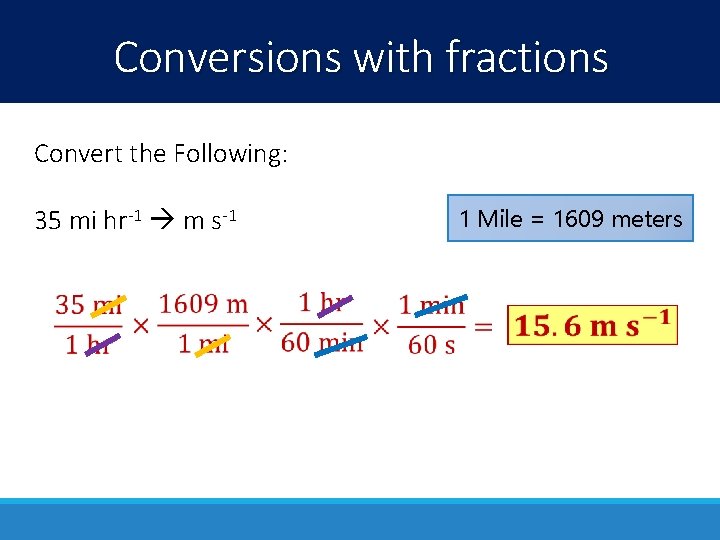
Conversions with fractions Convert the Following: 35 mi hr-1 m s-1 1 Mile = 1609 meters
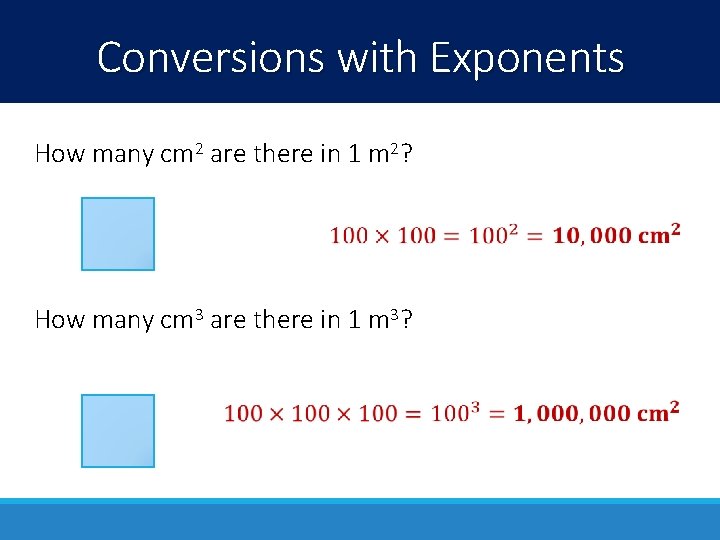
Conversions with Exponents How many cm 2 are there in 1 m 2? How many cm 3 are there in 1 m 3?
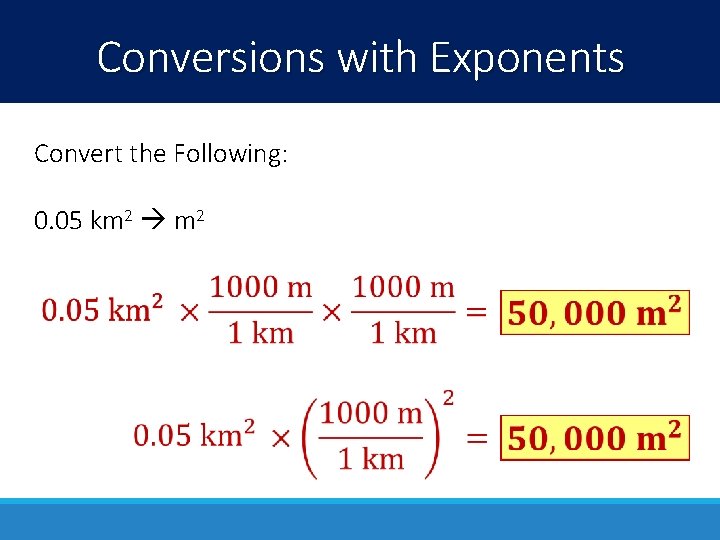
Conversions with Exponents Convert the Following: 0. 05 km 2
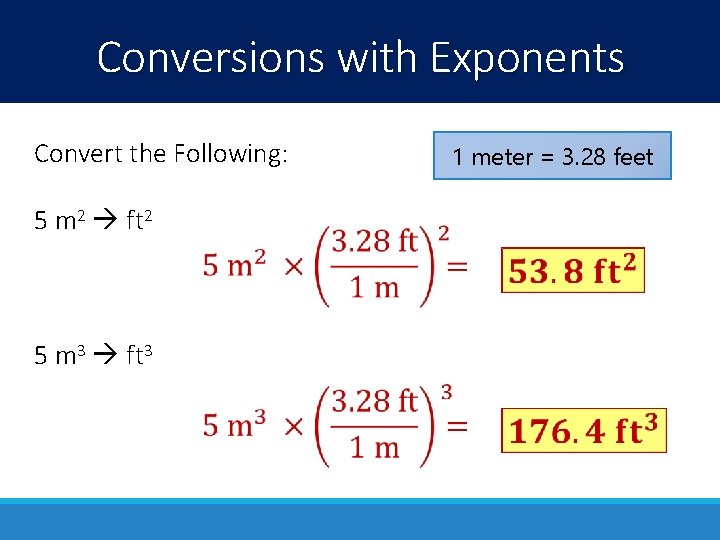
Conversions with Exponents Convert the Following: 5 m 2 ft 2 5 m 3 ft 3 1 meter = 3. 28 feet
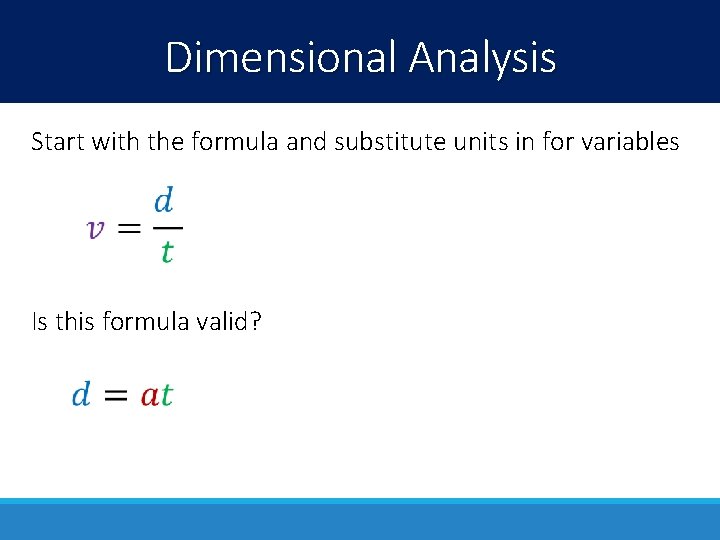
Dimensional Analysis Start with the formula and substitute units in for variables Is this formula valid?
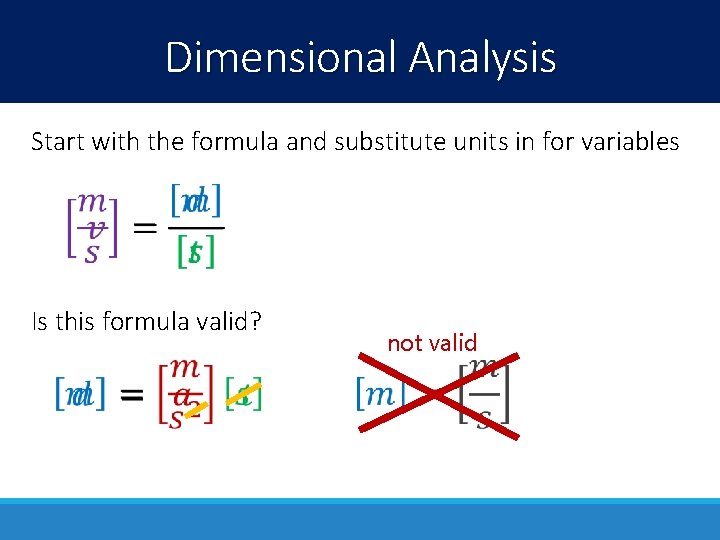
Dimensional Analysis Start with the formula and substitute units in for variables Is this formula valid? not valid
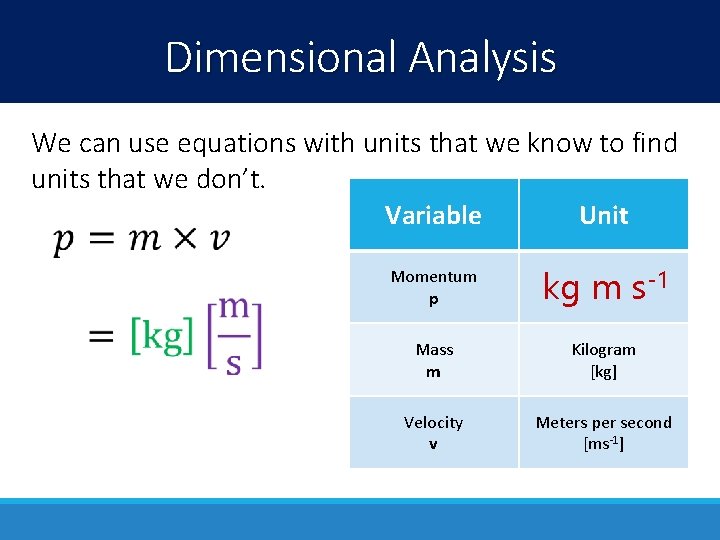
Dimensional Analysis We can use equations with units that we know to find units that we don’t. Variable Unit Momentum p kg m s-1 Mass m Kilogram [kg] Velocity v Meters per second [ms-1]
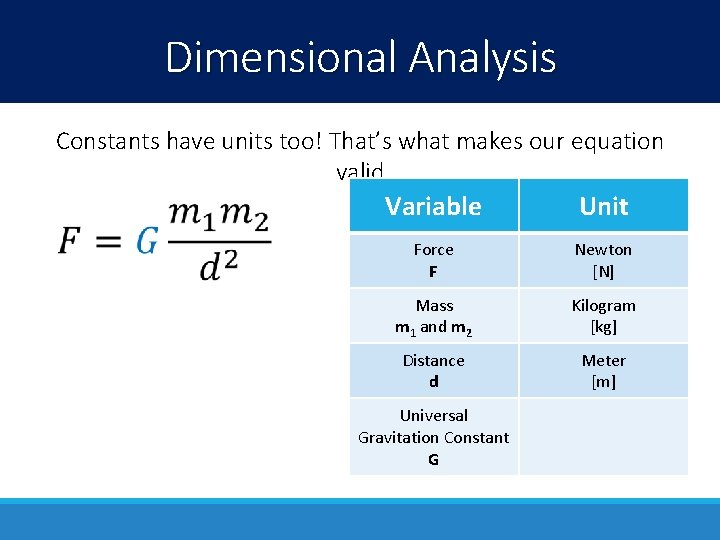
Dimensional Analysis Constants have units too! That’s what makes our equation valid Variable Unit Force F Newton [N] Mass m 1 and m 2 Kilogram [kg] Distance d Meter [m] Universal Gravitation Constant G
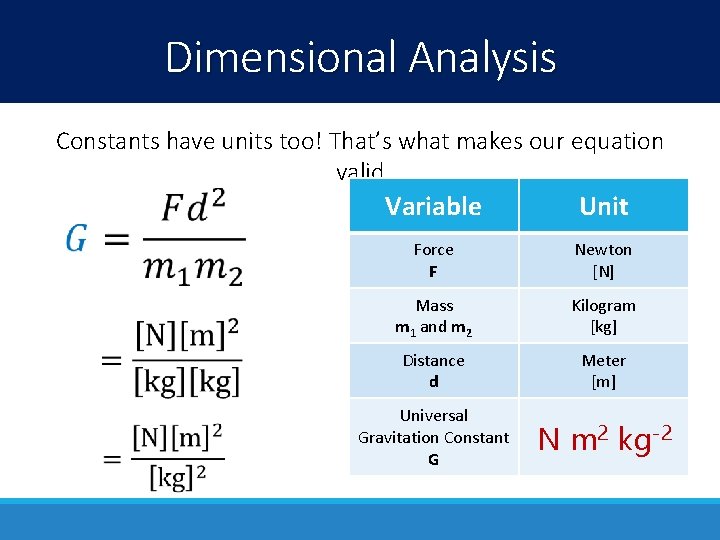
Dimensional Analysis Constants have units too! That’s what makes our equation valid Variable Unit Force F Newton [N] Mass m 1 and m 2 Kilogram [kg] Distance d Meter [m] Universal Gravitation Constant G N m 2 kg-2
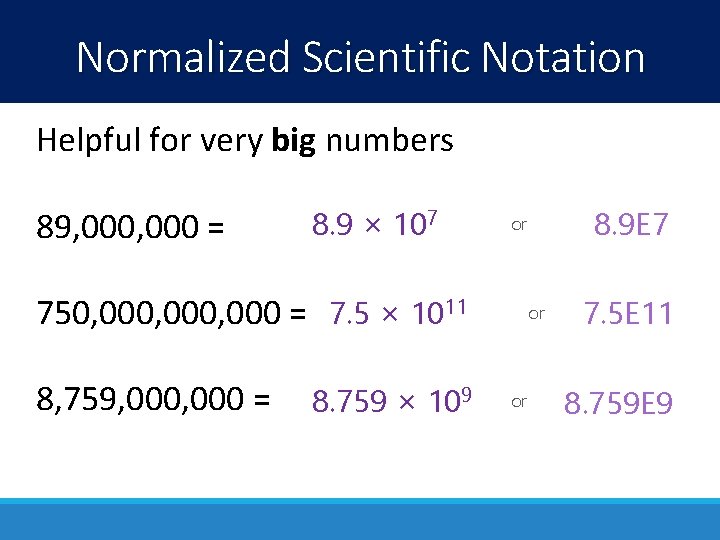
Normalized Scientific Notation Helpful for very big numbers 89, 000 = 8. 9 × 10⁷ 750, 000, 000 = 7. 5 × 10¹¹ 8, 759, 000 = 8. 759 × 109 8. 9 E 7 or or or 7. 5 E 11 8. 759 E 9
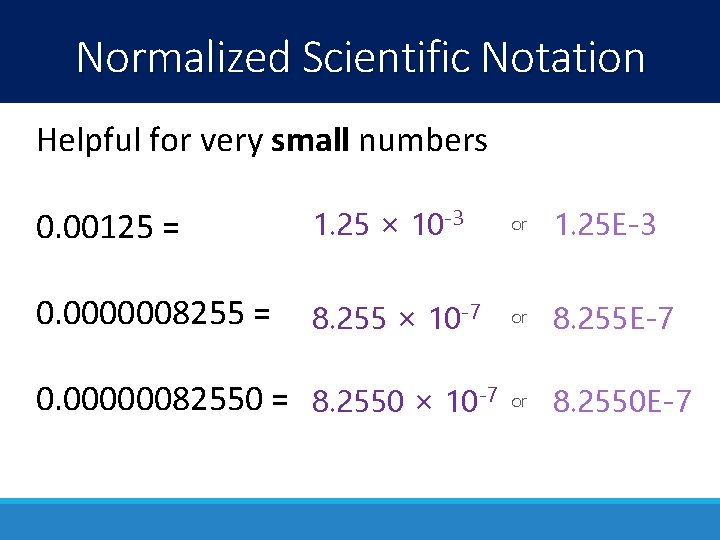
Normalized Scientific Notation Helpful for very small numbers 0. 00125 = 1. 25 × 10 -3 or 1. 25 E-3 0. 0000008255 = 8. 255 × 10 -7 or 8. 255 E-7 or 8. 2550 E-7 0. 00000082550 = 8. 2550 × 10 -7
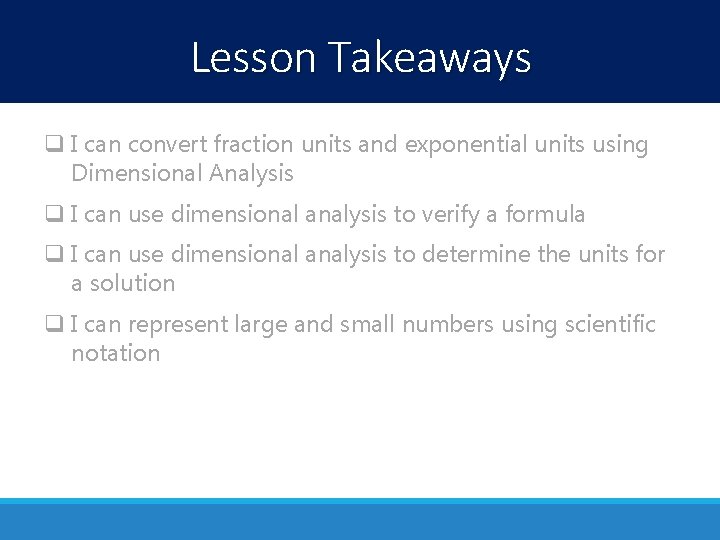
Lesson Takeaways q I can convert fraction units and exponential units using Dimensional Analysis q I can use dimensional analysis to verify a formula q I can use dimensional analysis to determine the units for a solution q I can represent large and small numbers using scientific notation
- Slides: 14