
Dilepton measurements in heavy ion collisions fixedtarget versus
![Collider Luminosity: L = N 1·N 2·B / F [cm-2 s-1] N 1, N](https://slidetodoc.com/presentation_image_h2/18ac8e319902b68117848e198e989e4b/image-28.jpg "Collider Luminosity: L = N 1·N 2·B / F [cm-2 s-1] N 1, N")
![Fixed target Luminosity: L = NB·NT/ F [cm-2 s-1] NB = beam particles/sec NT](https://slidetodoc.com/presentation_image_h2/18ac8e319902b68117848e198e989e4b/image-29.jpg "Fixed target Luminosity: L = NB·NT/ F [cm-2 s-1] NB = beam particles/sec NT")
- Slides: 32
Dilepton measurements in heavy ion collisions: fixed-target versus collider experiments 1. Experimental setups 2. Multiplicities 3. Luminosities 4. Rates
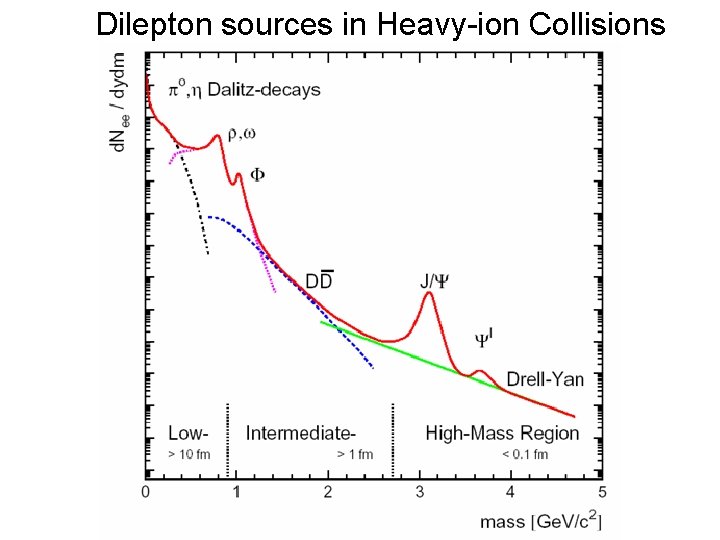
Dilepton sources in Heavy-ion Collisions
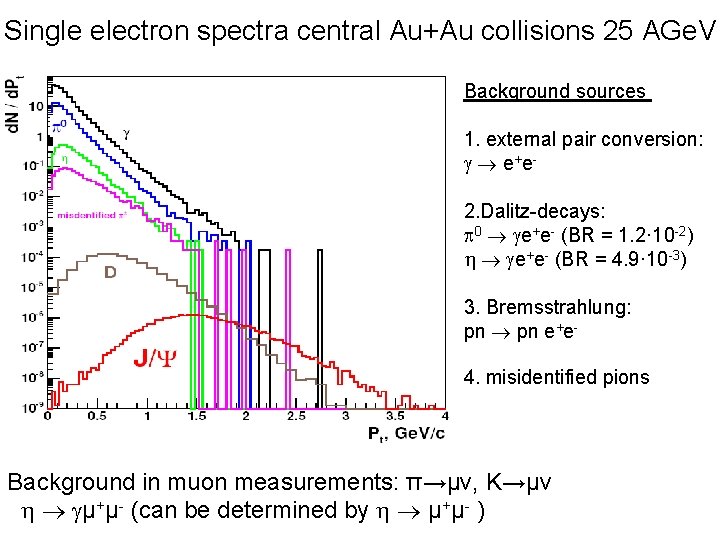
Single electron spectra central Au+Au collisions 25 AGe. V Background sources 1. external pair conversion: e+ e 2. Dalitz-decays: 0 e+e- (BR = 1. 2· 10 -2) e+e- (BR = 4. 9· 10 -3) 3. Bremsstrahlung: pn e+e 4. misidentified pions Background in muon measurements: π→μν, K→μν μ+μ- (can be determined by μ+μ- )
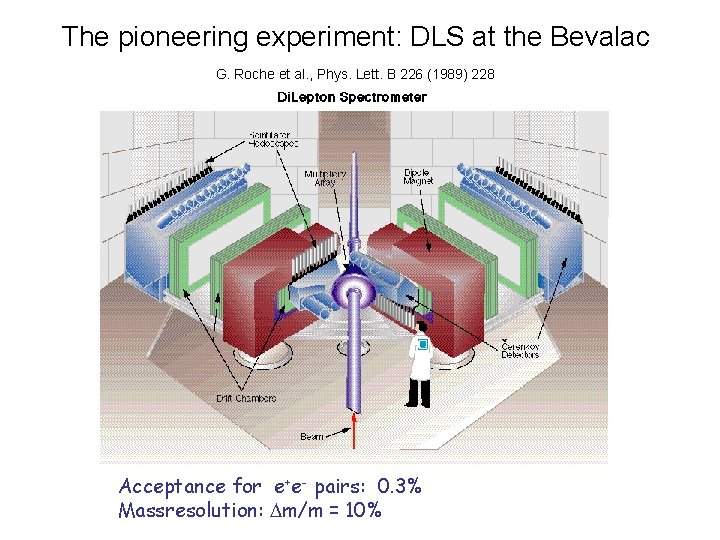
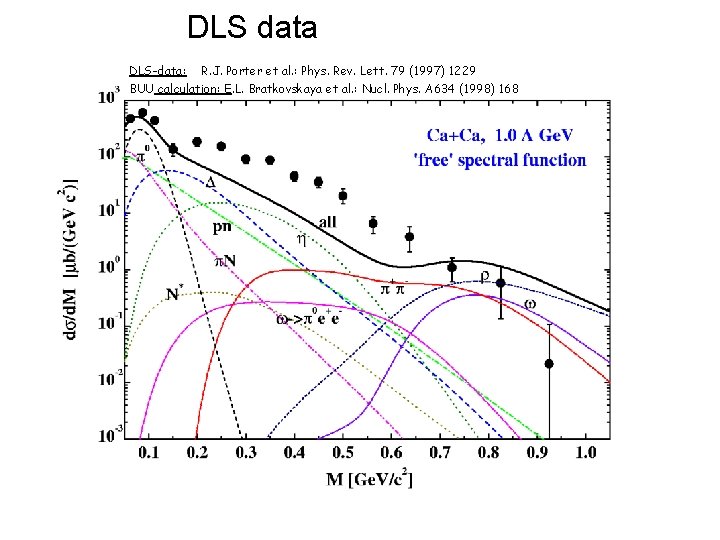
The pioneering experiment: DLS at the Bevalac G. Roche et al. , Phys. Lett. B 226 (1989) 228 Acceptance for e+e- pairs: 0. 3% Massresolution: m/m = 10%
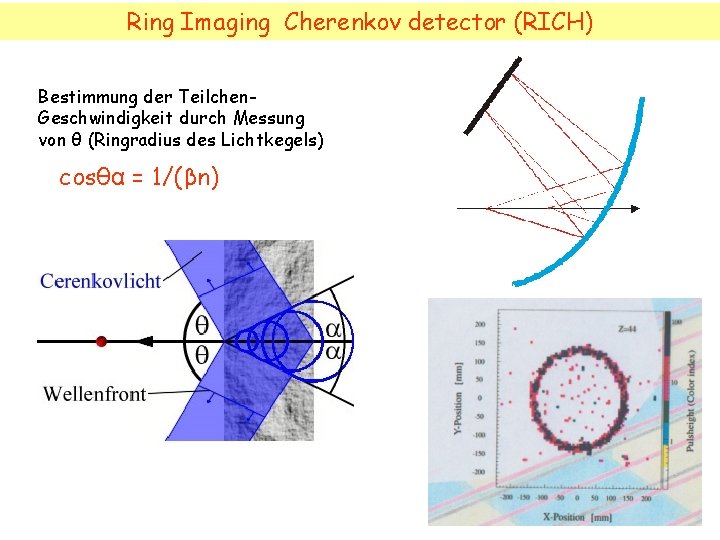
Ring Imaging Cherenkov detector (RICH) Bestimmung der Teilchen. Geschwindigkeit durch Messung von θ (Ringradius des Lichtkegels) cosθα = 1/(βn)
DLS data DLS-data: R. J. Porter et al. : Phys. Rev. Lett. 79 (1997) 1229 BUU calculation: E. L. Bratkovskaya et al. : Nucl. Phys. A 634 (1998) 168
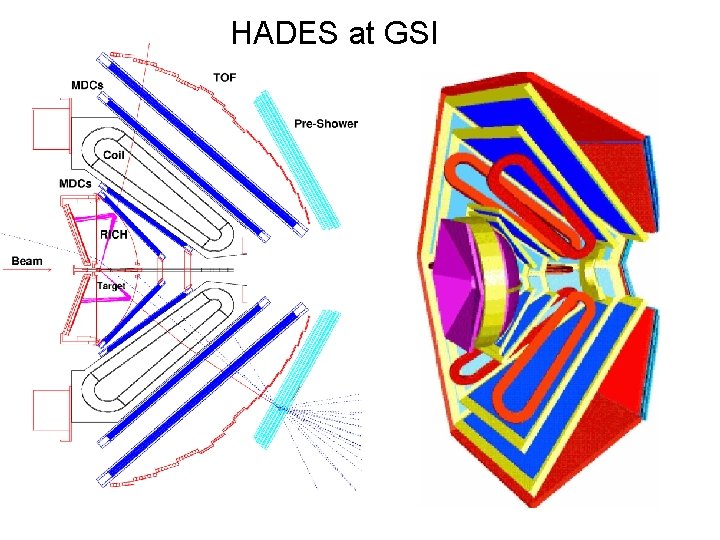
HADES at GSI
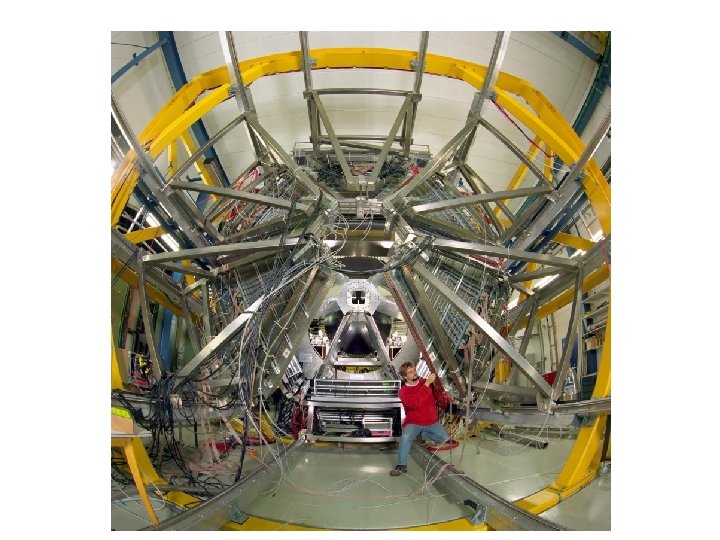
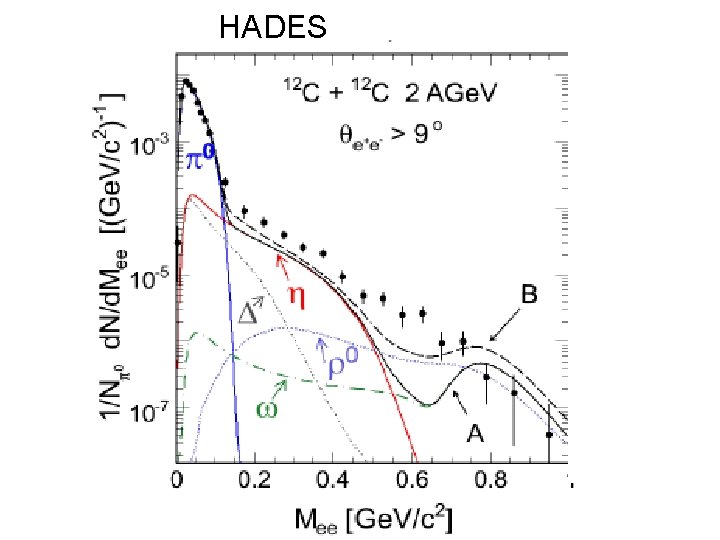
HADES
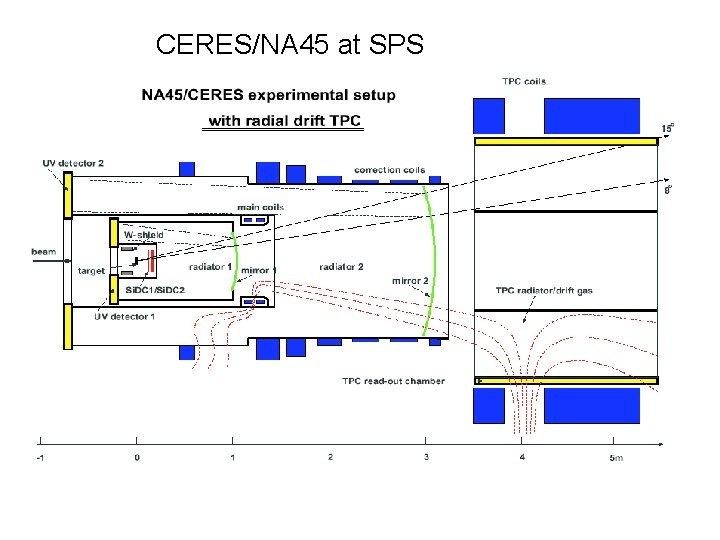
CERES/NA 45 at SPS
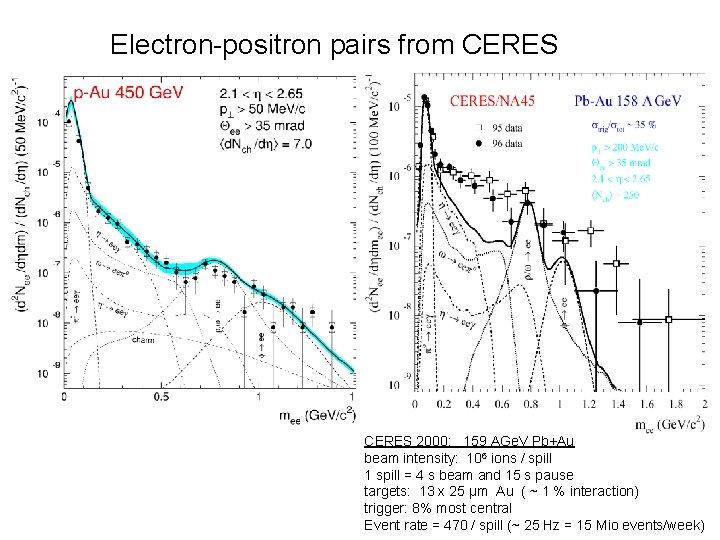
Electron-positron pairs from CERES 2000: 159 AGe. V Pb+Au beam intensity: 106 ions / spill 1 spill = 4 s beam and 15 s pause targets: 13 x 25 μm Au ( ~ 1 % interaction) trigger: 8% most central Event rate = 470 / spill (~ 25 Hz = 15 Mio events/week)
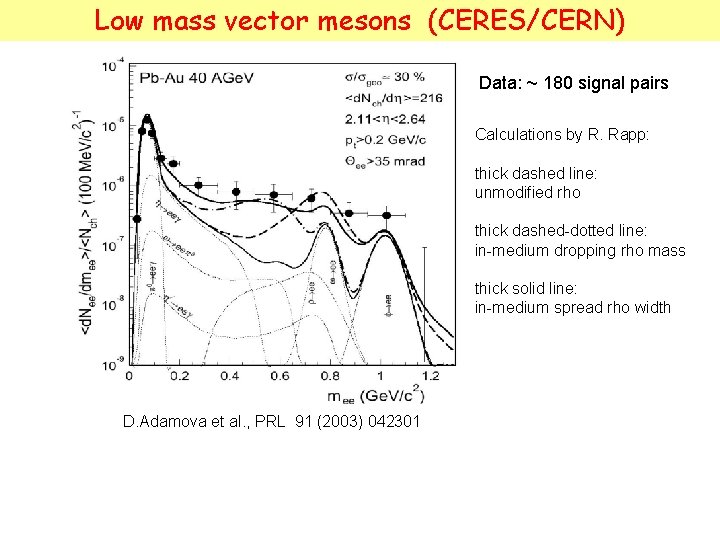
Low mass vector mesons (CERES/CERN) Data: ~ 180 signal pairs Calculations by R. Rapp: thick dashed line: unmodified rho thick dashed-dotted line: in-medium dropping rho mass thick solid line: in-medium spread rho width D. Adamova et al. , PRL 91 (2003) 042301
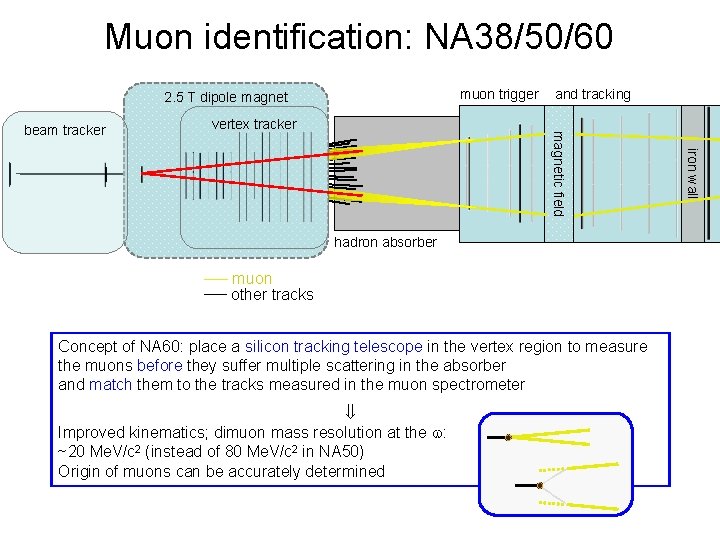
Muon identification: NA 38/50/60 muon trigger 2. 5 T dipole magnet targets vertex tracker hadron absorber muon other tracks Concept of NA 60: place a silicon tracking telescope in the vertex region to measure the muons before they suffer multiple scattering in the absorber and match them to the tracks measured in the muon spectrometer Improved kinematics; dimuon mass resolution at the : ~20 Me. V/c 2 (instead of 80 Me. V/c 2 in NA 50) Origin of muons can be accurately determined iron wall magnetic field beam tracker and tracking
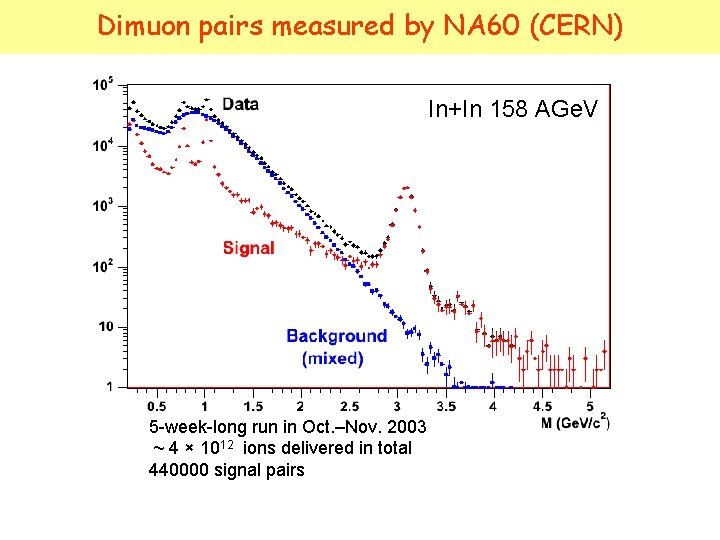
Dimuon pairs measured by NA 60 (CERN) In+In 158 AGe. V 5 -week-long run in Oct. –Nov. 2003 ~ 4 × 10¹² ions delivered in total 440000 signal pairs
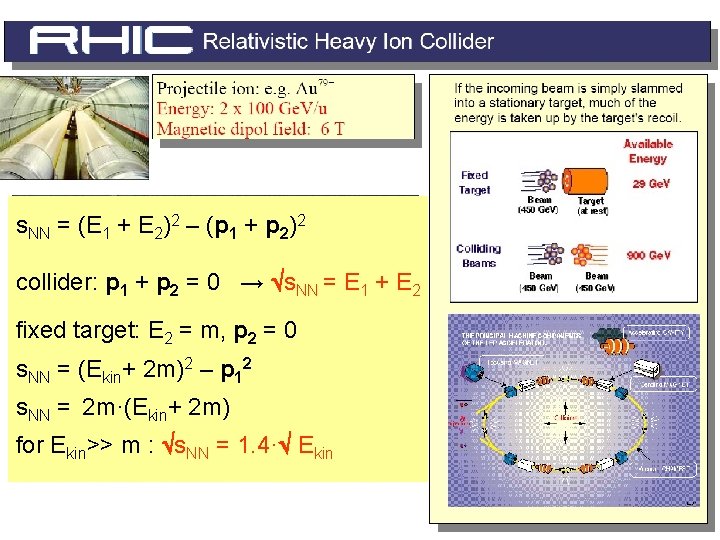
s. NN = (E 1 + E 2)2 – (p 1 + p 2)2 collider: p 1 + p 2 = 0 → s. NN = E 1 + E 2 fixed target: E 2 = m, p 2 = 0 s. NN = (Ekin+ 2 m)2 – p 12 s. NN = 2 m·(Ekin+ 2 m) for Ekin>> m : s. NN = 1. 4· Ekin
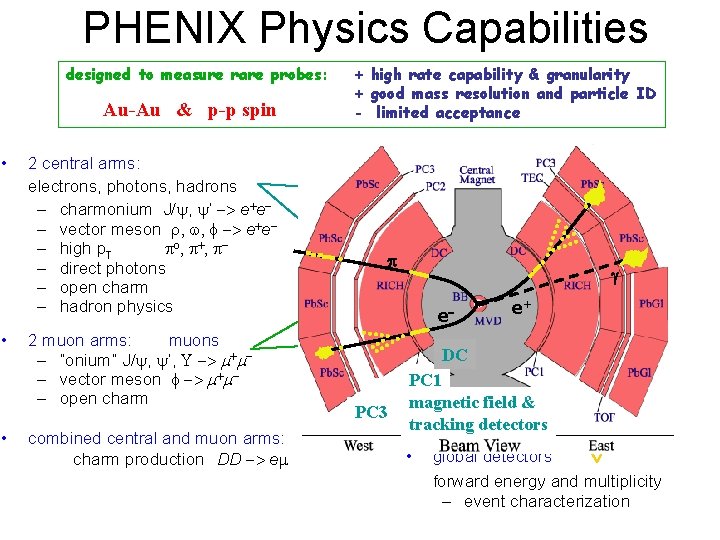
PHENIX Physics Capabilities designed to measure rare probes: Au-Au & p-p spin • • • 2 central arms: electrons, photons, hadrons – charmonium J/ , ’ -> e+e– vector meson , , -> e+e– high p. T o, +, – direct photons – open charm – hadron physics 2 muon arms: muons – “onium” J/ , ’, -> m+m– vector meson -> m+m– open charm combined central and muon arms: charm production DD -> e + high rate capability & granularity + good mass resolution and particle ID - limited acceptance p g e- PC 3 e+ DC PC 1 magnetic field & tracking detectors • global detectors forward energy and multiplicity – event characterization
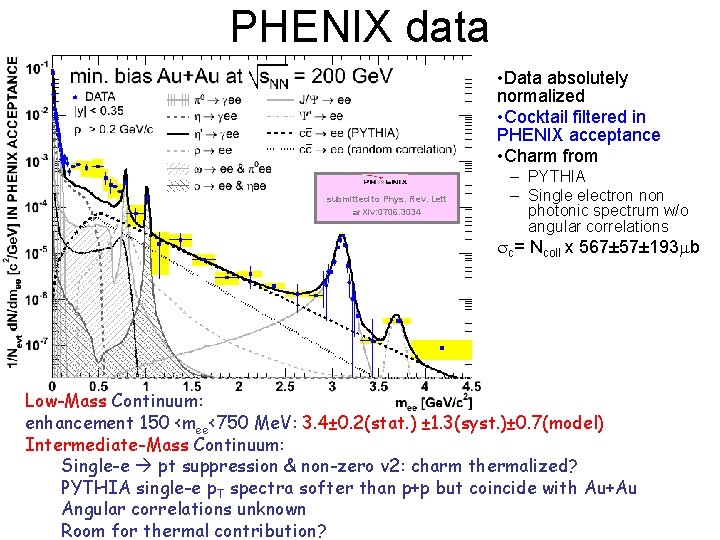
PHENIX data • Data absolutely normalized • Cocktail filtered in PHENIX acceptance • Charm from submitted to Phys. Rev. Lett ar. Xiv: 0706. 3034 – PYTHIA – Single electron non photonic spectrum w/o angular correlations sc= Ncoll x 567± 57± 193 b Low-Mass Continuum: enhancement 150 <mee<750 Me. V: 3. 4± 0. 2(stat. ) ± 1. 3(syst. )± 0. 7(model) Intermediate-Mass Continuum: Single-e pt suppression & non-zero v 2: charm thermalized? PYTHIA single-e p. T spectra softer than p+p but coincide with Au+Au Angular correlations unknown Room for thermal contribution?
CERN and the Large Hadron Collider (LHC)
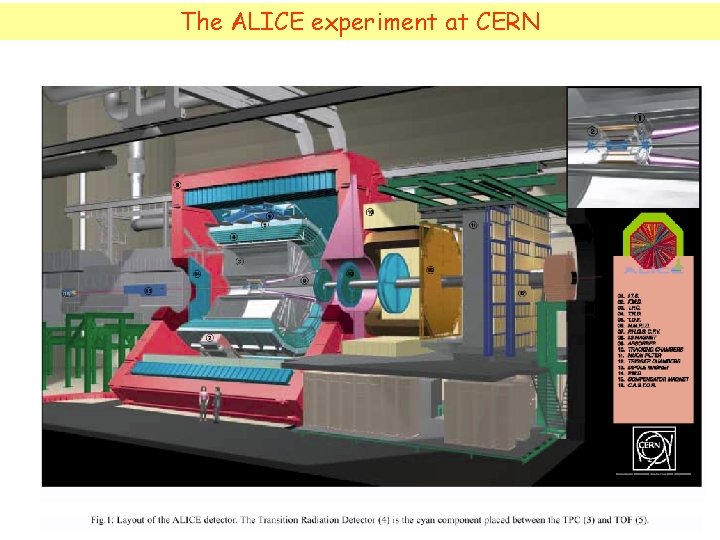
The ALICE experiment at CERN
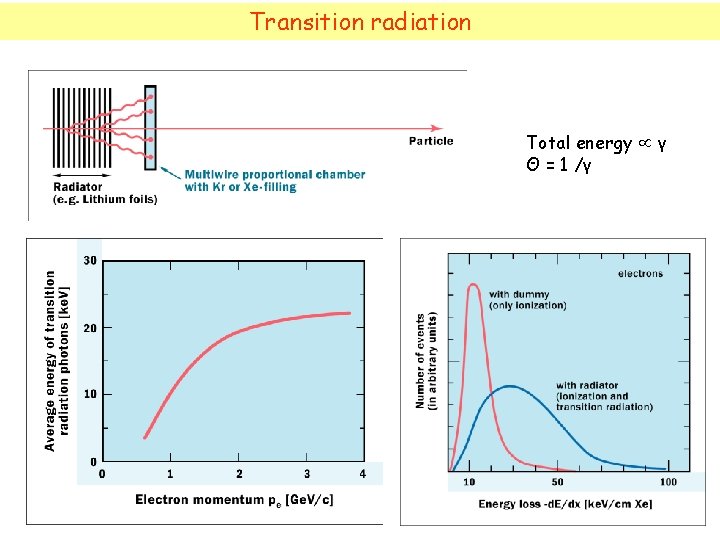
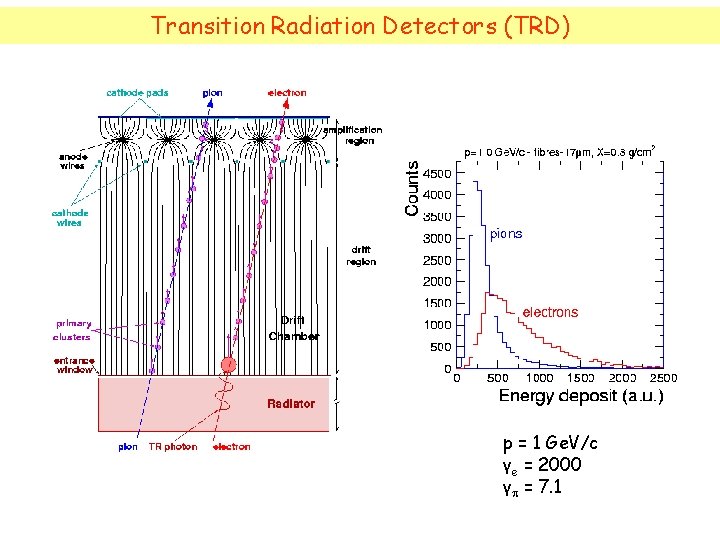
Transition radiation Total energy γ Θ = 1 /γ
Transition Radiation Detectors (TRD) p = 1 Ge. V/c γe = 2000 γ = 7. 1
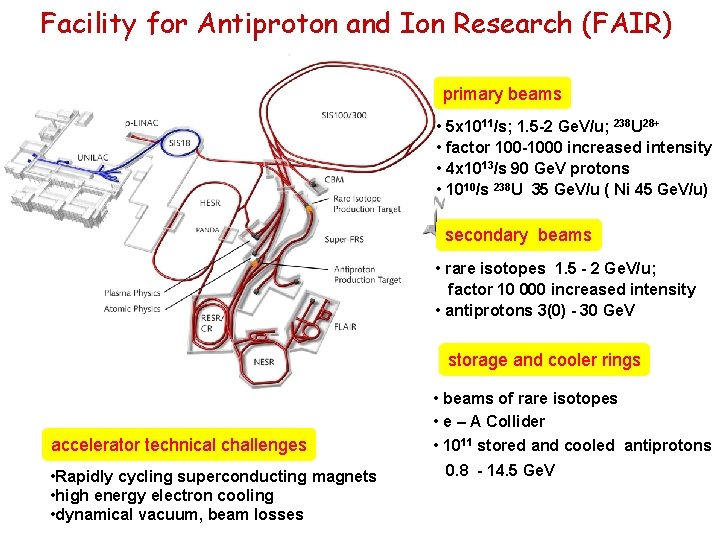
Facility for Antiproton and Ion Research (FAIR) primary beams • 5 x 10¹¹/s; 1. 5 -2 Ge. V/u; 238 U 28+ • factor 100 -1000 increased intensity • 4 x 10¹³/s 90 Ge. V protons • 1010/s 238 U 35 Ge. V/u ( Ni 45 Ge. V/u) secondary beams • rare isotopes 1. 5 - 2 Ge. V/u; factor 10 000 increased intensity • antiprotons 3(0) - 30 Ge. V storage and cooler rings accelerator technical challenges • Rapidly cycling superconducting magnets • high energy electron cooling • dynamical vacuum, beam losses • beams of rare isotopes • e – A Collider • 1011 stored and cooled antiprotons 0. 8 - 14. 5 Ge. V
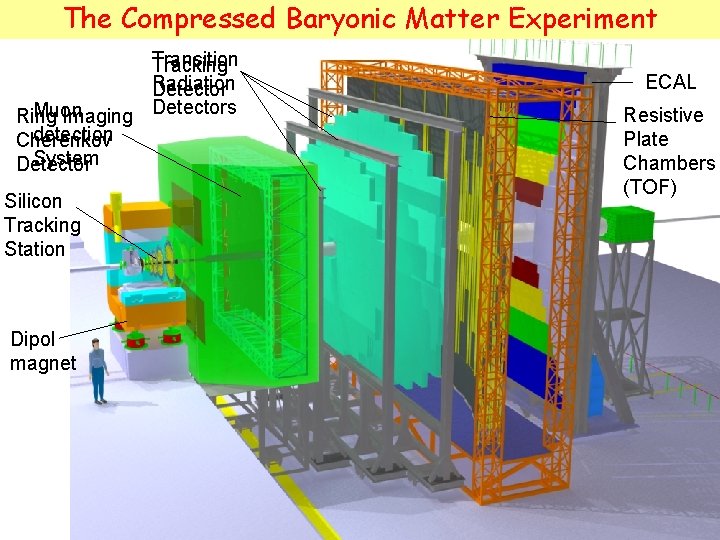
The Compressed Baryonic Matter Experiment Transition Tracking Radiation Detector Muon Ring Imaging Detectors detection Cherenkov System Detector Silicon Tracking Station Dipol magnet ECAL Resistive Plate Chambers (TOF)
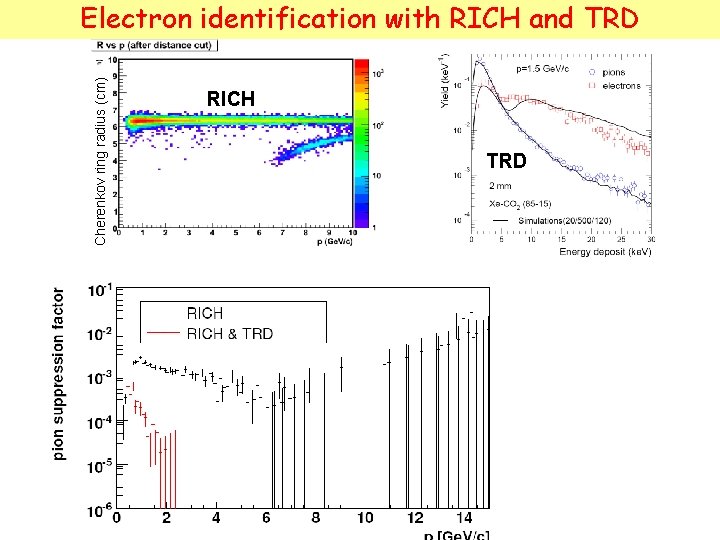
Cherenkov ring radius (cm) Electron identification with RICH and TRD RICH TRD
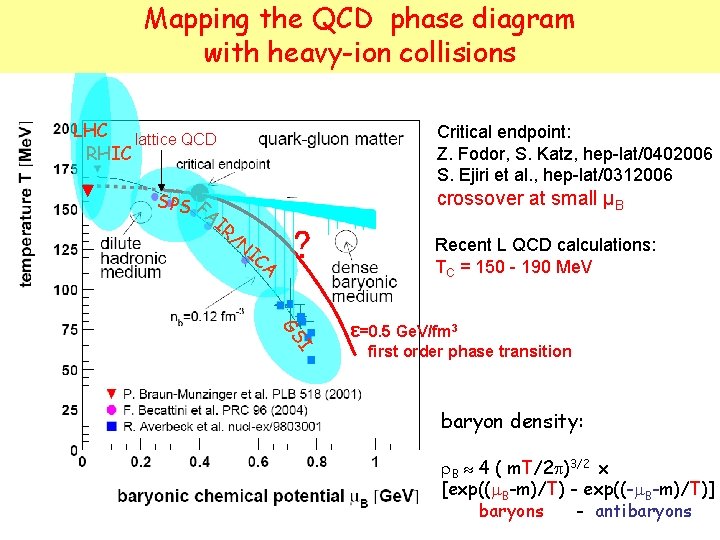
Mapping the QCD phase diagram with heavy-ion collisions LHC lattice QCD RHIC Critical endpoint: Z. Fodor, S. Katz, hep-lat/0402006 S. Ejiri et al. , hep-lat/0312006 crossover at small μB SPS F AI R/ N IC A ? Recent L QCD calculations: TC = 150 - 190 Me. V I GS ε=0. 5 Ge. V/fm 3 first order phase transition baryon density: B 4 ( m. T/2 )3/2 x [exp(( B-m)/T) - exp((- B-m)/T)] baryons - antibaryons
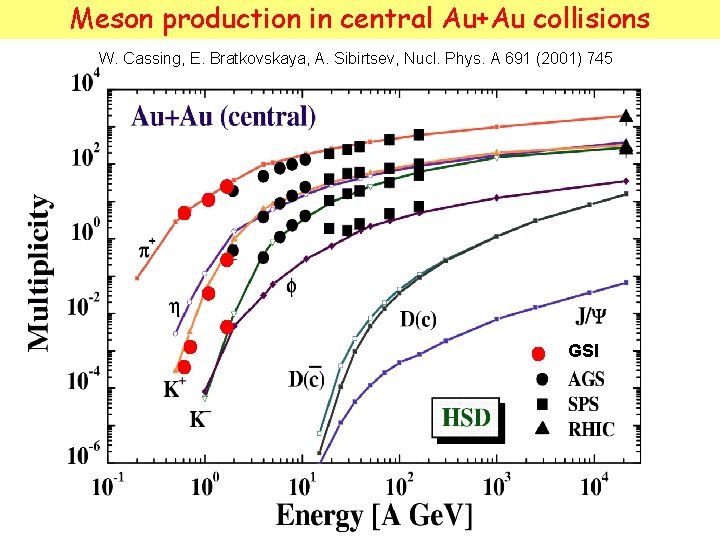
Meson production in central Au+Au collisions W. Cassing, E. Bratkovskaya, A. Sibirtsev, Nucl. Phys. A 691 (2001) 745 GSI
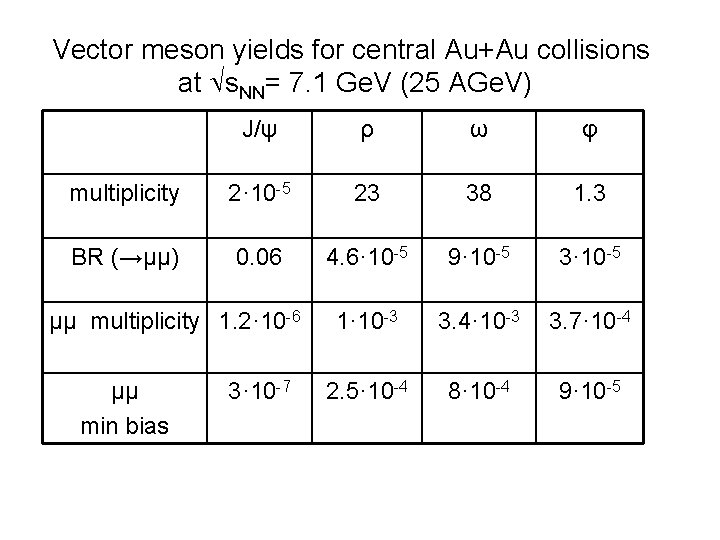
Vector meson yields for central Au+Au collisions at s. NN= 7. 1 Ge. V (25 AGe. V) J/ψ ρ ω φ multiplicity 2· 10 -5 23 38 1. 3 BR (→μμ) 0. 06 4. 6· 10 -5 9· 10 -5 3· 10 -5 1· 10 -3 3. 4· 10 -3 3. 7· 10 -4 2. 5· 10 -4 8· 10 -4 9· 10 -5 μμ multiplicity 1. 2· 10 -6 μμ min bias 3· 10 -7
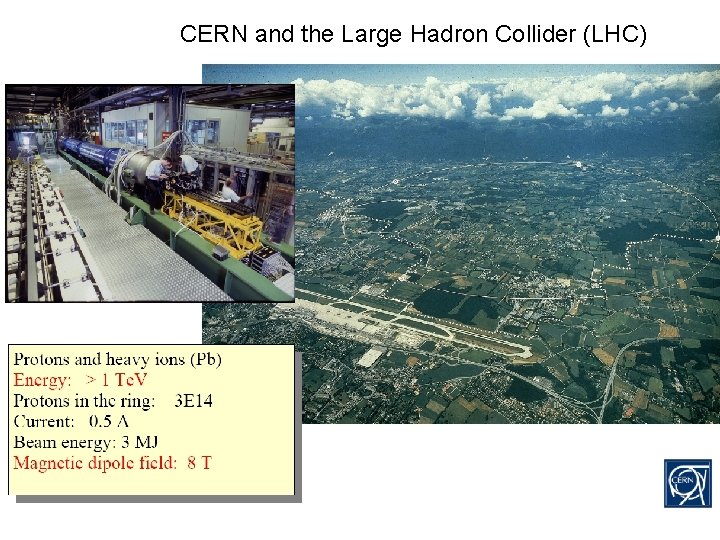
Collider Luminosity: L = N 1·N 2·B / F [cm-2 s-1] N 1, N 2 = beam particles per bunch B = number of bunch crossings per sec F = beam size in cm 2 Typical numbers: N 1= N 2 = 109 B = 106 F = 10 -3 cm 2 → L = 1027 cm-2 s-1 Reaktion rate R = L · σ σ = reaction cross section σ = · (2 ·R)2 = 4 ·(r 0·A 1/3)2 with r 0=1. 2 fm Au+Au collisions: A=197 σ = 6 barn, 1 barn = 10 -24 cm 2 Collider reaction rates for Au+Au: R = 1027 cm-2 s-1 · 6· 10 -24 cm 2 = 6000 s-1
Fixed target Luminosity: L = NB·NT/ F [cm-2 s-1] NB = beam particles/sec NT /F = target atoms/cm 2 = NA · ·d/A with Avogadros Number NA = 6. 02· 1023· mol-1, material density [g/cm 3], target thickness d [cm] atomic number A Typical numbers: NB = 109 s-1 Au target: = 19. 3 g/cm 3, A = 197 d = 0. 3 mm (1% interaction rate) L = 1. 8· 1030 cm-2 s-1 Fixed target reaction rates for Au+Au: R = L · σ = 1. 8· 1030 cm-2 s-1 · 6· 10 -24 cm 2 = 107 s-1
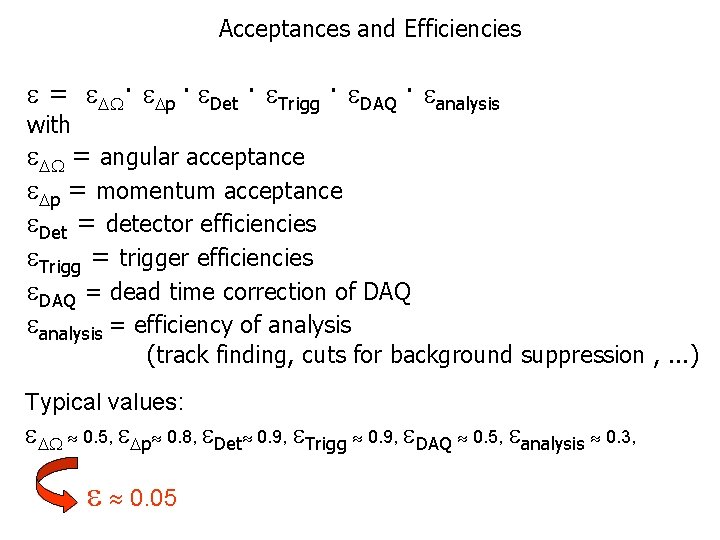
Acceptances and Efficiencies = · p · Det · Trigg · DAQ · analysis with = angular acceptance p = momentum acceptance Det = detector efficiencies Trigg = trigger efficiencies DAQ = dead time correction of DAQ analysis = efficiency of analysis (track finding, cuts for background suppression , . . . ) Typical values: 0. 5, p 0. 8, Det 0. 9, Trigg 0. 9, DAQ 0. 5, analysis 0. 3, 0. 05
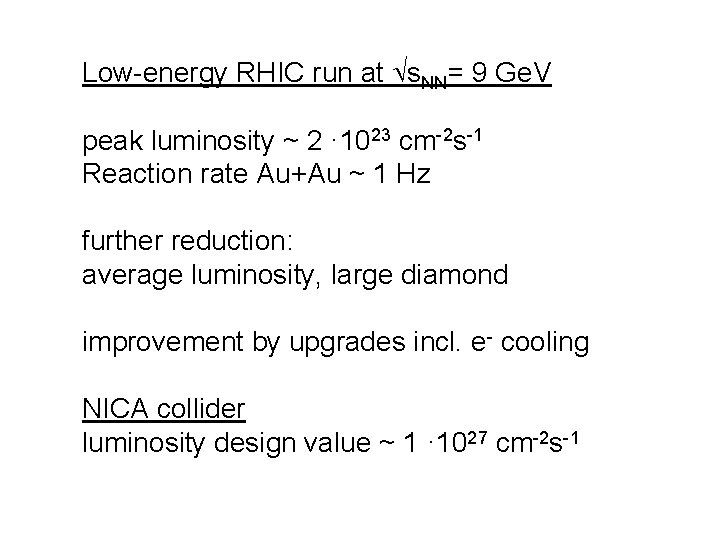
Low-energy RHIC run at s. NN= 9 Ge. V peak luminosity ~ 2 · 1023 cm-2 s-1 Reaction rate Au+Au ~ 1 Hz further reduction: average luminosity, large diamond improvement by upgrades incl. e- cooling NICA collider luminosity design value ~ 1 · 1027 cm-2 s-1
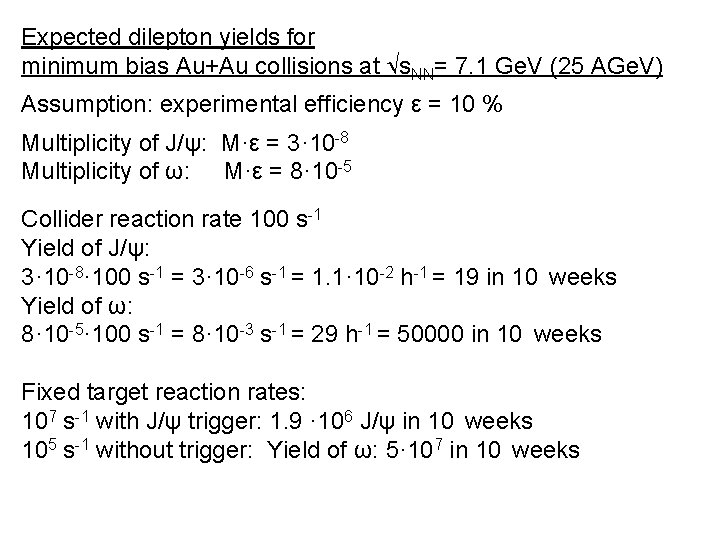
Expected dilepton yields for minimum bias Au+Au collisions at s. NN= 7. 1 Ge. V (25 AGe. V) Assumption: experimental efficiency ε = 10 % Multiplicity of J/ψ: M·ε = 3· 10 -8 Multiplicity of ω: M·ε = 8· 10 -5 Collider reaction rate 100 s-1 Yield of J/ψ: 3· 10 -8· 100 s-1 = 3· 10 -6 s-1 = 1. 1· 10 -2 h-1 = 19 in 10 weeks Yield of ω: 8· 10 -5· 100 s-1 = 8· 10 -3 s-1 = 29 h-1 = 50000 in 10 weeks Fixed target reaction rates: 107 s-1 with J/ψ trigger: 1. 9 · 106 J/ψ in 10 weeks 105 s-1 without trigger: Yield of ω: 5· 107 in 10 weeks