
Dihybrid Crosses Punnett squares for two traits Genes

Dihybrid Crosses: Punnett squares for two traits

Genes on Different Chromosomes If two genes are on different chromosomes, all four possible alleles combinations for two different genes in a heterozygous cross are equally likely due to independent assortment. If parents are Rr. Yy (heterozygous for both traits) R r y Y OR R r Y y Ry r. Y RY ry Gametes: 25% Ry, 25% r. Y, 25% RY, 25% ry Equally likely to line up either way when dividing
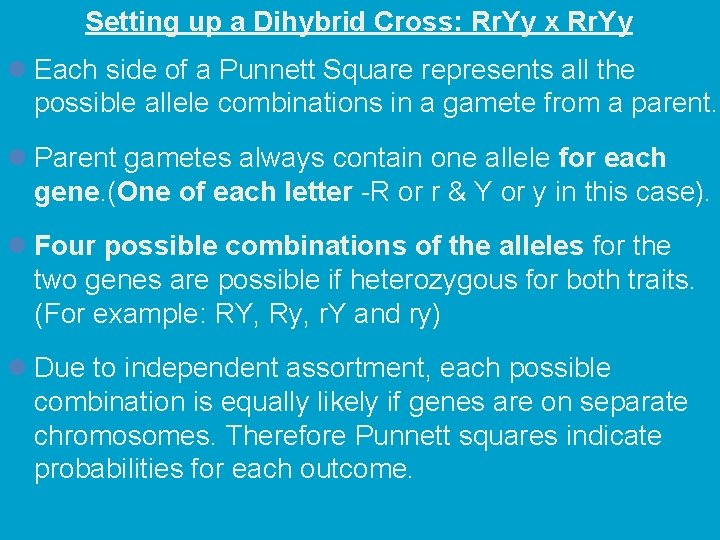
Setting up a Dihybrid Cross: Rr. Yy x Rr. Yy l Each side of a Punnett Square represents all the possible allele combinations in a gamete from a parent. l Parent gametes always contain one allele for each gene. (One of each letter -R or r & Y or y in this case). l Four possible combinations of the alleles for the two genes are possible if heterozygous for both traits. (For example: RY, Ry, r. Y and ry) l Due to independent assortment, each possible combination is equally likely if genes are on separate chromosomes. Therefore Punnett squares indicate probabilities for each outcome.
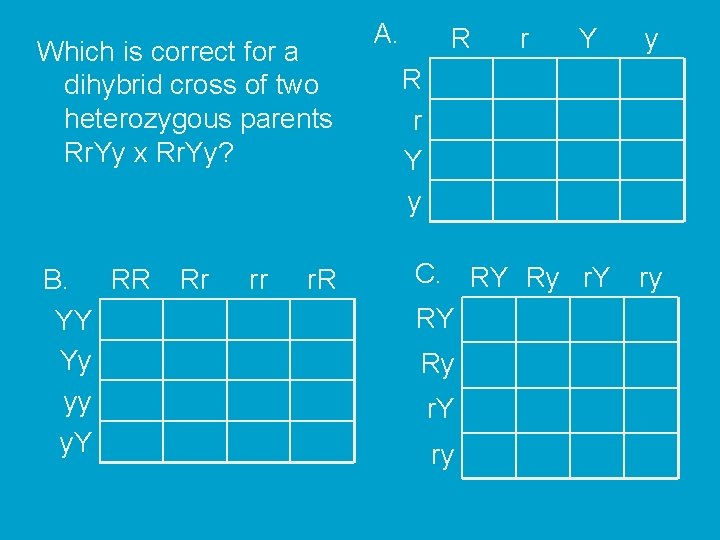
Which is correct for a dihybrid cross of two heterozygous parents Rr. Yy x Rr. Yy? B. RR YY Yy yy y. Y Rr rr r. R A. R r Y y C. RY Ry r. Y ry ry
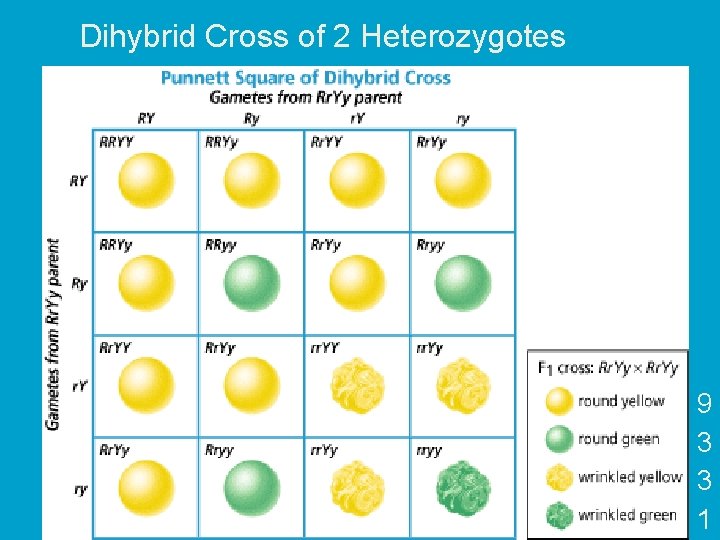
Dihybrid Cross of 2 Heterozygotes 9 3 3 1
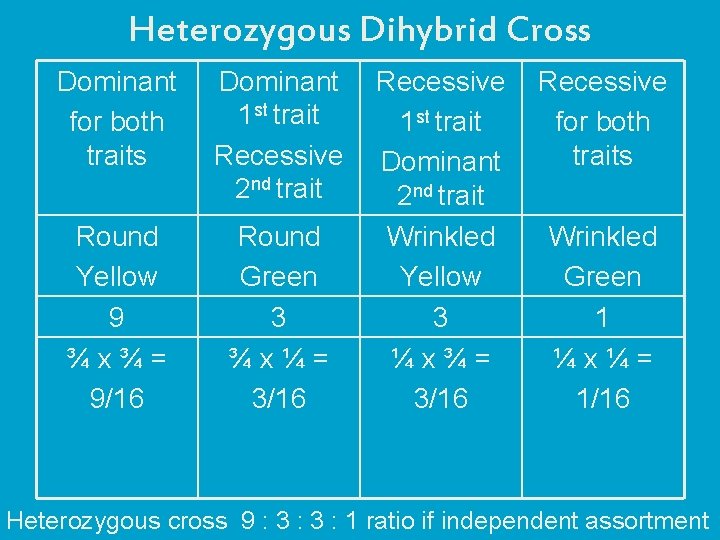
Heterozygous Dihybrid Cross Dominant for both traits Dominant 1 st trait Recessive 2 nd trait Round Yellow 9 ¾x¾= 9/16 Round Green 3 ¾x¼= 3/16 Recessive 1 st trait Dominant 2 nd trait Wrinkled Yellow 3 ¼x¾= 3/16 Recessive for both traits Wrinkled Green 1 ¼x¼= 1/16 Heterozygous cross 9 : 3 : 1 ratio if independent assortment
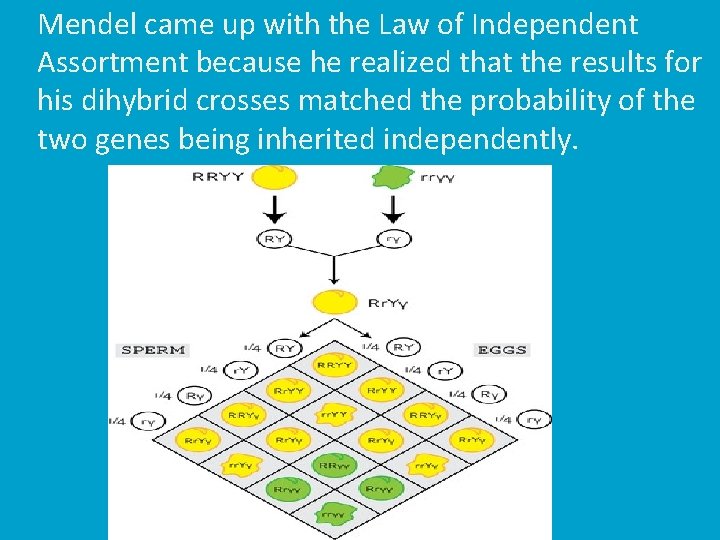
Mendel came up with the Law of Independent Assortment because he realized that the results for his dihybrid crosses matched the probability of the two genes being inherited independently.
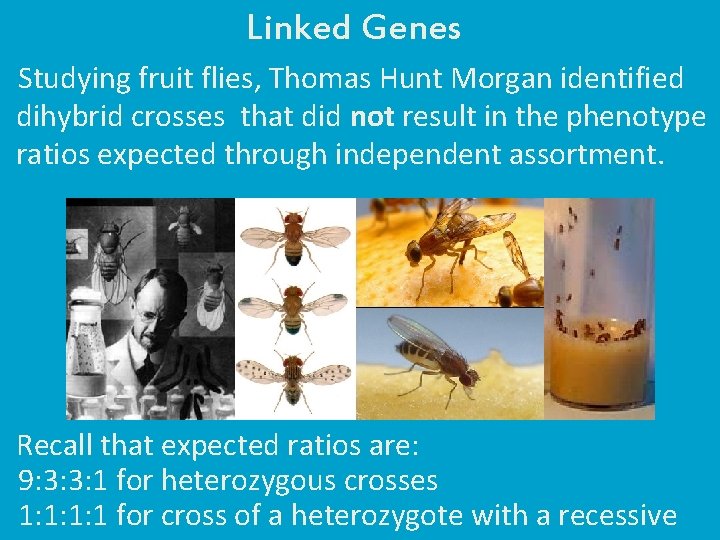
Linked Genes Studying fruit flies, Thomas Hunt Morgan identified dihybrid crosses that did not result in the phenotype ratios expected through independent assortment. Recall that expected ratios are: 9: 3: 3: 1 for heterozygous crosses 1: 1: 1: 1 for cross of a heterozygote with a recessive
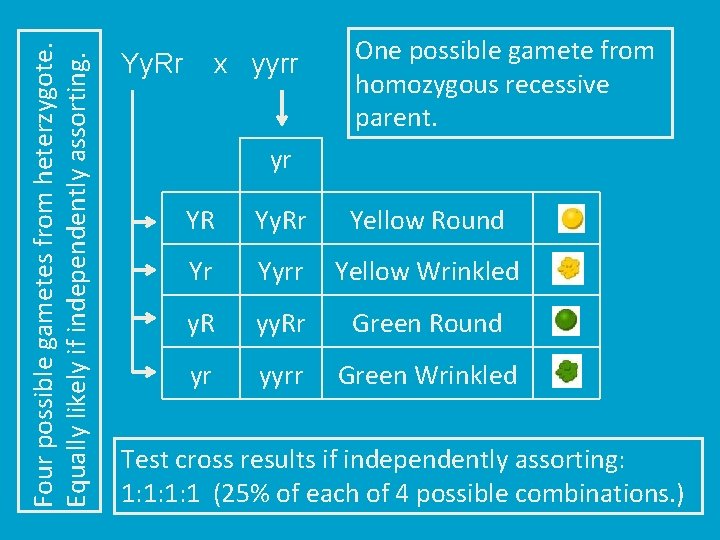
Four possible gametes from heterzygote. Equally likely if independently assorting. Yy. Rr x yyrr One possible gamete from homozygous recessive parent. yr YR Yy. Rr Yellow Round Yr Yyrr Yellow Wrinkled y. R yy. Rr Green Round yr yyrr Green Wrinkled Test cross results if independently assorting: 1: 1 (25% of each of 4 possible combinations. )
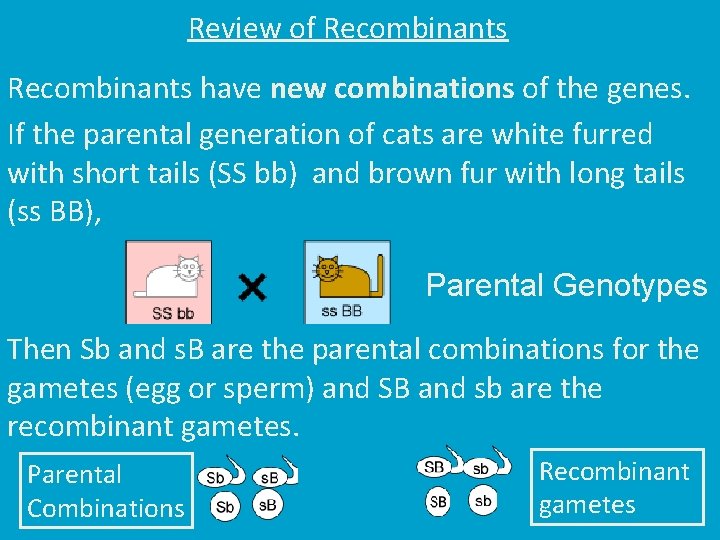
Review of Recombinants have new combinations of the genes. If the parental generation of cats are white furred with short tails (SS bb) and brown fur with long tails (ss BB), Parental Genotypes Then Sb and s. B are the parental combinations for the gametes (egg or sperm) and SB and sb are the recombinant gametes. Parental Combinations Recombinant gametes
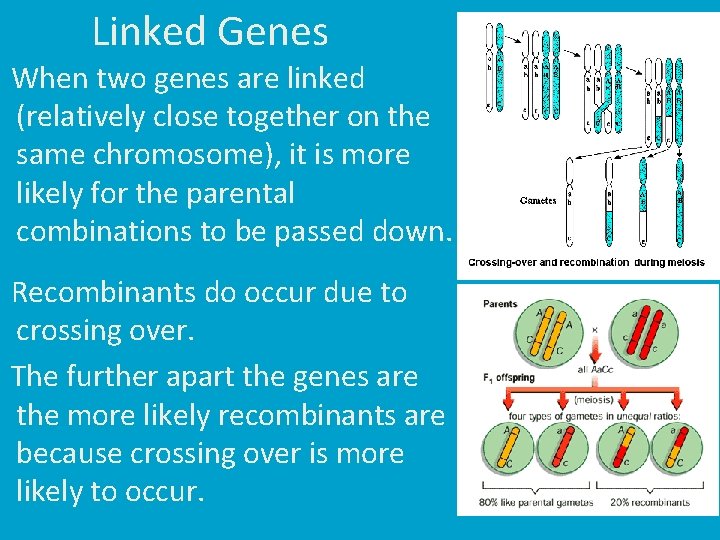
Linked Genes When two genes are linked (relatively close together on the same chromosome), it is more likely for the parental combinations to be passed down. Recombinants do occur due to crossing over. The further apart the genes are the more likely recombinants are because crossing over is more likely to occur.
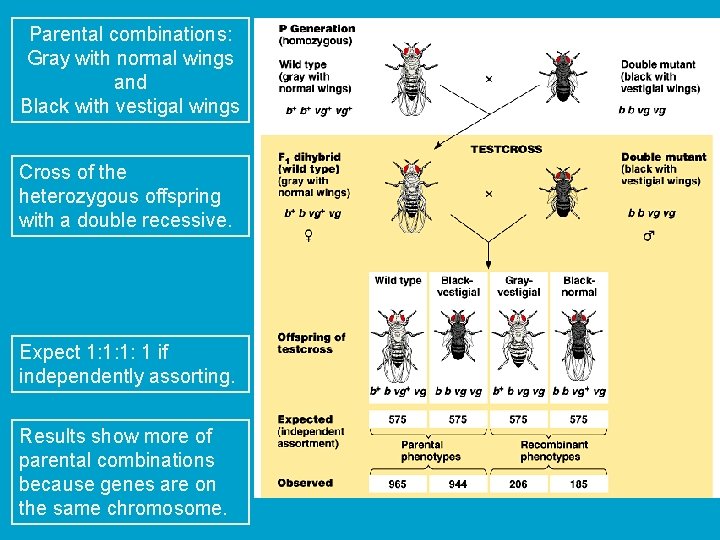
Parental combinations: Gray with normal wings and Black with vestigal wings Cross of the heterozygous offspring with a double recessive. Expect 1: 1: 1: 1 if independently assorting. Results show more of parental combinations because genes are on the same chromosome.
Parental combinations: Gray with normal wings and Black with vestigal wings Cross of the heterozygous offspring with a double recessive. Expect 1: 1: 1: 1 if independently assorting. Results show more of parental combinations because genes are on the same chromosome.
Mythbuster: Many people assume that dominant traits are always more common. It is true that if both parents are heterozygous, it is more likely that the offspring will have the dominant trait (75% probability). However, a recessive trait can be more common when the recessive allele is more prevalent in the population. For example, Achrondoplasia dwarfism is caused by a dominant allele, and yet the trait is very rare in the
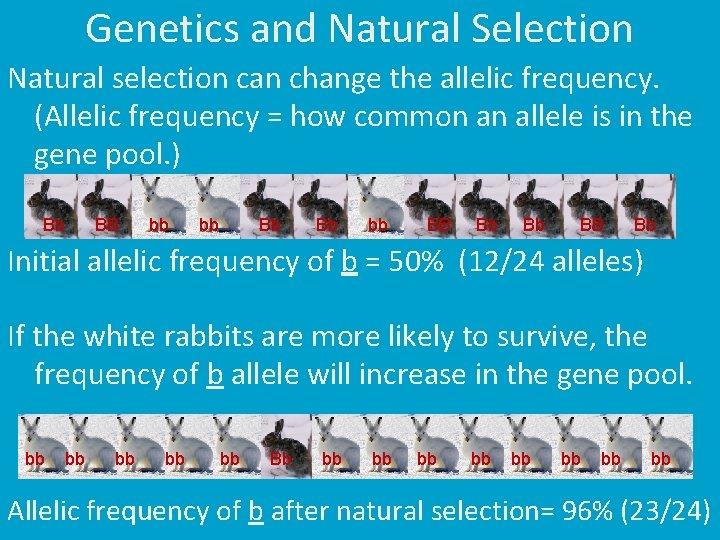
Genetics and Natural Selection Natural selection can change the allelic frequency. (Allelic frequency = how common an allele is in the gene pool. ) Bb BB bb bb Bb Bb bb BB Bb Bb BB Bb Initial allelic frequency of b = 50% (12/24 alleles) If the white rabbits are more likely to survive, the frequency of b allele will increase in the gene pool. bb bb bb Bb bb bb Allelic frequency of b after natural selection= 96% (23/24)
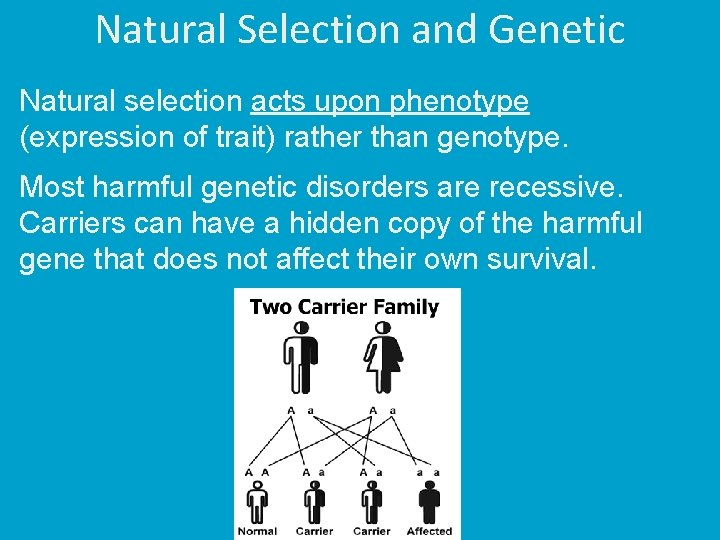
Natural Selection and Genetic Natural selection acts upon phenotype (expression of trait) rather than genotype. Most harmful genetic disorders are recessive. Carriers can have a hidden copy of the harmful gene that does not affect their own survival.
- Slides: 16