
Digitalization of Pension System in Mexico Benefits and
Digitalization of Pension System in Mexico Benefits and Implications Jocelyn Alba & Juan Carmona National Autonomous University of Mexico (UNAM) May 11 th – May 15 th 2020
About the speaker Jocelyn G. Alba Arellano Juan F. Carmona S. • Academic & Risk Manager • Academic & Financial Researcher • Actuarial Science (UNAM, 2018), High Technology Management (Samara University, 2017) • Master in Financial Economics (UNAM, 2019), Graduate in Economics (ITAM, 2016) & Actuarial Science (UNAM, 2015) UNAM – Scotiabank Mexico UNAM – Bank of México § Risk Manager in Liquidity, Interest Rate and Investment Funds Directorate § Harvard Project for Asian and International Relations Delegate § World Bank Impact Challenge, first place § 7 years of professional experience in the Macroeconomic Analysis Directorate of Banco de México § 9 years of teaching experience in the Faculty of Sciences § Recognized by Inroads de México, A. C. as "Teacher who leaves a mark"
Digitalization of Pension System in Mexico Introduction and Context § Retirement Savings System in Mexico § Demographic and Labor Context § Non – Conventional Employment SAR Digitalization Strategy § Challenges, Scope and Limitations Results Public Policy Recommendations Conclusions
Digitalization of Pension System in Mexico Introduction and Context § Retirement Savings System in Mexico § Demographic and Labor Context § Non – Conventional Employment SAR Digitalization Strategy § Challenges, Scope and Limitations Results Public Policy Recommendations Conclusions
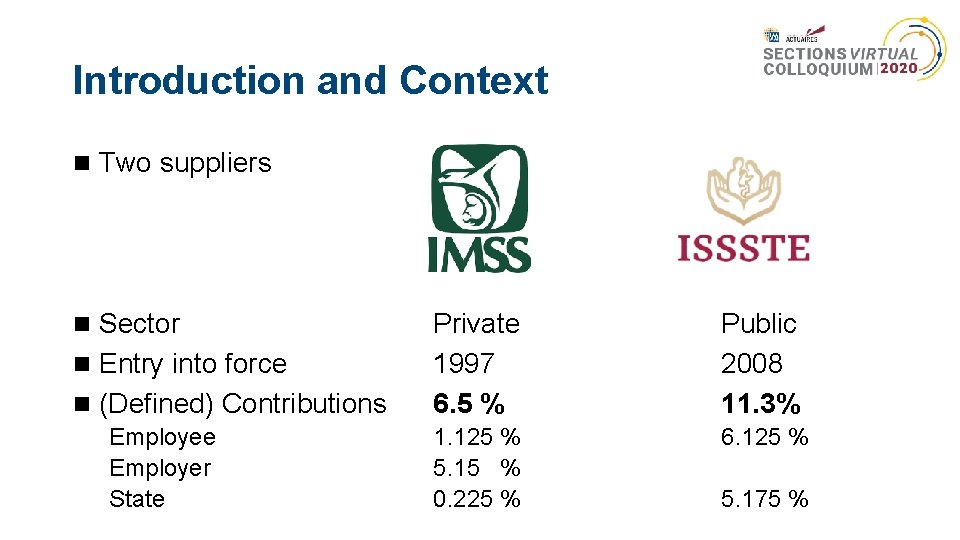
Introduction and Context Two suppliers Sector Entry into force (Defined) Contributions Employee Employer State Private 1997 6. 5 % Public 2008 11. 3% 1. 125 % 5. 15 % 0. 225 % 6. 125 % 5. 175 %
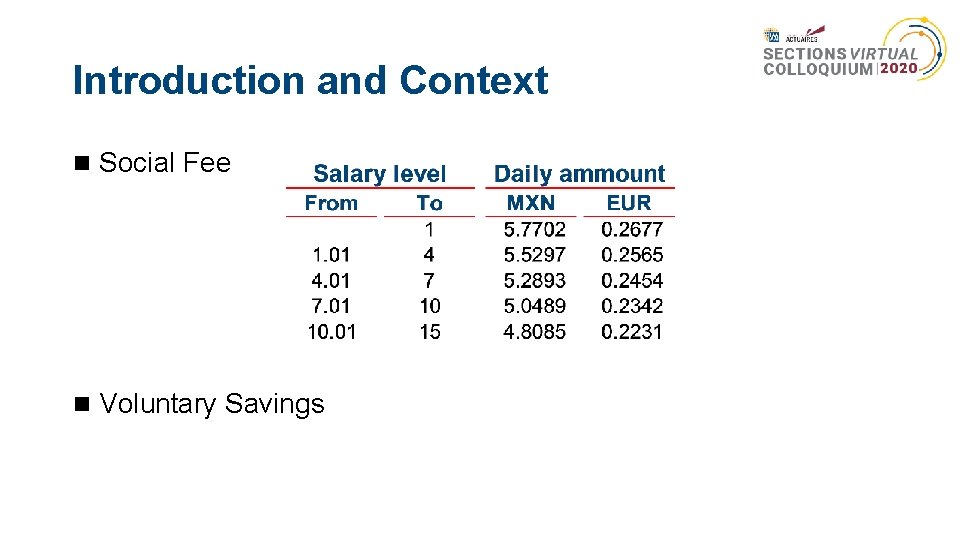
Introduction and Context Social Fee Voluntary Savings
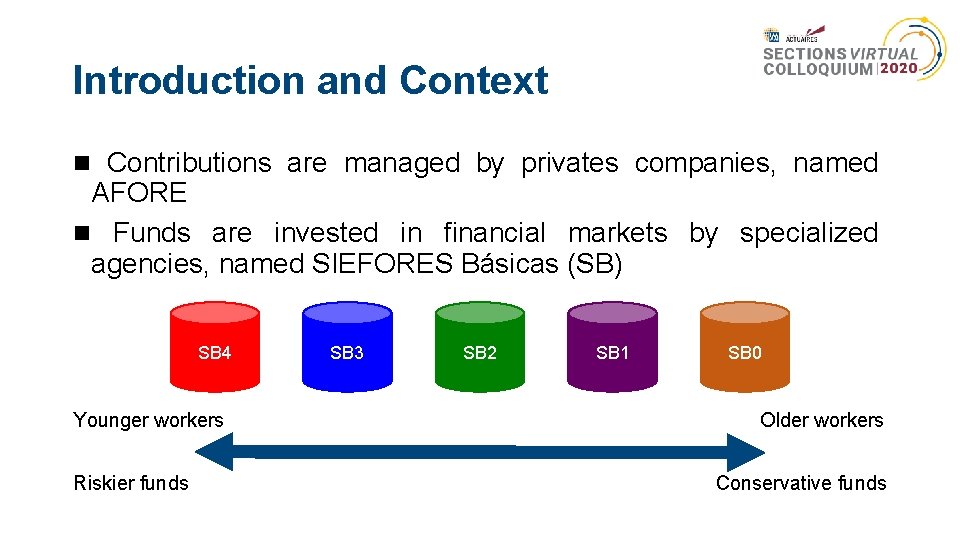
Introduction and Context Contributions are managed by privates companies, named AFORE Funds are invested in financial markets by specialized agencies, named SIEFORES Básicas (SB) SB 4 Younger workers Riskier funds SB 3 SB 2 SB 1 SB 0 Older workers Conservative funds
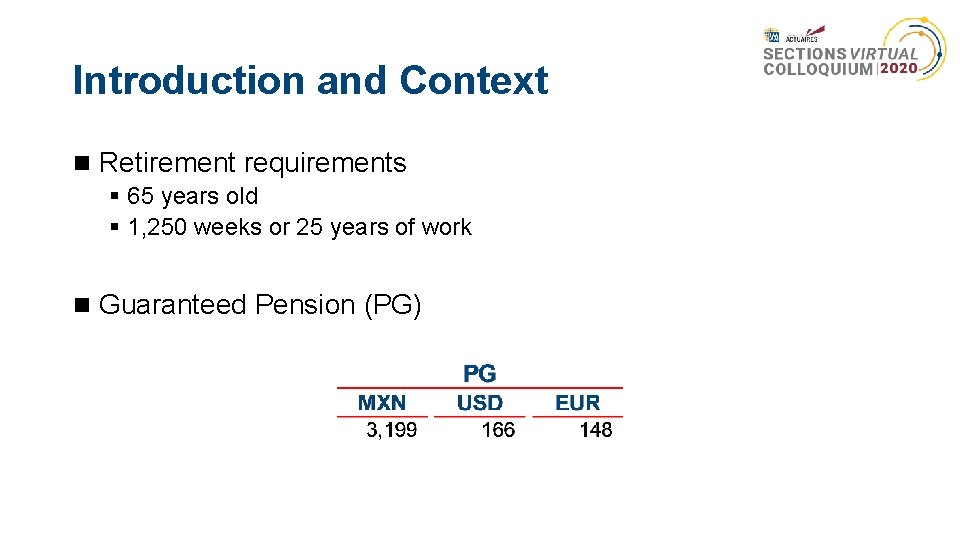
Introduction and Context Retirement requirements § 65 years old § 1, 250 weeks or 25 years of work Guaranteed Pension (PG)
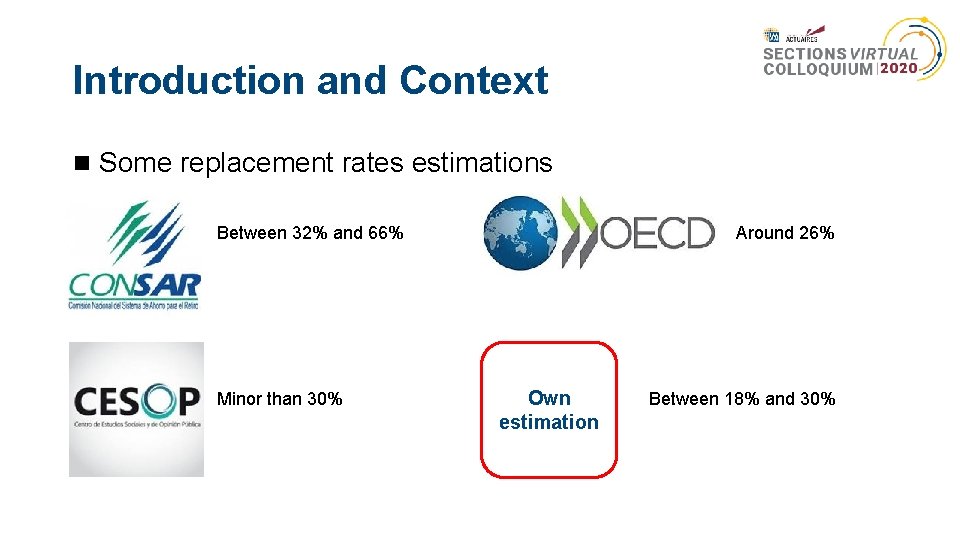
Introduction and Context Some replacement rates estimations Between 32% and 66% Minor than 30% Around 26% Own estimation Between 18% and 30%
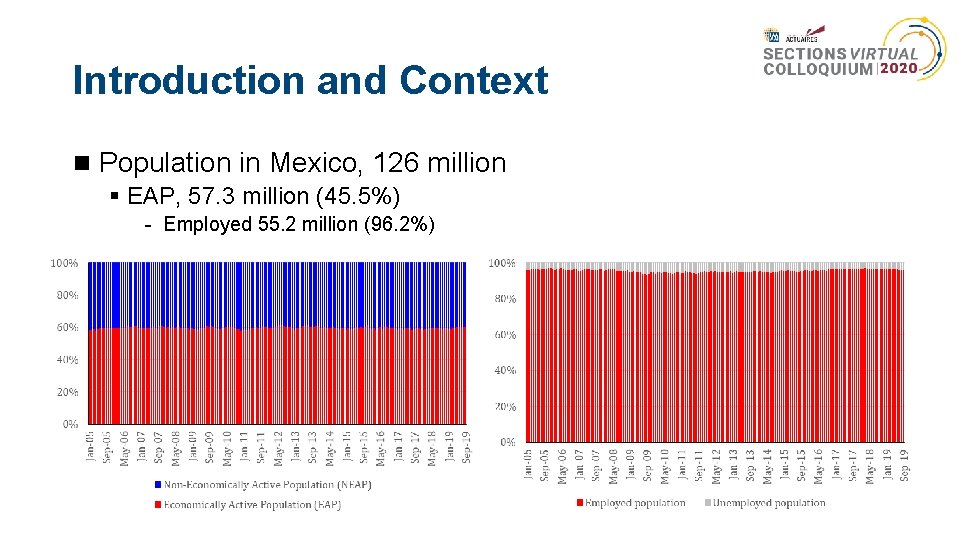
Introduction and Context Population in Mexico, 126 million § EAP, 57. 3 million (45. 5%) - Employed 55. 2 million (96. 2%)
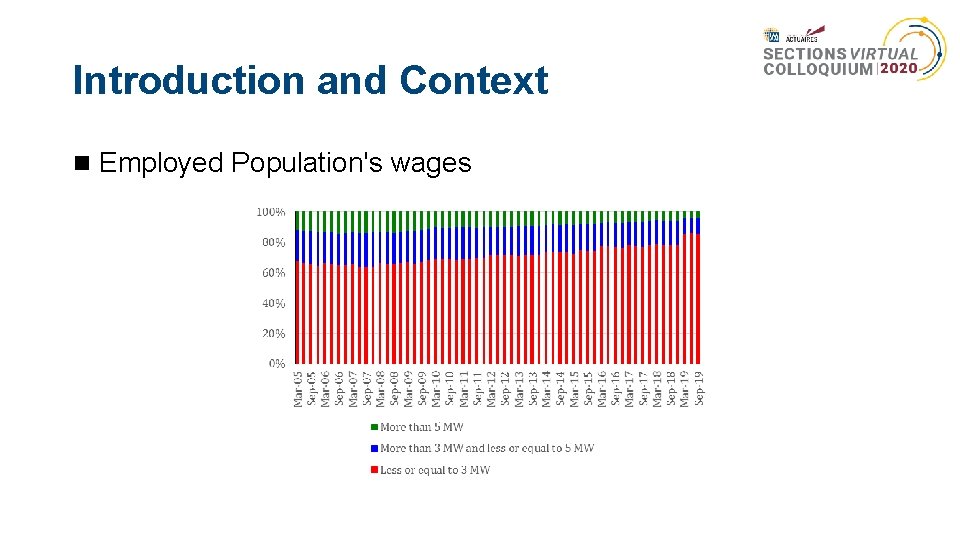
Introduction and Context Employed Population's wages
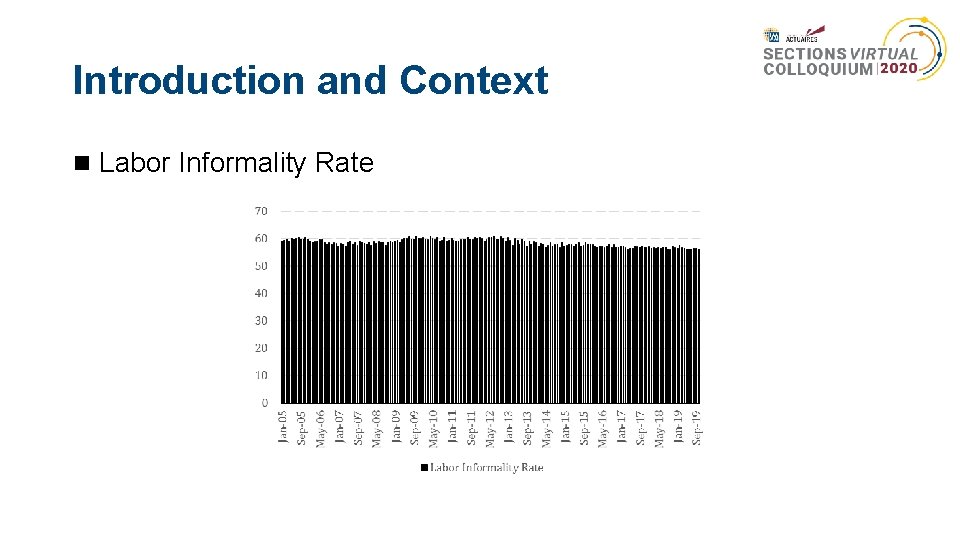
Introduction and Context Labor Informality Rate
Digitalization of Pension System in Mexico Introduction and Context § Retirement Savings System in Mexico § Demographic and Labor Context § Non – Conventional Employment SAR Digitalization Strategy § Challenges, Scope and Limitations Results Public Policy Recommendations Conclusions
SAR Digitalization Strategy 2013. Diagnosis § Weak involvement of workers with their retirement savings § The quality of attention for workers by AFORE was not the optimum § It was extremely complex to make voluntary savings. Context § Low replacement rates § Rising population aging § Technological growth (Natural) solution: Digitalization
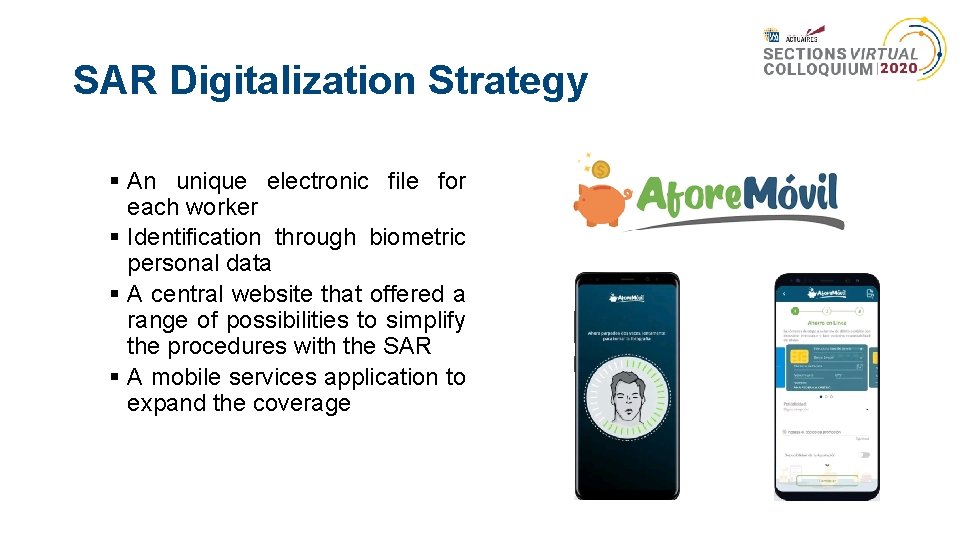
SAR Digitalization Strategy § An unique electronic file for each worker § Identification through biometric personal data § A central website that offered a range of possibilities to simplify the procedures with the SAR § A mobile services application to expand the coverage
SAR Digitalization Strategy Background and Expectations § Digital technologies might simplify procedures, reduce fraud and improve financial and actuarial planning (Keller and Tapia, 2019) § Web applications can contribute to decision making, for example, in voluntary savings (OECD, 2018) Previous experiences
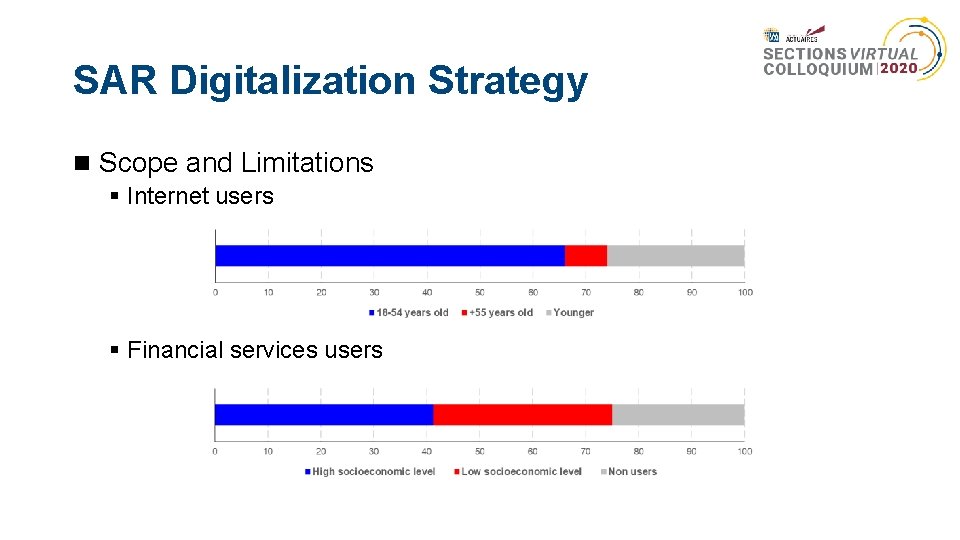
SAR Digitalization Strategy Scope and Limitations § Internet users § Financial services users
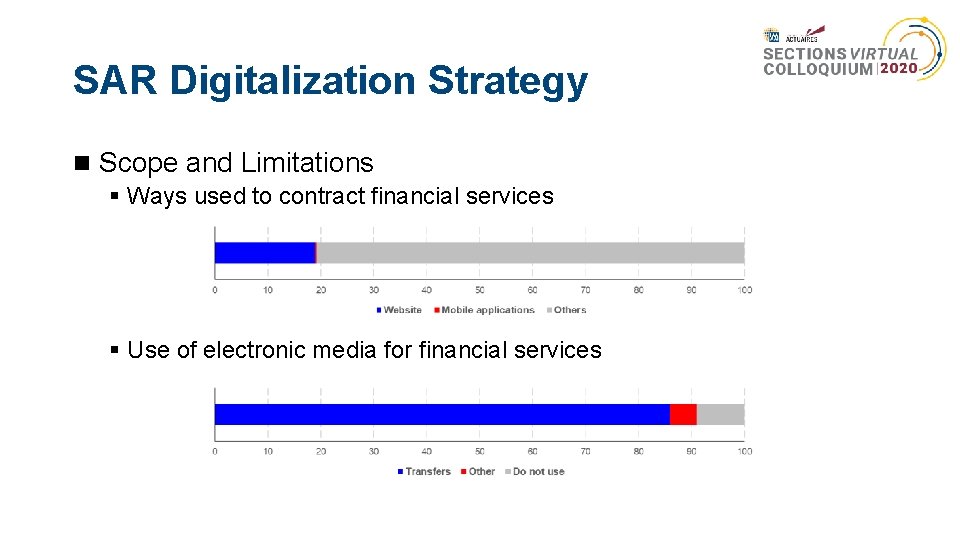
SAR Digitalization Strategy Scope and Limitations § Ways used to contract financial services § Use of electronic media for financial services
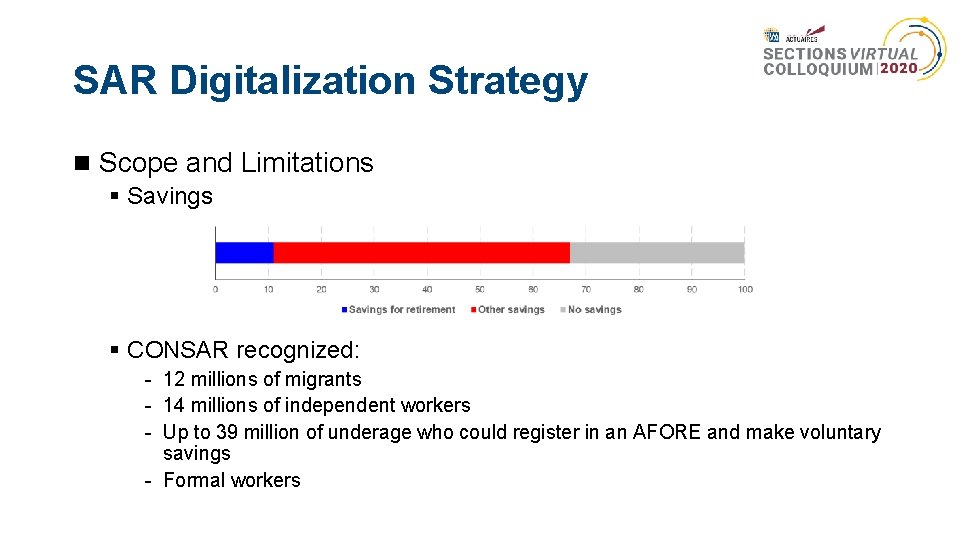
SAR Digitalization Strategy Scope and Limitations § Savings § CONSAR recognized: - 12 millions of migrants - 14 millions of independent workers - Up to 39 million of underage who could register in an AFORE and make voluntary savings - Formal workers
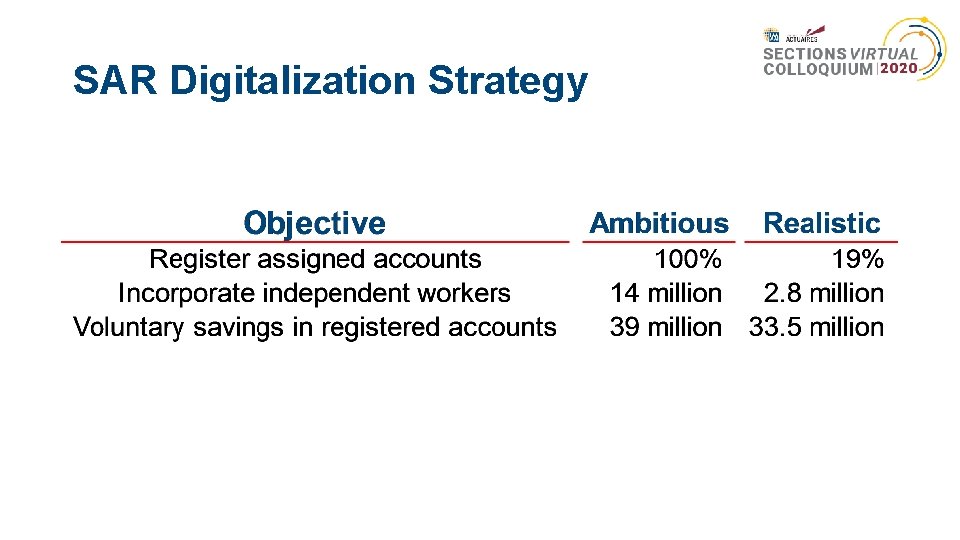
SAR Digitalization Strategy
Digitalization of Pension System in Mexico Introduction and Context § Retirement Savings System in Mexico § Demographic and Labor Context § Non – Conventional Employment SAR Digitalization Strategy § Challenges, Scope and Limitations Results Public Policy Recommendations Conclusions
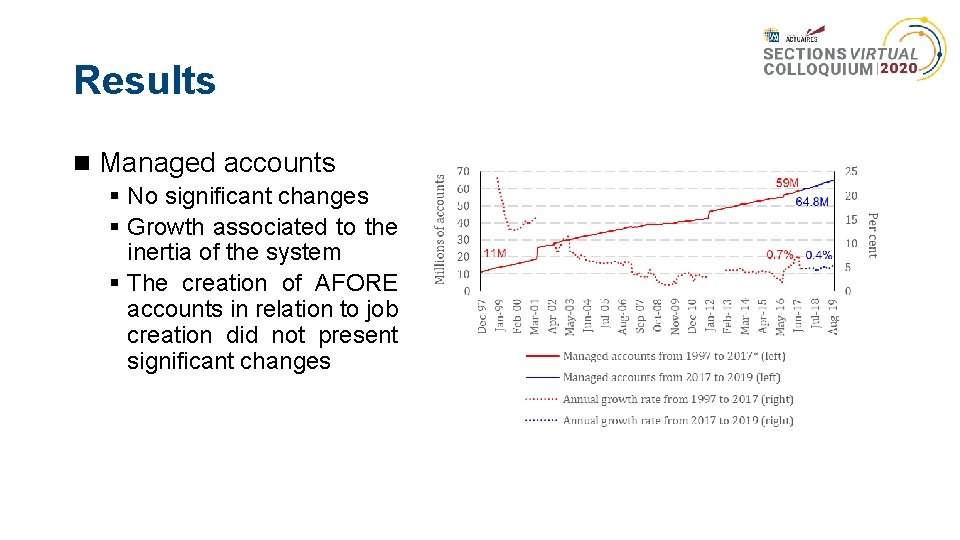
Results Managed accounts § No significant changes § Growth associated to the inertia of the system § The creation of AFORE accounts in relation to job creation did not present significant changes
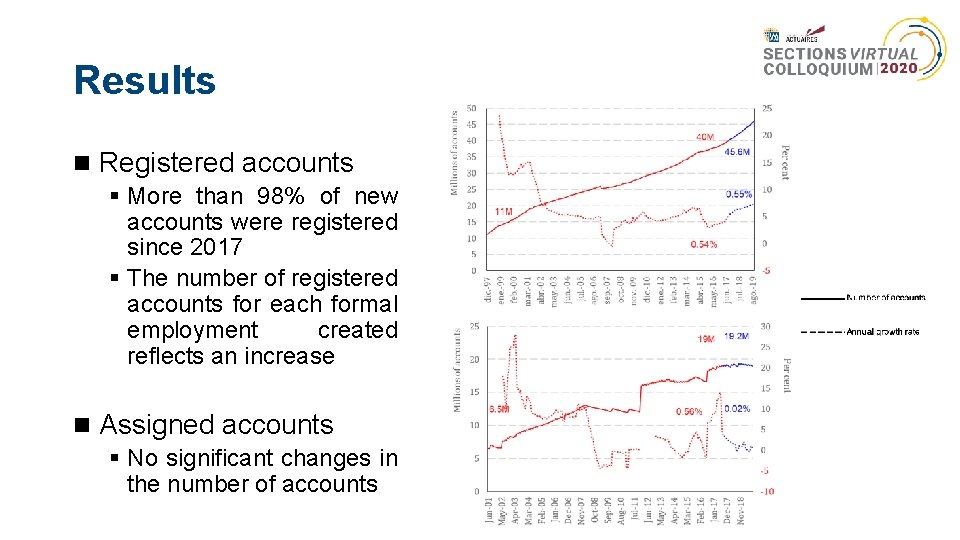
Results Registered accounts § More than 98% of new accounts were registered since 2017 § The number of registered accounts for each formal employment created reflects an increase Assigned accounts § No significant changes in the number of accounts
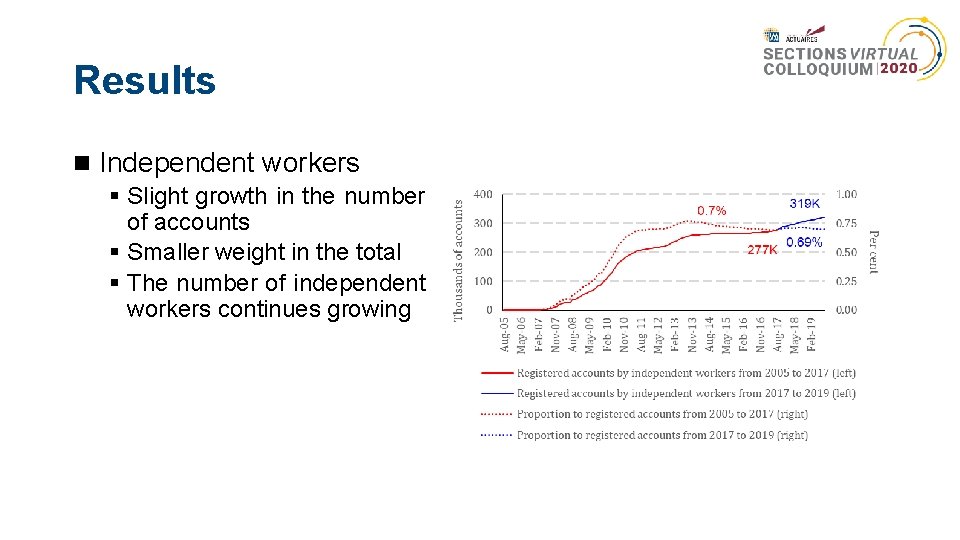
Results Independent workers § Slight growth in the number of accounts § Smaller weight in the total § The number of independent workers continues growing
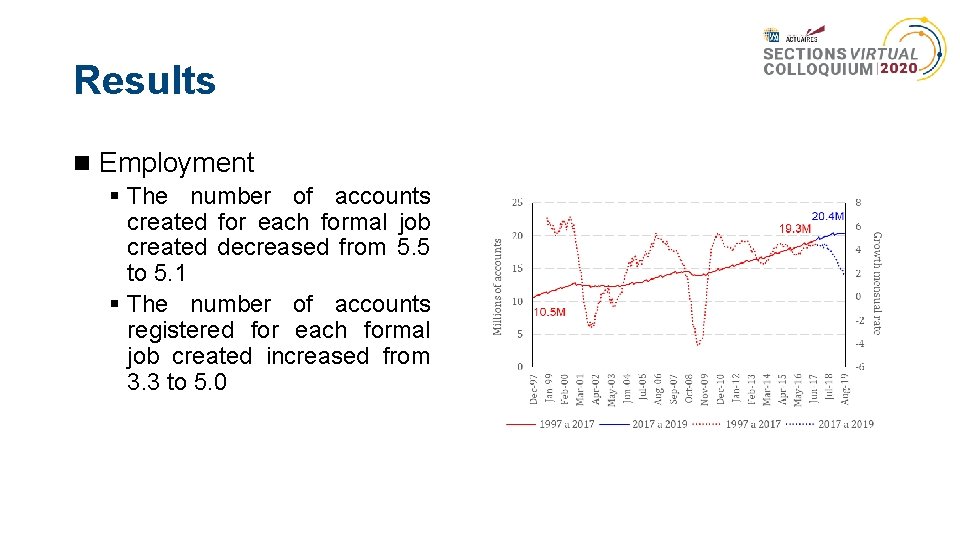
Results Employment § The number of accounts created for each formal job created decreased from 5. 5 to 5. 1 § The number of accounts registered for each formal job created increased from 3. 3 to 5. 0
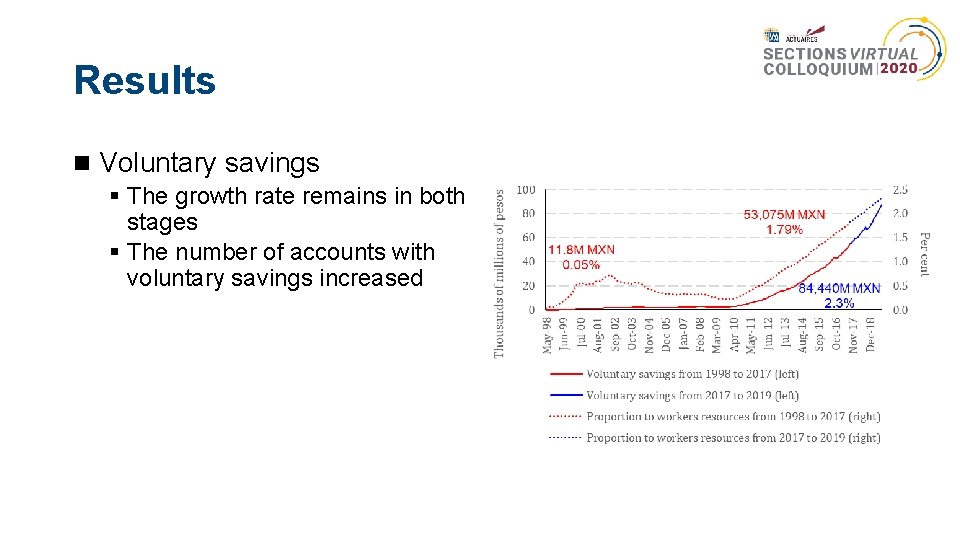
Results Voluntary savings § The growth rate remains in both stages § The number of accounts with voluntary savings increased
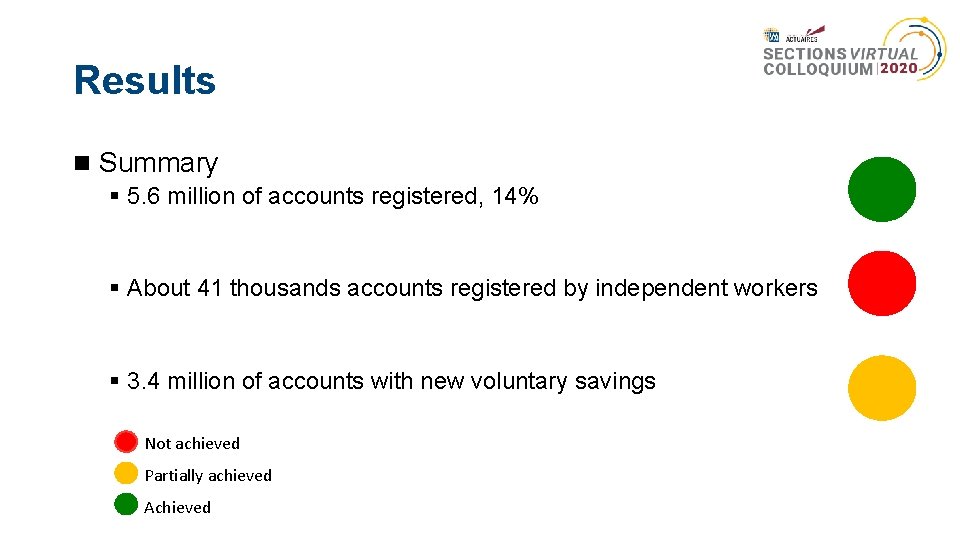
Results Summary § 5. 6 million of accounts registered, 14% § About 41 thousands accounts registered by independent workers § 3. 4 million of accounts with new voluntary savings Not achieved Partially achieved Achieved
Digitalization of Pension System in Mexico Introduction and Context § Retirement Savings System in Mexico § Demographic and Labor Context § Non – Conventional Employment SAR Digitalization Strategy § Challenges, Scope and Limitations Results Public Policy Recommendations Conclusions
Public Policy Recommendations CONSAR could expand the advertising campaigns Extension of the dissemination campaign by CONSAR § focused on workers who have no knowledge or interest on SAR § Include a campaign to disseminate the mobile application with all the advantages Creation of programs and incentives for the inclusion of informal and independent workers to SAR § A scheme, which the State subsided once the worked made retirement savings contributions for a term previously defined
Public Policy Recommendations Include artificial intelligence algorithms § Push notifications to encourage voluntary savings according to the user profile § Expand the campaign in order to approach all workers; formal, informal and independent; disseminating the SAR benefits based on each saver needs
Digitalization of Pension System in Mexico Introduction and Context § Retirement Savings System in Mexico § Demographic and Labor Context § Non – Conventional Employment SAR Digitalization Strategy § Challenges, Scope and Limitations Results Public Policy Recommendations Conclusions
Conclusions « Afore Móvil » shows mixed results: it has not brought the assigned workers or independent workers to the SAR but it has favored the registration of workers recently incorporated into AFORE and has increased the number of accounts with voluntary contributions Digitalization strategy has not been correctly focused The recent reforms to Mexican pension system have not included the new forms of employment. The labor context was adapted to the digital era before regulations.
Thank you for your attention Contact details : Juan Francisco Carmona Sánchez Jocelyn G. Alba Arellano Avenida Universidad 3000 Post Code 04360, Mexico City Mexico juanf_carsan@ciencias. unam. mx jocelyn_arellano@ciencias. unam. mx https: //www. actuarialcolloquium 2020. com/

Disclaimer: The views or opinions expressed in this presentation are those of the authors and do not necessarily reflect official policies or positions of the Institut des Actuaires (IA), the International Actuarial Association (IAA) and its Sections. While every effort has been made to ensure the accuracy and completeness of the material, the IA, IAA and authors give no warranty in that regard and reject any responsibility or liability for any loss or damage incurred through the use of, or reliance upon, the information contained therein. Reproduction and translations are permitted with mention of the source. Permission is granted to make brief excerpts of the presentation for a published review. Permission is also granted to make limited numbers of copies of items in this presentation for personal, internal, classroom or other instructional use, on condition that the foregoing copyright notice is used so as to give reasonable notice of the author, the IA and the IAA's copyrights. This consent for free limited copying without prior consent of the author, IA or the IAA does not extend to making copies for general distribution, for advertising or promotional purposes, for inclusion in new collective works or for resale.
- Slides: 34