
Digitalization Needs a Change in the IT Mindset

- Slides: 24
Digitalization Needs a Change in the IT Mindset
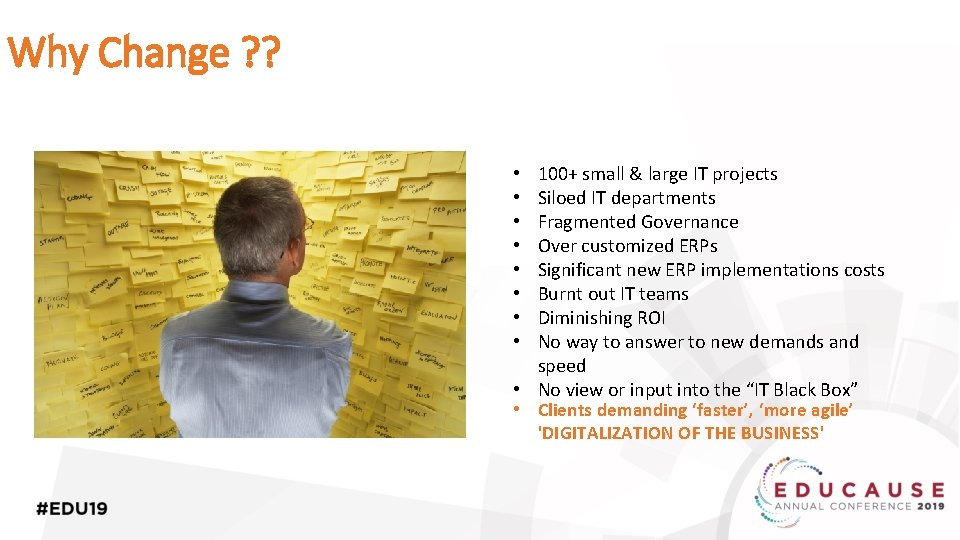
Why Change ? ? 100+ small & large IT projects Siloed IT departments Fragmented Governance Over customized ERPs Significant new ERP implementations costs Burnt out IT teams Diminishing ROI No way to answer to new demands and speed • No view or input into the “IT Black Box” • Clients demanding ‘faster’, ‘more agile’ 'DIGITALIZATION OF THE BUSINESS' • •
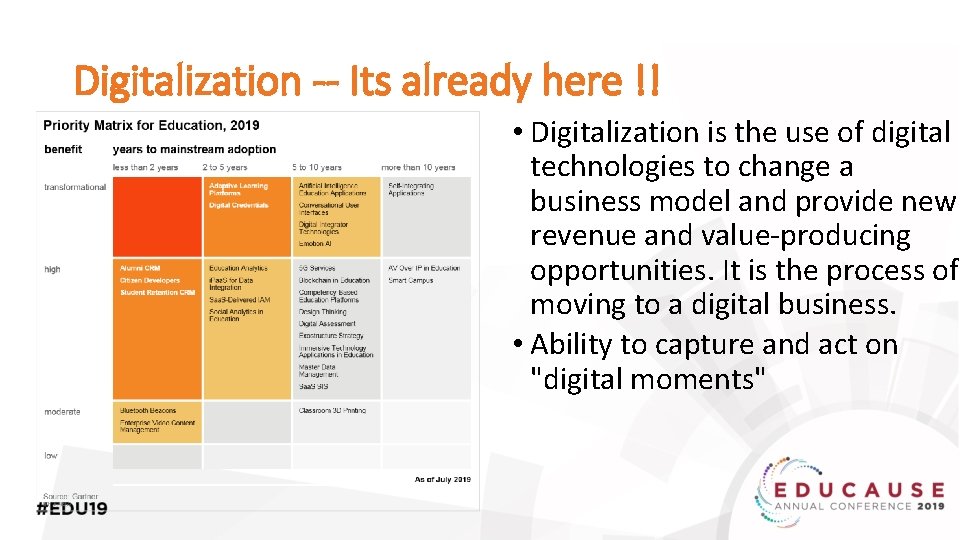
Digitalization -- Its already here !! • Digitalization is the use of digital technologies to change a business model and provide new revenue and value-producing opportunities. It is the process of moving to a digital business. • Ability to capture and act on "digital moments"
We need a new IT mindset • Lazer focus on client outcome • Scale and sustain innovative practices • Break down IT silos • Create platforms for transformation • Rapidly deliver valueproducing products NOT individual projects • Hire and reward a growth mindset
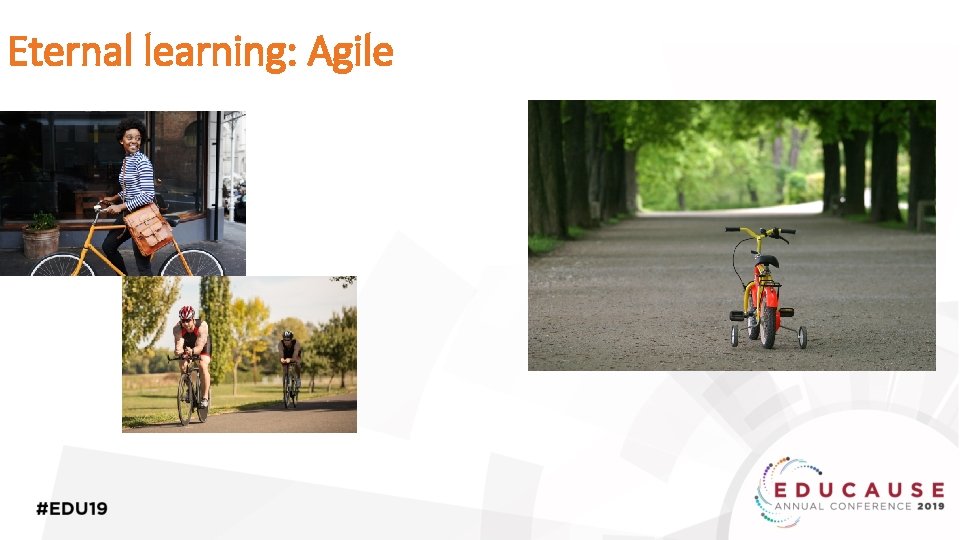
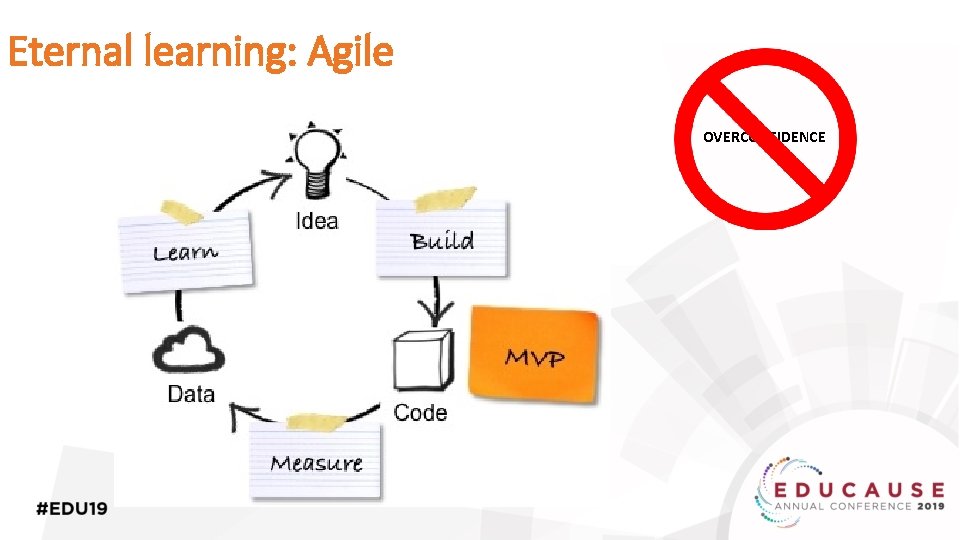
Eternal learning: Agile Do you remember? . . .
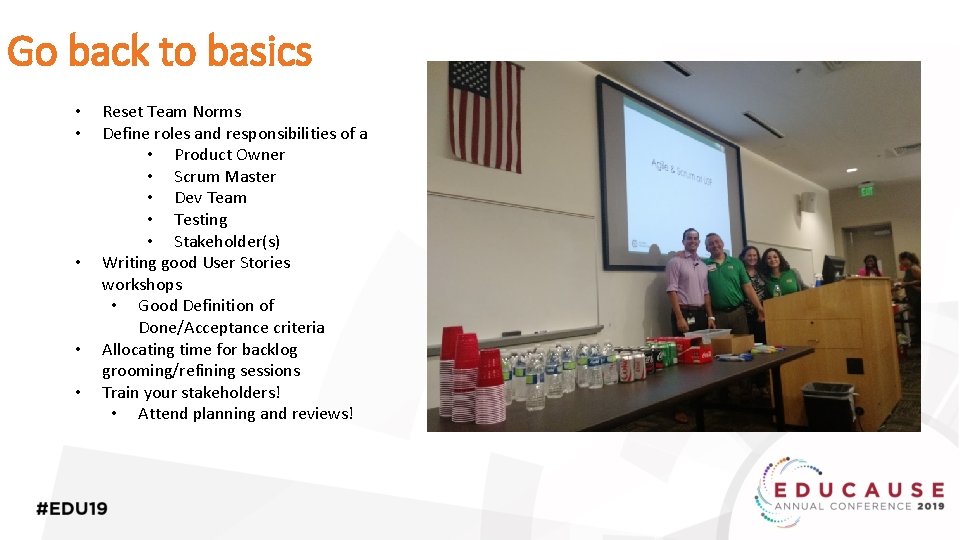
Go back to basics • • • Reset Team Norms Define roles and responsibilities of a • Product Owner • Scrum Master • Dev Team • Testing • Stakeholder(s) Writing good User Stories workshops • Good Definition of Done/Acceptance criteria Allocating time for backlog grooming/refining sessions Train your stakeholders! • Attend planning and reviews!
Eternal learning: Agile OVERCONFIDENCE
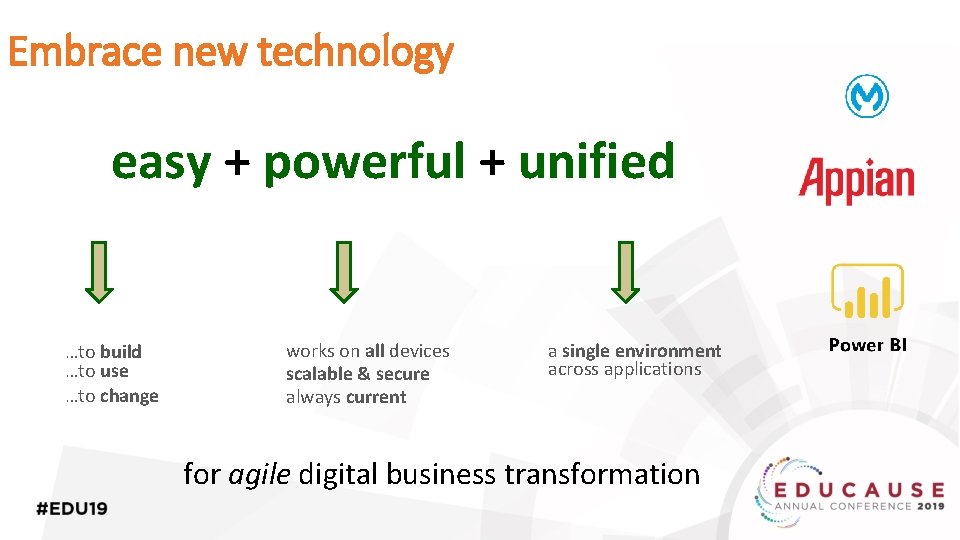
Embrace new technology easy + powerful + unified …to build …to use …to change works on all devices scalable & secure always current a single environment across applications for agile digital business transformation
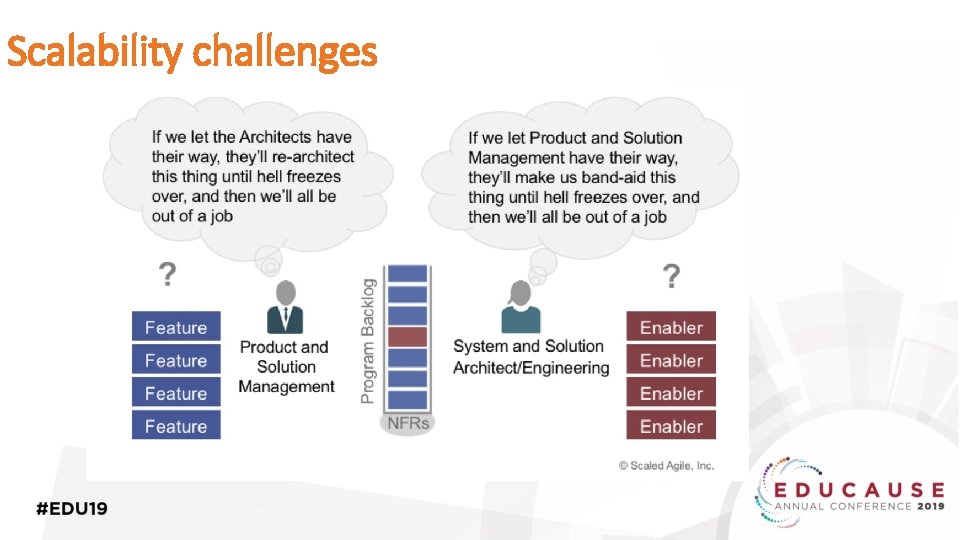
Scalability challenges
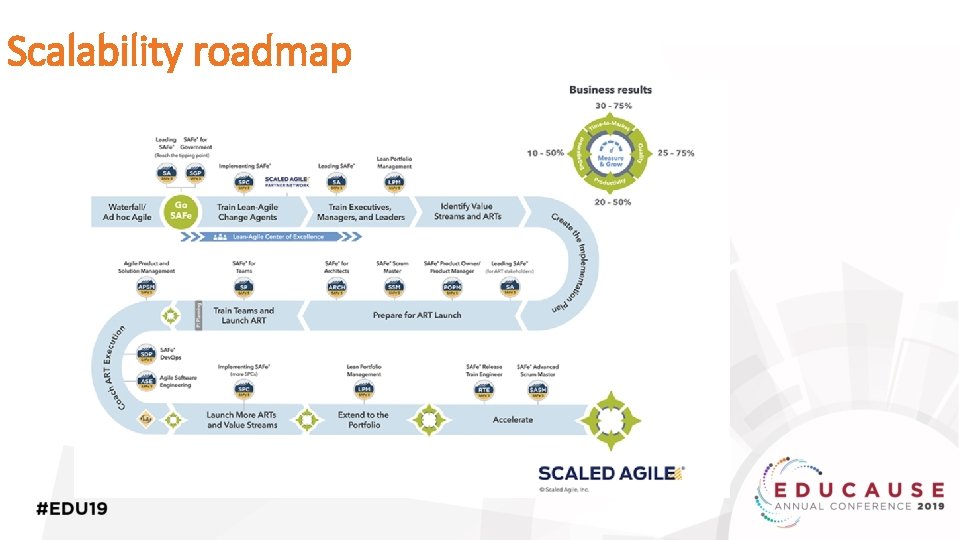
Scalability roadmap
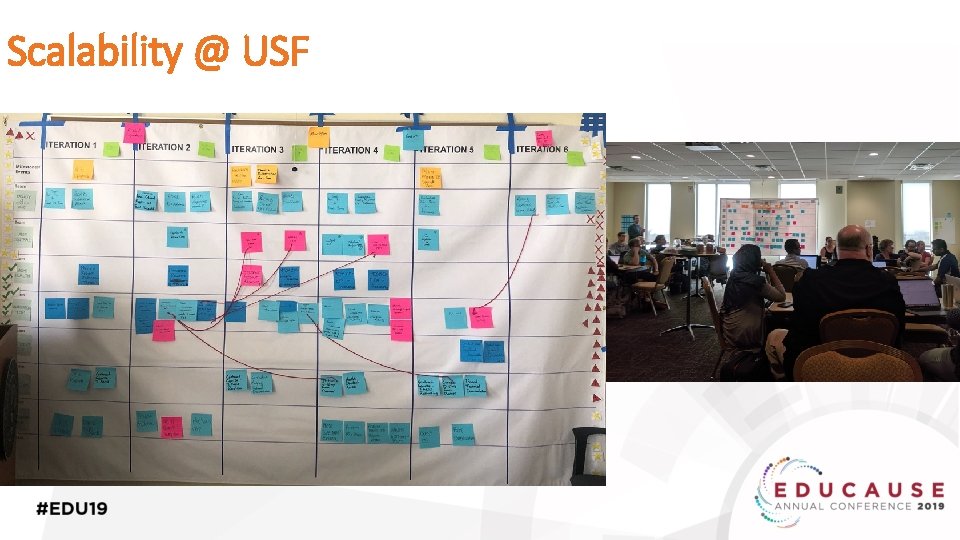
Scalability @ USF
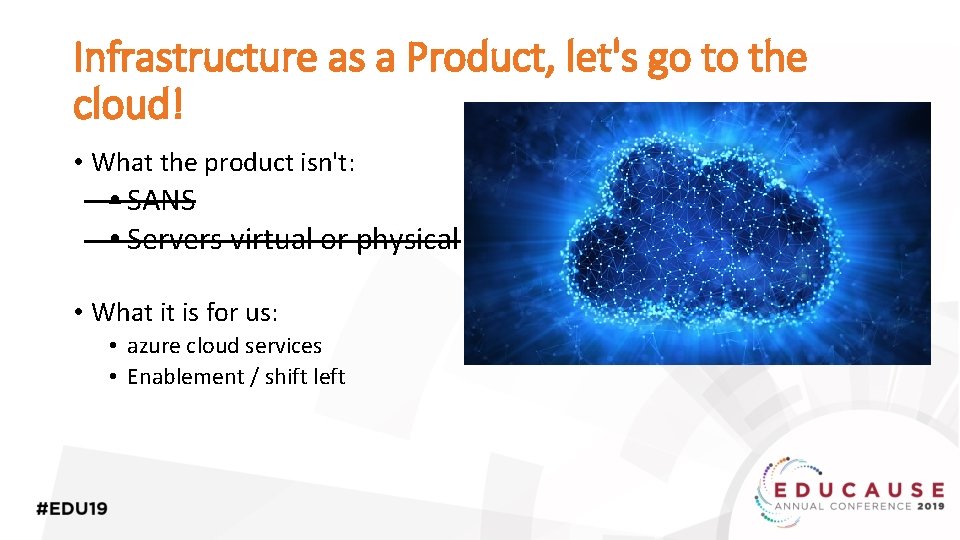
Infrastructure as a Product, let's go to the cloud! • What the product isn't: • SANS • Servers virtual or physical • What it is for us: • azure cloud services • Enablement / shift left
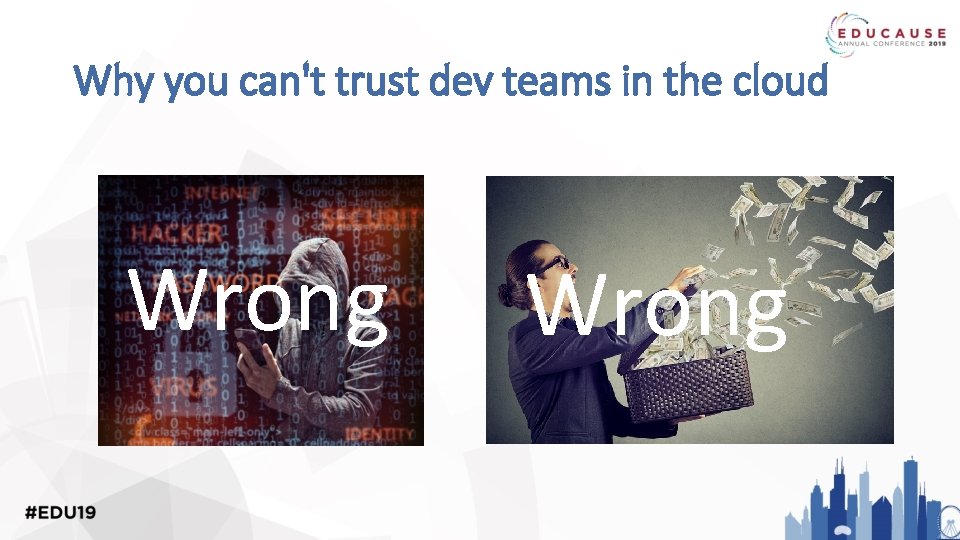
Why you can't trust dev teams in the cloud Wrong
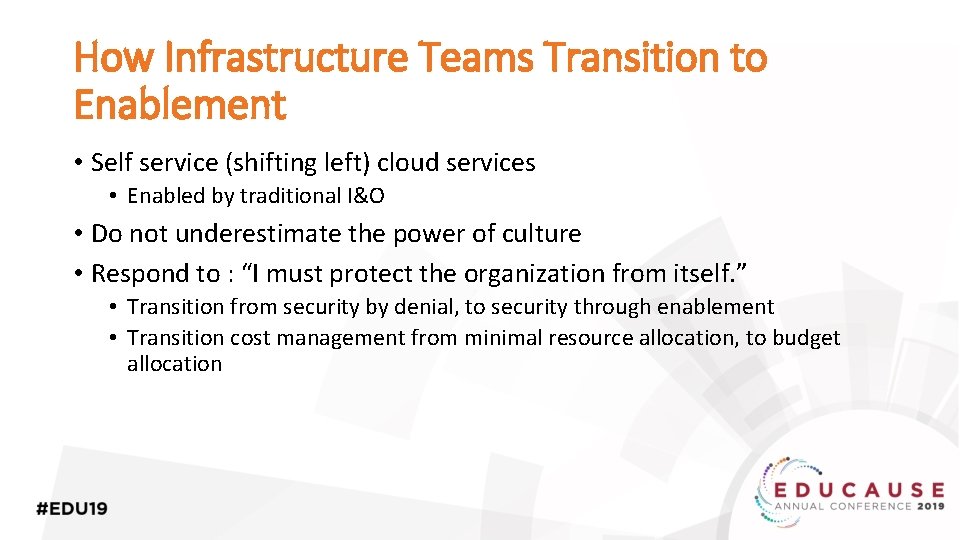
How Infrastructure Teams Transition to Enablement • Self service (shifting left) cloud services • Enabled by traditional I&O • Do not underestimate the power of culture • Respond to : “I must protect the organization from itself. ” • Transition from security by denial, to security through enablement • Transition cost management from minimal resource allocation, to budget allocation
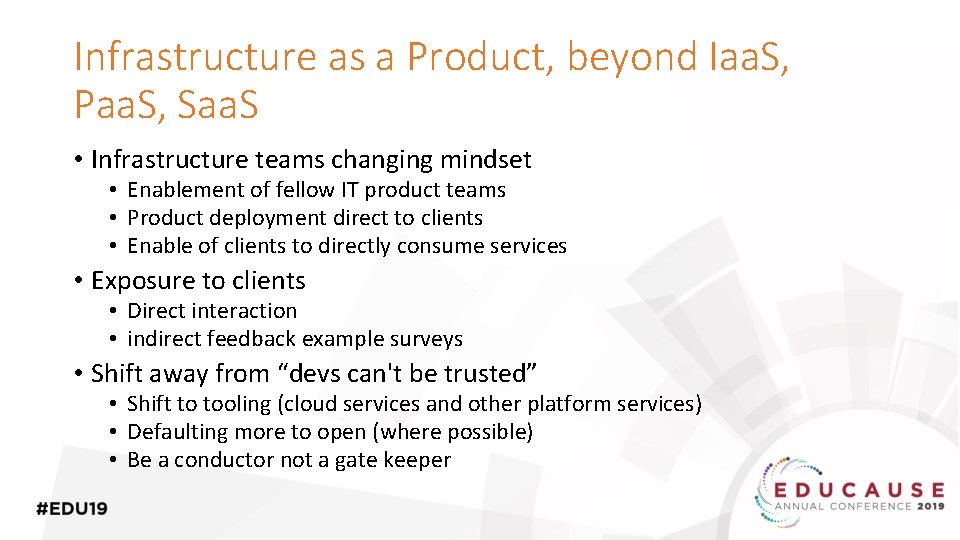
Infrastructure as a Product, beyond Iaa. S, Paa. S, Saa. S • Infrastructure teams changing mindset • Enablement of fellow IT product teams • Product deployment direct to clients • Enable of clients to directly consume services • Exposure to clients • Direct interaction • indirect feedback example surveys • Shift away from “devs can't be trusted” • Shift to tooling (cloud services and other platform services) • Defaulting more to open (where possible) • Be a conductor not a gate keeper
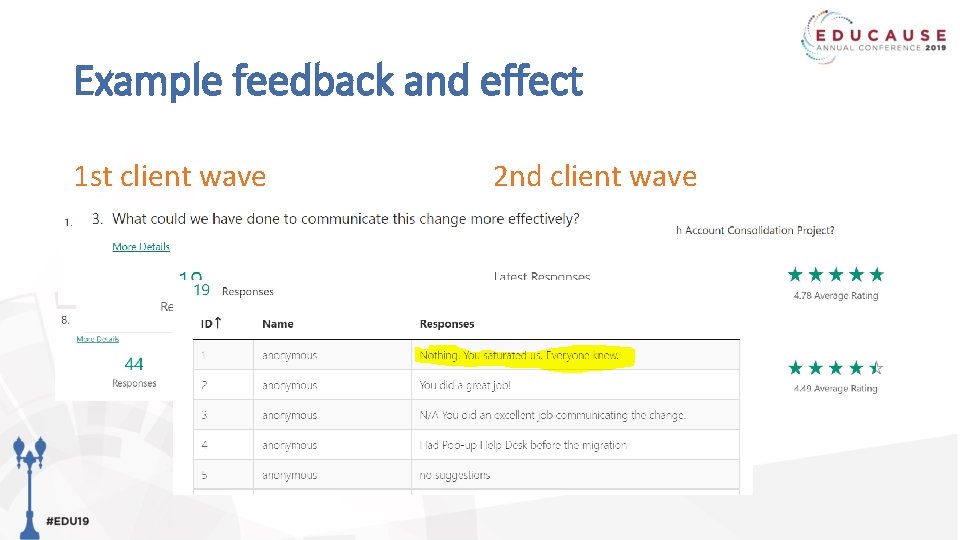
Example feedback and effect 1 st client wave 2 nd client wave
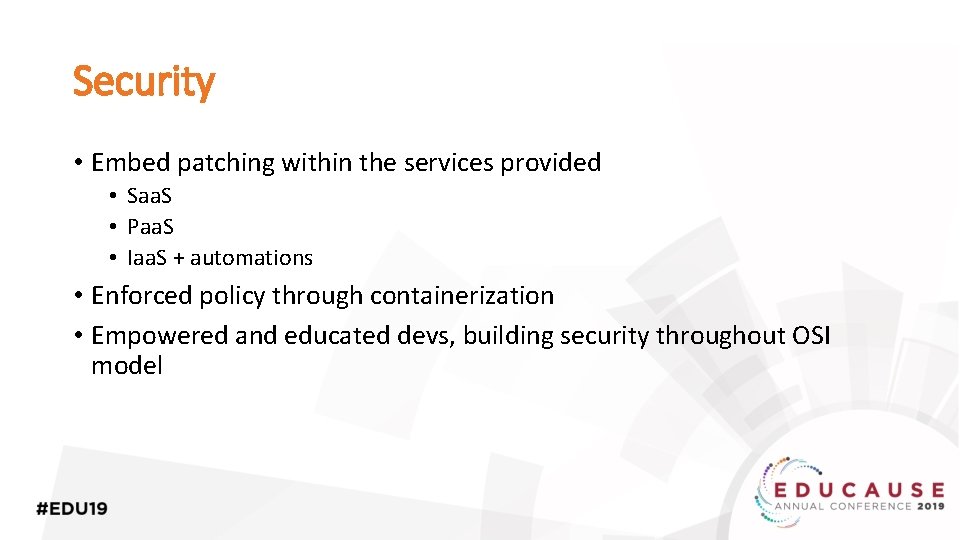
Security • Embed patching within the services provided • Saa. S • Paa. S • Iaa. S + automations • Enforced policy through containerization • Empowered and educated devs, building security throughout OSI model
Cost • Shift as close to the customer as possible • Charge back (direct) • Researchers / specific departments with unique needs (IT is broker) • Charge back (internal – IT) • Allows product teams to self optimize their product line • They can answer the question themselves: • Is it more important to optimize this application to scale up / down as needed? Or throw more resources at it? • Is it worth throwing development hours at backing up infrastructure as ‘software’ vs. keeping idle cycles available for DR? • Show back • Include all infrastructure (DR / Backup) – Align to your product suites
Data & Analytics – Familiar Challenges • Reporting as an after-thought • • Data Quality, Gaps, Data Capture Challenges No clear understanding of “Why” “Now What”? “What Next? ” • Insatiable appetites for data • Varied client-base • • Subject Matter Expertise Strategic vs Tactical Technical Proficiencies Readiness • Disparate technologies – no one size fits all
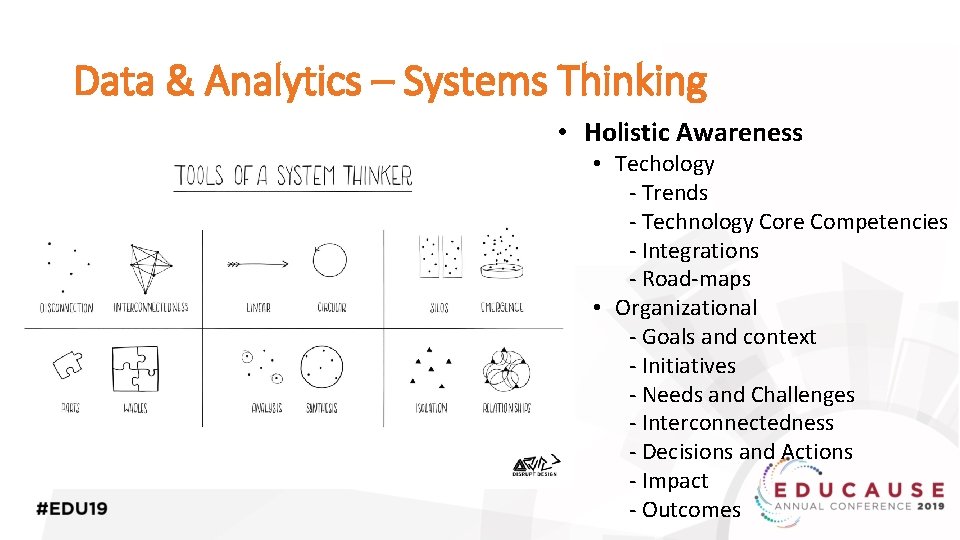
Data & Analytics – Systems Thinking • Holistic Awareness • Techology - Trends - Technology Core Competencies - Integrations - Road-maps • Organizational - Goals and context - Initiatives - Needs and Challenges - Interconnectedness - Decisions and Actions - Impact - Outcomes
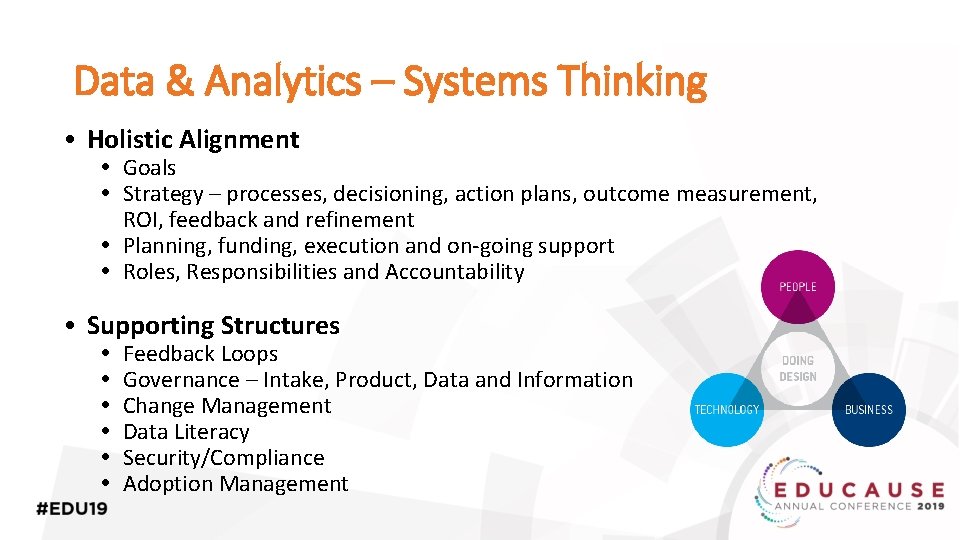
Data & Analytics – Systems Thinking • Holistic Alignment • Goals • Strategy – processes, decisioning, action plans, outcome measurement, ROI, feedback and refinement • Planning, funding, execution and on-going support • Roles, Responsibilities and Accountability • Supporting Structures • • • Feedback Loops Governance – Intake, Product, Data and Information Change Management Data Literacy Security/Compliance Adoption Management
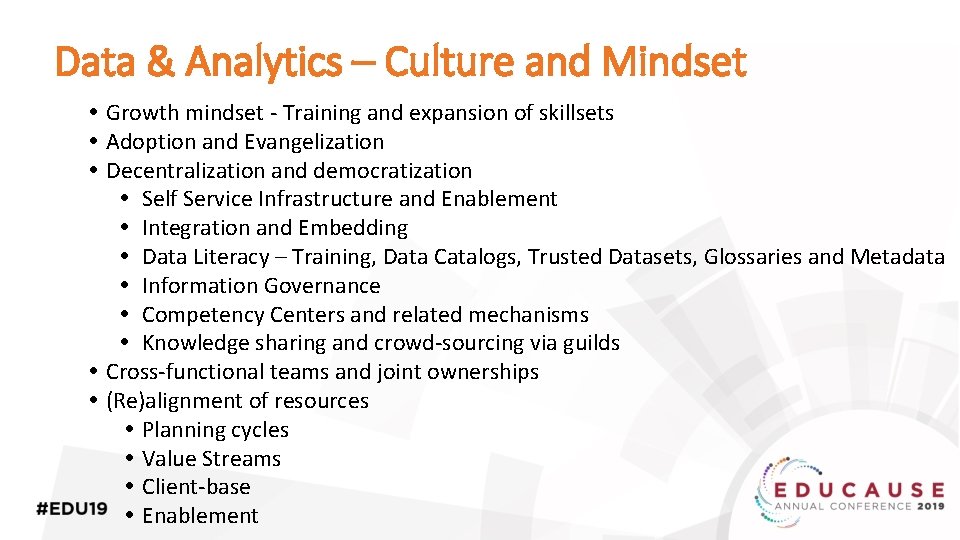
Data & Analytics – Culture and Mindset • Growth mindset - Training and expansion of skillsets • Adoption and Evangelization • Decentralization and democratization • Self Service Infrastructure and Enablement • Integration and Embedding • Data Literacy – Training, Data Catalogs, Trusted Datasets, Glossaries and Metadata • Information Governance • Competency Centers and related mechanisms • Knowledge sharing and crowd-sourcing via guilds • Cross-functional teams and joint ownerships • (Re)alignment of resources • Planning cycles • Value Streams • Client-base • Enablement
How we work today • https: //vimeo. com/347375384
Contact Information Swapna Chackravarthy (AVP Analytics and Data Management Solutions) – schackra@usf. edu Patrick Gall (Chief Technology Officer) gallpw@usf. edu Alice Wei Senior Director Digital Innovation and Transformation wwei@usf. edu Sidney Fernandes VP Information Technology/CIO sfernand@usf. edu NOTE: This presentation leaves copyright of the content to the presenter. Unless otherwise noted in the materials, uploaded content carries the Creative Commons Attribution 4. 0 International (CC BY 4. 0), which grants usage to the general public, with appropriate credit to the author.