
DIGITAL TRANSFORMATION ZACHMANS FRAMEWORK DIGITAL ECONOMY AND SOCIETY





















- Slides: 40
DIGITAL TRANSFORMATION ZACHMAN’S FRAMEWORK DIGITAL ECONOMY AND SOCIETY INDEX (DESI) 1
Δομή Παρουσίασης 1. 2. 3. 4. Strategic Information Systems Planning Zachman Framework Zachman Toolbox DESI Index 2
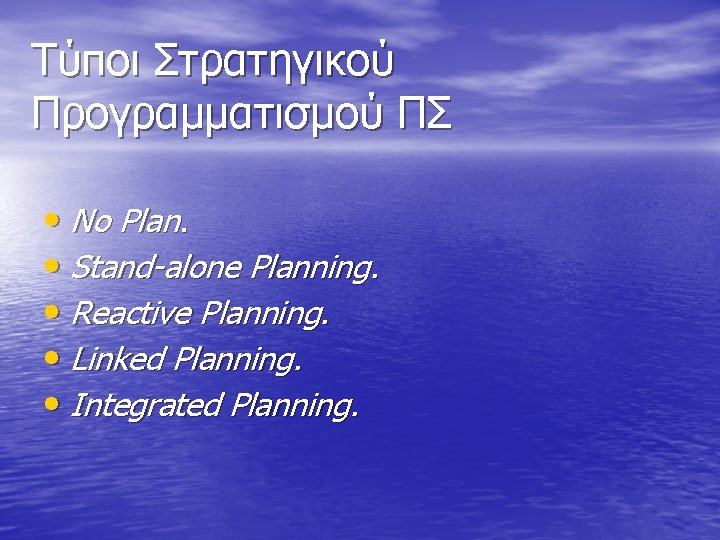
Τύποι Στρατηγικού Προγραμματισμού ΠΣ • No Plan. • Stand-alone Planning. • Reactive Planning. • Linked Planning. • Integrated Planning.
Zachman’s Framework-I 26
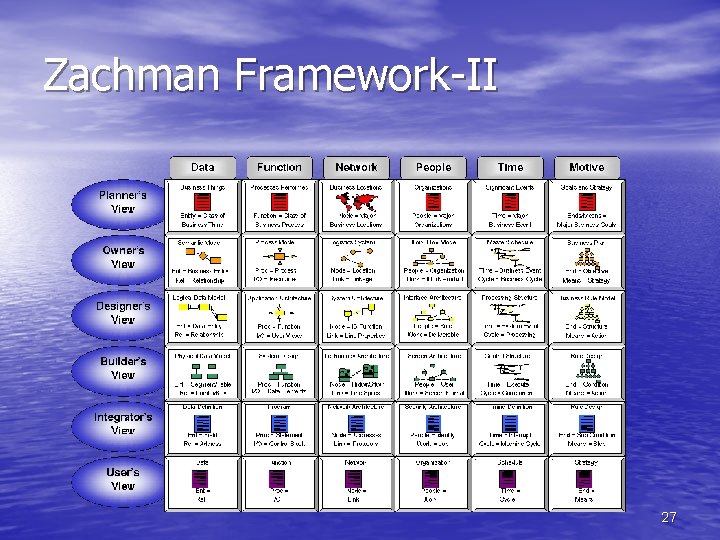
Zachman Framework-II 27
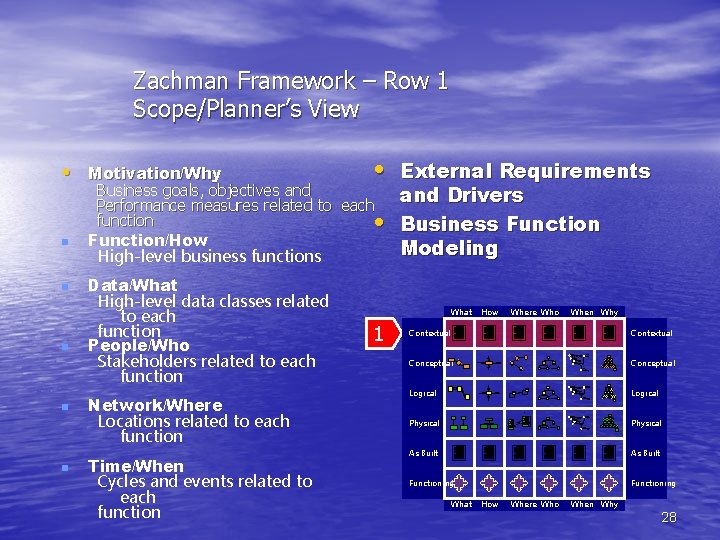
Zachman Framework – Row 1 Scope/Planner’s View • Motivation/Why n n n • External Requirements Business goals, objectives and Performance measures related to each function • Function/How High-level business functions Data/What High-level data classes related to each function People/Who Stakeholders related to each function Network/Where Locations related to each function Time/When Cycles and events related to each function and Drivers Business Function Modeling What 1 How Where Who When Why Contextual Conceptual Logical Physical As Built Functioning What How Where Who When Why 28
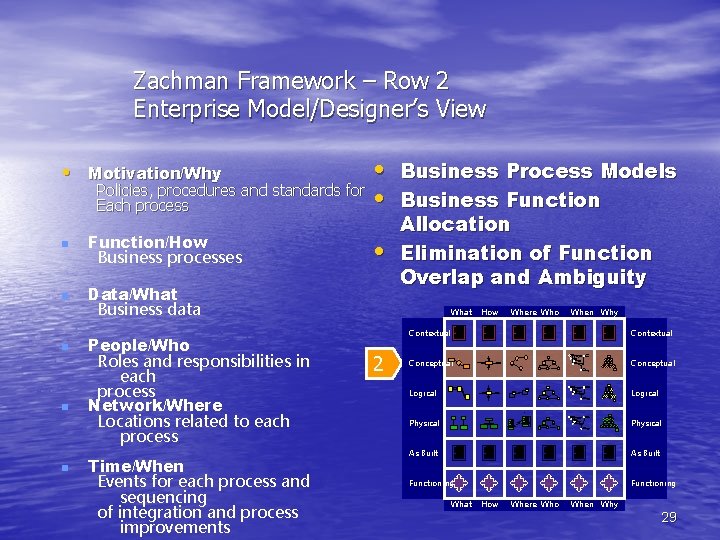
Zachman Framework – Row 2 Enterprise Model/Designer’s View • Business Process Models Policies, procedures and standards for • Business Function Each process • Motivation/Why n Function/How Business processes n Data/What Business data n n n People/Who Roles and responsibilities in each process Network/Where Locations related to each process Time/When Events for each process and sequencing of integration and process improvements • Allocation Elimination of Function Overlap and Ambiguity What 2 How Where Who When Why Contextual Conceptual Logical Physical As Built Functioning What How Where Who When Why 29
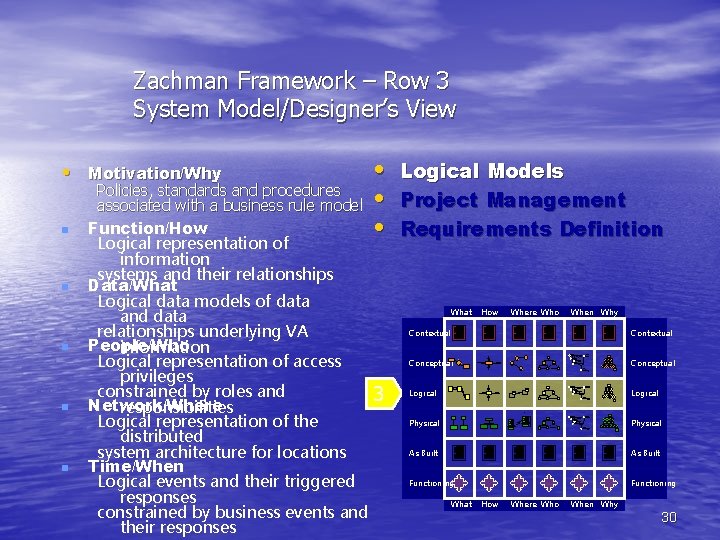
Zachman Framework – Row 3 System Model/Designer’s View • Policies, standards and procedures associated with a business rule model • Function/How • Logical representation of • Motivation/Why n n n information systems and their relationships Data/What Logical data models of data and data relationships underlying VA People/Who information Logical representation of access privileges constrained by roles and 3 Network/Where responsibilities Logical representation of the distributed system architecture for locations Time/When Logical events and their triggered responses constrained by business events and their responses Logical Models Project Management Requirements Definition What How Where Who When Why Contextual Conceptual Logical Physical As Built Functioning What How Where Who When Why 30
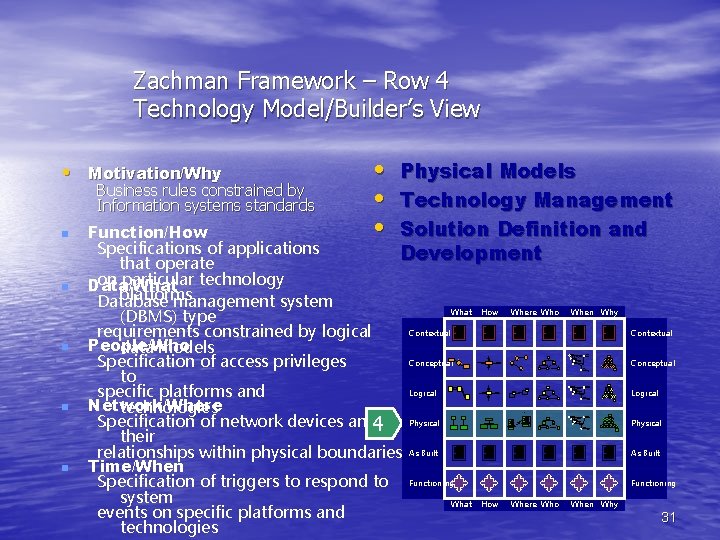
Zachman Framework – Row 4 Technology Model/Builder’s View • Motivation/Why Business rules constrained by Information systems standards n n n • • • Physical Models Technology Management Solution Definition and Development Function/How Specifications of applications that operate on particular technology Data/What platforms Database management system (DBMS) type requirements constrained by logical People/Who data models Specification of access privileges to specific platforms and Network/Where technologies Specification of network devices and 4 their relationships within physical boundaries Time/When Specification of triggers to respond to system events on specific platforms and technologies What How Where Who When Why Contextual Conceptual Logical Physical As Built Functioning What How Where Who When Why 31
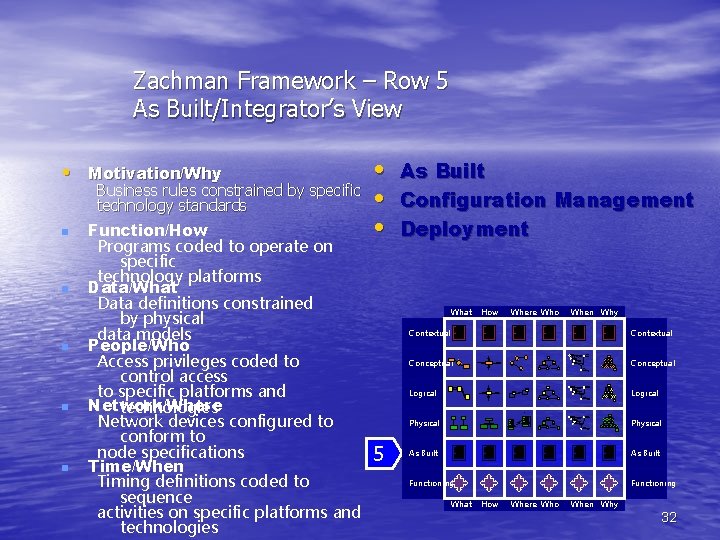
Zachman Framework – Row 5 As Built/Integrator’s View • Business rules constrained by specific • technology standards • Function/How • Motivation/Why n n n Programs coded to operate on specific technology platforms Data/What Data definitions constrained by physical data models People/Who Access privileges coded to control access to specific platforms and Network/Where technologies Network devices configured to conform to node specifications Time/When Timing definitions coded to sequence activities on specific platforms and technologies As Built Configuration Management Deployment What 5 How Where Who When Why Contextual Conceptual Logical Physical As Built Functioning What How Where Who When Why 32
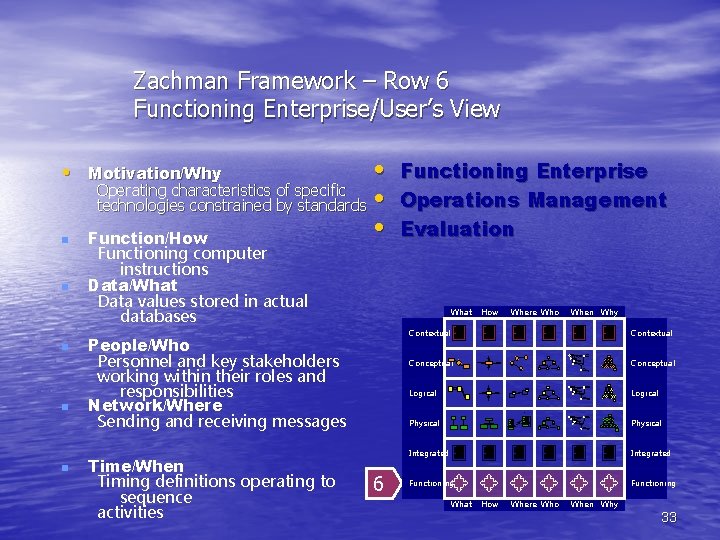
Zachman Framework – Row 6 Functioning Enterprise/User’s View • Operating characteristics of specific technologies constrained by standards • • Function/How • Motivation/Why n n n Functioning computer instructions Data/What Data values stored in actual databases What People/Who Personnel and key stakeholders working within their roles and responsibilities Network/Where Sending and receiving messages Time/When Timing definitions operating to sequence activities Functioning Enterprise Operations Management Evaluation 6 How Where Who When Why Contextual Conceptual Logical Physical Integrated Functioning What How Where Who When Why 33
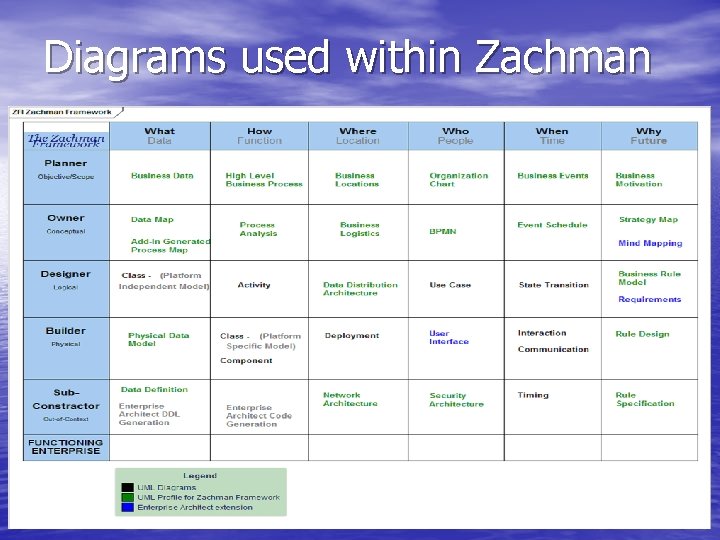
Diagrams used within Zachman 34
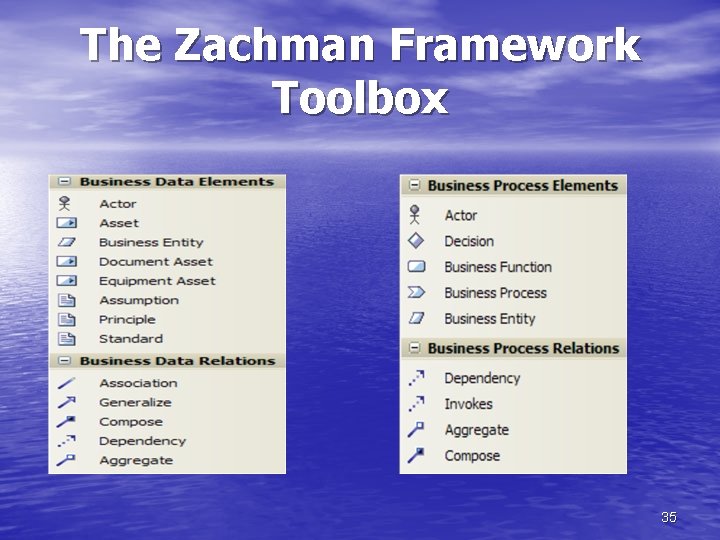
The Zachman Framework Toolbox 35
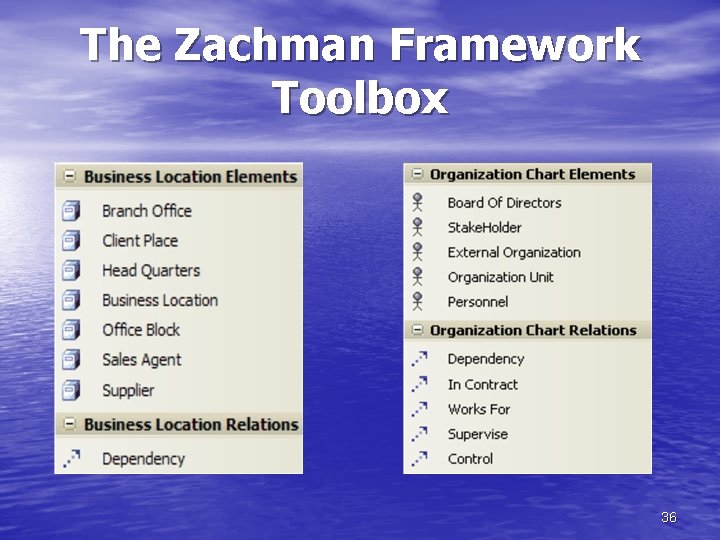
The Zachman Framework Toolbox 36
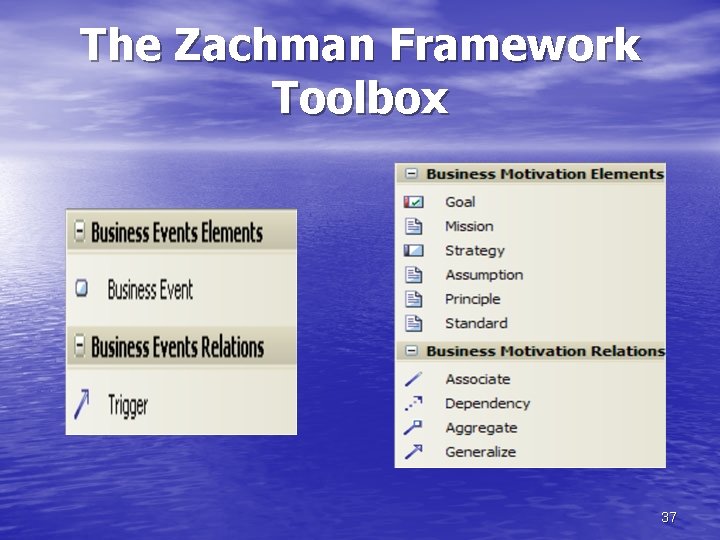
The Zachman Framework Toolbox 37
DESI Index Dimensions (European Union) (https: //ec. europa. eu/digital-single-market/en/desi) • The Connectivity, dimension measures the deployment of broadband infrastructure and its quality. • The Human Capital/Digital skills dimension measures the skills needed to take advantage of the possibilities offered by digital. 38
DESI Index Dimensions (European Union) • The Use of Internet Services by citizens dimension accounts for a variety of online activities, such as the consumption of online content (videos, music, games, etc. ) video calls as well as online shopping and banking. • The Integration of Digital Technology by businesses dimension measures the digitisation of businesses and e-commerce. By adopting digital technologies, businesses can enhance efficiency, reduce costs and better engage customers and business partners. 39