
Digital Steganography Pelin Gul Sankar Das Outline What
- Slides: 19
Digital Steganography Pelin Gul Sankar Das
Outline What is Steganography? Uses of Steganography Its Relation to Cryptography Digital Watermarking Network Security and Steganography Types of Steganography Detecting Steganography: Steganalysis Future of Steganography
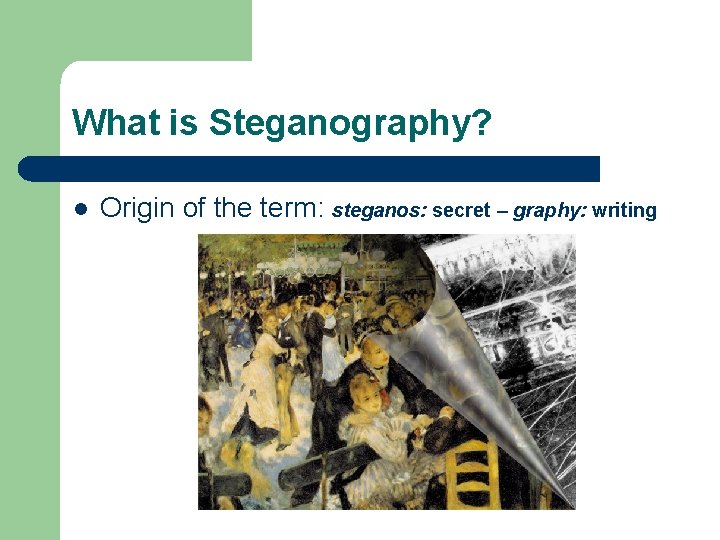
What is Steganography? Origin of the term: steganos: secret – graphy: writing
History of Steganography in Ancient Greece Ancient Rome - 1499, Steganographia, the first book about steganography World War II Germany - microdots Modern Steganography - 1985, with the development of personal computers Digital Steganography – with internet (e. g. digital watermarking)
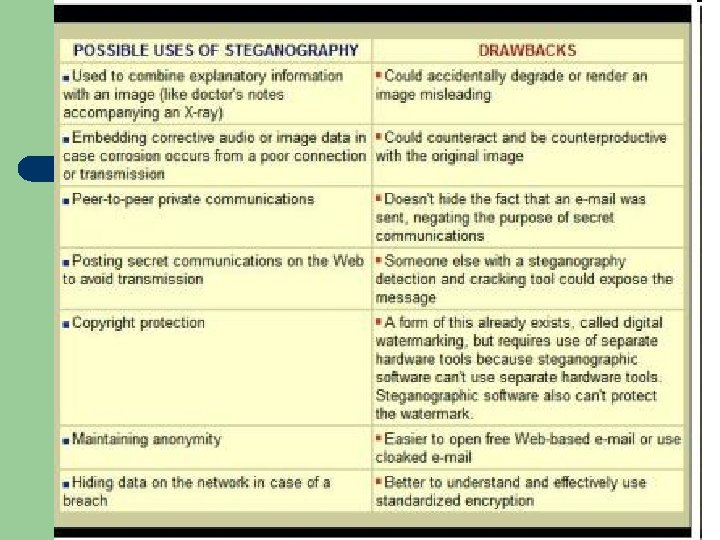
Uses of Steganography Governments Businesses: Digital Watermarking Individuals
Steganography & Cryptography Steganography and Cryptography are closely related The difference is in their goals. . . – – Cryptography: although encypted and unreadable, the existence of data is not hidden Steganography: no knowledge of the existence of the data Steganography and Cryptography can be used together to produce better protection
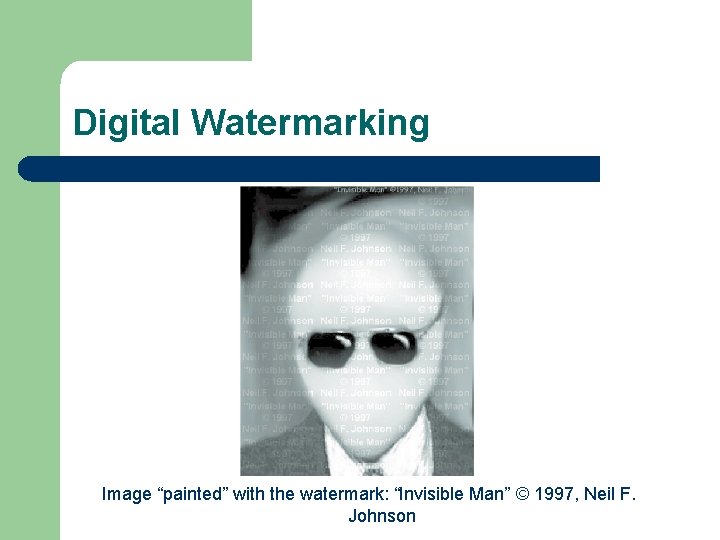
Digital Watermarking Image “painted” with the watermark: “Invisible Man” © 1997, Neil F. Johnson
Digital Watermarking Used primarily for identification Embedding a unique piece of information within a medium (typically an image) without noticeably altering the medium Almost impossible to remove without seriously degrading an image
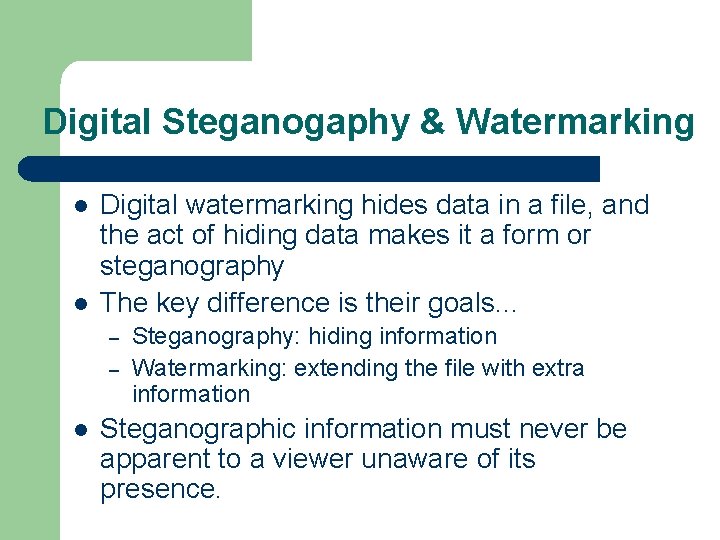
Digital Steganogaphy & Watermarking Digital watermarking hides data in a file, and the act of hiding data makes it a form or steganography The key difference is their goals. . . – – Steganography: hiding information Watermarking: extending the file with extra information Steganographic information must never be apparent to a viewer unaware of its presence.
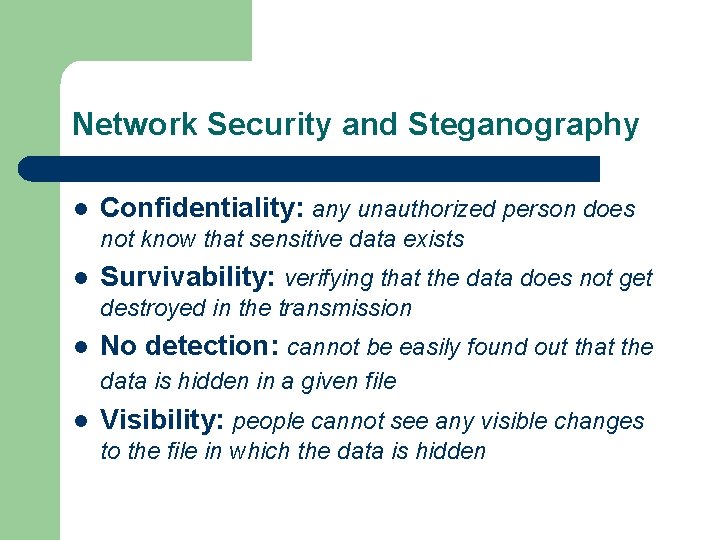
Network Security and Steganography Confidentiality: any unauthorized person does not know that sensitive data exists Survivability: verifying that the data does not get destroyed in the transmission No detection: cannot be easily found out that the data is hidden in a given file Visibility: people cannot see any visible changes to the file in which the data is hidden
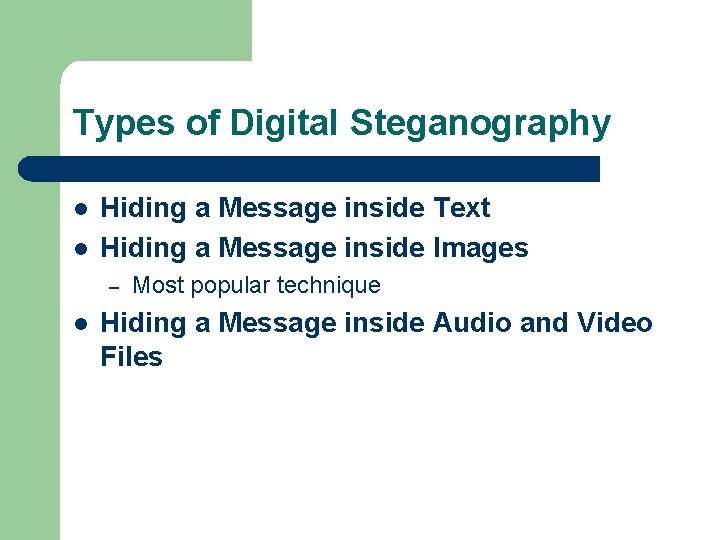
Types of Digital Steganography Hiding a Message inside Text Hiding a Message inside Images – Most popular technique Hiding a Message inside Audio and Video Files
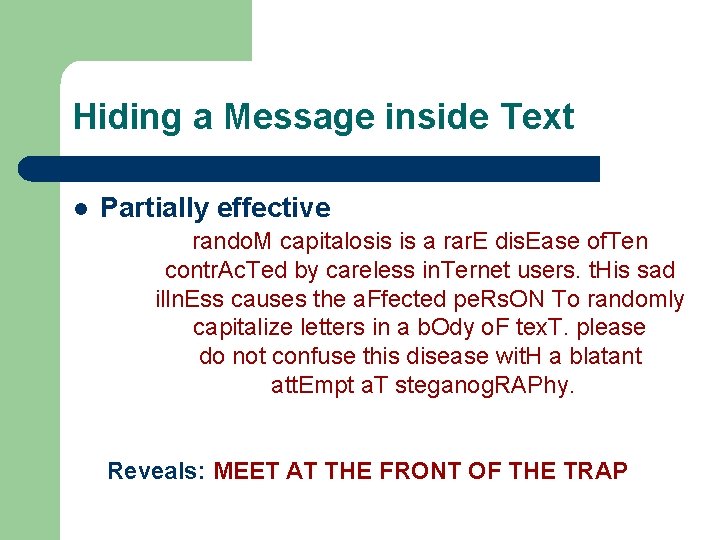
Hiding a Message inside Text Partially effective rando. M capitalosis is a rar. E dis. Ease of. Ten contr. Ac. Ted by careless in. Ternet users. t. His sad illn. Ess causes the a. Ffected pe. Rs. ON To randomly capitalize letters in a b. Ody o. F tex. T. please do not confuse this disease wit. H a blatant att. Empt a. T steganog. RAPhy. Reveals: MEET AT THE FRONT OF THE TRAP
Hiding a Message inside Text First-letter algorithm Every n-th character Altering the amount of whitespace Using a publicly available cover source
Hiding a Message inside Images The most popular medium! Least-significant bit (LSB) modifications – – 24 -bit vs. 8 -bit images Tools to implement LSB: Ez. Stego and S-Tools Masking and Filtering Algorithms and Transformations
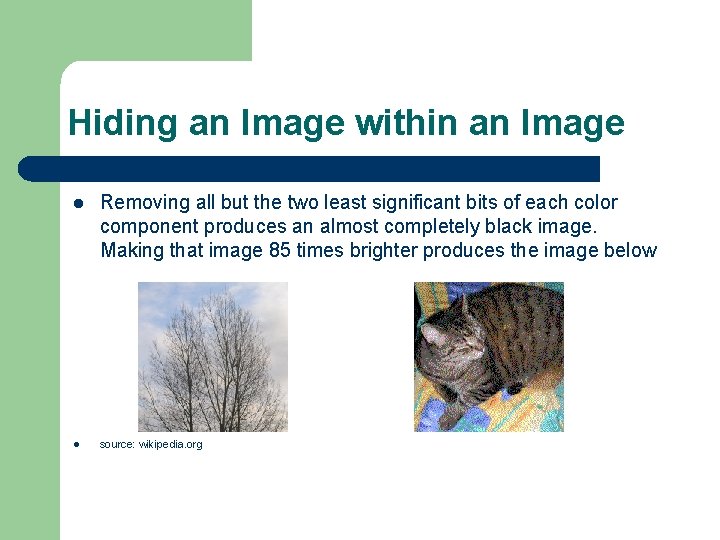
Hiding an Image within an Image Removing all but the two least significant bits of each color component produces an almost completely black image. Making that image 85 times brighter produces the image below source: wikipedia. org
Hiding a Message inside Audio or Videos Files Advantages – – – Human limitations – 20. 000 Hz. Large amount of data that can be hidden inside Hard to recognize because of the continuous flow of information (moving stream of images and sound)
Steganalysis Detecting and decoding the hidden data within a given medium Even if secret content is not revealed, modifying the cover medium changes the medium’s statistical properties Distributed Dictionary Attack
Future of Steganography The most important use of steganographic techniques will probably lie in the field of digital watermarking Might become limited under laws governments claimed that criminals use steganography to communicate . . . the End