
digital signature Message authentication code Chapter 3 User
- Slides: 16
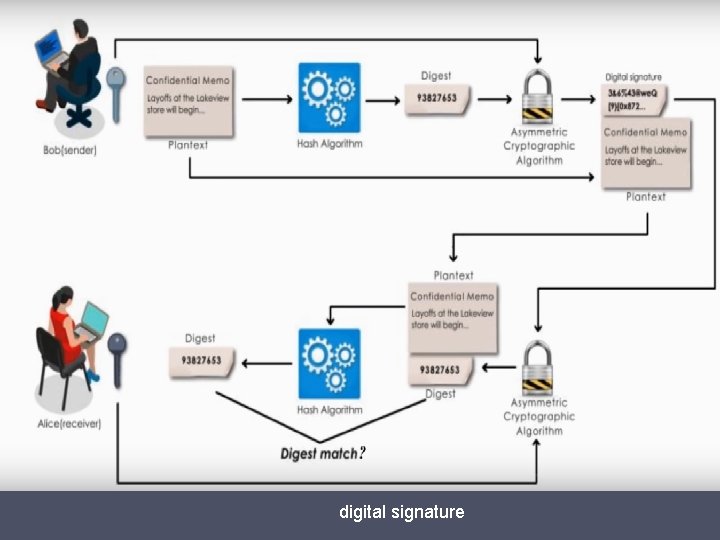
digital signature
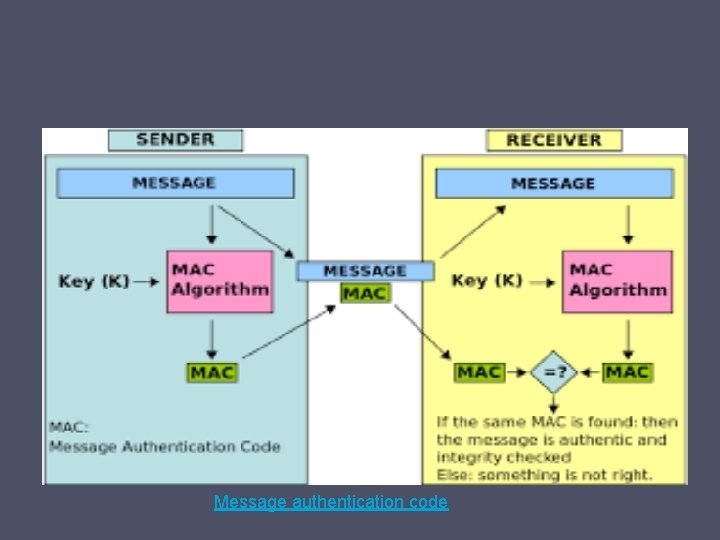
Message authentication code
Chapter 3 User Authentication
RFC 4949 defines user authentication as: “The process of verifying an identity claimed by or for a system entity. ”
Authentication Process • Fundamental building block and primary line of defense • Basis for access control and user accountability • Identification step Presenting an identifier to the security system • Verification step Presenting or generating authentication information that corroborates the binding between the entity and the identifier
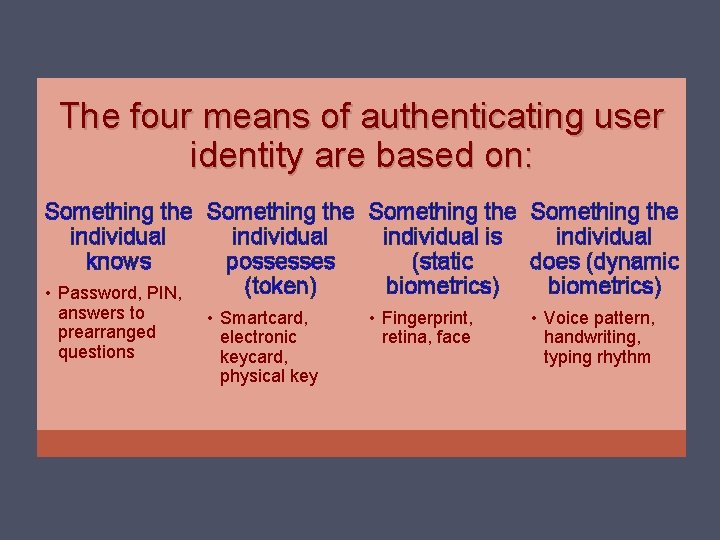
The four means of authenticating user identity are based on: Something the individual is individual knows possesses (static does (dynamic (token) biometrics) • Password, PIN, answers to prearranged questions • Smartcard, electronic keycard, physical key • Fingerprint, retina, face • Voice pattern, handwriting, typing rhythm
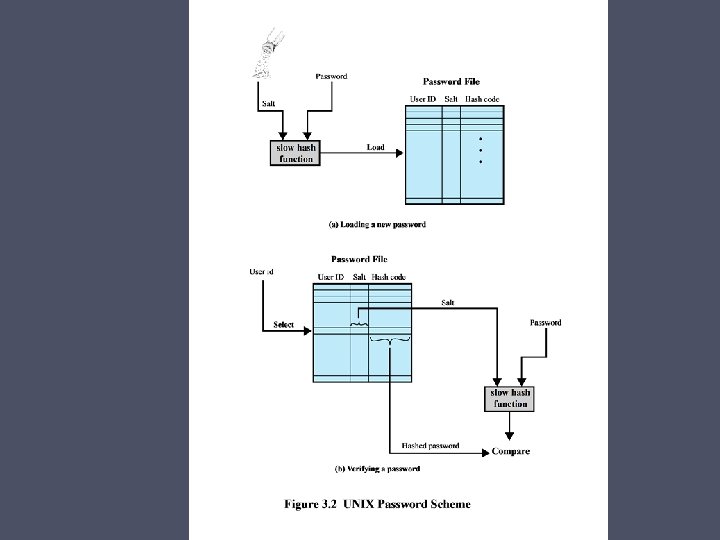
Password Authentication • Widely used line of defense against intruders o User provides name/login and password o System compares password with the one stored for that specified login • The user ID: o o o Determines that the user is authorized to access the system Determines the user’s privileges Is used in discretionary access control
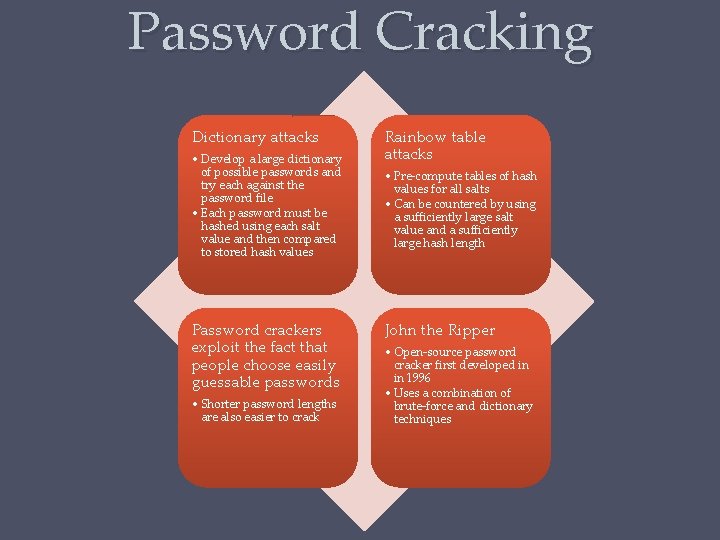
Password Cracking Dictionary attacks • Develop a large dictionary of possible passwords and try each against the password file • Each password must be hashed using each salt value and then compared to stored hash values Password crackers exploit the fact that people choose easily guessable passwords • Shorter password lengths are also easier to crack Rainbow table attacks • Pre-compute tables of hash values for all salts • Can be countered by using a sufficiently large salt value and a sufficiently large hash length John the Ripper • Open-source password cracker first developed in in 1996 • Uses a combination of brute-force and dictionary techniques
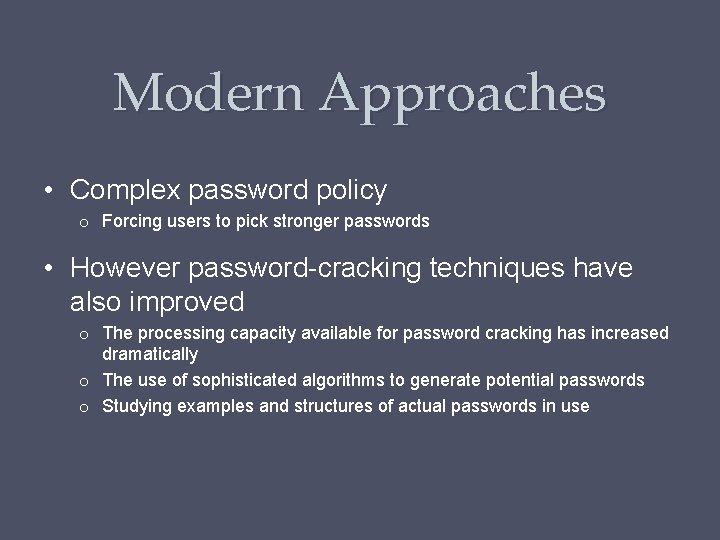
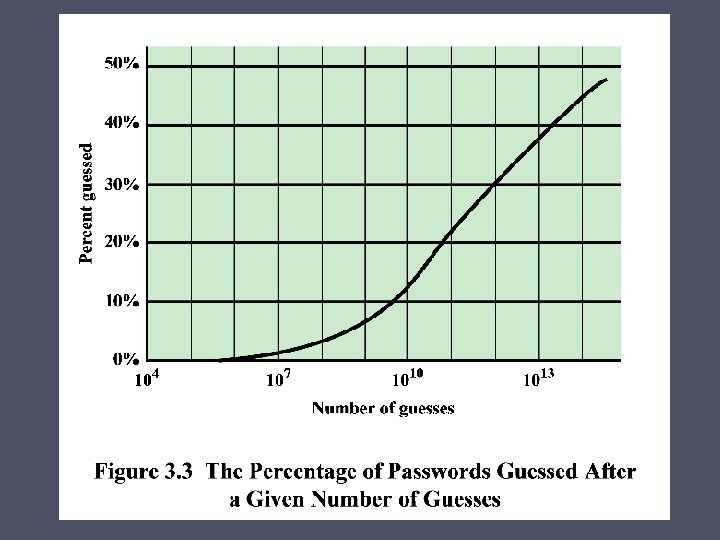
Modern Approaches • Complex password policy o Forcing users to pick stronger passwords • However password-cracking techniques have also improved o The processing capacity available for password cracking has increased dramatically o The use of sophisticated algorithms to generate potential passwords o Studying examples and structures of actual passwords in use
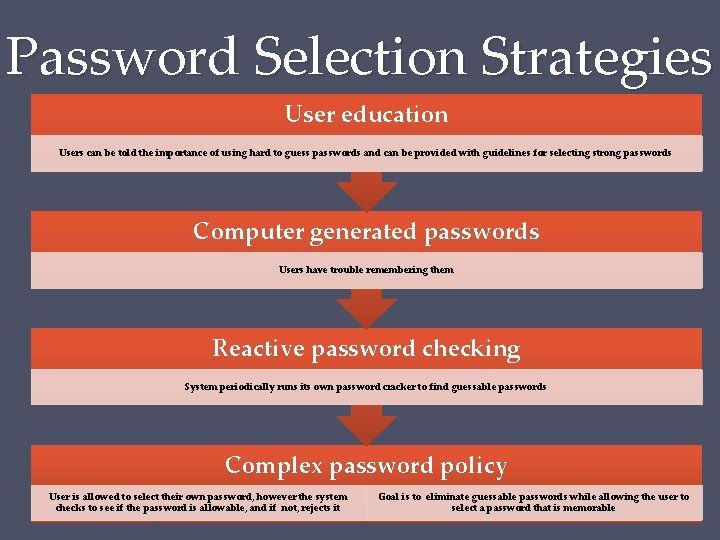
Password Selection Strategies User education Users can be told the importance of using hard to guess passwords and can be provided with guidelines for selecting strong passwords Computer generated passwords Users have trouble remembering them Reactive password checking System periodically runs its own password cracker to find guessable passwords Complex password policy User is allowed to select their own password, however the system checks to see if the password is allowable, and if not, rejects it Goal is to eliminate guessable passwords while allowing the user to select a password that is memorable
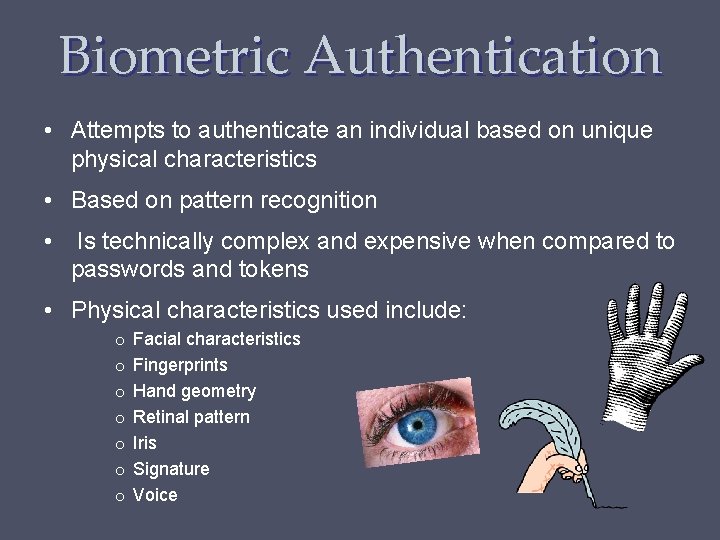
Biometric Authentication • Attempts to authenticate an individual based on unique physical characteristics • Based on pattern recognition • Is technically complex and expensive when compared to passwords and tokens • Physical characteristics used include: o o o o Facial characteristics Fingerprints Hand geometry Retinal pattern Iris Signature Voice