
Digital Religion How religious organizations use technology to
- Slides: 18
Digital Religion: How religious organizations use technology to create value Tanya Giannelia · HEC Montréal · December 2020 International Conference on Information Systems
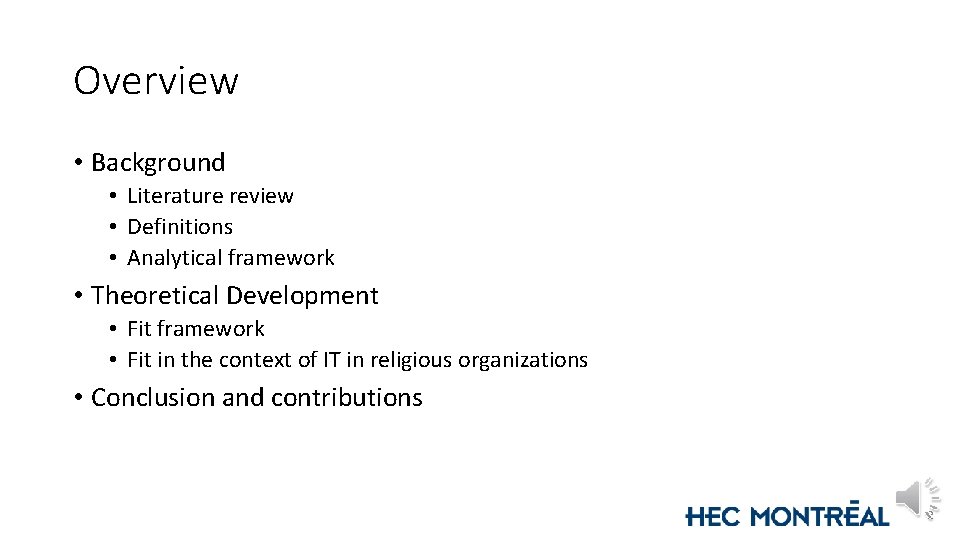
Overview • Background • Literature review • Definitions • Analytical framework • Theoretical Development • Fit framework • Fit in the context of IT in religious organizations • Conclusion and contributions 2
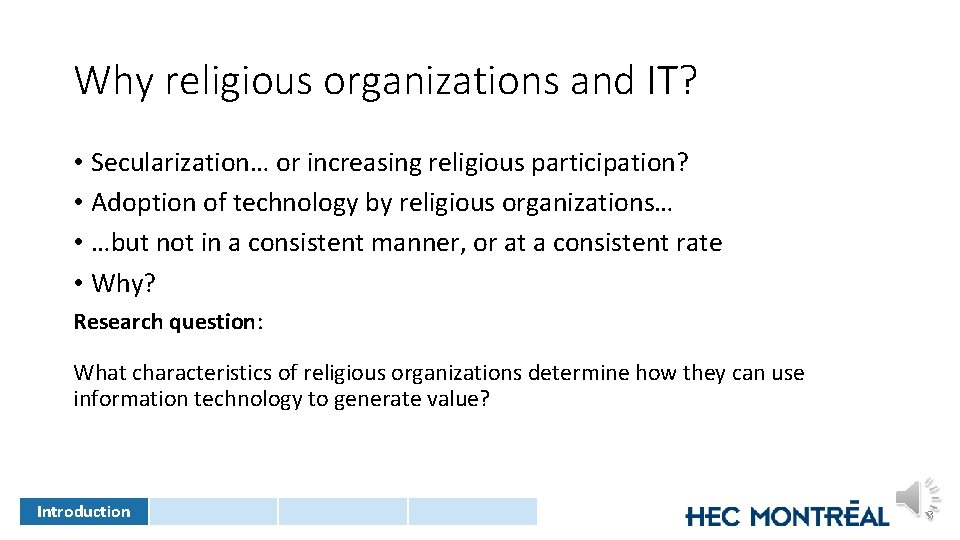
Why religious organizations and IT? • Secularization… or increasing religious participation? • Adoption of technology by religious organizations… • …but not in a consistent manner, or at a consistent rate • Why? Research question: What characteristics of religious organizations determine how they can use information technology to generate value? Introduction 3
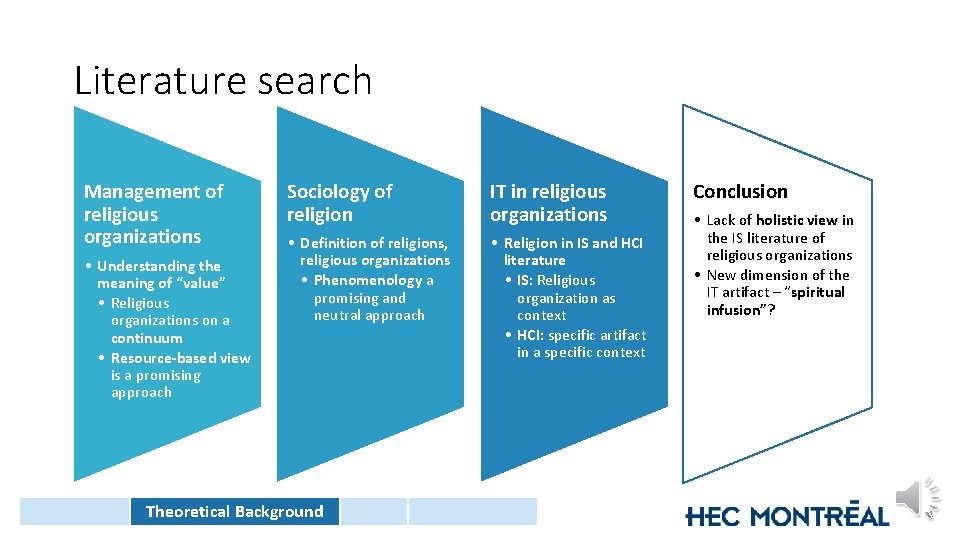
Literature search Management of religious organizations • Understanding the meaning of “value” • Religious organizations on a continuum • Resource-based view is a promising approach Sociology of religion IT in religious organizations • Definition of religions, religious organizations • Phenomenology a promising and neutral approach • Religion in IS and HCI literature • IS: Religious organization as context • HCI: specific artifact in a specific context Theoretical Background Conclusion • Lack of holistic view in the IS literature of religious organizations • New dimension of the IT artifact – “spiritual infusion”? 4
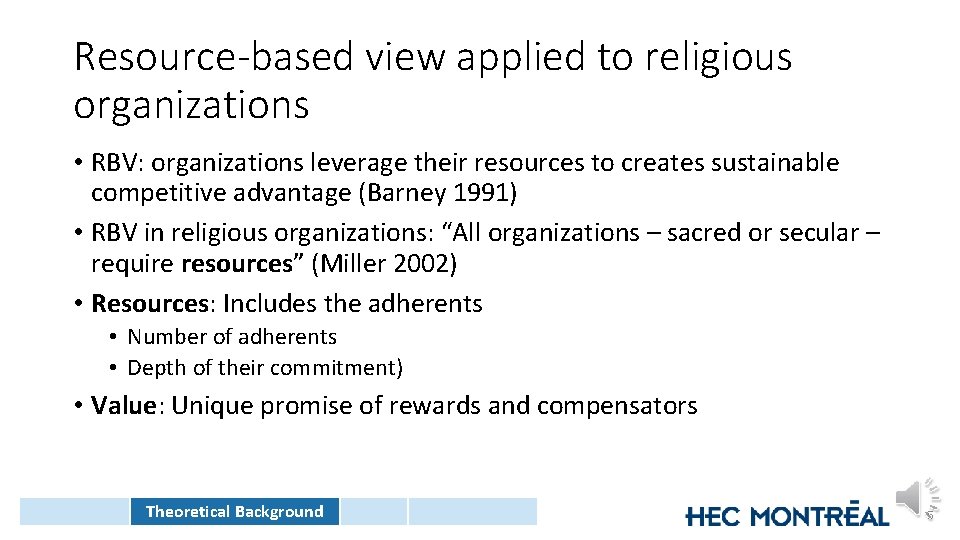
Resource-based view applied to religious organizations • RBV: organizations leverage their resources to creates sustainable competitive advantage (Barney 1991) • RBV in religious organizations: “All organizations – sacred or secular – require resources” (Miller 2002) • Resources: Includes the adherents • Number of adherents • Depth of their commitment) • Value: Unique promise of rewards and compensators Theoretical Background 5
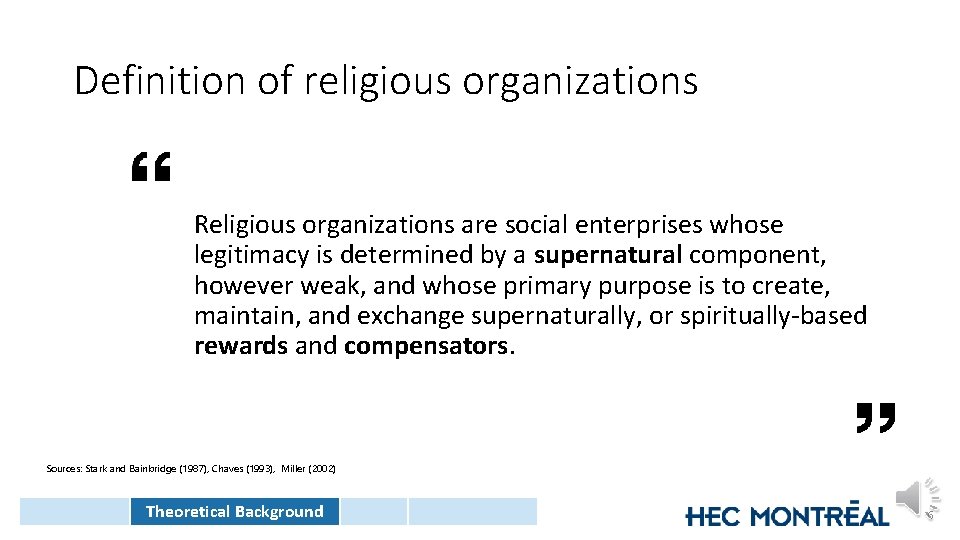
Definition of religious organizations Religious organizations are social enterprises whose legitimacy is determined by a supernatural component, however weak, and whose primary purpose is to create, maintain, and exchange supernaturally, or spiritually-based rewards and compensators. Sources: Stark and Bainbridge (1987), Chaves (1993), Miller (2002) Theoretical Background 6
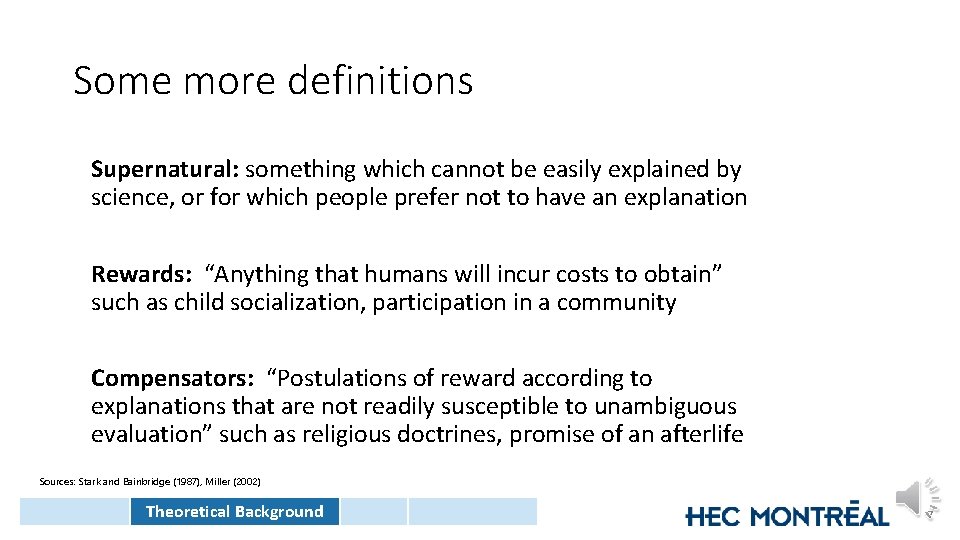
Some more definitions Supernatural: something which cannot be easily explained by science, or for which people prefer not to have an explanation Rewards: “Anything that humans will incur costs to obtain” such as child socialization, participation in a community Compensators: “Postulations of reward according to explanations that are not readily susceptible to unambiguous evaluation” such as religious doctrines, promise of an afterlife Sources: Stark and Bainbridge (1987), Miller (2002) Theoretical Background 7
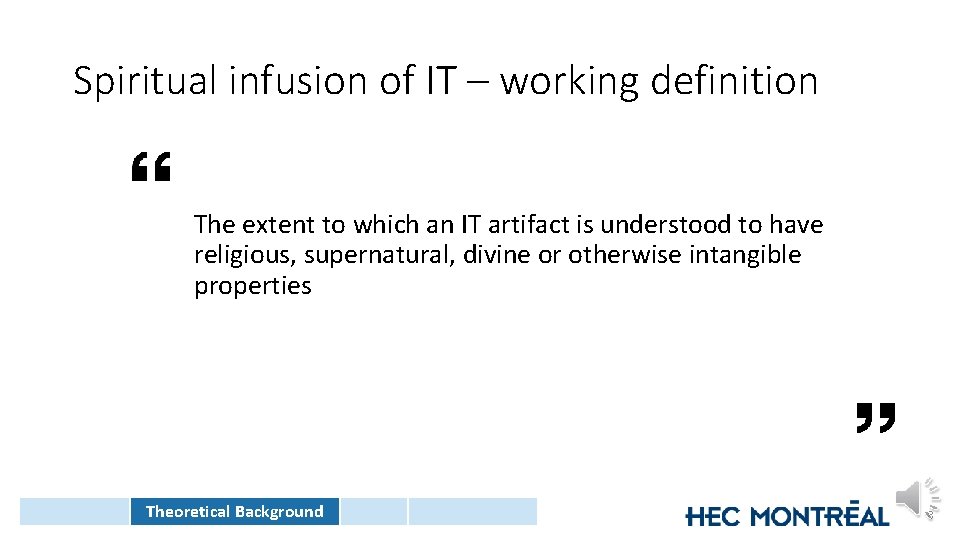
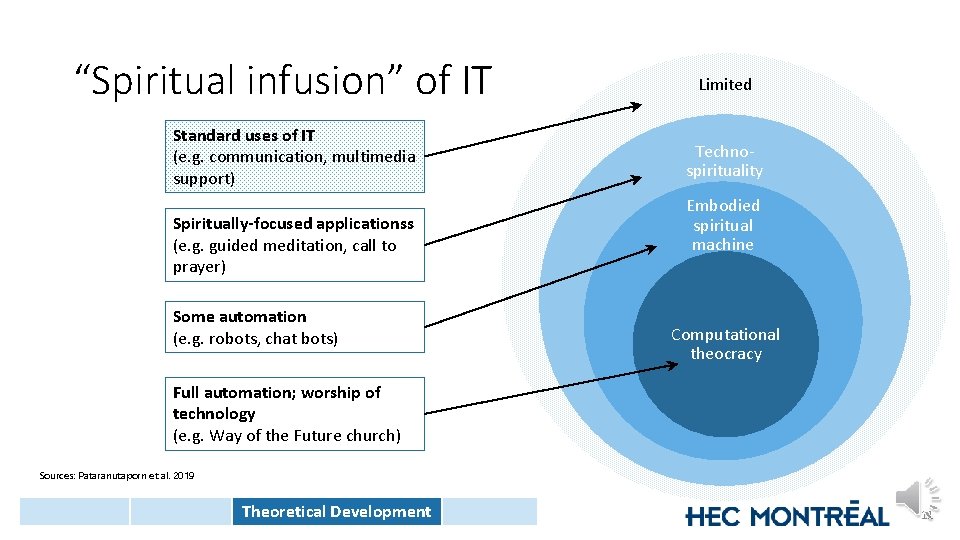
Spiritual infusion of IT – working definition The extent to which an IT artifact is understood to have religious, supernatural, divine or otherwise intangible properties Theoretical Background 8
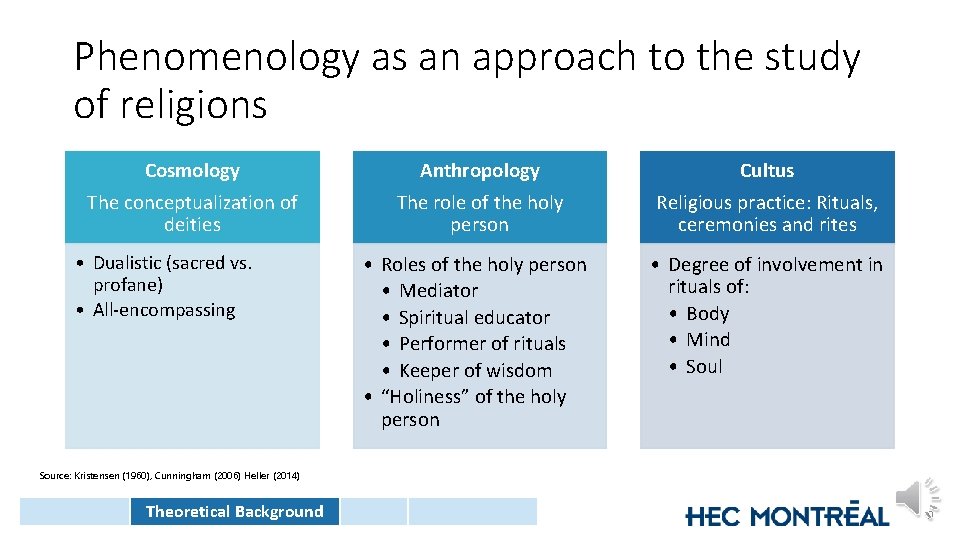
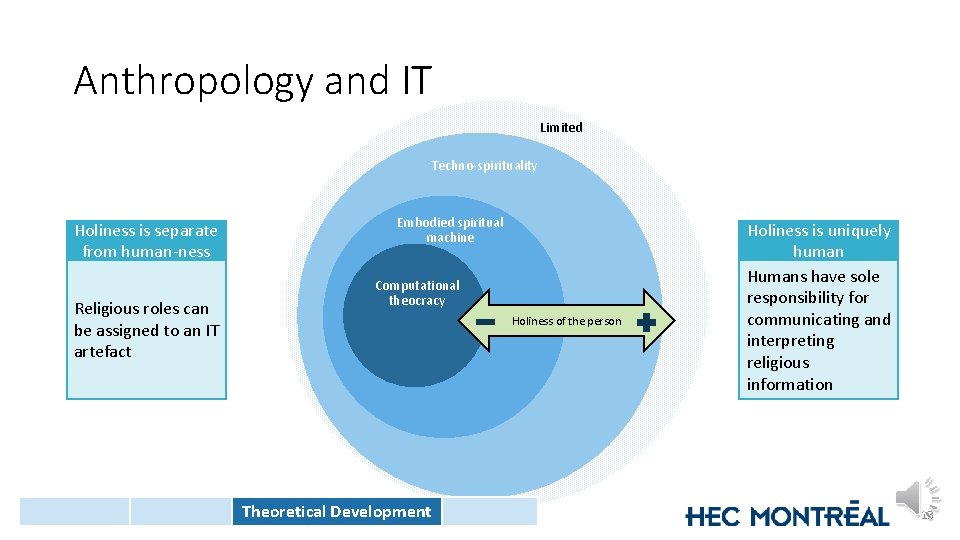
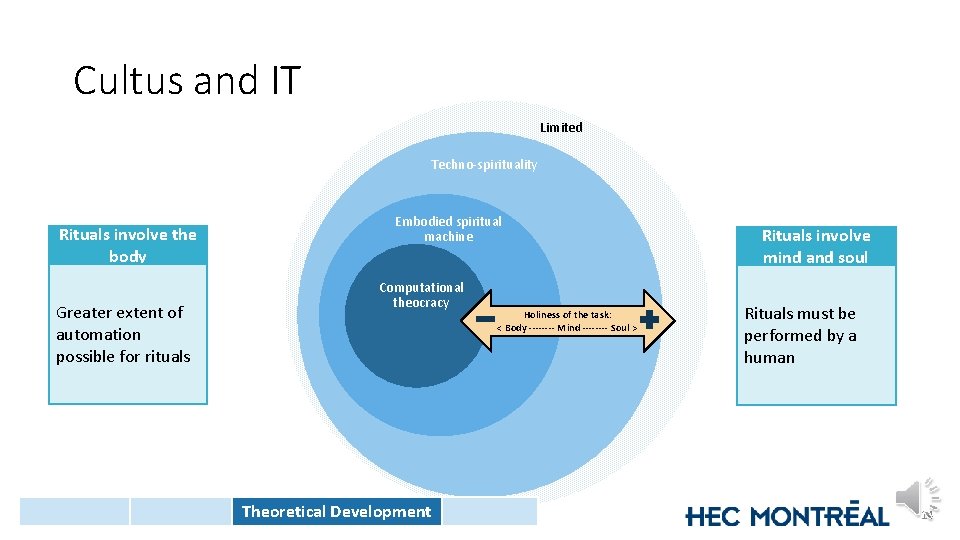
Phenomenology as an approach to the study of religions Cosmology The conceptualization of deities • Dualistic (sacred vs. profane) • All-encompassing Anthropology The role of the holy person Cultus Religious practice: Rituals, ceremonies and rites • Roles of the holy person • Mediator • Spiritual educator • Performer of rituals • Keeper of wisdom • “Holiness” of the holy person • Degree of involvement in rituals of: • Body • Mind • Soul Source: Kristensen (1960), Cunningham (2006) Heller (2014) Theoretical Background 9
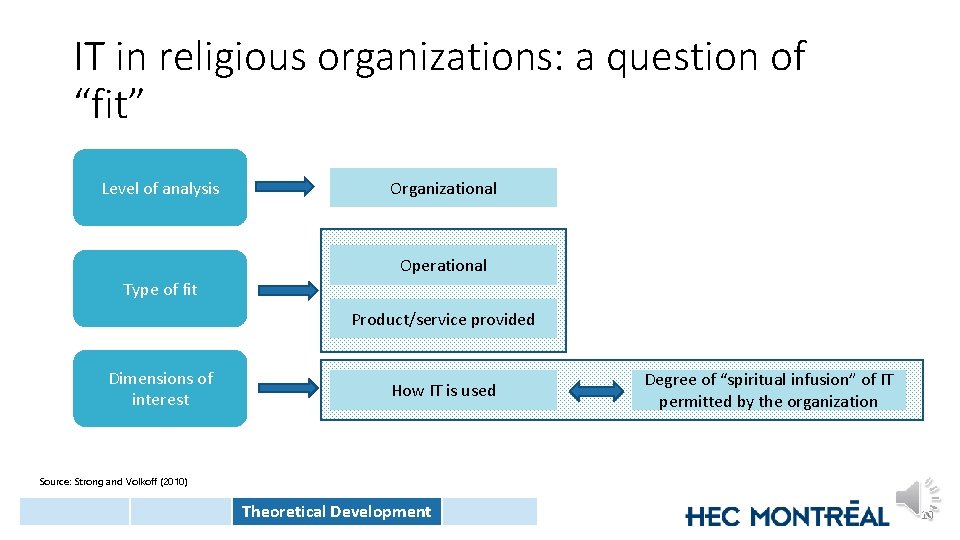
IT in religious organizations: a question of “fit” Level of analysis Organizational Operational Type of fit Product/service provided Dimensions of interest How IT is used Degree of “spiritual infusion” of IT permitted by the organization Source: Strong and Volkoff (2010) Theoretical Development 10
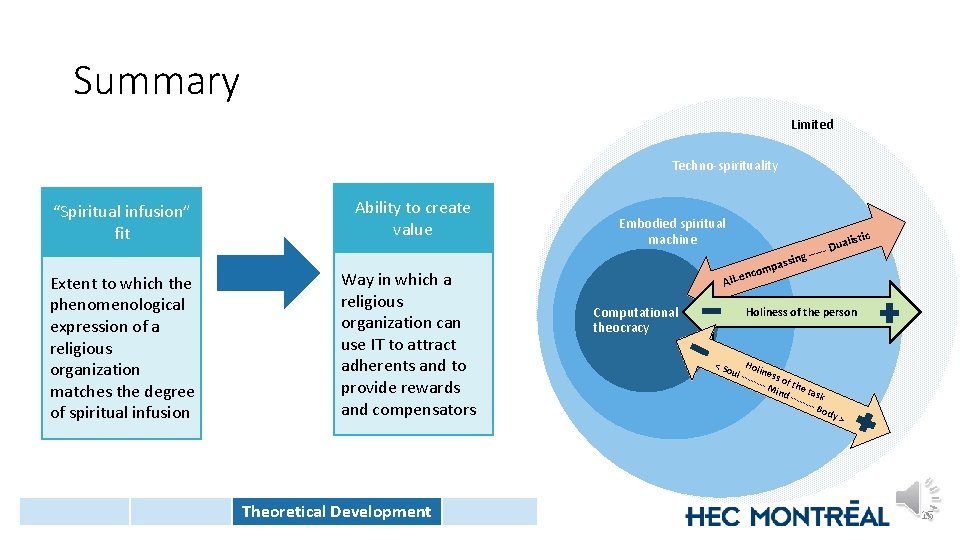
“Spiritual infusion” of IT Standard uses of IT (e. g. communication, multimedia support) Spiritually-focused applicationss (e. g. guided meditation, call to prayer) Some automation (e. g. robots, chat bots) Limited Technospirituality Embodied spiritual machine Computational theocracy Full automation; worship of technology (e. g. Way of the Future church) Sources: Pataranutaporn et al. 2019 Theoretical Development 11
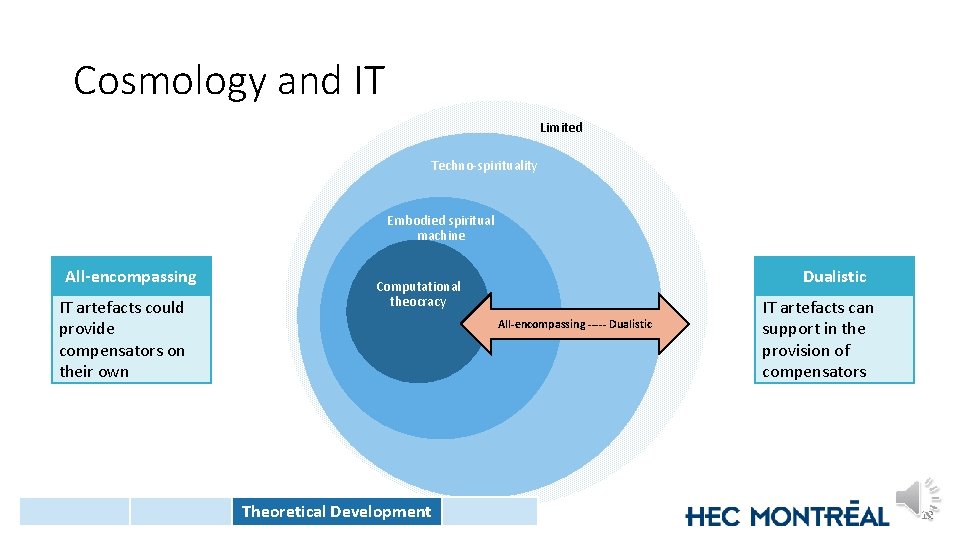
Cosmology and IT Limited Techno-spirituality Embodied spiritual machine All-encompassing IT artefacts could provide compensators on their own Dualistic Computational theocracy All-encompassing ----- Dualistic Theoretical Development IT artefacts can support in the provision of compensators 12
Anthropology and IT Limited Techno-spirituality Holiness is separate from human-ness Religious roles can be assigned to an IT artefact Embodied spiritual machine Computational theocracy Holiness of the person Theoretical Development Holiness is uniquely human Humans have sole responsibility for communicating and interpreting religious information 13
Cultus and IT Limited Techno-spirituality Rituals involve the body Greater extent of automation possible for rituals Embodied spiritual machine Computational theocracy Theoretical Development Holiness of the task: < Body ---- Mind ---- Soul > Rituals involve mind and soul Rituals must be performed by a human 14
Summary Limited Techno-spirituality “Spiritual infusion” fit Extent to which the phenomenological expression of a religious organization matches the degree of spiritual infusion Ability to create value Way in which a religious organization can use IT to attract adherents and to provide rewards and compensators Theoretical Development Embodied spiritual machine ua ---- D ing - pass ncom listic All-e Computational theocracy Holiness of the person < So Hol in ----- ess of -- M th ind e task ------- B od ul - y> 15
Conclusion • Contributions • Extension of the organization – ES fit framework to include the dimension of “spiritual infusion” • Holistic conceptualization of IT use by religious organizations • Responds to calls for more research on the resource-based view in religious organizations • Limitations • Abstraction of social and cultural context • Based only on literature; lacking empirical validation • Phenomenological approach; resource-based view perhaps imperfect Conclusion 16
Questions • Have I missed any key literature? • Next steps? • Empirical research or further pursue theorization? • Journal submission? tanya. giannelia@hec. ca Conclusion 17
Directions for future work • Theoretical lens: Clarification of use of the resource-based view vs. value co-creation • Shift the focus: How organizations use IT to create, maintain and communicate meaning, with religious organization as an extreme example • Focus on the technology: What aspects of the technology allow it to create, maintain and communicate meaning? Conclusion 18