
Digital Pulse Processing A new paradigm in nuclear
![DPP for typical NIM modules functions o o o Leading Edge Discrimination: • y[n]=x[n]-x[n-k](differentiation)](https://slidetodoc.com/presentation_image_h2/d7a98c525f476bf4c5b67c68b460eaa7/image-23.jpg "DPP for typical NIM modules functions o o o Leading Edge Discrimination: • y[n]=x[n]-x[n-k](differentiation)")
- Slides: 39
Digital Pulse Processing: A new paradigm in nuclear instrumentation Roberto V. Ribas – DFN-IFUSP XXXII RTFNB - Lindoia, 2009
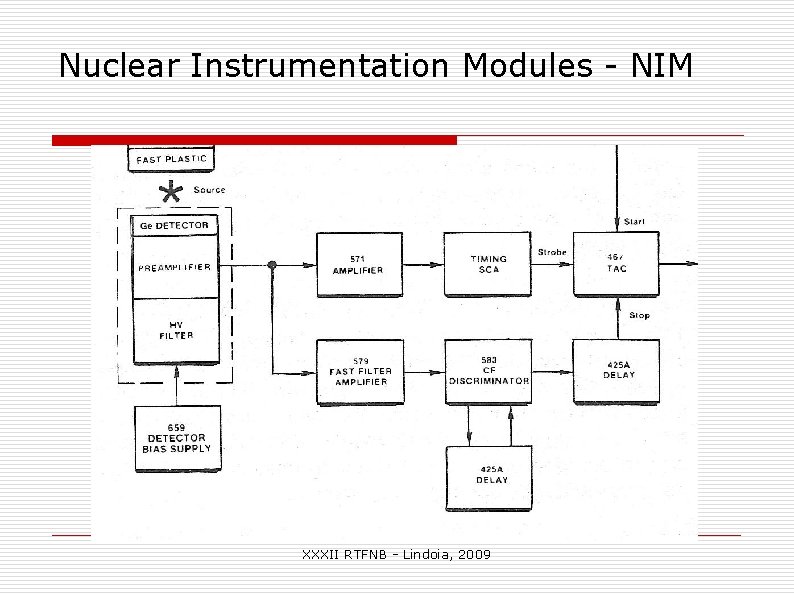
Nuclear Instrumentation Modules - NIM XXXII RTFNB - Lindoia, 2009
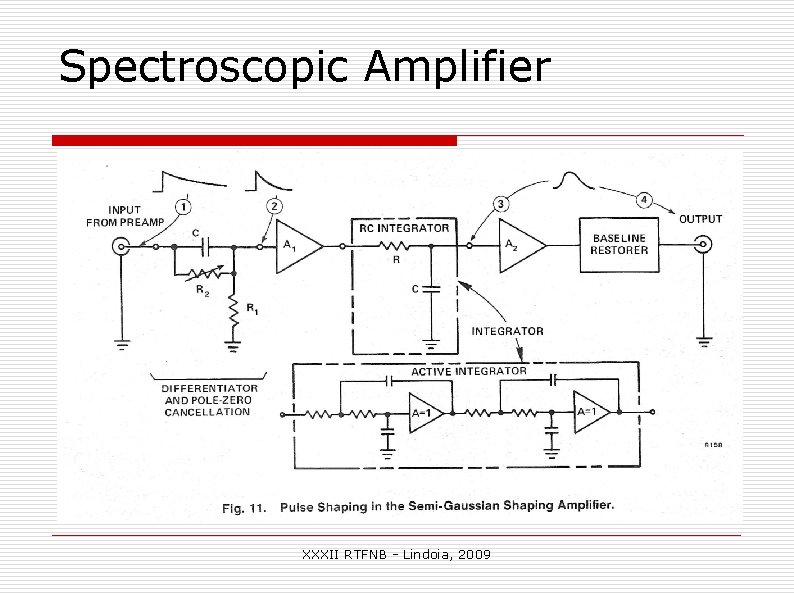
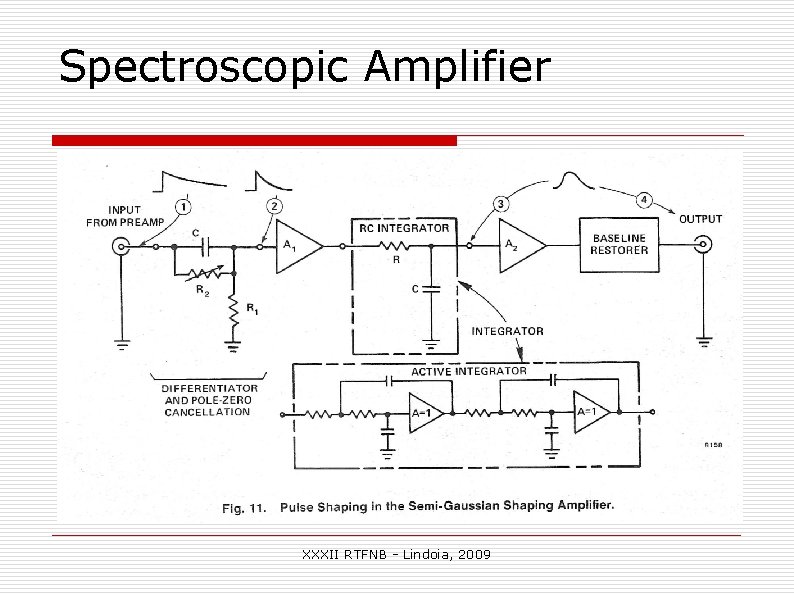
Spectroscopic Amplifier XXXII RTFNB - Lindoia, 2009
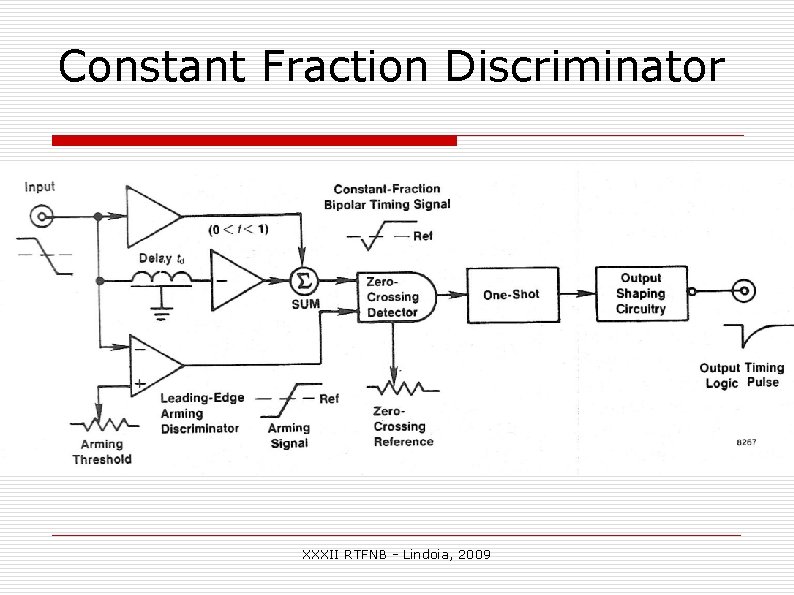
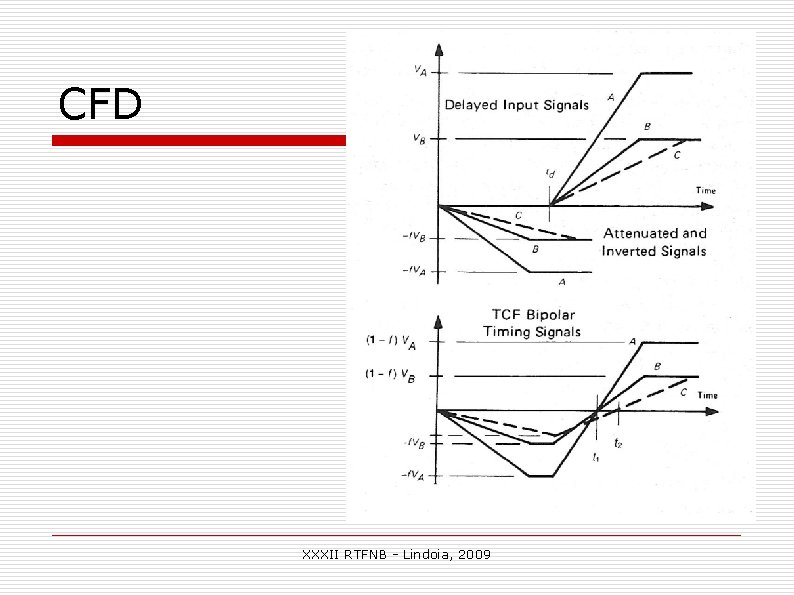
Constant Fraction Discriminator XXXII RTFNB - Lindoia, 2009
CFD XXXII RTFNB - Lindoia, 2009
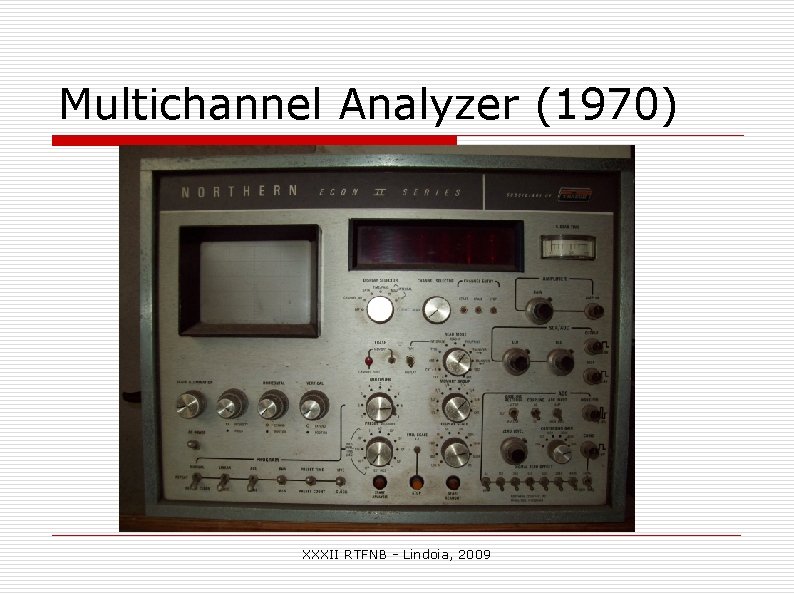
Multichannel Analyzer (1970) XXXII RTFNB - Lindoia, 2009
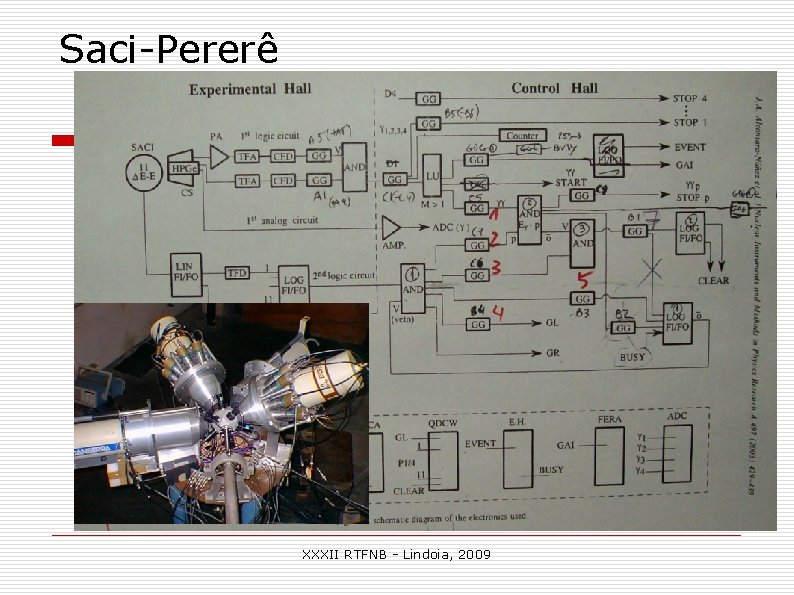
Saci-Pererê XXXII RTFNB - Lindoia, 2009
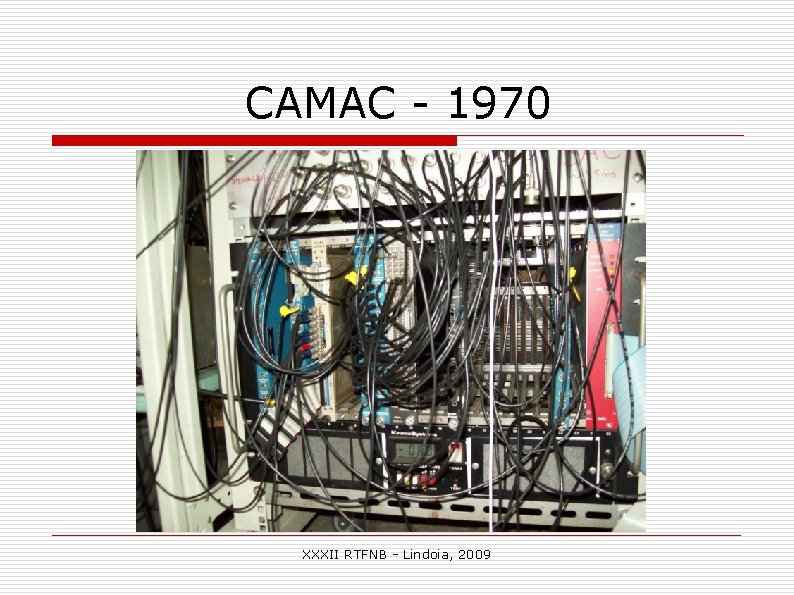
CAMAC - 1970 XXXII RTFNB - Lindoia, 2009
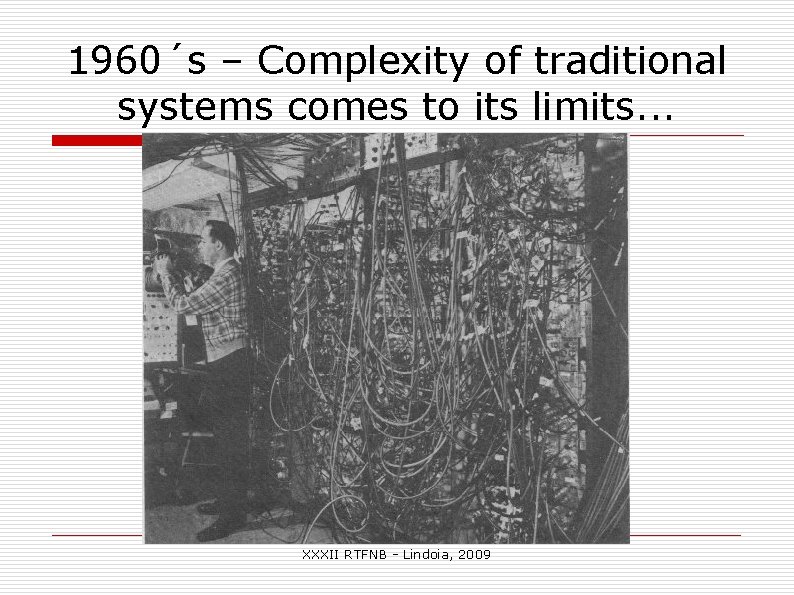
1960´s – Complexity of traditional systems comes to its limits. . . XXXII RTFNB - Lindoia, 2009
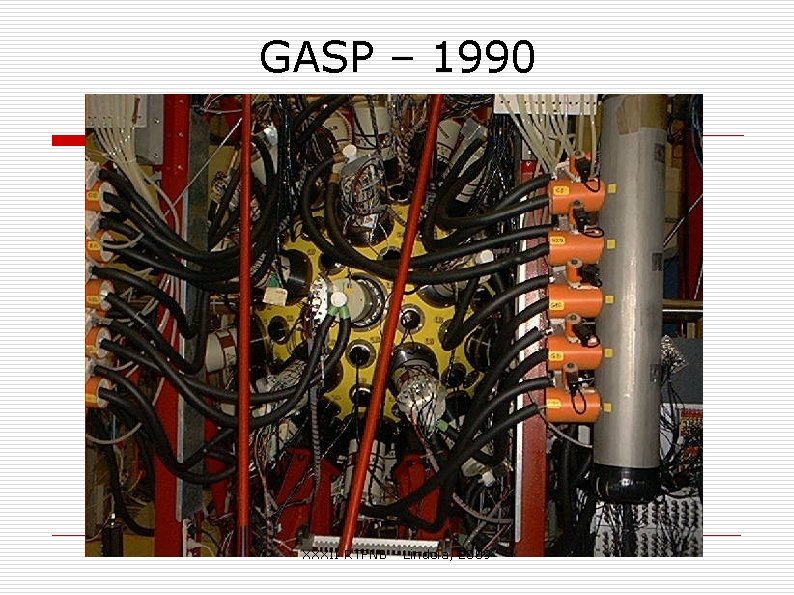
GASP – 1990 XXXII RTFNB - Lindoia, 2009
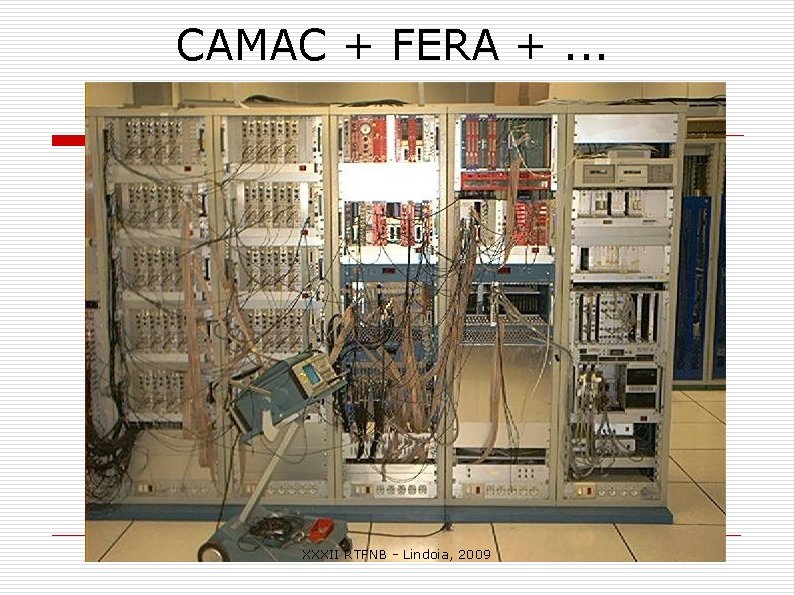
CAMAC + FERA +. . . XXXII RTFNB - Lindoia, 2009
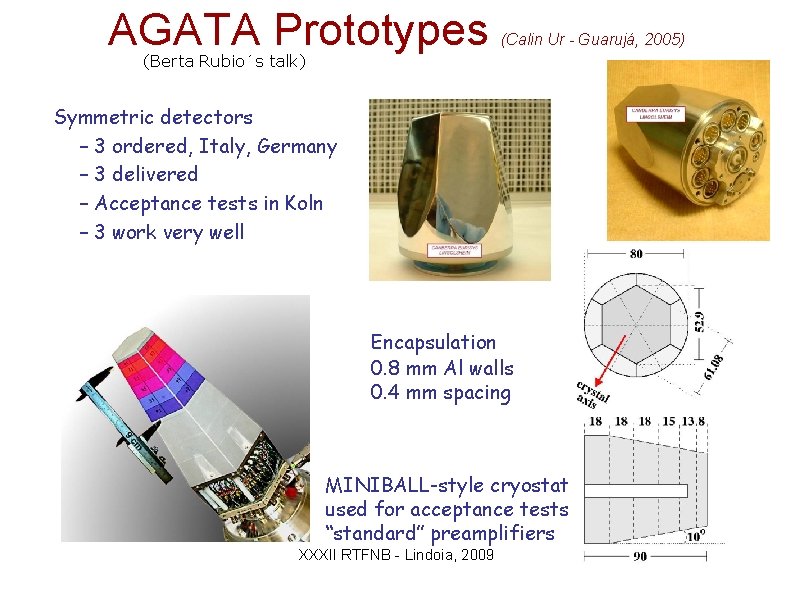
AGATA Prototypes (Calin Ur - Guarujá, 2005) (Berta Rubio´s talk) Symmetric detectors – 3 ordered, Italy, Germany – 3 delivered – Acceptance tests in Koln – 3 work very well Encapsulation 0. 8 mm Al walls 0. 4 mm spacing MINIBALL-style cryostat used for acceptance tests “standard” preamplifiers XXXII RTFNB - Lindoia, 2009
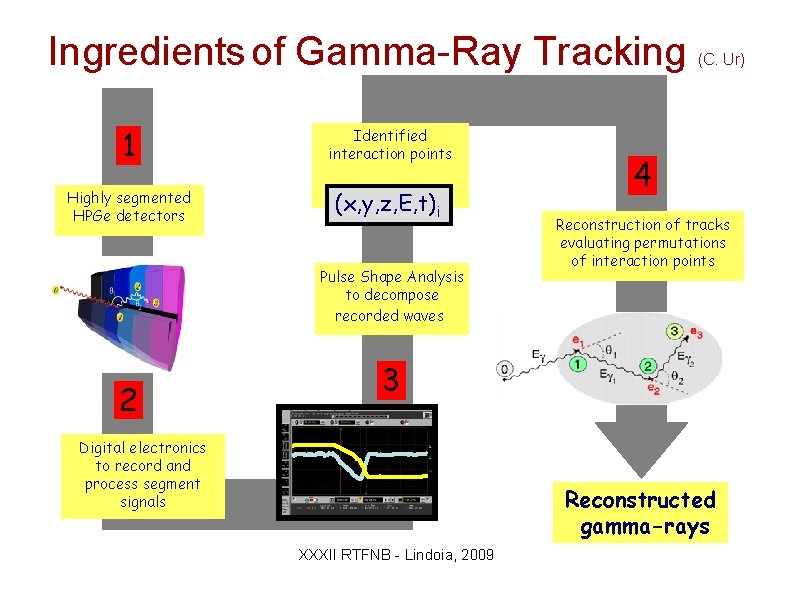
Ingredients of Gamma-Ray Tracking 1 Identified interaction points Highly segmented HPGe detectors (x, y, z, E, t)i · · 2 Pulse Shape Analysis to decompose recorded waves (C. Ur) 4 Reconstruction of tracks evaluating permutations of interaction points 3 Digital electronics to record and process segment signals Reconstructed gamma-rays XXXII RTFNB - Lindoia, 2009
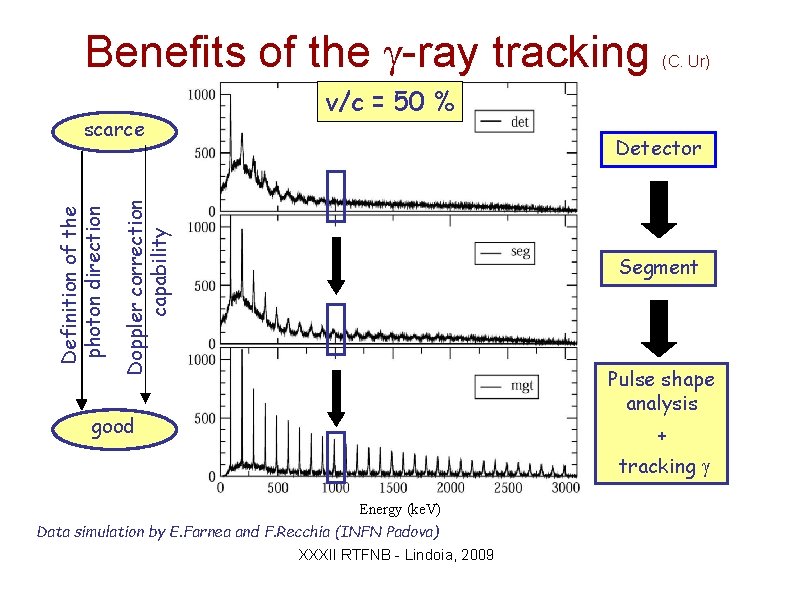
Benefits of the g-ray tracking v/c = 50 % Detector Doppler correction capability Definition of the photon direction scarce (C. Ur) Segment Pulse shape analysis good + tracking g Energy (ke. V) Data simulation by E. Farnea and F. Recchia (INFN Padova) XXXII RTFNB - Lindoia, 2009
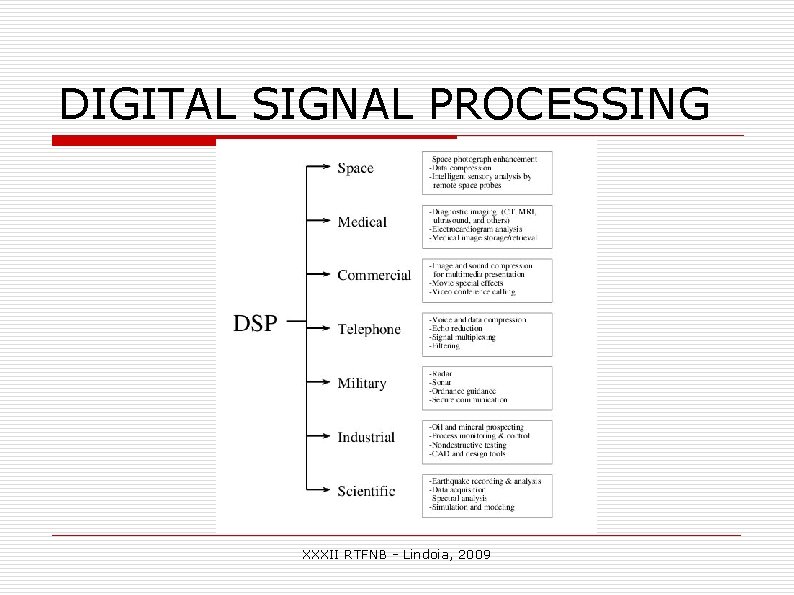
DIGITAL SIGNAL PROCESSING XXXII RTFNB - Lindoia, 2009
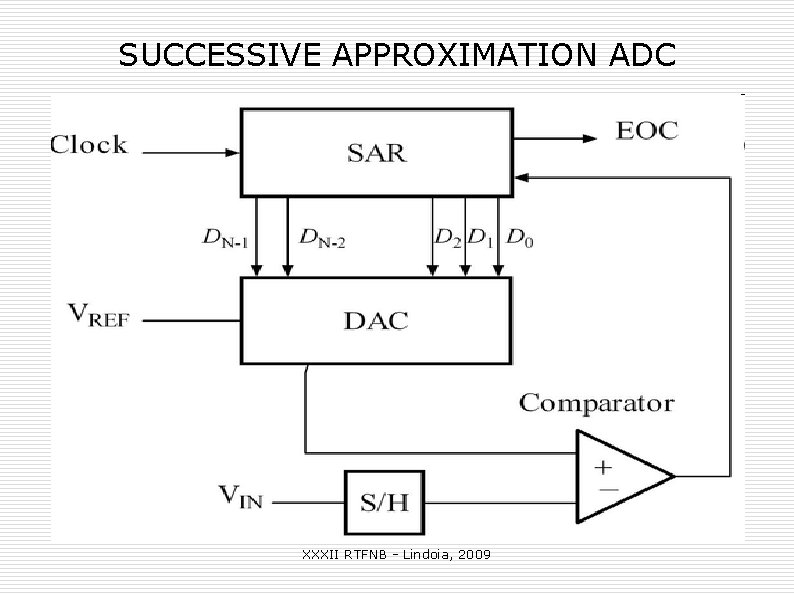
SUCCESSIVE APPROXIMATION ADC XXXII RTFNB - Lindoia, 2009
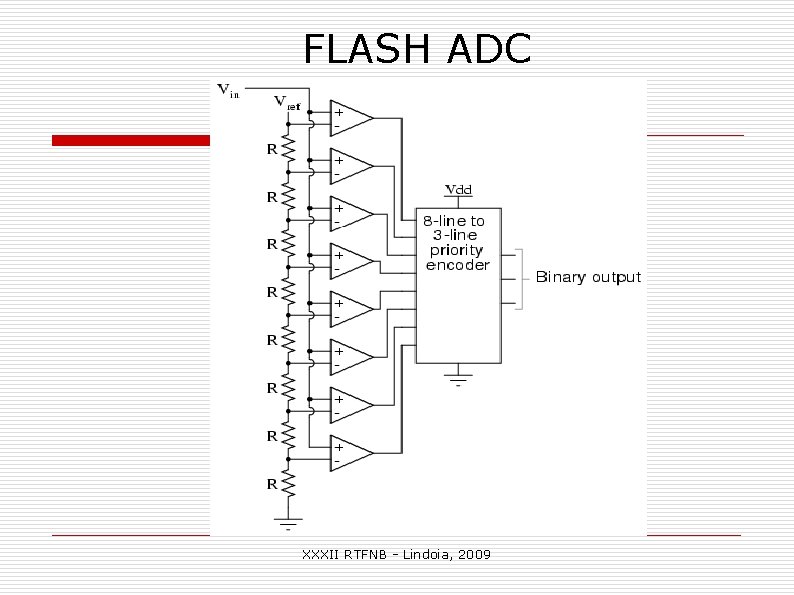
FLASH ADC XXXII RTFNB - Lindoia, 2009
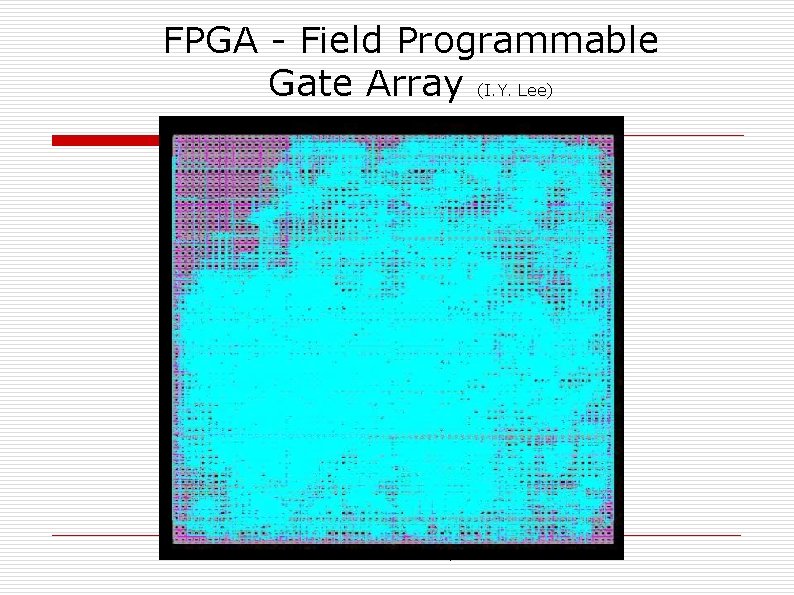
FPGA - Field Programmable Gate Array (I. Y. Lee) XXXII RTFNB - Lindoia, 2009
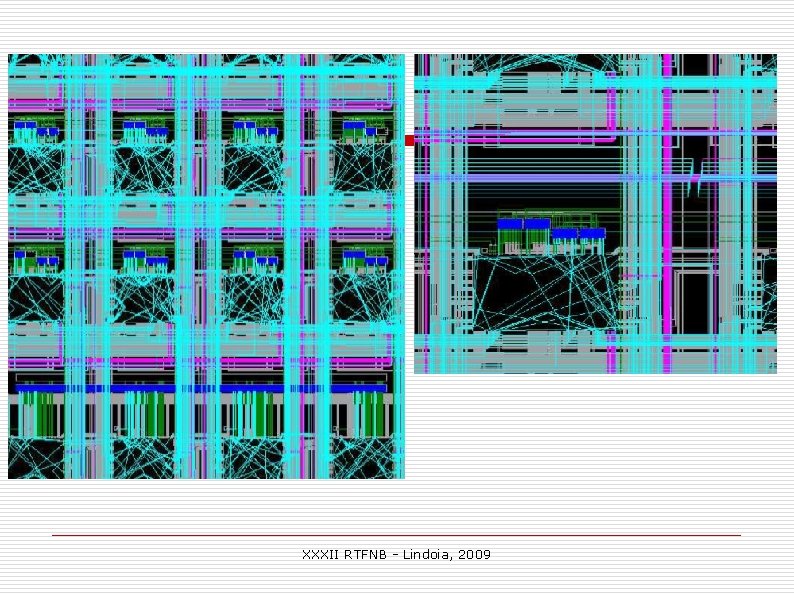
XXXII RTFNB - Lindoia, 2009
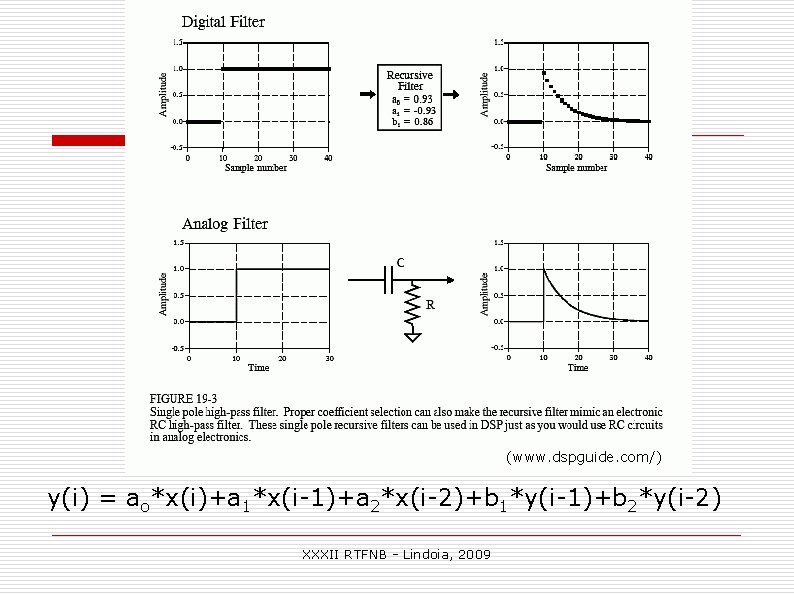
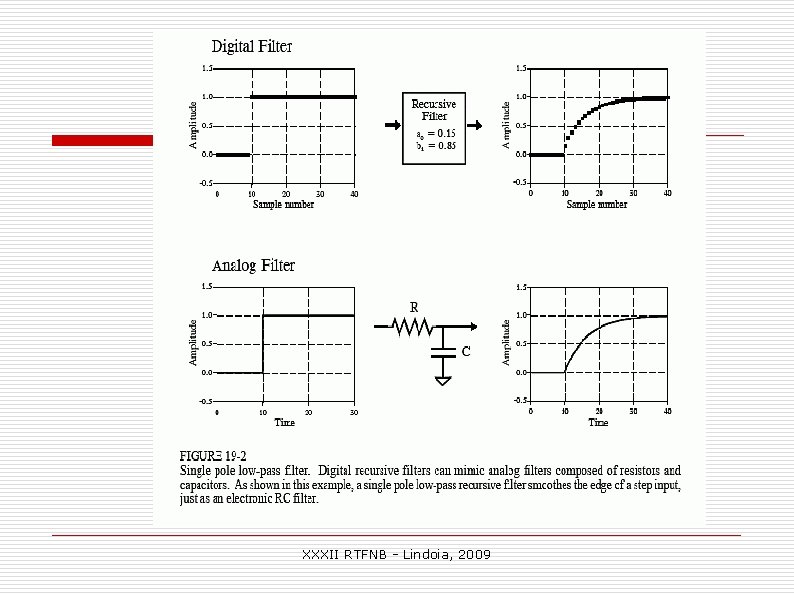
(www. dspguide. com/) y(i) = ao*x(i)+a 1*x(i-1)+a 2*x(i-2)+b 1*y(i-1)+b 2*y(i-2) XXXII RTFNB - Lindoia, 2009
XXXII RTFNB - Lindoia, 2009
Spectroscopic Amplifier XXXII RTFNB - Lindoia, 2009
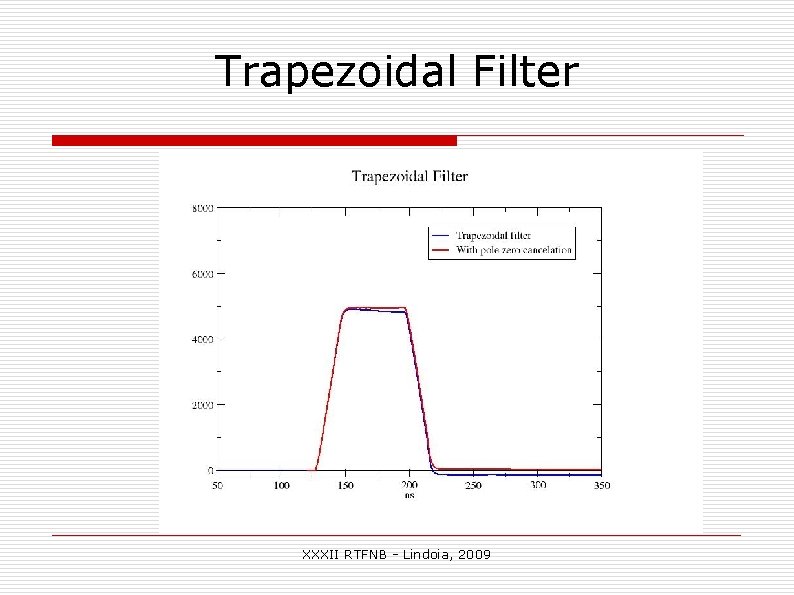
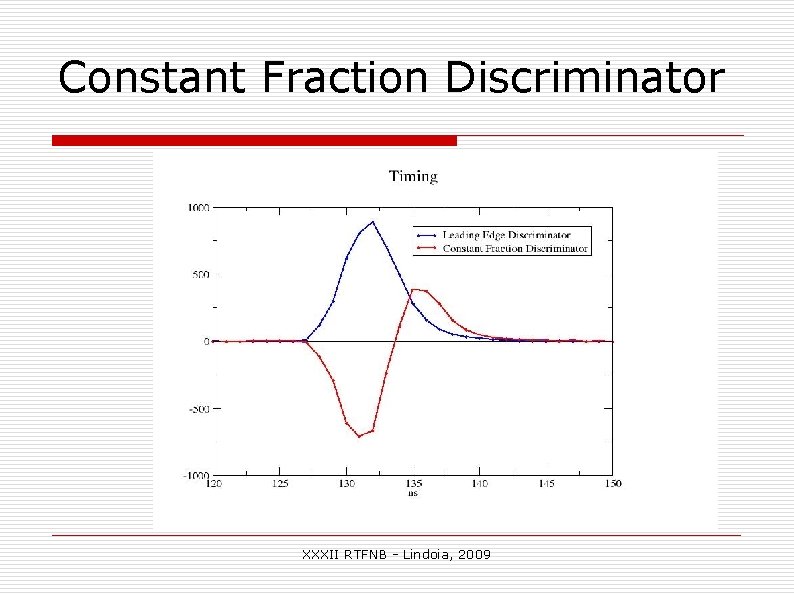
DPP for typical NIM modules functions o o o Leading Edge Discrimination: • y[n]=x[n]-x[n-k](differentiation) • y[n]= (x[n]+x[n-2]) +x[n-1]<<1(Gaussian filtering) • Threshold comparison →LED time Constant Fraction Discrimination: • y[n]=x[n]-x[n-k](differentiation) • y[n]= (x[n]+x[n-2]) +x[n-1]<<1(Gaussian filtering) • y[n]=x[n-k]<<a-x[n](constant fraction) • Zero crossing comparison →CFD time Trapezoidal filter and energy determination: • y[n]=y[n-1]+ ( (x[n]+x[n-2 m-k]))–(x[n-m]+x[n-m-k]) ) J. T. Anderson et al. IEEE N 25, 6 p 1751 (2007) XXXII RTFNB - Lindoia, 2009
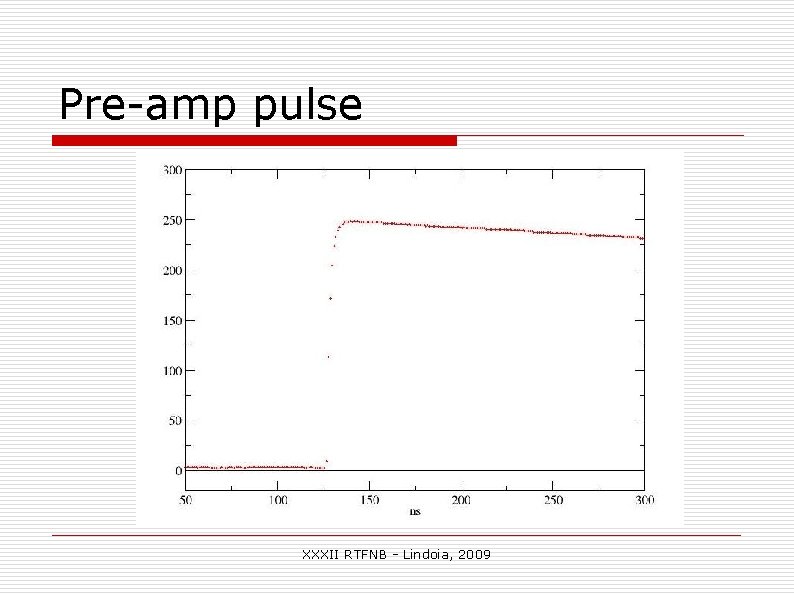
Pre-amp pulse XXXII RTFNB - Lindoia, 2009
Trapezoidal Filter XXXII RTFNB - Lindoia, 2009
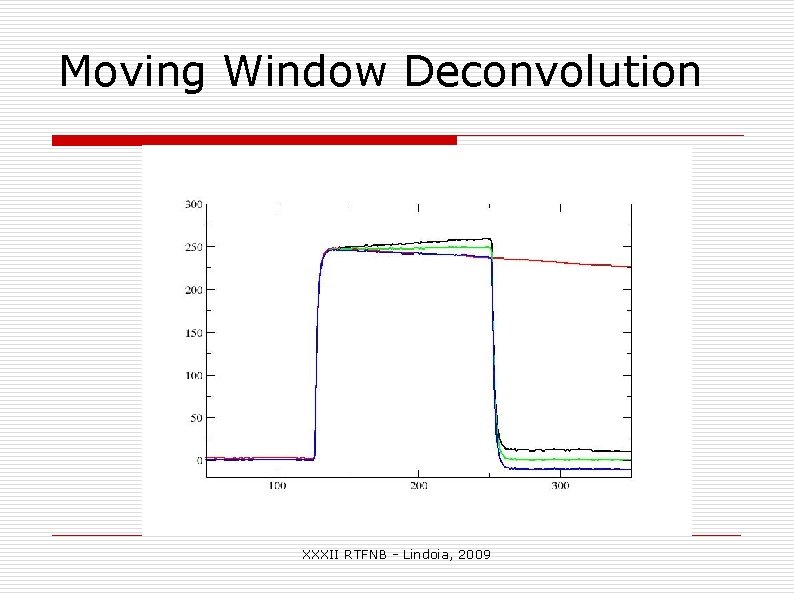
Moving Window Deconvolution XXXII RTFNB - Lindoia, 2009
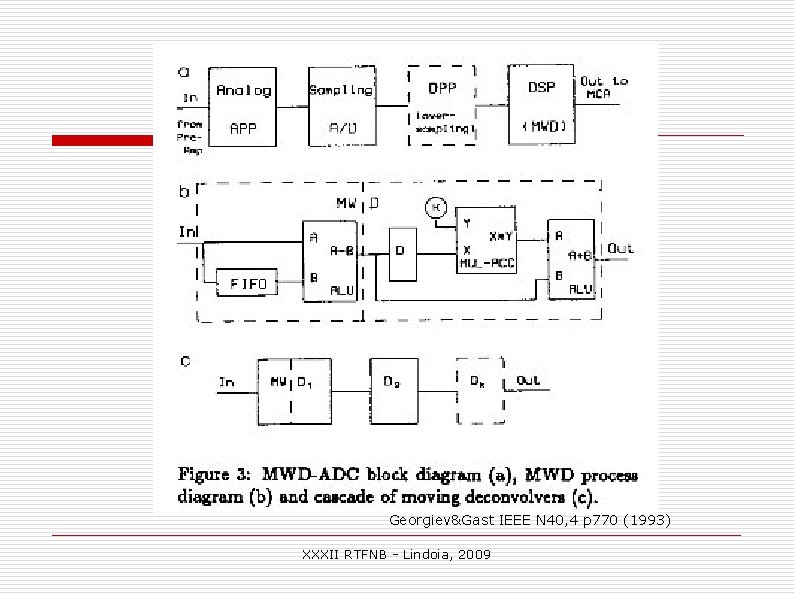
Georgiev&Gast IEEE N 40, 4 p 770 (1993) XXXII RTFNB - Lindoia, 2009
Constant Fraction Discriminator XXXII RTFNB - Lindoia, 2009
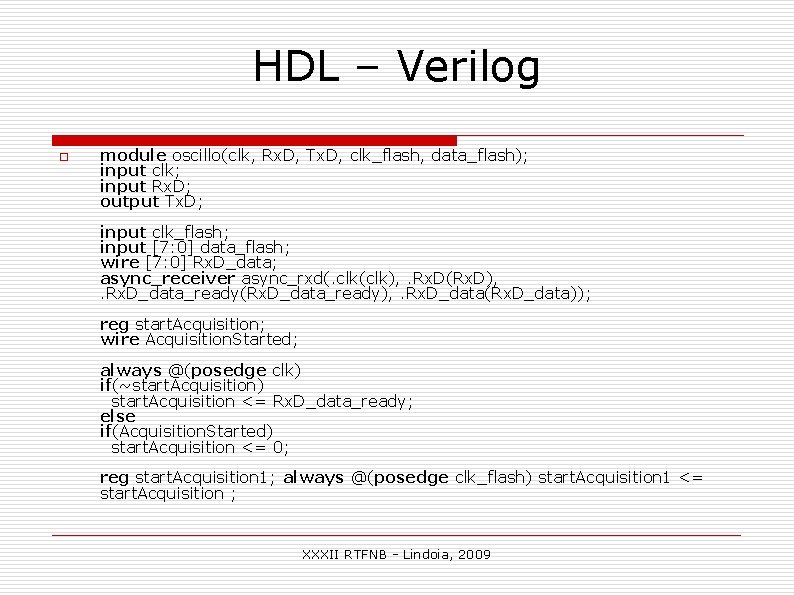
HDL – Verilog o module oscillo(clk, Rx. D, Tx. D, clk_flash, data_flash); input clk; input Rx. D; output Tx. D; input clk_flash; input [7: 0] data_flash; wire [7: 0] Rx. D_data; async_receiver async_rxd(. clk(clk), . Rx. D(Rx. D), . Rx. D_data_ready(Rx. D_data_ready), . Rx. D_data(Rx. D_data)); reg start. Acquisition; wire Acquisition. Started; always @(posedge clk) if(~start. Acquisition) start. Acquisition <= Rx. D_data_ready; else if(Acquisition. Started) start. Acquisition <= 0; reg start. Acquisition 1; always @(posedge clk_flash) start. Acquisition 1 <= start. Acquisition ; XXXII RTFNB - Lindoia, 2009
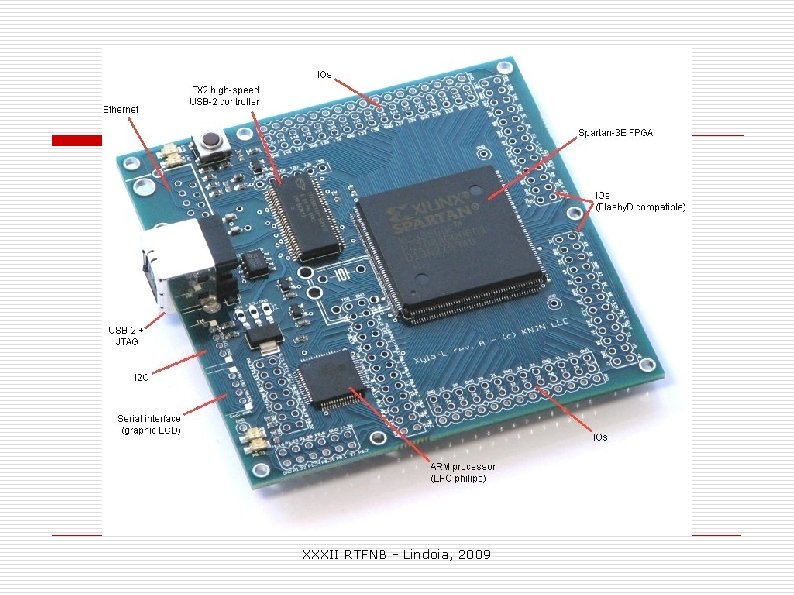
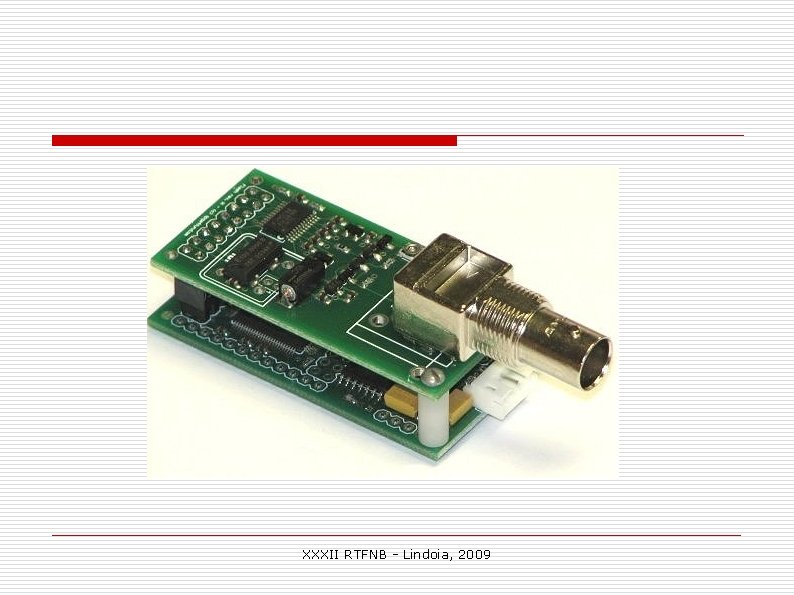
Development & Evaluation o o o FPGA + USB interface evaluation boards from www. knjn. com (Saxo, Xilo) 8 bit flash ADCs from KNJN 4 -12 bit flash ADC evaluation boards from Analog Devices (from MARS) XXXII RTFNB - Lindoia, 2009
XXXII RTFNB - Lindoia, 2009
XXXII RTFNB - Lindoia, 2009
A simple MCA o o Using the evaluation modules we have. With 8 bits ADC - not really useful for real measurements Simple software developed implements all DPP, histogramming, display and an “oscilloscope” to inspect the signal at various points in the DPP chain. May be used in experimental courses at our Institute (e. g. Compton scattering experiment) XXXII RTFNB - Lindoia, 2009
What Have to be Done o o Learn better to program in Verilog Introduce all DPP in the FPGA Develop a trigger system to control 4 12 bits ADCs. This could be a simple system to be used in our lab. Develop a board with USB interface, larger FPGA, capable to interface more ADCs. XXXII RTFNB - Lindoia, 2009
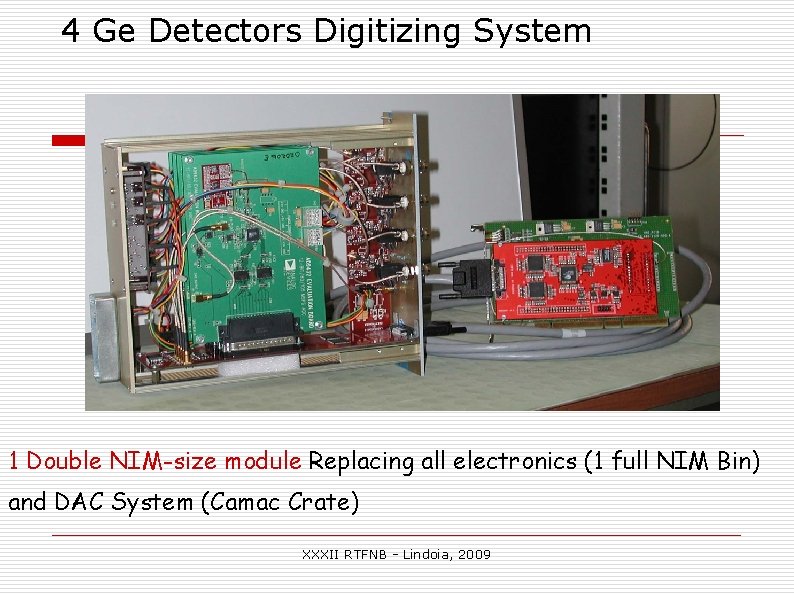
4 Ge Detectors Digitizing System 1 Double NIM-size module Replacing all electronics (1 full NIM Bin) and DAC System (Camac Crate) XXXII RTFNB - Lindoia, 2009
Who are we? o o RVR – DPP algorithms (on the PC) and acquisition software Felipe L. Borges (electronic engineering undergraduate student)– FPGA programming XXXII RTFNB - Lindoia, 2009
Conclusions o o o DPP will be wide spread in the near future. Costs are much smaller than traditional electronics (~US$500/channel) Even if commercial systems are now available, they are (now) to much specific. We certainly will need to build our own. Digital electronics at high frequency is not simple, but way more easy to construct than the analogical equivalents. XXXII RTFNB - Lindoia, 2009
XXXII RTFNB - Lindoia, 2009
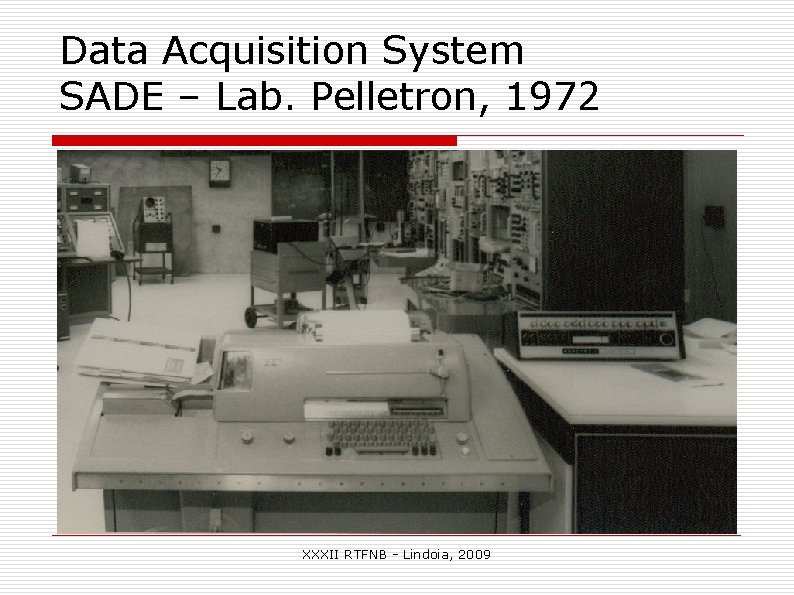
Data Acquisition System SADE – Lab. Pelletron, 1972 XXXII RTFNB - Lindoia, 2009