
Digital Literacy Programme For Schools United Nations Public
Digital Literacy Programme For Schools United Nations Public Service Awards Presentation | Digital Literacy Programme | 11/23/2020 1
Objectives • Prepare learners for the 21 st century skills needed in today’s globally competitive environment • Creation of employment opportunities arising from ICT support centers across the country • Provide electricity to schools and the community • Increased ICT skills among teachers and communities • Creation of business opportunity for digital content developers • Increase the role of Kenya as a global leader and pace setter in ICT | Digital Literacy Programme | 11/23/2020 2

Implementation Status – Installations (Number of Schools with Digital Literacy Programme Devices) Schools 19384 | Digital Literacy Programme | 11/23/2020 3
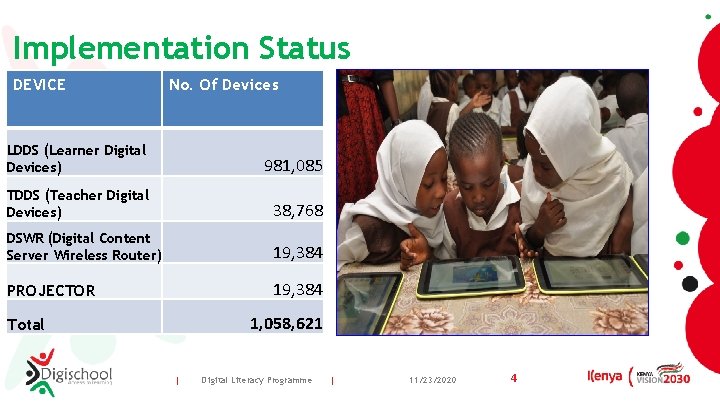
Implementation Status DEVICE No. Of Devices LDDS (Learner Digital Devices) 981, 085 TDDS (Teacher Digital Devices) 38, 768 DSWR (Digital Content Server Wireless Router) 19, 384 PROJECTOR 19, 384 1, 058, 621 Total | Digital Literacy Programme | 11/23/2020 4
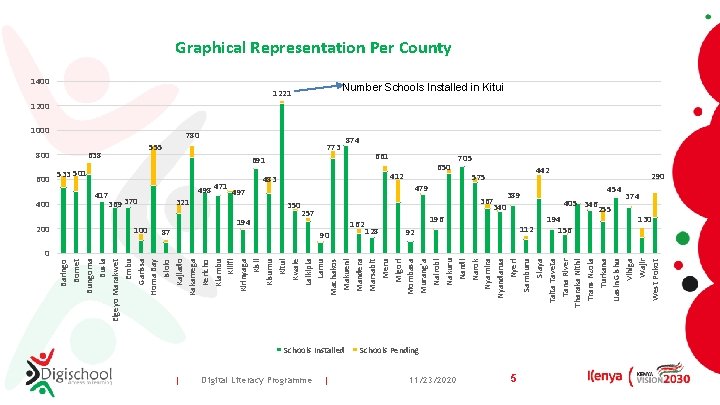
600 400 200 0 Baringo Bomet Bungoma Busia Elgeyo Marakwet Embu Garissa Homa Bay Isiolo Kajiado Kakamega Kericho Kiambu Kilifi Kirinyaga Kisii Kisumu Kitui Kwale Laikipia Lamu Machakos Makueni Mandera Marsabit Meru Migori Mombasa Murang'a Nairobi Nakuru Nandi Narok Nyamira Nyandarua Nyeri Samburu Siaya Taita Taveta Tana River Tharaka Nithi Trans Nzoia Turkana Uasin Gishu Vihiga Wajir West Pokot Graphical Representation Per County 1400 1221 1000 800 638 533 501 417 498 471 369 370 100 321 87 | 350 194 Number Schools Installed in Kitui 1200 555 780 773 257 90 Schools Installed Digital Literacy Programme | 874 691 661 483 412 497 162 128 650 479 11/23/2020 705 575 367 340 442 389 92 196 112 Schools Pending 5 290 405 346 454 194 156 255 374 130
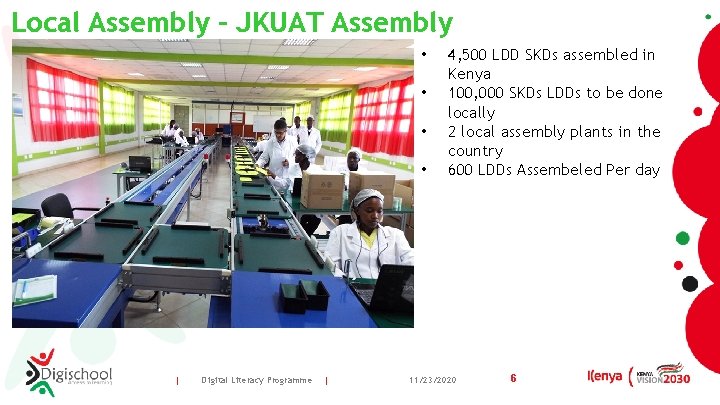
Local Assembly – JKUAT Assembly • • | Digital Literacy Programme | 4, 500 LDD SKDs assembled in Kenya 100, 000 SKDs LDDs to be done locally 2 local assembly plants in the country 600 LDDs Assembeled Per day 11/23/2020 6
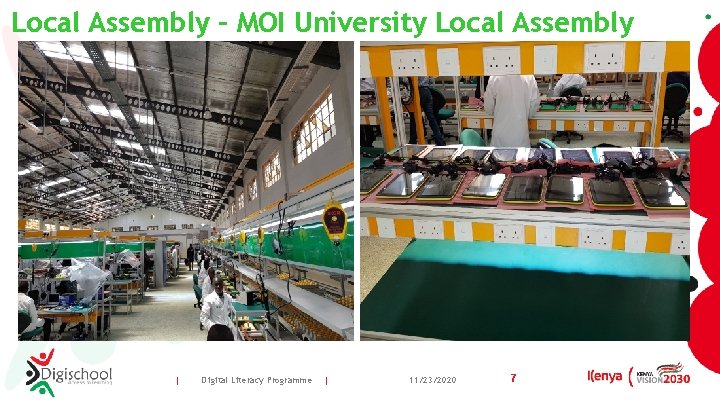
Local Assembly – MOI University Local Assembly | Digital Literacy Programme | 11/23/2020 7
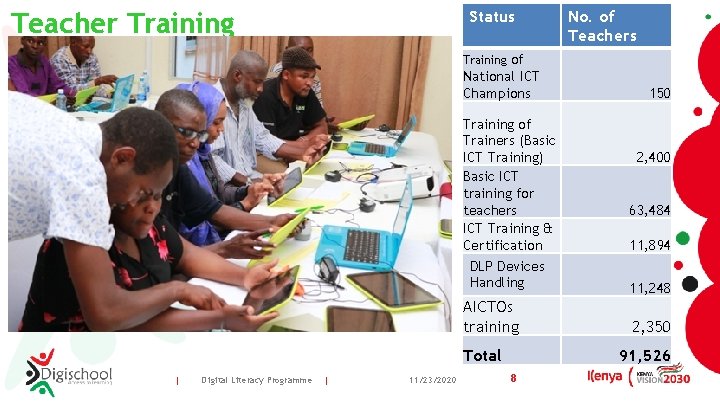
Teacher Training Status No. of Teachers Training of National ICT Champions Training of Trainers (Basic ICT Training) Basic ICT training for teachers ICT Training & Certification DLP Devices Handling AICTOs training Total | Digital Literacy Programme | 11/23/2020 150 2, 400 63, 484 11, 894 11, 248 2, 350 91, 526 8
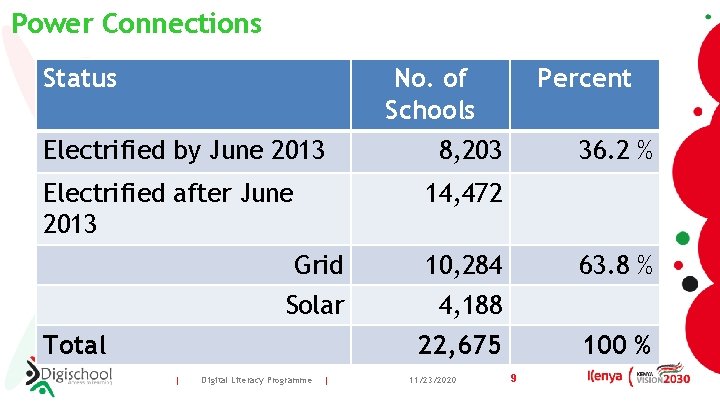
Power Connections Status No. of Schools Electrified by June 2013 Electrified after June 2013 Percent 8, 203 36. 2 % 14, 472 Grid 10, 284 Solar 4, 188 Total 63. 8 % 22, 675 | Digital Literacy Programme | 11/23/2020 100 % 9
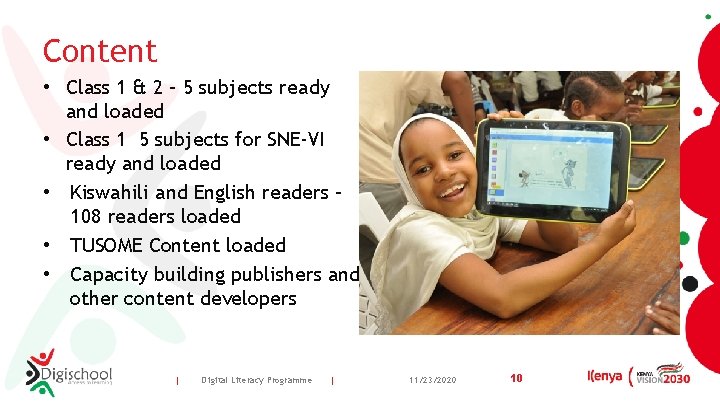
Content • Class 1 & 2 – 5 subjects ready and loaded • Class 1 5 subjects for SNE-VI ready and loaded • Kiswahili and English readers – 108 readers loaded • TUSOME Content loaded • Capacity building publishers and other content developers | Digital Literacy Programme | 11/23/2020 10
Success Stories • Over 89. 2 % of all the public primary schools have been supplied with the DLP devices , the remaining distribution of DLP devices is ongoing • Over 91, 000 teachers have been trained on device utilization • An improved number of pupils enrolment in public primary schools has been realized • Learning in public primary schools is now more fun • Over 95% of schools are connected with power | Digital Literacy Programme | 11/23/2020 11
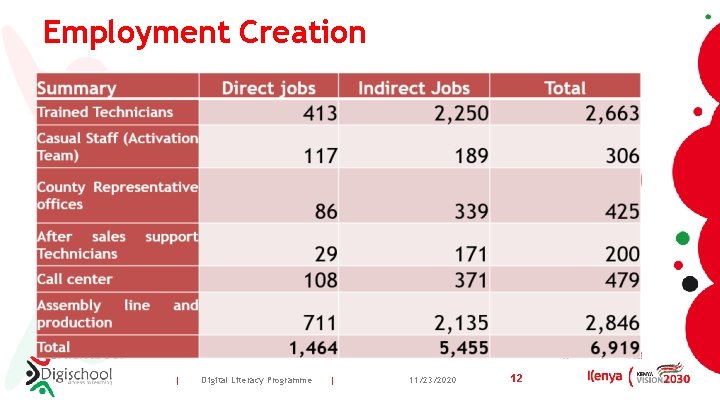
Employment Creation | Digital Literacy Programme | 11/23/2020 12
Key Pillars Alignment with the 2030 Agenda • Vision 2030 was launched with an objective to help transform Kenya into a newly industrializing , middle-income country providing a high quality life to all its citizens by 2030. • Thorough DLP , Kenya aims to ensure inclusive and equitable quality education and promote lifelong opportunities for all. | Digital Literacy Programme | 11/23/2020 13
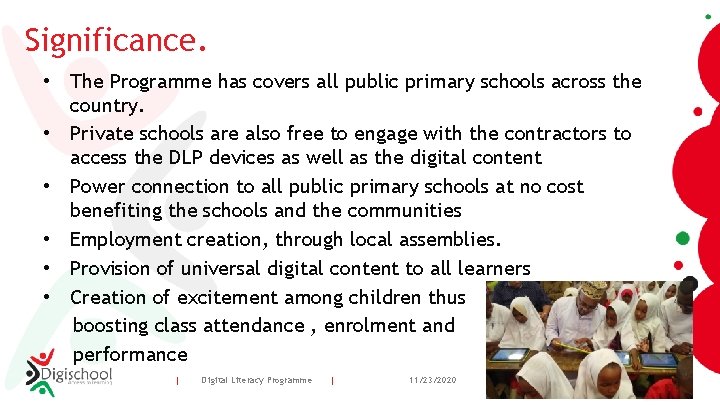
Significance. • The Programme has covers all public primary schools across the country. • Private schools are also free to engage with the contractors to access the DLP devices as well as the digital content • Power connection to all public primary schools at no cost benefiting the schools and the communities • Employment creation, through local assemblies. • Provision of universal digital content to all learners • Creation of excitement among children thus boosting class attendance , enrolment and performance | Digital Literacy Programme | 11/23/2020 14
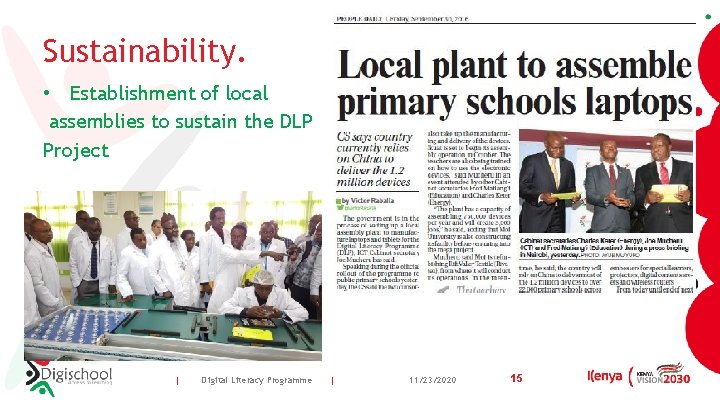
Sustainability. • Establishment of local assemblies to sustain the DLP Project | Digital Literacy Programme | 11/23/2020 15
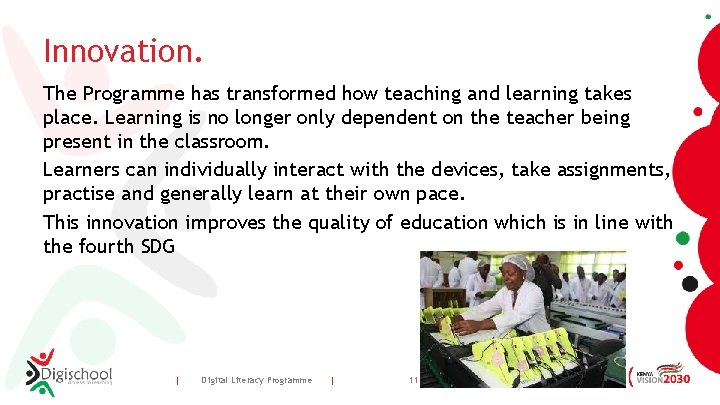
Innovation. The Programme has transformed how teaching and learning takes place. Learning is no longer only dependent on the teacher being present in the classroom. Learners can individually interact with the devices, take assignments, practise and generally learn at their own pace. This innovation improves the quality of education which is in line with the fourth SDG | Digital Literacy Programme | 11/23/2020 16
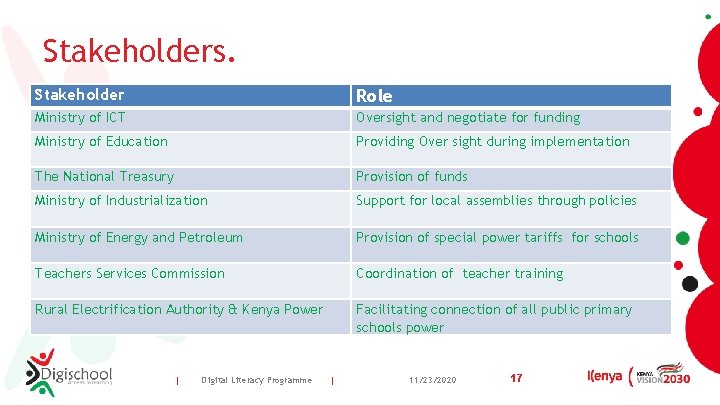
Stakeholders. Stakeholder Role Ministry of ICT Oversight and negotiate for funding Ministry of Education Providing Over sight during implementation The National Treasury Provision of funds Ministry of Industrialization Support for local assemblies through policies Ministry of Energy and Petroleum Provision of special power tariffs for schools Teachers Services Commission Coordination of teacher training Facilitating connection of all public primary schools power Rural Electrification Authority & Kenya Power | Digital Literacy Programme | 11/23/2020 17
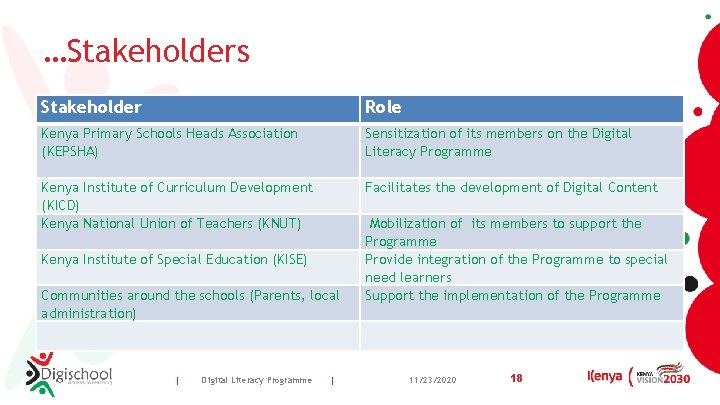
…Stakeholders Stakeholder Role Kenya Primary Schools Heads Association (KEPSHA) Sensitization of its members on the Digital Literacy Programme Kenya Institute of Curriculum Development (KICD) Kenya National Union of Teachers (KNUT) Kenya Institute of Special Education (KISE) Facilitates the development of Digital Content Communities around the schools (Parents, local administration) | Digital Literacy Programme | Mobilization of its members to support the Programme Provide integration of the Programme to special need learners Support the implementation of the Programme 11/23/2020 18
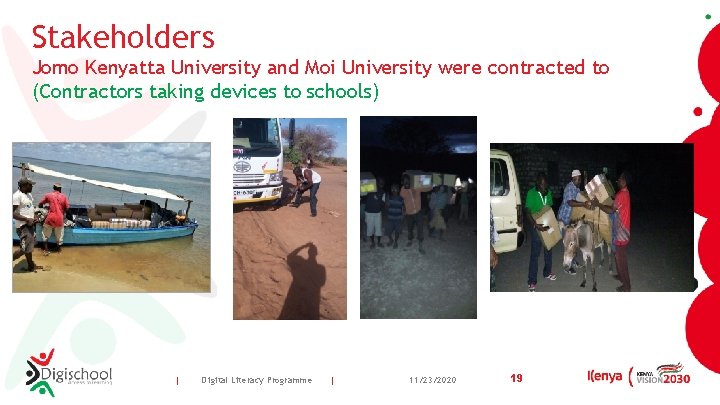
Stakeholders Jomo Kenyatta University and Moi University were contracted to (Contractors taking devices to schools) | Digital Literacy Programme | 11/23/2020 19
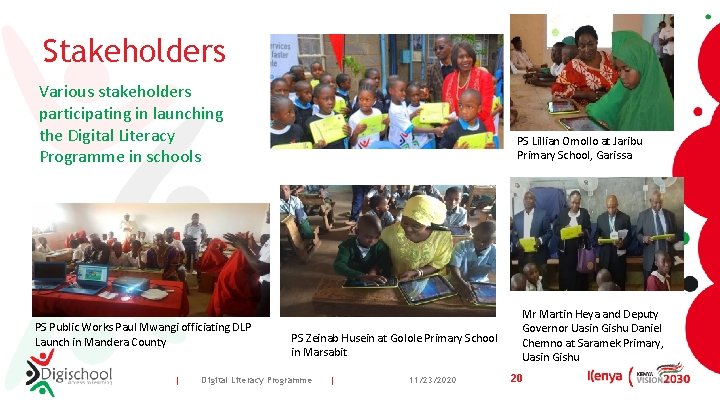
Stakeholders Various stakeholders participating in launching the Digital Literacy Programme in schools PS Public Works Paul Mwangi officiating DLP Launch in Mandera County | PS Lillian Omollo at Jaribu Primary School, Garissa PS Zeinab Husein at Golole Primary School in Marsabit Digital Literacy Programme | 11/23/2020 Mr Martin Heya and Deputy Governor Uasin Gishu Daniel Chemno at Saramek Primary, Uasin Gishu 20
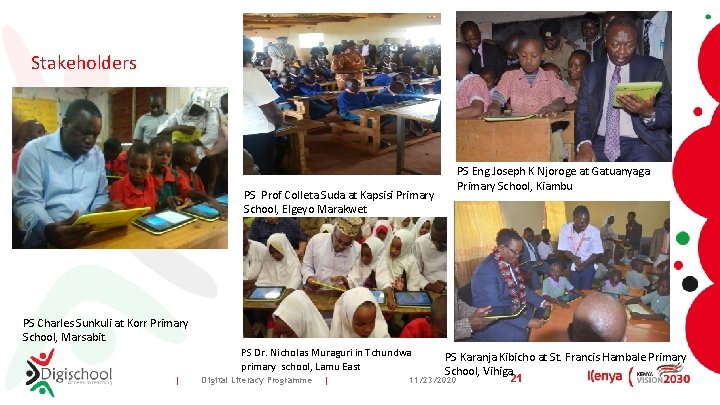
Stakeholders PS Eng Joseph K Njoroge at Gatuanyaga Primary School, Kiambu PS Prof Colleta Suda at Kapsisi Primary School, Elgeyo Marakwet PS Charles Sunkuli at Korr Primary School, Marsabit. PS Dr. Nicholas Muraguri in Tchundwa primary school, Lamu East | Digital Literacy Programme | PS Karanja Kibicho at St. Francis Hambale Primary School, Vihiga. 11/23/2020 21
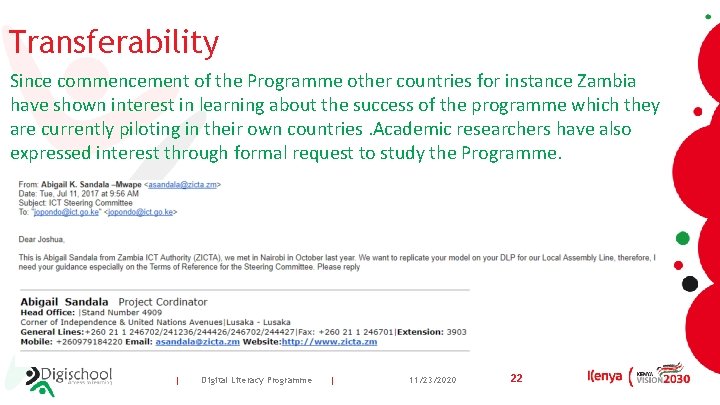
Transferability Since commencement of the Programme other countries for instance Zambia have shown interest in learning about the success of the programme which they are currently piloting in their own countries. Academic researchers have also expressed interest through formal request to study the Programme. | Digital Literacy Programme | 11/23/2020 22
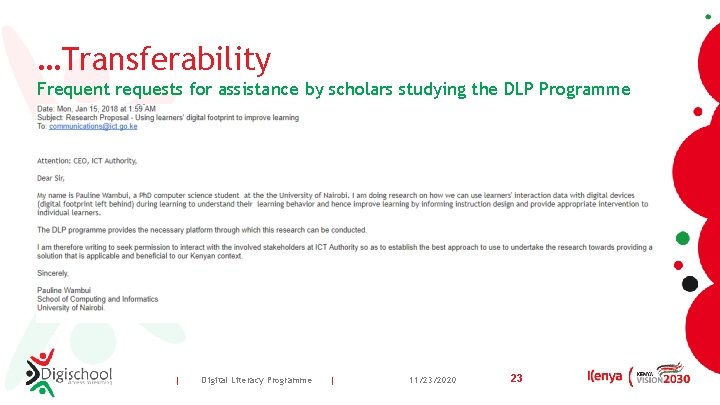
…Transferability Frequent requests for assistance by scholars studying the DLP Programme | Digital Literacy Programme | 11/23/2020 23
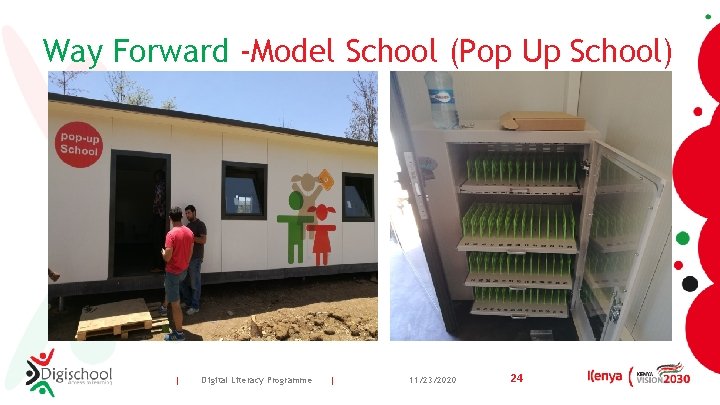
Way Forward -Model School (Pop Up School) | Digital Literacy Programme | 11/23/2020 24
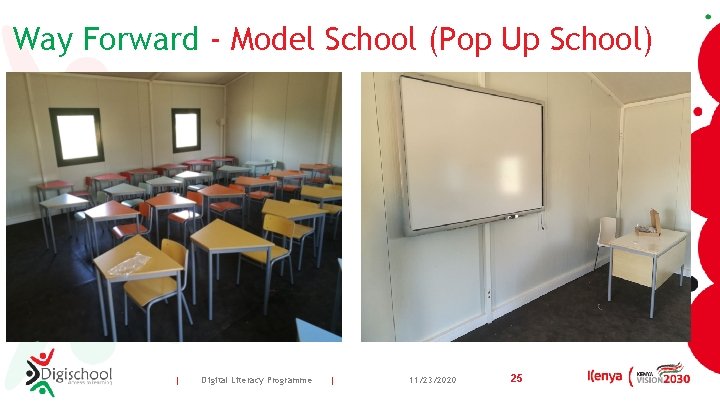
Way Forward - Model School (Pop Up School) | Digital Literacy Programme | 11/23/2020 25
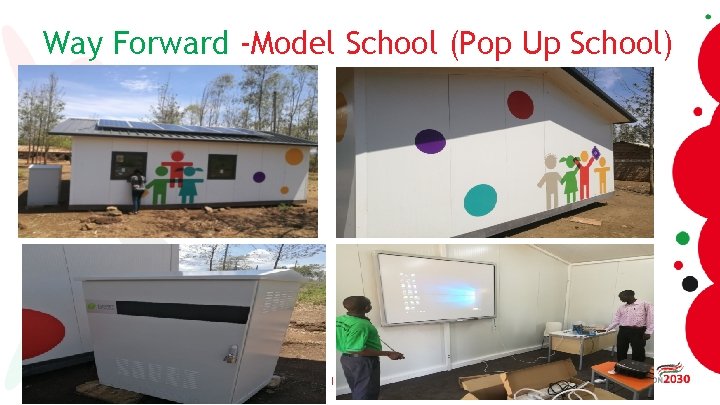
Way Forward -Model School (Pop Up School) | Digital Literacy Programme | 11/23/2020 26
Thank you | Digital Literacy Programme | 11/23/2020 27
- Slides: 27