
Digital Literacy and Partnerships Integrating the Northstar Digital
- Slides: 36
Digital Literacy and Partnerships Integrating the Northstar Digital Literacy Assessment into Libraries, Workforce Centers, and ABE Programs
Presenters � Tom Cytron-Hysom, Project Manager � Eric Nesheim, Executive Director, Minnesota Literacy Council � Jennifer Weaverling, Assistant Supervisor, St. Paul ABE – Hubbs Center
Outline � Brief overview: Northstar � Digital literacy needs of adults in ABE, libraries, workforce centers, etc. � Integration of Northstar into these systems � Resolving systems issues � Business model � Northstar reporting and database capacities that support collaboration
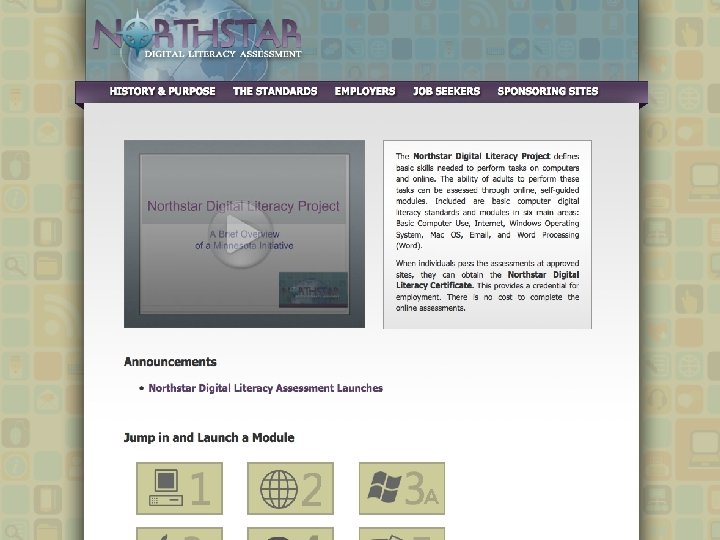
Northstar: An overview � Purpose ◦ Develop basic computer literacy ◦ Demonstrate competency ◦ Create a credential to assist in job search � Target audience ◦ Adults with very low literacy level ◦ Displaced workers without computer skills ◦ Need skills for ABE, career certificates, etc.
Features � Online, self-guided assessment with audio � Six modules: Windows, Mac OS, basic computer, email, world wide web, Word � Spanish version available � ADA compliant; closed-captioning available � Infrastructure in place � Comprehensive database and online tools available to sponsors � Creative Commons license
Northstar: Partnership is key � Developed in partnership ◦ St. Paul Public Library/St. Paul Community Literacy Consortium ◦ Community participation in development process � Used ◦ ◦ ◦ in partnership ABE programs Libraries Workforce centers CTEP Center for Study of Adult Literacy
Current Status (July 2013) � 73 sponsor sites have administered 10, 490 assessments, awarded 1, 539 Certificates �Public sites have administered 58, 000+ assessments �Sponsor sites in four states outside Minnesota
Digital literacy needs of adults � Lack of basic computer/digital literacy skills are a barrier to employment, re-employment, and higher education. � Searching for and applying for work requires online and computer skills. � 70% of all U. S. jobs will require some Information Communication Technology by 2016 (Mccain, 2009) � Lack of digital literacy skills contributes to poverty and limited employment options.
Overlapping needs � The same populations use ABE, libraries, and workforce centers � Clients are often low-income, with limited skills � Lack of basic computer and digital literacy skills are common � These skill deficits can prevent effective use of ABE/library/workforce center resources, and are barriers to employment and further information
Integrating Northstar into systems � Libraries � ABE � Workforce centers – BTOP; REA ABE Northstar Collaborative Pilot Project � Ensures standardization of offerings among libraries
Libraries � MELSA support � St. Paul ◦ Integrated classes taught by CTEP members at library sites ◦ Mobile WORKplace: Classes taught primarily in other languages outside library locations. As of early August, 328 Northstar assessments had been administered, and 675 certificates awarded.
The Mobile Lab � 12 laptops and a mobile internet connection � Classes taught in English, Somali, Hmong, Spanish, and Karen � Classes include basic computer, internet, Word, basic coding, etc. – based on need � Many partner sites, including Roosevelt Homes, Mc. Donough, MORE, Karen Association of MN, Highwood Hills Elementary, Parkway Gardens (seniors), Dorothy Day, Ramsey County Correctional Facility, etc.
One Site: Dorothy Day � Connection made through Ramsey County Workforce Center � Northstar used as pre-test to highlight skills and guide teaching � Recently housed students – have enough stability that they are very interested in learning, so they see skills/certificate as personally valuable; high motivation � Dorothy Day staff excited over the Certificate
Why SPPL finds value in Northstar � Provides valuable evaluation data for programming ◦ Are students learning? ◦ What are they learning? � Used as pre- and post-test � Provides value to students ◦ Motivates students by highlighting skill gaps ◦ Shows what they have learned ◦ Provides Certificate as a credential option
Use in ABE �Pre- and post-assessment �Means of assessing student progress and recognizing achievement �Metric for programs �Building digital literacy skills for distance learning and other instruction �Breaking news: Endorsement and financial support from MDE ABE
ABE Best Practice = � Integration into core literacy instruction
Characteristics of Optimal Integration: 1. Seamless 2. Appropriate 3. Facilitated 4. Empowering Dillon-Marable & Valentine
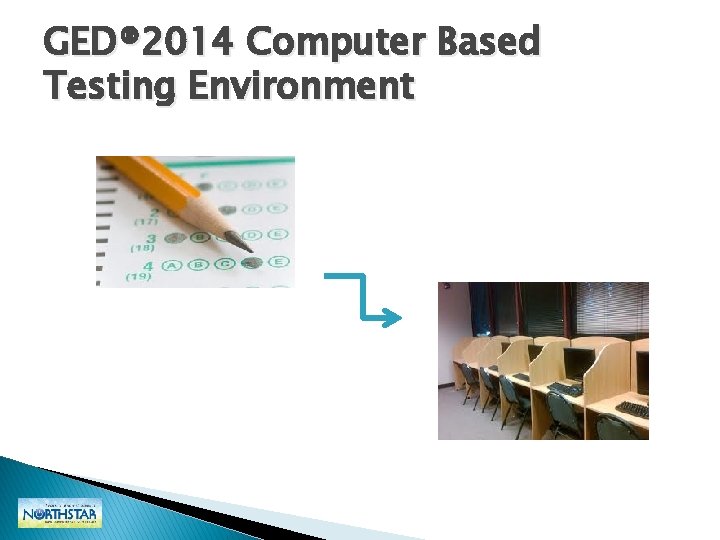
GED® 2014 Computer Based Testing Environment
Workforce Centers: BTOP � 5 -state digital literacy/broadband adoption project funded through ARRA � 30 month project concluded June 30 � Involved 4 workforce centers (Mankato, New Ulm, Minneapolis, Ramsey County) and one nonprofit in Minnesota (PPL) � Northstar used to assess skill development among participants � Use of volunteer tutors under ABE direction
Workforce Centers: REA/UI � REA ABE Northstar Collaborative Pilot Project � Lack of digital literacy skills as barrier to employment � Modeled after previous BTOP project � Designed to serve UI participants at-risk for exhausting UI resources � Lack of digital literacy skills identified as major barrier
REA/UI - Continued � Incorporates screeners, Northstar assessment, and Learner Web learning plans � Services provided collaboratively by ABE, UI/REA, and workforce centers � Pilot project at Ramsey County, Osseo, Mankato, and Duluth workforce centers � Includes evaluation to assess long term outcomes for participants
Other Partnerships � CTEP � Center for Study of Adult Literacy
CTEP � Community Technology Empowerment Program � Uses Ameri. Corps members to teach technology skills at non-profits, libraries, ABE programs, etc. � Northstar used to assess attainment of outcomes
Center for Study of Adult Literacy � Working to provide online instruction for lowskill readers � Specific computer skills needed to access and utilize the online resources � Has requested specially tailored versions of two modules to include only the identified computer skills
Commonalities in Collaborative Projects � Involve multiple large systems, with different practices, policies, etc. � Provide different services, but all serve lowskilled adults (among others) � Address issues involving the Digital Divide
Systems issues can sink collaboration if not addressed! � Lack of initial communication and buy-in among partners; key individuals not involved early � Poor role definition – who does what/is responsible for what � Decision-making (everyone/no-one in charge) � Timeframe is unrealistic
More systems issues � Space and technology limitations � Conflicts in system practices, policies, etc. ; centralized vs. decentralized, different end goals, etc. � Differing goals among partners � Unrealistic expectations
Questions to Ask � What are we trying to accomplish? � Who needs to be at the table? � Have all needed system partners bought into the project? � Have all key staff bought into the project? � What are the specific roles, commitments, and responsibilities for the project? � Is the time frame realistic?
More Questions � What are the means of accountability? � Have barriers having to do with policy, practices, resources, and technological capacity been identified and addressed?
Business Model � Philosophy � Minnesota Literacy Council as fiscal agent � Community steering group
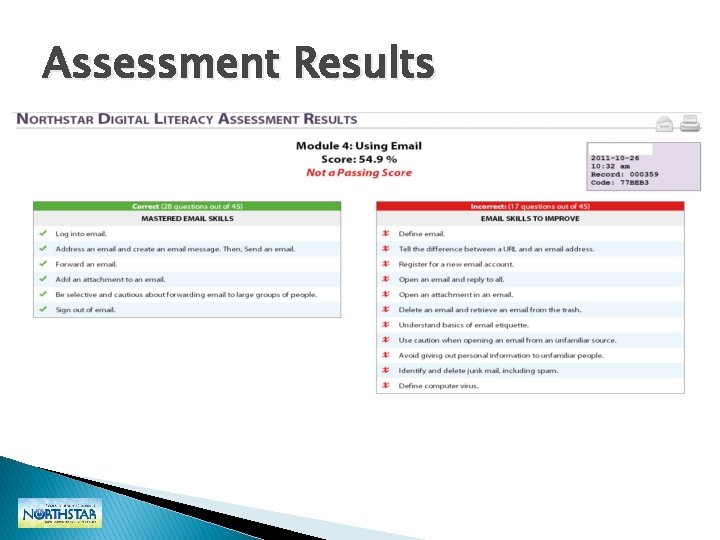
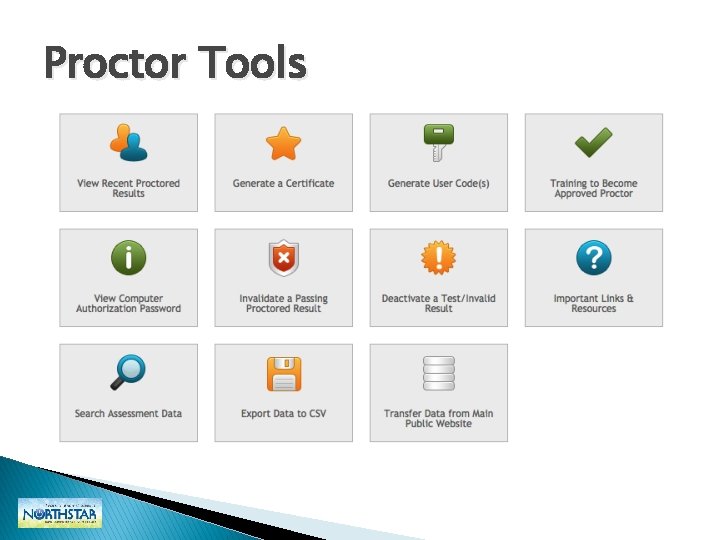
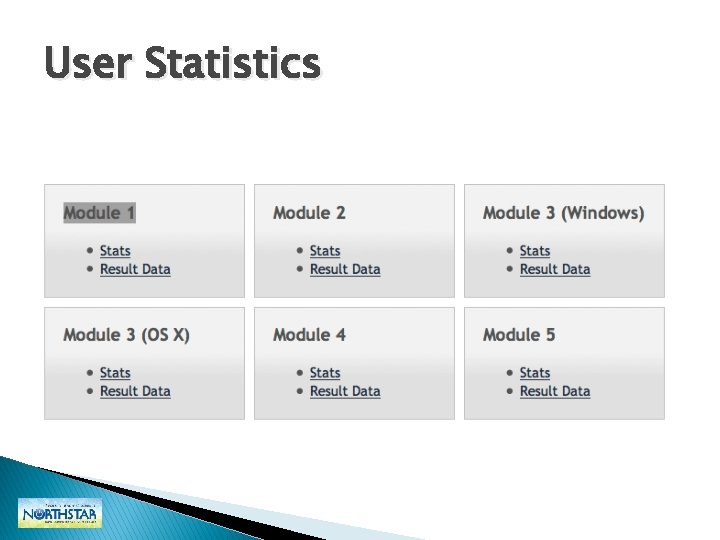
Northstar tools/database capacities � Can support collaborative projects � Designed to: ◦ Provide feedback for individuals completing the assessment, as well as instructors ◦ Help agencies manage Northstar easily and effectively ◦ Allow agencies to access and use data for a variety of management purposes ◦ Can be used to track data for accountability/evaluation purposes
Assessment Results
Proctor Tools
User Statistics
Questions? � http: //www. digitalliteracyassessment. org/ind ex. php