
Digital libraries computer science and education 10 projects
Digital libraries, computer science, and education: 10 projects Edward A. Fox fox@vt. edu Department of Computer Science Virginia Tech (VPI&SU) Blacksburg, Virginia, USA http: //fox. cs. vt. edu 1
Virginia Tech • • Digital Library Research Laboratory Center for Human-Computer Interaction College of Engineering System X, Terascale Computing Facility: largest academic supercomputer, for only $5 M • Largest university in Virginia (26 K students) • Ongoing collaboration with TUD, especially with Mechanical Engineering • Prior visit from CS by Deborah Tatar, Adrian Sandu to TUD -> collab. between VT, IPSI 2
Acknowledgements • • • Students Faculty, Staff Collaborators Support Mentors 3
Acknowledgements: Students • Pavel Calado, Yuxin Chen, Fernando Das Neves, Shahrooz Feizabadi, Robert France, Marcos Gonçalves, Nithiwat Kampanya, S. H. Kim, Aaron Krowne, Bing Liu, Ming Luo, Paul Mather, Fernando Das Neves, Unni. Ravindranathan, Ryan Richardson, Rao Shen, Ohm Sornil, Hussein Suleman, Ricardo Torres, Wensi Xi, Baoping Zhang, Qinwei Zhu, … 4
Acknowledgements: Faculty, Staff • Lillian Cassel, Debra Dudley, Roger Ehrich, Joanne Eustis, Weiguo Fan, James Flanagan, C. Lee Giles, Eberhard Hilf, John Impagliazzo, Filip Jagodzinski, Rohit Kelapure, Neill Kipp, Douglas Knight, Deborah Knox, Aaron Krowne, Alberto Laender, Gail Mc. Millan, Claudia Medeiros, Manuel Perez, Naren Ramakrishnan, Layne Watson, … 5
Other Collaborators (Selected) • • • Brazil: FUA, UFMG, UNICAMP Case Western Reserve University Emory, Notre Dame, Oregon State Germany: Univ. Oldenburg Mexico: UDLA (Puebla), Monterrey College of NJ, Hofstra, Penn State, Villanova University of Arizona University of Florida, Univ. of Illinois University of Virginia VTLS (slides on digital repositories, NDLTD) 6
Acknowledgements: Sponsors • ACM, Adobe, AOL, CAPES, CNI, CONACy. T, DFG, IBM, IEEE, Microsoft, NASA, NDLTD, NLM, OCLC, SOLINET, SUN, SURA, UNESCO, US Dept. Ed. , VTLS • NSF (IIS-9986089, 0086227, 0080748, 0325579; ITR-0325579; DUE-0121679, 0136690, 0121741, 0333601)
Outline • • • More information Information life cycle Digital libraries DL curriculum DL textbook 5 S ETANA OCKHAM CITIDEL, NSDL • Get. Smart • Networked Digital Library of Theses and Dissertations (NDLTD) • Quality, Metasearch • Stepping Stones and Pathways • Personalization, Sense. Cam, SI 8
For More Information • Magazine: www. dlib. org • Books: http: //fox. cs. vt. edu/DLSB. html (1994) – MIT Press: Arms, plus by Borgman, Licklider (1965) – Morgan Kaufmann: Witten. . . (several), Lesk (2 nd edition) • Conferences – ECDL: www. ecdl 2005. org – ICADL: http: //icadl 2004. sjtu. edu. cn – JCDL: www. jcdl 2005. org • Associations – ASIS&T DL SIG; DELOS – IEEE TCDL: www. ieee-tcdl. org (student awards, doctoral consortia) • NSF: www. dli 2. nsf. gov 9 • Labs: VT: www. dlib. vt. edu, http: //ei. cs. vt. edu/~dlib/
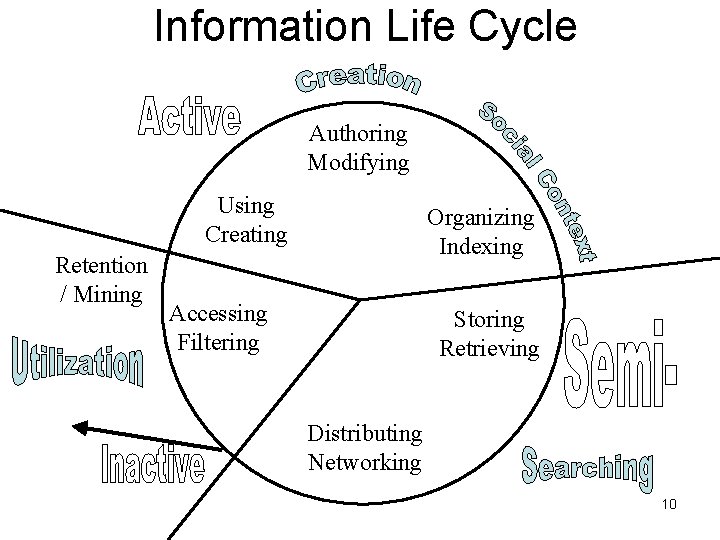
Information Life Cycle Authoring Modifying Using Creating Retention / Mining Organizing Indexing Accessing Filtering Storing Retrieving Distributing Networking 10
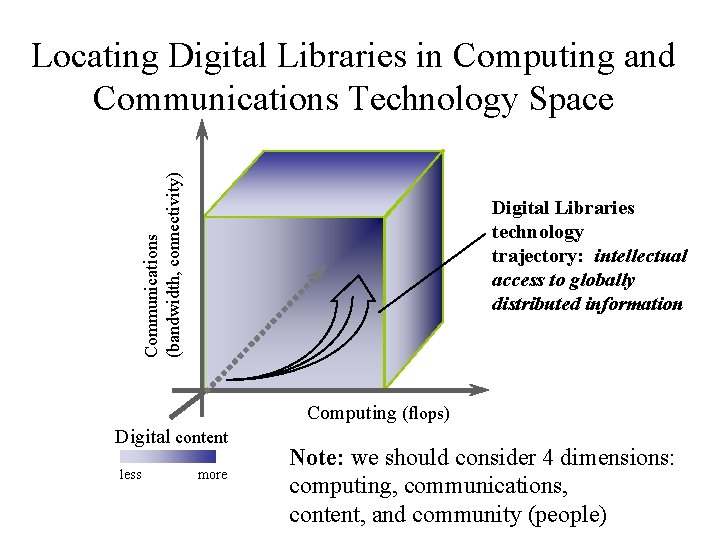
Communications (bandwidth, connectivity) Locating Digital Libraries in Computing and Communications Technology Space Digital Libraries technology trajectory: intellectual access to globally distributed information Computing (flops) Digital content less more Note: we should consider 4 dimensions: computing, communications, content, and community (people)

12
Digital Libraries --- Objectives • World Lit. : 24 hr / 7 day / from desktop • Integrated “super” information systems: 5 S: Table of related areas and their coverage • Ubiquitous, Higher Quality, Lower Cost • Education, Knowledge Sharing, Discovery • Disintermediation -> Collaboration • Universities Reclaim Property • Interactive Courseware, Student Works • Scalable, Sustainable, Useful
Digital Library (DL) Challenges • Preservation - so people with trust DLs • Supporting infrastructure - networks, . . . • (Semantic) interoperability • DL industry - critical mass by covering libraries, archives, museums, corporate info, govt info, personal info - “quality WWW” integrating DB, HCI, HT, IR, MM, networking, . . . – Need tools/methods to make building them easier
DL Challenges – 2: Terminology • Digital / electronic / virtual library • Born digital, hybrid (digital/physical) • Universal access (all people/places/times) – Accommodate disabilities (color, visual, auditory) – Mobile (office, home, laptop, PDA, mobile) • Archiving, self-archiving • Open (source, standards, archives) 15
Outline • • • More information Information life cycle Digital libraries DL curriculum DL textbook 5 S ETANA OCKHAM CITIDEL, NSDL • Get. Smart • Networked Digital Library of Theses and Dissertations (NDLTD) • Quality, Metasearch • Stepping Stones and Pathways • Personalization, Sense. Cam, SI 16
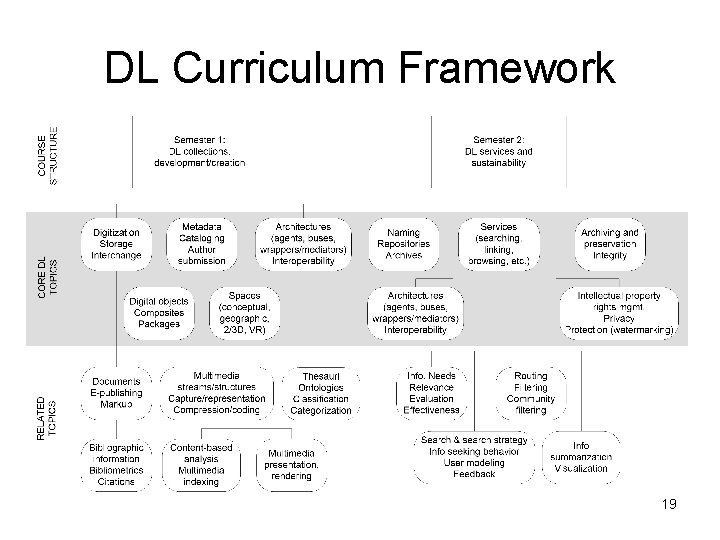
How to organize a DL course? • Various frameworks – What, Why, How – History, Current status, Future (research) – Economics: open source, sustainability – Social: users/patrons, management – Technical: DB, HCI, HT, IR, LIS, MM, Web • Suggest that concept maps be drawn by readers to help in working with this book • Instructors can access “expert” maps with IHMC tools 17
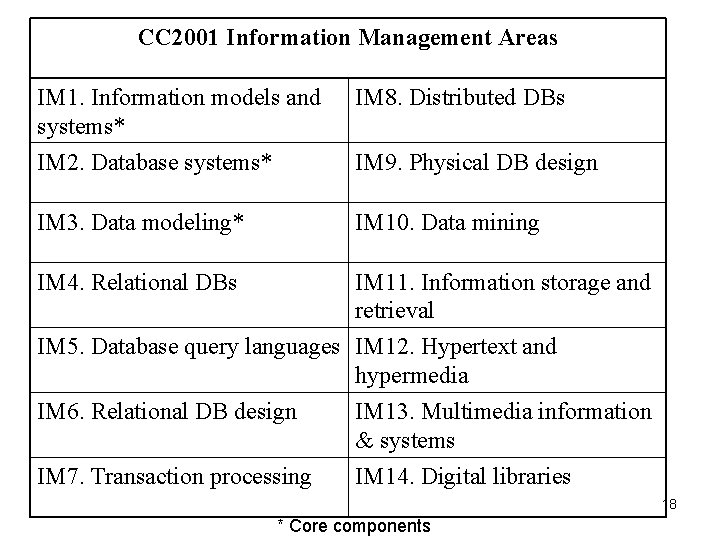
CC 2001 Information Management Areas IM 1. Information models and systems* IM 8. Distributed DBs IM 2. Database systems* IM 9. Physical DB design IM 3. Data modeling* IM 10. Data mining IM 4. Relational DBs IM 11. Information storage and retrieval IM 5. Database query languages IM 12. Hypertext and hypermedia IM 6. Relational DB design IM 13. Multimedia information & systems IM 7. Transaction processing IM 14. Digital libraries 18 * Core components
DL Curriculum Framework 19
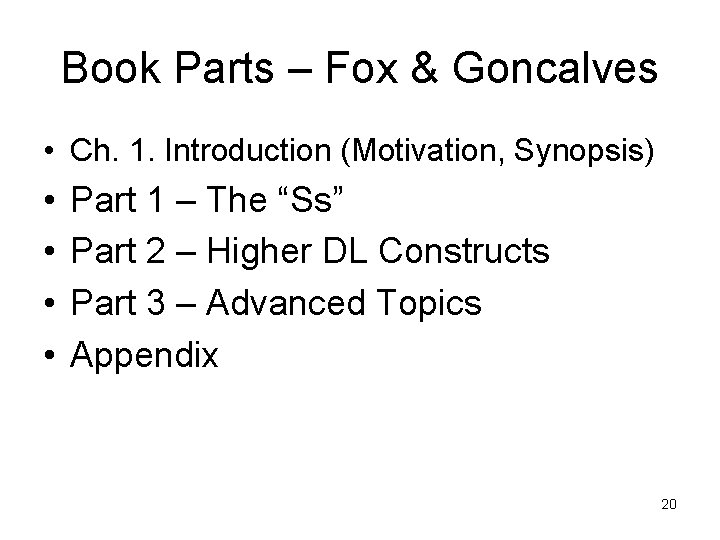
Book Parts – Fox & Goncalves • Ch. 1. Introduction (Motivation, Synopsis) • • Part 1 – The “Ss” Part 2 – Higher DL Constructs Part 3 – Advanced Topics Appendix 20
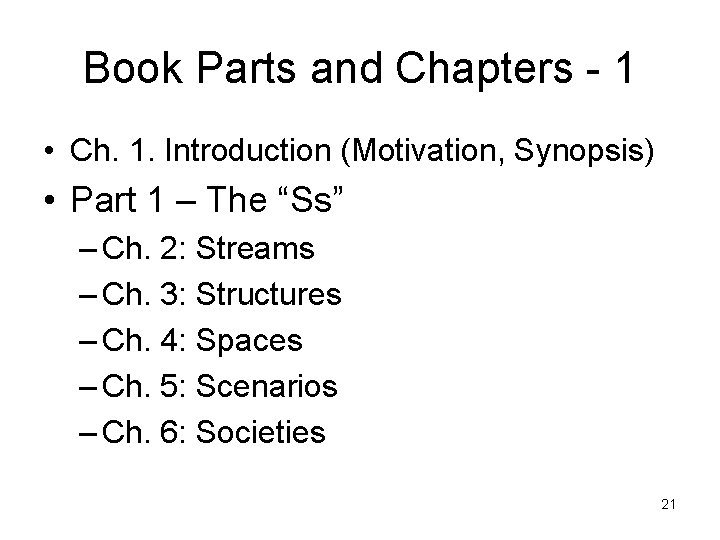
Book Parts and Chapters - 1 • Ch. 1. Introduction (Motivation, Synopsis) • Part 1 – The “Ss” – Ch. 2: Streams – Ch. 3: Structures – Ch. 4: Spaces – Ch. 5: Scenarios – Ch. 6: Societies 21
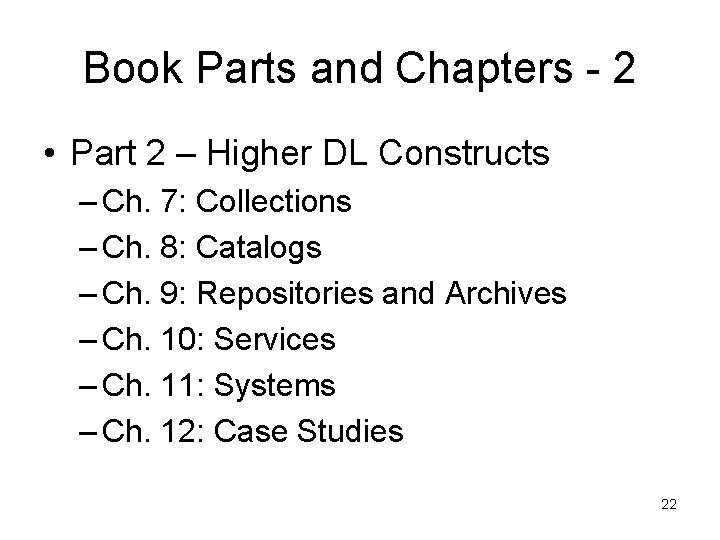
Book Parts and Chapters - 2 • Part 2 – Higher DL Constructs – Ch. 7: Collections – Ch. 8: Catalogs – Ch. 9: Repositories and Archives – Ch. 10: Services – Ch. 11: Systems – Ch. 12: Case Studies 22
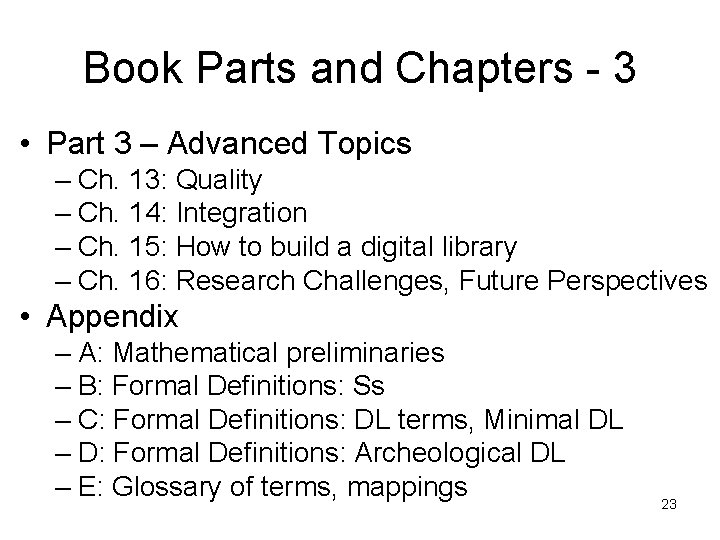
Book Parts and Chapters - 3 • Part 3 – Advanced Topics – Ch. 13: Quality – Ch. 14: Integration – Ch. 15: How to build a digital library – Ch. 16: Research Challenges, Future Perspectives • Appendix – A: Mathematical preliminaries – B: Formal Definitions: Ss – C: Formal Definitions: DL terms, Minimal DL – D: Formal Definitions: Archeological DL – E: Glossary of terms, mappings 23
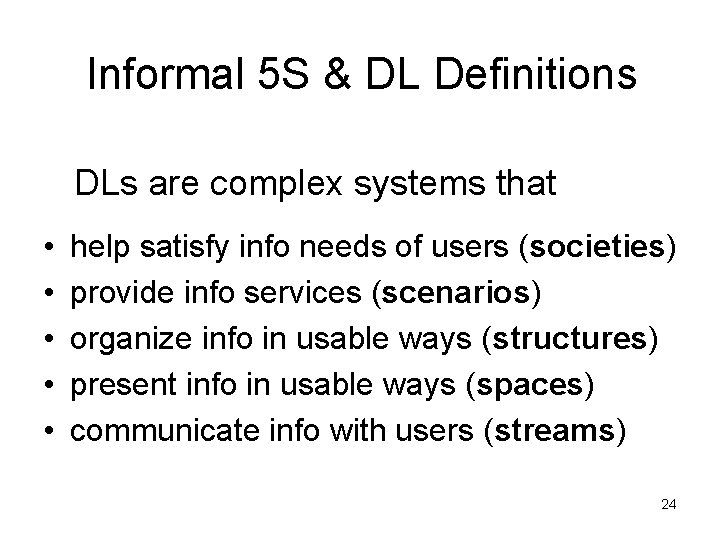
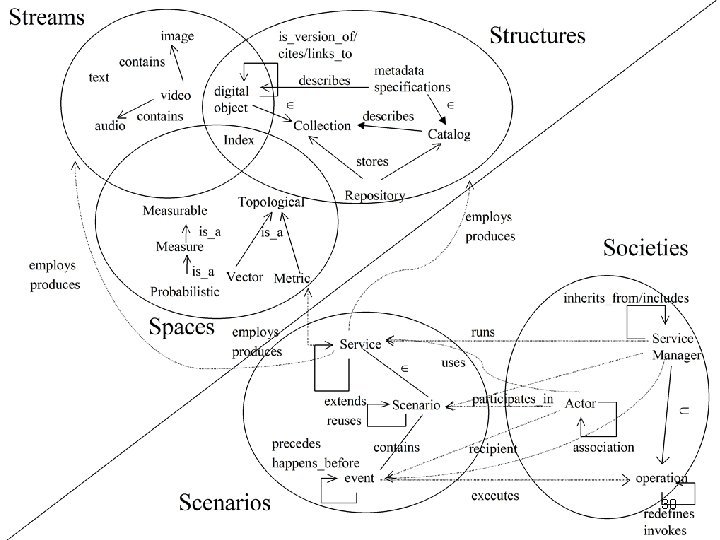
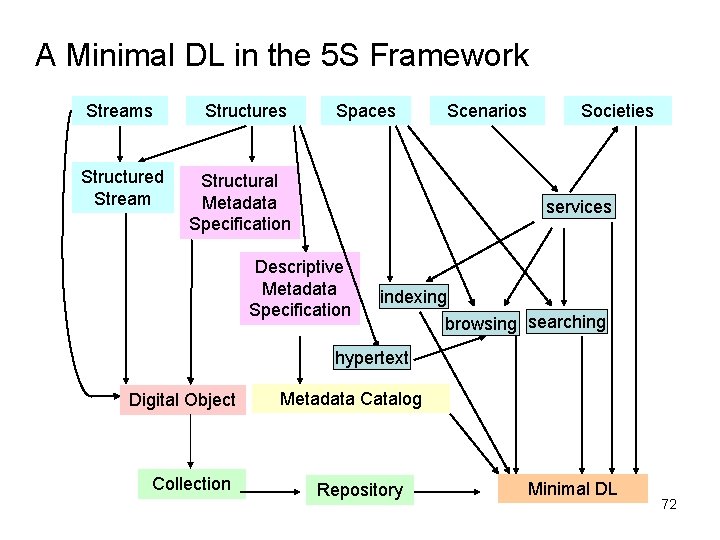
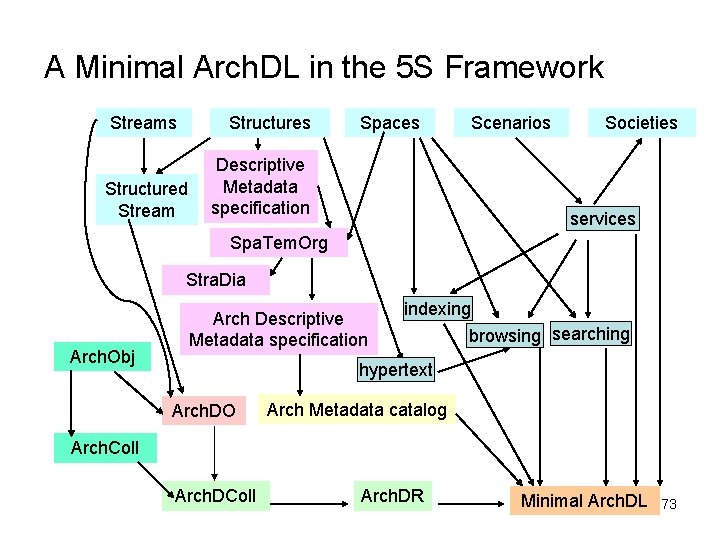
Informal 5 S & DL Definitions DLs are complex systems that • • • help satisfy info needs of users (societies) provide info services (scenarios) organize info in usable ways (structures) present info in usable ways (spaces) communicate info with users (streams) 24
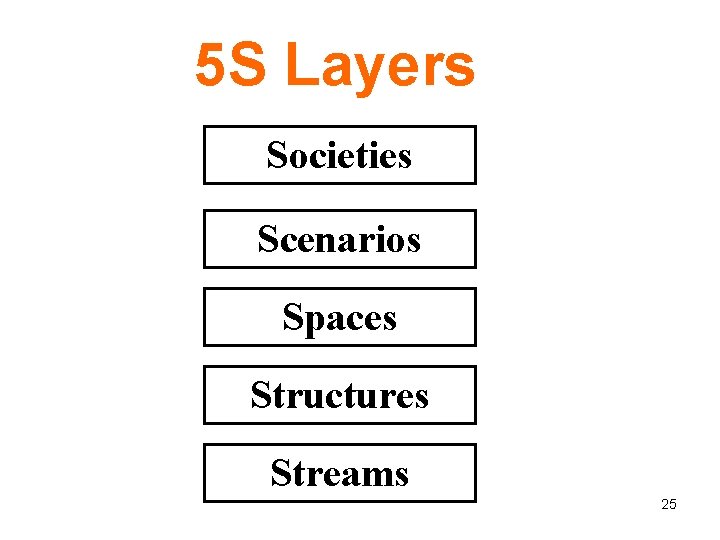
5 S Layers Societies Scenarios Spaces Structures Streams 25
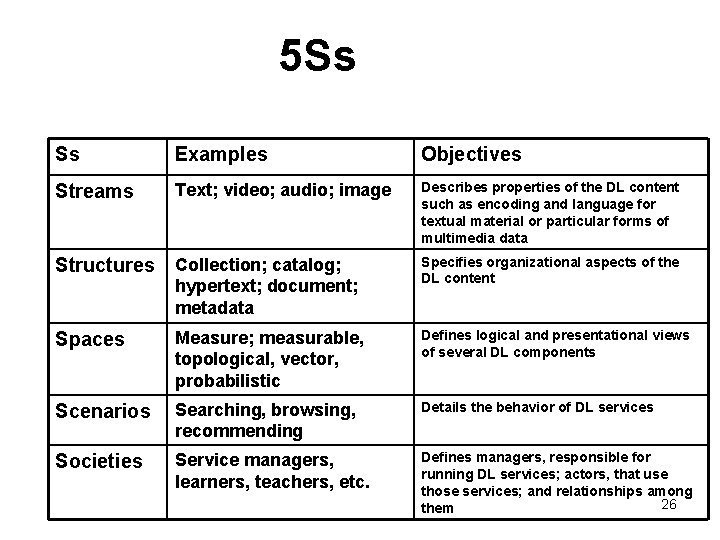
5 Ss Ss Examples Objectives Streams Text; video; audio; image Describes properties of the DL content such as encoding and language for textual material or particular forms of multimedia data Structures Collection; catalog; hypertext; document; metadata Specifies organizational aspects of the DL content Spaces Measure; measurable, topological, vector, probabilistic Defines logical and presentational views of several DL components Scenarios Searching, browsing, recommending Details the behavior of DL services Societies Service managers, learners, teachers, etc. Defines managers, responsible for running DL services; actors, that use those services; and relationships among 26 them
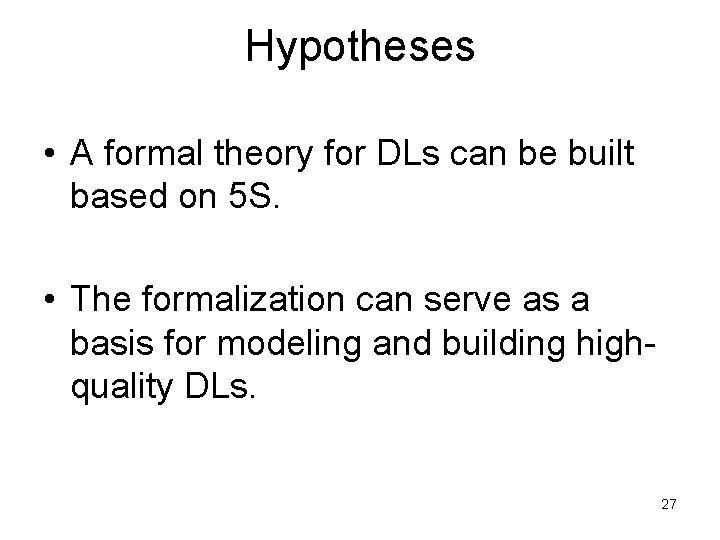
Hypotheses • A formal theory for DLs can be built based on 5 S. • The formalization can serve as a basis for modeling and building highquality DLs. 27
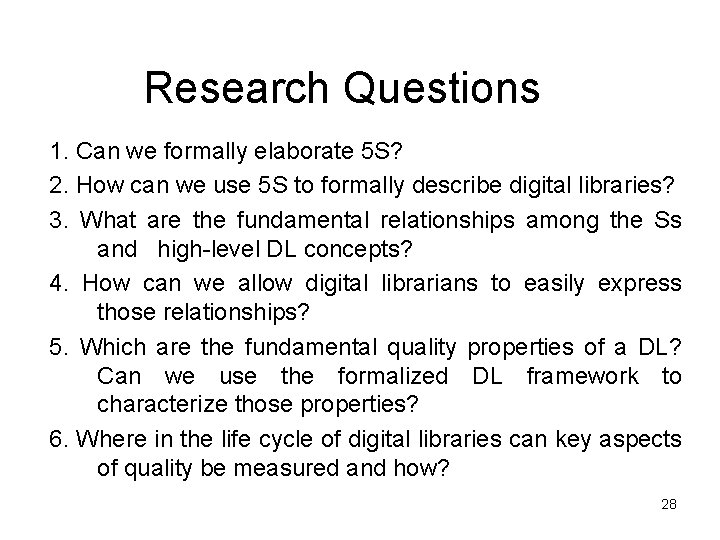
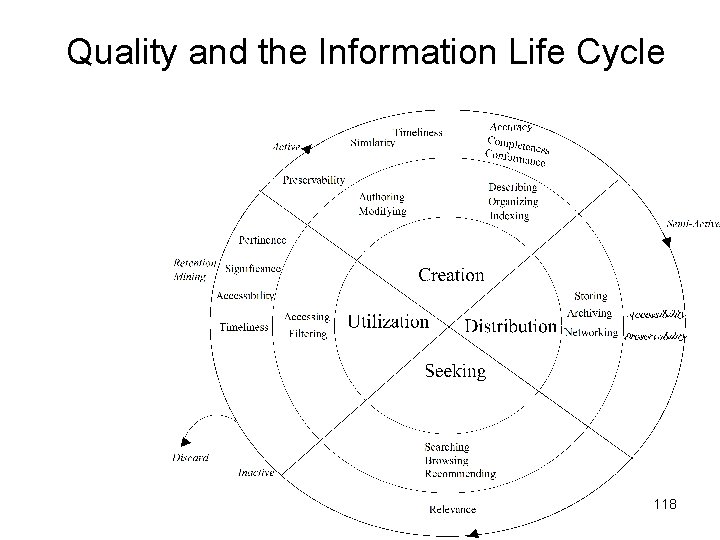
Research Questions 1. Can we formally elaborate 5 S? 2. How can we use 5 S to formally describe digital libraries? 3. What are the fundamental relationships among the Ss and high-level DL concepts? 4. How can we allow digital librarians to easily express those relationships? 5. Which are the fundamental quality properties of a DL? Can we use the formalized DL framework to characterize those properties? 6. Where in the life cycle of digital libraries can key aspects of quality be measured and how? 28
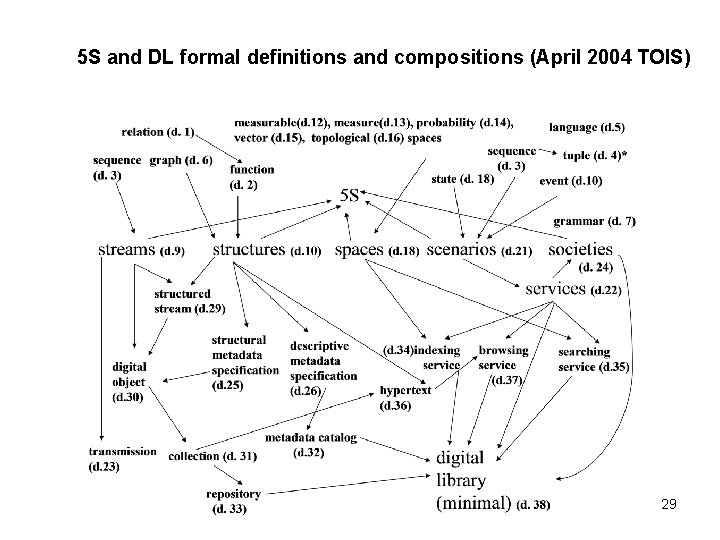
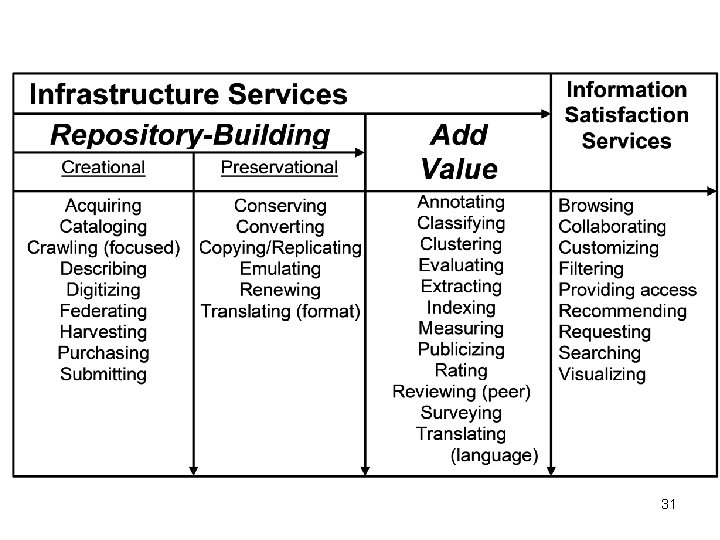
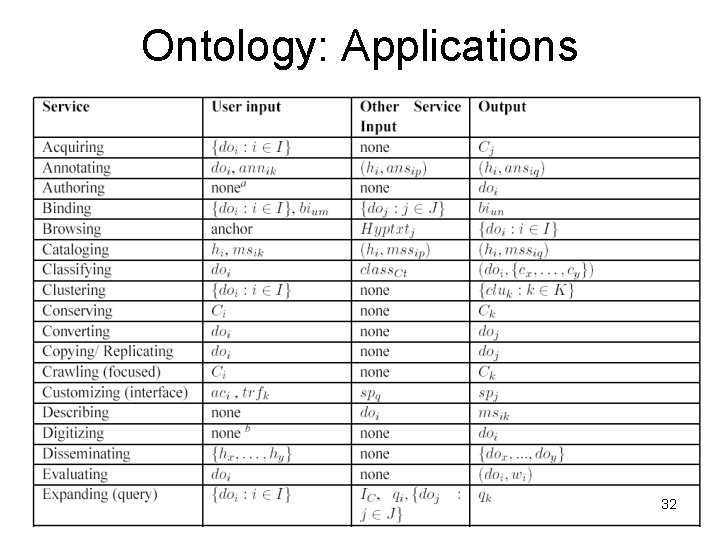
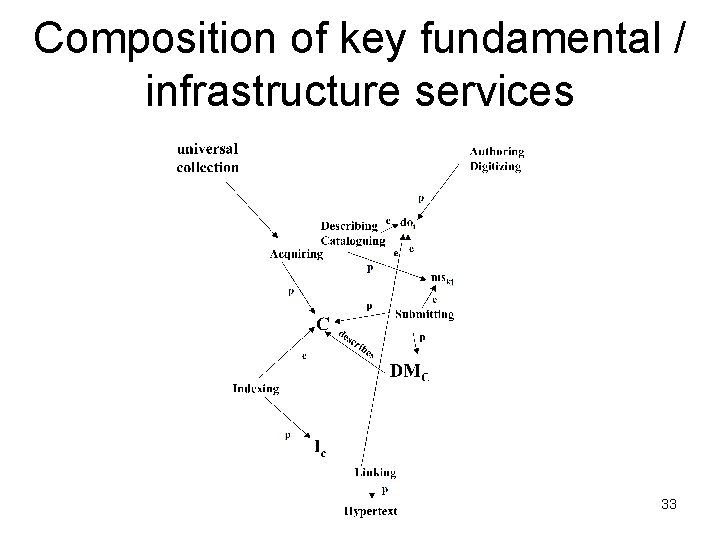
5 S and DL formal definitions and compositions (April 2004 TOIS) 29
30
31
Ontology: Applications 32
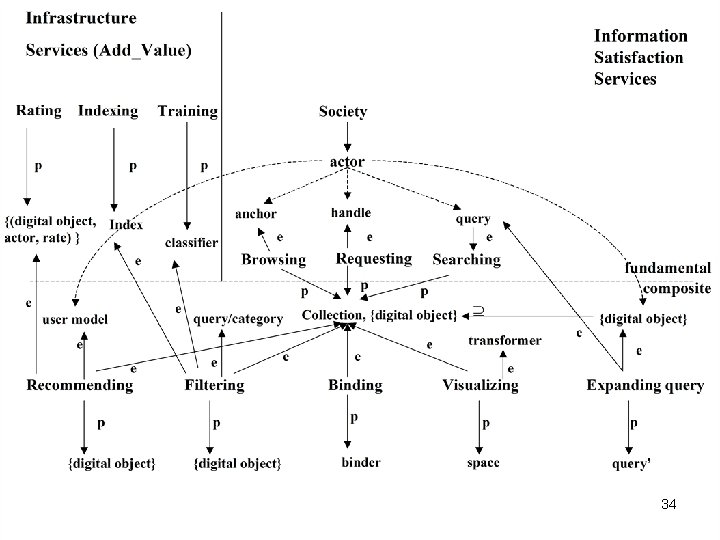
Composition of key fundamental / infrastructure services 33
34
35
36
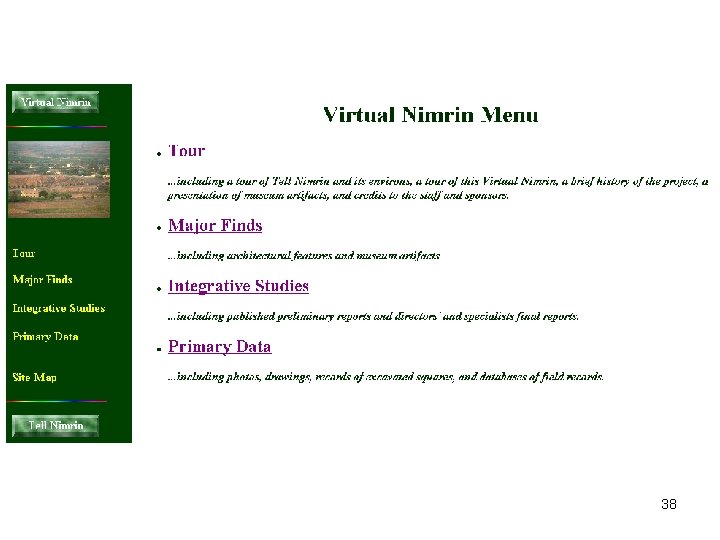
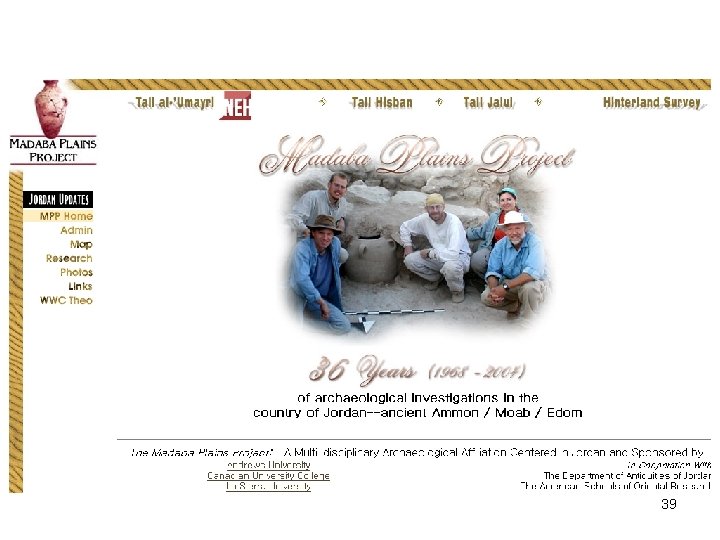
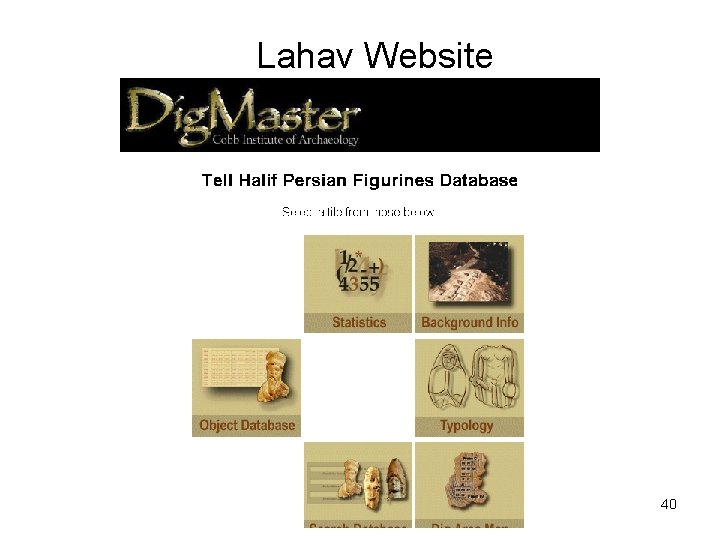
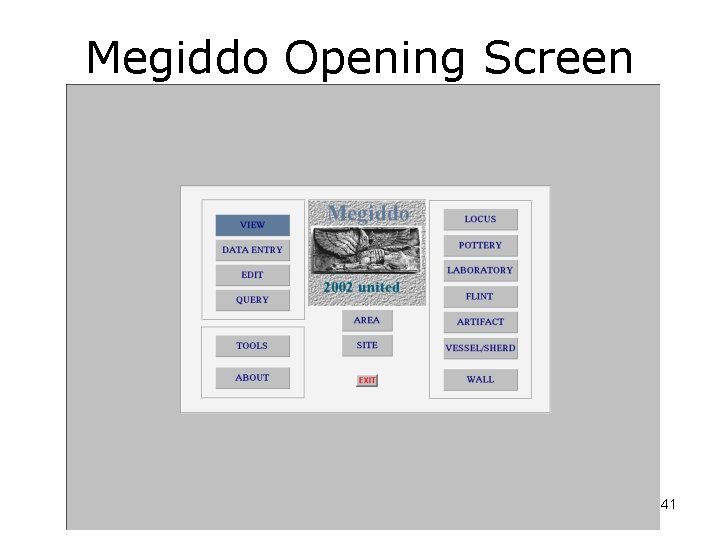
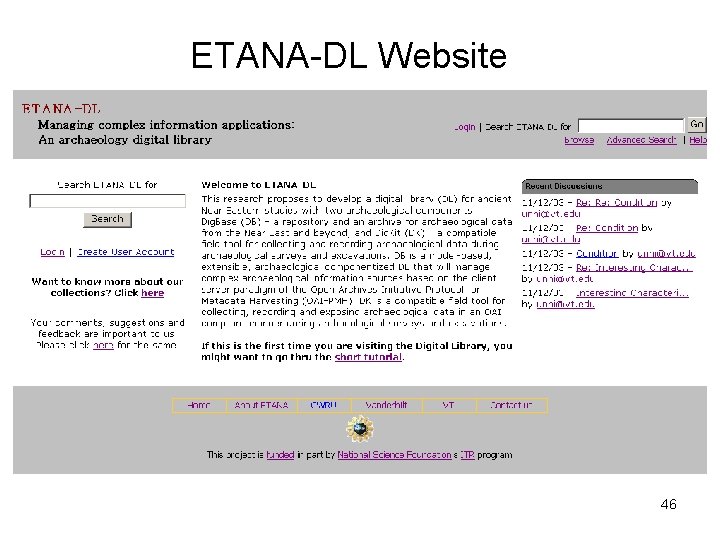
ETANA-DL • • Archaeological DL Integrated DL – Heterogeneous data handling • Applies and extends the OAI-PMH – Open Archives Initiative Protocol for Metadata Handling • Design considerations – Componentized – Extensible – Portable 37
38
39
Lahav Website 40
Megiddo Opening Screen 41
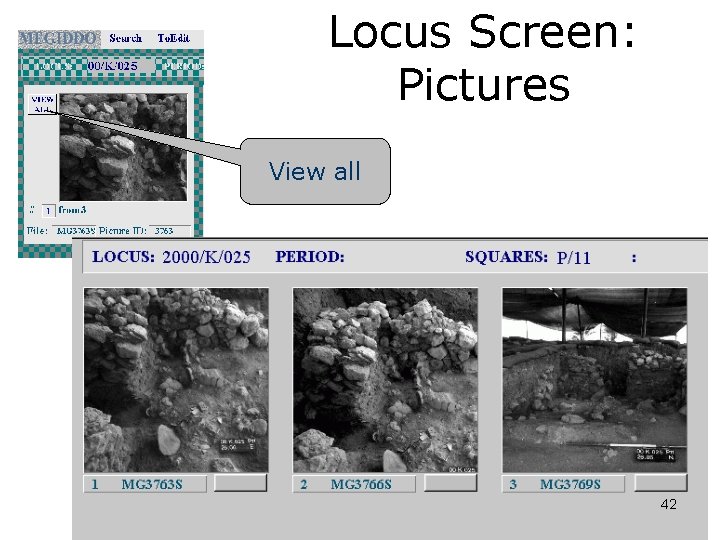
Locus Screen: Pictures View all 42
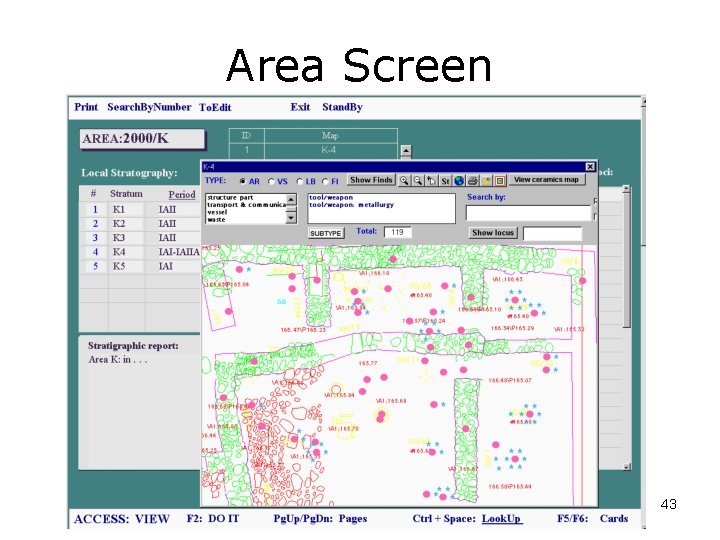
Area Screen 43
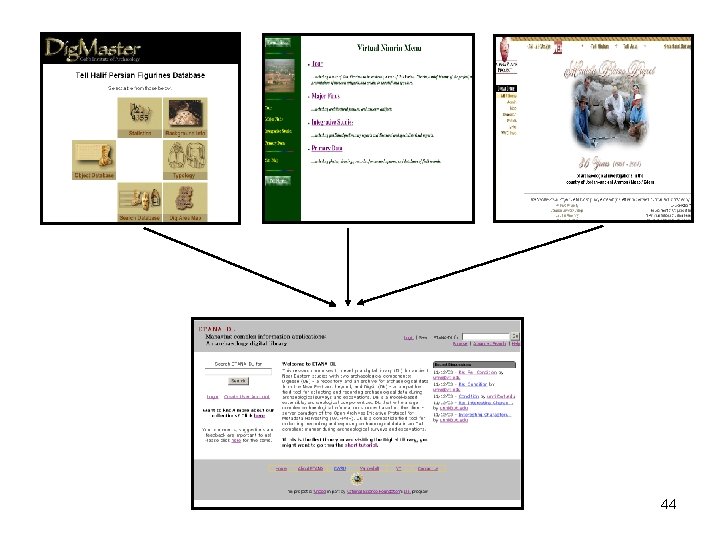
44
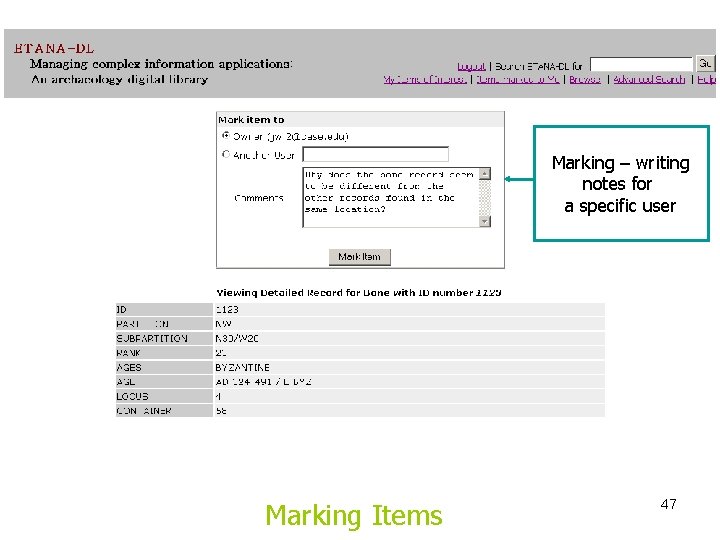
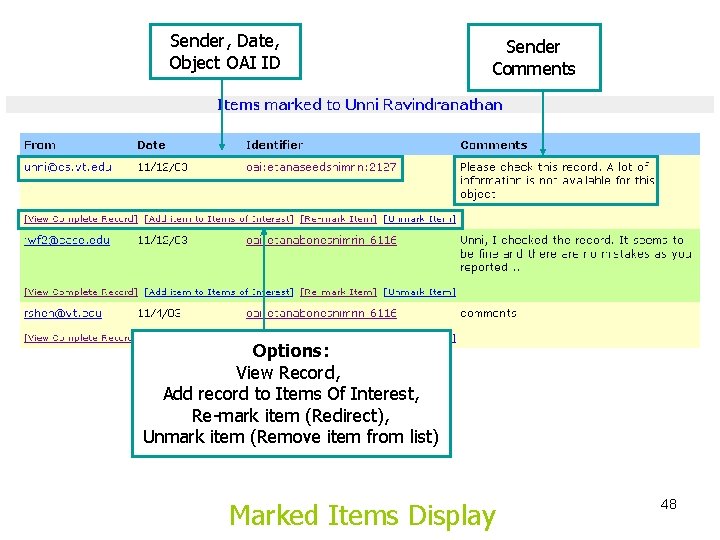
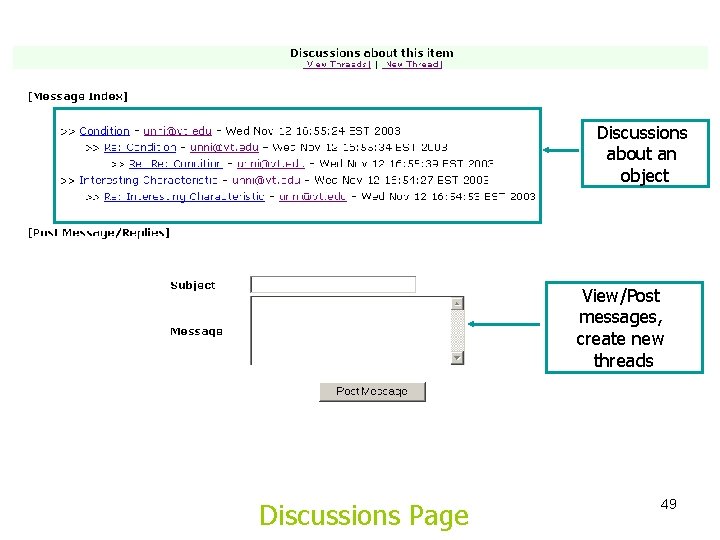
ETANA-DL Approach • Applying and extending Digital Library (DL) techniques to solve key problems: making primary data available, data preservation, and interoperability • Modeling archaeological information systems using 5 S to better understand the domain and design the system and the supporting services • Rapidly prototyping DLs that handle heterogeneous archaeological data using componentized frameworks: – eliciting requirements – refining metamodel and union schema – modeling sites – mapping – harvesting 45 – providing useful services
ETANA-DL Website 46
Marking – writing notes for a specific user Marking Items 47
Sender, Date, Object OAI ID Sender Comments Options: View Record, Add record to Items Of Interest, Re-mark item (Redirect), Unmark item (Remove item from list) Marked Items Display 48
Discussions about an object View/Post messages, create new threads Discussions Page 49
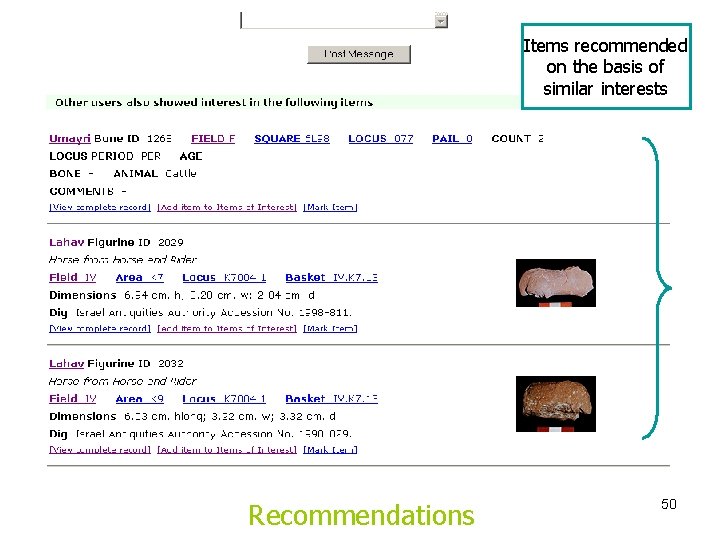
Items recommended on the basis of similar interests Recommendations 50
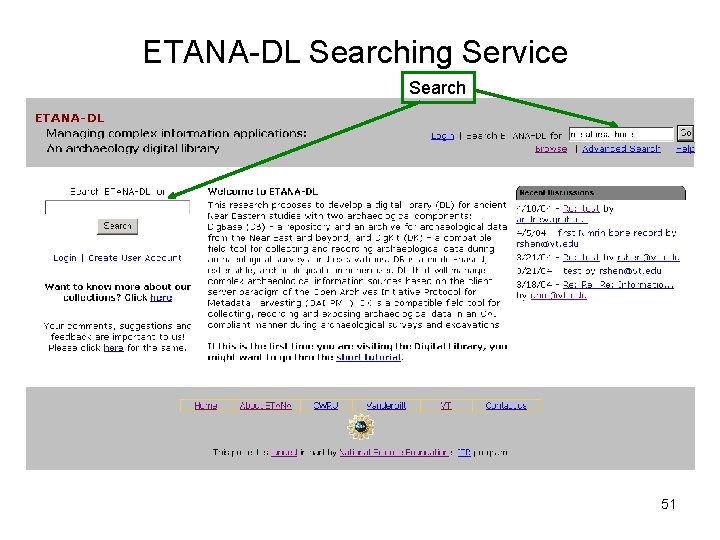
ETANA-DL Searching Service Search 51
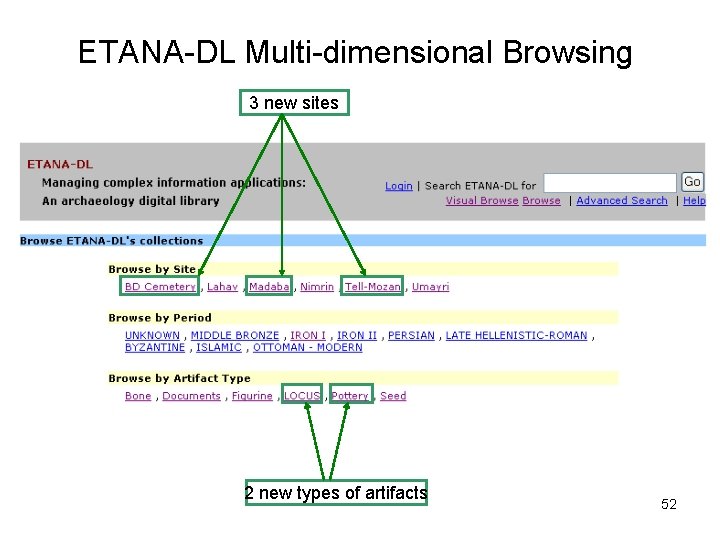
ETANA-DL Multi-dimensional Browsing 3 new sites 2 new types of artifacts 52
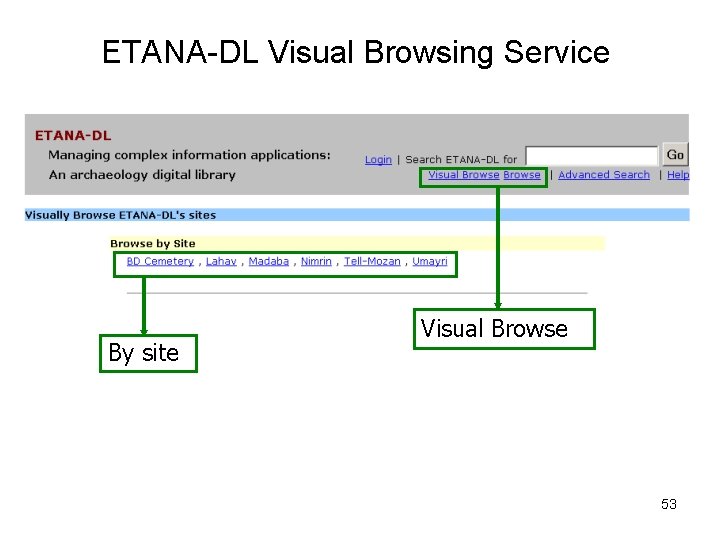
ETANA-DL Visual Browsing Service By site Visual Browse 53
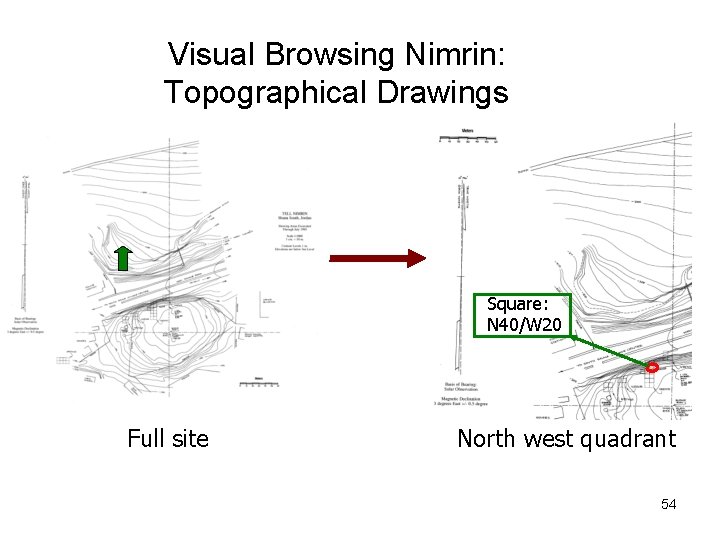
Visual Browsing Nimrin: Topographical Drawings Square: N 40/W 20 Full site North west quadrant 54
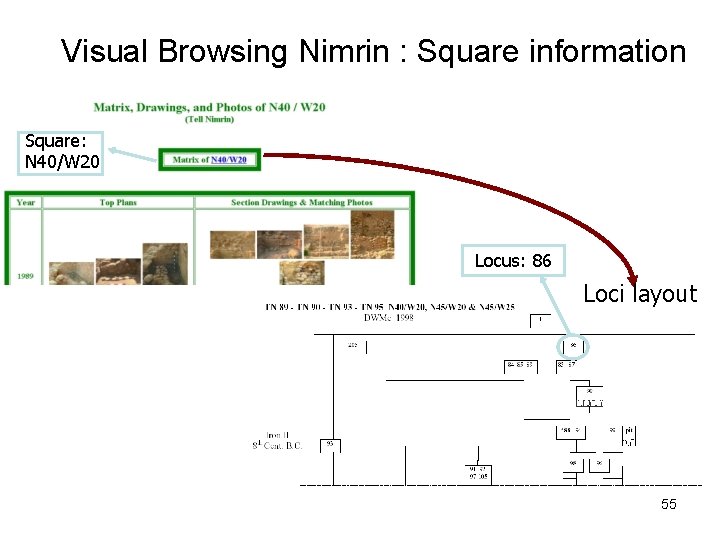
Visual Browsing Nimrin : Square information Square: N 40/W 20 Locus: 86 Loci layout 55
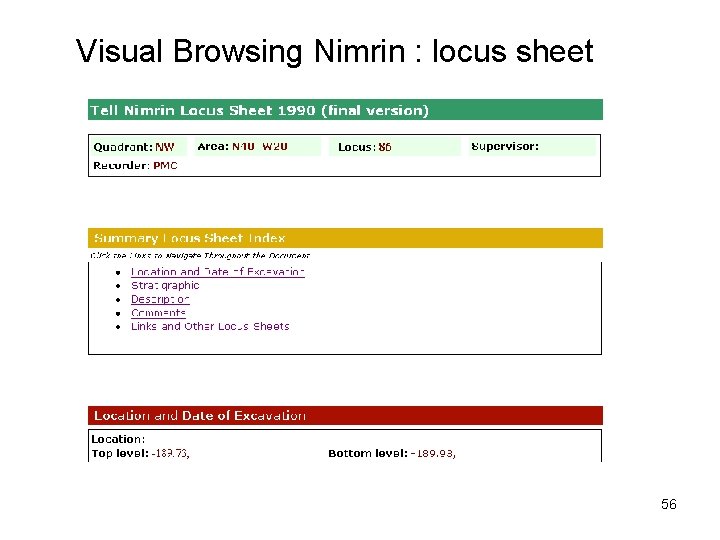
Visual Browsing Nimrin : locus sheet 56
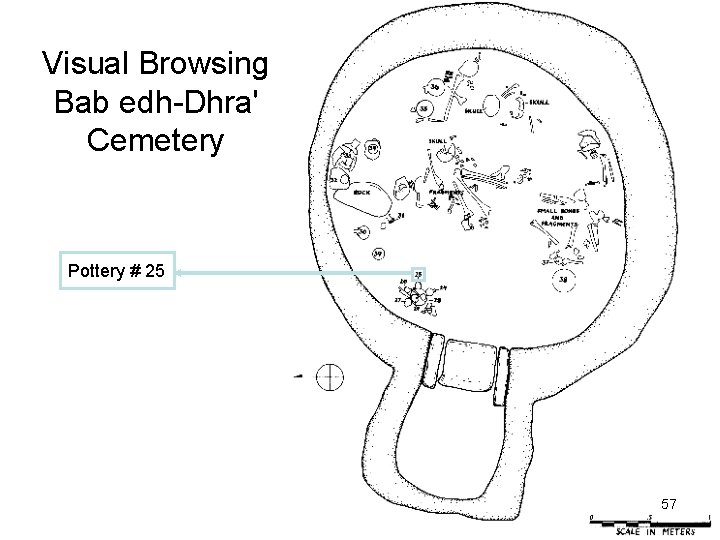
Visual Browsing Bab edh-Dhra' Cemetery Pottery # 25 57
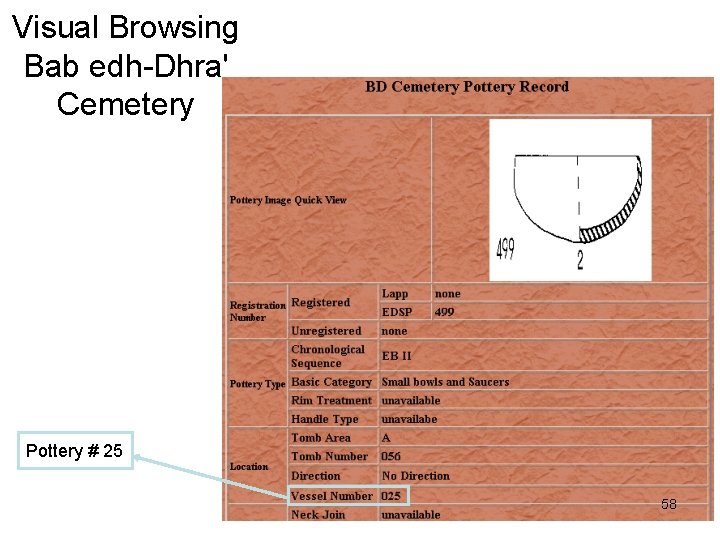
Visual Browsing Bab edh-Dhra' Cemetery Pottery # 25 58
ETANA Societies 1. Historic and pre-historic societies (being studied) 2. Archaeologists (in academic institutes, fieldwork settings, or local and national governmental bodies) 3. Project directors 4. Technical staff (consisting of photographers, technical illustrators, and their assistants) 5. Field staff (responsible for the actual work of excavation) 6. Camp staff (e. g. , camp managers, registrars, tool stewards) 7. General public (e. g. , educators, learners, citizens) 59
ETANA Societies • Social issues 1. Who owns the finds? 2. Where should they be preserved? 3. What nationality and ethnicity do they represent? 4. Who has publication rights? 5. What interactions took place between those at the site studied, and others? What theories are proposed by whom about this? 60
ETANA Scenarios 1. 2. 3. 4. Life in the site in former times Digital recording: the planning stage and the excavation stage Planning stage: remote sensing, fieldwalking, field surveys, building surveys, consulting historical and other documentary sources, and managing the sites and monuments Excavation 1. 2. 3. 4. 5. 6. 7. 8. Detailed information is recorded, including for each layer of soil, and for features such as pole holes, pits, and ditches. Data about each artifact is recorded together with information about its exact find spot. Numerous environmental and other samples are taken for laboratory analysis, and the location and purpose of each is carefully recorded. Large numbers of photographs are taken, both general views of the progress of excavation and detailed shots showing the contexts of finds. Organization and storage of material Analysis and hypotheses generation and testing Publications, museum displays Information services for the general public 61
ETANA Spaces 1. Geographic distribution of found artifacts 2. Temporal dimension (as inferred by archaeologists) 3. Metric or vector spaces 1. used to support retrieval operations, and to calculate distance (and similarity) 2. used to browse / constrain searches spatially 4. 3 D models of the past, used to reconstruct and visualize archaeological ruins 5. 2 D interfaces for human-computer interaction 62
ETANA Structures 1. Site Organization 1. Region, site, partition, sub-partition, locus, … 2. Temporal orderings (ages, periods) 3. Taxonomies 1. for bones, seeds, building materials, … 4. Stratigraphic relationships 1. above, beneath, coexistent 63
ETANA Streams 1. successive photos and drawings of excavation sites, loci, unearthed artifacts 2. audio and video recordings of excavation activities and discussions 3. textual reports 4. 3 D models used to reconstruct and visualize archaeological ruins. 64
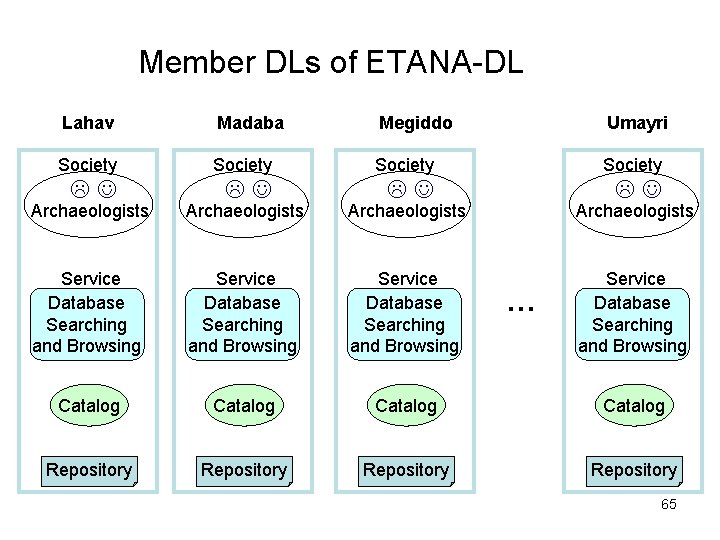
Member DLs of ETANA-DL Lahav Madaba Megiddo Umayri Society Archaeologists Service Database Searching and Browsing Catalog Repository … 65
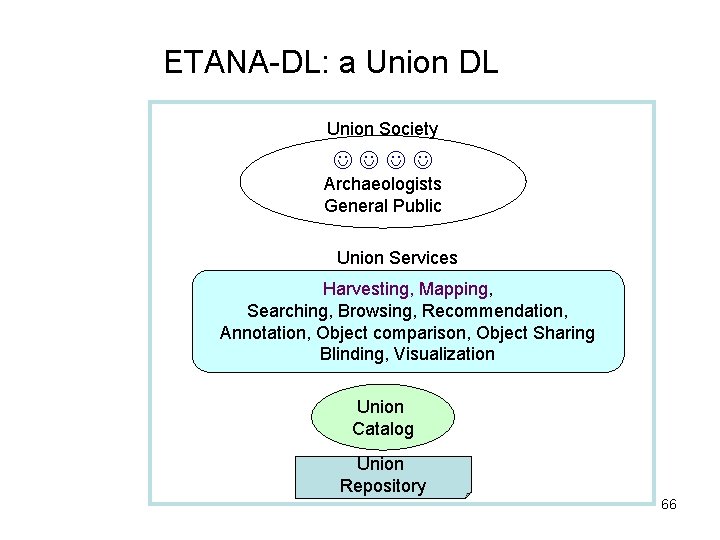
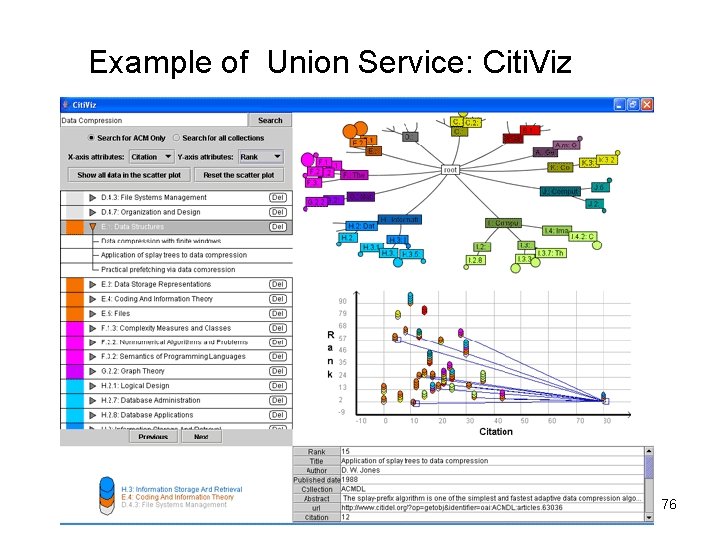
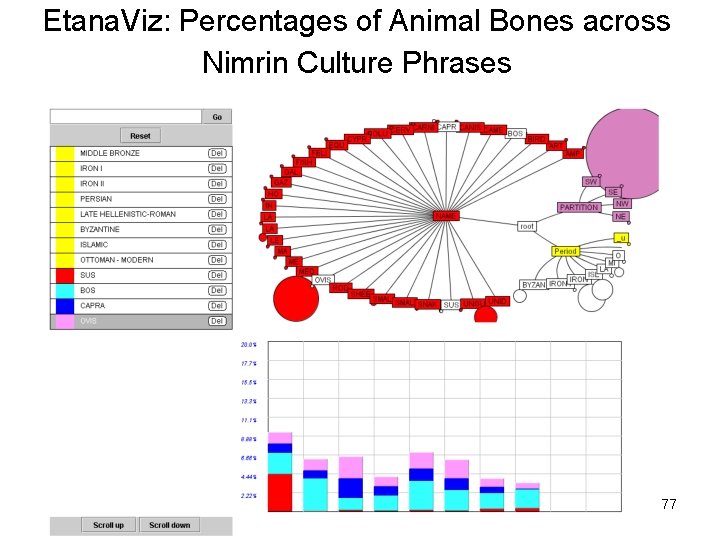
ETANA-DL: a Union DL Union Society Archaeologists General Public Union Services Harvesting, Mapping, Searching, Browsing, Recommendation, Annotation, Object comparison, Object Sharing Blinding, Visualization Union Catalog Union Repository 66
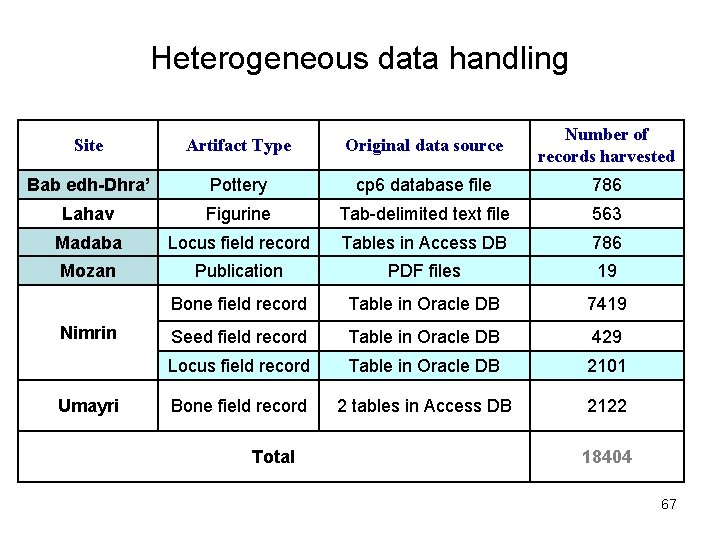
Heterogeneous data handling Site Artifact Type Original data source Number of records harvested Bab edh-Dhra’ Pottery cp 6 database file 786 Lahav Figurine Tab-delimited text file 563 Madaba Locus field record Tables in Access DB 786 Mozan Publication PDF files 19 Bone field record Table in Oracle DB 7419 Seed field record Table in Oracle DB 429 Locus field record Table in Oracle DB 2101 Bone field record 2 tables in Access DB 2122 Nimrin Umayri Total 18404 67
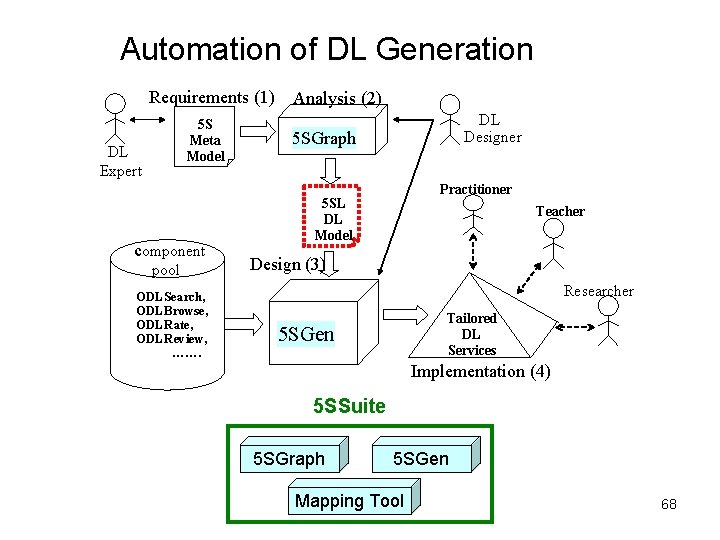
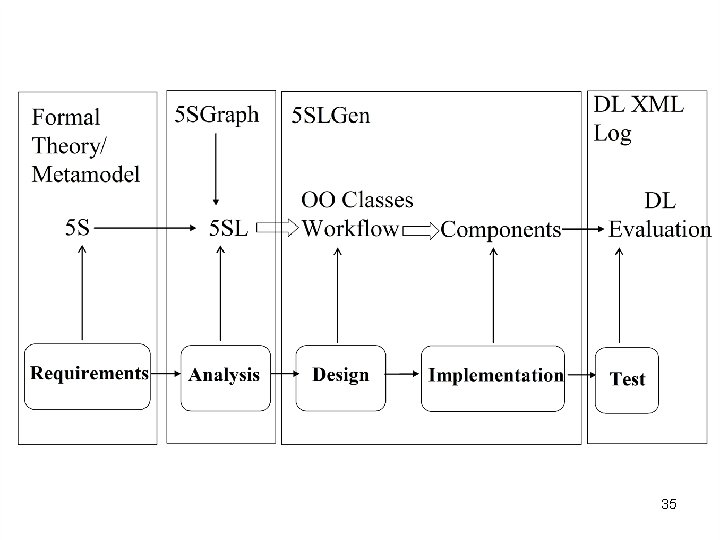
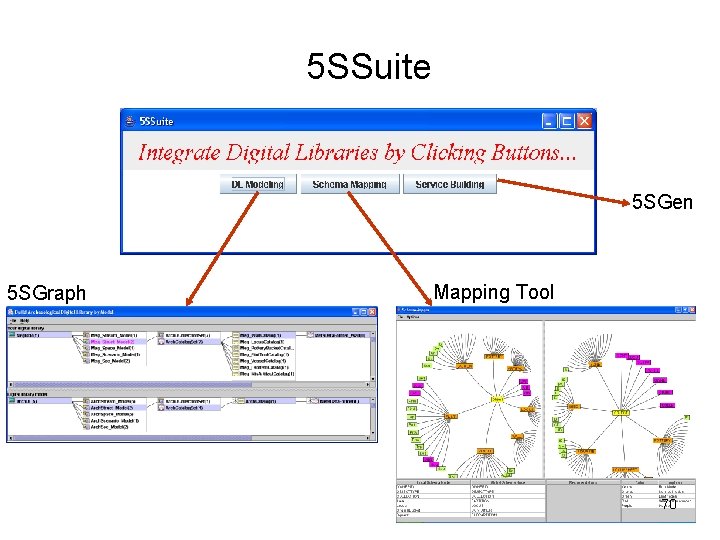
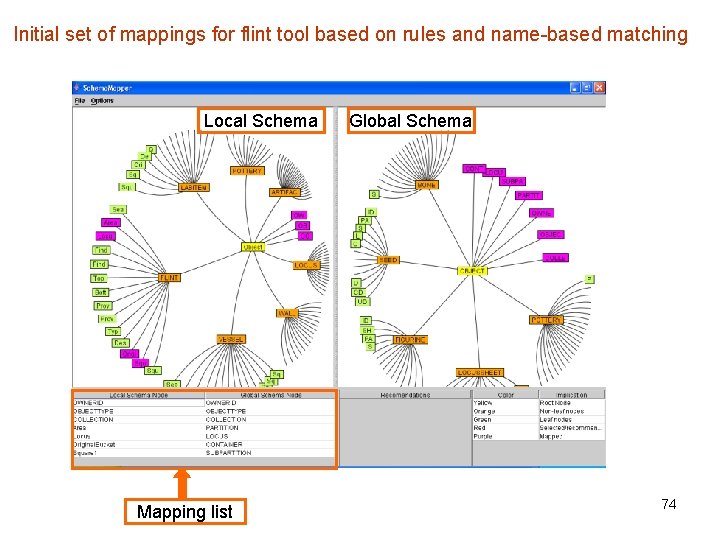
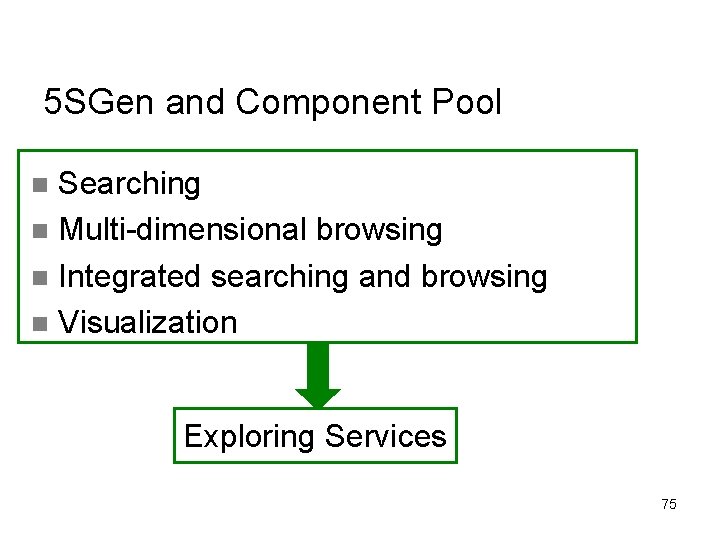
Automation of DL Generation Requirements (1) 5 S Meta Model DL Expert component pool ODLSearch, ODLBrowse, ODLRate, ODLReview, ……. Analysis (2) DL Designer 5 SGraph Practitioner 5 SL DL Model Teacher Design (3) Researcher Tailored DL Services 5 SGen Implementation (4) 5 SSuite 5 SGraph 5 SGen Mapping Tool 68
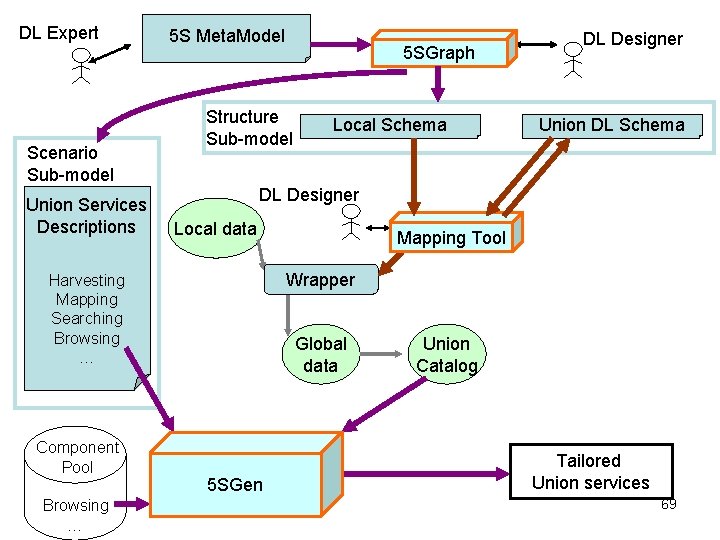
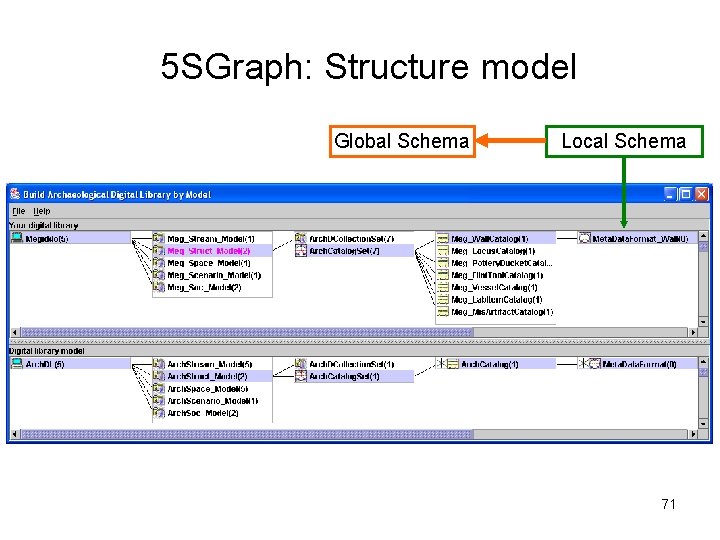
DL Expert Scenario Sub-model Union Services Descriptions 5 S Meta. Model Structure Sub-model Browsing … Local Schema DL Designer Union DL Schema DL Designer Local data Mapping Tool Wrapper Harvesting Mapping Searching Browsing … Component Pool 5 SGraph Global data 5 SGen Union Catalog Tailored Union services 69
5 SSuite 5 SGen 5 SGraph Mapping Tool 70
5 SGraph: Structure model Global Schema Local Schema 71
A Minimal DL in the 5 S Framework Streams Structured Stream Structures Spaces Structural Metadata Specification Scenarios Societies services Descriptive Metadata Specification indexing browsing searching hypertext Digital Object Collection Metadata Catalog Repository Minimal DL 72
A Minimal Arch. DL in the 5 S Framework Streams Structured Stream Spaces Descriptive Metadata specification Scenarios Societies services Spa. Tem. Org Stra. Dia Arch. Obj Arch Descriptive Metadata specification indexing browsing searching hypertext Arch. DO Arch Metadata catalog Arch. Coll Arch. DR Minimal Arch. DL 73
Initial set of mappings for flint tool based on rules and name-based matching Local Schema Mapping list Global Schema 74
5 SGen and Component Pool Searching n Multi-dimensional browsing n Integrated searching and browsing n Visualization n Exploring Services 75
Example of Union Service: Citi. Viz 76
Etana. Viz: Percentages of Animal Bones across Nimrin Culture Phrases 77
Outline • • • More information Information life cycle Digital libraries DL curriculum DL textbook 5 S ETANA OCKHAM CITIDEL, NSDL • Get. Smart • Networked Digital Library of Theses and Dissertations (NDLTD) • Quality, Metasearch • Stepping Stones and Pathways • Personalization, Sense. Cam, SI 78
OCKHAM Library Network 79
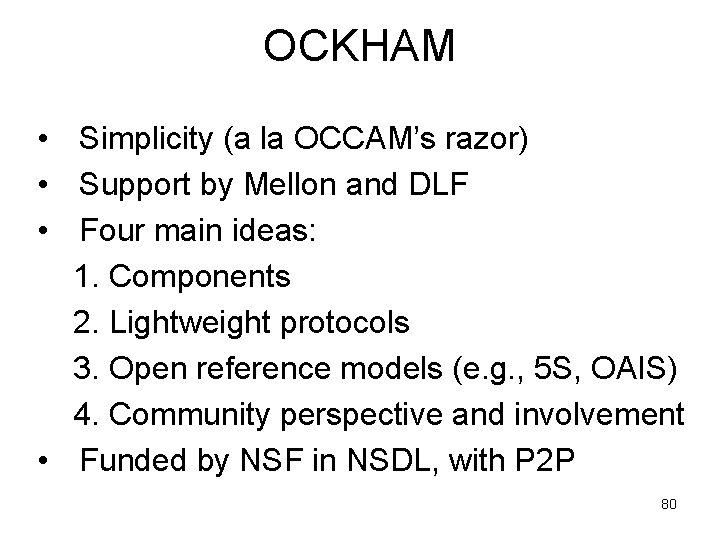
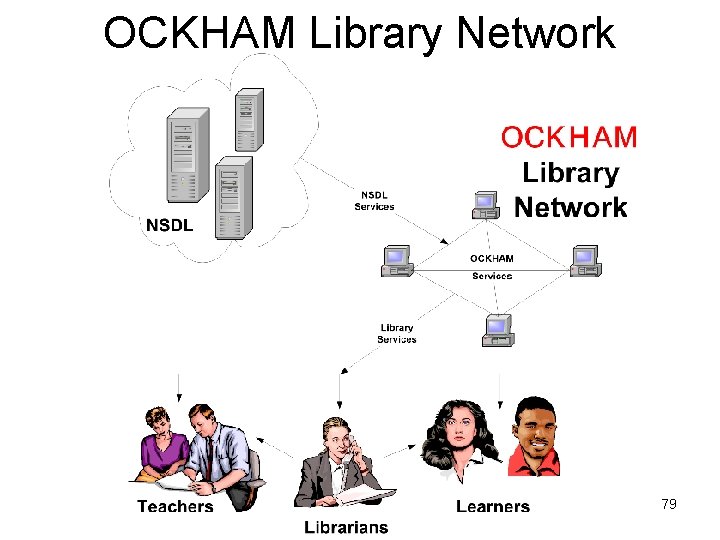
OCKHAM • Simplicity (a la OCCAM’s razor) • Support by Mellon and DLF • Four main ideas: 1. Components 2. Lightweight protocols 3. Open reference models (e. g. , 5 S, OAIS) 4. Community perspective and involvement • Funded by NSF in NSDL, with P 2 P 80
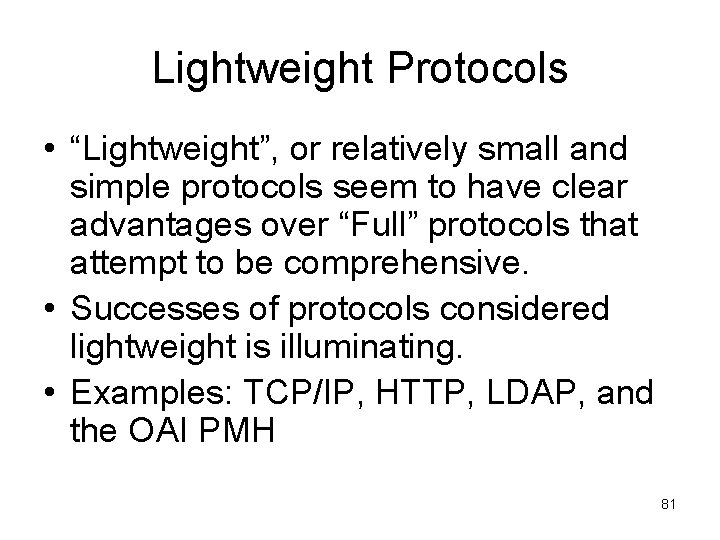
Lightweight Protocols • “Lightweight”, or relatively small and simple protocols seem to have clear advantages over “Full” protocols that attempt to be comprehensive. • Successes of protocols considered lightweight is illuminating. • Examples: TCP/IP, HTTP, LDAP, and the OAI PMH 81
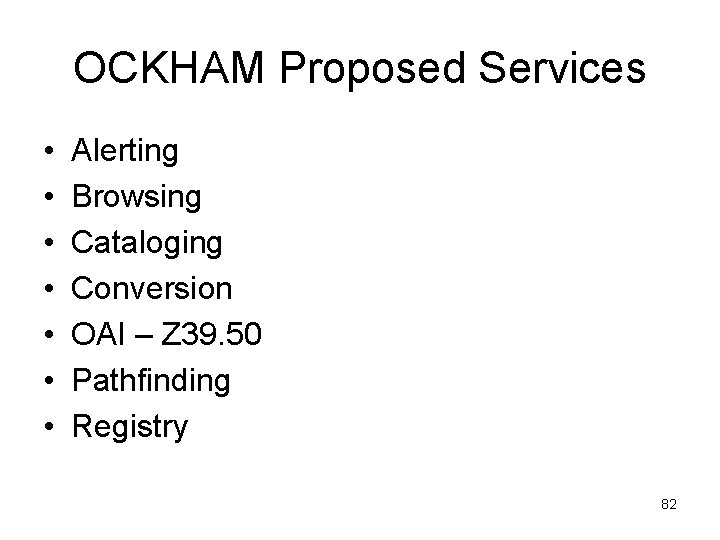
OCKHAM Proposed Services • • Alerting Browsing Cataloging Conversion OAI – Z 39. 50 Pathfinding Registry 82
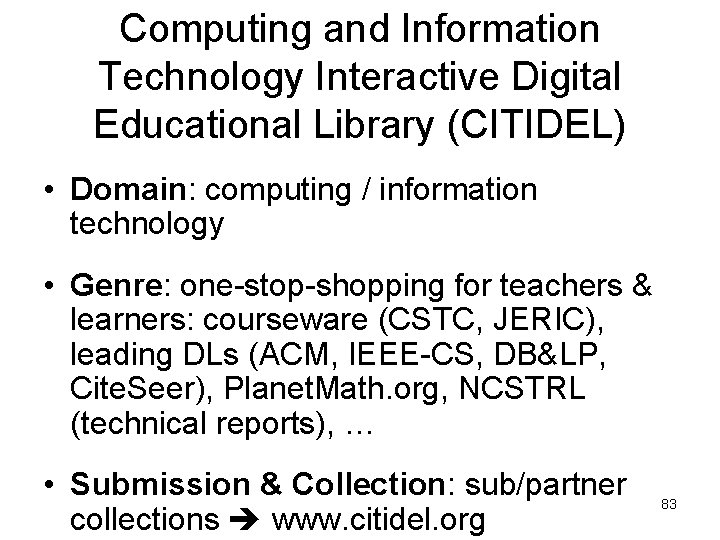
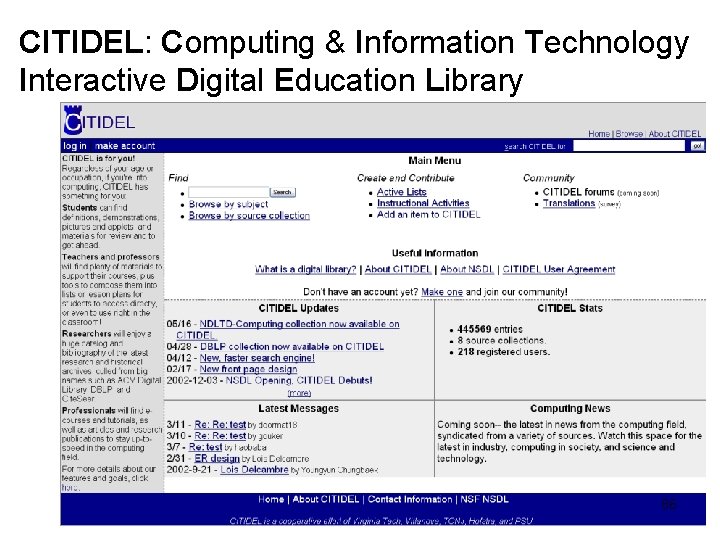
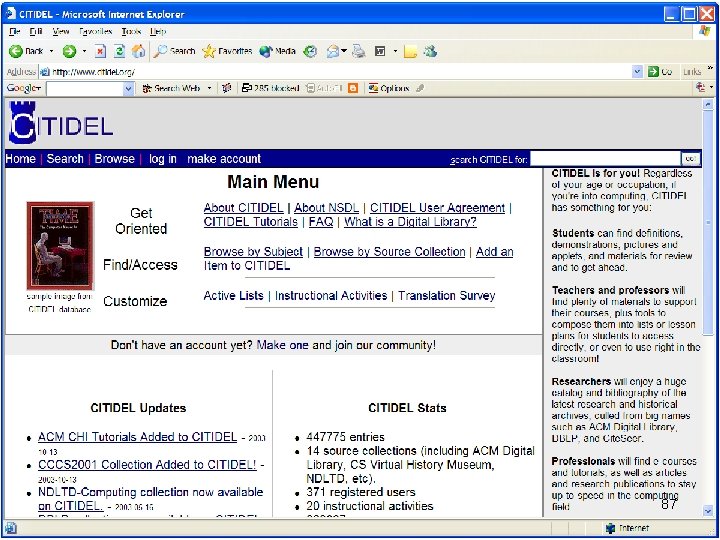
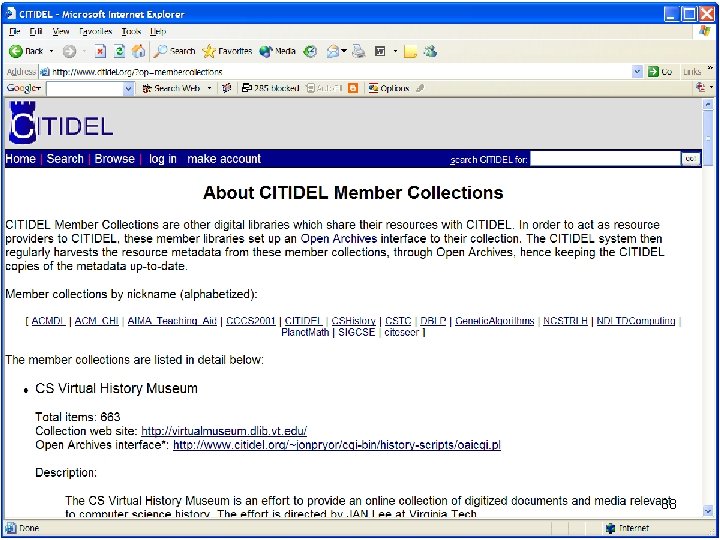
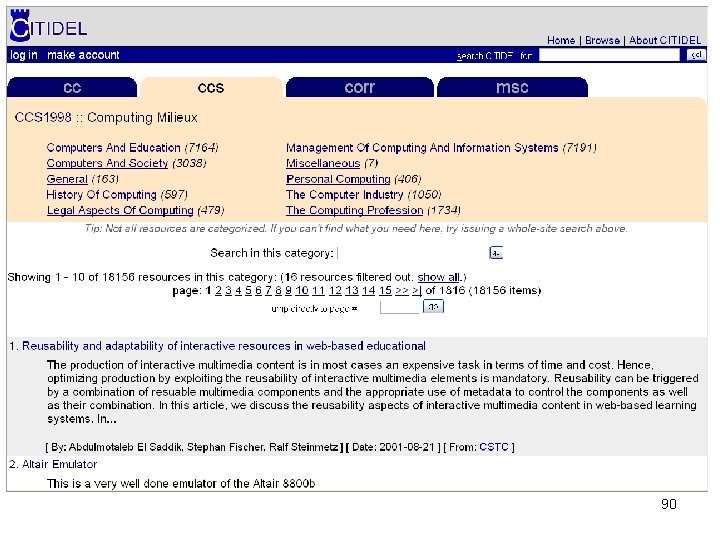
Computing and Information Technology Interactive Digital Educational Library (CITIDEL) • Domain: computing / information technology • Genre: one-stop-shopping for teachers & learners: courseware (CSTC, JERIC), leading DLs (ACM, IEEE-CS, DB&LP, Cite. Seer), Planet. Math. org, NCSTRL (technical reports), … • Submission & Collection: sub/partner collections www. citidel. org 83
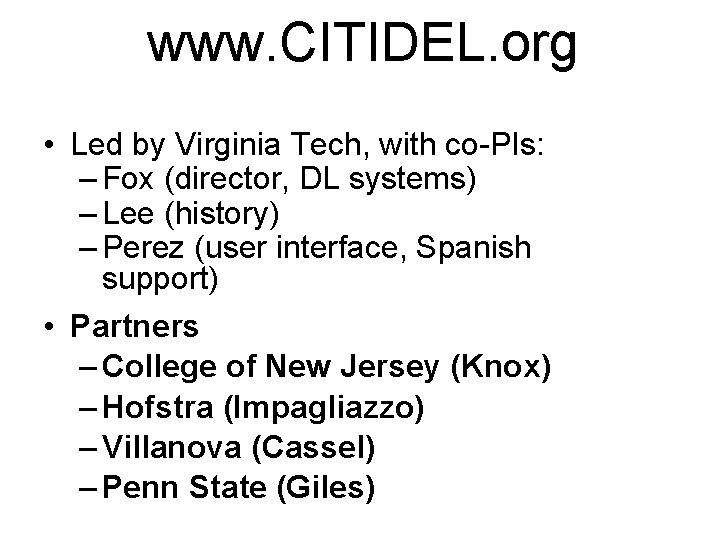
www. CITIDEL. org • Led by Virginia Tech, with co-PIs: – Fox (director, DL systems) – Lee (history) – Perez (user interface, Spanish support) • Partners – College of New Jersey (Knox) – Hofstra (Impagliazzo) – Villanova (Cassel) – Penn State (Giles)
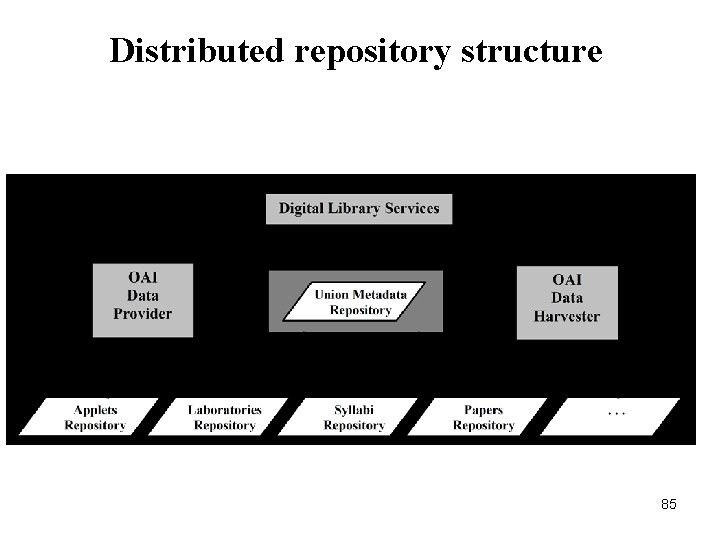
Distributed repository structure 85
CITIDEL: Computing & Information Technology Interactive Digital Education Library 86
87
88
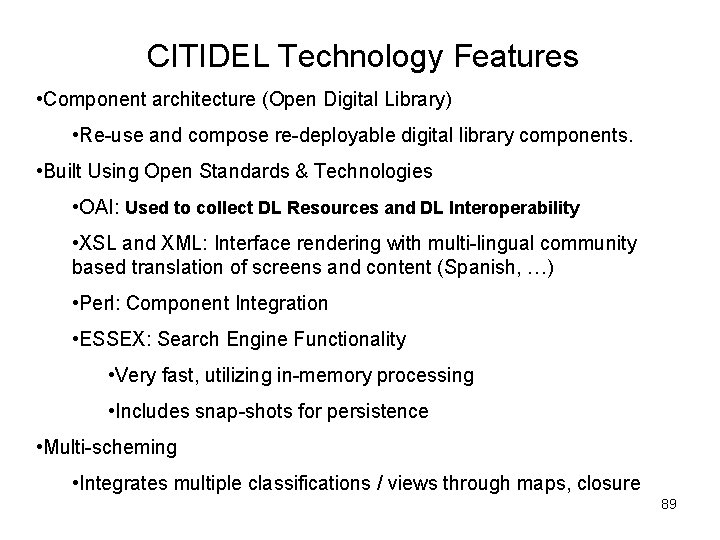
CITIDEL Technology Features • Component architecture (Open Digital Library) • Re-use and compose re-deployable digital library components. • Built Using Open Standards & Technologies • OAI: Used to collect DL Resources and DL Interoperability • XSL and XML: Interface rendering with multi-lingual community based translation of screens and content (Spanish, …) • Perl: Component Integration • ESSEX: Search Engine Functionality • Very fast, utilizing in-memory processing • Includes snap-shots for persistence • Multi-scheming • Integrates multiple classifications / views through maps, closure 89
90
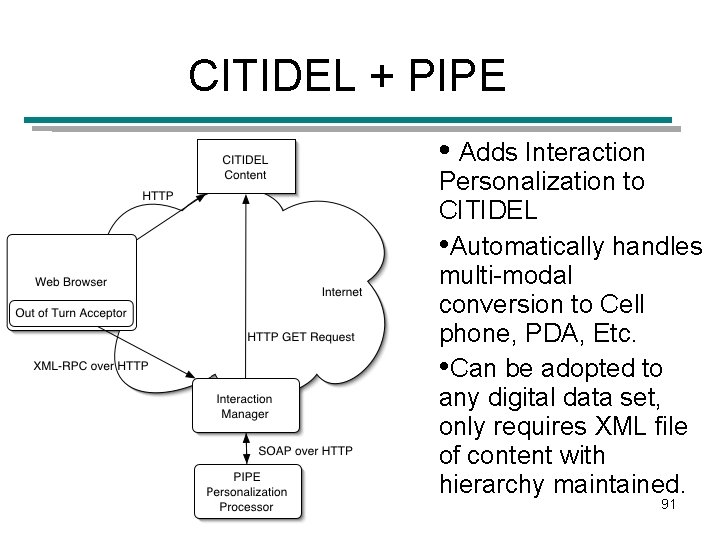
CITIDEL + PIPE • Adds Interaction Personalization to CITIDEL • Automatically handles multi-modal conversion to Cell phone, PDA, Etc. • Can be adopted to any digital data set, only requires XML file of content with hierarchy maintained. 91
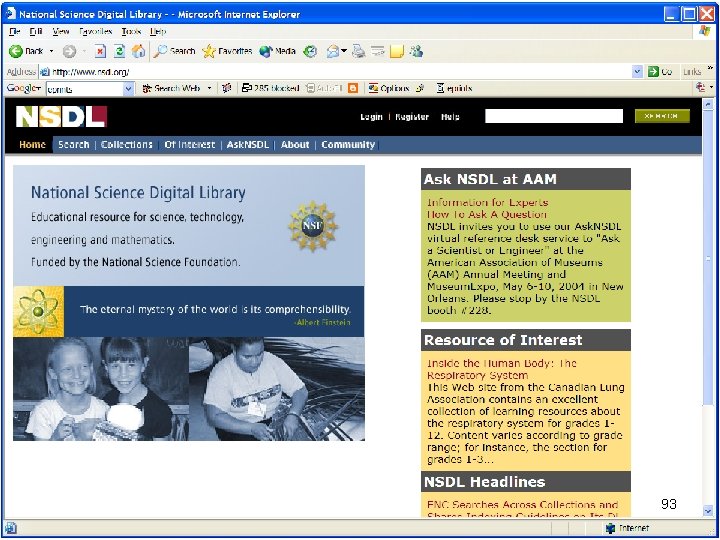
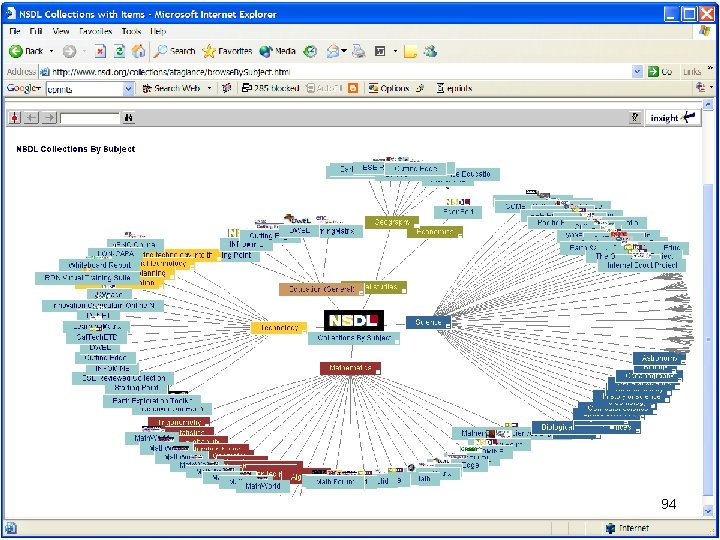
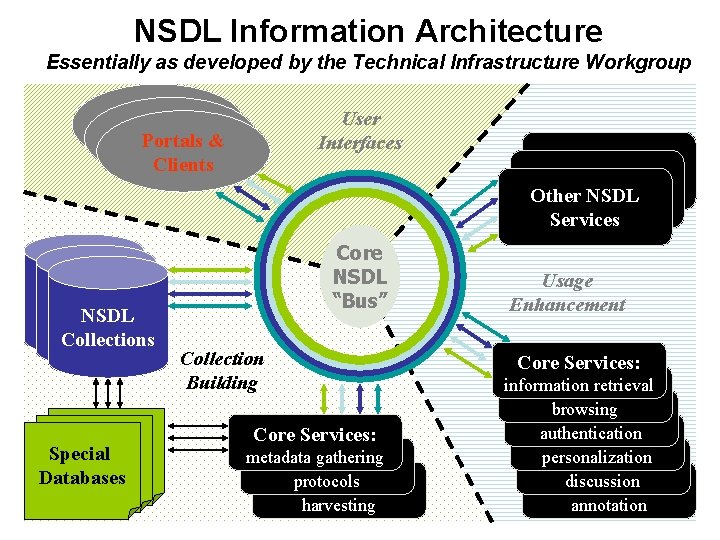
CITIDEL -> NSDL • A collection project in the • National STEM (science, technolgy, engineering, and mathematics) education Digital Library – NSDL • National Science Digital Library • www. nsdl. org
93
94
NSDL Information Architecture Essentially as developed by the Technical Infrastructure Workgroup Portals & Clients NSDL Collections referenced items&& Special items collections Databases collections User Interfaces Core NSDL “Bus” Collection Building Core Services: Collectionmetadata Building Core gathering Collection. Services protocols Building Services harvesting NSDL Services Other NSDL Services Usage Enhancement Core Services: CI Services information retrieval CI Services browsing CI Services authentication CI Services personalization CI Services discussion annotation 95
Get. Smart • Let by Hsinchun Chen at U. of Arizona for NSDL • Concept Maps for Students and Instructors to help with learning – Notes attached to nodes – URLs attached to nodes • Integration with meta-searching • Record keeping for individuals and groups of students • Similar system to Cmap tools from IHMC • Dissertation on English-Spanish ETDs, and summarization using concept maps 96
Outline • • • More information Information life cycle Digital libraries DL curriculum DL textbook 5 S ETANA OCKHAM CITIDEL, NSDL • Get. Smart • Networked Digital Library of Theses and Dissertations (NDLTD) • Quality, Metasearch • Stepping Stones and Pathways • Personalization, Sense. Cam, SI 97
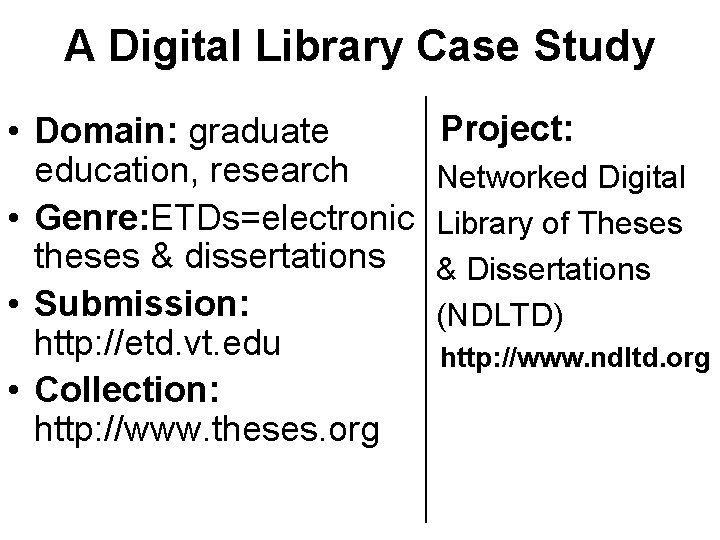
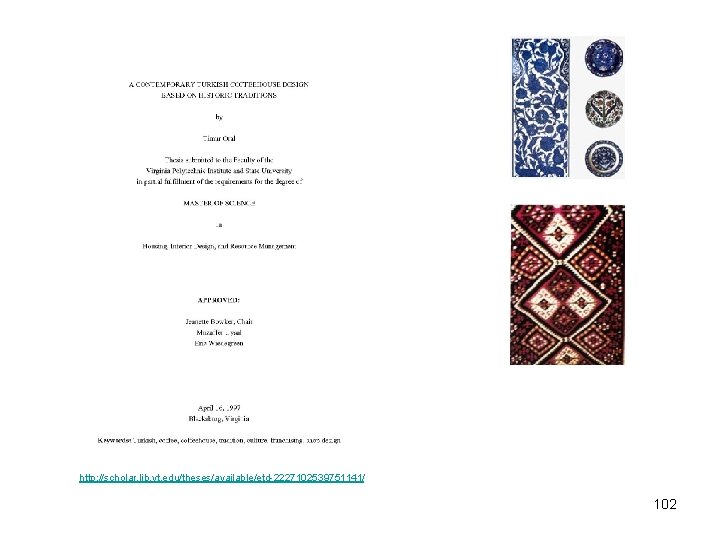
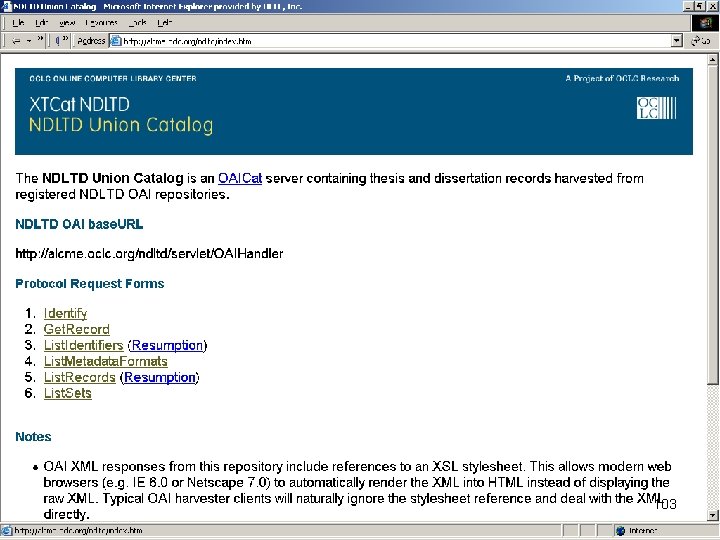
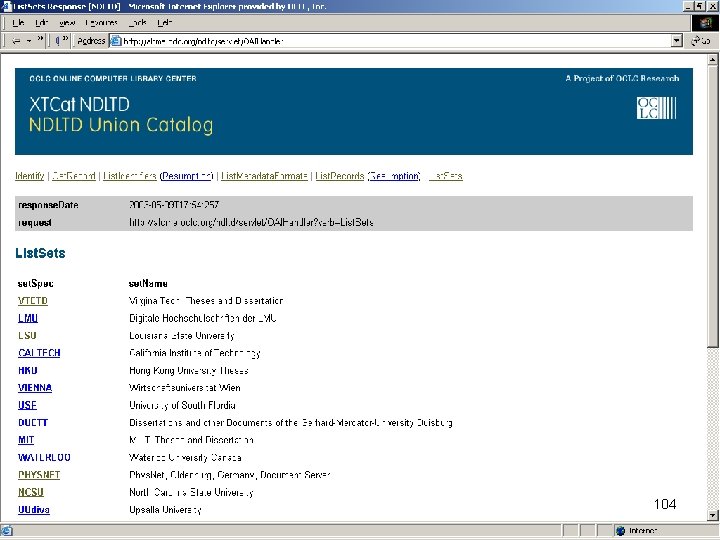
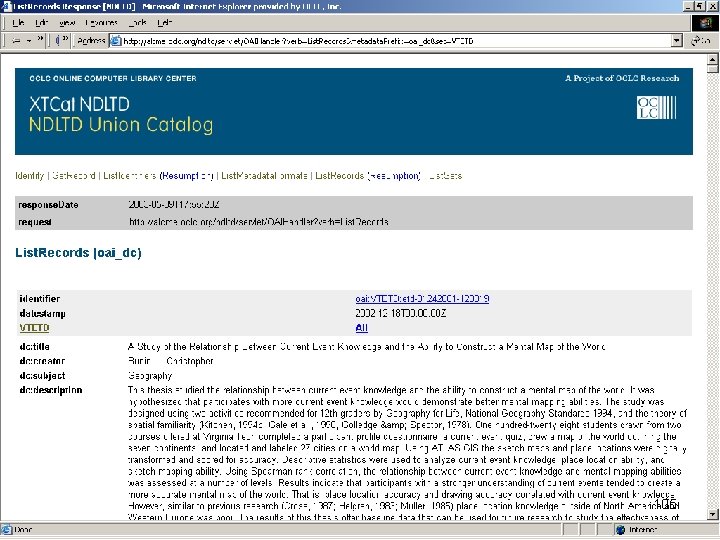
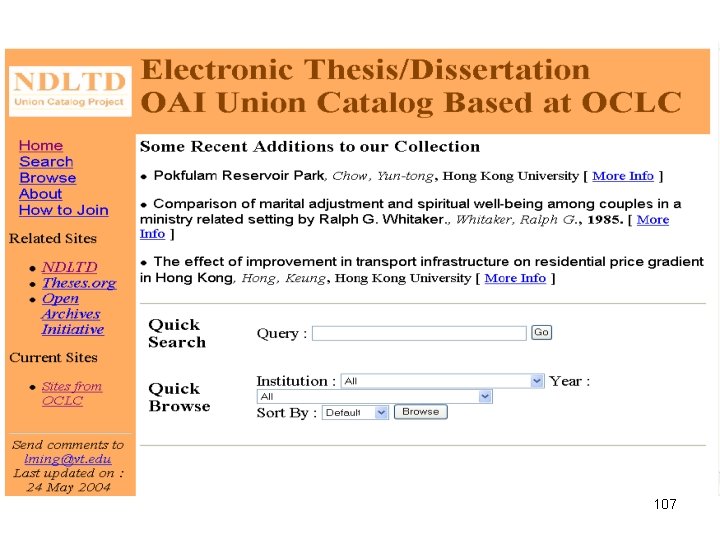
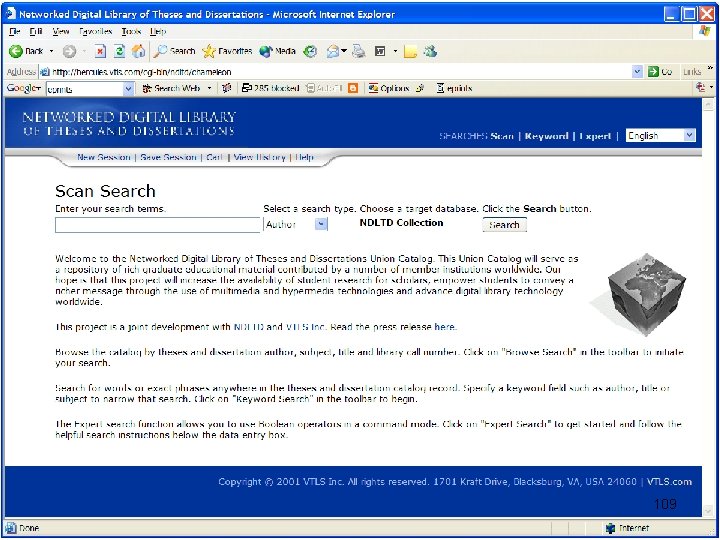
A Digital Library Case Study • Domain: graduate education, research • Genre: ETDs=electronic theses & dissertations • Submission: http: //etd. vt. edu • Collection: http: //www. theses. org Project: Networked Digital Library of Theses & Dissertations (NDLTD) http: //www. ndltd. org
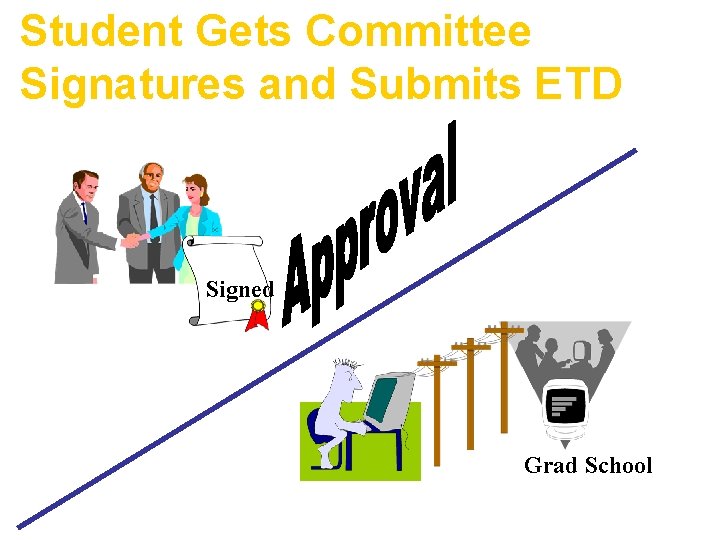
Student Gets Committee Signatures and Submits ETD Signed Grad School
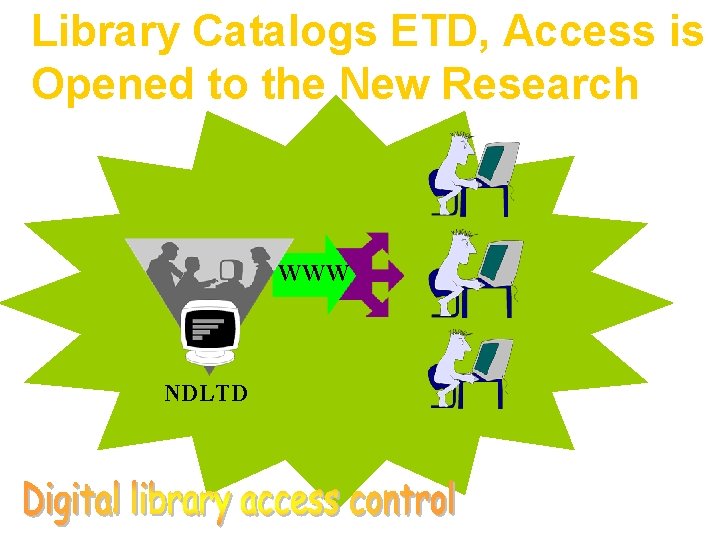
Library Catalogs ETD, Access is Opened to the New Research WWW NDLTD
Key Aspects • NDLTD incorporated as non-profit corporation, with international board of directors, and annual conference – Berlin, Kentucky, Sydney, Montreal, … • Scirus provides full-text search service atop over 200 K documents harvested in diverse languages from hundreds of member universities • Next: multimedia works, other services 101
http: //scholar. lib. vt. edu/theses/available/etd-2227102539751141/ 102
103
104
105
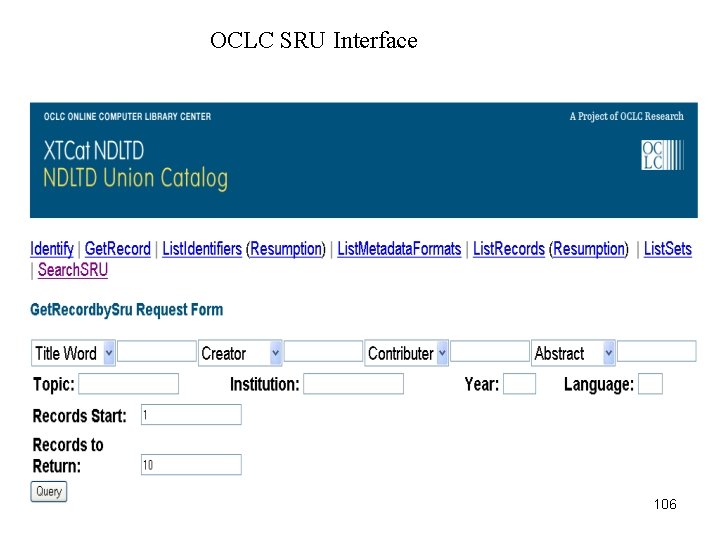
OCLC SRU Interface 106
107
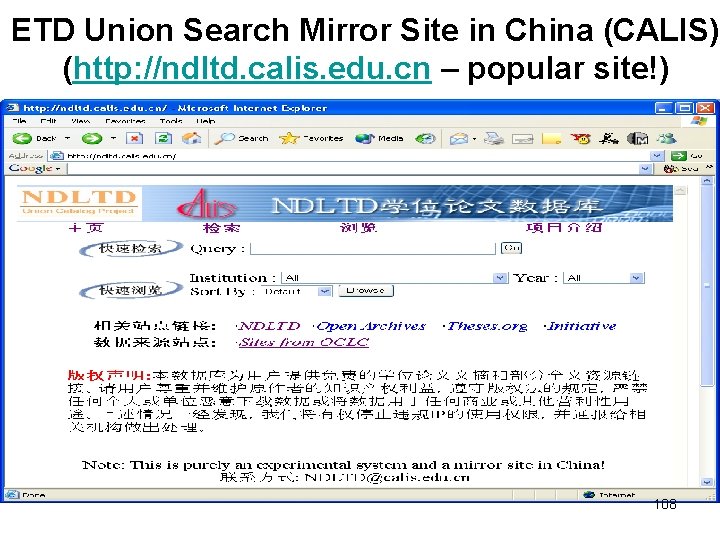
ETD Union Search Mirror Site in China (CALIS) (http: //ndltd. calis. edu. cn – popular site!) 108
109
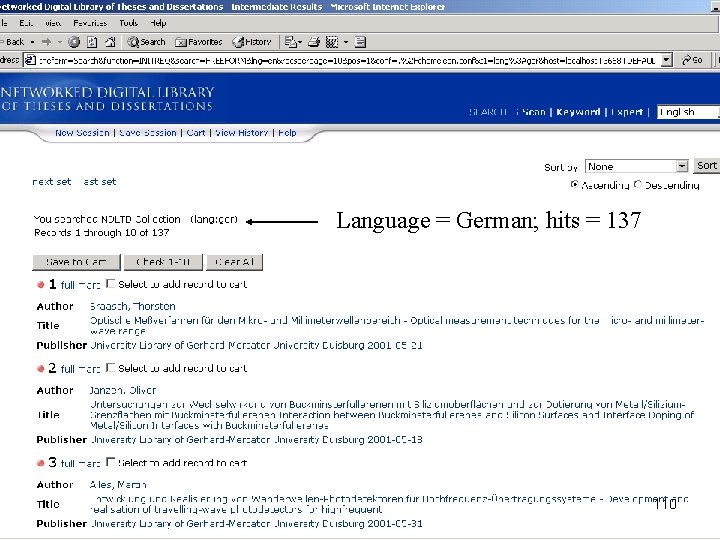
Language = German; hits = 137 110
111
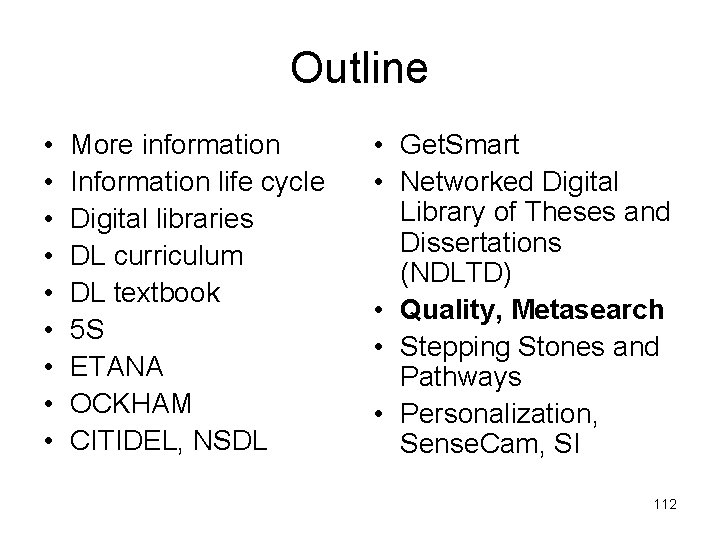
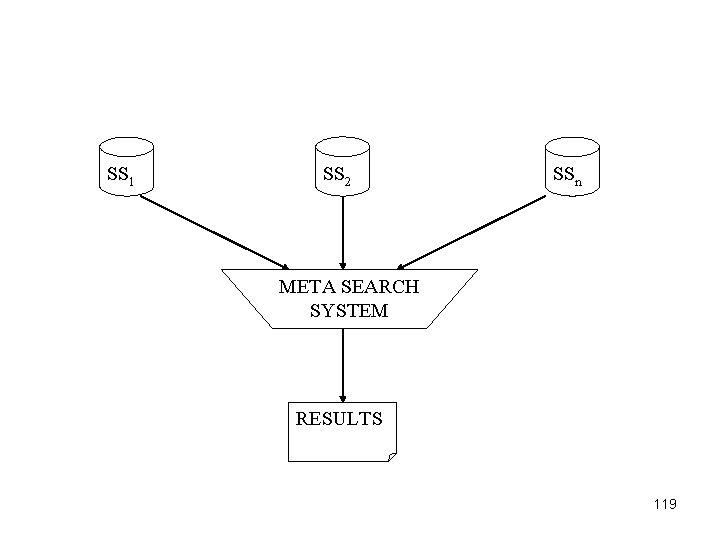
Outline • • • More information Information life cycle Digital libraries DL curriculum DL textbook 5 S ETANA OCKHAM CITIDEL, NSDL • Get. Smart • Networked Digital Library of Theses and Dissertations (NDLTD) • Quality, Metasearch • Stepping Stones and Pathways • Personalization, Sense. Cam, SI 112
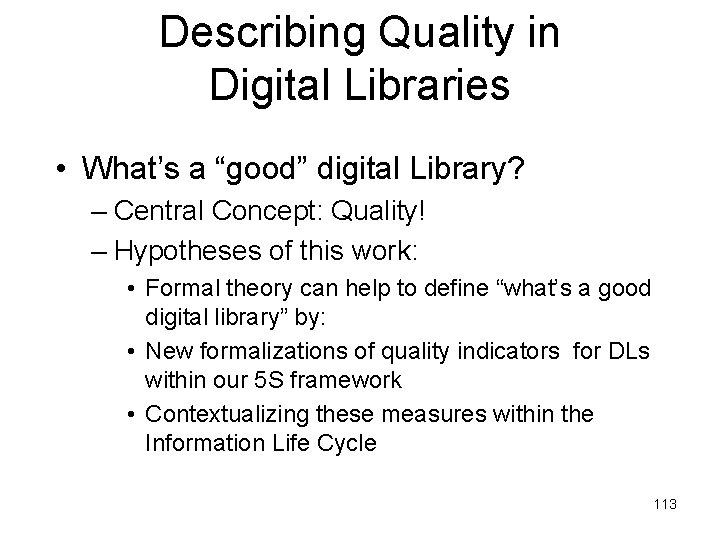
Describing Quality in Digital Libraries • What’s a “good” digital Library? – Central Concept: Quality! – Hypotheses of this work: • Formal theory can help to define “what’s a good digital library” by: • New formalizations of quality indicators for DLs within our 5 S framework • Contextualizing these measures within the Information Life Cycle 113
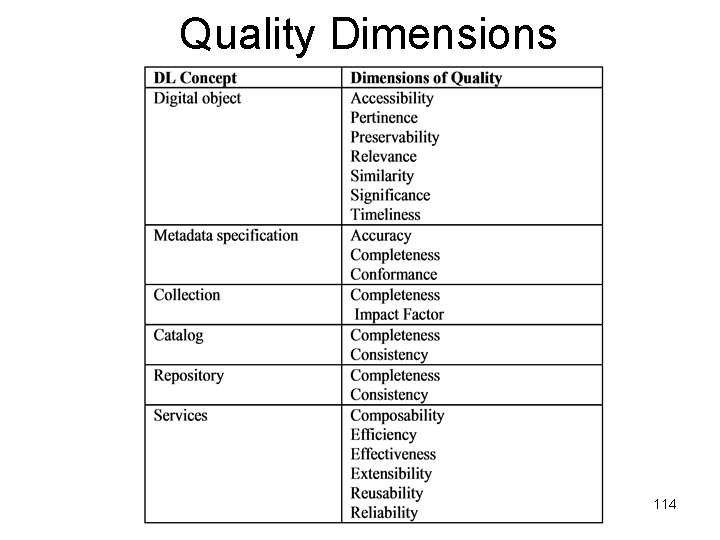
Quality Dimensions 114
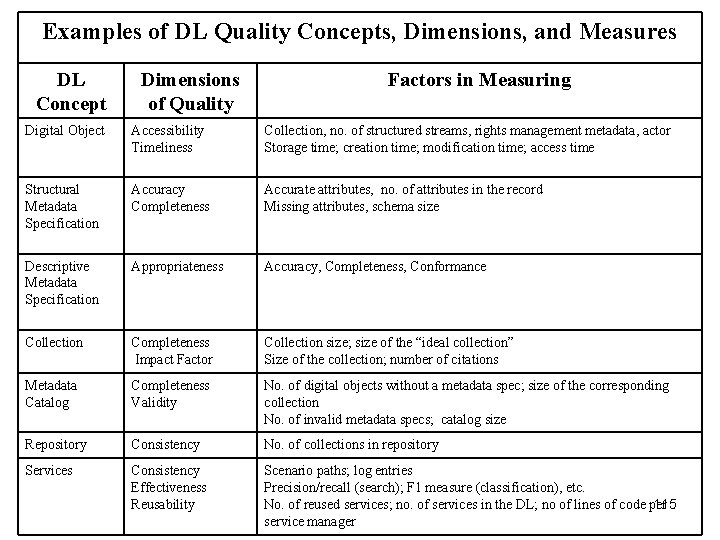
Examples of DL Quality Concepts, Dimensions, and Measures DL Concept Dimensions of Quality Factors in Measuring Digital Object Accessibility Timeliness Collection, no. of structured streams, rights management metadata, actor Storage time; creation time; modification time; access time Structural Metadata Specification Accuracy Completeness Accurate attributes, no. of attributes in the record Missing attributes, schema size Descriptive Metadata Specification Appropriateness Accuracy, Completeness, Conformance Collection Completeness Impact Factor Collection size; size of the “ideal collection” Size of the collection; number of citations Metadata Catalog Completeness Validity No. of digital objects without a metadata spec; size of the corresponding collection No. of invalid metadata specs; catalog size Repository Consistency No. of collections in repository Services Consistency Effectiveness Reusability Scenario paths; log entries Precision/recall (search); F 1 measure (classification), etc. 115 No. of reused services; no. of services in the DL; no of lines of code per service manager
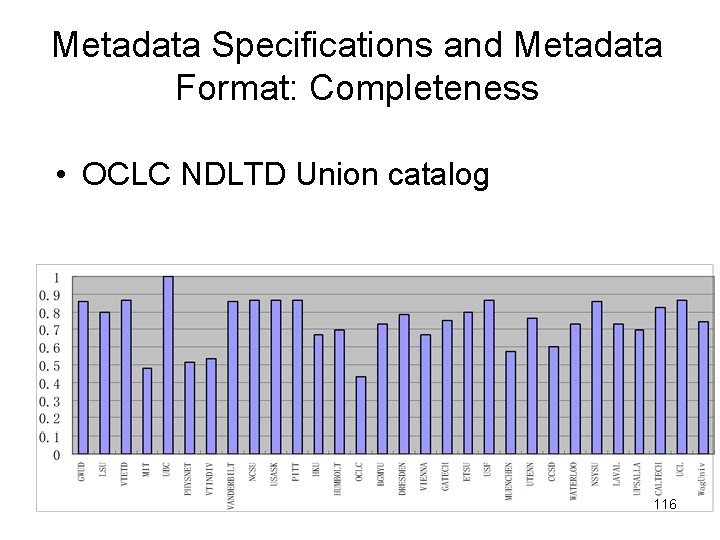
Metadata Specifications and Metadata Format: Completeness • OCLC NDLTD Union catalog 116
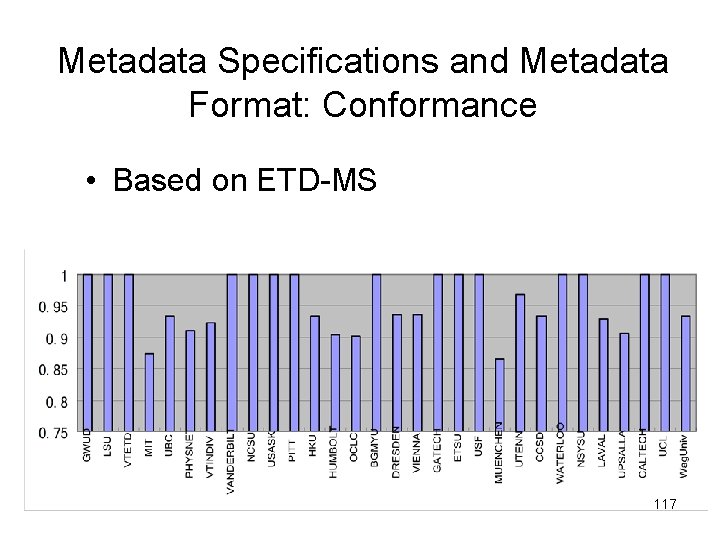
Metadata Specifications and Metadata Format: Conformance • Based on ETD-MS 117
Quality and the Information Life Cycle 118
SS 1 SS 2 SSn META SEARCH SYSTEM RESULTS 119
120
121
Outline • • • More information Information life cycle Digital libraries DL curriculum DL textbook 5 S ETANA OCKHAM CITIDEL, NSDL • Get. Smart • Networked Digital Library of Theses and Dissertations (NDLTD) • Quality, Metasearch • Stepping Stones and Pathways • Personalization, Sense. Cam, SI 122
123
Collection Query Operating System End Stone 1 Message passing Stepping Stone area networks End Stone 2 Remote procedure call A Causally Consistent Protocol for Distributed Shared Memory End Stone 1 pattern discovery Stepping Stone application of data mining Discovery of Interesting Usage Patterns from Web Data End Stone 2 personalization Discovery of Aggregate Usage Profiles for Web Personalization End Stone 1 expansion Stepping Stone probabilistic model a probabilistic model of information retrieval development and status End Stone 2 modeling Data Mining Information Retrieval Document Title Implementing Object-based Distributed Shared Memory an information retrieval logic model implementation and experiments 124
Description Sub-query 1 Sub-query 2 Salmon dams Pacific northwest What harm have power dams in the Pacific northwest caused to salmon fisheries? Northwest, pacific, dam, salmon, fishery, fish, river, Oregon, specie, bycatch spawn, ocean, water, California, marine, Idaho, habitat, wildlife quilts, income In what ways have quilts been used to generate income? quilt, deduct, median, jacket income, family, taxpay, household, percent, person, low, trust, children, high, invest, rate Lyme disease arthritis What evidence is there to link tick-borne Lyme disease with arthritis? disease, arthritis, patient, rheumatoid, drug, research, health, infect, medical, cancer, treatment, clinic, immunize, blood, cell, symptom, doctor lyme, diabetes, biotechnology tourists, violence Here are tourists likely violence, Egypt, foreign, to be subjected to acts military, Egyptian, Islam, of violence causing police, destiny, kill, Tourist, tourism, 125 visitor, hotel, travel, attack, tour
Personalization of Content: Bridging the Gap Between NSDL and its Users Dr. Manuel A. Pérez-Quiñones†, Dr. Edward Fox†, Dr. Lillian Cassel††, Dr. Patrick Fan † †Virginia Tech, Blacksburg, VA †† Villanova University, Villanova, PA 126
Problem Statement • The NSDL needs to be integrated into the current pedagogical practices of educators and students. • As of April 2005, 331 out of 406 NSDL collections gather no information about the user, thus personalization is not currently a possibility for most of the NSDL. • We will explore how to provide personalized content for instructors and students based on the context provided by the course website. 127
Bringing NSDL to the users • The goal of this project is to get NSDL content closer to its intended audience by designing, implementing, and evaluating the integration of its content with a course management system using personalization techniques. • We will conduct studies with instructors and students to identify how NSDL resources are used in class planning or class activities. • We will prototype interfaces using some of the leading CMS and utilizing standard APIs for communication between the CMS and the NSDL collections. 128
Extending a CMS For the instructor • Provide textbook recommendations, based on the textbook being used in the course and on typical textbooks used in other similar courses. • Show similar syllabus to the course being shown in the CMS. • Suggest demos, visualizations, etc. that match some of the topics covered in the course. • Allow the instructor to define parameter to configure a genetic algorithm will recommend supplementary material to the students. For the students • Show other online resources (e. g. extra readings) at a 129
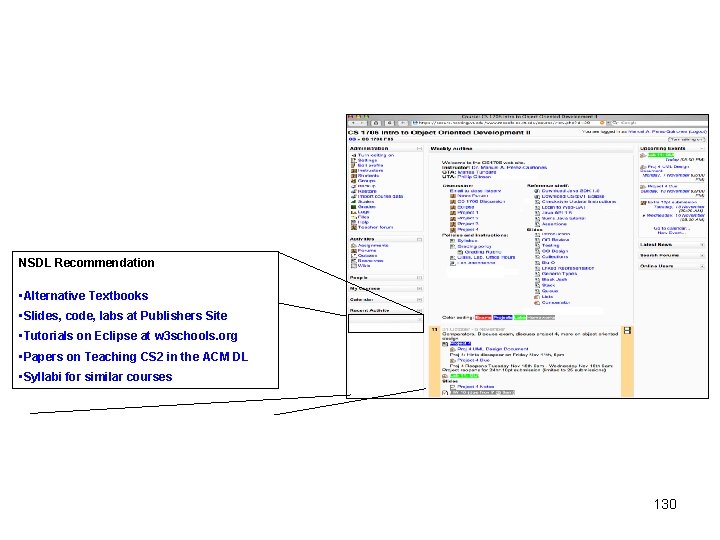
NSDL Recommendation • Alternative Textbooks • Slides, code, labs at Publishers Site • Tutorials on Eclipse at w 3 schools. org • Papers on Teaching CS 2 in the ACM DL • Syllabi for similar courses 130
Sense. Cam Project • Microsoft My. Life. Bits RFP, award to Perez and Fox starting 2006 • Near continuous capture of photos, audio, GPS, temperature • Integration with laptop daily, for email, calendar, and other activities • Two particular types of users – Veterinary students – Students with various disabilities 131
Superimposed Information • Another project with NSDL • Lois Delcambre, David Maier, Lillian (Boots) Cassel (Portland State, Villanova) • Middleware for “marks” • Integrate with various knowledge management systems: wiki, Cmap tools, SIMPEL (multimedia presentation) • Allow management of educational materials at the sub-document level 132
Outline • • • More information Information life cycle Digital libraries DL curriculum DL textbook 5 S ETANA OCKHAM CITIDEL, NSDL • Get. Smart • Networked Digital Library of Theses and Dissertations (NDLTD) • Quality, Metasearch • Stepping Stones and Pathways • Personalization, Sense. Cam, SI 133
Selected Links - http: //fox. cs. vt. edu • CITIDEL (computing education resources) – www. citidel. org • NCSTRL (computing technical reports) – www. ncstrl. org • NDLTD (electronic theses and dissertations worldwide) – www. ndltd. org and etdguide. org • NSDL (National Science Digital Library) – www. nsdl. org • OAI (Open Archives Initiative) – www. openarchives. org • Virginia Tech Digital Library Research Laboratory (DLRL, www. dlib. vt. edu) 134
Questions? Discussion? Thank You! 135
- Slides: 135