
Digital fluency By Maddy Vo What is Digital
Digital fluency By Maddy Vo
What is Digital Fluency? • Digital fluency is understanding more possibilities for an objective, knowing how to find appropriate solutions and how to adapt to changing technology. Being digitally fluent requires competencies and capabilities that go beyond an individual’s skill level. • For example, a person that is digitally fluent selects tools knowing what to do with them, but can also explain why they are used the way they do and how it may affect the outcome if context was to change.
A digitally fluent student: • Knows where to find access information accurately and efficiently • Proficient producer of digital content • Can recognize and use most effective methods to gain audience’s attention • Know how to use digital technologies responsibly including digital security.

Digital fluency can be a combination of three concepts: • Digital, or technical, proficiency: being able to understand make judgements, use appropriate tools and technologies for different purposes • Digital literacy: Able to read, create, make judgements about the accuracy and worth of information being accessed, critical thinking and problem solving, and using digital tools to construct information. • Social competence, or dispositional knowledge: Able to relate to others and communicate with them effectively and manage information and identity in appropriate and safe ways.
• The essence of digital fluency is to make core critical thinking and information literacy skills relevant to the new challenges of the digital environment. Digital fluency combines skills and techniques necessary for any critical engagement with information through the internet and online (Miller and Barlett, 2012).
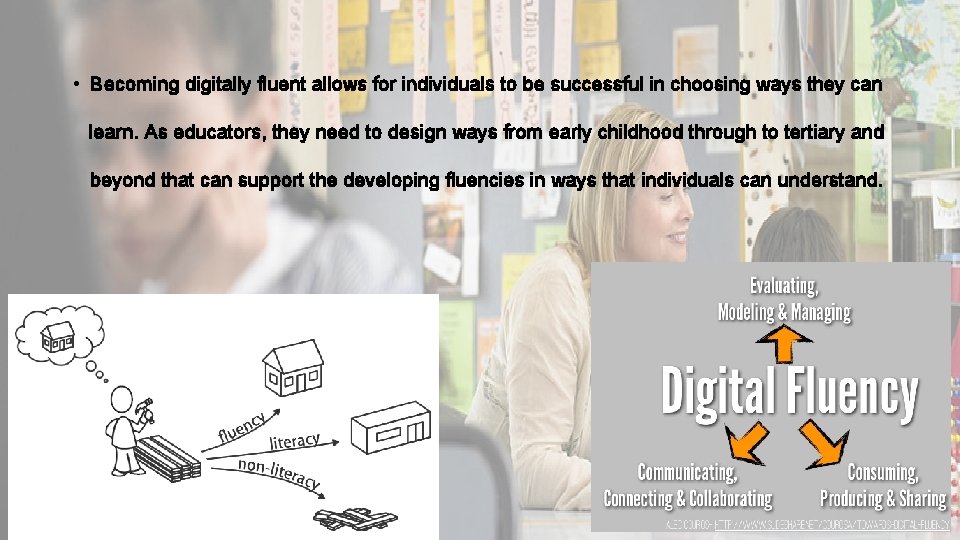
• Becoming digitally fluent allows for individuals to be successful in choosing ways they can learn. As educators, they need to design ways from early childhood through to tertiary and beyond that can support the developing fluencies in ways that individuals can understand.
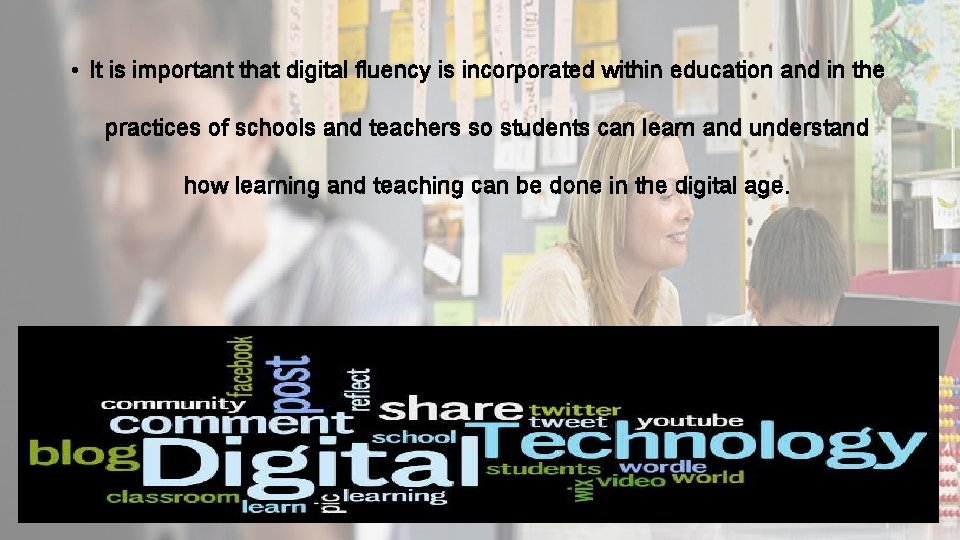
• It is important that digital fluency is incorporated within education and in the practices of schools and teachers so students can learn and understand how learning and teaching can be done in the digital age.
- Slides: 7