
Digital ethnography Michael Wesch Ethnography Is literally the
- Slides: 22
Digital ethnography Michael Wesch
Ethnography • Is literally the study of people and cultures. • Digital ethnography is the study of cultures and people in the new digital age. • Theorist Michael Wesch explores this idea and used Youtube as a case study.
The machine is us/ing us • https: //www. youtube. com/watch? v=6 gm. P 4 nk 0 EO E&spfreload=10
Benefits of new media • Digital text is flexible, moveable and can link (hypertext) • Early websites were written in HTML and the producer of the text needed to know complex coding. • It was very rigid/static. • A blog is born every half second. • Millions of people broadcast themselves and even have their own ‘channel’. • Websites can mash data together making them more user friendly, intuitive, responsive and accessible.
However… • We are having to organise all of this data. • We are teaching the machine each time that we link text and ideas. • We are sharing our data, our images, our likes, our dislikes. These can all be accessed through the web. It can be used against us. (Through marketing) • Web 2. 0 is linking people- which is good… • But comes with a price…
Wesch says… • “The computer is us/ing us” • We need to rethink; • Privacy • Governance • Identity • Copyright • Authorship • Ethics • Privacy How many examples can you think of where New Digital Media has been responsible for breaching these ‘rights’?
A few examples… • Edward Snowden- Whistleblower- US spying on people though webcams and Internet. • Julien Assange- Wikileaks • Facebook breaching privacy rights of users. Following their ‘Likes’ • Piratebay- torrents- websites • Instagram selling your photos! • Sony Hacking scandal- The interview and North Korea. .
Democracy, freedom of speech and ideology
Democracy • When we think about democracy, we think about freedom of speech, individual liberty and expression. • But how far does new digital media provide opportunities for democratic space and equality? Are we free to participate equally or are dominant ideologies continually forced upon us?
Benefits… • New media technologies facilitate smallscale media productions. • This provides for alternative views that challenge dominant ideologies/values of society. • Key word: Egalitarian (equalism) Each person has equal rights, values, worth. Reiforces democratic perspectives.
The Royal Commission on the Press (1977) defined alternative media as: • Dealing with the opinion of small minorities • Expressing attitudes hostile to widely held beliefs • Espousing views or dealing with subjects not given regular coverage by publications generally available at newsagents.
Challenging dominant ideologies • Answer: • Look through the websites below. • How has New Media allowed for opportunities to challenge dominant ideology? • ADBUSTERS • Liveleak • The TREWS • Mc. Spotlight • Can you find any other media websites that challenge dominant ideology?
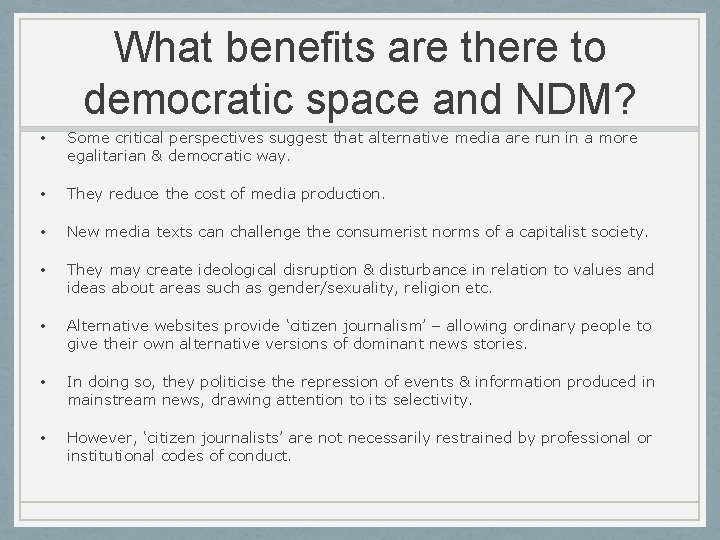
What benefits are there to democratic space and NDM? • Some critical perspectives suggest that alternative media are run in a more egalitarian & democratic way. • They reduce the cost of media production. • New media texts can challenge the consumerist norms of a capitalist society. • They may create ideological disruption & disturbance in relation to values and ideas about areas such as gender/sexuality, religion etc. • Alternative websites provide ‘citizen journalism’ – allowing ordinary people to give their own alternative versions of dominant news stories. • In doing so, they politicise the repression of events & information produced in mainstream news, drawing attention to its selectivity. • However, ‘citizen journalists’ are not necessarily restrained by professional or institutional codes of conduct.
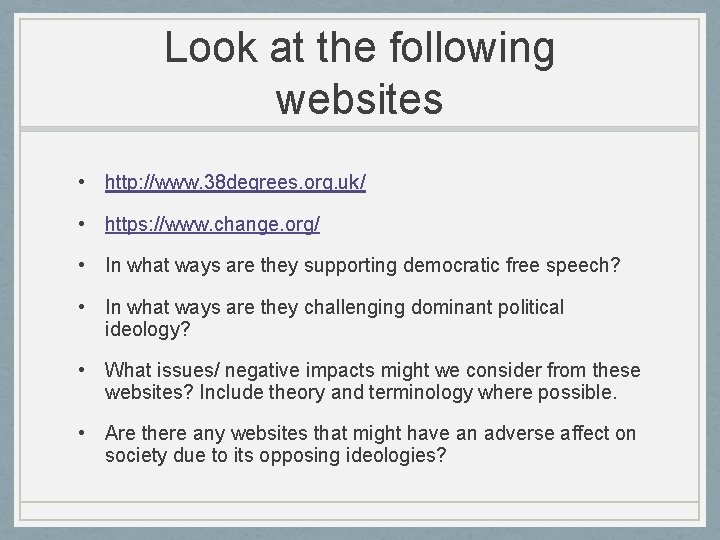
Look at the following websites • http: //www. 38 degrees. org. uk/ • https: //www. change. org/ • In what ways are they supporting democratic free speech? • In what ways are they challenging dominant political ideology? • What issues/ negative impacts might we consider from these websites? Include theory and terminology where possible. • Are there any websites that might have an adverse affect on society due to its opposing ideologies?
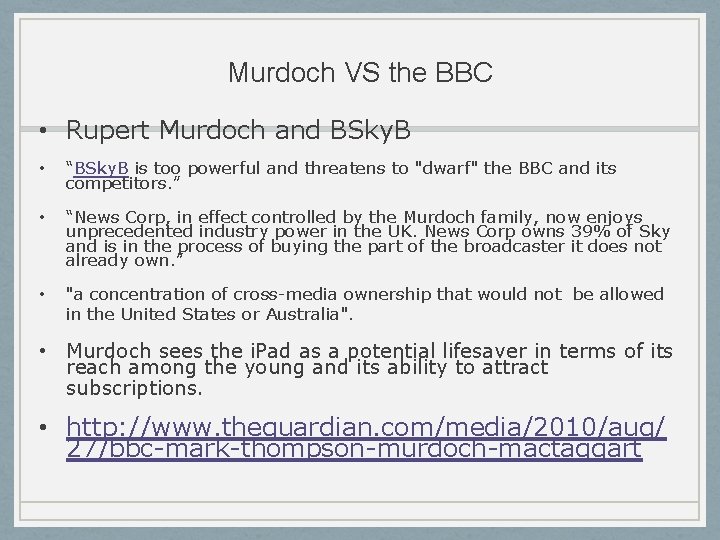
Murdoch VS the BBC • Rupert Murdoch and BSky. B • “BSky. B is too powerful and threatens to "dwarf" the BBC and its competitors. ” • “News Corp, in effect controlled by the Murdoch family, now enjoys unprecedented industry power in the UK. News Corp owns 39% of Sky and is in the process of buying the part of the broadcaster it does not already own. ” • "a concentration of cross-media ownership that would not be allowed in the United States or Australia". • Murdoch sees the i. Pad as a potential lifesaver in terms of its reach among the young and its ability to attract subscriptions. • http: //www. theguardian. com/media/2010/aug/ 27/bbc-mark-thompson-murdoch-mactaggart
Who retains control and power?
Further Research • So far we have looked at; • The changing role of the BBC • Michale Wesch- the machine is us/ing us (Digital ethnography) • Globalisation and new media • Non-mainstream media (including sites that ‘challenge’ dominant ideology and promote democratic values of free speech. • Media theory and terminology sheets
Read the following article and answer the questions • http: //www. theguardian. com/mediablog/2015/feb/20/will-cash-strapped-newspapersbe-tempted-to-get-cosier-with-advertisers • New digital media has impacted news in many ways. Fundamentally, it has impacted on the sales of traditional print newspapers as well as the readership figures.
According to the article… • What corrupt practices have print newspapers had to do to ensure they do not experience financial difficulties? • Why do you think the financial impact on the Sun newspaper has been less significant than others? (Consider ownership and how it has used NDM) • Are there any media terms, theories or similar issues that we could relate to this article?
http: //www. bbc. co. uk/webwis e/guides/about-cookies • What are cookies? How do they affect audiences? • What are the benefits and disadvantages? • Why do you think the BBC defends the use of cookies? How could Althusser’s theory be used to challenge the BBC’s defence of cookies?
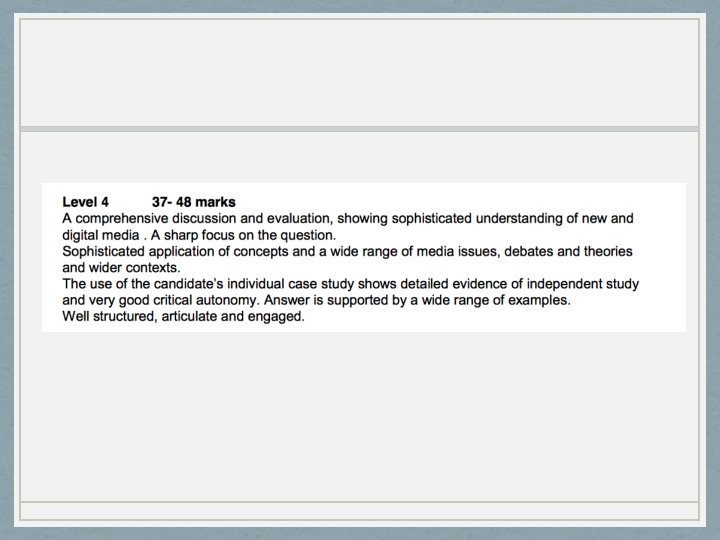
Homework Question • New and digital media offer a wide range of competing ideas and opinions from experts and journalists to bloggers and social networkers, making it harder for audiences to know who to trust. • In such an environment, how does the audience know who to trust? • 48 marks