
Digital Education Action Plan 2021 2027 Resetting Education
- Slides: 13
Digital Education Action Plan 2021 -2027 Resetting Education and Training for the Digital Age EDUTalks 13: 00 -14: 00 February 10, 2021 Georgi Dimitrov Head of Unit (acting), Unit C 4 – Digital Education Directorate-General for education, youth sport and Culture
Digital Education Action Plan (2021 -2027) Adoption date: 30 September 2020
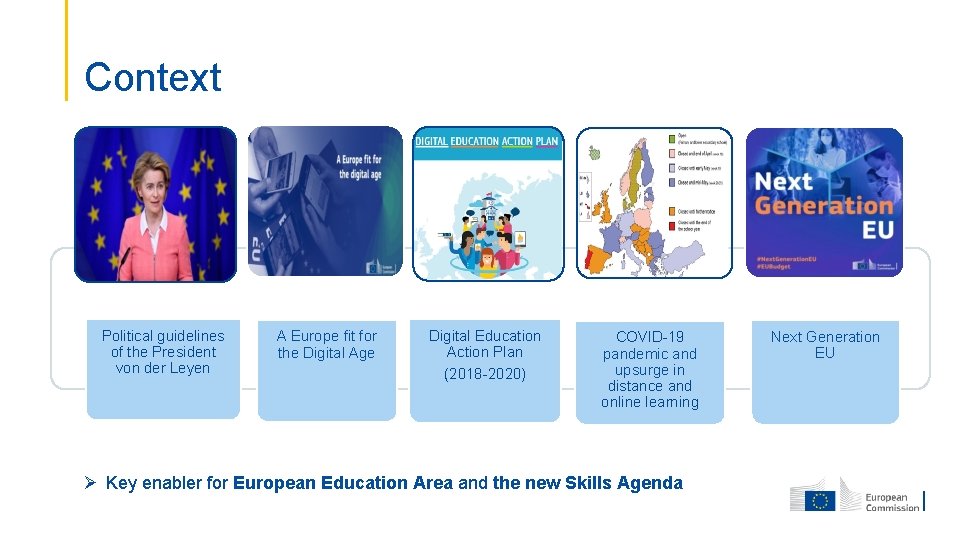
Context Political guidelines of the President von der Leyen A Europe fit for the Digital Age Digital Education Action Plan (2018 -2020) COVID-19 pandemic and upsurge in distance and online learning Ø Key enabler for European Education Area and the new Skills Agenda Next Generation EU
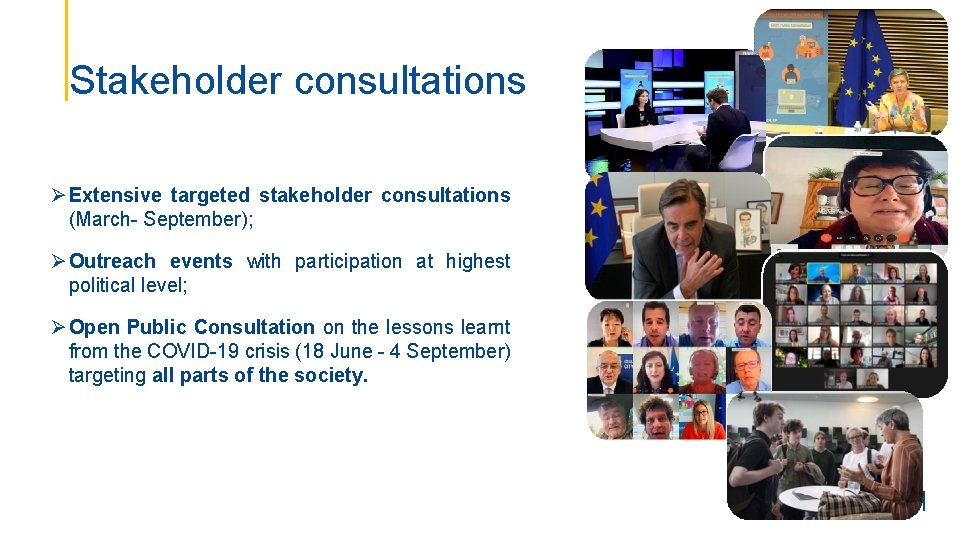
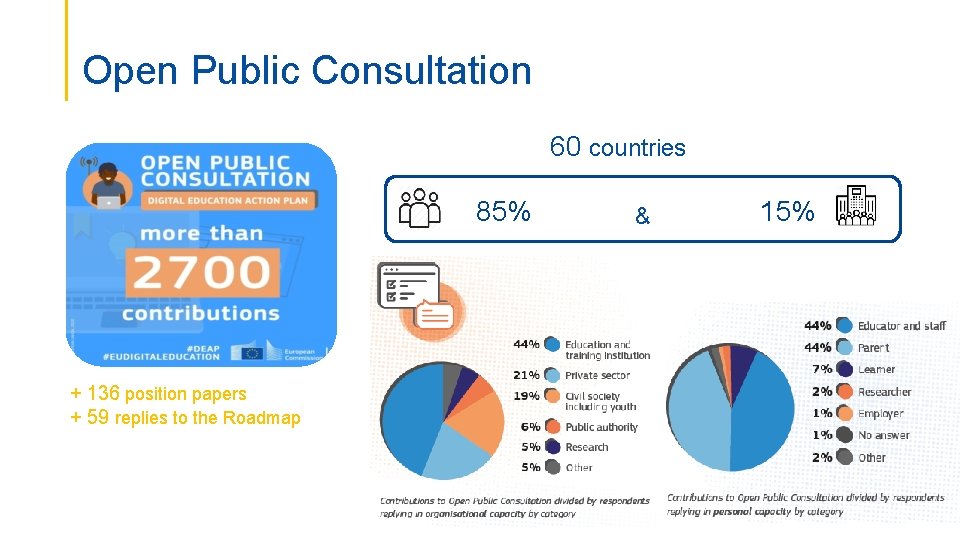
Stakeholder consultations Ø Extensive targeted stakeholder consultations (March- September); Ø Outreach events with participation at highest political level; Ø Open Public Consultation on the lessons learnt from the COVID-19 crisis (18 June - 4 September) targeting all parts of the society.
Open Public Consultation 60 countries 85% + 136 position papers + 59 replies to the Roadmap & 15%
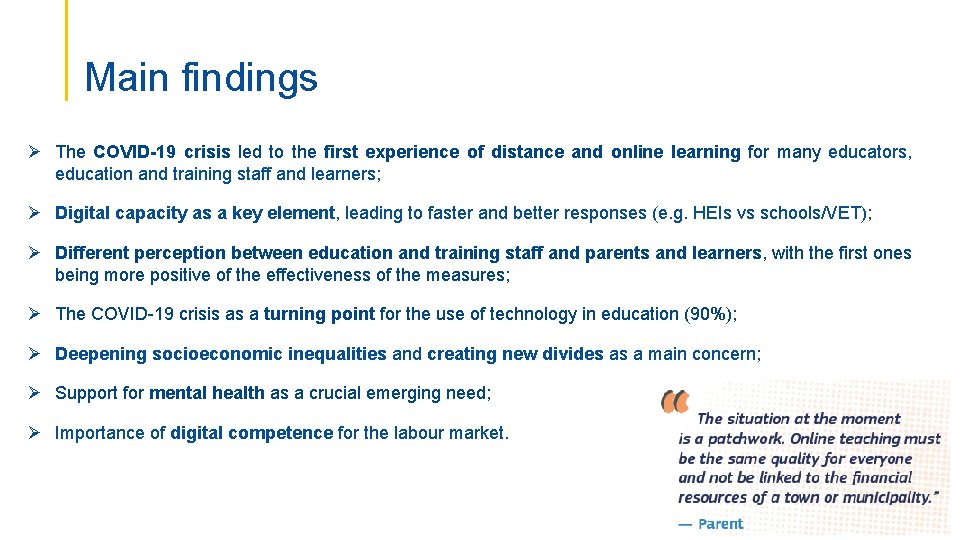
Main findings Ø The COVID-19 crisis led to the first experience of distance and online learning for many educators, education and training staff and learners; Ø Digital capacity as a key element, leading to faster and better responses (e. g. HEIs vs schools/VET); Ø Different perception between education and training staff and parents and learners, with the first ones being more positive of the effectiveness of the measures; Ø The COVID-19 crisis as a turning point for the use of technology in education (90%); Ø Deepening socioeconomic inequalities and creating new divides as a main concern; Ø Support for mental health as a crucial emerging need; Ø Importance of digital competence for the labour market.
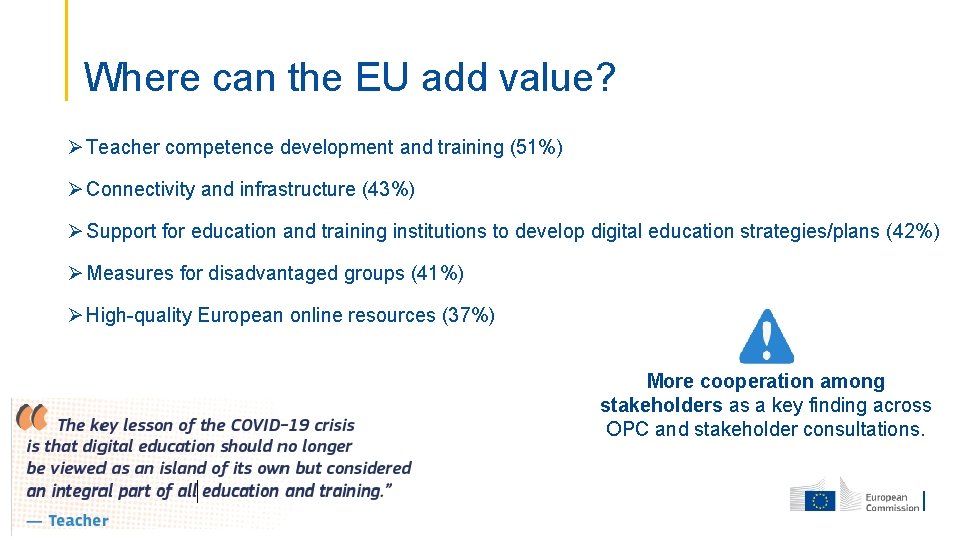
Where can the EU add value? Ø Teacher competence development and training (51%) Ø Connectivity and infrastructure (43%) Ø Support for education and training institutions to develop digital education strategies/plans (42%) Ø Measures for disadvantaged groups (41%) Ø High-quality European online resources (37%) More cooperation among stakeholders as a key finding across OPC and stakeholder consultations.
Key aspects of Action Plan Ø An integrated approach for technology use in education and improving digital skills; Ø Extended scope - beyond formal education and including lifelong learning; Ø Longer duration - 2021 -2027, aligned with the programming period of the EU; Ø Digital education as a strategic priority for a Europe fit for the digital age; Ø Important for Recovery and Resilience Plans of Member States; Ø Better synergies between funding instruments (Erasmus, Horizon Europe, Digital Europe Programme, ESF, ERDF, Invest. EU, Recovery and Resilience Funds).
Guiding principles Ø High quality and inclusive digital education as a strategic goal throughout education and training; Ø Transforming education for the digital age is a task for the whole of society; Ø Equality, accessibility and inclusiveness; Ø Connectivity, equipment, organisational capacity and skills are vital; Ø All teachers and trainers need to be competent and confident users of technology; Ø Education leaders play a key role in digital education. Ø Digital literacy is essential: o basic digital skills are a must for life and work; o advanced digital skills are crucial for digital transformation of society and the economy. Ø High-quality education content to boost the relevance, quality and inclusiveness of European education and training at all levels
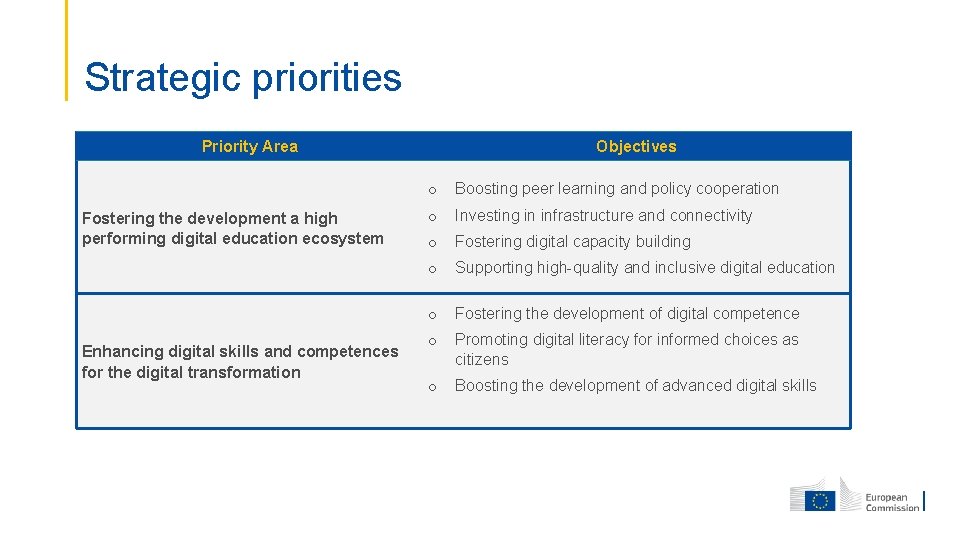
Strategic priorities Priority Area Fostering the development a high performing digital education ecosystem Enhancing digital skills and competences for the digital transformation Objectives o Boosting peer learning and policy cooperation o Investing in infrastructure and connectivity o Fostering digital capacity building o Supporting high-quality and inclusive digital education o Fostering the development of digital competence o Promoting digital literacy for informed choices as citizens o Boosting the development of advanced digital skills
Stronger coordination and cooperation at EU level 14) European Digital Education Hub: Ø Support a network of national advisory services to exchange experience and good practice, link national and regional digitaleducation initiatives and strategies and stakeholders; Ø Monitor the implementation of the Action Plan and the development of digital education in Europe and share good practices by contributing to research experimentation and systematic collection and analysis of empirical evidence; Ø Cross-sector collaboration and new models for the exchange of digital learning content, including common standards for digital education; Ø Agile development of policy and practice in digital education by being a think-and-do-tank and engaging stakeholders in user-driven innovation through the Digital Education Hackathon.
Outreach and international cooperation Ø Stakeholder Forum with a wide range of stakeholders; Ø Stronger international dimension with Western Balkans, Africa, East and South neighbouring regions as priority regions; Ø Monitoring and implementation as part of European Education Area.
Thank you! EAC-DIGITALEDUCATION@ec. europa. eu © European Union 2020