
Digital Divide Pertinent Questions Facts global national educational
Digital Divide Pertinent Questions * Facts (global, national, educational levels) * Why important? • As educators, what can we do? Ferdinand B. Pitagan, Ph. D Ed. Tech 101
Sharing your experience • What kind of technology do you use? (mobile phone, i. Pod, Wiki, Blogs, social networking, Skype, YM, etc) • For what? • How often? • What are the individual differences?
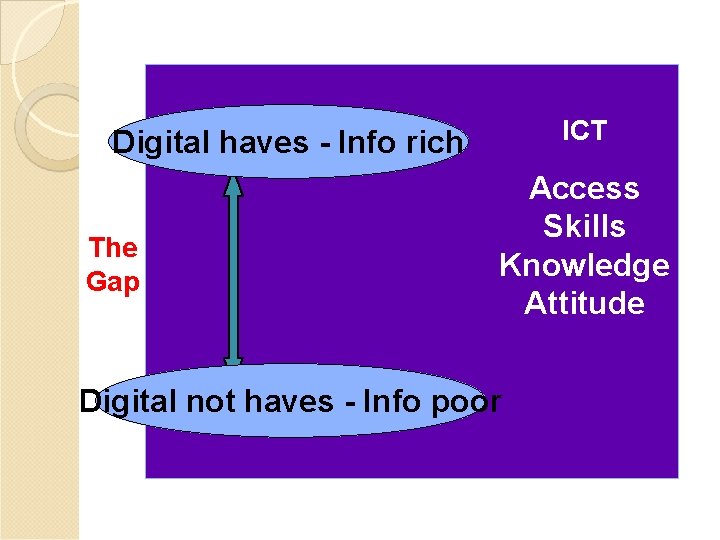
ICT Digital haves - Info rich The Gap Access Skills Knowledge Attitude Digital not haves - Info poor
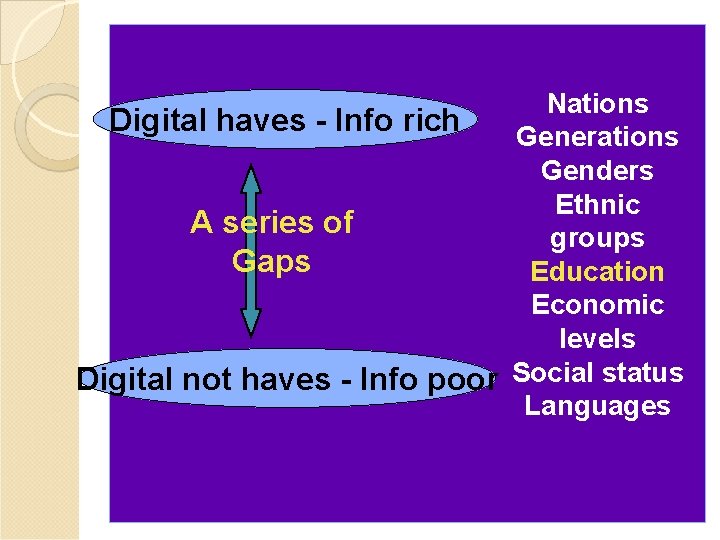
Nations Digital haves - Info rich Generations Genders Ethnic A series of groups Gaps Education Economic levels Digital not haves - Info poor Social status Languages
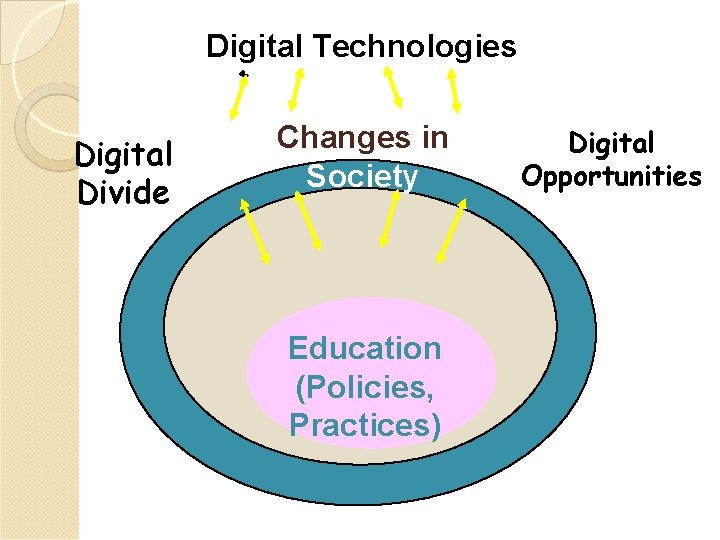
Digital Technologies Digital Divide Changes in Society Education (Policies, Practices) Digital Opportunities
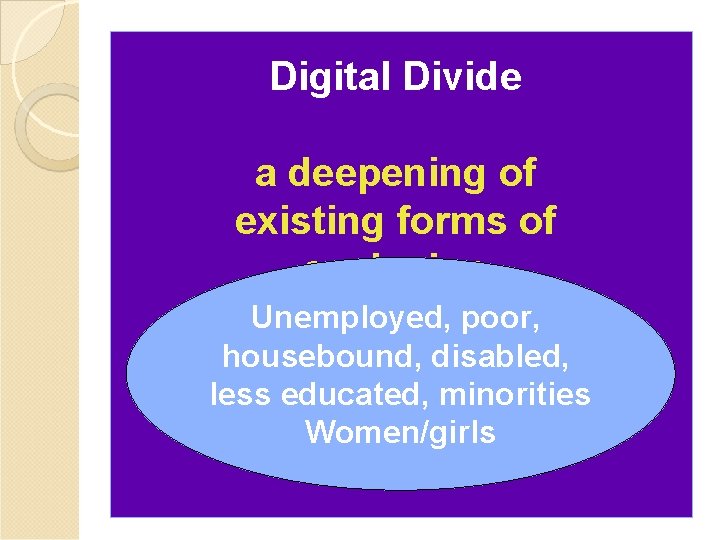
Digital Divide a deepening of existing forms of exclusion Unemployed, poor, housebound, disabled, less educated, minorities Women/girls
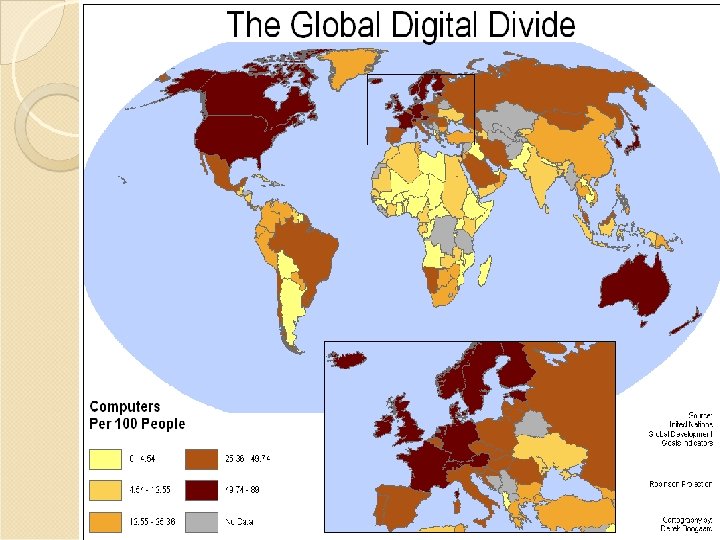
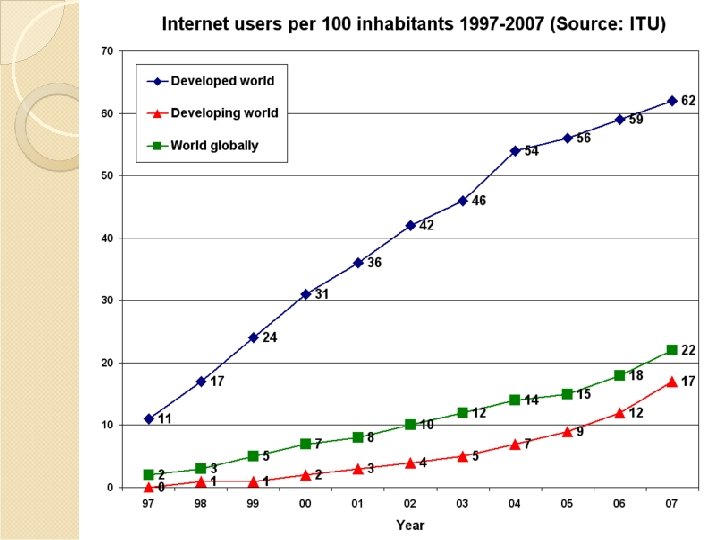
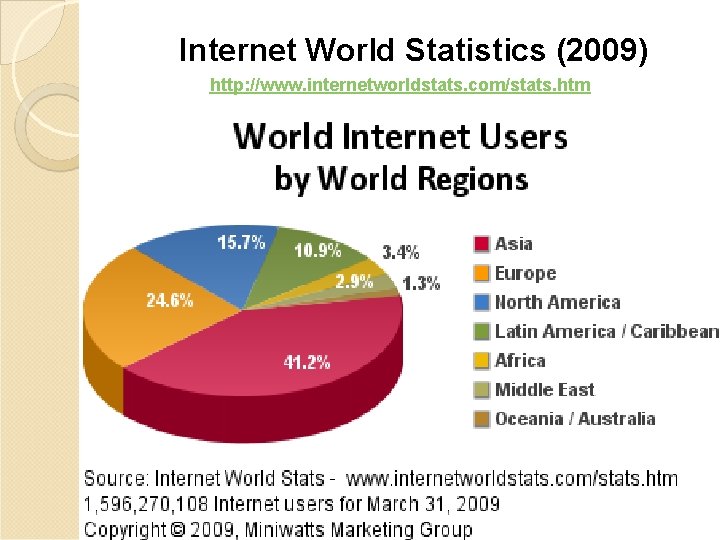
Internet World Statistics (2009) http: //www. internetworldstats. com/stats. htm
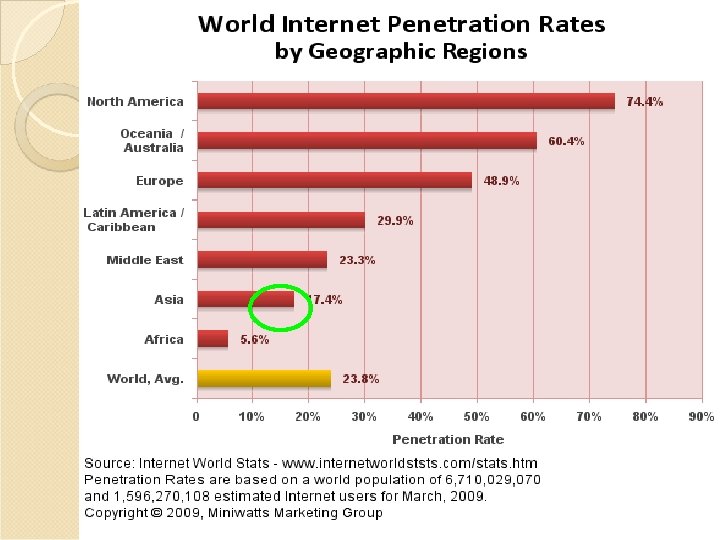
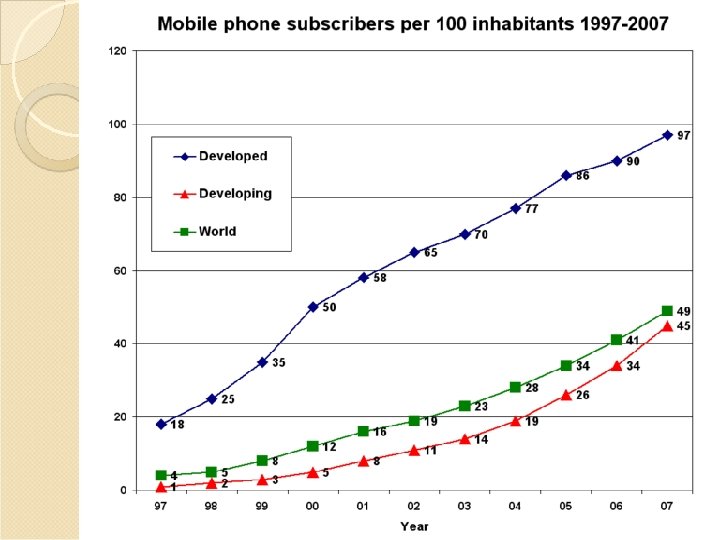
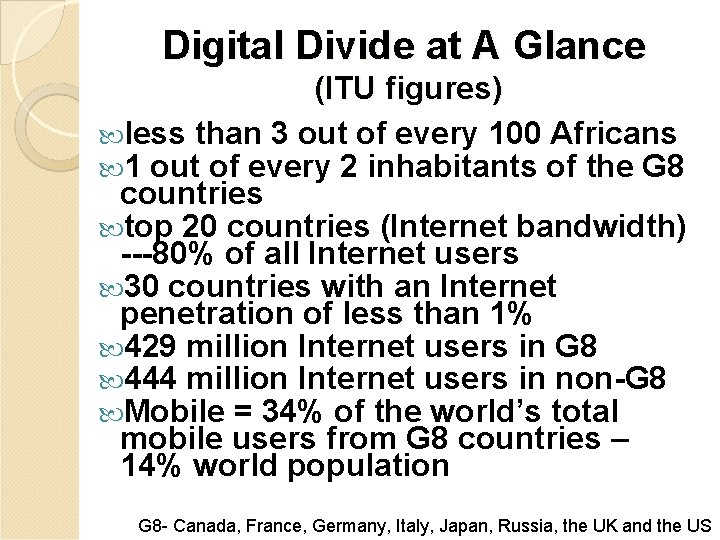
Digital Divide at A Glance (ITU figures) less than 3 out of every 100 Africans 1 out of every 2 inhabitants of the G 8 countries top 20 countries (Internet bandwidth) ---80% of all Internet users 30 countries with an Internet penetration of less than 1% 429 million Internet users in G 8 444 million Internet users in non-G 8 Mobile = 34% of the world’s total mobile users from G 8 countries – 14% world population G 8 - Canada, France, Germany, Italy, Japan, Russia, the UK and the US
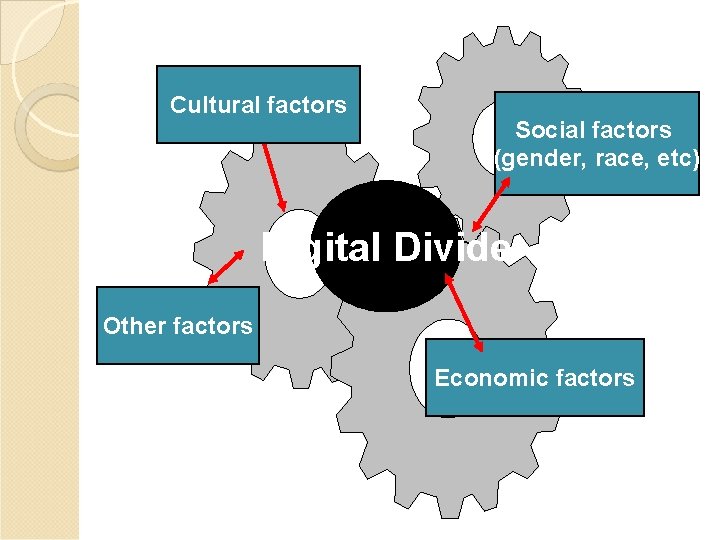
Cultural factors Social factors (gender, race, etc) Digital Divide Other factors Economic factors
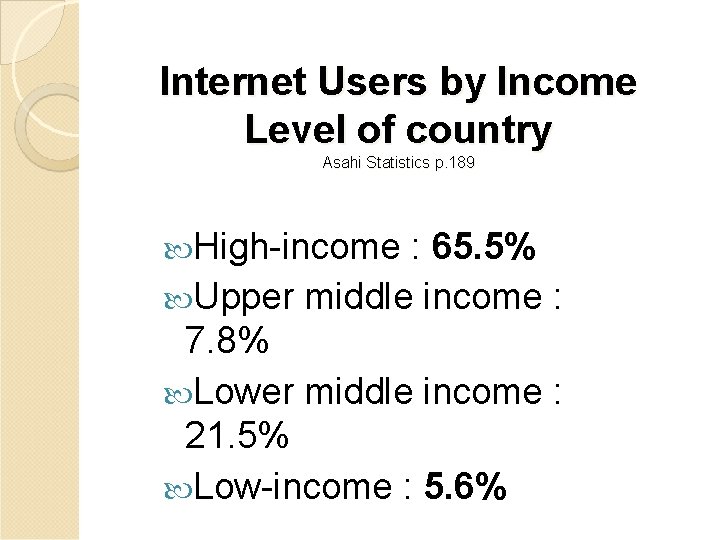
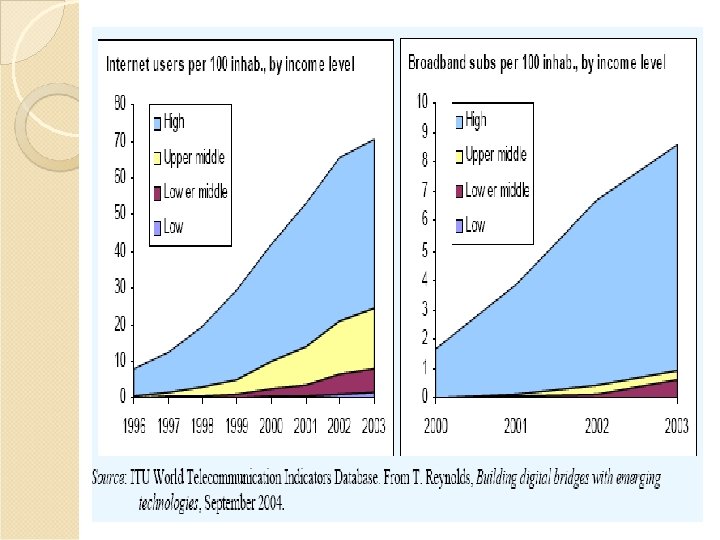
Internet Users by Income Level of country Asahi Statistics p. 189 High-income : 65. 5% Upper middle income : 7. 8% Lower middle income : 21. 5% Low-income : 5. 6%
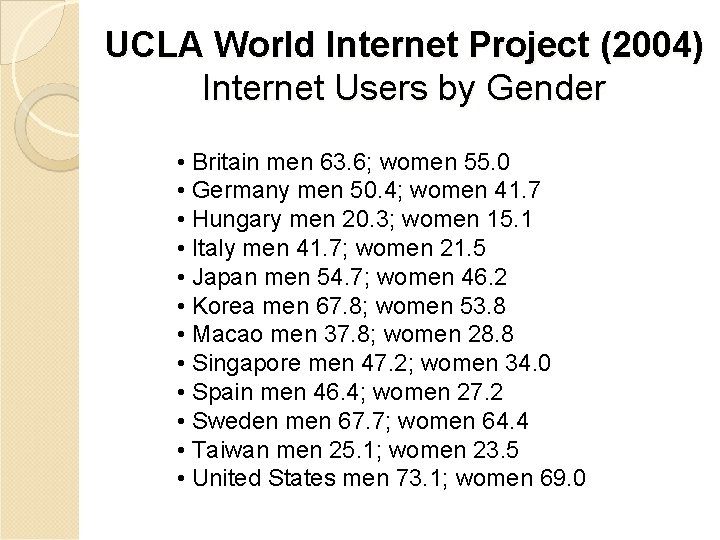
UCLA World Internet Project (2004) Internet Users by Gender • Britain men 63. 6; women 55. 0 • Germany men 50. 4; women 41. 7 • Hungary men 20. 3; women 15. 1 • Italy men 41. 7; women 21. 5 • Japan men 54. 7; women 46. 2 • Korea men 67. 8; women 53. 8 • Macao men 37. 8; women 28. 8 • Singapore men 47. 2; women 34. 0 • Spain men 46. 4; women 27. 2 • Sweden men 67. 7; women 64. 4 • Taiwan men 25. 1; women 23. 5 • United States men 73. 1; women 69. 0
Internet Users by Age Group “… 86 percent of women ages 18 to 29 were online, compared with 80 percent of men in the same age group. “…among the older group, those age 65 and older, 34 percent of men are online, compared with 21 percent of women. ” USA, Washingtonpost Thursday, December 29, 2005
Not easy to stop/lessen gaps If we don’t do anything about it…. Need for awareness Need for strong policies Need for international collaboration Need for education
World Summit on the Information Society http: //www. itu. int/wsis/tunis/newsroom/stats/Building-digitalbridges_2005. pdf 1. International Collaboration “UNDP etc – e Vietnamese Village” “Japan – Asian Broadband Project” 2. NGOs/Public sectors “Brazil – Tele-centers” 3. National Policies “Egypt – E-readiness Plan” “Korean Agency for Digital Opportunity” 4. Business Involvement “Sudan – SUDATEL”
World Summit on the Information Society 8 Key Areas for Policy 1. 2. 3. 4. 5. 6. 7. 8. Access for all to HW & SW Changed roles of teachers/learners Promoting lifelong learning Quality assurance Enhanced citizenship Brokering services and agencies Support, encourage & direct research Change in role of policy-maker in education
Digital Opportunities ICT, helping to overcome some forms of exclusion Distance learning to remote areas Village tele-centers with ICT in Basic Education Lifelong Learning through ICT Others
Digital Divide in Education -Digital divide in investment (input) -Digital divide in ICT use (process) -Digital divide in people (output)
Digital Divide in Education 1. Input Factors • Hardware, • Software • Materials and Resources • Connectivity • Integration of ICT in curriculum • Supports • Policies • Others
Digital Divide in Education 2. Process Factors Different approaches to ICT use - Used for advanced applications and thinking? - Used for basic skill training? - Used for computer games? - Others
Digital Divide in Education 3. Human (Outcome) Factors Digital literacy? - ICT skills / knowledge - confidence - competencies
ICT Skills (University, Perception) Source: NIME (2003) “I do not have adequate ICT skills and knowledge” - More faculty than students - More older people than younger ones - More people in humanities and social sciences than those in natural sciences and engineering
Digital divide in informal learning (more learning happens outside schools) Home differences Differences at work Differences in communities
- Slides: 27