
DIGITAL DIVIDE IN THE PHILIPPINES A Bacala W
DIGITAL DIVIDE IN THE PHILIPPINES A. Bacala, W. Dimamay, D. Dinawanao Mindanao State University-Iligan City, Philippines D. Villorente, J. Tetangco Advanced Science & Technology Institute (ASTI), Department of Science & Technology Philippines
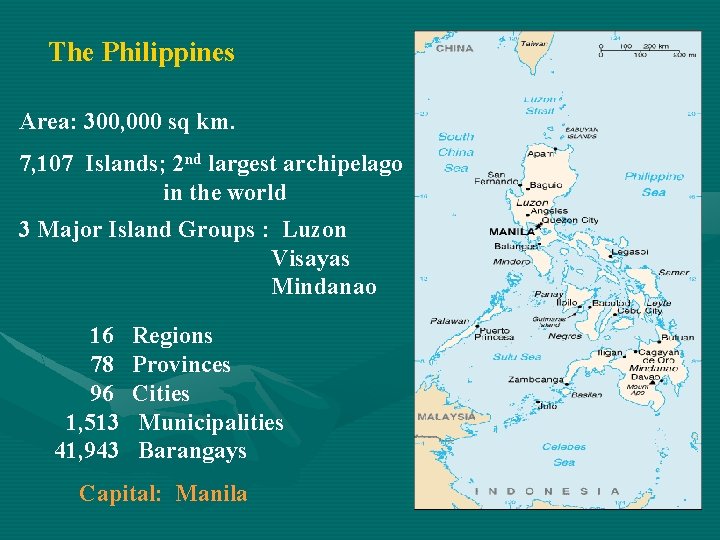
The Philippines Area: 300, 000 sq km. 7, 107 Islands; 2 nd largest archipelago in the world 3 Major Island Groups : Luzon Visayas Mindanao 16 78 96 1, 513 41, 943 Regions Provinces Cities Municipalities Barangays Capital: Manila
Philippine Profile • • 82 M population (2003); 2. 3% annual growth rate Predominantly young (71% < 35 yrs old) 95% Malayan descent 84% Catholics; 10% Protestants; 5% Muslims 95. 1% adult literacy 73% English literacy 2. 4 M enrolled in higher education 400, 000 college graduates annually
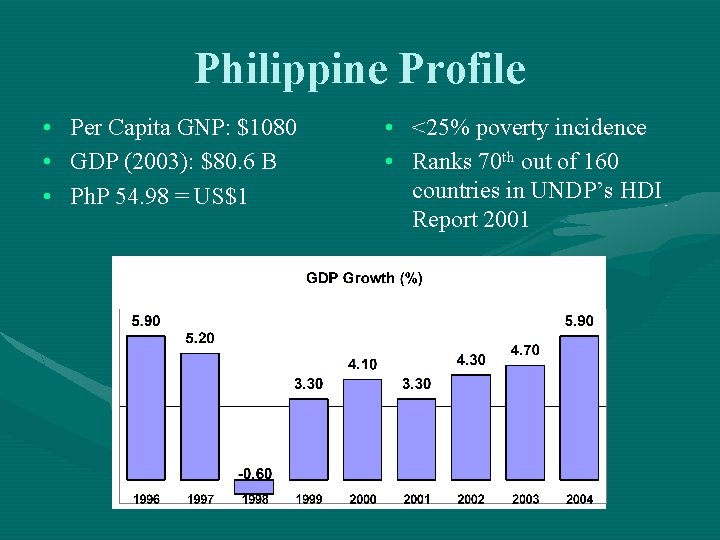
Philippine Profile • • • Per Capita GNP: $1080 GDP (2003): $80. 6 B Ph. P 54. 98 = US$1 • <25% poverty incidence • Ranks 70 th out of 160 countries in UNDP’s HDI Report 2001
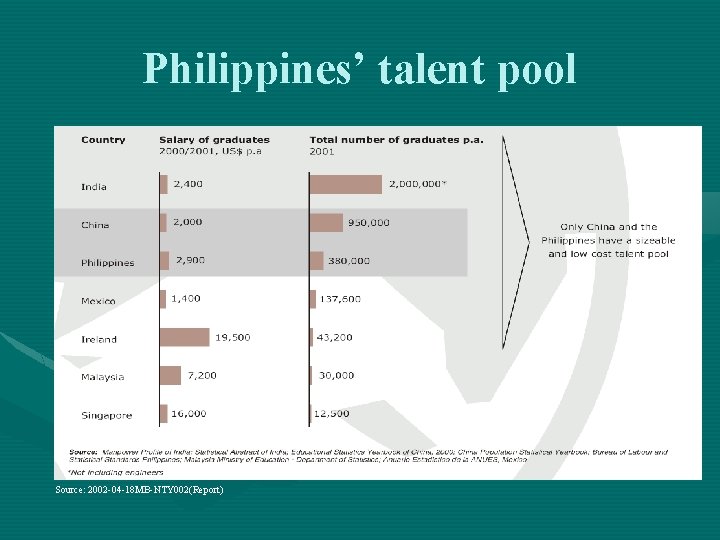
Philippines’ talent pool Source: 2002 -04 -18 MB-NTY 002(Report)
![Number of Installed Lines and Teledensity (19922003) Source: NTC, ITU, [2]](http://slidetodoc.com/presentation_image_h2/ad708c6b34c607196e0865bec9a98a49/image-6.jpg "Number of Installed Lines and Teledensity (19922003) Source: NTC, ITU, [2]")
Number of Installed Lines and Teledensity (19922003) Source: NTC, ITU, [2]

Source: ITU 2002, 2005
![GDP per Capita vs. Wireline Teledensity Source: ITU 2003, [2]](http://slidetodoc.com/presentation_image_h2/ad708c6b34c607196e0865bec9a98a49/image-8.jpg "GDP per Capita vs. Wireline Teledensity Source: ITU 2003, [2]")
GDP per Capita vs. Wireline Teledensity Source: ITU 2003, [2]
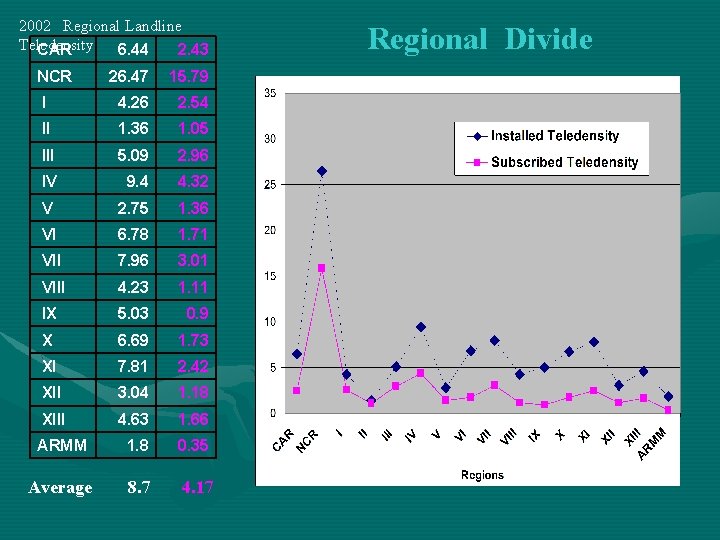
2002 Regional Landline Teledensity CAR 6. 44 2. 43 NCR 26. 47 15. 79 I 4. 26 2. 54 II 1. 36 1. 05 III 5. 09 2. 96 IV 9. 4 4. 32 V 2. 75 1. 36 VI 6. 78 1. 71 VII 7. 96 3. 01 VIII 4. 23 1. 11 IX 5. 03 0. 9 X 6. 69 1. 73 XI 7. 81 2. 42 XII 3. 04 1. 18 XIII 4. 63 1. 66 ARMM 1. 8 0. 35 Average 8. 7 4. 17 Regional Divide
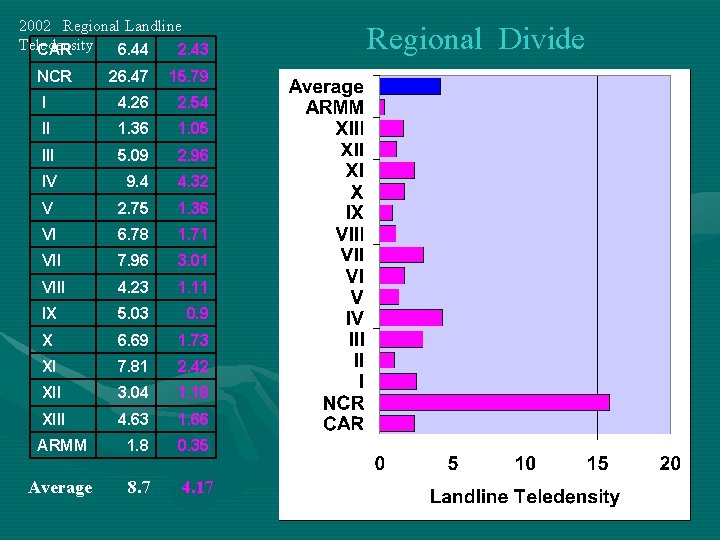
2002 Regional Landline Teledensity CAR 6. 44 2. 43 NCR 26. 47 15. 79 I 4. 26 2. 54 II 1. 36 1. 05 III 5. 09 2. 96 IV 9. 4 4. 32 V 2. 75 1. 36 VI 6. 78 1. 71 VII 7. 96 3. 01 VIII 4. 23 1. 11 IX 5. 03 0. 9 X 6. 69 1. 73 XI 7. 81 2. 42 XII 3. 04 1. 18 XIII 4. 63 1. 66 ARMM 1. 8 0. 35 Average 8. 7 4. 17 Regional Divide
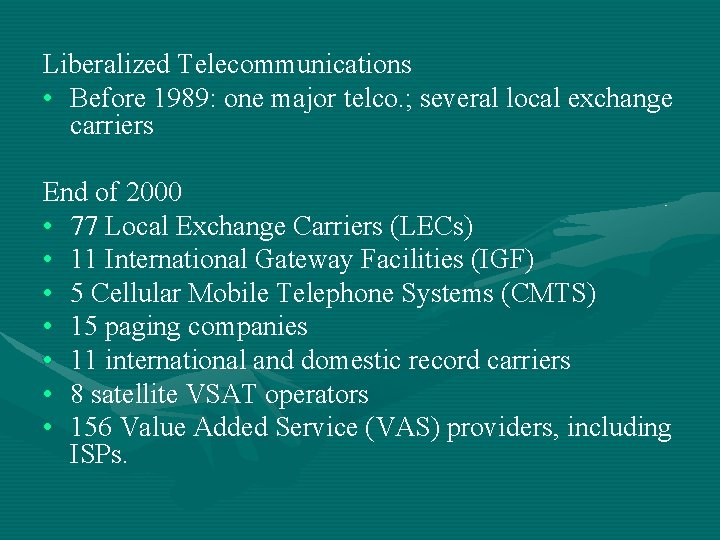
Liberalized Telecommunications • Before 1989: one major telco. ; several local exchange carriers End of 2000 • 77 Local Exchange Carriers (LECs) • 11 International Gateway Facilities (IGF) • 5 Cellular Mobile Telephone Systems (CMTS) • 15 paging companies • 11 international and domestic record carriers • 8 satellite VSAT operators • 156 Value Added Service (VAS) providers, including ISPs.
![Growth of Mobile Subscribers (1995 -2003) Source: NTC, ITU, [2]](http://slidetodoc.com/presentation_image_h2/ad708c6b34c607196e0865bec9a98a49/image-12.jpg "Growth of Mobile Subscribers (1995 -2003) Source: NTC, ITU, [2]")
Growth of Mobile Subscribers (1995 -2003) Source: NTC, ITU, [2]
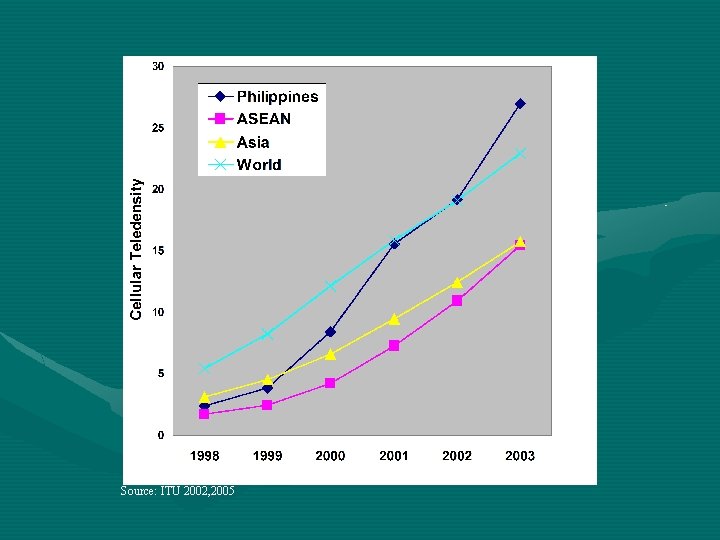
Source: ITU 2002, 2005

Source: ITU 2002, 2005
![Weight of Mobile in Relation to Teledensity (2002) Source: ITU 2003, [2]](http://slidetodoc.com/presentation_image_h2/ad708c6b34c607196e0865bec9a98a49/image-15.jpg "Weight of Mobile in Relation to Teledensity (2002) Source: ITU 2003, [2]")
Weight of Mobile in Relation to Teledensity (2002) Source: ITU 2003, [2]
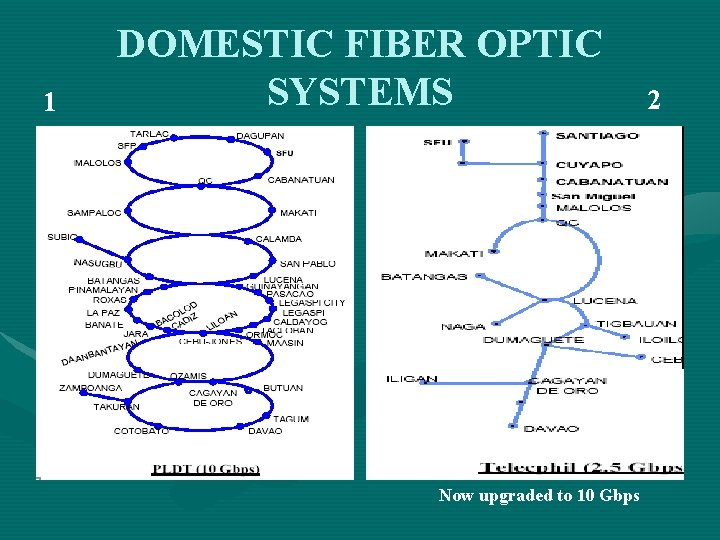
1 DOMESTIC FIBER OPTIC SYSTEMS Now upgraded to 10 Gbps 2
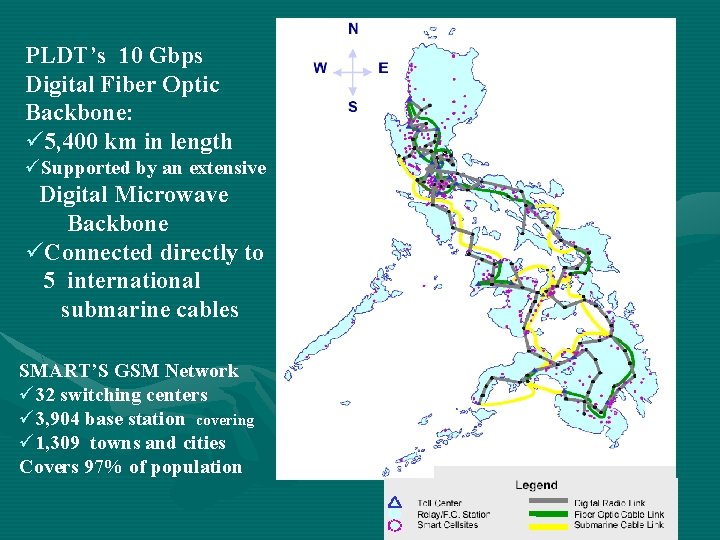
PLDT’s 10 Gbps Digital Fiber Optic Backbone: ü 5, 400 km in length üSupported by an extensive Digital Microwave Backbone üConnected directly to 5 international submarine cables SMART’S GSM Network ü 32 switching centers ü 3, 904 base station covering ü 1, 309 towns and cities Covers 97% of population
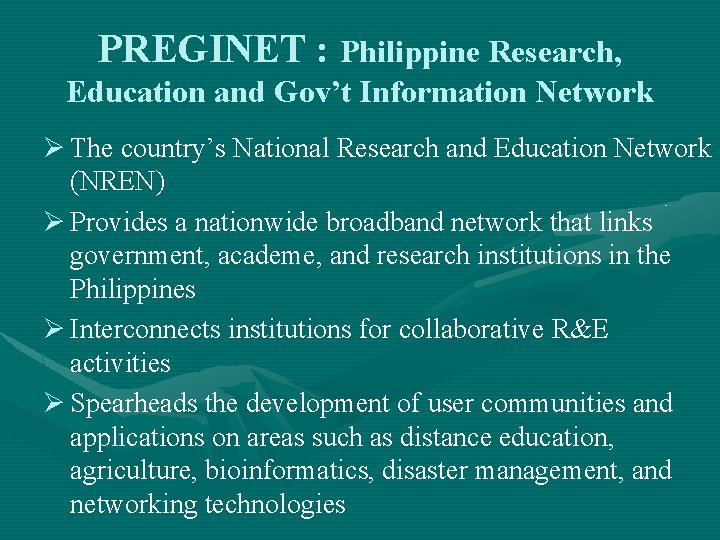
PREGINET : Philippine Research, Education and Gov’t Information Network Ø The country’s National Research and Education Network (NREN) Ø Provides a nationwide broadband network that links government, academe, and research institutions in the Philippines Ø Interconnects institutions for collaborative R&E activities Ø Spearheads the development of user communities and applications on areas such as distance education, agriculture, bioinformatics, disaster management, and networking technologies
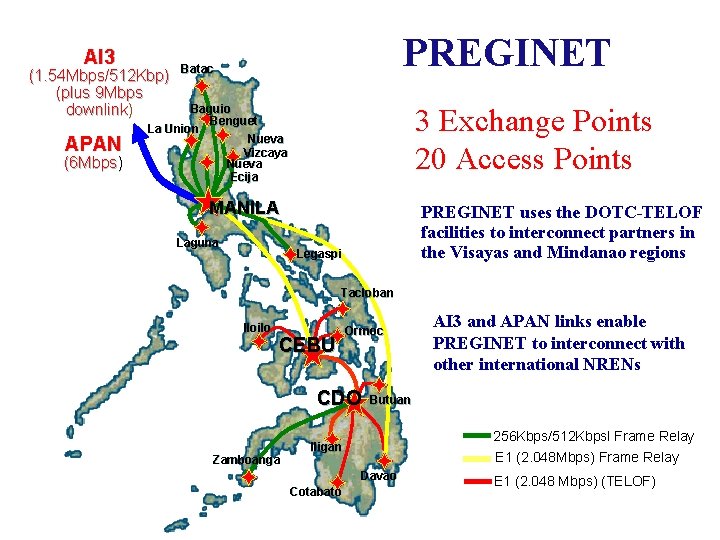
AI 3 (1. 54 Mbps/512 Kbp) (plus 9 Mbps downlink) APAN (6 Mbps) PREGINET Batac 3 Exchange Points 20 Access Points Baguio Benguet La Union Nueva Vizcaya Nueva Ecija MANILA Laguna PREGINET uses the DOTC-TELOF facilities to interconnect partners in the Visayas and Mindanao regions Legaspi Tacloban Iloilo CEBU Ormoc CDO Zamboanga Butuan 256 Kbps/512 Kbpsl Frame Relay E 1 (2. 048 Mbps) Frame Relay Iligan Davao Cotabato AI 3 and APAN links enable PREGINET to interconnect with other international NRENs E 1 (2. 048 Mbps) (TELOF)
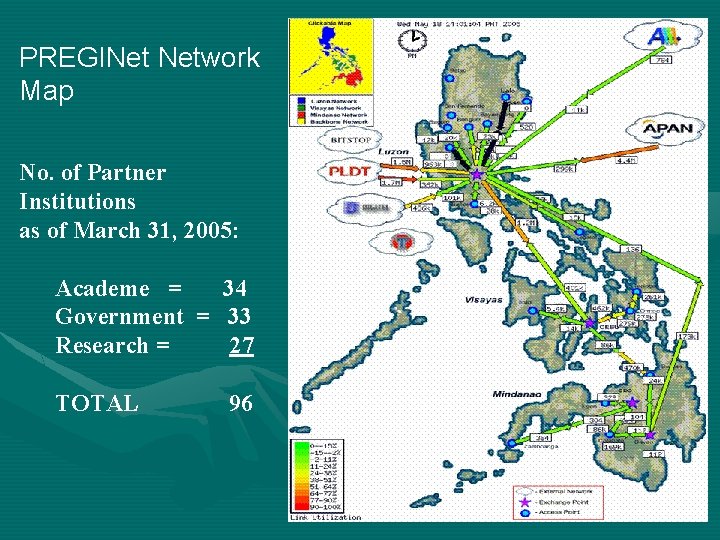
PREGINet Network Map No. of Partner Institutions as of March 31, 2005: Academe = 34 Government = 33 Research = 27 TOTAL 96
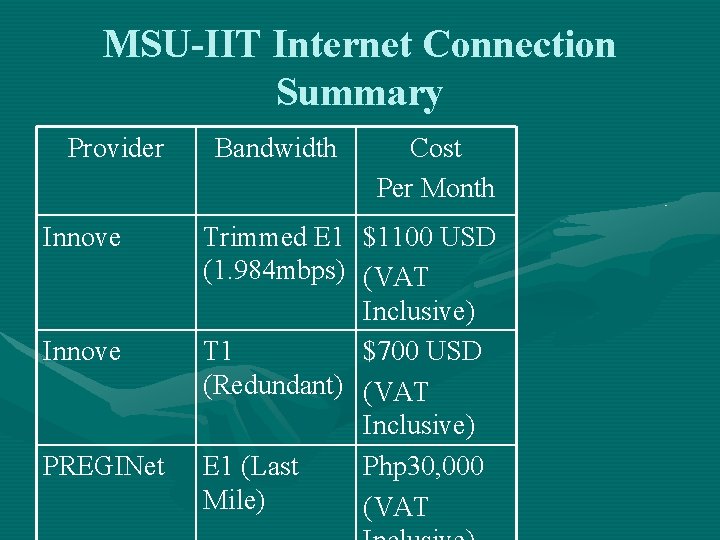
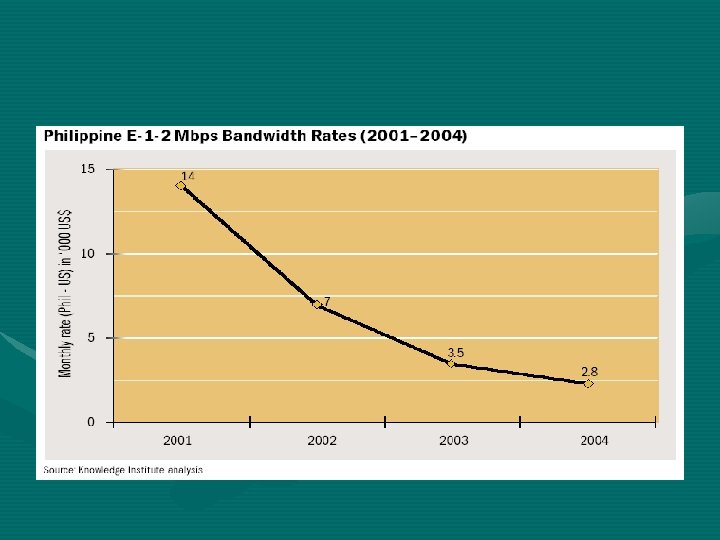
MSU-IIT Internet Connection Summary Provider Innove PREGINet Bandwidth Cost Per Month Trimmed E 1 $1100 USD (1. 984 mbps) (VAT Inclusive) T 1 $700 USD (Redundant) (VAT Inclusive) E 1 (Last Php 30, 000 Mile) (VAT
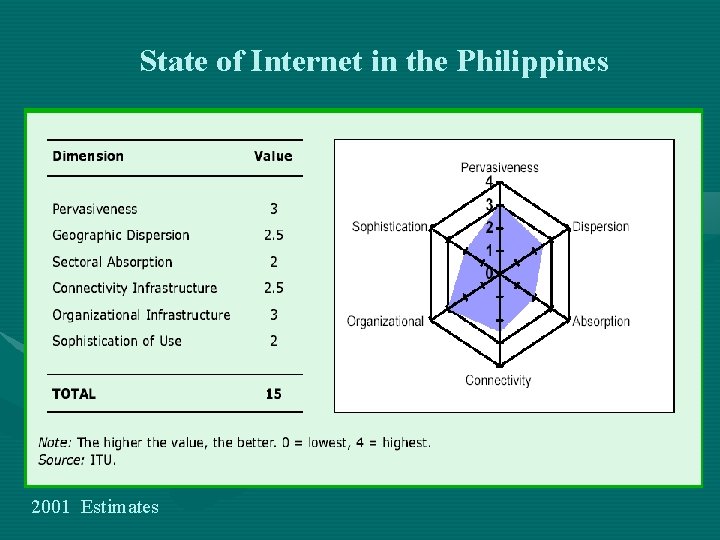
State of Internet in the Philippines 2001 Estimates
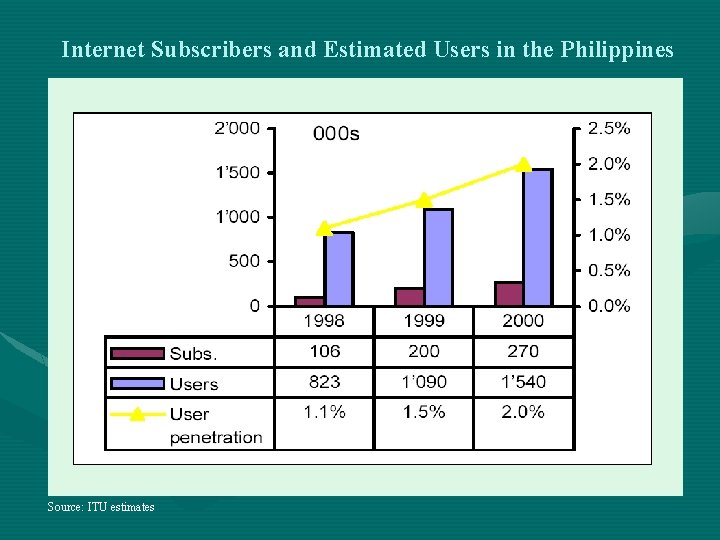
Internet Subscribers and Estimated Users in the Philippines Source: ITU estimates
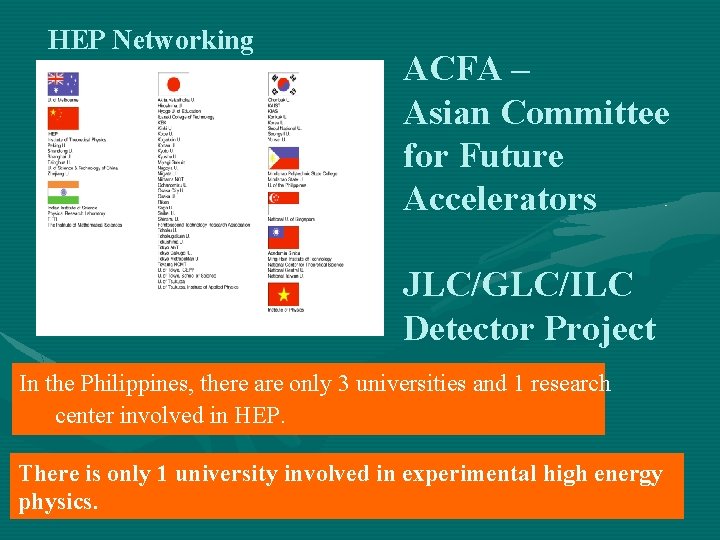
HEP Networking ACFA – Asian Committee for Future Accelerators JLC/GLC/ILC Detector Project In the Philippines, there are only 3 universities and 1 research center involved in HEP. There is only 1 university involved in experimental high energy physics.
References 1. 2. 3. 4. 5. 6. M. Minges et al, “Pinoy Internet : Philippines Case Study”, ©ITU, 2002. F. Huang, “Industry Briefs: Telecommunications Industry 2003”, SGV& Co/Knowledge Institute, Inc. Manila, Philippines. E. Patalinghug, “Wireless Applications for the Digital Divide: Philippines”. Presented at “The Challenge of Mobile Revolution and the Digital Divide”, May 10 -12, 2004. Renaissance Hotel, Seoul, South Korea. R. La. Brie, A. Vinze, “Globe Telecom: Succeeding in the Philippine Telecommunication Economy” © 2003, Idea Group, Inc. National Information Technology Council, “IT 21: I. T. Action Agenda for the 21 st Century”, October 1997. Manila, Philippines. R. Valencia, “Concept Paper: A Strategic Approach to Bridge the Digital Divide in the Philippines’’, APT Regional Forum, Indonesia, February 2004.

Thank you!
- Slides: 27