
Digital Bill of Rights Morgan La Forest Digital
Digital Bill of Rights Morgan La Forest
Digital Access: full electronic participation in society. You should have a fair access to technology Technology users need to be aware of and support electronic access for all to create a foundation for Digital Citizenship.
Digital Commerce: electronic buying and selling of goods Technology users need to understand that a large share of market economy is being done electronically. Legitimate and legal exchanges are occurring, but the buyer or seller need to be aware of the issues associated with it.
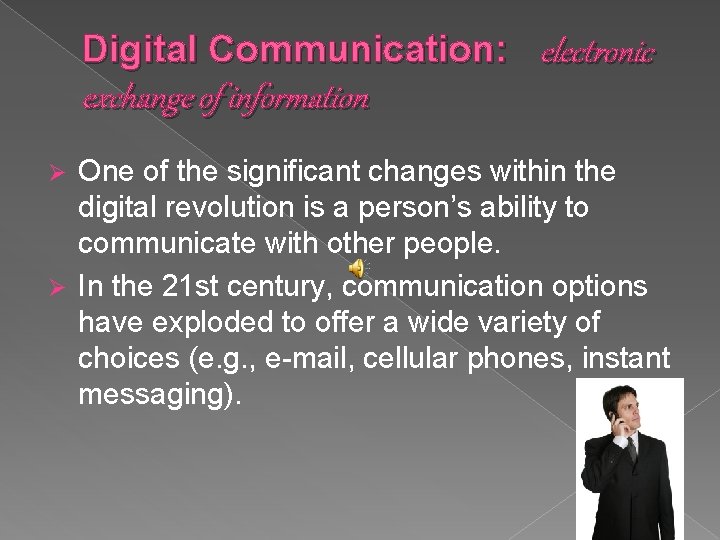
Digital Communication: electronic exchange of information One of the significant changes within the digital revolution is a person’s ability to communicate with other people. Ø In the 21 st century, communication options have exploded to offer a wide variety of choices (e. g. , e-mail, cellular phones, instant messaging). Ø
process of teaching and learning about technology and the use of technology Digital Literacy: While schools have made great progress in the area of technology infusion, much remains to be done. renewed focus must be made on what technologies must be taught as well as how it should be used.
Digital Etiquette: electronic standards of conduct or procedure Technology users often see this area as one of the most pressing problems when dealing with Digital Citizenship. q Often rules and regulations are created or the technology is simply banned to stop inappropriate use. q
Digital Law: electronic responsibility for actions and deeds Digital law deals with the ethics of technology within a society. Unethical use manifests itself in form of theft and/or crime. Downloading illegal music, or stealing anyone’s identify or property is unethical.
Digital Rights & Responsibilities: those freedoms extended to everyone in a digital world Just as in the American Constitution where there is a Bill of Rights, there is a basic set of rights extended to every digital citizen. Digital citizens have the right of Privacy, and free speech.
Digital Health & Wellness: physical and psychological well-being in a digital technology world ergonomic practices are issues that need to be addressed in a new technological world. � Beyond the physical issues are those of the psychological issues that are becoming more prevalent such as Internet addiction. Users need to be taught that there inherent dangers of technology �
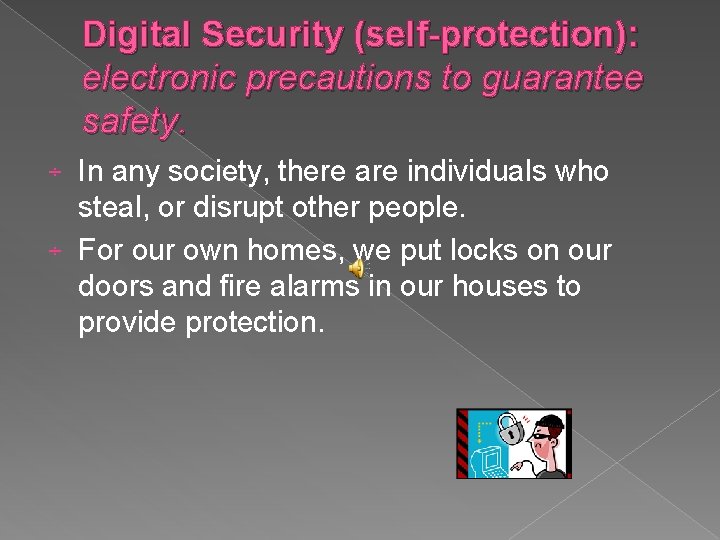
Digital Security (self-protection): electronic precautions to guarantee safety. In any society, there are individuals who steal, or disrupt other people. ÷ For our own homes, we put locks on our doors and fire alarms in our houses to provide protection. ÷
- Slides: 10